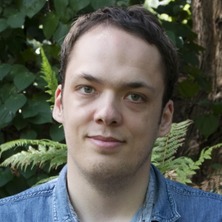
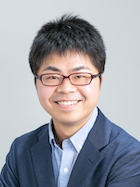
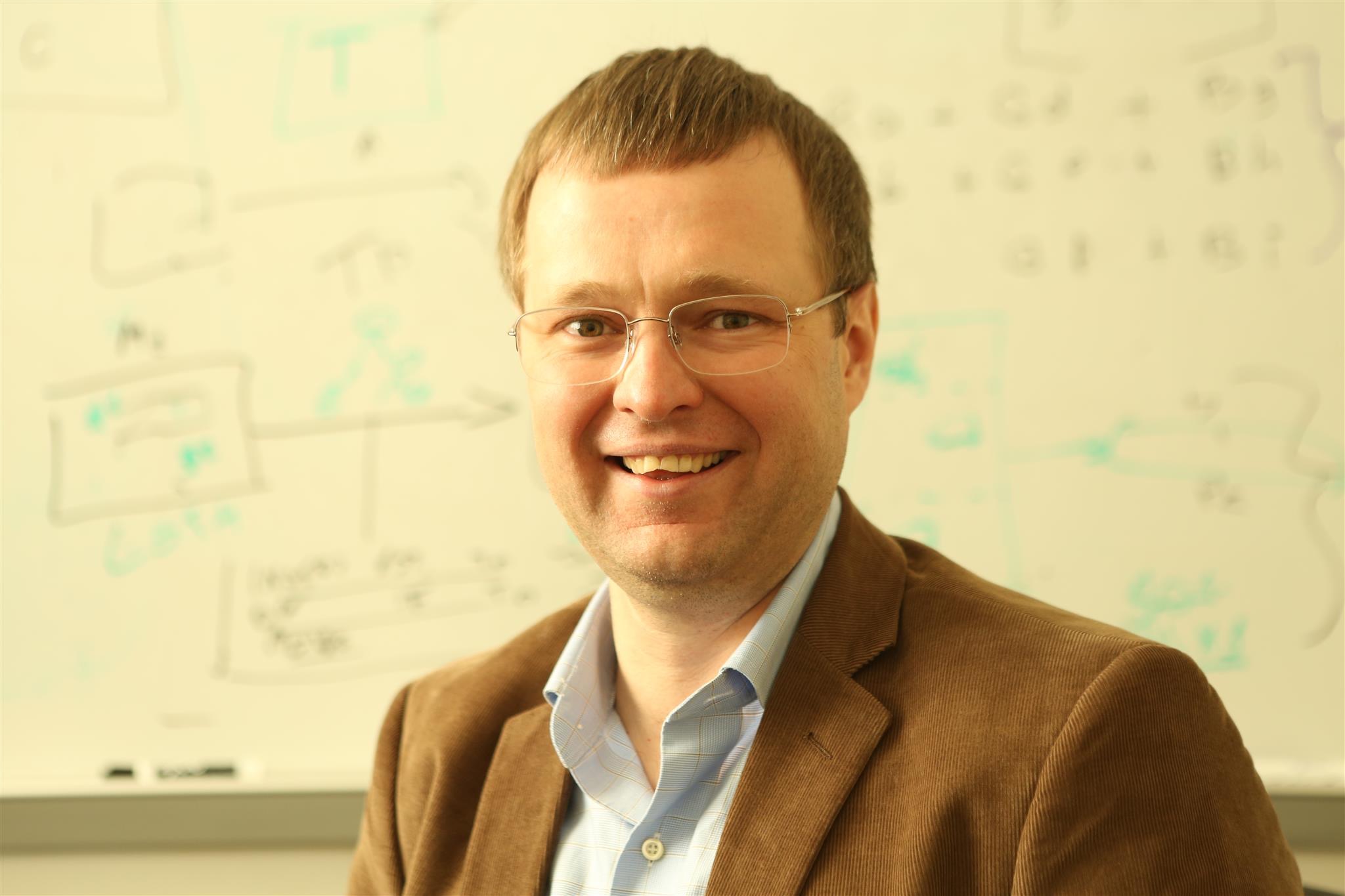
Joshua Scarsbrook is a Research Officer at the University of Queensland's School of Electrical Engineering and Computer Science, part of the Faculty of Engineering, Architecture and Information Technology. He holds a Bachelor (Honours) in Computing Science from the University of Waikato. His research focuses on cybersecurity education, virtualization, computer vision applications in agriculture, software orchestration, and program analysis. Notable projects include TinyRange (a VM orchestration tool) and MetropolJS (JavaScript visualization). His recent work spans AI-driven agricultural auditing (using video technology), cybersecurity in smart grids, and TypeScript evolution analysis. He has published in venues like IEEE/ACM Mining Software Repositories and the Journal of Cybersecurity. Available for supervision, his expertise includes systems architecture, cybersecurity, and open-source software development. His personal projects explore cursed bash scripting, embedded emulators, and Starlark-based configuration systems.
Bernd Fischer is a Professor and current Head of Division in the Division of Computer Science at Stellenbosch University, South Africa. He has previously worked at TU Braunschweig, NASA Ames Research Center, and University of Southampton. His academic journey includes a PhD from Universität Passau (defended June 1, 2001). Professor Fischer's research focuses on automated software engineering with particular emphasis on logic-based techniques. His work spans specification-based component reuse, program synthesis, program verification (including annotation inference, software model checking, and human-oriented presentation of verification results), and innovative visualization approaches like tag clouds over concept lattices. His research has led to significant contributions in concurrent program verification, fault localization, and software repository analysis. Analysis of his recent publications reveals strong trends in software verification, particularly in concurrent systems and model checking. His work has consistently focused on developing practical verification tools (CSeq, ESBMC) that have achieved top rankings in international verification competitions. He has also pioneered visualization techniques for software repositories and academic data exploration using concept lattices and tag clouds. His scientific achievements have been recognized with multiple awards including Best Paper Award at ASE 1998, ASE 2012 Most Influential Paper Award, ACM Distinguished Paper Award (2011), Best Presentation Award at SAFECOMP 2010, and multiple Gold and Silver medals in the International Competition on Software Verification (SV-COMP) in 2014, 2015, and 2016. Professor Fischer has successfully supervised numerous PhD and Master's students, both at Stellenbosch University and previously at University of Southampton. His service to the academic community includes committee memberships in IFIP TC-2 Working Group on Program Generation (since 2004), ASE steering committee (since 2007), and GPCE steering committee (since 2011). He has served as General Chair for SPIN 2015 and GPCE'16, and as Program Committee Chair for GPCE 2009 and ASE 2007. His research group has developed several notable tools including AutoBayes (for automatic generation of data analysis programs), ConceptCloud (for browsing software archives), CSeq (a concurrency pre-processor for sequential C verification), and ESBMC (a model checker for C and C++ programs).
Marco D'Ambros is Professor and Director of CodeLounge , the software research & development center within the Software Institute at Università della Svizzera italiana (USI) in Lugano, Switzerland. Since February 2018 he has led CodeLounge, bridging academic research with industrial practice. Education Ph.D. in Computer Science, Università della Svizzera italiana, 2010 – Dissertation: "On the Evolution of Source Code and Software Defects" M.Sc. (Laurea) in Computer Engineering, Politecnico di Milano, Italy, 2005 – Thesis: "Software Archaeology – Reconstructing the Evolution of Software Systems" Research Interests Marco’s work centers on mining software repositories , software evolution , and software visualization . He designs interactive visual analytics tools—such as Churrasco , BugCrawler , Evolution Radar —that help developers and researchers understand how large codebases change over time, where defects emerge, and how teams collaborate. Recent projects extend these ideas to microservices architectures and text mining of development communication (e.g., mailing lists, issue trackers). Scientific Awards Best Paper Award , IEEE Working Conference on Reverse Engineering (WCRE) 2009 Grants & Collaborations Between 2012 and 2018 Marco led high-impact data-integration projects for government and enterprise clients worldwide as a technical leader at Palantir Technologies , bringing industrial-scale challenges back to academia. At USI he continues to foster industry partnerships through CodeLounge, securing collaborative R&D funding for topics ranging from large-scale microservice evolution to AI-assisted program comprehension. Laboratories & Teams CodeLounge serves as an open laboratory where faculty, doctoral students, and industry engineers co-develop next-generation tooling for software evolution analysis. The lab hosts visiting researchers and maintains open-source releases of its research prototypes.
Olga Baysal is an Associate Professor at the School of Computer Science, Carleton University, and serves as Director of the Carleton University Institute for Data Science (CUIDS). She has held roles including Graduate Director (2020-2022) and Acting Director of CUIDS (2021), with prior faculty positions at Université de Montréal and Ryerson University. PhD and Master's in Computer Science from University of Waterloo NSERC Postdoctoral Fellowship at University of Toronto Her research focuses on applying AI, ML, and NLP techniques to software engineering challenges through empirical studies of development artifacts. She leads the Software Analytics (SWAN) research group, mentoring 3 PhD and 4 MCS students while collaborating with industry partners like Ericsson, Shopify, and Google. Research keywords: Software Engineering, Data Science, AI/ML, Mining Software Repositories, Human-Computer Interaction, Empirical Methods. NSERC Postdoctoral Fellowship Dr. Baysal has supervised over 20 graduate and 30 undergraduate students. Her teaching includes courses on Data Science (DATA 5000) and Mining Software Repositories (COMP 5117), emphasizing interdisciplinary teamwork and practical applications using R, Tableau, and IBM tools.
Yasutaka Kamei is a Full Professor at the Graduate School and Faculty of Information Science and Electrical Engineering , Kyushu University since 2024. He holds a Doctorate in Information Science from Nara Institute of Science and Technology and has been a InaRIS Fellow since 2023. His career spans roles as Associate Professor (2015-2023), Visiting Researcher at Queen's University (2015-2017), and Assistant Professor (2011-2015). Research Fields: Specializing in Empirical Software Engineering , he investigates software reliability, defect prediction, code review practices, and mining software repositories. His work on fuzz testing , technical debt , and automated program repair has produced influential frameworks like TraceJIT and PAFL . He pioneered studies on developer behavior in GitHub and federated learning for cross-project defect prediction. Scientific Trends: Recent publications focus on LLM applications in mutation testing , visual bug reporting , and CI/CD inefficiencies . His team explores developer-centric challenges in modern practices, including token-based micro commits and fuzzing build failures . Awards & Grants: InaRIS Fellowship (2023): 10-year, 100M yen grant for human-machine interaction in software development IPSJ/ACM Early Career Award (2013) Leadership: He chairs PC for MSR2018 , co-organizes NII Shonan Seminars , and serves on committees for ICSE , ASE , and SANER conferences. His editorial roles include Empirical Software Engineering and Automated Software Engineering journals.
Denys Poshyvanyk is the Chancellor Professor of Computer Science and Graduate Director at William & Mary, where he leads the SEMERU research group. He received his Ph.D. from Wayne State University under Dr. Andrian Marcus. Research Interests: Software Engineering (SE), with a focus on software analytics, evolution, and maintenance Deep Learning for Software Engineering (DL4SE) and SE for deep learning (SE4DL) Program comprehension, mobile app testing and security, reverse engineering Large-scale mining of software repositories and traceability His research integrates AI and machine learning to improve software development practices, with a strong emphasis on empirical studies and tool development. Recent work explores large language models (LLMs), GUI testing, and quantum-classical software integration. Awards and Honors: NSF CAREER Award (2013) IEEE Fellow and ACM Distinguished Member Multiple Best Paper and ACM SIGSOFT Distinguished Paper Awards Most Influential Paper Awards (ICSME, ICPC, SCAM, MSR) Service and Leadership: Senior Associate Editor, ACM TOSEM Editorial Board, Empirical Software Engineering, JSEP, SCP Steering Committee: FSE, ASE, AIware PC Co-chair for FSE’25, MOBILESoft'24, ASE'21; General Chair for MOBILESoft'24 Member, CRA-E Board of Directors He has advised numerous students who have secured faculty and research positions. His work is widely cited and has significantly influenced the software engineering community through both theoretical contributions and practical tools.
Aiko Yamashita is an Associate Professor at Oslo Metropolitan University's Faculty of Technology, Art and Design, Department of Computer Science. Her research focuses on empirical software engineering, particularly software quality, evolution, and human/organizational factors in computing. She actively collaborates with international researchers and contributes to software engineering literature through publications in top-tier venues like IEEE and ACM. Empirical Software Engineering Code Smell Detection Technical Debt Analysis Human Factors in Software Development Software Maintenance Open Source Systems Her recent publications explore connections between code smells and maintenance effort, analyze developer discussions on technical debt, and advance methodologies for empirical case studies. She works with colleagues from institutions like Politecnico di Milano and McGill University, applying mixed-method approaches combining screen recordings, metrics, and expert reviews. Aiko participates in research groups including Applied Artificial Intelligence and Universal Design of ICT (UD-ICT). Her work bridges academic research with industry practice, focusing on actionable insights for software quality improvement. Contact her at aiko.yamashita@oslomet.no for collaborations or further information.
Akon Dey is a researcher affiliated with the University of Sydney , Australia. His career spans database systems, distributed transactions, and scholarly knowledge graphs, with a PhD thesis titled Cherry Garcia: Transactions across Heterogeneous Data Stores (2015). He has extensively published in conferences like CIDR, ICSOC, IC2E, and TPCTC, focusing on scalable transactions, benchmarking frameworks, and cloud processing. Education : PhD in Computer Science, University of Sydney (2015) Research Interests include heterogeneous data stores, cloud computing, FAIR data principles, and knowledge graphs. His work addresses transaction scalability, benchmarking standards, and semantic publishing of research artifacts. Article Trends (2023–2025) reveal a shift toward large language models (LLMs), knowledge graph question answering, software engineering metadata, and open science practices. He contributes to FAIR digital objects, RO-Crate, and machine-actionable metadata standards.
Dr inż. Piotr Szwed is a Lecturer in the Department of Applied Computer Science at AGH University of Science and Technology, Kraków. He is affiliated with the Faculty of Electrical Engineering, Automatics, Computer Science and Biomedical Engineering (EAIiIB), where he teaches courses ranging from imperative and object-oriented programming to data exploration and computational intelligence. Research Interests: Data mining and knowledge discovery Fuzzy cognitive maps and their applications in transportation, risk assessment, and security Software engineering methodologies, including agile and ontology-driven development Intelligent transportation systems (ITS) and real-time traffic management Natural language processing for Polish texts, stylometry, and authorship attribution Ontology engineering, enterprise architecture verification, and model checking His work often bridges theoretical computer science with practical applications in urban mobility, safety systems, and enterprise software. Scientific Contributions: Pioneered the integration of fuzzy cognitive maps with evolutionary algorithms to predict traffic flows. Developed rule-based and machine-learning approaches to determine speed limits from geospatial data. Contributed to the INSIGMA intelligent transportation system aimed at enhancing urban mobility in Polish cities. Created formal verification techniques for ArchiMate business processes using NuSMV model checking. Advanced stylometric analysis for Polish texts, introducing part-of-speech features for authorship attribution. Teaching & Academic Service: Regularly teaches Programming (C, C++, Java), Software Engineering, Data Exploration, and Computational Intelligence. Supervises engineering and master theses in applied computer science. Maintains a public wiki with course materials, lab exercises, and consultation schedules for students. Utilizes Git-based repositories to streamline code submission and continuous assessment in laboratory classes. Laboratory & Facilities: He is located in building C-2, room 403, at AGH’s main campus, al. Mickiewicza 30, 30-059 Kraków. The lab supports courses that emphasize practical software development, version control, and collaborative project work.
Prof. Dr.-Ing. Robert Müller is a faculty member at the Faculty of Computer Science and Media of Leipzig University of Applied Sciences (HTWK Leipzig). His expertise lies in Multimedia Databases , with a focus on advanced data modeling and workflow integration techniques. Collaborated on industry projects like FoodBroker for synthetic datasets in business analytics Pioneered graph-grammar approaches for medical context representation Developed rule-based workflow systems for healthcare domains His research spans Workflow Systems , Knowledge-Based Modeling , and Graph-Based Analytics , as evidenced by publications in both computer science and health informatics. He actively contributes to academic projects through his technical leadership in database and process engineering.
Mgr. Vojtěch Juřík, Ph.D. serves as an Assistant Professor at the Institute of Psychology within the Faculty of Arts at Masaryk University in Brno, Czech Republic. His academic work spans cognitive psychology, virtual reality applications, and educational technology, with significant contributions to understanding human cognition in digital environments. His research interests focus on Virtual Reality applications in psychological research, Eye-Tracking methodologies, Spatial Cognition, Human-Computer Interaction, Metacognition, and Self-Regulated Learning . Juřík has pioneered methods for integrating VR technologies into psychological experimentation, particularly examining how immersive environments affect cognitive processes, learning behaviors, and spatial navigation. Analysis of his publication trends reveals a strong emphasis on experimental methodology development (particularly Toggle Toolkit for Unity environments), replication studies using VR to address psychology's replication crisis, and applied educational research examining how technology-supported learning environments influence student outcomes. His work demonstrates consistent interdisciplinary collaboration across psychology, computer science, and geospatial disciplines. As an active researcher, Juřík has organized academic conferences including the Cognition and Artificial Life series and has contributed to numerous collaborative research projects. His methodological innovations in eye-tracking within VR environments have established new standards for ecological validity in psychological research.
Yingcheng Sun is an Assistant Professor in the Department of Computer Science at the University of North Carolina Greensboro (UNCG). He holds a Ph.D. in Computer Science from Case Western Reserve University and completed a postdoctoral fellowship at Columbia University's Department of Biomedical Informatics. His research focuses on Information Retrieval, Machine Learning, and Biomedical Informatics, with applications in clinical trial optimization, healthcare data analysis, and web text mining. Key projects include the development of the Clinical Trial Knowledge Base and the COVID-19 Trial Finder , tools designed to streamline patient recruitment and eligibility assessment for clinical trials. Sun's work also explores conversational structure analysis in online discussions and spam detection in short texts. He has received notable awards such as the DjangoCon US 2024 Opportunity Grant and the Generative AI Implementation Grant. His advising includes Maximilian Doerr, who successfully defended their thesis in 2024. Sun maintains an active GitHub profile with repositories focused on clinical informatics and NLP tools.
Diomidis Spinellis is Professor of Software Engineering in the Department of Management Science and Technology at the Athens University of Economics and Business, Greece, where he heads the Business Analytics Laboratory (BALab). He also holds a position as Professor of Software Analytics in the Department of Software Technology at the Delft University of Technology. His academic career spans multiple prestigious institutions and research domains. Spinellis's research interests center on software engineering, IT security, and computing systems. He has made significant contributions through his work on code quality, software tools, program comprehension, and debugging methodologies. His research bridges theoretical foundations with practical applications, evident in his development of widely-used open-source tools and his contributions to operating systems like Apple's macOS and BSD Unix. His scholarly output includes over 300 technical papers with more than 10,500 citations, demonstrating substantial impact across the software engineering community. His publications span diverse topics including software analytics, program comprehension, debugging techniques, and open-source software quality. Among his notable recognitions are two award-winning, widely-translated books: Code Reading and Code Quality: The Open Source Perspective , followed by Effective Debugging: 66 Specific Ways to Debug Software and Systems in 2016. His work has been influential in both academic and industry settings. IEEE Software editorial board member for a decade Editor-in-Chief of IEEE Software for four years Elected member of IEEE Computer Society Board of Governors (2013-2015) Senior member of ACM and IEEE Spinellis actively contributes to the software engineering community through tool development (CScout, UMLGraph, dgsh), conference leadership roles, and mentoring activities. His professional service includes program committee memberships across major software engineering conferences including ICSE, ESEC/FSE, and ASE.
Heng Li is an Assistant Professor in the Department of Computer Engineering and Software Engineering at Polytechnique Montreal, Canada. He leads the Measurement, Observation, and Optimization of Software and its Evolution (MOOSE) lab, focusing on software engineering research with emphasis on observability, log analysis, and performance engineering. His work bridges academic research with practical industry applications, drawing from his prior experience as a software engineer at Synopsys and BlackBerry. Education: Ph.D. in Computing from Queen's University, Canada M.Sc. from Fudan University, China B.Eng. from Sun Yat-sen University, China Heng Li's research spans multiple critical areas in modern software engineering. His primary focus is on software monitoring and observability , where he develops techniques to make software systems more transparent and understandable during operation. He has made significant contributions to software log mining , creating novel approaches for parsing and analyzing log data to detect anomalies and performance issues. His work in intelligent operations of software systems applies machine learning to automate various aspects of software operations. Additionally, he researches software performance engineering and mining software repositories to understand development practices and improve software quality. An analysis of Dr. Li's recent publications reveals a strong focus on practical applications of software analytics. His work consistently addresses real-world challenges in software observability, particularly log analysis and performance monitoring. A notable trend is his exploration of machine learning applications in software operations (AIOps), with increasing emphasis on efficient algorithms for log processing and anomaly detection. His research shows a progression from foundational techniques in log parsing to more sophisticated approaches for performance regression detection and privacy preservation in software logs. Many of his papers include empirical studies from industry settings, demonstrating his commitment to bridging the gap between academic research and industrial practice. Professional Service: Program Committee member for multiple top software engineering conferences including ASE, ICSE, ESEC/FSE Active participation in workshops and special tracks related to software analytics and AIOps Dr. Li leads the MOOSE (Measurement, Observation, and Optimization of Software and its Evolution) laboratory at Polytechnique Montreal. The lab focuses on developing innovative techniques for monitoring software systems, analyzing their behavior through logs and performance metrics, and optimizing their operation. Current projects in the lab include advanced log parsing algorithms, performance regression detection systems, and privacy-preserving techniques for software logs. The lab maintains strong connections with industry partners to ensure research relevance to real-world challenges.
Dr. Yuan Tian is an Assistant Professor in the School of Computing at Queen's University, Canada. Her research focuses on applying artificial intelligence and machine learning techniques to solve software engineering challenges, particularly in the areas of code analysis, technical debt management, and developer productivity enhancement. Dr. Tian received her Ph.D. in Information Systems from Singapore Management University in May 2017 under the supervision of Prof. David Lo (IEEE/ACM fellow). Prior to joining Queen's University, she worked as a data scientist at the Living Analytics Research Centre (LARC) in Singapore. She has also conducted research visits at Carnegie Mellon University in 2015 and Inria Paris in 2013. Dr. Tian's research spans several key areas in software engineering with AI: Automatic technical debt, bug, and code change management LLM applications for code transformation and generation Human-AI collaboration in software development Analysis of developer interactions with AI tools like ChatGPT Mining software repositories for insights into development practices Her recent work has increasingly focused on leveraging Large Language Models to address software engineering challenges, with publications examining code translation, technical debt identification, and the dynamics of developer-AI interactions. Her research demonstrates a strong empirical approach, often analyzing large datasets from GitHub and other software development platforms. Dr. Tian has received recognition for her work, including the Best Research Paper Award at AI Foundation Models and Software Engineering (Forge), 2024 for her paper "Exploring the Impact of the Output Format on the Evaluation of Large Language Models for Code Translation." Dr. Tian leads the RISE research lab at Queen's University, which currently includes 5 PhD students, 2 MSc students, and 2 undergraduate research assistants. She has successfully supervised several graduate students to completion, with alumni now working at institutions including Duke University and Veeva Systems. Her research is supported by funding including an NSERC Alliance-Mitacs project on "Pragmatic Automated Code Transformation Leveraging Large Language Models" in collaboration with industry partner Ross Video. The RISE lab (Goodwin 621) is dedicated to developing reliable and intelligent support for software engineering. The lab's current research focuses on three main thrusts: automatic technical debt/bug/code change management, LLM for code transformation, and human-AI collaboration in software development.