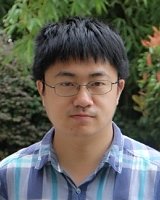
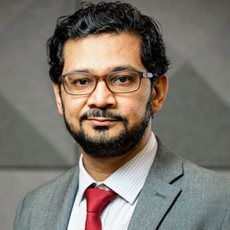
Thorsten Vitt is a Researcher at the Chair of Computational Philology and Modern German Literary History within the Faculty of Philosophy at the University of Würzburg . His role includes academic advising for Digital Humanities degree programs, IT support for the Chair, and technical leadership in digital edition projects such as the Faust Edition and TextGrid . He is affiliated with the ZPD (Zentrum für Philologie) and works on computational methods for literary analysis. Current Projects : Faust Edition, ESF-ZDEX, TextGrid, DARIAH-DE Technical Expertise : Markup Languages, Linguistic Query Languages, Database Systems Research Interests : Digital Humanities, Computational Philology, Authorship Attribution, Topic Modeling, Digital Editions, Data Visualization, Software Development for Humanities. His work bridges computer science with literary studies, focusing on algorithmic analysis of historical texts and digital scholarly editions. Publications highlight his contributions to computational analysis of Goethe's Faust, topic modeling tools, and distance measures like Burrows' Delta. He has developed software libraries for stylometric analysis and collaborates on infrastructures like TextGrid and DARIAH-DE. Education : Completed a diploma thesis on "Queries to Complex Corpora" (2005) and a student research paper on "Storing Linguistic Corpora in Databases" (2004) at Humboldt University Berlin. Technical Leadership : Deputy IT support for the Chair, contributor to GitHub repositories including pydelta and faust-web , and developer of tools for topic modeling and digital editions.
Sunil Aryal is an Associate Professor of Data Science at the School of Information Technology, Faculty of Science Engineering and Built Environment, Deakin University, Australia. He received his PhD and Master by Research degrees from Monash University Australia and has published over 70 papers in top-tier international venues in Artificial Intelligence, Machine Learning and Data Mining. Dr. Aryal's educational background includes: Graduate Certificate of Higher Education Learning and Teaching, Deakin University (2020) PhD in Computer Science, Monash University (2017) Master of Information Technology (Research), Monash University (2012) Master of Information Technology (Coursework), University of Southern Queensland (2008) Bachelor of Information Technology, Purbanchal University, Nepal (2005) His primary research interests focus on making Machine Learning and Data Mining algorithms robust and flexible to handle heterogeneous, noisy and uncertain data in real-world problems. His work spans across several specific areas including anomaly detection, clustering, kernel/similarity-based learning, ensemble methods, learning from limited data, reinforcement learning, natural language processing, and computer vision. Dr. Aryal is particularly interested in applying these techniques to solve challenges in Defence, National Intelligence, Engineering, Manufacturing, Healthcare and Education. Dr. Aryal co-leads the Machine Learning for Decision Support (MLDS) Research Group at Deakin University and has secured over AUD 4.5 million in external research funding. His research is supported by diverse organizations including US and Australia Defence Agencies, the Australian Office of National Intelligence, Worksafe Victoria, the Victorian State Department of Education and Training, the Technology Innovation Institute (TII) UAE, and Table Tennis Australia (TTA). His notable awards include multiple Deakin University research and teaching awards, the Australian Postgraduate Award for his PhD studies, and several student travel awards during his doctoral candidature. Dr. Aryal actively supervises numerous PhD and Master's students and has contributed significantly to teaching in various courses at Deakin University and previously at Federation University. He serves on several university committees and contributes to the research community as a reviewer, program committee member, and editor for various journals and conferences.
Hoa Khanh Dam is Professor and Deputy Head of School (Research) & Head of Postgraduate Studies in the School of Computing and Information Technology at the University of Wollongong, Australia. He serves as Co-Director of the Decision System Lab where he leads research at the intersection of Software Engineering and Artificial Intelligence. His research focuses on developing AI-driven solutions for software quality, cybersecurity, and productivity enhancement. Key interest areas include: AI/IoT autonomous and cyber resilient systems Software Analytics and Mining Software Repositories Large Language Models for software engineering tasks Defect prediction and vulnerability analysis Agile project management optimization Analysis of Dam's 12 publications from 2018-2025 reveals consistent application of machine learning to software engineering challenges. His work shows progressive evolution from traditional ML techniques toward LLM-based frameworks, with major contributions in defect prediction (DeepJIT), vulnerability analysis, microservice recommendation, and agile effort estimation. The research demonstrates strong industry relevance through practical implementations in code review, component prediction, and security systems. Dam co-leads the Decision System Lab at UOW, which develops intelligent decision support systems using AI and data analytics. The lab's work bridges theoretical AI advancements with real-world software engineering applications, particularly in cybersecurity and autonomous systems development.
Professor Yuan Miao is a distinguished academic at Victoria University (VU), serving as Professor in the College of Arts, Business, Law, Education & IT and Head of the Information Technology Program. With a PhD from Tsinghua University's Automation Department, his academic journey spans prestigious institutions including the University of Melbourne and Nanyang Technological University in Singapore before settling at VU where he has been Professor since January 2010, following his Associate Professorship from August 2004 to December 2009. Education: BSc, Shandong University, China MEng, Tsinghua University, China PhD, Tsinghua University, Automation Department, China Professor Miao's research centers on Large Language Models (LLMs) and Generative AI, where he has identified critical barriers in practical applications including limited memory length in systems like ChatGPT and Gemini, contradictory explanations, lack of local knowledge integration, and significant errors in text-data hybrid reasoning (up to 38%). His innovative solutions involve cognitive map graphs and rational intelligence models to create customized AI systems. His work spans diverse application areas including human knowledge modeling, multimodal interaction, healthcare analytics (particularly dementia detection), cybersecurity, and robotics powered by rational intelligence. Analysis of Professor Miao's recent publications reveals a strong focus on integrating LLMs with specialized knowledge domains across healthcare, cybersecurity, and social media analysis. His research consistently addresses practical limitations of current AI systems while developing novel frameworks for more reliable and context-aware applications. The interdisciplinary nature of his work is evident in publications spanning medical informatics, cybersecurity analytics, and educational technology. Scientific Recognition: Two articles in fuzzy cognitive map modeling ranked among top 10 most cited works since 2000 (Google Scholar 2000-2016) Development of adversarial dataset based on SQuAD 2.0 that reduced BERT and ELECTRA accuracy from ~90% to ORCID identifier 0000-0002-6712-3465 with 138 peer-reviewed publications Professor Miao actively supervises PhD and Master's students across diverse research topics including access control systems, healthcare analytics, cybersecurity, and social behavior analysis. His research has secured substantial funding from both industry giants (Microsoft, Amazon, Oracle, Google) and government bodies (Australia Research Council, Data61, Singapore's NRF), with recent projects including Digital Transformation for Construction Industry ($1.258 million), Western Health SharePoint Development ($68,000), and Big Data Analysis for Domestic Violence Research (US$100,000). His current grant portfolio demonstrates strong industry-academia collaboration addressing real-world challenges. Professor Miao leads research teams focused on rational intelligence systems that overcome current LLM limitations, with particular emphasis on creating practical AI solutions for healthcare, cybersecurity, and smart city applications. His work with Maribyrnong City Council on the Smart City at Footscray Park project ($850,000) exemplifies his commitment to applying advanced AI research to community-level challenges.
Dr. Jifeng Xuan is a Professor and Deputy Dean at the School of Computer Science, Wuhan University, China. He founded the CSTAR (Centre of Software Testing, Analysis and Reliability) and holds editorial roles at Empirical Software Engineering and PLOS One . Previously, he was a postdoctoral researcher at INRIA Lille-Nord Europe (France) and earned his PhD from Dalian University of Technology. Research Interests: His work focuses on software testing, debugging, automated program repair, software data analysis, and search-based software engineering. He integrates AI/ML techniques for tasks like log analysis, fuzz testing, and vulnerability detection, with applications in robotics, microservices, and Android development. Publication Trends: Recent articles (2022–2025) emphasize AI-driven software engineering, including LLM-based repair, reinforcement learning for testing, and deep learning surveys. Security (vulnerability logs) and empirical studies on industrial challenges (e.g., C program repair) are recurring themes. Awards & Honors: ACM SIGSOFT Distinguished Paper Award (2025) IEEE TCSE Distinguished Paper Award (2025) CCF NASAC Youth Software Innovation Award (2024) Outstanding Doctoral Dissertation Award, China Computer Federation (2014) Luojia Young Scholar (2015) Student Advising & Labs: Actively recruits PhD and master students for CSTAR Lab. Research areas include automated debugging, testing tools (e.g., Mergebot, FastLog), and AI-generated code assessment. No specific grants listed.
Dr. Zenon Michaelides is Reader in Business Analytics (equivalent to Associate Professor) at Manchester Metropolitan University Business School. With extensive industry experience, he bridges academic research with applied digital transformation in enterprise contexts. His research examines digital transformation, business analytics, supply chain optimization, and Industry 4.0 technologies. Michaelides leads knowledge transfer partnerships worth over £1.2M, collaborating with aerospace, retail, and public sector organizations. As Deputy Head of Research Ethics and Governance, he oversees compliance frameworks. He represents the university in SAP/AWS/Celonis academic partnerships. His publications emphasize practical applications: sustainability reporting, lean management in developing economies, big data in SCM, and RFID/e-business systems. Recent work analyzes organizational drivers for sustainable manufacturing and social value in procurement. He teaches postgraduate/executive courses on analytics, Industry 4.0, and digital leadership. His TEDx talk on cloud computing/ERP reflects commitment to translating technical concepts for broader audiences.
Dr. Brian Ó Raghallaigh is an Assistant Professor in Fiontar & Scoil na Gaeilge at Dublin City University (DCU). He holds a BA (Mod.) in computational linguistics and a PhD in speech technology from Trinity College Dublin. His research focuses on digital terminology, onomastics, folkloristics, phonetics, and language technology. He is Co-Principal Investigator of the AHRC-IRC 'Decoding Hidden Heritages' project (2021–2024) and Principal Investigator of the Department of the Gaeltacht-funded 'Logainm Placenames Database of Ireland' project. Education: BA (Mod.) in Computational Linguistics (Trinity College Dublin), PhD in Speech Technology (Trinity College Dublin) Roles: Technology Manager of the Gaois research group, Module Coordinator for Irish Linguistics (LIG1004), Co-coordinator for Corpus Research (LIG1010) Publications: Authored Fuaimeanna na Gaeilge , creator of fuaimeanna.ie , and co-editor of Decoding the Oral Traditions of Scotland and Ireland . His research interests span terminology, placename studies, digital humanities, and language preservation. He leads projects like Terminologue (a cloud-based terminology platform) and collaborates on initiatives such as the EU-GA terminology project. He is active in professional organizations like SNSBI, SIEF, and CIGILT. Grants & Projects: Funded by AHRC/IRC, Department of the Gaeltacht, RIA. Key projects include Logainm.ie , Gaois surname database , and Historical Dictionary of Modern Irish . Labs/Teams: Gaois research group (focused on language technology), Terminologue (terminology management), and collaborations with the Digital Repository of Ireland (DRI).
Rong Liu is an Associate Professor at the School of Business, Stevens Institute of Technology, specializing in Information Systems and FinTech. His research focuses on Blockchain, Deep Learning, Text Mining, and Business Process Management. Prior to Stevens, he was a Research Staff Member at IBM T.J. Watson Research Center (2006–2017). Liu holds a PhD in Information Systems from Penn State University (2006). Research Interests Liu’s work integrates AI and business analytics to address challenges in finance, healthcare, and operations. Key areas include blockchain applications in supply chains, ethical AI in hiring, misinformation detection, and predictive modeling for fraud and litigation. His methodologies combine deep learning with theory-driven approaches, emphasizing interpretability and real-world impact. Recent Trends in Publications His recent work explores large language model (LLM) applications in healthcare (e.g., drug shortage prediction), financial decision-making systems, and ethical compliance in job advertisements. He also investigates blockchain’s role in supply chain transparency and open-source development’s impact on ICOs. Awards & Recognition Liu has received awards including the Bright Idea Award (New Jersey Business Faculty, 2020) and multiple best paper awards at ICIS, WITS, and INFOCOM conferences. His work on supply chain event management (2007) was recognized with a Best Paper Award at the Business Process Management Conference. Service & Teaching He serves on academic committees at Stevens and reviews for top journals like MIS Quarterly and Production and Operations Management. Courses taught include Web Mining, Deep Learning for Business Analytics, and Large Language Models in Finance.
Bin Guo is an Assistant Professor at the Computer Science Department of Trent University (since Jan. 2024) and an Adjunct Assistant Professor at the Computing & Software Department of McMaster University. He holds a PhD in Computer Science from McMaster University (2023) and an MSc in Applied Computer Science from Winnipeg University (2018). His research focuses on parallel/distributed computing, graph algorithms, and computer security for data analytics, with notable contributions to federated k-core decomposition and secure distributed algorithms. He teaches courses in database systems, operating systems, and computer security at Trent University and has taught at McMaster University. Education: PhD in Computer Science, McMaster University (2023) MSc in Applied Computer Science, Winnipeg University (2018) Research Interests: Parallel and Distributed Computing Graph Algorithms and Mining Computer Security & Privacy Federated Learning Concurrent Data Structures Advising & Grants: Current advisees: Gregory Prouty, Michael Abiona, Syed Zarif Past advisees: Igor Jardim-Martins, Issec Lee Funding sources: Graduate Teaching Assistantships, Research Fellowships, Trent University Research Development Grants Labs & Teams: Leading research projects in parallel graph algorithms and federated security algorithms Collaborating with McMaster University on PhD/Master's co-supervision
Georg Groh is an Adjunct Professor at the Technical University of Munich (TUM), affiliated with the TUM School of Computation, Information and Technology . His research focuses on modeling social context, social interaction mediated by IT systems, and ML-based natural language processing. He holds a doctorate (2005) and habilitation (2012) from TUM, with prior studies in physics and computer science. Key research areas include social signal processing, network analysis, and bias detection in AI systems. Notable awards include the 2019 Supervisory Award and 2016 Honorary Teaching Certificate. His work bridges computational methods with societal impacts, particularly in health informatics and ethical AI. Recent projects explore LLM hallucination detection, bias profiling, and cross-lingual text classification. Education: PhD in Computer Science (2005), TUM Habilitation in Computer Science (2012), TUM Studies in Physics (University of Kaiserslautern) and Computer Science (Universities of Hamburg, Kaiserslautern, TUM) Research Interests: Groh’s work spans social computing, NLP, and ethical AI . Current projects address bias in language models, hate speech detection, and data-driven health interventions. His methodologies emphasize contextual analysis of social interactions, leveraging ML and graph-based techniques. Awards: 2nd place Supervisory Award (2019) Best Paper Awards (2016, 2008) Advising & Grants: Advised on projects like Nutrilize (nutrition recommender system) and contributed to EU-funded initiatives on mHealth systems. Active in designing AI systems for dietary logging and stress management.
René Röpke is an Assistant Professor at TU Wien since August 2024. Previously, he conducted his PhD and postdoctoral research within the Learning Technologies Research Group at RWTH Aachen University, focusing on personalized game-based learning for cybersecurity education. His academic journey includes a Bachelor's and Master's from Technical University of Darmstadt and a study semester at Simon Fraser University in Canada. His research interests span Learning Technologies, AI-driven Education, Game-based Learning, and Open Educational Resources (OER). Notable projects include the AIStudyBuddy initiative for AI-powered study planning and the development of serious games for phishing education. He has contributed to tools like WebWriter for interactive content creation and BuddyAnalytics for educational data visualization. Röpke’s recent publications emphasize leveraging AI and process mining for personalized learning solutions, study path optimization, and collaborative learning analytics. His work bridges theoretical educational frameworks with practical digital tool development, aiming to enhance individualized and equitable access to education. He has actively participated in conferences like LAK (Learning Analytics & Knowledge) and DELFI, advocating for open science practices and transparency in educational technology. His contributions highlight a strong focus on human-centered design principles in educational technologies.
Miloš Mravik is an academic affiliated with Singidunum University's Faculty of Informatics and Computing, specializing in research involving artificial intelligence, cybersecurity, and data science. He holds a doctoral degree in 'Advanced Protection Systems' from Singidunum University (2020–2023), preceded by a Master’s in 'Contemporary Information Technologies' (2018–2019) and a Bachelor’s in 'Informatics and Computing' (2014–2018). His work emphasizes applying machine learning techniques to real-world challenges like healthcare diagnostics, cybersecurity frameworks, and pandemic-era education systems. Research Interests: AI-driven cybersecurity solutions for IoT and blockchain Machine learning applications in health informatics Optimization of predictive algorithms using metaheuristics E-learning strategies during crises Recent articles focus on explainable AI for metaverse security, sentiment analysis using BERT models, and blockchain node detection via XGBoost. His work bridges theoretical computer science with practical applications in emergency education and pandemic response. No scientific awards listed. Advised no formally registered students. Active in conference organizing and software prototyping, as seen in projects like a scheduling web application and network management systems.
Kashif Rajpoot is a Professor of Medical AI and Deputy Head of the School of Computer Science at the University of Birmingham Dubai. He is actively engaged in research at the intersection of artificial intelligence and medicine, with a focus on medical image analysis, cardiac electrophysiology, computational pathology, and data science. His educational background includes a PhD in Engineering Science from the University of Oxford (2009) and an MSc in Digital Signal & Image Processing from De Montfort University (2003). His research interests span the development of AI-driven solutions for medical diagnostics and analysis. Key areas include automated interpretation of whole slide images in pathology, signal processing in cardiac electrophysiology, and biomarker discovery for neurological and metabolic disorders. His work combines computational modeling with experimental validation in biomedical contexts. The recent publications reflect a strong trend toward integrating deep learning and signal processing in healthcare, particularly in digital pathology and cardiovascular imaging. His contributions include software tools like ElectroMap for high-throughput cardiac data analysis and methodological advances in NMR and histology image analysis. Unleashing the potential of AI for pathology: challenges and recommendations (2023) Validation of plasma protein glycation and oxidation biomarkers for autism (2023) Automated analysis of NMR spectra (2023) Handcrafted histological transformer for whole slide images (2023) High-resolution optical mapping in preclinical models (2022) Kashif Rajpoot has published over 60 papers in top-tier journals and conferences. His scientific contributions include interdisciplinary collaborations in AI for healthcare, cardiac imaging, and biomarker research. While specific grant details are not listed, his publication record suggests active funding and research leadership. He has contributed to open-source software development and methodological innovation in medical AI. He is involved in research teams focusing on medical AI, cardiac electrophysiology, and computational pathology, often collaborating with experts in pathology, cardiology, and biochemistry. His lab likely supports projects in AI-driven diagnostics, image analysis, and biomedical data science.
Axel Polleres is a full professor in the area of 'Data and Knowledge Engineering' at the Vienna University of Economics and Business (WU Wien) and a faculty member at the Complexity Science Hub (CSH) in Vienna, a position he has held since January 2017. His work bridges academic research and real-world applications in semantic technologies, knowledge graphs, and data governance. His research interests lie at the intersection of semantic web technologies, knowledge engineering, and data management. Focused on querying and reasoning over ontologies, logic programming, and rule-based systems, he explores how structured data can be effectively managed, validated, and integrated—especially through standards like SPARQL and SHACL. His work extends to applications in open data, legal data, biomedical informatics, and socio-environmental challenges such as climate and public health. The most recent publications highlight a growing trend toward practical and societal applications of knowledge graphs, including climate risk assessment, crisis response, healthcare accessibility, and open data governance. These works combine technical rigor in semantic modeling with impactful real-world use cases, particularly in European and Austrian contexts. Axel Polleres has been actively involved in international standardization, notably as co-chair of the W3C SPARQL Working Group, and serves on the editorial boards of the Semantic Web Journal and Journal of Web Semantics . He has contributed to numerous European and national research projects and has published over 100 articles in top-tier journals and conferences. He advises and collaborates with researchers across disciplines and institutions, contributing to interdisciplinary teams working on complex societal challenges. His work is supported by significant research grants, though specific funding sources are not detailed in the provided text. He leads and participates in research groups focused on semantic technologies, knowledge graphs, and data-driven policy.
Angelos Alexopoulos is an Assistant Professor at the Department of Economics , Athens University of Economics and Business . He has held Research Associate positions at the University of Cambridge, University College London, and University of Exeter in the UK. PhD: Athens University of Economics and Business Research Focus: Computational Statistics, Econometrics, Bayesian Analysis, Network Modelling Publications span Bayesian inference, epidemic forecasting, machine learning for fraud detection, and econometric methodology. Key journals include Journal of the Royal Statistical Society , Journal of Computational and Graphical Statistics , and Statistics and Computing . 2024: Gaussian invariance in MCMC 2024: Epidemic nowcasting models 2023: VAT fraud detection with ML Awards include certifications in Deep Learning (Coursera), Blockchain (edX), and Object-Oriented R Programming (DataCamp).