
معرفی
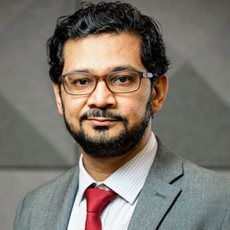
Kashif Rajpoot is a Professor of Medical AI and Deputy Head of the School of Computer Science at the University of Birmingham Dubai. He is actively engaged in research at the intersection of artificial intelligence and medicine, with a focus on medical image analysis, cardiac electrophysiology, computational pathology, and data science.
His educational background includes a PhD in Engineering Science from the University of Oxford (2009) and an MSc in Digital Signal & Image Processing from De Montfort University (2003).
His research interests span the development of AI-driven solutions for medical diagnostics and analysis. Key areas include automated interpretation of whole slide images in pathology, signal processing in cardiac electrophysiology, and biomarker discovery for neurological and metabolic disorders. His work combines computational modeling with experimental validation in biomedical contexts.
The recent publications reflect a strong trend toward integrating deep learning and signal processing in healthcare, particularly in digital pathology and cardiovascular imaging. His contributions include software tools like ElectroMap for high-throughput cardiac data analysis and methodological advances in NMR and histology image analysis.
- Unleashing the potential of AI for pathology: challenges and recommendations (2023)
- Validation of plasma protein glycation and oxidation biomarkers for autism (2023)
- Automated analysis of NMR spectra (2023)
- Handcrafted histological transformer for whole slide images (2023)
- High-resolution optical mapping in preclinical models (2022)
Kashif Rajpoot has published over 60 papers in top-tier journals and conferences. His scientific contributions include interdisciplinary collaborations in AI for healthcare, cardiac imaging, and biomarker research. While specific grant details are not listed, his publication record suggests active funding and research leadership. He has contributed to open-source software development and methodological innovation in medical AI.
He is involved in research teams focusing on medical AI, cardiac electrophysiology, and computational pathology, often collaborating with experts in pathology, cardiology, and biochemistry. His lab likely supports projects in AI-driven diagnostics, image analysis, and biomedical data science.
