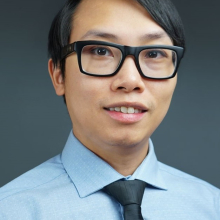
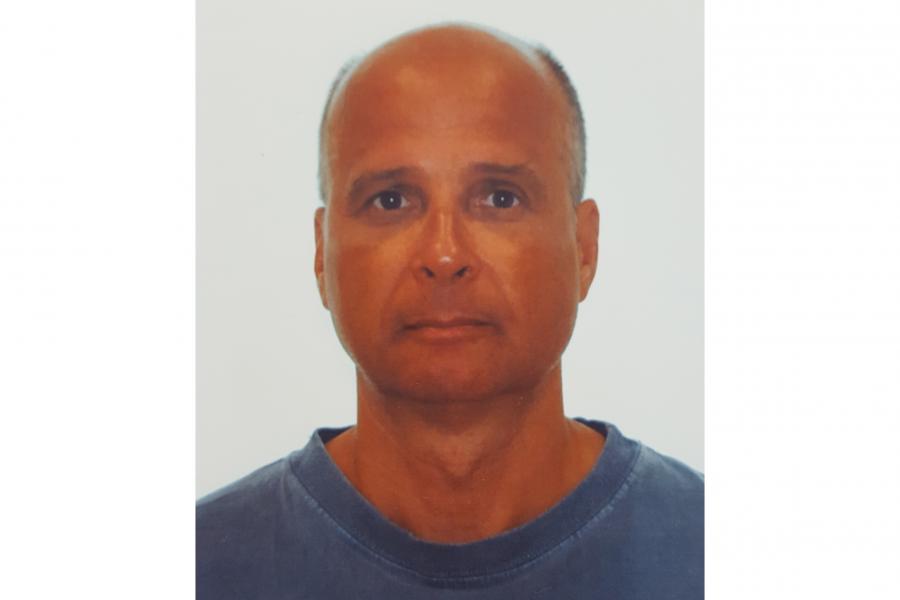
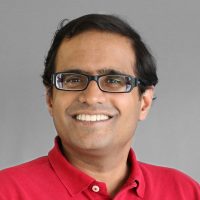
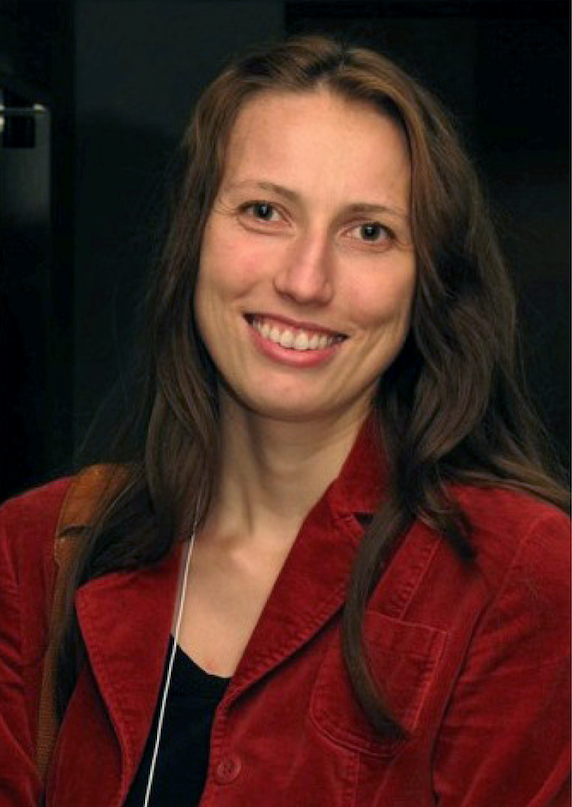
Dr. Steven H. H. Ding is an Assistant Professor at McGill University's School of Information Studies, specializing in cybersecurity, machine learning, and data mining. His research focuses on AI-driven solutions for malware detection, software vulnerability analysis, and reverse engineering. He holds a PhD from McGill University and has been supported by BlackBerry Cylance and DRDC. His work bridges theoretical advancements with practical applications in military systems and avionics cybersecurity. Dr. Ding earned his PhD in 2019 with notable awards including the FRQNT Doctoral Research Scholarship and McGill's Dean’s Graduate Award. His educational background includes degrees from McGill, Concordia University, and the University of Shanghai for Science and Technology. His research interests span cybersecurity domains such as zero-day malware identification, code obfuscation countermeasures, authorship verification for digital forensics, and AI applications in avionics anomaly detection. He actively contributes to open-source tools like the Kam1n0 MapReduce-based assembly clone search system. Recent work emphasizes adversarial machine learning for evasive malware generation, transformer-based anomaly detection in avionics, and automated SBOM generation for firmware analysis. His publications reflect a focus on real-world cybersecurity challenges in both civilian and defense sectors. Dr. Ding leads the L1NNA Lab and collaborates with industry partners on cutting-edge projects. His contributions include novel techniques for phishing detection leveraging large language models and innovative approaches to reverse engineering software composition in JavaScript applications.
Professor Guy-Vincent Jourdan is affiliated with the School of Electrical Engineering and Computer Science at the University of Ottawa. He holds a Ph.D. from Université de Rennes/INRIA (France, 1995) focusing on distributed systems analysis. Prior to academia, he served as CTO and CEO of Decision Academic Graphics, an Ottawa-based firm. His research interests span software security, cybersecurity (including cybercrime prevention), distributed systems modeling, formal methods, mobile applications, and rich internet applications. Specific technical emphases include phishing detection systems, blockchain fraud analysis, and adversarial machine learning. Professor Jourdan has pioneered tools like D-ForenRIA for reconstructing user interactions in Rich Internet Applications and contributed to cybersecurity frameworks such as HEART for log anomaly detection. His work integrates machine learning techniques with domain-specific challenges in network security and software verification. His publications (2023-2025) reflect advancements in AI-driven vulnerability analysis, blockchain fraud detection, and automated phishing detection systems. Notable projects include SV-TrustEval-C for source code vulnerability analysis and Intellitweet for social media threat detection. While no scientific awards are explicitly listed, his prolific publication record and industry-academia transition highlight sustained contributions to computer science and cybersecurity domains.
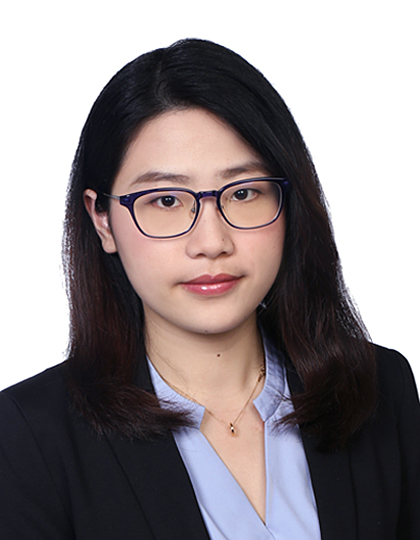
Yuan Tian is an Assistant Professor in the School of Computing at Queen's University, Faculty of Arts and Science. She holds a PhD in Information Systems from Singapore Management University (2017) and a B.Sc. in Computer Science from Zhejiang University (2012). Her research focuses on integrating heterogeneous data sources to enhance software engineering practices, including data mining, recommender systems, and social network analysis. Prior to Queen's, she was a data scientist at Living Analytics Research Centre (LARC), SMU. She has held visiting positions at Carnegie Mellon University, INRIA Paris, and SAIL Canada. Research Interests: Data Mining Software Engineering Social Network Analysis Information Retrieval Recommender Systems Computer Security Recent Research Trends: Her work emphasizes AI-driven solutions for software bug management, code translation, vulnerability detection, and developer behavior analysis. Notable contributions include leveraging LLMs for technical debt repayment and enhancing code vulnerability detection via Graph Neural Networks. Awards: SMU Presidential Doctoral Fellowship (2015-2016) Best Paper Award at SANER 2017 Grants & Advising: No formal advisees listed, but active in collaborative projects with industry and academic partners. Labs/Teams: Previously associated with SOAR Group at SMU and currently leads research in Queen's School of Computing.
Dr. Mahesh Tripunitara is a Professor in the Department of Electrical and Computer Engineering at the University of Waterloo, serving as Associate Chair for Undergraduate Studies. He holds a PhD (2005) and Master's (1995) in Computer Science from Purdue University, along with a BSc (1993) in Computer Science from Dalhousie University. His research focuses on information security, authorization mechanisms, cryptographic key management, and hardware security, with industry experience at Motorola's R&D labs and Silicon Valley. His work spans theoretical advancements like access control policy analysis and practical applications such as secure payments systems and IoT device reliability. Notable awards include the Best Student Paper at Usenix Security 2013 and Best Paper at ACM SACMAT 2013. He actively serves on program committees for major security conferences including CCS, CODASPY, and SACMAT. Recent publications highlight innovations in cellular security (SUCI-Catchers defense), role-mining optimization, and blockchain smart contract auditing. Teaching includes advanced algorithm design courses (ECE 406/606) and digital computation (BME 121). His research emphasizes balancing security rigor with usability in authorization systems and hardware protection mechanisms.
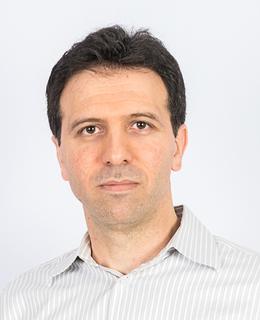
Majid Ghaderi is a Professor in the Department of Computer Science at the University of Calgary, Faculty of Science. His expertise spans network algorithms, secure communication, and machine learning applications in network control. He holds a Ph.D. in Computer Science from the University of Waterloo (2006), and M.Sc. and B.Sc. degrees in Software Engineering from Sharif University of Technology (2001 and 1999). Education: Ph.D. Computer Science, University of Waterloo, 2006 M.Sc. Software Engineering, Sharif University of Technology, 2001 B.Sc. Software Engineering, Sharif University of Technology, 1999 Research Interests: Dr. Ghaderi focuses on optimizing network algorithms, securing communication in distributed systems, and leveraging machine learning for network control. His work addresses challenges such as secure wireless protocols, SDN-based network management, and efficient resource allocation in data centers. He explores proactive traffic scheduling and anomaly detection in critical infrastructures like industrial control systems and vehicular networks. Publications Trends: His recent work emphasizes covert communication in heterogeneous networks, adaptive federated learning in edge environments, and low-overhead diagnostic systems for cloud networks. He also investigates cybersecurity defenses against hardware vulnerabilities and dynamic threat landscapes. Awards: Best in-session Presentation Award, IEEE INFOCOM 2018 Municipal Excellence Award, Government of Alberta 2018 Faculty of Science Excellence in Teaching Award 2012 Advising & Grants: While no specific advisees are listed, his research has been supported by grants focusing on network security, edge computing, and IoT applications. He teaches CPSC 441 (Computer Networks) and maintains an active lab focused on network systems and cybersecurity. Labs & Teams: His research group collaborates on projects involving software-defined networks, vehicular communication, and industrial IoT security. The team develops open-source tools for network monitoring and anomaly detection.
Dr. Ken Ferens is an Assistant Professor in the Department of Electrical and Computer Engineering at the Price Faculty of Engineering, University of Manitoba. He serves as the Computer Engineering Champion in the Centre for Engineering Professional Practice and Engineering Education and directs the Applied Cognitive Intelligence (ACI) Research Group. Dr. Ferens is a senior member of the Institute of Electrical & Electronics Engineers (IEEE), Chair of the EduManCom Chapter of the IEEE, Vice-Chair of the Computer and Computational Intelligence Chapter of the IEEE, and Chair of the Industry, Teaching Assistants, and Student Forums for Engineering Curriculum Review and Improvement. Ph.D. (Computer Engineering), University of Manitoba, 1996 M.Sc. (Computer Engineering), University of Manitoba, 1991 B.Sc. (Electrical Engineering), University of Manitoba, 1989 Dr. Ferens has over 33 years of research experience in computational intelligence, focusing on cognitive machine learning, artificial intelligence, cognitive computational intelligence, chaos theory applications, agent-based models, and various optimization algorithms including simulated annealing, genetic algorithms, artificial neural networks, and particle swarm optimization. His research applies these techniques to develop software and hardware intrusion detection systems for cybersecurity applications. He teaches graduate-level courses on Computer Network Security and Applied Computational Intelligence, providing students with theoretical background and hands-on experience in state-of-the-art security methods. Analysis of Dr. Ferens' recent publications reveals a strong focus on applying cognitive and chaotic computational techniques to cybersecurity challenges, particularly malware detection and network intrusion detection. His work increasingly integrates complexity theory, fractal analysis, and hybrid optimization approaches to enhance security systems' effectiveness. There's a clear progression toward more sophisticated machine learning architectures applied to increasingly complex security scenarios, with growing emphasis on real-world IoT and network security applications. Best Paper Award at IEEE International Conference on Cognitive Informatics and Cognitive Computing (ICCI*CC 2022) Best Paper Award at IEEE International Conference on Cognitive Informatics and Cognitive Computing (ICCI*CC 2015) Best Journal Paper Award for 2013 (Journal of ICT Research and Applications) Best Poster Award at 12th International Conference on e-Health Networking, Application & Services (2010) Best Paper Award at IASTED International Conference on Computer, Electronics, Control, and Communication (1991) Dr. Ferens collaborates with national and international industry partners including the Department of Advanced Information Management, Content Technology Canadian Tire Corporation (CTC), and Magellan Aerospace. His research group has received funding supporting the Cyber-security Research Program, developing practical applications of computational intelligence for security systems. He has supervised numerous graduate students in the Electrical and Computer Engineering department, focusing on research at the intersection of machine learning and cybersecurity. Dr. Ferens leads the Applied Cognitive Intelligence (ACI) Research Group within the Department of Electrical and Computer Engineering, which focuses on applying cognitive, chaotic, and computationally intelligent algorithms to build intrusion detection systems. The group collaborates with industry partners to develop practical security solutions while providing students with hands-on research experience in cutting-edge security technologies. Their work spans both theoretical algorithm development and practical hardware implementation for real-world security applications.
Douglas Stebila is an Associate Professor in the Department of Combinatorics and Optimization at the University of Waterloo, Faculty of Mathematics. His research focuses on cryptographic protocols, with an emphasis on post-quantum cryptography, TLS protocol security, and key exchange mechanisms. He has contributed to the design and analysis of cryptographic systems resilient to quantum computing threats, including work on hybrid key exchange methods and post-quantum TLS implementations. Stebila is involved in standards projects such as the Open Quantum Safe initiative, aiming to transition existing infrastructure to quantum-resistant algorithms. His recent work addresses security models for cryptographic protocols, including formal verification of key establishment schemes and analysis of real-world protocols like Signal and TLS. His research spans theoretical cryptography, applied protocol analysis, and implementation security. Key contributions include studies on obfuscated key exchange, verifiable decapsulation of post-quantum KEMs, and optimization of TLS handshake efficiency (e.g., TurboTLS). He also explores challenges in cryptographic protocol design, such as preventing double authentication and ensuring resistance against side-channel attacks. His work frequently bridges academic research with practical applications, emphasizing the transition of cryptographic innovations into real-world systems. Stebila collaborates with industry and academic partners on projects like the Open Quantum Safe initiative, which develops libraries for post-quantum cryptography integration. His publications often address security analyses of emerging protocols and their vulnerability to both classical and quantum adversaries. He has co-authored conference proceedings for major venues like CRYPTO and SAC, and contributed to standards documentation for protocols such as TLS and SSH.
Steven Ding is an Adjunct Assistant Professor and Lab Director at the School of Computing, Queen's University , leading the L1NNA Artificial Intelligence and Security Lab. His research focuses on the intersection of machine learning, data mining, and cybersecurity with applications in malware analysis, reverse engineering, and authorship attribution. Education: PhD in Information Studies (McGill University, 2019), M.A.Sc. in Information Systems Security (Concordia University), B.S. in Information Systems (University of the Fraser Valley), B.S. in Computer Science (University of Shanghai for Science & Technology) Research Interests: His work integrates artificial intelligence and security systems to develop solutions for malware phenotype decomposition, neural malware analysis, binary provenance, and explainable AI in cybersecurity. He explores data analytics for assembly code evolution and authorship analysis using machine learning and differential privacy . Publication Trends: His peer-reviewed work (IEEE Transactions, ACM conferences) emphasizes binary code analysis , neural networks , and cybersecurity , with a focus on static malware characterization , authorship attribution , and cross-architecture code similarity . Scientific Awards: FRQNT Doctoral Research Scholarship (2017-2018) Dean’s Graduate Award at McGill University (4 years, 2014-2018) NSERC Alliance Grant (2021-2024) Best Poster Award, SERENE-RISC Research Showcase (2016) Second Prize, Hex-Rays Software Plug-in Contest (2015) ACM SIGKDD Student Travel Award (2016) Advising & Grants: Dr. Ding has supervised numerous Ph.D. and Master’s students (e.g., Li Tao Li, Mark M. Adams) and secured significant funding from BlackBerry Cylance , DRDC , and NSERC , including a 1.24M CAD NSERC Alliance Grant (50%) and 1.5M CAD DRDC Contract (50%). Labs & Teams: The L1NNA lab collaborates with DRDC Canada, NVIDIA, and IEEE Security & Privacy, focusing on AI-driven security tools (e.g., Kam1n0 assembly clone search engine) and neural malware analysis . The lab is located in Goodwin Hall, Queen's University, and emphasizes practical software development and industrial partnerships .
Dr. Arash Habibi Lashkari is an Associate Professor and Canada Research Chair in Cybersecurity at York University's School of Information Technology. He holds a PhD from the University of Technology Malaysia and completed a Post-Doc at the University of New Brunswick. With over 25 years of teaching experience, he specializes in cybersecurity risk management, malware analysis, and threat hunting. He pioneered Canada’s first cybersecurity Capture the Flag (CTF) competition for post-secondary students and has authored 10 books and over 110 academic articles. Research Interests: Cybersecurity, Network Security, Threat Hunting, Malware Analysis, Cybersecurity Risk Management, and Blockchain Security. He leads the Behaciour-Centric Cybersecurity Center (BCCC), focusing on vulnerability detection technologies and cybersecurity dataset generation. Awards: Mitacs 150 Top Researchers (2017), University of New Brunswick Teaching Innovation Award (2020), Gold Medal at 2020 Canadian Online Publishing Awards, and multiple international security competition awards. His work has been featured in CBC, CIC, and global cybersecurity conferences. Key Projects: Development of intrusion detection datasets (e.g., CIRA-CIC-DoHBrw-2020), malware analysis frameworks, and AI-driven cybersecurity tools. He actively collaborates with organizations like Aviva and NICT on cybersecurity resilience strategies. Teaching: Offers courses in Digital Forensics, Network Security, and Cybersecurity Management. His 'Think-Que-Cussion' teaching methodology emphasizes interactive learning.
Anil Somayaji is an Associate Professor in the School of Computer Science at Carleton University, serving as Associate Director of the Carleton Internet Security Lab (CISL). He holds a Ph.D. from the University of New Mexico (2002) and a B.S. in Mathematics from MIT. His research integrates biological principles with computer security, focusing on software diversity, Linux technologies like eBPF, and adaptive defense mechanisms inspired by the human immune system. Teaching responsibilities include courses such as Fundamentals of Web Applications (COMP 2406), Operating Systems (COMP 3000), and Distributed Operating Systems (COMP 4000/5102). He also leads graduate courses on Operating System/Web Security and Biological Approaches to Computer Security. Current advisees include Lavesh Kamalesh (MHCI), Savannah Sidle (MHCI), and John Shortt (PhD, co-supervised). Research interests span computer security, operating systems, intrusion detection, complex adaptive systems, and artificial life. Notable projects include ebpH (a Linux security tool) and contributions to program committees for the New Security Paradigms Workshop. His work emphasizes practical applications of theoretical concepts, such as using eBPF for runtime process confinement and developing context-aware authentication systems. He collaborates with the Carleton Cyber Security Lab (CCSL) and maintains active engagement in interdisciplinary cybersecurity initiatives. His lab focuses on mitigating vulnerabilities through diversity-based approaches and advancing secure system design principles.
Werner Dietl is an Associate Professor in the Department of Electrical and Computer Engineering at the University of Waterloo. His work focuses on programming languages, static analysis, software security, and formal verification techniques. He has contributed to type system design, low-power computing, and approximate data types through projects like EnerJ. His research also addresses challenges in compiler design, cryptographic protocol validation, and runtime enforcement mechanisms. Key research areas include: Type systems for imperative and domain-specific languages Static analysis of implicit control flow (e.g., Java reflection, Android intents) Approximate computing and energy-efficient computation Formal verification of security properties Publications span topics from unit measurement type inference to ownership-based security models, reflecting a focus on practical formal methods. His work emphasizes scalability and precision in type systems while addressing real-world software engineering challenges.
Natalia Stakhanova is an Associate Professor and Director of The CyberLab at the University of Saskatchewan, Canada. She is a leading researcher in cybersecurity, with a focus on malware analysis, software obfuscation, mobile security, IoT security, and e-Health security. Her work integrates practical solutions to real-world security challenges, leveraging advanced techniques in reverse engineering, blockchain forensics, and AI-driven security tools. Her research has been recognized with prestigious awards, including the Best Paper Awards at FPS 2023 and EUSPN 2023, and she was named one of Canada’s Top 20 Women in Cybersecurity. She actively contributes to the cybersecurity community through editorial roles (e.g., IEEE TDSC) and conference leadership (e.g., Program Chair of SAD20 and SSPREW19). Stakhanova’s recent work explores AI-generated code security, adversarial analysis of software tools, and blockchain-based healthcare data integrity. Her projects often involve collaboration with industry partners, emphasizing practical impact alongside academic rigor.
Margo Seltzer is a Professor and Co-Head of the Department of Computer Science at the University of British Columbia (UBC). She holds the Canada 150 Research Chair in Computer Systems and the Cheriton Family Chair in Computer Science. Her research focuses on computer systems, including operating systems, databases, data provenance, graph analytics, and interpretable machine learning. She is also involved in educational initiatives and has held leadership roles in academia, including serving as Dean of Computer Science and Engineering at Harvard University. Education: PhD in Computer Science from UC Berkeley (1992), AB in Applied Mathematics from Harvard (1983). Professional roles include Chief Technology Officer at Sleepycat Software and architect at Oracle Corporation. She has received prestigious awards such as the ACM Athena Lecturer Award, Killam Teaching Prize, and membership in the National Academy of Engineering. Research Interests: Systems, databases, transaction processing, provenance capture, healthcare informatics, and cybersecurity. Her work emphasizes practical applications of systems research, including optimizing storage, improving operating system performance, and enhancing data security. She has contributed to open-source projects like Berkeley DB and CamFlow provenance system. Key Contributions: Developed systems for provenance-aware storage, sparse decision trees (e.g., GOSDT), and intrusion detection (FRAPpucino). She advocates for reproducible research through tools like Encapsulator and Rclean. Her teaching and mentorship have influenced countless students and junior faculty in computer science. Awards: ACM Athena Lecturer (2023), SIGMOD Systems Award (2020), USENIX Lifetime Achievement Award (2019), and election to the American Academy of Arts and Sciences (2021). Her work bridges theoretical computer science with real-world applications, emphasizing both technical innovation and societal impact.
Wenbo He is a Professor in the Department of Computing and Software at McMaster University 's Faculty of Engineering. His research bridges Machine Learning , Privacy-Preserving Technologies , and Networked Systems , with a focus on secure federated learning , data anonymization , and wireless network optimization . Contact: hew11@mcmaster.ca Research Interests include: Machine Learning : Robustness under label noise, ensemble models, and 2D/3D classification. Privacy : Differentially private feature operations, encrypted classification, and location privacy. Networking : Software Defined Networking (SDN), wireless ad hoc networks, and crowdsensing. Recent Publications span IEEE Transactions on Mobile Computing , IEEE Infocom , and NeurIPS , with themes in: Security : Data poisoning, web shell obfuscation, and correlation attacks. AI/ML : Noise-robust models, face anonymization, and video action recognition. Systems : RFID optimization, cloud storage, and energy-efficient data centers. Teaching highlights include courses like Real-Time Systems , Computer Networks and Security , and Big Data Systems since 2017.
Nomair Naeem is a Lecturer and CS Advisor at the David R. Cheriton School of Computer Science, University of Waterloo. He holds a Ph.D. from the University of Waterloo where he developed static program analysis techniques for object-oriented languages, focusing on reducing runtime overhead of safety verification. His research interests include: Static program analysis and verification Compiler design and optimization Java decompilation and obfuscation Algorithmic improvements for program analysis His publications focus primarily on program analysis techniques, particularly efficient alias analysis and verification methods for AspectJ constructs. Recent teaching includes courses on compiler design, data structures, and software development principles.