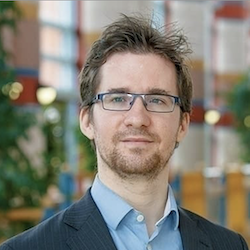
Matthew Louis Mauriello is an Assistant Professor in the Department of Computer and Information Sciences at the University of Delaware , where he directs the Sensify Lab . He holds a PhD in Computer Science from the University of Maryland (2018) and completed postdoctoral work at Stanford University (School of Medicine, 2020; School of Public Policy & Environmental Engineering Department, 2019). Research interests span Human-Computer Interaction (HCI), Ubiquitous Computing, and User-Centered Design with applications in: Sustainability Human-Building Interaction Wearable Technology Personal Informatics Educational Game Design Mental Health Interventions Recent publications highlight trends in stress monitoring (skin-like biosensors, workplace wellbeing), energy auditing (thermography systems), and educational technology (block-based programming tools for teachers). His work appears in ACM CHI, ACM Human-Computer Interaction, and Building and Environment. Scientific awards include: Best Paper Honorable Mention, CHI 2016 Best Paper Honorable Mention, CHI 2015 Best of WebSci'18 Teaching at University of Delaware encompasses courses like Educational Game Design Operating Systems Advanced Web Technologies Computing for Social Good with a focus on project-based learning and systems thinking.
Andrea Arpaci-Dusseau is the Susan Beth Horwitz WARF Professor of Computer Sciences and Catherine A. Erickson Professor in the School of Computer, Data & Information Sciences at the University of Wisconsin-Madison. She has been a professor at UW-Madison since January 2000 and currently serves as Graduate Advising Chair for the Computer Sciences Department. Her research focuses on computer systems with primary emphasis on file and storage systems, but also making significant contributions in distributed systems, virtualization, and scheduling. According to csrankings.org, she has published the fourth-most papers in premier systems conferences (SOSP and OSDI) and the most at the top file and storage conference (FAST). Professor Arpaci-Dusseau's recent publications demonstrate continued leadership in storage systems research, with increasing focus on cloud architectures, persistent memory technologies, and system reliability. Her work bridges theoretical foundations with practical implementations, consistently addressing real-world challenges in modern computing environments. ACM SIGOPS Mark Weiser Award 2018 (highest honor in systems field) UW-Madison Van Hise Outreach Teaching Award 2017 Multiple Best Paper awards at FAST, SOSP, OSDI, and EuroSys conferences Carolyn Rosner Award for Excellence in Teaching (2010, 2017) Co-chaired major conferences including USENIX ATC '04, FAST '07, OSDI'18, and SOSP'24 Professor Arpaci-Dusseau has co-advised 28 Ph.D. students and is deeply committed to educational outreach through the CaTaPuLT project, which connects UW-Madison students with K-12 schools to teach computational thinking using Scratch. This initiative has reached hundreds of students across Madison and earned her significant recognition for teaching excellence. She leads the Arpaci-Dusseau Systems Lab (ADSL) and is involved with the Wisconsin Institute on Software-defined Datacenters in Madison (WISDoM), where her research group continues to advance state-of-the-art solutions in computer systems.
Dr. Chengmo Yang is a Professor in the Department of Electrical and Computer Engineering at the University of Delaware, with a joint appointment. She received her PhD and MSc in Computer Science from the University of California, San Diego, and a BSc in Microelectronics from Peking University, China. PhD, University of California, San Diego MSc, University of California, San Diego BSc, Peking University, China Her research focuses on enhancing security, reliability, non-volatility, and energy efficiency in embedded systems, cyber-physical systems (CPS), and Internet-of-Things (IoT). She leads the Computer Architecture, Reliability, and Security (CARES) group and has authored over 70 peer-reviewed publications. Recent publications emphasize neural network accelerators, non-volatile memory (NVM) optimization, and security frameworks for embedded systems. Her work explores fault tolerance, wear leveling, and side-channel attack mitigation in NVM-based FPGAs, STT-RAM, and SSDs. National Science Foundation Career Award (2013) University of Delaware Mid-Career Faculty Excellence in Scholarship Award (2020) Best paper award at ICESS (2019) Three best paper nominations at DAC, DATE, and GLSVLSI (2019) Dr. Yang serves as Associate Editor for IEEE TCAD and ACM TODAES. She is the Diversity & Inclusion Representative for IEEE CEDA and has organized numerous conferences including Technical Program Chair for CODES-ISSS 2022. Her lab has hosted current and former students like Fanruo Meng (PhD candidate), Fateme Hosseini (Qualcomm), and Patrick Cronin (Intel), focusing on graduate-level research in hardware security and reliability.
Cicek Cavdar is an Associate Professor at the School of Electrical Engineering and Computer Science (EECS) at KTH Royal Institute of Technology , Sweden. She leads the Intelligent Network Systems research group and specializes in Telecommunication Networks , with a focus on Beyond 5G/6G Mobile Networks , Energy Efficiency , and AI-Assisted Network Management . PhD in Computer Science (2009) from University of California, Davis and Istanbul Technical University Her research spans Cell-Free Massive MIMO , Reconfigurable Intelligent Surfaces (RIS) , UAV Communication Systems , and Green Network Technologies . She actively contributes to 6G Network Architecture and Non-Terrestrial Networks , including satellite and aerial systems. Recent publications highlight AI-driven network optimization for handover management, energy-aware resource allocation , and multi-agent reinforcement learning in complex communication environments. She teaches advanced courses in Communication Systems , Machine Learning , and Software Engineering at KTH.
Tanzeem Choudhury is a Professor at the Jacobs Technion-Cornell Institute at Cornell Tech, specializing in Information Sciences. She co-founded HealthRhythms Inc. and directs the People-Aware Computing lab, focusing on machine learning for human activity and social network analysis. Her work pioneered the 'Reality Mining' field, leveraging mobile sensors to model social interactions. Choudhury holds a Ph.D. from MIT's Media Lab and B.S. in Electrical Engineering from the University of Rochester. Her research spans wearable tech, mental health interventions, and ubiquitous computing. Notable projects include affective touch wearables for anxiety reduction, stress detection systems (e.g., StressSense), and the BeWell app for well-being monitoring. Choudhury has been recognized as an ACM Fellow and SIGCHI Academy member, with impactful contributions to healthcare technology and sensor-based behavioral analysis. Current lab initiatives include developing closed-loop interventions for mental health, equity-driven sensing systems, and exploring AI integration in psychotherapy. She advises PhD students on topics like digital biomarkers, burnout detection in healthcare workers, and smartphone-based mental health assessment. Education: Ph.D. in Media Arts & Sciences (MIT), M.S. (MIT Media Lab), B.S. in Electrical Engineering (University of Rochester) Lab Team: Includes PhD candidates (Dan Adler, Yiran Zhao) and researchers focusing on health AI, wearable devices, and clinical applications. Major Awards: ACM Fellowship (2020), SIGCHI Academy (2018), Best Paper Awards at Ubicomp and MobileHCI conferences. Key Projects: OptoBeat (skin-tone calibrated blood oxygen sensor), EmotionCheck (anxiety intervention), and Affective Touch devices.
Maja J Matarić is the Chan Soon-Shiong Chaired and Distinguished Professor of Computer Science at the University of Southern California's Viterbi School of Engineering, with courtesy appointments in Neuroscience and Pediatrics. She serves as founding director of the USC Robotics and Autonomous Systems Center, co-director of the USC Robotics Research Lab, and Principal Scientist at Google DeepMind. Previously, she held leadership roles as USC's interim Vice President of Research (2020-2021) and Vice Dean for Research (2006-2019). Her educational background includes: PhD in Computer Science and Artificial Intelligence from MIT (1994) MS in Computer Science from MIT (1990) BS in Computer Science from University of Kansas (1987) Matarić pioneers Socially Assistive Robotics (SAR) , a field her lab named, focusing on human-robot interaction that provides assistance through social rather than physical support. Her research targets critical health and wellness challenges including post-stroke rehabilitation, autism spectrum disorder therapy, cognitive exercises for Alzheimer's patients, ADHD academic support, and mental health interventions. She develops systems modeling user engagement, personality, and motivation, with extensive real-world deployments in schools, rehabilitation centers, and homes. Analysis of her recent publications reveals dominant themes in cognitive health robotics (2025 CHI paper on LLM-powered elder care), pediatric assistive technology (2025 IDC speech therapy review), and adaptive preference modeling (2025 HRI contrastive learning work). Her research consistently bridges machine learning with human-centered design for vulnerable populations. Major scientific recognition includes: ACM Athena Lecturer Award (2024) ACM Eugene L. Lawler Humanitarian Award (2024) ACM Fellow (2020) Presidential Mentoring Award (2011) Multiple society fellowships (AAAS, IEEE, AAAI) As a dedicated mentor, Matarić has championed underrepresented groups through CRA-W, placing numerous women in faculty positions. She leads USC Viterbi's K-12 STEM Outreach Program serving low-income Los Angeles schools and authored The Robotics Prime for student education. Her research has secured significant funding enabling real-world technology transfer, with documented impact in rehabilitation centers and homes through deployable SAR systems. Her Robotics Research Lab at USC drives innovation in embodied AI, with current projects spanning LLM-integrated elder care robots, ADHD academic companions, and autism therapy systems. The lab emphasizes co-design with end-users and rigorous real-world validation across diverse populations.
Rachit Agarwal is an Associate Professor in the Department of Computer Science at Cornell University, with research focusing on systems, networking, and theoretical problems arising in practical systems. He leads a research group working on resource disaggregation, host architecture, secure cloud storage, and datacenter design. PhD in Computer Science, Cornell University Undergraduate, IIT Kanpur His research spans three major directions: Resource Disaggregation (with $3M NSF and Google awards), Host Architecture (exploring terabit interconnects), and PANCAKE (secure oblivious cloud storage with $1M NSF award). He also contributed to foundational work in Near-optimal Datacenter Design and Data Plane Monitoring . Awards include the Sloan Fellowship, NSF CAREER, IRTF Applied Networking Prize, and multiple best paper awards. His recent publications focus on host network architecture, congestion control, oblivious data access mechanisms, and secure cloud storage systems. He has advised multiple Ph.D. and postdoctoral researchers who now hold faculty positions at leading institutions. Sloan Research Fellowship NSF CAREER award Kavli Fellowship IRTF Applied Networking Research Prize SIGCOMM Best Student Paper Award Usenix Security Distinguished Paper Award Tau Beta Pi Professor of the Year 2025 Rachit has advised numerous students including current Cornell advisees like Midhul Vuppalapati, Shreyas Kharbanda, and Omar Eqbal. Former advisees include Saksham Agarwal (UIUC), Qizhe Cai (UVA), and Mina Tahmasbi Arashloo (University of Waterloo). His research is supported by large NSF grants and industry awards, with deployments in real-world systems and open-source contributions.
Shreyas Sen is the Elmore Associate Professor of Electrical and Computer Engineering at Purdue University, jointly affiliated with the School of Biomedical Engineering. He directs the Center for Internet of Bodies (C-IoB) and leads the SPARC Lab, focusing on circuits/systems for secure, energy-efficient body-centric communication and biomedical applications. Education: B.E. (Jadavpur University, 2006), M.S. & Ph.D. (Georgia Tech, 2009-2011). His research spans Human Body Communication (HBC), hardware security, IoT/IoB systems, and low-power sensing. Notable innovations include Electro-Quasistatic HBC (EQS-HBC) technology, which enables covert body-wire communication with 100x lower energy than conventional methods. Research Themes: Secure communication for medical wearables Physical layer security in IoT Ultra-low-power biosensors Side-channel attack mitigation in cryptographic ICs Publications: Over 200 papers in top venues (ISSCC, DAC, CICC, HOST) with focus on HBC systems, electromagnetic security, and biomedical circuits. Recent work explores EQS-HBC privacy properties (Nature Scientific Reports, 2019) and 350x current-domain signature attenuation for AES security (ISSCC 2020). Awards: NSF CAREER Award (2020) AFOSR Young Investigator (2016) MIT TR35 India (2018) 9 Best Paper Awards Intel Outstanding Researcher (2020) He advises over 20 students and leads industry collaborations through Ixana Inc. (founded 2020), commercializing EQS-HBC technology. Current efforts include EQS-based authentication systems and radiation dosimetry wearables.
Tim Althoff is an Associate Professor at the Paul G. Allen School of Computer Science & Engineering, University of Washington, specializing in Artificial Intelligence and Human-Centered Computing. His research focuses on behavioral data science, combining Data Science Natural Language Processing Social Computing Human-Centered AI Ethics & Fairness to extract insights about health and well-being. Recent publications highlight advancements in: Mental health support through AI Wearable sensor health monitoring Online community analysis Reproducibility in data science Public health interventions with notable papers in ACL, Nature Machine Intelligence, and NeurIPS. Scientific recognition includes: ACL 2023 Outstanding Paper Award WWW 2021 Best Paper Award Double ICWSM 2021 Best Paper Awards SIGKDD Dissertation Award 2019 Fulbright Scholarship German National Merit Foundation Actively mentoring postdoctoral researchers and seeking PhD students in areas like neural representation learning, NLP applications to psychology, and mobile health technologies through his Behavioral Data Science Group .
Richard M. Murray is the Thomas E. and Doris Everhart Professor of Control and Dynamical Systems and Bioengineering at the California Institute of Technology (Caltech). He holds a B.S. from Caltech (1985), M.S. from UC Berkeley (1988), and Ph.D. from UC Berkeley (1990). He has served in academic roles from Assistant Professor (1991–1997) to his current endowed professorship. He chaired the Engineering and Applied Science division (2000–2005) and Biology and Biological Engineering (2020–2024). His research focuses on feedback control in biological and autonomous systems, synthetic cells, and networked control systems. Collaborators include experts in robotics, synthetic biology, and systems biology. Key awards include the IEEE Control Systems Award and election to the National Academy of Engineering. His educational contributions span courses on control systems, robotics, and bioengineering. Current research projects include the Developer Cell initiative (Sloan Foundation), layered testing for autonomous systems (AFOSR), and microbiome-based environmental solutions (CHARMME, ARO). He advises numerous graduate students and postdocs, with notable alumni in academia and industry. Labs include facilities in Keck and Steele laboratories at Caltech. His work bridges control theory, synthetic biology, and autonomous systems to address societal challenges like environmental monitoring and safe autonomy.
Asaf Cidon is an Associate Professor at Columbia University, jointly affiliated with the Department of Electrical Engineering and Computer Science, and a member of the Data Science Institute. His research focuses on software systems , storage , large-scale machine learning , and cybersecurity . Stanford University - PhD in Electrical Engineering Stanford University - MS in Electrical Engineering Technion - BS in Computer and Software Engineering His work in distributed storage systems has been commercialized by companies such as Facebook, Tibco, and Rubrik. He has led projects like Sentinel and Forensics during his industry career. Recent publications highlight advancements in software-based radiation protection (ASPLOS'26), PCIe pooling with CXL (HotOS'25), and AI phishing detection (IMC'25). These reflect his expertise in system architecture , security , and networking . Scientific recognitions include best paper awards at OSDI, Usenix Security, CIDR, and ATC, along with NSF CAREER and ARO Young Investigator Awards . His papers Cookie Monster (SOSP'24) and Chablis (CIDR'24) received notable accolades. He has mentored numerous PhD and Master's students , including Edward Guo, Harry Wang, and Teng Jiang, many of whom now hold roles at Google, Meta, Amazon, and academic institutions. His lab at Columbia is actively recruiting CS and EE PhD students. Prior to Columbia, he founded and led the startup Sookasa to acquisition and served as Senior Vice President of Email Protection at Barracuda Networks , managing a $200M business with 100 engineers.
Dr. Jimeng Sun is a Health Innovation Professor at the Siebel School of Computing and Data Science and Carle Illinois College of Medicine at the University of Illinois Urbana-Champaign. Co-founder of Keiji AI , he leads groundbreaking research at the intersection of artificial intelligence and healthcare, actively deploying clinical AI systems and developing frameworks like PyHealth and Therapeutics Data Commons . His research spans four major areas: Clinical AI Systems : Developing interpretable models (e.g., RETAIN) for patient similarity, temporal event prediction, medication recommendation, and clinical outcome forecasting Drug Discovery : Creating molecular optimization frameworks, drug-target interaction models, and AI-driven platforms Clinical Trials : Pioneering patient-trial matching, outcome prediction, and optimization frameworks using deep learning and graph neural networks Biosignal Analysis : Advancing sleep staging, seizure classification, and automated EEG/Cardiac monitoring systems With over 500 top-tier publications (including in Nature , NEJM AI , and leading AI conferences) and an h-index of 99, his work has been recognized with the Top 100 AI Leaders in Drug Discovery and Advanced Healthcare award. He maintains active collaborations with institutions like Massachusetts General Hospital , Medidata Solutions , and OSF Healthcare . His recent publications reveal a strong focus on: Reinforcement learning applications in medical data analysis Large language model adaptation for clinical tasks Knowledge graph integration with AI systems Synthetic data generation for healthcare Multi-modal learning in clinical contexts Explainable AI for medical applications Dr. Sun's lab ( Sunlab ) emphasizes practical impact over theoretical work, actively collaborating with hospitals and healthtech companies. He welcomes contributions from clinicians, researchers, and industry partners through initiatives like his AI for Health webinar series .
Daniel W. Bliss is a Professor in the School of Electrical, Computer and Energy Engineering at Arizona State University and Director of ASU's Center for Wireless Information Systems and Computational Architectures (WISCA). With over $50 million in research funding as principal investigator from organizations including DARPA, ONR, Google, and Airbus, his work bridges theoretical foundations with practical implementations across multiple domains of wireless systems. Dr. Bliss received his educational foundation with a B.S.E.E. from Arizona State University (1989), followed by M.S. and Ph.D. degrees in Physics from the University of California-San Diego (1995, 1997). His academic journey includes significant industry experience at General Dynamics (1989-1993) and MIT Lincoln Laboratory (1997-2012) before joining ASU. His research program focuses on advanced wireless systems spanning radar, communications, precision positioning, computational architectures, and medical monitoring applications. Bliss employs information theory, estimation theory, and signal processing to develop novel system concepts with disruptive capabilities. Current research emphasizes RF convergence, integrated sensing and communications, and anticipatory medical analytics using wireless technologies, with particular focus on extracting physiological data from radar signals. Analysis of recent publications reveals a strong trend toward integrated sensing and communications systems, particularly utilizing mmWave and radar technologies for medical monitoring applications. His work increasingly bridges traditional communications and radar domains while expanding into physiological monitoring, demonstrating a clear trajectory toward convergence of wireless technologies for healthcare applications and remote vital sign detection. Dr. Bliss has received significant recognition for his contributions: Fellow of the IEEE (2015) 2021 IEEE Warren D. White Award for Excellence in Radar Engineering 2016-2017 Top 5% Teaching Award at ASU 2017 ASU Fulton Engineering Exemplar Faculty As a dedicated mentor, Dr. Bliss has supervised numerous graduate students through successful dissertation and thesis defenses across both PhD and Master's programs. His research portfolio includes substantial funding from diverse sources with over $50 million secured as principal investigator. Current projects include the $17M DARPA DASH project focused on advanced software-reconfigurable heterogeneous SoCs for next-generation RF systems, and multiple initiatives in contactless vital sign monitoring using radar technologies. Dr. Bliss leads the BLISS Lab and serves as director of WISCA, fostering interdisciplinary research in wireless systems. His team includes researchers working on distributed coherent systems, MIMO radar, RF convergence, and medical monitoring applications, with recent successes including the Making Waves team that tied for first place in the Air Force Spark Tank challenge. He has founded two startup companies: DASH Tech Integrated Circuits Company and the Big Little Sensor Company, focusing on high-performance embedded processing and small-scale radar physiological monitoring, respectively.
Ajmal Mian is a Professor of Computer Science at the University of Western Australia (UWA), affiliated with the School of Physics, Maths and Computing. He holds an Australian Research Council Future Fellowship (2022) and leads research in Artificial Intelligence, Computer Vision, and Machine Learning. His work focuses on 3D computer vision, adversarial AI defense, and explainable AI. His research interests include 3D point cloud analysis, face recognition, human action recognition, and remote sensing. He has published over 300 papers and secured major grants from ARC, NHMRC, and DARPA, totaling millions in funding. He has supervised 29 PhD students and mentored 12 postdoctoral researchers. Key projects include 3D diffusion models for scene generation, robust 3D vision systems, and defense against AI deception attacks. He serves as a fellow of IAPR, an ACM Distinguished Speaker, and has editorial roles at IEEE Transactions on Neural Networks and Pattern Recognition. Research Awards: HBF Mid-Career Scientist of the Year, West Australian Early Career Scientist of the Year, IAPR Best Scientific Paper Award. Grants: ARC Discovery Projects, National Intelligence & Security Discovery grants, DARPA grants for AI security. His teaching spans computer vision, machine learning, and programming courses. Collaborations include defense, medical, and agricultural applications.
David Stillwell serves as Professor of Computational Social Science at Cambridge Judge Business School and Academic Director of The Psychometrics Centre, University of Cambridge. His research leverages big data to understand human psychology and behavior, with significant contributions in personality prediction from digital footprints and personalized advertising applications. His educational background includes: BSc in Psychology from the University of Nottingham (2007) MSc in Research Methods from the University of Nottingham (2008) PhD in Decision Making from the University of Nottingham (2012) Dr. Stillwell's research centers on computational social science and psychometrics, pioneering the myPersonality Facebook application that collected data from over 6 million users. His work demonstrates computers can predict personality as accurately as spouses, reveals psychological targeting's advertising effectiveness, and establishes links between personality-matched spending and life satisfaction. He also explores linguistic honesty markers through profanity analysis and personality-based dating patterns. His recent publications (2019-2025) reveal a strong trajectory toward AI evaluation using psychometric frameworks, particularly in medical and general-purpose AI assessment. Key themes include fairness metrics in language models, crisis emotional responses through social media, and computational personality recognition - demonstrating consistent innovation at the psychology-technology intersection. He has received significant recognition: Top 10 most influential papers of 2013 by Altmetric Nieman Journalism Lab highlight of 2013 Named in 'top 30 thinkers under 30' by Pacific Standard Magazine Dr. Stillwell maintains active industry engagement through consultancy with Barclays, Hilton, and Ubisoft on projects spanning computer-adaptive testing systems to interactive experiences like Predictive World for Watch Dogs 2. His policy impact is substantial, with citations by the European Data Protection Supervisor, World Bank, and multiple national governments, leading to speaking engagements at the European Parliament and Bank of England. As Academic Director of The Psychometrics Centre, he leads a global hub for advancing psychological assessment through innovative methods including Concerto open-source software, collaborating with organizations ranging from the European Commission to major corporations on psychometric applications in people analytics and digital behavior.