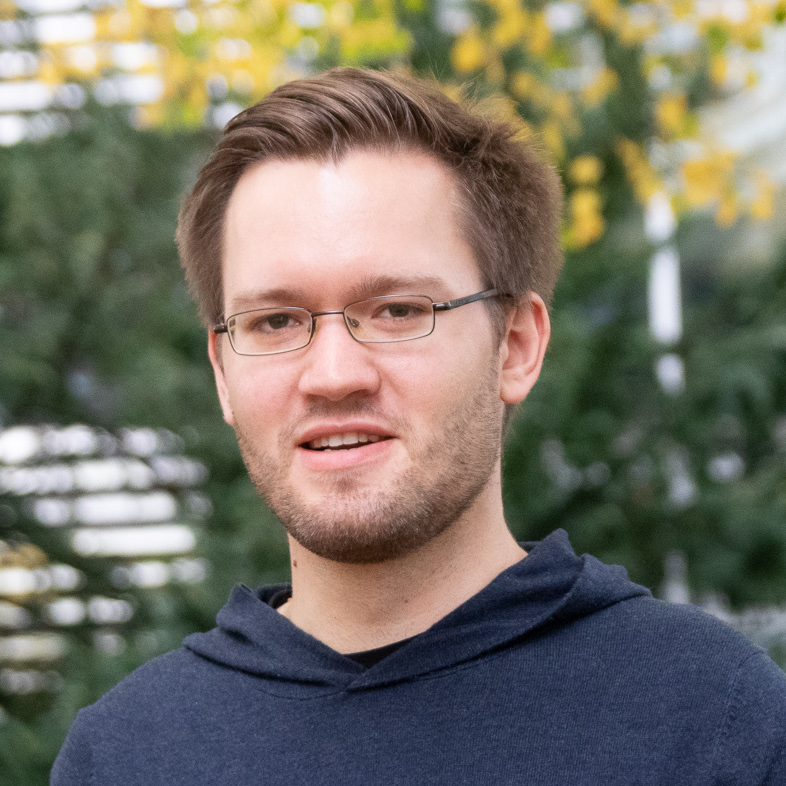
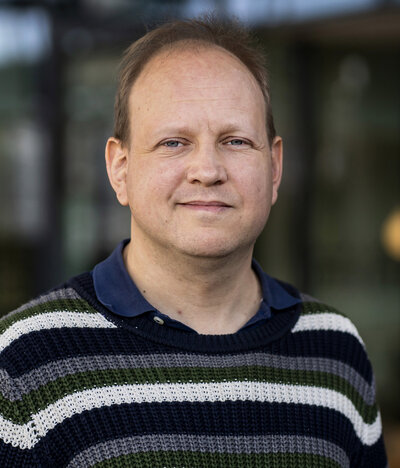
Vadim Zaytsev is an Associate Professor at Vrije Universiteit, specializing in Formal Methods and Tools. His research spans software language engineering, program verification, and model-driven development, with a focus on legacy systems and modernization. PhD in Recovery, Convergence, and Documentation of Languages (2008) Master's in Combinatorial Test Set Generation (2004) and Modelling Distributed Systems (2003) Bachelor's in Python Programming E-Learning (2002) Zaytsev's work integrates software language engineering , program verification , and domain-specific languages to address legacy system modernization. His recent publications emphasize data enrichment , automated repair , and refactoring detection across languages like Kotlin and Python. His scientific contributions include the IFIP TC2 Manfred Paul Award (2020) and datasets for program verification, refactoring detection, and automated repair. He actively participates in editorial work, including peer-review for workshops like OOPSLE 2020.
Prof. Marielle Stoelinga is a Professor at the University of Twente, Netherlands, working within the Electrical Engineering, Mathematics and Computer Science faculty in the Formal Methods and Tools department. She leads significant research initiatives in formal methods with applications to safety, security, and reliability engineering. Her research spans predictive maintenance , fault tree analysis , attack tree modeling , and the integration of safety and security through formal methods. She focuses on applying big data analytics to predict system failures, with particular emphasis on critical infrastructure including railway systems, satellite missions, and nuclear reactors. Her work bridges theoretical formal methods with practical applications in asset management. Analysis of her recent publications reveals a strong trend toward integrating safety and security analysis through attack-fault-defense trees, developing formal frameworks for risk assessment, and applying model checking techniques to real-world maintenance problems. Her research increasingly addresses the human and organizational aspects of predictive maintenance systems while maintaining rigorous formal foundations. 5 million euros research grant from Dutch National Organization for Scientific Research (NWO) for PrimaVera project Prof. Stoelinga leads the PrimaVera research project ( Predictive maintenance for Very effective asset management ), which takes a holistic approach to predictive maintenance spanning sensor systems, data science, maintenance optimization, and human factors. Her research group actively contributes to formal methods applications in critical infrastructure sectors including energy, transportation, and aerospace.
Dirk Beyer is a Full Professor and Head of Research Chair at the Department of Computer Science, Ludwig-Maximilians-Universität München (LMU Munich), where he leads the Software and Computational Systems Lab. His research focuses on developing models, algorithms, and tools for constructing and analyzing reliable software systems, with emphasis on software verification, model checking, and static analysis. Professor Beyer's research spans multiple critical areas in software engineering and formal methods. He has made significant contributions to software model checking through tools like CPAchecker and BLAST, structure analysis of large systems using CrocoPat and CCVisu, and formal verification of real-time systems with Rabbit. His work on interfaces for component-based design (Chic) has advanced modular software development approaches. Beyer has pioneered methodologies in benchmarking and reliable experimental evaluation through BenchExec, which has become a standard in tool competitions. Analysis of his recent publications reveals a strong focus on advancing software verification techniques, particularly in transferring knowledge between hardware and software verification domains, decomposing verification tasks for parallel processing, and improving the effectiveness of verification witnesses. His work consistently bridges theoretical foundations with practical tool implementations, with a growing emphasis on comparative evaluation and competition frameworks that drive the field forward. ACM SIGSOFT Distinguished Paper Award (FSE 2024) ACM SIGSOFT Best Artifact Award (FSE 2024) As a principal investigator of the DFG Research Training Group ConVeY, Beyer has secured significant funding for advancing verification techniques. He has played leadership roles in numerous software verification competitions including SV-COMP and Test-Comp, serving as PC Chair for major conferences like TACAS 2018 and VMCAI 2020. His service contributions extend to chairing ETAPS 2022 and organizing multiple workshops on CPAchecker. Professor Beyer leads the Software and Computational Systems Lab at LMU Munich, which has developed numerous influential verification tools including CPAchecker (configurable software verification), BenchExec (reliable benchmarking), and CCVisu (software structure visualization). The lab maintains active collaborations with research groups worldwide and contributes significantly to the international verification community through competitions, benchmarks, and open-source tool development.
Jeroen Keiren is Assistant Professor in Formal System Analysis at Eindhoven University of Technology. Research develops formal methods for verifying software and hardware system correctness. Specializes in model checking techniques, reduction algorithms, and verification tools. Key contributions include advanced reduction methods for model checking, parity game algorithms, and improvements to the mCRL2 toolset for concurrent system analysis. Recent work focuses on efficient equivalence checking algorithms and state-space reduction techniques.
Dragan Bosnacki is an Assistant Professor at Eindhoven University of Technology (TU/e), holding joint appointments in the departments of Biomedical Engineering and Mathematics and Computer Science. He specializes in interdisciplinary research at the intersection of computer science and biomedicine, with a focus on machine learning, bioinformatics, and computational modeling of medical therapies. His work combines formal verification techniques, GPU-accelerated algorithms, and biomedical applications such as High Intensity Focused Ultrasound (HIFU) therapy modeling. Dr. Bosnacki earned his BSc in Electrical Engineering and MSc in Computer Science from Sts. Cyril and Methodius University (Macedonia), followed by a PhD in Mathematics and Computer Science at TU/e under Professors Jos Baeten and Dennis Dams. He has pioneered advancements in parallel model checking and contributed significantly to the SPIN model checking tool. His research also spans separation logic, biomedical data analytics, and the application of mathematical methods to biological systems. Education: BSc in Electrical Engineering, Sts. Cyril and Methodius University (Macedonia) MSc in Computer Science, Sts. Cyril and Methodius University (Macedonia) PhD in Mathematics and Computer Science, TU/e (2001) Research Interests: Mechanisms of machine learning for biomedical data Formal verification of hardware/software systems GPU-optimized algorithms for computational biology Mathematical modeling of HIFU cancer therapies Reconstruction of biological networks and drug response modeling Teaching: Advanced programming and biomedical data analysis Simulation of biochemical systems Programming for data analytics Capita selecta in bioinformatics Thermodynamics & chemical kinetics Key Contributions: Co-developed GPU-based model checking tools (e.g., GPUexplore) Improved partial-order and symmetry reduction techniques Contributions to the SPIN model checker and VeriFast tool Advising: Supervised 37 academic works, focusing on interdisciplinary projects in computational biology and formal methods.
H.M.W. (Eric) Verbeek is an ICT Developer in the Department of Mathematics and Computer Science at Eindhoven University of Technology, specializing in Process Analytics. His work focuses on advancing process mining techniques, standardization of event data (e.g., IEEE XES), and the development of tools like ProM and CPN IDE. He has contributed to over 160 publications since 1986, with recent research emphasizing process discovery algorithms, workflow net synthesis, and context-rich process modeling. Research Interests include Process Mining, Process Models, Process Discovery, Petri Net Analysis, and Workflow Management. He has actively participated in projects like the GDPR compliance toolkit and has been involved in defining standards for event data interoperability. Notable contributions include the IEEE XES standard for process mining, tools for event log generation and analysis, and methods for decomposed conformance checking. His work bridges theoretical advancements in process modeling with practical tool development, supporting both academia and industry applications. Collaborations span international academia, focusing on process mining workflows and compliance monitoring. His research trends highlight a balance between algorithmic innovation and real-world applicability in areas like healthcare, logistics, and service management.
Professor Boudewijn R.H.M. Haverkort is affiliated with the University of Twente's Digital Society Institute and Faculty of Electrical Engineering, Mathematics, and Computer Science. His research focuses on formal methods, performance evaluation, and thermal management in computing systems. He has contributed to advancing model checking techniques, data center workload modeling, and temperature-aware scheduling algorithms. His work intersects computer science, embedded systems, and cyber-physical systems. Research interests include: - Model Checking and Formal Verification - Performance Evaluation of Distributed Systems - Thermal Management in Real-Time Systems - Machine Learning Applications for System Workload Analysis Notable contributions include developing statistical model checking frameworks and temperature prediction methods recognized by the Harvey Rosten Award in 2020. He has supervised 27 research projects, though student names are not listed here. His collaborations span thermal investigations in ICs, cyber-physical system design, and digital communication systems in conflict resolution contexts. Labs/Teams: Active in the Digital Society Institute and MESA+ Institute, collaborating with TechMed Centre on interdisciplinary projects.
Bob Rubbens is a Researcher in the Formal Methods and Tools group at the Department of Computer Science, Faculty of Electrical Engineering, Mathematics and Computer Science, University of Twente. His work focuses on formal verification techniques for concurrent and distributed software systems, with emphasis on practical tool development and case studies. His research spans concurrent software , choreography , runtime verification , and program transformations . He investigates correctness in parameterized systems and shared-memory concurrency, frequently applying formal methods to real-world software challenges through collaborations with industry and academic partners. Recent publications (2021-2025) demonstrate consistent innovation in choreography-based program generation and verification tooling. Key contributions include parameterized choreography frameworks, shared-memory concurrency solutions, and integrations of verification tools like VerCors for Java systems, often validated through case studies and open datasets. Scientific Awards: COORDINATION 2025 Best Paper Award (June 2025) Advising and Grants: The provided text contains no information about student advising or research grants. Labs and Teams: Rubbens actively contributes to the Formal Methods and Tools research group at the University of Twente, which develops verification methodologies and tools for critical software systems, maintaining strong ties with international verification communities through conferences like CAV and IFM.
Mahboobeh Zangiabady is a Lecturer at the Digital Society Institute, specializing in Design and Analysis of Communication Systems . Her research focuses on Software Defined Networking (SDN) , Network Virtualization , and Control Plane optimization.
Anton J. Wijs is an Associate Professor at the Eindhoven University of Technology (TU/e) , affiliated with the Model-Driven Software Engineering group within the Department of Software Engineering and Technology . His research focuses on parallel software development and leveraging parallelism to enhance formal verification techniques. He holds leadership roles as a Board Member of the European Association for Programming Languages and Systems (EAPLS) and a member of the Steering Committee of ETAPS. Academic Background: Wijs earned his PhD in Computer Science from VU Amsterdam (2007), followed by postdoc positions at INRIA (France), TU/e, and RWTH Aachen University (Germany). He transitioned to an Assistant Professor role at TU/e in 2015 and became an Associate Professor in 2023. Research Interests: His work emphasizes scalable verification methodologies using GPUs, formal analysis of concurrent systems, and tools like mCRL2 . He collaborates with industry partners such as ASML and Codeplay Software to bridge academic research with practical applications. Awards & Grants: Notable achievements include the Best Student Paper Award (FACS 2017) , the Amazon Research Award (2022) , and an NWO grant for GPU-accelerated state space analysis. He co-led the GEARS project (2017–2022) , focusing on efficient parallel model checking. Teaching: Wijs teaches courses on Programming , Program Verification Techniques , and Digital Twins of Medical Devices . He actively supervises students and contributes to international conferences as a program chair and reviewer.
Matthias Volk is an Assistant Professor in the Formal System Analysis group at Eindhoven University of Technology (TU/e). His research focuses on improving the safety and reliability of complex systems through formal methods, particularly probabilistic model checking. He develops automated techniques for system modeling and analysis, with a focus on industrial applications. He is a core developer of the Storm model checker. Academic Background: B.Sc. and M.Sc. in Computer Science from RWTH Aachen University Ph.D. from RWTH Aachen University, supervised by Joost-Pieter Katoen Postdoctoral researcher at the University of Twente Joined TU/e as an Assistant Professor in 2023 Research Interests: Probabilistic model checking Safety-critical systems Automated verification tools Industrial collaborations for formal methods Grants and Funding: NWO grant NWA.1160.18.238 (PrimaVera) ERC Consolidator Grant 864075 (CAESAR) EU Horizon 2020 project MISSION (101008233) Labs/Teams: Part of the Formal System Analysis group and Algorithms and Logics for Verification group at TU/e.
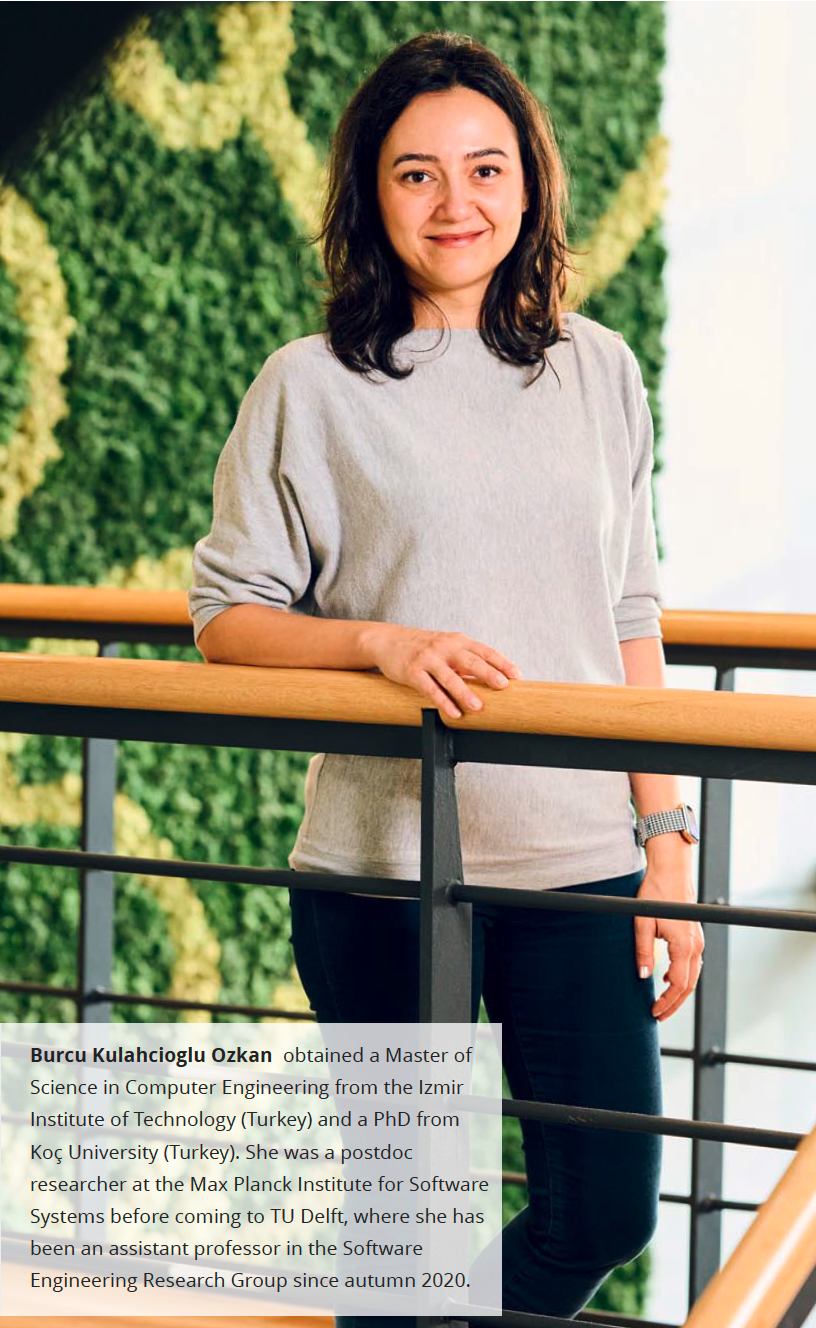
Burcu Kulahcioglu Ozkan is an Assistant Professor and Delft Technology Fellow at the Delft University of Technology (TU Delft) Software Engineering Research Group (SERG). Her research bridges formal methods with software engineering to enhance the reliability of concurrent and distributed systems , with applications in blockchain systems and graph databases . Recipient of Amazon Research Award (2022) and Stellar Academic Research Grant (2023) Founder of the FORSE Lab , focusing on lightweight formal methods for software engineering Co-PI of Ripple’s UBRI program at TU Delft, targeting blockchain testing Co-leader of the TU Delft-JetBrains AI4SE collaboration track Her research spans model checking , debugging , and fuzz testing , addressing challenges in event interleavings and network faults in distributed systems. She has received multiple best paper awards , including OOPSLA’23 Distinguished Paper and ICGT’25 Best Software Science Paper . She serves on program committees for major conferences like ICSE’26 , CAV’25 , and ECOOP’25 , and has delivered invited talks at VLDB Summer School (2025), Sabanci University (2024), and Dagstuhl Seminars (2023).
Sybren de Kinderen serves as an Assistant Professor in the Information Systems group within the Industrial Engineering and Innovation Sciences department at Eindhoven University of Technology. His academic journey began with a PhD in Computer Science from the Free University of Amsterdam in 2010, followed by postdoctoral research positions at the Luxembourg Institute of Science and Technology, University of Luxembourg, and University of Duisburg-Essen before securing his current faculty position. Dr. de Kinderen's research spans multiple interconnected domains with a consistent focus on enterprise modeling methodologies. His primary research interests include enterprise architecture modeling, future energy systems, and cognitive linguistics for discourse analysis in information systems. He has developed significant expertise in formal methods for model verification, particularly through integrating the ADOxx modeling platform with Alloy formal language. His recent work demonstrates an innovative pivot toward applying Large Language Models for Legal Goal-oriented Requirements Language (Legal GRL) modeling, showing how prompt templates can structure LLM output for regulatory compliance analysis. His research consistently bridges theoretical modeling approaches with practical applications in complex domains like energy systems and cybersecurity. Analysis of Dr. de Kinderen's publication record reveals a clear evolution in research focus over time. Early work centered on service bundling and value modeling, while more recent publications demonstrate increasing sophistication in multi-level modeling approaches, formal verification techniques, and the integration of AI technologies with traditional modeling paradigms. His research shows particular strength in applying enterprise modeling to energy sector challenges, with numerous publications addressing smart grid initiatives, energy community development, and regulatory compliance in energy systems. The most recent publications indicate growing interest in leveraging AI capabilities while maintaining rigorous formal modeling foundations. Dr. de Kinderen actively contributes to the academic community through editorial roles, including guest editing special sections on enterprise architecture research trends. While no specific awards are mentioned in the available information, his consistent publication record in reputable venues and his role as corresponding author on significant works indicates recognition within his research community. His research appears to be supported by institutional affiliations rather than explicitly mentioned external grants. Within the Information Systems group at Eindhoven University of Technology, Dr. de Kinderen contributes to multiple research initiatives focused on enterprise modeling, particularly through the EIRES Research group. His work intersects with several collaborative projects in energy systems analysis and cybersecurity, suggesting participation in interdisciplinary research teams addressing complex societal challenges through advanced modeling approaches.
D.M. Groenewegen is a researcher at the Computer Science & Engineering department within the School of Electrical Engineering, Mathematics and Computer Science at Delft University of Technology. His work focuses on domain-specific languages, particularly WebDSL , for web application development and academic workflow optimization. Research interests include domain-specific languages (DSL) , web programming , conference management systems , and software engineering . He has contributed to improving the reliability and modularity of DSLs through case studies and runtime evolution. Recent publications explore the use of WebDSL to build systems like Conf Researchr for managing academic conferences, incremental computation in persistent object graphs (e.g., IceDust ), and the integration of validation and UI concerns in web applications. These works highlight trends in DSL design , linguistic abstractions , and software reliability . He collaborates with researchers such as Elmer van Chastelet and Eelco Visser, emphasizing peer-reviewed contributions to conferences like ECOOP and workshops under ACM and Dagstuhl Publishing. His work has been published in venues such as OpenAccess Series in Informatics and PervasiveHealth .
Tijs van der Storm is a Senior Researcher and Groupleader at the Centrum Wiskunde & Informatica (CWI) in Amsterdam, Netherlands, with a part-time professor appointment at the University of Groningen . His work spans Domain-Specific Language (DSL) design , software engineering , and programming language theory , focusing on tools like the Rascal meta-programming language for DSL construction and evolution. Email: storm@cwi.nl , T.van.der.Storm@cwi.nl Academic Rank: Professor (University of Groningen), Scientific Staff Member (CWI) Research Interests center on building and evolving DSLs , integrating live programming environments , and advancing language workbenches . His work addresses challenges in software analysis , model-driven development , and interactive programming tools . Trends in his scientific publications (2015–2024) emphasize DSL engineering , concrete syntax , gradual typing , and block-based language design . He has contributed to software testing and distributed systems through projects like AlleAlle and Recaf . Awards and Recognitions : Most Influential Paper Award (SLE 2023) Distinguished Artifact Award (SLE 2021) Distinguished Vision Paper Award (SLE 2018) Best Software Engineering Technology Paper (ICT OPEN 2019) Professional Activities include leadership roles in academic communities: chair of IFIP TC2 Working Group 2.16, treasurer of the European Association for Programming Languages and Systems (EAPLS), and organizer of conferences like SLE 2016 . He has served on program committees for IFIP TC2 WG 2.16 , EAPLS , and SPLASH symposia.