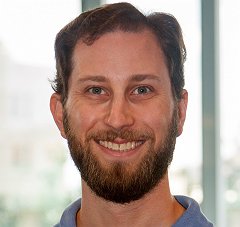
Mick Grierson is a Researcher at Goldsmiths, University of London , specializing in Interactive Machine Learning , Audiovisual Composition , and Computational Creativity . His work bridges Music Technology , Human-Computer Interaction , and Assistive Technology , with a focus on making machine learning accessible for creative applications. He has developed open-source software like Maximilian and collaborated on projects involving Brain-Computer Interfaces and Digital Musical Instruments for rehabilitation. Research Interests : Interactive Machine Learning Generative AI for Audiovisual Art Accessibility in Music Technology Collaborative Coding Environments Rehabilitation through Digital Instruments Neural Network Applications Selected Projects : NoiseBear - Wireless controller for disabled children Plundermatics - Real-time media segmentation Event-Maximillian - Brainwave music interfaces
Kris Luyten is a Researcher at Hasselt University 's Expertise Centre for Digital Media in Belgium. He specializes in Human-Computer Interaction , Wearable Technology , and Interactive Systems through extensive collaborations with institutions like ACM, Springer, and interdisciplinary teams. Focus on haptic interfaces , telerobotics , and delay-invariant interaction Contributions to multimodal interface design and predictive usability models His recent work explores AI-Spectra dashboards for model transparency and ViRgilites for VR haptics. Publications span journals like Proc. ACM Hum. Comput. Interact. and conferences such as CHI , EICS , and VRST . While no student advising or awards are explicitly listed, his editorial roles (e.g., PACMHCI editorials) demonstrate leadership in interactive systems research.
Gabriel Lopez Millan is a Professor in the Department of Information and Communication Engineering at the Faculty of Informatics, University of Murcia. His work focuses on network security, identity management, and software-defined networking (SDN) systems. PhD in Information and Communication Engineering University of Murcia, 2006 Research interests include network access control , AAA infrastructure , and IPsec management , with a strong emphasis on SDN and IETF standards . Recent work explores EDHOC protocol integration for IoT security and automated rekeying in IPsec associations. His publications from 2019–2025 highlight trends in SDN-based security , TLS configuration standards , and YANG modeling for network security. He has contributed to RFCs and educational accreditation frameworks like Euro-Inf. Gabriel Lopez Millan serves as a key researcher in the Intelligent Systems and Telematics group and has collaborated with projects such as DAMe and CLASSe for secure network federations.
Marika Apostolova Trpkovska is an Associate Professor at the Faculty of Contemporary Sciences and Technologies, South East European University (Tetovo, Macedonia). Her academic work spans cybersecurity, blockchain technology, and educational technology with a focus on Industrial IoT security, semantic web applications, and digital learning systems. PhD in Computer Science (Specialty: e-Medical Services based on Semantic Web) MSc in Software Development and Applications BSc in Computer Sciences Her research covers cybersecurity frameworks for Industrial IoT, blockchain applications in public administration, and educational technology innovations including VR/AR integration and gamification. She has published extensively in international conferences and journals on these topics, with recent works focusing on machine learning-enhanced security protocols and decentralized real estate management systems. Current publications (2023-2024) highlight her expertise in IIoT security standards, smart contract development using Ethereum/IPFS, and cybersecurity threat modeling. Earlier works examine e-learning systems implementation, gender disparities in CS research, and real-time operating system validation. She serves as part-time academic staff member while maintaining technical roles in learning management system administration (LIBRI, ANGEL) and teaching responsibilities across software engineering, algorithms, and programming disciplines.
Sangyoung Park is an Assistant Professor of Smart Mobility Systems at the Faculty of Mechanical Engineering and Transport Systems, Technical University of Berlin, and is co-affiliated with the Einstein Center for Digital Future. His research focuses on two main areas: enhancing vehicle safety through digitalization and connectivity, and advancing the electrification of the transport sector with emphasis on electric vehicle battery systems design and management. He leads the Chair of Smart Mobility Systems at TU Berlin, where his team investigates how vehicle connectivity can improve energy efficiency, traffic flow, and safety in autonomous vehicle systems. Dr. Park completed his PhD in Electrical Engineering and Computer Science at Seoul National University in Korea, where he focused on energy management techniques for hybrid energy storage systems in electric vehicles. Before joining TU Berlin in 2018, he conducted postdoctoral research at the Technical University of Munich, working on energy management for smartphones in collaboration with Google and studying battery aging processes. His research interests span smart mobility systems, electric vehicle battery management, energy consumption optimization, vehicle connectivity, and autonomous driving systems. Park's work bridges the gap between design engineers and software engineers, investigating how different energy storage components (fuel cells, supercapacitors, lithium-ion batteries) should be interconnected and managed together for maximum efficiency. His research also addresses the design of charging infrastructure for electric vehicles. Analysis of Dr. Park's recent publications reveals a strong focus on digital twin technology for teleoperated driving, battery management systems for electric vehicles, and vehicle connectivity for improved safety and efficiency. His research increasingly integrates cybersecurity aspects of connected vehicles and explores novel approaches to extend battery lifespan through advanced cell balancing techniques. The interdisciplinary nature of his work connects electrical engineering, computer science, transportation systems, and urban infrastructure planning. Dr. Park supervises multiple doctoral students, including Philipp Kremer, Ongun Türkçüoglu, Kil Young Lee, Maria Claudia Miguel de Priego, Muzaffer Citir, Andrea Reindl, Subhendu Bhadra, and Hueseyin Türkyilmaz. His research is supported by various funding sources including the ECDF grant, DAAD projects (ide3a), and government scholarships. He collaborates with institutions including OTH Regensburg and Siemens Mobility. His laboratory, the Smart Mobility Systems group, focuses on developing system-level approaches for measuring, analyzing, and balancing energy consumption in battery-powered mobile systems. The team investigates how direct communication among autonomous vehicles can enable control scenarios that improve energy efficiency, traffic flow, and safety beyond what human drivers or isolated autonomous vehicles can achieve.
Amin Jalali is an Associate Professor of Computer and Systems Sciences at Stockholm University, specializing in business process modeling, analysis, and management. He is affiliated with the Department of Computer and Systems Sciences within the Faculty of Social Sciences, where he serves as a board member and manages three graduate courses: Business Process Design and Intelligence, Business Process and Case Management, and Data Warehousing. Institution: Stockholm University Department: Department of Computer and Systems Sciences (DSV) Research Groups: Natural Language Processing Research Group and PRECIS (Process, Requirements, Enterprise, Capability, Information Systems modelling) His research focuses on business process analysis through model-based and data-driven techniques, with particular emphasis on process simulation, process mining, event knowledge graphs, and object-centric process mining. He has led numerous research projects across healthcare, education, and finance domains. His work includes significant contributions to the development of NLP methods involving large language models, with focus on privacy, explainability, and domain adaptation. Jalali's research output shows a strong trend toward practical applications of process mining techniques, particularly in healthcare contexts like drug-drug interaction analysis and elderly care. More recently, his work has expanded into blockchain applications for fraud detection, motor imagery signal classification, and advanced object-centric process mining approaches. His publications span both theoretical contributions to business process management frameworks and practical implementations in real-world settings. He has extensive industry experience in designing and implementing Business Intelligence and Big Data Analytics solutions, which informs his academic work and teaching approach. His research has been published consistently from 2012 through 2024, demonstrating sustained scholarly productivity in his field. Dr. Jalali has contributed significantly to the development of tools and libraries for process mining, including the dfgcompare library for process variant analysis and implementations for object-centric process mining. His work bridges academic research with practical applications, particularly evident in healthcare projects like the DDIs-Graph system for identifying drug-drug interactions.
Marc Hellmuth is an Associate Professor of Computational Mathematics at the Department of Mathematics, Stockholm University, Sweden. His academic career includes previous positions as Junior Professor for Biomathematics and Computer Science at University of Greifswald, Germany (2015-2020), Lecturer at School of Computing, University of Leeds, UK (2020), and PostDoc positions at Saarland University and Max-Planck Institutes. Dr. Hellmuth earned his PhD in Computer Science from University of Leipzig, Germany (2007-2010, summa cum laude), supervised by Peter F. Stadler, and completed his Venia Legendi (habilitation) at Saarland University, Germany (2016). His research spans the interface of discrete mathematics, computer science, and life sciences with emphasis on: Discrete Mathematics including Graph Theory, Combinatorics, and Optimization Algorithm Design and Complexity Theory Mathematical and Computational Biology Phylogenomics and Evolutionary Analysis Computational Chemistry and Atom Tracking His publication record demonstrates a consistent focus on developing mathematical frameworks and efficient algorithms for biological problems, particularly in phylogenomics, orthology detection, and evolutionary analysis. His work bridges theoretical computer science with practical applications in biology and chemistry, often resulting in open-source software tools. Dr. Hellmuth has developed numerous software tools including AsymmeTree for phylogenetic simulation, tralda for tree algorithms, and specialized tools for phylogenomics, atom tracking, and graph analysis. His collaborative work extends internationally with research visits to institutions including Yale University, University of Leoben, Vienna University of Economics, University of Southern Denmark, Université de Montréal, and institutions in China.
Nathir Rawashdeh is an Assistant Professor in the Department of Applied Computing at Michigan Technological University , with an affiliated appointment in Electrical and Computer Engineering . He is a Senior Member of the IEEE and a member of the Institute of Computing and Cybersystems (ICC) and Great Lakes Research Center . Education: Ph.D., Electrical Engineering, University of Kentucky, 2007 MS, Electrical and Computer Engineering, University of Massachusetts, Amherst, 2003 BS, Electrical Engineering, University of Kentucky, 2000 Dr. Rawashdeh's research focuses on unmanned vehicle perception , image analysis , control systems , and mechatronics , with applications in autonomous driving, winter weather adaptation, and industrial automation. His work includes sensor fusion, deep learning, and AI-enhanced manufacturing solutions. Recent publications highlight advancements in winter weather autonomous driving , UV disinfection robotics , and AI-driven industrial inspection systems . His research spans mechatronics curriculum development, industry 4.0 integration, and cross-cultural educational initiatives. Scientific Awards: Senior Member of the IEEE Dr. Rawashdeh has secured over $2 million in funding from organizations including the NSF , Ford Motor Co. , NIST , and the European Commission . His grants support projects like GPU clusters for research, winter weather autonomous driving standards, and UV sterilization robotics. He leads the Mobile Robotics Lab at Michigan Tech, focusing on collaboration and innovation in autonomous systems and mechatronics research.
Kathrin Figl is a Full Professor (Tenured) for Human-centric Information Systems Design at the Department of Information Systems, Production and Logistics Management at the University of Innsbruck. Previously, she held positions as an Assistant Professor at WU Vienna University of Economics and Business and as a research associate at the University of Vienna. Her educational background includes a doctoral degree in Information Systems (2008, with honors, awarded the Dr. Maria Schaumayer Prize) and dual master's degrees in Information Systems (2004) and Psychology (2006), all from the University of Vienna. This interdisciplinary foundation bridges technical and psychological perspectives in her research approach. Professor Figl's research centers on human-centered information systems with particular emphasis on cognitive aspects of digital interaction: Human-AI interaction and algorithmic management systems Digital nudging techniques and online manipulation Eye-tracking methodologies in user research Cognitive biases and heuristics in digital environments Fake news perception and detection mechanisms Webpage prototypicality and its effects on user attitudes Business process modeling as cognitive tools Her publication trajectory demonstrates a sophisticated evolution from foundational work on business process modeling to cutting-edge research on device-specific cognitive effects and misinformation perception. A hallmark of her methodology is the rigorous application of empirical approaches, particularly eye-tracking studies, to investigate how screen design, device type, and interface elements influence human cognition and decision-making across digital platforms. Professor Figl has earned significant recognition for her scholarly contributions: Dr. Maria Schaumayer Prize for doctoral excellence Three Best Paper Awards at major international conferences Excellent Teaching Award from WU Vienna Recognition as a top reviewer for Software & Systems Modeling journal Outstanding service awards as associate editor and track chair She has secured substantial research funding including an FWF Lisa Meitner Programme grant (€145,260) on Web Design Prototypicality and an Austrian Nationalbank Research Grant (€55,000) on Cognitive Effectiveness in Business Process Modeling. While specific advisees aren't documented in the provided materials, her extensive publication record with numerous co-authors indicates active mentorship of graduate researchers. Her work with eye-tracking technology suggests leadership of a specialized laboratory environment for studying human-computer interaction, with established collaborations including the Technical University of Denmark and Queensland University of Technology.
Dr. Christian Büsel is a researcher at the Department of General Psychology I, Institute of Psychology, University of Innsbruck . His work focuses on visual attention mechanisms, including top-down and bottom-up processing, and their relationships with working memory. Email: Christian.Buesel@uibk.ac.at Research Interests: Visual attention, visual search, and the interplay between working memory and intentional visual attention. He employs behavioral experiments, meta-analyses, and mobile eye tracking to study suppression of irrelevant stimuli and contingent capture effects. Methodological Contributions: A key developer of the open-source Experimenters' Tools project, which provides resources for psychological research, including visual angle calculations, color conversions, power analyses, and diffusion modeling. His textbook on empirical-experimental methods is available via Springer. Articles Trends: Recent publications emphasize attentional control, feature-based suppression, and cross-modal cognitive processes (e.g., music reading and auditory discrimination). Technical contributions highlight mobile experimentation frameworks and OpenSesame-based methodologies.
Matthias Baitsch serves as Professor of Construction Informatics and Numerical Methods in the Department of Civil and Environmental Engineering at Bochum University of Applied Sciences, where he concurrently heads the BIM Institute. His academic trajectory includes research assistant and senior engineer roles at Ruhr-University Bochum (2000-2009), academic coordination at the Vietnamese-German University (2009-2012), and an acting professorship at the University of Kassel (2012-2014). His educational foundation comprises: Civil Engineering studies at the University of Dortmund (1991-1997) under the interdisciplinary "Dortmund Model" Doctorate from Ruhr-University Bochum (2003) on geometric imperfection-based optimization of compressive beam structures Professor Baitsch's research integrates computational mechanics with civil engineering practice, specializing in construction informatics, numerical optimization, and high-order finite element methods. His work pioneers distributed optimization frameworks, structural health monitoring for wind energy infrastructure, and BIM-based construction informatics. Key methodological contributions include hp-FEM implementations, parallel optimization algorithms, and mobile structural analysis tools. Analysis of his recent publications reveals three dominant research trajectories: (1) Advanced numerical methods for structural optimization under uncertainty, (2) Health monitoring-driven lifetime prediction for wind turbine systems, and (3) Computational modeling of tunnel environments using viscoacoustic inversion techniques. These threads demonstrate consistent focus on robust numerical implementations and real-world civil engineering applications. As Head of the BIM Institute, he leads institutional efforts in digital construction technologies, fostering industry-academia collaboration on building information modeling standards and applications. His teaching portfolio spans foundational mathematics, numerical methods, and computer science for civil engineering students, emphasizing practical computational skills.
Keiji Kimura is a Professor in the Department of Computer Science and Engineering at Waseda University's Faculty of Science and Engineering, School of Fundamental Science and Engineering. He earned his Doctor of Engineering from Waseda University and has held academic positions at the university since 1999, progressing from Research Associate to Assistant Professor (2004-2005), Associate Professor (2005-2012), and Professor (2012-present). He is affiliated with multiple professional organizations including ACM, IEEE Computer Society, The Institute of Electronics, Information and Communication Engineers, and Information Processing Society of Japan. His research focuses on computer architecture, particularly parallel computing systems and compiler technology. Kimura has made significant contributions to the development of the OSCAR (Optimally Scheduled Advanced Multiprocessor) automatic parallelizing compiler framework. His work spans multiple areas including multicore processor architecture, power reduction techniques for embedded systems, non-volatile memory systems, and parallelization methods for heterogeneous architectures. His research interests specifically include Multiprocessor Architecture and Parallelizing Compiler development, with applications in real-time systems and energy-efficient computing. Analysis of his recent publications reveals a strong focus on practical implementations of parallel computing technologies across diverse hardware platforms including RISC-V, ARM, and heterogeneous multicore systems. His work demonstrates a consistent trajectory from theoretical compiler development toward practical applications in embedded systems, security, and non-volatile memory technologies. The publications show increasing emphasis on RISC-V architecture, persistent memory programming, and power-efficient computing solutions. MEXT Award for Science and Technology (Research category), 2014.04 Ministry of Education, Culture, Sports, Science and Technology (MEXT) Kimura has served on numerous prestigious conference program committees including PACT, IPDPS, HPCA, and LCPC. His research has been supported through collaborations with major technology companies and government initiatives such as the METI/NEDO project entitled "Multicore Technology for Realtime Consumer Electronics." His work with the OSCAR compiler framework has demonstrated significant performance improvements and power reductions in real-world applications. He leads research in the APAL laboratory (http://www.apal.cs.waseda.ac.jp/) at Waseda University, focusing on advanced parallel processing technologies. His team works on compiler-directed approaches to solve challenges in heterogeneous multicore architectures, with particular emphasis on making parallel programming more accessible while optimizing for both performance and power efficiency. Current research directions include RISC-V secure boot verification, non-volatile memory systems, and GPU-based persistent memory solutions.
Michael Minock is an Associate Professor in Computing Science at Umeå University. His research focuses on the intersection of AI and relational databases, particularly in natural language interfaces, semantic tractability, and knowledge representation. He has led significant projects such as the VR grant (2015-04953) and EU STREP SpaceBook (2011–2014). Minock also co-founded C-Phrase Technologies AB and teaches courses on databases and large language models. B.S. in Computer Science (Honors), University of Michigan Ph.D. in Computer Science, UCLA His research explores the logical foundations of database query languages, emphasizing higher-order logic in natural language interfaces. Recent work integrates LLMs into database management systems. Key publication trends include query containment analysis, cooperative question answering, and context-aware navigation systems. Subfields span natural language processing, spatial databases, and semantic reasoning. Scientific Awards: Pell Grants Michigan Competitive Scholarship DARPA AASERT Award Minock's teaching includes courses on database management and LLM applications in IT. He actively contributes to open-access publications and maintains a strong interdisciplinary focus across AI, logic, and real-world database challenges.
Tim Thacker is a Research Associate Professor at the Center for Power Electronics Systems (CPES) at Virginia Tech. He previously worked as Chief Engineer at VPT Energy Systems (PowerHub Systems) and Director of Engineering & Research and Development at Motion Control Systems, Inc. His academic journey began at Virginia Tech, where he earned his BSEE in 2003, followed by MS and PhD degrees in 2005 and 2009. Virginia Tech: Research Associate Professor (2024–present) VPT Energy Systems: Chief Engineer Motion Control Systems, Inc.: Director of Engineering & R&D Research Interests: Dr. Thacker's work spans the design and control of power electronics systems, with a focus on renewable energy integration, energy storage, and advanced motor drives. His expertise includes: Grid-interfaced power converters for renewable energy systems Control algorithms for plug-in hybrid electric vehicles (PHEVs) and vehicle-to-grid (V2G) applications Permanent magnet synchronous motor (PMSM) design and drive electronics Use of SiC technology for improved efficiency and reliability EMI/EMC mitigation and power quality analysis Scientific Awards: NSF PhD Fellowship GE PhD Fellowship VPTES (PowerHub Systems) PhD Fellowship Contributions: He holds a patent, developed proprietary technologies in industry, and has extensive experience in hardware development, software implementation, and team leadership. At CPES, he contributed to the Student Council as Vice President and co-chaired the Center's Annual Conference in 2007.
Michael Coblenz is an Assistant Professor in the Computer Science Department at University of California, San Diego. His research focuses on integrating user-centered design into programming language development, creating safer languages for blockchain and scientific computing. He completed his Ph.D. at Carnegie Mellon University under Jonathan Aldrich and Brad A. Myers, followed by a Basili postdoctoral fellowship at University of Maryland. Specializes in usability of programming languages Created Obsidian language for safer smart contracts Developed PLIERS methodology for iterative language design Active in Rust usability and REST API quality research His work bridges programming languages and human-computer interaction, with recent projects including Kale (safer spreadsheets) and climate change-focused programming tools. He has served on program committees for SPLASH, VL/HCC, and HATRA conferences. 2025: Graduate Consortium Co-chair at VL/HCC 2024: HATRA Organizing Chair 2023: Doctoral Symposium Chair at SPLASH