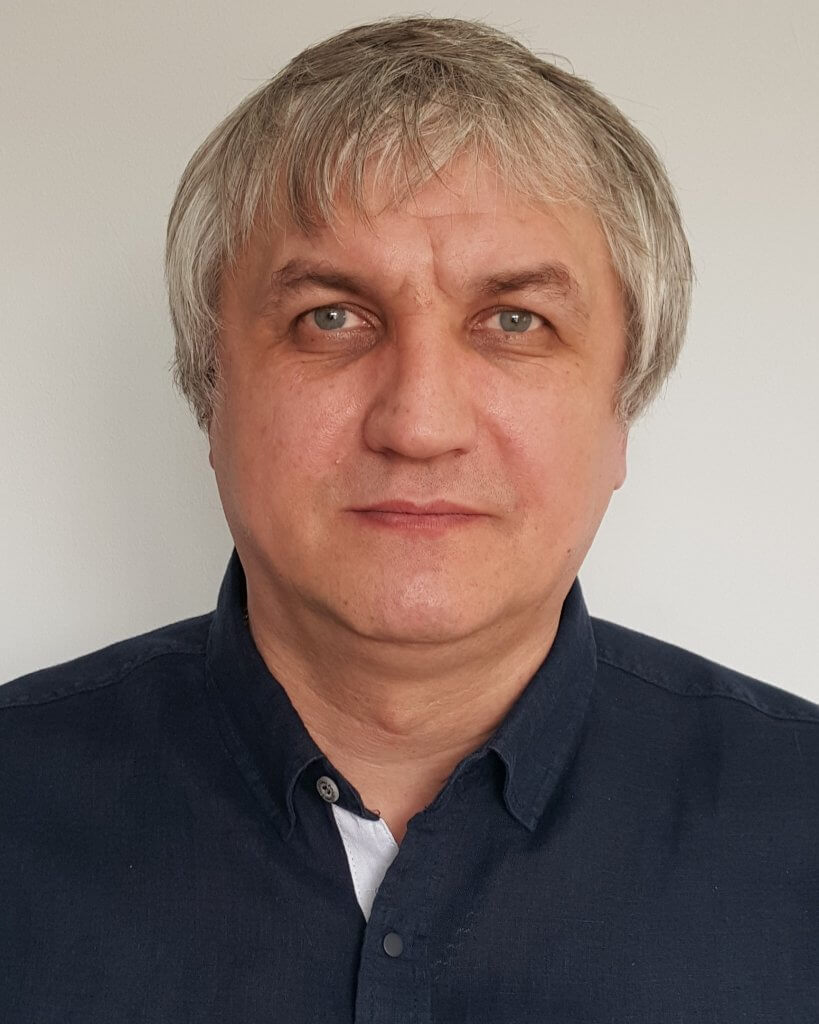
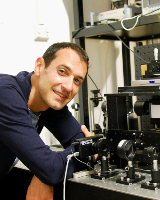
Dr. Artur Yakimovich leads the Machine Learning for Infection and Disease group at the Helmholtz Center Dresden-Rossendorf (HZDR) and is affiliated with the CASUS Center for Advanced Systems Understanding. His research focuses on applying artificial intelligence to infection biology and biomedical imaging, with a particular emphasis on virus-host interactions and microscopy image analysis. Research areas include deep learning , computational virology , biomedical image processing , and AI-driven diagnostics . Developed open-source tools like PyPlaque for viral plaque analysis. Active in high-content screening and physics-informed neural networks for imaging applications. Current work spans urinary tract infection diagnostics , super-resolution microscopy , and computational modeling of virus transmission .
Ramyaa is an Assistant Professor in the Department of Computer Science & Engineering at New Mexico Tech. Her research focuses on the intersection of computation, logic, and emerging models of computation, including implicit complexity theory and biologically inspired neural networks. She also explores machine learning applications in real-world problems and interpretable AI. Education: Ph.D. in Computer Science, with a focus on theoretical foundations. Research Interests: Implicit complexity (relating logical complexity to computational resource constraints), formalization of computational models (e.g., biological neural networks), machine learning (including neural network training, adversarial robustness, and program synthesis), and applications in healthcare, security, and education. Her work emphasizes adaptable complexity measures for novel computational frameworks. Recent Trends in Publications: Recent work includes reinforcement learning for astrophysical data workflows, biologically inspired sleep algorithms for neural networks, and machine learning applications in nutritional epidemiology. She also explores educational technology, such as games for teaching logic and interactive programming tutorials. Grants & Advising: Advises research in machine learning, theoretical computer science, and interdisciplinary applications. Active in grant-seeking for projects at the intersection of theory and applications. No listed students, but collaborates widely with researchers globally. Affiliations: Fellow at the Simons Institute for the Theory of Computing (Berkeley), organizer of conferences like ICALT and CSR, and contributor to initiatives like WiCS at NMT. Teaches courses in formal languages, automata theory, and reinforcement learning.
Александар С. Станимировић serves as an Associate Professor in the Department of Computer Science at the Faculty of Electronic Engineering, University of Niš, appointed in 2024 within the field of Computer Science and Informatics. His academic foundation stems entirely from this institution, where he has maintained continuous affiliation since undergraduate studies. His educational journey includes: Bachelor's degree (Diplomirao) in Electrical Engineering and Computing (2000) Master's degree (Magistrirao) in Electrical Engineering and Computing (2006) Doctorate (Doktorirao) in Electrical Engineering and Computing (year unspecified) Research focuses intensely on Geographic Information Systems with specializations in semantic interoperability, ontology mapping, and component-based spatial frameworks. His work bridges theoretical computer science with practical applications in utility network management and emergency response systems, emphasizing data integration challenges in heterogeneous environments. Early-career publications demonstrate consistent innovation in making geospatial systems interoperable through semantic technologies. Analysis of his 2004-2007 publications reveals a cohesive trajectory: initial work established component-based GIS architectures (2004), evolving toward semantic integration solutions (2005-2006), and culminating in domain-specific implementations for power networks and disaster management (2007). This progression shows increasing sophistication in handling real-world spatial data interoperability problems while maintaining theoretical rigor in ontology engineering. He currently participates in three active research initiatives comprising two national projects and one international collaboration, indicating sustained research momentum beyond his early publication period. While project specifics aren't detailed, their existence confirms ongoing scholarly activity aligned with his GIS expertise. No formal advising relationships or laboratory leadership roles are documented in the available materials.
Dr. Kirstin Strokorb (she/her) is a Senior Lecturer and Deputy Director of Postgraduate Research at the School of Mathematics, Cardiff University . Her research focuses on multivariate, spatial, and temporal dependence phenomena in extreme value theory , a field critical for assessing rare hazardous events in data-driven risk modeling. She contributes to interdisciplinary research through editorial roles (Extremes, Stochastic Models) and leadership in the One World Extremes seminar and Statistics seminar series . Education: PhD in Mathematics (University of Göttingen, summa cum laude, 2013), Diploma in Pure Mathematics (University of Göttingen, 2010), Exchange student at Warwick University (2006/2007). Research Interests include extreme value theory, stochastic processes, and graphical models. She develops tools for spatio-temporal risk assessment and forecast evaluation , with applications in finance, insurance, and environmental engineering. Her work addresses challenges in max-stable processes , stochastic orderings , and realisability problems . Recent article trends emphasize graphical models for extremes , simulation algorithms , and stochastic ordering . She explores high-dimensional extremes and tail correlation functions , contributing to spatial and temporal modeling and conditional independence frameworks . Scientific Awards : Oberwolfach Research Fellow (2024) RSS Mardia Award for interdisciplinary workshops (2018) Nominated for Philip Leverhulme Prize (2020) Supervision & Grants : Mentored PhD students Michela Corradini, Matt Hutchings, Eferhonore Efe-Eyefia, and Jonas Brehmer. Projects supported by EPSRC DTP , TETFund , and Innovation for All grants . Led workshops under Cardiff’s Water Research Institute and Data Innovation Research Institute . Labs & Collaborations : Collaborated with institutions including University of Copenhagen, University of Geneva, and University of Edinburgh. Active in the Bernoulli Society , Royal Statistical Society , and Data Innovation Research Institute .
Geraint Palmer is a Welsh Medium Lecturer at Cardiff University's School of Mathematics, where he teaches mathematics courses primarily in Welsh. His academic journey includes a BSc in Mathematics from Aberystwyth University (2013), followed by an MSc in Operational Research and Applied Statistics (2014) and a PhD in Applied Stochastic Modelling (2018), both from Cardiff University. His educational background includes: BSc in Mathematics, Aberystwyth University (2013) MSc in Operational Research and Applied Statistics, Cardiff University (2014) PhD in Applied Stochastic Modelling, Cardiff University (2018) Dr. Palmer's research spans several interconnected areas within operational research and applied mathematics. His primary focus is on queueing theory and stochastic modeling , with applications in healthcare systems and emergency services. He has made significant contributions to discrete event simulation , notably through the development of the open-source Ciw library. Additionally, his work extends to Welsh language processing, where he has contributed to computational linguistics projects including Welsh word embeddings and stemmers. His interdisciplinary approach combines theoretical mathematical modeling with practical software implementation, often using Python and R. His recent publications demonstrate a strong trend toward applying operational research methods to healthcare challenges, particularly emergency services optimization. His work on ambulance fleet allocation, emergency care transformation, and orthopaedic care systems shows a consistent focus on improving healthcare delivery through mathematical modeling. Simultaneously, his research in Welsh language processing represents a unique interdisciplinary contribution at the intersection of mathematics, computer science, and linguistics. His publication record also highlights his commitment to open-source software development, with contributions to libraries like Ciw (for discrete event simulation) and GCol (for graph coloring). His scientific contributions include: Development of Ciw, an open-source discrete event simulation library Development of GCol, a high-performance Python library for graph coloring Contributions to Welsh language processing tools and resources Co-authorship of "Applied Mathematics with Open-Source Software: Operational Research Problems with Python and R" (2022) Dr. Palmer is actively involved in teaching mathematics at Cardiff University, delivering modules including Preliminary Mathematics II, Problem Solving, and Computational Methods. His bilingual capabilities enable him to provide Welsh-medium instruction, supporting linguistic diversity in higher education. His research projects often involve collaboration with healthcare professionals, operational research specialists, and language technologists, reflecting the interdisciplinary nature of his work. Notably, he has contributed to standardized Welsh language assessment tools, demonstrating his commitment to both academic research and practical community applications.
Alexander Alexandrovich Trofimov is an Associate Professor at the Department of Engineering Graphics within the Institute of Mining, Geology and Geotechnology at Siberian Federal University. Born on September 25, 1971, in Zaozerny, Krasnoyarsk Krai, he graduated from the Krasnoyarsk Institute of Non-Ferrous Metals in 1996 with a specialization in "Mining Machinery and Equipment," qualifying as a mining electrical engineer. He received his associate professorship in 2009 and has authored 30 scientific and educational works. Education Krasnoyarsk Institute of Non-Ferrous Metals (1996), Mining Machinery and Equipment, Mining Electrical Engineer Research Interests Professor Trofimov's research focuses on Engineering Graphics , Descriptive Geometry , and specialized applications in Mining and Geological Graphics . His work integrates pedagogical methods for technical education, computer-aided design, and geometric problem-solving in mining contexts. Recent investigations emphasize educational adaptations for engineering students and technological innovations in graphic instruction. Professional Development Integration of project activities of teachers into the educational process (Siberian Federal University, 2013) Management of an educational project (Siberian Federal University, 2017)
Piotr Burnos serves as a Professor at the Department of Metrology and Electronics within the Faculty of Electrical Engineering, Automatics, Computer Science and Biomedical Engineering at AGH University of Science and Technology in Kraków, Poland. His office is located in room 211 of building B-1 (second floor), with contact details including telephone +48 12 617 28 27 and email burnos@agh.edu.pl. Burnos specializes in Weigh-in-Motion (WIM) technology for vehicle enforcement, focusing on sensor accuracy under real-world conditions including temperature fluctuations and pavement mechanics. His research addresses critical challenges in dynamic vehicle weighing systems, particularly for administrative enforcement applications where measurement precision directly impacts road infrastructure protection and legal compliance. Key contributions include thermal error compensation, multi-sensor fusion, and Polish implementation frameworks. Analysis of his 15 most recent publications (2015-2018) reveals consistent advancement in WIM system reliability through temperature modeling, pavement interaction studies, and administrative integration. His work bridges metrological precision with practical enforcement needs, emphasizing Polish regulatory contexts while contributing to broader transportation engineering knowledge. No scientific awards were documented in the source materials. While specific student advisement or grant information isn't provided in available sources, Burnos' research demonstrates sustained focus on applied transportation engineering problems with direct societal impact through infrastructure protection and regulatory enforcement.
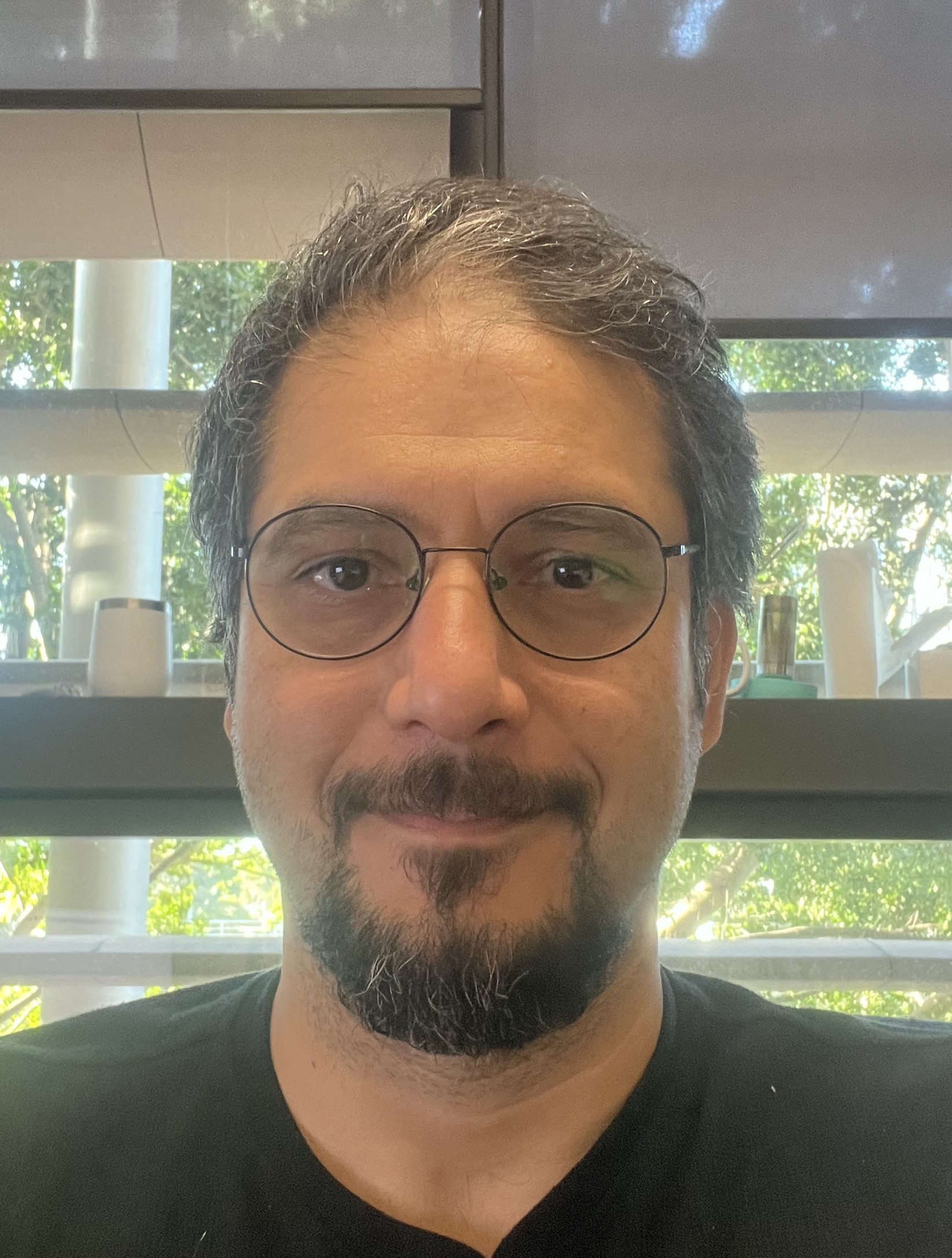
Professor Hamid Roshan is a faculty member at the School of Minerals and Energy Resources Engineering within the Faculty of Engineering at UNSW Sydney. He graduated with a PhD in Petroleum Geomechanics Engineering from UNSW Sydney in 2012, followed by 3.5 years of postdoctoral training in the School of Civil and Environmental Engineering. He was appointed to his current position in 2016 after gaining valuable industry experience with the Underground Gas Storage Company, where he worked on the Sarajeh field gas storage project. Professor Roshan's research spans multiphysics geomechanics and rock characterization, with applications across Mining, Civil, and Petroleum Engineering sectors. His work integrates theoretical, numerical, and experimental approaches to solve complex geomechanical problems. Since 2017, he has developed the advanced GeoEngineering Research Lab at UNSW, where next-generation equipment for coupled geomechanics-rock characterization has been designed and built, offering state-of-the-art services to industry. His research interests include THMC Experimental and Computational Modelling in CCUS, Coal Seam Gas and Shale Gas Engineering, Geophysics and Data-driven Rock Mass Characterization, Borehole Geotechnical Logging, In-situ Stress Measurement and Estimation, and Fundamentals of Rock Mechanics with a focus on Multiphysics Geomechanics. His recent publications demonstrate expertise in ultramafic rock interactions, geothermal energy storage, shale gas reservoirs, and advanced computational modeling techniques. Professor Roshan has developed and patented field-scale downhole logging tools for stress-mechanical property measurements along with software solutions for the mining industry. His work has practical applications in carbon sequestration, underground hydrogen storage, and unconventional gas extraction. Professional Recognition: American Rock Mechanics Association Future Leader Professional Memberships: Australian Geomechanics Society, International Society of Rock Mechanics, Society of Petroleum Engineers Professor Roshan teaches Petrophysics (PTRL2020), Formation Evaluation (PTRL5107), Integrated Oil and Gas Reservoir Evaluation (PTRL4010), and Geomechanics A, while actively seeking students with strong academic backgrounds for research opportunities.
Professor Christoph Arns is a full Professor at the University of New South Wales (UNSW) School of Engineering, specializing in Mineral and Energy Resources Engineering. He has been at UNSW since 2008 and has held the position of full Professor since 2014. Currently, he leads the Geoenergy and Geostorage discipline within the school. Prior to joining UNSW, he was a research fellow at the Australian National University from 2001-2008. Professor Arns obtained his Dipl. Phys. from RWTH Aachen, Germany in 1996 and his PhD in Petroleum Engineering from UNSW Sydney in 2002. His academic background combines physics and petroleum engineering, creating a unique interdisciplinary perspective for his research. His primary research focus is on Digital Rock Physics, where he has pioneered computational pore-scale physics based on tomographic images. He specializes in integrating 3D tomographic imaging technology with NMR techniques for petrophysical applications, with particular emphasis on heterogeneity analysis. His work spans multiple sub-disciplines including pore-scale modeling, digital core analysis, rock physics, reservoir characterization, and Minkowski functionals for structural analysis. Professor Arns has developed the MPI-parallel software package 'morphy' for computational physics operating on segmented tomographic images, which includes sophisticated NMR response modeling, electrical property calculations, permeability estimation, elastic moduli determination, and morphological property analysis. His research has substantial industry relevance, as evidenced by his role as a founding member of Digital Core Pty Ltd, an ANU/UNSW spin-off that was sold to FEI for $76 million in 2014 and is now part of ThermoFisher. He has received significant research support through three successive Australian Research Council (ARC) fellowships. His scholarly contributions are reflected in numerous publications spanning from 2000 to 2025, with recent work focusing on advanced computational methods, machine learning applications in rock physics, and detailed analysis of fluid-rock interactions at the pore scale. Professor Arns maintains active leadership roles in multiple professional societies including Interpore (lifetime member, former council chair 2016-2019), Society of Core Analysts (Australasia Regional Director since 2016), Society of Petrophysicists & Well Log Analysts, Society of Exploration Geophysicists, and Society of Petroleum Engineers.
Prof. Mag. Dr. Ewald Jarz is a Professor of Computer Science at the University of Applied Sciences Rosenheim, Germany. His work bridges business administration and information technology, focusing on software engineering, e-learning, and IT solutions for SMEs. He has held leadership roles such as Chairman of the Examination Board for Business Informatics and contributed to IT service management and business process engineering. Academic Affiliation: University of Applied Sciences Rosenheim Department: Computer Science Leadership Roles: Chairman of the Examination Board for Business Informatics Jarz's research spans multimedia learning systems , business process engineering , and IT solutions for SMEs . His work emphasizes practical applications in education and industry, including case studies and ITIL process documentation. His publications (1995–2008) focus on information technology , educational multimedia , and business informatics , with recurring themes in IT service management and SMEs. Notable trends include the integration of multimedia in education and the evolution of IT governance frameworks. Scientific Awards: Dr. Otto Seibert Prize (1996) Marquis WHO's WHO inclusions (1996–1999) City of Innsbruck Research Prize (1997)
Prof. Dr. Simon Nestler is a Professor for Human-Computer Interaction at Technische Hochschule Ingolstadt (THI) since 2019, previously at Hochschule Hamm-Lippstadt (HSHL) (2011-2019). He holds a Diploma in Computer Science and a Ph.D. in Human-Computer Interaction from Technische Universität München (TUM) and International Graduate School of Science and Engineering (IGSSE) , supervised by Prof. Gudrun Klinker . Educated: TUM (Diploma), IGSSE (Ph.D.) Affiliations: THI (2019-present), HSHL (2011-2019), Intraworlds (User Experience Engineer) Research Interests focus on applying HCI principles to safety-critical systems , particularly in emergency scenarios . He designs interfaces for car drivers , disaster response teams , and crisis management , addressing challenges like mental workload , collaborative problem-solving , and RFID patient tracking . His work includes developing virtual reality crisis simulations and mobile disaster apps . Teaching includes courses like Masterpraktikum GAMES and FAR Oberseminar . He also offers digital accessibility training , UX workshops , and keynotes on digitalization through his Prof. Nestler Akademie , which has trained 5000+ learners and delivered 100+ corporate trainings .
Karl Meinke is a Professor at KTH Royal Institute of Technology, where he serves as Head of the Computer Science Department and Head of the Division of Theoretical Computer Science within the School of Electrical Engineering and Computer Science. His research focuses on applying machine learning techniques to software testing, particularly for safety-critical systems like autonomous vehicles and embedded systems. His research interests span machine learning, software testing, safety critical systems, embedded systems, autonomous driving, digital pathology, and graph neural networks. Meinke has developed innovative approaches like Learning-Based Testing that combine machine learning with formal methods for system validation. His work bridges theoretical computer science with practical applications in automotive systems and medical diagnostics. His recent publications show a strong trend toward applying graph neural networks to diverse domains including program analysis, digital pathology, and autonomous vehicle testing. His research demonstrates a consistent focus on solving the test oracle problem and generating meaningful test cases for complex systems where traditional testing approaches fall short. Meinke actively collaborates with Karolinska Institutet (KI), indicating interdisciplinary work between computer science and medical research. He is responsible for Masters level education in software testing at KTH and serves as examiner for several advanced courses including Degree Projects in Computer Science and Software Reliability. His research group has developed tools like LBTest for learning-based testing of reactive systems, and he has secured funding for projects such as the ITEA3 Testomat Project focused on next-level test automation. His work has significant implications for validating autonomous systems where safety is paramount. Meinke leads research in using machine learning to address fundamental challenges in software testing, particularly for systems where traditional test oracles are unavailable or impractical. His approach of combining active learning with formal specifications has created new pathways for validating complex cyber-physical systems.
Ignacio IZEDDIN is an Associate Professor ( Maître de conférences ) at the Institut Langevin, ESPCI Paris, which is part of CNRS and Université PSL. His research sits at the critical intersection of advanced optical imaging, biophysics, and molecular cell biology, with a particular focus on pushing the boundaries of what can be visualized and understood about molecular distribution and cellular dynamics. His primary research interests include Single-Molecule Localization Microscopy (SMLM), super-resolution imaging techniques, single particle tracking (SPT), biophotonics, diffusion processes in cell biology, molecular cell biology, transcription regulation, DNA repair mechanisms, and light-matter interactions at the nanoscale. Dr. IZEDDIN's work aims to develop innovative microscopy tools that overcome current limitations in spatial and temporal resolution, enabling the capture of rapid, dynamic cellular processes with unprecedented clarity. The trends in his recent publications reveal a strong focus on developing event-based sensor technology for high-speed single-molecule localization, creating novel 3D microstructured substrates for cellular imaging and calibration, studying light-matter interactions at the nanoscale through fluorescence lifetime imaging, and applying these advanced techniques to understand fundamental biological processes like DNA repair, chromatin dynamics, and cellular differentiation. His work consistently bridges physics, engineering, and biology to solve complex imaging challenges. Dr. IZEDDIN is actively involved in research funding and recruitment, with current projects including a European LIGHTinParis COFUND PhD position analyzing alpha-synuclein diffusion in neurons using super-resolution microscopy based on event sensors, and hiring for a software engineer position to develop data processing tools for event-based SMLM technology. His laboratory employs a highly interdisciplinary approach, combining physics, biology, and engineering expertise to tackle challenging problems in cellular imaging. Current projects involve collaborations with neuroscientists, physicists, and engineers to study everything from molecular diffusion in neurons to macrophage differentiation on 3D topographical substrates.
John F Hughes is a Professor of Computer Science at Brown University's School of Engineering. His work bridges computer graphics and mathematics, with a focus on intuitive interfaces for 3D modeling and visualization. He has made significant contributions to sketch-based interfaces, art-based graphics, and shape modeling. Education: PhD in Mathematics, University of California, Berkeley (1982) MA in Mathematics, University of California, Berkeley (1982) BA in Mathematics, Princeton University (1977) Professor Hughes's research centers on computer graphics with strong mathematical foundations. He specializes in the modeling of shape and form at multiple scales, human-computer interaction, and art-based graphics. His work explores how artists' techniques can be utilized to enhance human-computer communication about shape. He has recently expressed interest in machine learning applications to graphics problems. His approach emphasizes informal modes of input and output, particularly sketching as a means to describe shape and expressive renderings for information communication. His publication record shows a consistent focus on sketch-based interfaces for 3D modeling, art-based rendering techniques, and mathematical approaches to graphics problems. Over time, his work has evolved from foundational mathematical approaches to more applied interactive systems, while maintaining a strong connection to mathematical principles. Recent publications indicate expanding interests into machine learning applications for graphics and computational approaches to sparse data. Scientific Awards: User Interface Software and Technology (UIST) Best Paper Award Professor Hughes has received substantial research funding from major technology companies and government agencies. His funded research includes a gift from Pixar supporting graduate fellowships in computer graphics (since 2000), research grants from Microsoft, NSF, and collaborations with IBM and Sun Microsystems. His work has been instrumental in advancing sketch-based interfaces and art-based rendering techniques, with applications ranging from character animation to document navigation interfaces. He maintains active collaborations with researchers across the computer graphics community, particularly in the areas of sketch-based interfaces and modeling. His work with Takeo Igarashi, Tomer Moscovich, and other collaborators has been highly influential in the computer graphics community, shaping how we interact with 3D content through intuitive sketching interfaces.
Aleksandar Borković is a Researcher at the Institute of Structural Mechanics , Graz University of Technology. His work focuses on advanced computational methods in structural engineering, particularly isogeometric analysis, finite strip modeling, and van der Waals interactions in slender structures. Department: Institute of Structural Mechanics Email: aborkovic@tugraz.at His research bridges theoretical mechanics and practical engineering applications, addressing nonlinear dynamics, contact mechanics, and geometrically exact formulations. Recent publications highlight innovative approaches to modeling molecular interactions in fiber systems and optimizing computational efficiency for structural simulations. The 15 most recent articles demonstrate expertise in: Van der Waals attraction in curved beams Geometrically exact isogeometric formulations Finite strip method for stiffened plates Contact dynamics in beam-to-beam interactions Nonlinear stability analysis of thin-walled structures Moving load simulations in spatial beams He has also contributed to educational software development for structural analysis, emphasizing real-time visualization and numerical accuracy.