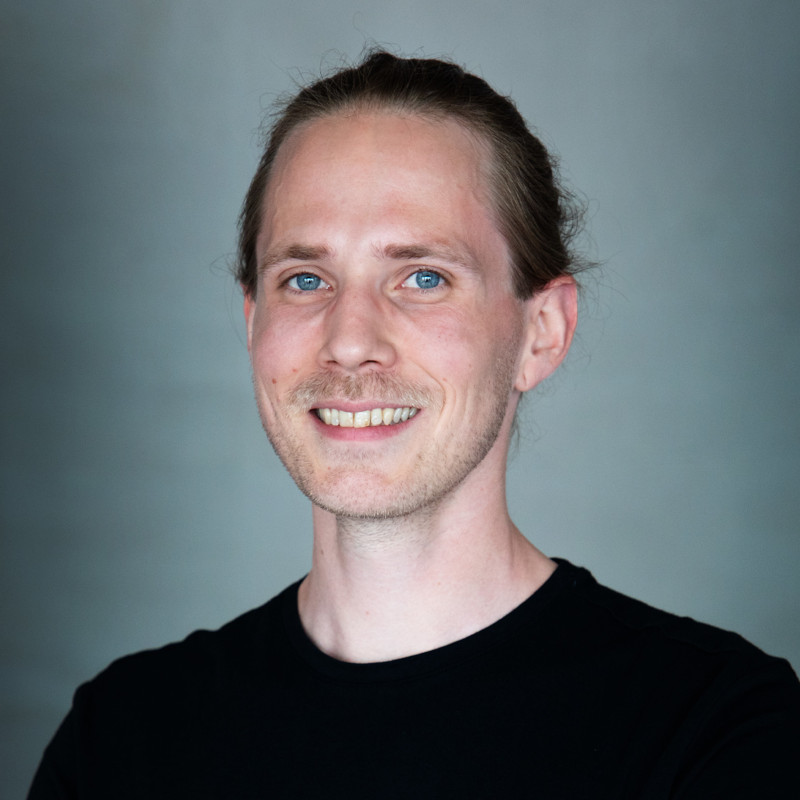
Markus Böck is a PreDoc Researcher at the Software Engineering department of Technische Universität Wien (TU Wien), Austria. His academic work focuses on the intersection of software engineering and machine learning , particularly in performance prediction and probabilistic program analysis . He contributes to automated code analysis and intelligent software systems research. Role: PreDoc Researcher Department: Software Engineering, TU Wien Contact: markus.h.boeck@tuwien.ac.at His research explores: Language-agnostic static analysis of probabilistic programs Context-dependent performance prediction from source code Interactive machine learning systems for software engineering Distributional reinforcement learning applications Code-based performance modeling Program analysis for probabilistic systems Key publication trends include: Advancing probabilistic program analysis (2024-2025) Performance prediction techniques (2022-2023) Reinforcement learning innovations (2020-2022) Application of machine learning to software engineering challenges Game theory algorithm optimization (2025)
Michael Hofbaur is a full Professor at the University of Klagenfurt, where he works in the Institute for Intelligent Systems Technologies within the Faculty of Technical Sciences. His office is located at Lakesidepark Haus B04, Ebene 2, Raum B04.2.206, and he can be contacted at michael.hofbaur@aau.at. Professor Hofbaur has established himself as a leading researcher in robotics with particular expertise in human-robot collaboration, safety systems, and formal verification methods for robotic applications. His research interests focus on the intersection of robotics, safety engineering, and human factors. Professor Hofbaur has made significant contributions to the field of robot safety, particularly in developing methods for safe human-robot collaboration without physical barriers. His work spans multiple dimensions of robotics including kinematic analysis, motion planning, sensor integration, and formal verification techniques to ensure system reliability. He has published extensively on topics such as obstacle avoidance strategies, proximity perception systems, and methods to enhance flexibility in collaborative workspaces while maintaining safety standards. Analysis of his recent publications reveals a clear trend toward integrating formal verification methods with practical robotics applications, particularly focusing on safety-critical aspects of human-robot interaction. His research increasingly incorporates advanced sensing technologies like radar and capacitive proximity sensors to create more intelligent and responsive robotic systems. The work demonstrates a progression from theoretical kinematic analyses toward practical implementations in industrial and collaborative settings, with a consistent emphasis on safety assurance throughout. Professor Hofbaur's research portfolio includes numerous projects related to robotic safety, formal verification, and human-robot collaboration, though specific awards directly attributed to him are not listed in the available materials. His work appears to have significant practical applications in industrial automation and collaborative robotics settings. While specific information about his students and advising activities isn't provided in the available materials, his extensive publication record spanning over two decades suggests he has likely supervised numerous graduate students and postdoctoral researchers. His research activities indicate involvement in both theoretical and applied projects, potentially including collaborations with industry partners given the practical nature of many of his publications. Based on his departmental affiliation and research focus, Professor Hofbaur is likely associated with robotics laboratories at the University of Klagenfurt that specialize in human-robot interaction, safety systems, and formal verification of robotic workflows. These facilities likely include experimental setups for testing collaborative robots, sensor integration systems, and simulation environments for verifying robotic behaviors before physical implementation.
Thomas Rosenstatter is a Senior Lecturer and researcher at the Salzburg University of Applied Sciences (FH Salzburg/SUAS), where he works in the Department Information Technologies and Digitalisation at Campus Urstein. Prior to this position, he was a researcher at the Digital Systems division at RISE Research Institutes of Sweden from November 2021 to April 2023. He completed his Ph.D. in computer science and engineering at Chalmers University in Gothenburg, Sweden between 2016 and 2021. His educational background includes: Ph.D. in Networks and Systems, Computer Science and Engineering, Chalmers University, Sweden (2016-2021) M.Sc. in Embedded and Intelligent Systems, Halmstad University, Sweden (2016) Diplom-Ingenieur (DI) in Information Technology & Systems Management, Salzburg University of Applied Sciences, Austria (2016) B.Sc. in Information Technology & Systems Management, Salzburg University of Applied Sciences, Austria (2014) Research Focus: Dr. Rosenstatter's research centers on cybersecurity and resilience for cyber-physical systems, with particular emphasis on automotive systems and industrial automation. His work addresses critical questions in automotive cybersecurity, including how to express security demands and requirements when designing connected vehicles, how to identify suitable security and resilience techniques, and how to develop frameworks for anomaly detection. He has made significant contributions to vehicular security through mechanisms like improving freshness mechanisms for authenticated messages, developing trust-based solutions in VANETs, and designing frameworks for anomaly detection using peer-assessments of vehicles. Publication Trends: His publications demonstrate a consistent focus on automotive security challenges, with recent work expanding into industrial automation security. His research shows progression from foundational work on security frameworks and requirements to more applied research on specific security mechanisms and frameworks for attack detection and response. The trend in his publications indicates growing interest in collaborative security approaches and practical implementations of security solutions for real-world automotive and industrial systems. Awards: SAIS Best AI Master's Thesis Award 2017 for research on "Modelling the Level of Trust in a Cooperative Automated Vehicle Control System" Dr. Rosenstatter has extensive teaching experience in network security, computer security, routing and switching technology, and advanced topics in networking, privacy, and security. He is actively involved in the Josef Ressel Centre for Intelligent and Secure Industrial Automation (JRZ ISIA) at Salzburg University of Applied Sciences.
Wilfried Elmenreich is a Professor at the Institute for Networked and Embedded Systems at Alpen-Adria-Universität Klagenfurt. He holds roles as Member of the Senate and Member of the Works Council for Academic University Staff. His research focuses on computational systems, energy engineering, and smart technologies, including swarm intelligence, cyber-physical systems, and sustainable energy solutions. Key interests include non-intrusive load monitoring (NILM), renewable energy integration, and decentralized learning paradigms. Research priorities encompass computer simulation, electrical power engineering, complex systems, and self-organization. Notable work includes frameworks like SwarmFabSim for production scheduling and CPSwarm for swarm robotics design. He also explores sustainability education and pandemic-related behavioral shifts in sustainability attitudes. Recent publications highlight advancements in federated learning for smart grids, energy disaggregation using NILM, and applications of biologically-inspired algorithms in critical infrastructure. His work integrates simulation reproducibility, open-source tools like Gradle/Docker, and educational games for renewable energy awareness (e.g., DAYSAM). Labs/Teams: Core member of the Institute for Networked and Embedded Systems, leading projects in CPS design, energy systems, and swarm robotics. Collaborates on EU initiatives like CPSwarm and educational outreach in sustainable development.
Luc Bousseau is a Senior Lecturer at the Institute of Romance Studies, Alpen-Adria-Universität Klagenfurt. His research focuses on Romance philology, language pedagogy, and interdisciplinary educational methodologies. He contributes to projects enhancing media literacy and scientific understanding among youth through initiatives like the #NoFakeFacts citizen science program. His recent publications explore digital media dynamics, swarm robotics systems, and innovative academic collaboration models. Active in editorial roles for German didactics journals, he bridges theoretical research with practical educational applications. Contact via Luc.Bousseau@aau.at or room N.0.48 in the main campus building. Research Areas: Romance Studies, Language Teaching Methodology, Cultural Education Recent Projects: Media Literacy Youth Program, Interdisciplinary Migration Research, Digital Marketplace Analysis
Prof. Daniel Müller-Gritschneder is a Full Professor of Computer Architecture at TU Wien's Institute of Computer Engineering (Faculty of Informatics) since 2024. Previously, he held roles as research group leader at TU Munich's Chair of Electronic Design Automation and acting professor for Real-Time Systems at TU Munich. He earned his Dipl.-Ing. (2003), Dr.-Ing. (2009), and Habilitation (2019) from TU Munich. His research focuses on Electronic System Level Design, RISC-V domain-specific architectures, embedded ML compiler toolchains, functional safety, and hardware security. He collaborates extensively with industry partners like Infineon, Bosch, BMW, and Mercedes. Active in the RISC-V community, he co-initiated the RISC-V Summit Europe and serves on steering committees for conferences such as DAC, ICCAD, and DATE. Key Research Themes: RISC-V ISA extensions and toolchain development Edge AI/ML on embedded systems Secure and safety-critical processor design High-level synthesis and performance simulation Awards: Best Student Paper Award (2024), IEEE Winter Conference on Computer Vision Habilitationspreis (2019), TU Munich Alumni Association Senior IEEE Member (2019) Teaching includes courses like 'High-Level Synthesis', 'Computer Organization', and 'Embedded Systems Design'. Current projects involve lightweight software for IoT devices and pre-silicon validation of safety-critical RISC-V systems. His work bridges academic research with industrial application through collaborative projects and open-source tool development.
Orna Grumberg is a Leumi Chair Professor in the Computer Science Department at the Technion - Israel Institute of Technology. She has held this professorship since 2005 and was awarded the Leumi Chair in Science in 2011. Professor Grumberg serves on the Steering Committee of the Computer-Aided Verification (CAV) conference and has been actively involved in the academic community through editorial boards and conference committees. Her educational background is deeply rooted at the Technion, where she received her B.Sc., M.Sc., and Ph.D. in Computer Science. Professor Grumberg's research spans several critical areas in computer science, with a primary focus on formal verification methods. Her work has significantly advanced the field of model checking and automated verification systems. She has made substantial contributions to abstraction techniques, refinement methods, and counterexample analysis in verification processes. Her research extends to compositional model checking, SAT-based approaches, distributed verification systems, and applications to security vulnerability detection. Her theoretical work on temporal logics and automata on infinite objects provides the mathematical foundation for many practical verification tools. The publication record of Professor Grumberg demonstrates a consistent research trajectory focused on improving model checking techniques. Her work shows evolution from foundational model checking approaches to more specialized techniques like abstraction-refinement, SAT-based solving, and security applications. The research spans theoretical computer science, practical software engineering applications, and hardware verification, reflecting the interdisciplinary nature of formal methods. Professor Grumberg has received recognition through her leadership roles in the field, including serving on the Steering Committee of the CAV conference and editorial boards of prestigious journals like "Information and Computation" and "Formal Methods in System Design". Her book "Model Checking" co-authored with E.M. Clarke and D. Peled has become the standard reference in the field. As an educator and mentor, Professor Grumberg has shaped the verification landscape in Israel. She served as Associate Dean for Graduate Studies at the Technion and established the software engineering track with a strong verification component. Her introductory model checking course attracts approximately 100 students annually. Her students now hold prominent positions in academia (Hebrew University, Tel-Aviv University) and industry (particularly at IBM). She maintains strong industry collaborations, with ongoing projects with IBM on UML Verification and with Rafael on Finding Security Vulnerabilities in Network Protocols. Professor Grumberg leads research groups that form the foundation for verification teams in major Israeli technology companies like IBM and Intel, demonstrating the practical impact of her academic work.
Prof. Gerald Steinbauer-Wagner is an Associate Professor at TU Graz's Institute of Software Engineering and Artificial Intelligence. He specializes in autonomous intelligent systems, focusing on decision-making architectures for robots in uncertain environments. His research integrates software engineering, AI, and robotics to develop reliable systems for applications in disaster response, planetary exploration, and industrial automation. Research Interests: Steinbauer-Wagner's work addresses challenges such as robot navigation in unstructured terrains, human-robot collaboration, and trustworthiness in autonomous systems. Key areas include explainable AI, fault diagnosis, and multi-robot coordination. His team explores solutions for off-road robotics, collective perception, and certification of autonomous systems. Recent Projects: Current initiatives include developing autonomous systems for subterranean rescue missions (ROBO-MOLE), optimizing robot localization using machine learning, and creating educational frameworks for AI literacy in schools. His group also contributes to the RoboCup Logistics League and planetary exploration cascades through analog missions like AMADEE-20. Awards & Recognition: No specific awards listed, but his work has been recognized through extensive publications in top venues like IEEE/RSJ IROS, ICRA, and RoboCup symposiums. Lab & Teams: Leads the Autonomous Intelligent Systems (AIS) research group at TU Graz, collaborating with industry partners like the Smart Factory. His team develops integrated robot systems for production, logistics, and disaster response scenarios.
Philipp Alexander Raith is a PreDoc Researcher and PhD student at the Distributed Systems Group of the Institute of Information Systems Engineering at Vienna University of Technology (TU Wien). His research focuses on edge intelligence, serverless edge computing, and AI operations, with a strong emphasis on resource optimization and infrastructure management across the edge-cloud continuum. BSc in Software Engineering (2018) from TU Wien MSc in Software Engineering & Internet Computing (2021) from TU Wien Research Interests encompass: Edge Intelligence Serverless Edge Computing AI/ML Operations Resource-aware Scheduling Distributed Systems Computing Continuum Publication Trends highlight his work in edge-cloud orchestration, neural feature compression, and quantum computing integration. Key areas include elasticity, serverless frameworks, and energy-aware architectures. Scientific Awards : UCC 2022 Best Paper Award SEC 2019 Best Demo Award 2020 Netidee Grant Winner Shortlisted for TU Wien Distinguished Young Alumnus Advising : Supervised multiple Master’s theses on edge-cloud autoscaling, AI workloads, mobile edge computing, and resource-aware offloading. Projects : Key contributor to AUTO-Cloud (2013–2025) and RAINBOW (2020–2022) projects.
Josef Altmann serves as a Professor at the University of Applied Sciences Upper Austria, specifically within the School of Informatics, Communications and Media at the Hagenberg Campus. He leads research activities at the Research Center Hagenberg Knowledge Media and Engineering and contributes to the AIST Digital Transformation Strength area focused on ICT - Information & Communication Technology. His academic credentials include Mag. Dr. qualifications, reflecting advanced academic achievements in his field. Professor Altmann's research spans multiple interconnected domains of Human-Computer Interaction, with particular emphasis on user interaction , personalization , and digital platform development . His work consistently addresses practical applications across diverse sectors including volunteering systems, construction technology, and intralogistics. The research fingerprint analysis reveals strong concentrations in Human-Computer Interaction (77%), User Interaction (100%), Personalization (64%), and Input Devices (64%), with notable contributions to Tabletop interfaces (59%) and Neurorehabilitation (47%). His approach integrates theoretical HCI principles with real-world problem-solving, particularly evident in his development of goal-oriented volunteering platforms and industry 4.0 applications. Analysis of his recent publication trends shows a clear trajectory toward applied research with societal impact. His 2024 works focus on leveraging Large Language Models for volunteering platforms, demonstrating adaptation to emerging AI technologies. Earlier publications (2021-2022) established foundations in mixed reality applications for intralogistics and digital transformation of construction sites. The consistent thread across his work involves creating user-centered digital solutions that address specific domain challenges while advancing HCI methodologies. His publications appear primarily in computer science venues with strong industry relevance. Best Paper Award HUCAPP 2018 - International Conference on Human-Computer Interaction Theory and Applications Professor Altmann actively contributes to the research ecosystem through numerous funded projects. Current major initiatives include iReduce (2025-2026) focusing on alarm flood reduction in critical infrastructure, AI-supported knowledge database development for industrial plastics production (2024-2027), and CIvolunteer (2023-2025) for digital volunteer engagement. He serves as a key researcher in these collaborative efforts, often working with Schönböck, Augstein, and Bodenhofer. His grant portfolio demonstrates strong industry-academia collaboration, particularly with COMET Competence Centers and KIRAS research programs. He also maintains an active role in the scientific community through conference participation, peer review activities, and organizational contributions. As part of the Research Center Hagenberg Knowledge Media and Engineering, Professor Altmann contributes to a vibrant research environment focused on digital transformation. His work intersects with several research teams focusing on human-centered computing, with particular connections to groups working on interaction design, digital platforms, and industry 4.0 applications. The collaborative nature of his projects indicates strong integration within both the university's research structure and external industry partnerships, particularly in the Austrian technology sector.
Simon Haller-Seeber is a Systems Engineer at the Department of Computer Science (Intelligent and Interactive Systems) at the University of Innsbruck, a role he has held since 2010. He also serves as a part-time Lecturer in Scientific Computing and Science Education. His academic background includes a Master's degree in Computer Science (2024) and a Bachelor's degree (2006), alongside professional certifications like Engineer Degree (2012) and Apprentice Instructor (2014). Research & Education: Focused on Free Software, System Automation, and Educational Robotics. He co-founded the STAIR-Lab and contributed to initiatives like ROSSINI workshops promoting youth robotics innovation. His work bridges robotics with pedagogy, emphasizing open-source tools and accessible education platforms. Publications: Recent works include web-based robotics IDEs (2025), AI-driven training frameworks (2023), and taxonomies for robotics action models (2019). His 2020 paper on recycling automation won the ROBOVIS Best Paper Award. Grants & Projects: Led EU-funded projects like IMAGINE (2018–2021) and participated in Squirrel/PaCMan (2014–2018). Co-organizes RoboCup Junior and the Computer Camp Malbun. Awards & Roles: Recognized for educational robotics contributions. Active in academic governance as former Senate member and board chair of 'brainity' and 'Natur Mensch Technik' associations.
Clemens Sauerwein is an Assistant Professor in the Department of Computer Science at the University of Innsbruck , Austria. His academic work spans information security, cyber threat intelligence, and innovative approaches in software engineering education. Position: Assistant Professor Institution: University of Innsbruck Department: Department of Computer Science Office: ICT Building, Room 3S03 Contact: clemens.sauerwein@uibk.ac.at His research is centered on Information Security , particularly cyber threat intelligence sharing , risk management , and organizational security culture . He also investigates Information Systems topics like crowdsourcing and socio-technical systems , and contributes to Security & Software Engineering Education through e-learning , AI integration , and security awareness training . The recent publications reflect a strong trend in empirical studies on threat intelligence platforms, automated programming assessment systems , and AI applications in education . His work combines technical and organizational aspects, often involving global or regional surveys and framework development. Scientific Contributions: Active research in cybersecurity and software engineering education Published in top venues like HICSS, ARES, ICEIS, and CSEE&T Focus on actionable intelligence and educational innovation He actively supervises bachelor’s and master’s theses in computer science and information systems, and leads projects like CySeReS-KMU to support SMEs in cybersecurity. He is involved in developing scalable educational tools and frameworks for learning analytics and AI tutoring. Labs and Teams: While no specific lab name is mentioned, his work is closely tied to empirical research in security and software engineering education, likely within collaborative research groups at the University of Innsbruck.
Gernot Rottermanner is a Researcher at the Media Computing Research Group within the Department of Media and Digital Technologies at St. Pölten University of Applied Sciences' Institute of Creative\Media/Technologies. He has been working at the institution since September 1, 2013, focusing on Usability Evaluation and User Centered Design within various research projects. Rottermanner completed his studies in Media Technology and Digital Media Technologies at St. Pölten University of Applied Sciences from 2008 to 2013, following which he worked as a Student Assistant at the same university from 2011 to 2013 before transitioning to his current research role. His research spans multiple domains including Human-Computer Interaction, Usability Evaluation, Accessibility Technologies, and AI/Machine Learning applications. Rottermanner has made significant contributions to air traffic control systems, accessibility solutions for elderly users, and industrial applications of digital technologies. His work often involves developing and evaluating prototypes for real-world applications, particularly in safety-critical environments and media technology contexts. Analysis of Rottermanner's recent publications (2019-2024) reveals a strong focus on practical applications of HCI principles across diverse domains. His work demonstrates consistent collaboration with industry partners and academic colleagues, with particular emphasis on user-centered solutions for media technology, air traffic control systems, and industrial automation. The publications show an evolution from foundational usability studies toward more complex AI-integrated systems, reflecting broader trends in the field. As a member of the Media Computing Research Group, Rottermanner contributes to numerous research projects including TrustAI, FairMedia, ERIKA, comfort:zone, QUAKE-iP, CLUE, and several iterations of CargoRider platforms. His work often bridges theoretical research with practical implementation, particularly in developing user interfaces for specialized contexts such as aviation and industrial manufacturing.
Stefan Huber is Professor and Head of Research at the Department for Information Technologies and Digitalisation at Salzburg University of Applied Sciences. He also serves as Research Group Leader and Head of the Josef Ressel Center for Intelligent and Secure Industrial Automation, a €2.5M research center established in 2022 focusing on digital assistants for industrial machines with research fields in system architectures, artificial intelligence, and cybersecurity for operational technology. His research spans multiple domains including Machine Learning , Industrial Automation , Cyber Security , Computational Geometry , and Algorithm Theory . Huber's work has evolved chronologically from theoretical computational geometry to practical applications in industrial automation systems. His current research focuses on AI applications in industrial settings, particularly in Industry 4.0 contexts, with significant contributions to OPC UA security, reinforcement learning for control systems, and time series forecasting for industrial processes. Analysis of his recent publications (2023-2025) reveals a strong focus on practical AI applications in industrial automation, with particular emphasis on security aspects of operational technology, predictive modeling for manufacturing processes, and integration of machine learning techniques into industrial control systems. His work bridges theoretical computer science with real-world industrial applications. Excellence rating for Josef Ressel Centre evaluation (2024) Recognition for successful high-tech research (2024) Huber leads multiple significant research projects including AI4GREEN (Data Science for Sustainability, 2024-2027), JRZ ISIA (Josef Ressel Centre for Intelligent Industry Automation, 2022-2027), and IAI (Industrial Artificial Intelligence, 2023-2024). His research group at the Josef Ressel Centre comprises numerous researchers working on system architectures, AI, and cybersecurity for industrial automation. The center has received positive evaluations and media coverage for its high-tech research contributions to the field.
Stephen John Warnett is a researcher affiliated with the Faculty of Computer Science, specializing in Software Architecture. His work focuses on architectural design decisions for machine learning systems, particularly MLOps and RLOps frameworks. Research Interests: Primary areas include Machine Learning, System Architecture, and Reinforcement Learning. Key subtopics involve architectural design decisions, quality assessment, understandability, data integration, and deployment practices in cyber-physical systems. Publications Trends: Recent work emphasizes model-driven metrics for MLOps architectures, understandability in machine learning systems, and decision-making support for training strategies in reinforcement learning. Scientific Awards: Best Paper Award (2022)