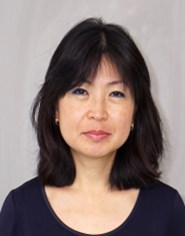
Marcus Schmidt Birgersson is a Lecturer at the Division of Network and Systems Engineering , KTH Royal Institute of Technology , Stockholm, Sweden. His roles include teaching and research in cybersecurity, particularly focused on Internet of Things (IoT) systems. Research Interests : Cybersecurity for IoT and cloud environments Secure system architecture design Trusted execution environments and privacy-preserving computing Publications : Recent work explores secure cloud analytics using trusted execution environments (2024) Research on multi-user security architectures for IoT systems (2021) Involvement : Course assistant and teacher for subjects including Applied Cryptography, Computer Networks, and Computer Systems Examiner and course responsible for Computing Systems Engineering
Seif Haridi is a Professor at KTH Royal Institute of Technology in Stockholm, Sweden, specializing in parallel and distributed computing systems. He holds dual roles as Chair-Professor of Computer Systems and Chief Scientific Advisor at RISE SICS. His research integrates systems engineering with theoretical foundations, focusing on programming systems, distributed computing, and big data technologies. Key contributions include co-designing SICStus Prolog, the Mozart Programming System, and Apache Flink, as well as leading the development of HOPS, a European big data platform awarded the IEEE Scale Prize 2017. He has led major EU projects like EIT-Digital’s cloud computing initiative and co-founded startups such as LogicalClocks and HiveStreaming. His teaching includes courses on distributed algorithms and peer-to-peer computing at KTH. Notable awards include the European Data Science Technology Innovation 2019. His work spans systems like HOPS, Flink, and Kompics, emphasizing scalability and robustness in distributed environments. Current projects include CDA (Continuous Deep Analytics) and ExtremeEarth for geospatial data analysis. Research interests include distributed algorithms, consensus protocols, and cloud-native systems. His lab’s contributions to scalable storage (e.g., HopsFS) and stream processing (Apache Flink) highlight his impact on both academia and industry.
Yuan Yao serves as an Assistant Professor in the Department of Information Technology at Uppsala University, Sweden. His academic role spans teaching and research within the Computer Systems division, focusing on cutting-edge computer architecture and parallel computing systems. He maintains active collaborations across international institutions, particularly in energy-efficient hardware design and emerging computing paradigms. His educational journey includes: B.S. in Micro-electronics from Northwestern Polytechnical University, China (2009) M.S. in System-on-Chip Design from KTH Royal Institute of Technology, Sweden (2014) Ph.D. in Electrical Engineering and Computer Science from KTH Royal Institute of Technology (2019) Yao's research centers on power and thermal management for chip multi-processors, Network-on-Chips (NoCs), and GPUs. He pioneers hardware/software co-design for high-performance computing, coherency mechanisms for emerging memory technologies, and performance analysis of on-chip networks. Recent work expands into neural network acceleration and battery-less Internet of Things architectures, reflecting a trajectory toward energy-constrained specialized systems. His methodology integrates formal modeling with practical implementation for real-world impact. Publication trends reveal consistent innovation in energy efficiency across parallel architectures. From foundational DVFS techniques for NoCs (2016-2018) to recent breakthroughs in battery-less IoT (2023-2024), his work demonstrates evolutionary progression toward novel computing domains. Key thematic threads include thermal-aware optimization, memory consistency protocols, and hardware acceleration for AI workloads, with applications spanning data centers to embedded systems. Scientific recognition includes: Best paper candidate at IEEE International Symposium on High Performance Computer Architecture (HPCA) 2018 for in-network packet generation research Yao actively supervises graduate researchers and leads collaborative projects in computer architecture. His grant portfolio supports work on battery-less IoT systems and neural network accelerators, though specific funding details aren't publicly enumerated. Current projects emphasize sustainable computing through novel architectures for energy-harvesting environments. He operates within Uppsala University's Computer Systems division, contributing to research groups focused on hardware acceleration, embedded systems, and networked architectures. His lab environment fosters interdisciplinary work bridging computer architecture, energy harvesting, and machine learning for next-generation computing platforms.
Michael Mattsson is a Professor in the Department of Software Engineering at Blekinge Institute of Technology (Faculty of Computing). His research focuses on software engineering practices, particularly in decision models for asset selection, framework evolution, and software architecture evaluation. Industrial collaboration and empirical validation are central to his work. Research Themes: Decision models, framework stability, quality attribute trade-offs, and industrial software evaluation. Projects: Completed the VITS project on test data visualization and contributed to the ORION project (funded by the Knowledge Foundation). Publications: Key topics include asset selection surveys, framework evolution comparisons, and systematic mapping studies in software engineering.
Masoumeh Ebrahimi is an Associate Professor at KTH Royal Institute of Technology, Division of Electronics and Embedded Systems, and holds an Adjunct Professor position at the University of Turku, Finland. She leads research in hardware acceleration, neural architecture search, and fault-tolerant systems. Her work bridges machine learning, embedded systems, and network-on-chip (NoC) design. Research Interests: Hardware-Accelerated Machine Learning 6G Network Architectures Fault-Tolerant Computing High-Performance GPU Systems Network-on-Chip (NoC) Design Federated Learning Key Projects: Co-supervisor of Hui Chen’s postdoc project Generalizing hardware acceleration for nonlinear functions . Active in Digital Futures, a cross-disciplinary center focusing on societal challenges using digital tech. Collaborates on edge computing, 6G networks, and resilient embedded systems. Labs & Teams: Core member of KTH’s Digital Futures initiative, advancing AI accelerators and next-gen communication systems. Engaged in EU-funded projects on NoC reliability and federated learning frameworks.
Pedro Delgado Roque is a Postdoctoral Researcher at the Royal Institute of Technology (KTH) in Stockholm, affiliated with the Wallenberg AI, Autonomous Systems and Software Program (WASP). He is part of the Division of Decision and Control Systems (DCS) and leads the establishment of the Space Robotics Laboratory at KTH. His research focuses on Space Robotics, Control Theory, and Computer Vision, with contributions to projects like DISCOWER, Space Cobot, and MoonHopper. He obtained his Ph.D. in 2024 under Professors Dimos Dimarogonas, Mikael Johansson, and Jana Tumova. **Research Interests**: Space Robotics: Weightless robotics, collaborative robotics, exploration robotics. Control Theory: Model predictive control, collaborative load transportation. Computer Vision: Visual-servoing, distributed vision systems. **Awards**: ICRA 2022 Outstanding Coordination Award for work on decentralized collaborative UAV control. **Advising**: Supervised 11+ Master's and thesis students, including works on failsafe control for space systems, predictive controllers in microgravity, and multi-agent inspection systems. Collaborated with NASA Astrobee and PX4 projects. **Labs & Projects**: Co-founded the DISCOWER project with 4 PhD students, 2 master students, 6 professors, and a postdoc team. Developed the Space CoBot aerial robot for indoor microgravity testing.
Marjan Sirjani is a Professor at Mälardalen University, affiliated with the School of Innovation, Design and Engineering, and the Division of Computer Science and Software Engineering. Her research focuses on cybersecurity, formal verification, and cyber-physical systems, with notable contributions to actor-based modeling (e.g., Timed Rebeca) and tools like AFRA for model analysis. She specializes in integrating formal methods into safety-critical systems, including automotive cybersecurity, ROS2 robotics, and blockchain-based IoT systems. Her work emphasizes rigorous analysis of protocols, concurrency, and real-time constraints. Recent projects include the CRYSTAL framework for CPS assurance, Tiny Twins for runtime attack detection, and applying LLMs for automated test generation. She also explores semantic segmentation in construction and compositional analysis of distributed systems. Publications highlight advancements in protocol learning, controller synthesis for safety, and model-driven development. Her research bridges theoretical foundations (e.g., automata theory, temporal logics) with practical applications in autonomous systems, medical device interoperability, and smart mobility. Labs/Teams: Involved in the Rebeca tool development (AFRA) and collaborative projects on CPS security. Grants: Not explicitly listed but implied through project involvement.
Alessandro Papadopoulos is a Professor of Electrical and Computer Engineering at Mälardalen University (MDU) and a QUALIFICA Fellow at the Institute for Software Technology and Software Engineering (ITIS), University of Málaga. He leads the Complex Real-Time Embedded Systems (CORE) research group and serves as Scientific Leader for Applied AI under the AI@MDU initiative. His research focuses on control theory, robotics, and real-time embedded systems, emphasizing interconnected systems and uncertainty management. Education: BSc (2008) and MSc (2010) in Computer Engineering from Politecnico di Milano; PhD (2014) in Information Technology, Systems and Control from the same institution. Postdoctoral fellowships at Lund University’s Department of Automatic Control and Politecnico di Milano’s Dipartimento di Elettronica, Informazione e Bioingegneria. Research interests include control theory applications to computing systems, distributed systems, and AI integration. His work addresses challenges in real-time, embedded, and edge computing. Notable contributions include VR starting grant (2020) and SSF strategic mobility grant (2020), and the Most Influential Paper Award at SEAMS 2025. He has advised PhD students like Anna Friebe and Daniel Bujosa Mateu. Grants and collaborations include projects with ABB industrial automation and leadership roles in conferences (e.g., DEBS 2025 Workshop/Tutorial Chairs). His research group explores autonomous systems, cybersecurity in industrial networks, and cloud manufacturing resilience. Labs/teams: CORE group, collaborating with Prof. Thomas Nolte.
Masoud Daneshtalab is a Professor at Mälardalen University, leading the Heterogeneous System research group (HERO). He previously held roles as a European Marie Curie Fellow at KTH Royal Institute of Technology (2014) and as a university lecturer and group leader at the University of Turku, Finland (2012-2014). His research focuses on interconnection networks, hardware/software co-design, deep learning acceleration, and evolutionary optimization. He specializes in fault-tolerant DNN accelerators, time-sensitive networking (TSN), and embedded systems. His work bridges theoretical advancements with practical implementations, emphasizing reliability and efficiency in edge computing and AI applications. Research interests include: Network-on-Chip (NoC) architectures and congestion prediction Fault resilience in deep neural networks (DNNs) Optimization of federated learning and homomorphic encryption for edge AI Integration of TSN with 5G and automotive systems Hardware acceleration techniques for computational efficiency Recent publications emphasize advancements in robust AI architectures, fault tolerance mechanisms, and TSN-based communication protocols. His work often addresses practical challenges in deploying machine learning models on resource-constrained devices. He actively contributes to interdisciplinary projects in autonomous systems, healthcare monitoring via FMCW radar, and neural architecture search for embedded applications. Labs/Teams: Leads the HERO group at Mälardalen University, focusing on heterogeneous computing systems and real-time embedded systems.
Sebastian Hönel is a postdoctoral researcher at Linnaeus University, affiliated with the Faculty of Technology and the Department of Computer Science and Media Technology. He is an active member of the Data Intensive Software Technologies and Applications (DISTA) research group and currently serves as a co-Principal Investigator in the project "In-line visual inspection using unsupervised learning" focused on manufacturing defect detection using machine learning techniques. Hönel completed his Doctoral Thesis in 2023 titled "Quantifying Process Quality: The Role of Effective Organizational Learning in Software Evolution" and earned his Licentiate Thesis in 2020 on "Efficient Automatic Change Detection in Software Maintenance and Evolutionary Processes," both from Linnaeus University. His educational background demonstrates a strong foundation in software engineering and data analysis. Hönel's research spans software engineering, machine learning, and data science. Initially focusing on applying Machine Learning and Deep Learning to software evolutionary processes and organizational learning, his current work emphasizes unsupervised and zero/few-shot learning techniques for industrial anomaly detection. He has particular expertise in Deep Density Estimation (especially Normalizing Flows) and Representation Learning, with applications in manufacturing quality assessment and software maintenance. His research interests include anomaly detection methodologies, architectural innovations in autoencoders, and methodological considerations for evaluation metrics in machine learning applications. An analysis of his publication record reveals a consistent focus on bridging software engineering with advanced machine learning techniques. His most recent work shows a strategic shift toward industrial applications of unsupervised learning, particularly in manufacturing defect detection, while maintaining his foundational work in software metrics and quality assessment. The publications demonstrate progression from theoretical software metrics to practical applications of deep learning in quality inspection systems. Hönel actively contributes to academic education by teaching (Deep) Machine Learning courses (4DV652, 4DV660, 4DV661) and previously served as a teaching assistant for agile product development courses (1DV508, 4DV611). His role as co-PI on the visual inspection project indicates successful research funding and leadership capabilities. While specific grant details aren't provided in the available information, his position suggests ongoing research support. As part of the DISTA research group, Hönel collaborates extensively with colleagues including Ericsson, Löwe, and Wingkvist on projects that combine software engineering with advanced data analysis techniques. His work environment supports interdisciplinary research at the intersection of computer science, software engineering, and machine learning applications, with particular emphasis on practical implementations in both software development contexts and manufacturing quality control systems.
Sonia-Florina Horchidan is a doctoral researcher at the KTH Royal Institute of Technology in Stockholm, Sweden. She is affiliated with the Division of Software and Computer Systems within the School of Electrical Engineering and Computer Science (EECS), working under the supervision of Associate Professor Paris Carbone in the Data Systems Lab . Her academic activities include teaching assistant roles for courses in distributed systems and data storage paradigms. Research Focus: Graph Databases Machine Learning on Graphs Stream Processing Federated Learning with Privacy Guarantees Approximate Query Processing via ML Serverless Streaming Graph Analytics Scientific Contributions: Her recent publications at venues like EDBT, VLDB, and AI4DB explore intersections between graph data management and machine learning. Key themes include ML inference optimization in streaming systems, privacy-preserving health data forecasting, and innovative graph query execution models. Honors & Service: Co-authored Best Paper at DEEM 2022 Best Paper Award at VLDB 2023 PhD Workshop Program Committee Member, aiDM 2024 Reproducibility Committee Member, ACM SIGMOD/PODS
Simin Nadjm-Tehrani is a Professor and Head of Unit at Linköping University's Department of Computer and Information Science (IDA), leading the Real-time Systems Laboratory (RTSLAB) since 2000. She holds a PhD in Computer Science from Linköping University (1994) and previously served as a full professor at the University of Luxembourg (2006–2008). Her research focuses on cybersecurity, dependability in distributed systems, and formal methods for safety-critical applications. Key research areas include adaptive anomaly detection in critical infrastructures, energy-efficient protocols, and formal analysis of safety protocols. She leads the NEST-project on AI for cyber attack identification and contributes to the Wallenberg AI, Autonomous Systems and Software Program (WASP). Her work addresses challenges in smart grids, edge computing, and secure communication protocols. Publications emphasize practical applications of formal verification in tree ensembles, SCADA systems, and avionics. She organized the 2019 CRITIS conference and collaborates with industry on edge computing benchmarks and secure IoT architectures. Her educational contributions include curriculum design for problem-based learning (PBL) and gender equity initiatives in computer science. Professional roles include leadership in the Software and Systems (SAS) division at IDA, where she oversees interdisciplinary projects combining safety and security constraints. Current efforts target resilient information systems for societal functions like energy and transportation.
Chuan He is an Assistant Professor in the Department of Mathematics at Linköping University, Sweden, affiliated with the Division of Applied Mathematics (TIMA) and the Wallenberg AI, Autonomous Systems and Software Program (WASP). His research bridges continuous optimization and machine learning, focusing on algorithmic efficiency and theoretical foundations. Education: Ph.D. in Industrial and Systems Engineering, University of Minnesota, USA (2019–2023) B.S. in School of Mathematical Sciences, Xiamen University, China (2015–2019) His research interests include deep learning, decentralized and large-scale optimization, high-order methods, and applications in healthcare, scientific computing, and engineering. He develops algorithms with strong theoretical guarantees, particularly in nonconvex optimization settings. His work emphasizes improving the speed, reliability, and scalability of machine learning training processes. His recent publications focus on Newton-CG based methods, augmented Lagrangian techniques, and federated learning under constraints. These contributions span top journals in operations research, optimization, and machine learning, reflecting a strong trend toward integrating second-order optimization with practical machine learning challenges. Scientific Awards: No awards explicitly mentioned in the text. Chuan He advises and collaborates within the WASP Mathematics research environment, particularly in the 'Optimisation for machine learning' group. He previously held a postdoctoral position at the University of Minnesota under Professor Ju Sun. His research is supported through institutional affiliations with WASP and Linköping University. He actively contributes to the academic community through conference presentations at INFORMS, SIAM, and NeurIPS workshops. He is involved in the 'Optimisation for machine learning' research group at MAI, which aims to develop more efficient and theoretically sound algorithms for machine learning. The group focuses on replacing heuristic methods with principled approaches, reducing computational costs in training models.
Anton Cervin is a Senior Lecturer at the Department of Automatic Control, Faculty of Engineering, Lund University. He is currently on leave of duty but remains actively involved in research and supervision. His work spans real-time systems, event-based control, cloud computing, and embedded systems, with strong ties to industrial applications and sustainable technologies. His research interests include: Event-Based and Stochastic Control Networked and Embedded Control Systems Cloud-Based Control and Resource Management Real-Time Scheduling and Performance Analysis Digital Twins and Fluid Modeling in Cloud Environments He has led major research projects funded by the Swedish Research Council, WASP, and ELLIIT, focusing on robust and secure cloud control, self-adaptive systems, and distributed learning. His software tools—TrueTime, Jitterbug, and TinyRealTime—are widely used in academia and industry for simulating and analyzing real-time control systems. The most recent publications highlight a shift toward intelligent, adaptive control using reinforcement learning, fluid modeling for microservices, and timing-robust cloud control—indicating a strong trend in merging traditional control theory with modern computing paradigms. His scientific contributions have been recognized with multiple Best Paper Awards: Best Paper Award - ECRTS 2021 Best Paper Award - RTNS 2016 Best Paper Award - RTCSA 2004 Best Paper Award - ECRTS 2003 Best Student Paper Award - RTCSA 1999 Anton Cervin has supervised numerous PhD students, including Max Nyberg Carlsson, Nils Vreman, and Claudio Mandrioli, and has served in key academic roles such as Director of PhD Studies and Deputy Head of Department. He has also led educational initiatives like doctoral study circles on programming languages and the history of control. He is affiliated with research environments such as WASP and ELLIIT and contributes to UN Sustainable Development Goals through advancements in smart systems and sustainable automation.
Natalya Pya Arnqvist is an Associate Professor in Mathematical Statistics at Umeå University, Sweden. She is affiliated with the Department of Mathematics and Mathematical Statistics and has active roles in research groups focused on Functional Data Analysis, Semiparametric Regression, and Statistical Learning for Spatio-Temporal Data. Her career includes prior positions at Nazarbayev University (2015-2020), University of Bath (2011-2015), and KIMEP University (2000-2005). Education : PhD in Statistics (University of Bath, UK, 2007-2010), CSc in Physical and Mathematical Sciences (Institute for Mathematics, Kazakhstan, 2000-2005). Her research centers on statistical regression modelling and functional data analysis , with significant contributions to shape constrained additive models (SCAMs) and model-based functional clustering . She has developed R packages such as scam , fdaMocca , and nilde for these methodologies. Recent publications highlight applications in applied demography , defect detection , and nonlinear state space modeling , reflecting her focus on bridging statistical theory with industrial and ecological challenges. She teaches undergraduate and graduate courses in probability, regression, and statistical learning.