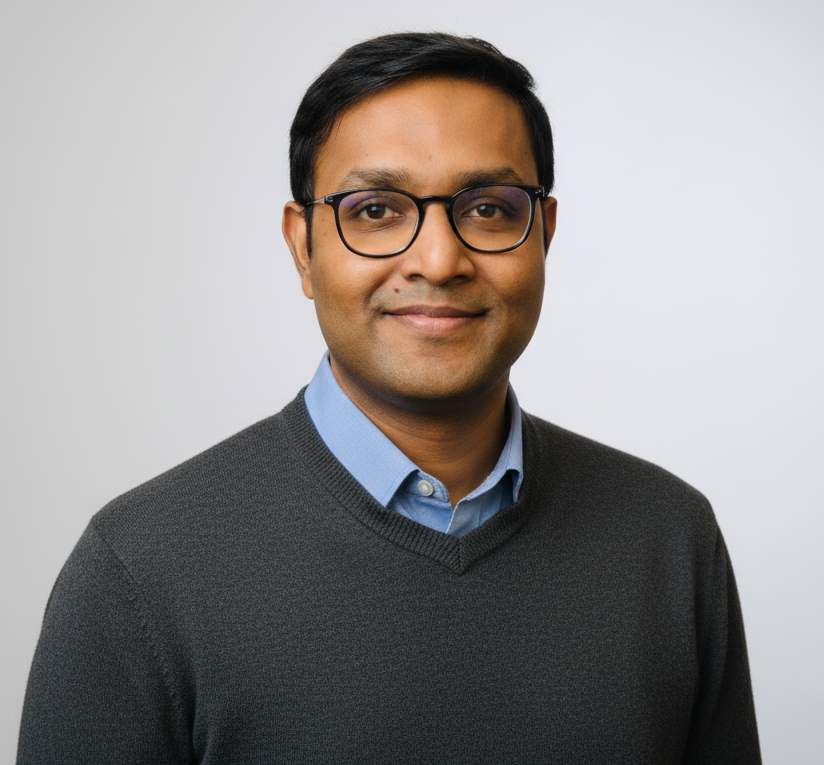
Rajmadan Lakshmanan is a Research Fellow at the Faculty of Mathematics , Technische Universität Chemnitz , specializing in optimal transport theory, stochastic optimization, and computational finance. Since 2021, he has contributed to academic development through teaching assistant roles and active participation in research seminars and workshops.
Dr. Yulia Sandamirskaya is the Head of Research Center "Cognitive Computing in Life Sciences" at Zurich University of Applied Sciences (ZHAW), focusing on neuromorphic computing applications for embodied artificial intelligence. Her work bridges computational neuroscience and robotics, emphasizing neural-dynamic architectures for real-time decision-making, learning, and sensorimotor integration in autonomous agents. Key Research Areas: Neuromorphic hardware, dynamic neural fields, spiking neural networks, spatial language modeling, and autonomous sequence generation. Projects: Developed controllers for UAVs and robotic arms using event-based vision sensors, explored on-chip unsupervised learning, and designed models for spatial language interpretation in robots. Scientific Contributions: Her publications span robotics conferences and journals like Science Robotics and Frontiers in Neurorobotics , addressing topics such as path integration, obstacle avoidance, and cognitive architectures. Recent work (2024) includes visual odometry with resonator networks and hyperdimensional scene factorization on neuromorphic chips. Advising: Supervised multiple MSc theses at ETH Zurich and NSC/INI programs, mentoring students on neuromorphic navigation, spiking networks, and tactile learning. Collaborated with institutions like ETH Zurich, University of Queensland, and INI Bochum. Labs & Collaborations: Leads the "Neuromorphic Computing Applications: Embodied AI" group at ZHAW, partnering with INIvation (Zurich) and Jörg Conradt (KTH) on neuromorphic hardware implementations. Projects integrate cognitive models with robotic platforms, emphasizing energy efficiency and low-latency interaction.
Linda Düperthal is a Researcher at the Institute for Didactics of General Education at the University of Münster, where she has worked since August 2020 while pursuing doctoral studies. Her research examines digital competence development for prospective primary school teachers, with emphasis on social studies instruction and teaching-learning laboratory applications. Her academic credentials include: Doctoral studies in Didactics of General Education, Educational Science and Psychology at University of Münster (2020–present) 2nd State Examination for Primary School Teaching from ZfsL Gelsenkirchen (2018–2020) Master of Education in Primary School Teaching (TU Dortmund, 2016–2018) Bachelor of Arts in Primary School Teaching (TU Dortmund, 2012–2016) Düperthal's research investigates how digital media enhances teacher professional knowledge, particularly in designing differentiation measures for scientific knowledge development. She focuses on practical applications within social studies education, analyzing planning processes for digitally supported lessons and reflective teaching practices in reduced-complexity laboratory settings. Her work bridges theoretical frameworks with classroom implementation strategies for preservice teachers. Her 2022–2024 publications reveal a cohesive trajectory in digital professional knowledge assessment, emphasizing measurement frameworks and laboratory-based skill development. These works consistently address the integration of digital tools for differentiated instruction in social studies, with increasing methodological sophistication in quasi-experimental designs across consecutive studies. Active in professional communities since 2020, she contributes to the Society for Didactics of Social Studies (GDSU) and Society for Didactics of Chemistry and Physics (GDCP), presenting annual conference papers on digital teacher competence modeling. Her collaborative work with Schreiber and Windt dominates current research outputs. As core personnel in the University of Münster's Quality Initiative for Teacher Training (second funding phase), she develops and evaluates a seminar that builds media-pedagogical skills through lesson planning and teaching-learning laboratory testing. This project employs quasi-experimental pre-post designs to measure digital teacher skill acquisition, specifically targeting differentiation strategies for scientific knowledge development in diverse classrooms.
Professor Kai Rannenberg is the Chair of Mobile Business & Multilateral Security at Goethe University Frankfurt since 2002 and holds a Visiting Professorship at the National Institute for Informatics in Tokyo since 2012. He previously worked with the System Security Group at Microsoft Research Cambridge on Personal Security Devices & Privacy Technologies. His extensive academic career spans over three decades with significant contributions to security and privacy research. His research interests focus on mobile and embedded systems, multilateral security in mobile business, location-based services, transport systems, and industrial applications. He has made significant contributions to privacy and identity management, particularly in attribute-based authorization, communication infrastructures and devices, and security/privacy standardization. His work emphasizes balanced security approaches that protect all stakeholders' interests. Professor Rannenberg's publications reveal a strong focus on practical privacy solutions for mobile and IoT environments, with recent work examining privacy-enhancing technologies adoption, mobile augmented reality security, and enterprise smartphone app risk assessment. His research consistently bridges theoretical security concepts with practical implementation challenges across various domains including e-commerce, social media, and critical infrastructure protection. IFIP Honorary Treasurer (2021-2024) and President-elect (2024-present) IFIP Vice President (2015-2021) and Councillor (2009-2015) Chair of IFIP TC-11 'Security and Privacy Protection in Information Processing Systems' (2007-2013) Academic expert in ENISA Management Board (2004-2013) and Advisory Group (2013-2022) Chair of CEPIS Legal & Security Issues Special Interest Network (since 2003) Editor-in-chief of IFIP Advances in Information and Communication Technology (since 2014) Professor Rannenberg has coordinated several leading EU research projects including the Network of Excellence 'Future of Identity in the Information Society' and the Integrated Project 'Attribute based Credentials for Trust' (ABC4Trust). He currently coordinates CyberSec4Europe, a pilot for the European Cybersecurity Competence Network. His leadership extends to ISO/IEC standardization work, where he served as Convenor of SC 27/WG 5 'Identity management and privacy technologies' and previously coordinated the 'Kolleg Security in Communication Technology' sponsored by Gottlieb Daimler & Karl Benz Foundation. His research group at Goethe University Frankfurt maintains active collaborations with industry and government agencies, particularly in the areas of mobile security, privacy-enhancing technologies, and standardization efforts. The group has recently received funding from the Goethe-Corona-Fonds for research on the German Corona Warning App adoption factors.
Patrick Schäfer is a Researcher at the Institute of Computer Science, Humboldt University of Berlin. His work focuses on time series analytics, bioinformatics, and data series management. He contributes to unsupervised learning algorithms and temporal data mining. Affiliation: Institute of Computer Science, Faculty of Mathematics and Natural Sciences, Humboldt University of Berlin Email: Patrick.Schaefer@hu-berlin.de Phone: 030 2093-41287 Address: Unter den Linden 6, 10099 Berlin Research Interests His research spans time series classification , segmentation algorithms , and bioinformatics data management . He develops tools for unsupervised analysis of multidimensional temporal data, focusing on motif detection, similarity search, and efficient indexing. Key Themes : Parameter-free temporal data analysis High-dimensional time series similarity search Unsupervised motif discovery Human activity segmentation benchmarks Integration of time series analytics with molecular simulations
Dr. Jan Grewe is a Senior scientific employee at the Institute for Neurobiology, Department of Biology, Faculty of Science at Eberhard-Karls University Tübingen. His research focuses on neuroethology and electrophysiology, particularly studying sensory information processing in weakly electric fish. He is affiliated with the Neuroethology research group led by Prof. Dr. Jan Benda. Dr. Grewe's primary research interests include neural coding, electrosensory processing, and computational neuroscience. He investigates how sensory information is processed by the nervous system to guide behavior, with a specific focus on weakly electric fish as a model system. His work combines electrophysiological recordings with computational approaches to understand neural mechanisms. He is also a strong advocate for open science and open data practices. His recent publications demonstrate expertise in neural coding, electrosensory systems, and data management. The research spans from basic neural mechanisms in weakly electric fish to developing computational models and data standards. His work shows a consistent focus on understanding how neural systems process information efficiently, with applications to both biological and artificial systems. Dr. Grewe has been actively involved in teaching and mentoring, including organizing the G-Node Course on Neural Data Analysis and mentoring in the Google Summer of Code program. His GitHub profile shows active contributions to neuroscience software projects like NIX and odML, which facilitate data sharing and reproducibility in neuroscience research.
Katharina Naumann is a researcher in the Department of Psychology at the University of Tuebingen, specializing in multisensory integration, knowledge space theory, and cognitive modeling. She contributes to academic software development, including R Shiny apps for psychological model simulations. Dipl.-Psych., 2015, University of Tuebingen Erasmus Intensive Program: Quantitative Psychological Processes, 2014, University of Tartu, Estonia Erasmus Intensive Program: Quantitative Psychological Processes, 2013, University of Oulu, Finland Semester Abroad, 2011, University of Otago, New Zealand Her research focuses on integrating sensory data, modeling psychological processes mathematically, and advancing quantitative methods in education. She has developed tools like the nlsem R package for nonlinear structural equation mixture models and interactive Shiny apps for psychometric analysis. Her publications highlight interdisciplinary work bridging psychological theory with computational statistics. Notable contributions include modeling multisensory integration time-windows and identifiability in local independence frameworks. Naumann has taught courses like Praktikum Datenerhebung und Auswertung and Tutorium Forschungsmethoden der Psychologie, and participated in the Erasmus+ Project Tools for Teaching Quantitative Thinking (2017). Contact: katharina.naumann@uni-tuebingen.de , +49 (0)7071 29-78340, Room 4.536, Schleichstr. 4, 72076 Tübingen.
Prof. Dr. Martin Biewen is a Full Professor of Statistics, Econometrics and Quantitative Methods at the University of Tübingen 's Faculty of Economics and Social Sciences. Since 2023, he serves as Scientific Director of the Institute for Applied Economic Research (IAW Tübingen) and is a member of the Cluster of Excellence - Machine Learning for Science. His research spans income distribution , labor economics , education economics , and microeconometrics , with recent work applying machine learning to inequality analysis. PhD, University of Heidelberg (2000) Habilitation, University of Mannheim (2005) His methodological innovations include bootstrap inference for inequality measurement and Stata implementations of decomposition techniques. He has served on multiple advisory boards including the German Federal Ministry of Labour and Social Affairs and the German Economic Association 's standing committees. Current grants include DFG Priority Programme 1764 and leadership roles in the LEAD Graduate School. Articles demonstrate expertise in minimum wage impacts , wealth inequality , and gender gaps in economic literacy . He has developed statistical software packages for Stata and R used in inequality analysis across 20+ journals.
Prof. Miriam Clincy is a Professor of Mathematics, Physics, and STEM Teacher Training at Hochschule Esslingen University of Applied Sciences. She holds roles as University Representative for Higher Education and Associated Member of the Tübingen School of Education (TüSE). Her work focuses on innovative educational technologies, particularly online assessment systems like STACK in Moodle, and teacher training methodologies. Education: PhD in Physics, University of Edinburgh (2003) Physics Diploma (M.Sc. equivalent), Universität Heidelberg & University of Edinburgh (2000) Research Interests: Prof. Clincy bridges theoretical physics and STEM education. Key areas include online testing innovations, peer feedback systems, and teacher training through simulation-based assessments. She also maintains research on non-equilibrium systems from her earlier work in statistical mechanics. Publications: Recent work emphasizes educational technology (e.g., sandbox testing environments, Moodle integration) alongside foundational physics contributions in driven systems and phase transitions. Awards: Baden-Württemberg-Zertifikat für Hochschuldidaktik (2020) Advising & Grants: As Dean of Study (2019–2021), she oversaw TVET teacher training accreditation. Current projects include collaborative initiatives with the University of Tübingen and participation in the „Lehre hoch n“ network for educational innovation. Labs/Teams: Active in Hochschule Esslingen’s Basic Sciences faculty, contributing to curriculum development and assessment frameworks.
Nuremberg Institute of Technology Georg Simon OhmGermany
Prof. Michael Koch is a Professor at Technische Hochschule Nürnberg, specializing in interdisciplinary research at the intersection of robotics, materials science, and industrial engineering. His work focuses on advancing additive manufacturing, robotics integration, and computational simulation in manufacturing processes. He holds a Dr.-Ing. and Dipl.-Wirt.-Ing., reflecting his expertise in engineering and applied sciences. Research interests include 3D printing optimization, cyber-physical systems, and safety analysis of materials under mechanical stress. He has contributed to innovations in robotics programming via augmented reality and developed frameworks for automated manufacturing processes. His studies on biomedical applications, such as ovarian cancer modeling, demonstrate a cross-disciplinary approach. Key projects involve robot-guided CT scanning for automotive industry 4.0, part orientation evaluation for additive manufacturing (Poeam), and safety protocols for explosives (PBX). His work emphasizes integrating real-world geometry data into simulations to improve accuracy and efficiency. Prof. Koch’s publications span over three decades, with a focus on manufacturing, robotics, and materials science. He has pioneered methods for energy-efficient CO2 capture systems and explored microstructural changes in materials under dynamic loading.
Max Planck Institute for Gravitational PhysicsGermany
Elisa Maggio is a Research Fellow at the Max Planck Institute for Gravitational Physics (Albert Einstein Institute) in Potsdam, Germany. She holds a PhD from Sapienza University of Rome, where her thesis, Probing new physics on the horizon of black holes with gravitational waves , earned multiple awards including the Amaldi Research Center Prize, Giulio Rampa Prize, and Fubini Prize. Her work focuses on testing general relativity in extreme environments using gravitational waves, particularly investigating the nature of black hole horizons and alternative theories of gravity. As a Marie Curie Fellow, she contributes to the ThorGW project, exploring horizon properties with future detectors like LISA and the Einstein Telescope. Her research involves modeling gravitational wave signals from compact object mergers, analyzing ringdown phases, and developing parametrized waveform models for precision tests. Notable contributions include studies on horizonless compact objects and their gravitational wave signatures. Maggio’s position is supported by grants from the Leibniz Prize (DFG) and Marie Skłodowska-Curie Actions. Elisa has been recognized with prestigious honors such as the Laura Bassi Prize for early-career women in physics (2024) and the Sapienza University of Rome’s thesis prize (2025). Her work bridges theoretical physics with observational challenges, advancing our understanding of gravity’s limits in strong-field regimes.
Schloss Dagstuhl - Leibniz Center for InformaticsGermany
John Hughes is a Professor at Chalmers University of Technology. His research focuses on functional programming, software testing, and formal methods. He is a co-author of the Haskell programming language and a pioneer of QuickCheck, a property-based testing tool. His work bridges foundational theory with practical applications in software engineering. Research Interests: Development of functional programming paradigms and their applications Property-based testing and automated software validation Type systems and compiler optimization techniques Concurrency and parallelism in functional languages His publications span influential works like Why Functional Programming Matters (1989) and A History of Haskell (2007). He has contributed to open-source tools and frameworks widely used in academia and industry.
Schloss Dagstuhl - Leibniz Center for InformaticsGermany
David Ranum is a computer science educator known for his significant contributions to programming language education, particularly focusing on Python as a teaching language. His work centers around developing innovative curriculum structures and interactive learning materials for introductory computer science courses. His research interests span computer science education, programming language pedagogy, and the development of interactive learning systems. Ranum has pioneered approaches to teaching introductory programming that emphasize student success through carefully structured curriculum sequences and the strategic use of Python as a first programming language. Analysis of his publication history reveals a consistent focus on improving computer science education through practical, classroom-tested approaches. His work on interactive learning platforms, particularly the Runestone interactive system, demonstrates his commitment to moving beyond traditional textbook formats to create more engaging educational experiences. Ranum has been active in major computer science education venues including SIGCSE and the Journal of Computing Sciences in Colleges, where he has presented numerous papers on curriculum design and programming language education.
Schloss Dagstuhl - Leibniz Center for InformaticsGermany
Amanda M. Holland-Minkley is a Professor at Cornell University, USA, with a focus on computer science education and curriculum design. Her work emphasizes integrating liberal arts principles into computing programs and developing identity-focused pedagogical frameworks. Education: PhD in Computer Science from Cornell University (2004) Her research interests include curriculum innovation, interdisciplinary teaching, and aligning liberal arts values with computing education. She has co-authored numerous publications in journals like J. Comput. Sci. Coll. and conferences such as SIGCSE, often collaborating with peers like Jakob Barnard and Grant Braught. Recent articles highlight her contributions to creating distinctive computing curricula for liberal arts institutions, using structured design processes, and redefining program-level outcomes. She has no listed scientific awards or student advisement records in the provided data.
Schloss Dagstuhl - Leibniz Center for InformaticsGermany
Charles L. Isbell Jr. is a Professor in the College of Computing at Georgia Institute of Technology. His work spans foundational research in artificial intelligence, machine learning, and robotics, with a focus on human-robot interaction, reinforcement learning, and educational technology. He leads efforts in scalable online education programs and contributes to policy discussions on AI's societal impact. Research Interests: Isbell's research emphasizes practical and theoretical advancements in AI systems, including Bayesian methods, multi-agent systems, and the ethical implications of AI. He explores how machines can learn from human interaction and adapt to complex environments. His recent work addresses challenges in robotics collaboration, scalable educational platforms, and the development of robust reinforcement learning algorithms. Publications Trends: His articles reflect a commitment to advancing AI through interdisciplinary approaches, with contributions to robotics collaboration (e.g., Nash equilibrium frameworks), scalable education systems, and foundational work in reinforcement learning and imitation learning. Recent collaborations include studies on machine learning systems engineering and long-term AI policy. Awards: No awards explicitly listed in the provided text. Advising & Grants: While specific grants are not detailed here, his extensive publication record indicates sustained research funding and mentorship of students in AI and robotics. His work on online education at scale highlights contributions to pedagogical innovation.