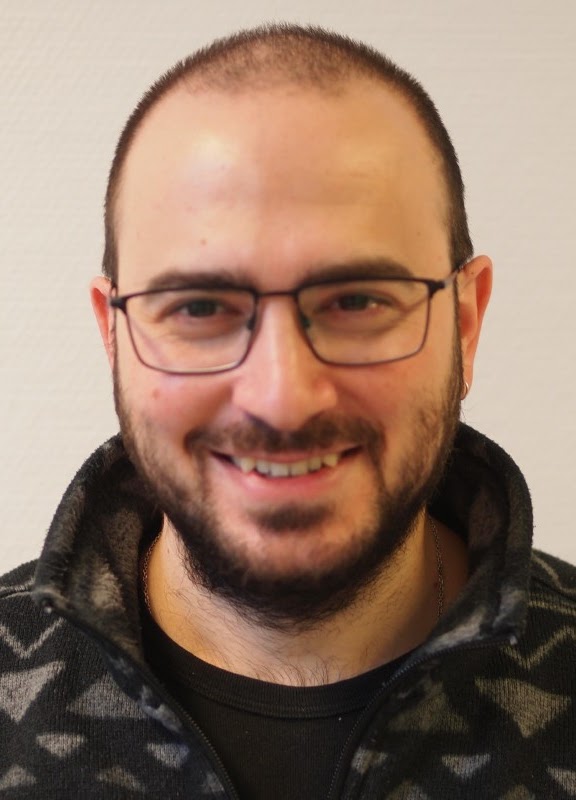
Pernille Bjørn is a Professor in Computer Supported Cooperative Work (CSCW) at the Department of Computer Science , University of Copenhagen (DIKU), where she has been since May 2015. Her research investigates collaborative work practices to design cooperative technologies, focusing on domains like healthcare, global software development, startup companies, and digital fabrication. Faculty of Science, University of Copenhagen Human-Centred Computing Section Research Interests : Bjørn’s work spans CSCW , Human-Computer Interaction , and Digital Fabrication , with applications in healthcare systems, cross-cultural software development, and inclusive technology design. She explores collaborative virtual reality training, FemTech, and crisis computing. ACM Distinguished Member (2024) Publications : Published in top venues like ACM Transactions on Computer-Human Interaction , CSCW , and CHI , her recent work examines hybrid work asymmetry, neurodiverse accessibility, and art-driven collaborative research.
Raghavendra Selvan, an Assistant Professor (Tenure Track) at the University of Copenhagen, holds joint appointments in the Machine Learning Section (Department of Computer Science), Kiehn Lab (Department of Neuroscience), and the Data Science Laboratory. His academic journey includes a PhD in Medical Image Analysis (2018), MSc in Communication Engineering (2015), and BSc in Electronics and Communication Engineering (2009). PhD - Medical Image Analysis, University of Copenhagen (2018) MSc - Communication Engineering, Chalmers University (2015) BSc - Electronics and Communication Engineering, BMS Institute of Technology, India (2009) His research focuses on Bayesian Machine Learning with emphasis on Medical Image Analysis, Graph-based Learning, Tensor Networks, Approximate Inference, and Multi-Object Tracking Theory. Recent publications highlight his contributions to environmentally sustainable AI practices, efficient deep learning in medical imaging, and novel applications of tensor networks. Key research areas: Green AI and Environmental Sustainability Medical Image Analysis Graph Neural Networks Crystal Structure Prediction Model Compression Materials Science Applications
Jacob Gorm Davidsen is an Associate Professor at Aalborg University's Department of Communication and Psychology, affiliated with The Faculty of Social Sciences and Humanities. He leads the Collaboratory for Human-Centered Immersive Problem-Solving Spaces (CHIPS) and co-founded initiatives like VILA and AVA360VR. His research focuses on leveraging digital technologies, particularly Virtual Reality (VR), to enhance learning, collaboration, and problem-solving in immersive environments. He holds a PhD in Human Centered Communication and Informatics. Key projects include 'En bedre start' (funded by Independent Research Fund Denmark) exploring VR for teacher training and the 360mash project addressing GPU cloud and software anonymization. His work bridges computer science, education, and human-centered design. Main research interests include immersive VR applications, collaborative learning environments, and digital infrastructure for social sciences. His contributions span 105+ publications, with recent emphasis on activity-based VR frameworks and near-future educational technologies. He serves on editorial boards (e.g., European Journal of Engineering Education) and actively reviews manuscripts. Notable software tools developed include DOTE and AVA360VR for qualitative analysis and video collaboration.
Hanne Leth Andersen is the Rector of Roskilde University and a Professor of University Pedagogy. She holds a PhD and has extensive experience in higher education leadership, including roles as director of the Centre for Teaching Development at Aarhus University and director of the Learning Lab at Copenhagen Business School. Her research focuses on foreign language didactics, university pedagogy, educational quality, and innovative teaching methods. Education: PhD in University Pedagogy. Previous academic positions include Professor of University Pedagogy at Aarhus University and Copenhagen Business School. Research interests emphasize exam form innovations, teaching development, language learning methodologies, and the role of foreign languages in education. She advocates for educational quality and pedagogical strategies to enhance student learning environments. Key awards include Chevalier de l'Ordre de la Légion d'Honneur (France), Commandant of the Ordre des Palmes Académiques (France), and Dannebrog Order (Denmark). Notable contributions include developing teacher training programs and advising on educational policies in Norway, Sweden, Finland, and France. Advising and grants: Pioneered collegial supervision methods for teacher competence development at Aarhus University, contributed to Norway’s university quality systems evaluations, and advised on French bachelor’s program reforms. Engaged in strategic board roles within research, education, and cultural institutions. Labs/teams: Active in Roskilde University’s Rectorate leadership, previously directed Learning Lab at CBS, and collaborates internationally on educational strategy initiatives.
Sara Shafiee is a Senior Researcher at the Department of Civil and Mechanical Engineering , Technical University of Denmark (DTU) . She specializes in product configuration systems, manufacturing engineering, and AI-driven innovation. Her work bridges technical systems with organizational agility, emphasizing sustainability and customer-centric design. External Roles: Founder & CEO of DivERS (Jan 2021–) External Lecturer at Copenhagen Business School (2022–2024) Senior Business Consultant at Haldor Topsoe AS (2017–2019) Research Focus: Her work addresses challenges in product configuration systems, generative AI applications, and sustainable construction. Key themes include: Optimal product design through recommendation systems Agile methodologies in knowledge-intensive development Environmental impact monitoring via configurators Publications Trends (2023–2025): Recent work explores AI-driven manufacturing optimization, consumer-centric innovation strategies, and the integration of environmental monitoring into design systems. High-impact areas include generative AI applications (13K+ downloads) and modular construction configurators. Awards: Agnes & Betzy Award (2025) Nordic Women in Tech Leadership Award (2022) Best Digital Startup (Venture Cup Denmark, 2021) Innovation Fund Denmark Role Model (2018) Advising & Grants: Supervised PhD projects on recommendation systems and configurator design. Lead PI of the RECODE project (DFF Grant DKK 10M+, 2024–2027) focusing on deep learning for engineer-to-order systems. Labs & Teams: Core member of DTU’s Design and Manufacturing Systems group, collaborating with industry partners like Haldor Topsoe and DivERS to develop scalable configurator solutions.
Georgios Arvanitidis is an Associate Professor at the Technical University of Denmark (DTU) in the Department of Applied Mathematics and Computer Science, specifically within the Section for Cognitive Systems (CogSys). He has established himself as a leading researcher in geometric machine learning, focusing on the application of differential geometry principles to enhance machine learning models. His work bridges theoretical mathematics with practical applications in artificial intelligence, with particular emphasis on understanding the geometric structure of data manifolds and latent spaces. Dr. Arvanitidis completed his educational journey with a Bachelor's degree from the Department of Informatics at the Aristotle University of Thessaloniki, followed by a Master's degree in Computer Science from Saarland University supported by the Max Planck Institute for Informatics. He earned his PhD at DTU's Cognitive Systems section under the supervision of Søren Hauberg, with additional research experience at Philipp Hennig's Probabilistic Numerics group. Prior to his current position as associate professor, he was a PostDoc at the Max Planck Institute for Intelligent Systems working with Bernhard Schölkopf. Dr. Arvanitidis's research primarily focuses on differential geometry in machine learning , where he explores how geometric structures can enhance representation learning and statistical modeling. His work in generative models investigates how learning the geometry of data manifolds can improve deep learning architectures. In the domain of deep learning theory , he examines why deep learning models generalize effectively on unseen data, with particular attention to the curvature properties of loss landscapes. His research in approximate Bayesian inference applies geometric principles to improve uncertainty quantification in neural networks. Through his innovative approaches, Dr. Arvanitidis has established himself as a leading researcher in geometric machine learning, contributing to both theoretical foundations and practical applications across various domains including robotics and life sciences. The publication trends of Dr. Arvanitidis reveal a consistent and evolving focus on geometric approaches to machine learning problems. His recent work (2023-2025) demonstrates increasing sophistication in applying Riemannian geometry to deep learning architectures, with particular emphasis on latent space geometry, optimization on manifolds, and geometric interpretations of neural network behavior. A notable pattern is the progression from foundational work on geometric representations to more applied research in areas like robotics and causal inference. His publications span top-tier conferences including NeurIPS, ICML, ICLR, and AISTATS, reflecting the high impact of his research. The interdisciplinary nature of his work is evident in collaborations across mathematics, computer science, and robotics domains, with recent papers addressing challenges in multimodal sampling, safety guarantees for dynamical systems, and counterfactual explanations. Dr. Arvanitidis has received several notable scientific awards and recognitions: Sapere Aude starting grant from the Independent Research Fund Denmark (DFF) GADL funding i-Rase, Pathfinder, and EIC (European Innovation Council) funding Best reviewer award for NeurIPS 2019 Best reviewer award for NeurIPS 2018 Best student paper award at Robotics: Science and Systems (R:SS) 2021 Dr. Arvanitidis actively mentors PhD students and researchers, currently supervising Alejandro Valverde, Johanna Gegenfurtner, and Albert Kjøller Jacobsen. He has previously co-supervised Alison Pouplin's PhD and worked with research assistant Georgios Pantis. His group receives substantial funding through multiple prestigious grants including the Sapere Aude starting grant from the Independent Research Fund Denmark, as well as European Innovation Council funding. He has been instrumental in creating opportunities for students interested in geometric machine learning, offering BSc and MSc thesis projects focused on generative models, deep learning theory, and optimization techniques. Dr. Arvanitidis also contributes significantly to the academic community as a reviewer for top conferences including ICLR and TMLR, and as an area chair for NeurIPS, ICML, AISTATS, and UAI. He co-organized the Machine Learning Summer School 2020 in Tübingen, further demonstrating his commitment to education and community building. Dr. Arvanitidis leads a vibrant research group focused on geometric machine learning within the Cognitive Systems section at DTU. His team includes multiple PhD students working on cutting-edge research at the intersection of differential geometry and artificial intelligence. The group has developed notable software tools, including the "geometric_ml" GitHub repository with over 70 stars, which contains implementations for applying Riemannian geometry in machine learning. His research has practical applications in robotics, where geometric approaches enable more robust motion planning, as evidenced by his work on "Reactive Motion Generation on Learned Riemannian Manifolds" which received a best student paper award. Additionally, his methodologies have found applications in life sciences, as mentioned in his 2022 AISTATS paper. The collaborative nature of his work is evident through extensive partnerships with researchers at institutions including the Max Planck Institute for Intelligent Systems, University of Cambridge, and various European universities. His recent news items indicate active engagement with the academic community through talks, conference presentations, and ongoing supervision of new PhD students joining his group.
Søren Eilers is a Professor at the Department of Mathematical Sciences , University of Copenhagen. His research focuses on Operator Algebras , particularly the classification of C*-algebras related to discrete and low-dimensional structures. He is a member of the FNU network 'Automorphisms and Invariants for Operator Algebras' and advocates for experimental mathematics using computational methods in pure mathematics. Education: MS in Mathematics and Computer Science, University of Copenhagen (1993) PhD in Mathematics, University of Copenhagen (1995) Research Interests: Operator Algebras K-theory Symbolic Dynamics Discrete Mathematics Experimental Mathematics Recent Publications (2016-2024) demonstrate expertise in graph C*-algebras , symbolic dynamics , and computational approaches to pure mathematics, with key collaborations in Denmark, Japan, Canada, and the U.S. Scientific Leadership: President, Danish Mathematical Society (2006-2008) Principal Investigator, Villum Fonden (2012-2016) Main Organizer, Mittag-Leffler Institute Program (2016) Advisory Roles: Supervised 28 master's theses and mentored 9 PhD students/postdocs (2003-2022) across institutions in Denmark, Canada, Japan, and the U.S.
Emilia Mendes is a Full Professor in the Department of Electrical and Computer Engineering at Aarhus University . Her research focuses on Empirical Software Engineering , particularly human-centric approaches, evidence-based decision-making, and the application of machine learning and statistical techniques in software development. Current research themes: Human-Centric Software Engineering, Evidence-Based Research, Statistical/Machine-Learning Techniques, and Value-Based Software Engineering. Developed tools for team climate forecasting, capability measurement, and value-based decision-making. Research Trends: Her work bridges software engineering with psychology (personality traits, team dynamics), machine learning (effort estimation, dementia prognosis), and value-based frameworks for decision-making. She emphasizes industrial applications, including agile methodologies, cross-company predictions, and Bayesian network modeling. Scientific Impact & Awards: 10,018 citations, h-index 58. Ranked #32 in Empirical Software Engineering Scholars (Google Scholar). Ranked #20 in Top Computer Science Scientists in Sweden (2023). Top 2% scientist in the world (2019, 2020, 2022; only female in Sweden for SE in 2022. Nine best paper awards at international conferences. Editorial board member: Information and Software Technology , ACM Computing Surveys , former roles at IEEE Transactions on Software Engineering and others. Grants & Leadership: Awarded €11.921.603 in research grants. Held leadership roles as General Chair (EASE 2017), PC Co-Chair (EASE 2012, ESEM 2012), and active participant in 200+ academic events.
Anders Haug serves as Associate Professor at the Department of Business and Sustainability (DBS) within the University of Southern Denmark's Kolding campus. Having joined the university in 2008 as Assistant Professor in the Department of Entrepreneurship and Relationship Management before transitioning to his current role in 2010, his academic career spans over 15 years of research and teaching in operations, supply chain, and digital transformation contexts. His work bridges theoretical rigor with practical industry applications, particularly in engineer-to-order manufacturing and logistics sectors. Education: PhD in communication, representation and automation of design knowledge (2005-2007) Haug's research centers on information and knowledge management systems, with deep expertise in data quality frameworks, knowledge-based configuration, and digitalization of business processes. His fingerprint reveals distinctive contributions to product configuration systems, digital twin applications, and supply chain resilience—particularly examining how configurators transform warehouse services, manufacturing processes, and product-service ecosystems. Recent work increasingly addresses sustainability through green dynamic capabilities frameworks and life cycle assessment tools, maintaining strong empirical grounding via case studies in Danish manufacturing. Analysis of his 2024-2025 publications shows converging trends: digital technologies (configurators, digital twins) are examined through operational performance lenses while addressing sustainability imperatives. These works span operations management, information systems, and strategic management disciplines but consistently prioritize practical implementation frameworks for manufacturing SMEs. The research demonstrates methodological diversity—from conceptual modeling to empirical case studies—with strong industry relevance in logistics, engineering-to-order contexts, and manufacturing digitization. Scientific Awards: Top read paper in Business 2017/18 (Wiley) (2019) Haug has supervised 34 teaching courses between 2018-2024 covering business information systems, digitalization projects, and supply chain management. His academic service includes extensive peer reviewing for conferences like NOFOMA and DRS, plus organizational roles in Nordic business research networks. While specific grant details aren't provided, his 175+ research outputs and industry collaborations (evidenced by consultant work since 2006) indicate substantial research funding engagement. Media contributions on 3D printing and business process efficiency demonstrate effective knowledge transfer to practitioners. Though no dedicated research lab is specified, Haug's extensive co-authorship network—including collaborations on projects like digital twin implementation and configurator development—reveals embeddedness in multiple research collectives. His industry-facing approach manifests through case studies with logistics providers, manufacturer partnerships, and practical frameworks for warehouse service design and supply chain resilience.
Per Lynggaard is a Professor of Electronics at the Technical University of Denmark (DTU) , leading the B.Eng. program in Electronics. Previously, he held an Associate Professor role at Aalborg University, combining academic excellence with a robust industrial career in technical-scientific research and development. Education: M.Sc. in Electrical Engineering and Information Technology (EE and IT) Ph.D. in Electronics from Aalborg University Research Interests: Focus on Integrated Circuit Design, Wireless Sensor Networks (WSN), Machine Learning, IoT, and Smart City Technologies . His work emphasizes energy-efficient systems, cybersecurity in IoT, AI-driven interference mitigation, and sustainable energy harvesting solutions. He has contributed to UN Sustainable Development Goals through projects addressing smart infrastructure and environmental monitoring. Projects & Collaborations: Leads and participates in EU-funded initiatives such as InnoTech (2023–2025) for green transition solutions and TransportTech (2023–2026) for Industry 4.0 logistics. Active in cybersecurity research via projects like Jamming Against Critical Wireless Communication , aiming to protect critical infrastructure. Awards: Recognized with multiple honors and rewards during his industrial career, though specific names are not listed. His work has been cited widely, with notable impact in IoT security and energy-efficient systems. Advising & Grants: Supervises Turnip T.N. in a PhD project on 6G security protocols. Engaged in securing funding for projects like F2D2: The Community for Dynamic Data (2021–2030), focusing on dynamic data systems and cybersecurity. Labs & Teams: Collaborates in interdisciplinary teams such as the InnoTech TaskForce and F2D2 Community , advancing IoT and AI integration. His research bridges academia and industry, with outputs spanning smart cities, healthcare IoT, and sustainable energy systems.
Krist V. Gernaey is Professor in Industrial Fermentation Technology at the Technical University of Denmark's Department of Chemical and Biochemical Engineering. His research develops computational tools for bioprocess optimization across pharmaceutical, food, and chemical sectors. Research specializes in mechanistic modeling of fermentation processes, process analytical technology (PAT) implementation, and continuous production system design. Current investigations focus on uncertainty analysis methods, data-driven modeling, and novel bioreactor characterization from micro to production scale. Publications demonstrate applications in vaccine manufacturing, wastewater treatment, chromatography simulation, and sustainable chemical engineering. Recent work advances regulatory frameworks for in silico bioprocess models and AI integration in engineering education. Research collaborations span academic institutions and industry partners across Europe. Professional activities include conference organization and editorial responsibilities for chemical engineering journals.
Jonathan Voersaa Wenshøj is an academic researcher at the Department of Computer Science, University of Copenhagen. He contributes to the Machine Learning section's activities spanning theoretical foundations and applications in diverse domains like information retrieval, medical data analysis, remote sensing, sustainability, and biological modeling. The section participates in the SCIENCE AI Centre and collaborates with initiatives like TreeSense for global tree resource analysis. His research intersects machine learning with quantum computing, medical informatics, and sustainability. Recent publications highlight applications in environmental monitoring, healthcare diagnostics, and energy-efficient AI systems. The department provides advanced compute resources including a powerful cluster for intensive machine learning tasks. This researcher's work appears in diverse machine learning domains, with recent publications addressing quantum-inspired architectures, explainable AI in medical imaging, and sustainable computing practices. The section actively hosts events including seminars, conferences, and PhD defences related to machine learning advancements.
Noah Zegna Rothenberger is a Research Fellow at the Software, Data, People & Society (SDPS) section within the Department of Computer Science at the University of Copenhagen . His work focuses on software, process, and data management systems designed to align with human needs and societal value.
Tijs Slaats is an Associate Professor in the Software, Data, People & Society section at the Department of Computer Science, University of Copenhagen. His research focuses on Business Process Management with particular emphasis on declarative and hybrid process notations to provide flexible workflow support for knowledge workers, funded by the Danish Council for Independent Research. His educational background includes: M.Sc. in Information Technology from IT University of Copenhagen Ph.D. in Computer Science from IT University of Copenhagen (supervised by Thomas Hildebrandt) Dr. Slaats specializes in declarative process modeling, particularly Dynamic Condition Response (DCR) graphs which enable flexible workflow systems. His work bridges theoretical foundations with practical applications in cross-organizational settings. Recent research extends into blockchain technologies, smart contracts, and applications in sensitive domains like asylum processing and refugee law. He combines formal methods with empirical evaluation to ensure both correctness and usability of workflow systems. His publication pattern shows increasing application of process mining techniques to blockchain technologies and socially impactful domains, while maintaining core research in Business Process Management. Notable trends include integration of DCR graphs with smart contracts, privacy-preserving techniques for asylum data, and object-centric approaches to process discovery. Research funding includes: Hybrid Business Process Management Technologies project (Danish Council for Independent Research) Technologies for Flexible Cross-organizational Case Management Systems (FLExCMS) industrial Ph.D. project Alongside his academic work, Dr. Slaats maintains strong industry connections through Exformatics A/S where he developed the DCR Graphs workflow solution (www.dcrgraphs.net), and previously worked as a software engineer in the Dutch e-commerce sector. His dual expertise in academia and industry ensures his research addresses real-world workflow challenges while maintaining theoretical rigor.
Niels Henrik Mortensen is a Professor and Head of Section in the Department of Civil and Mechanical Engineering at the Technical University of Denmark (DTU). His research focuses on engineering design and manufacturing systems, with emphasis on product architecture, modularization, maintenance performance, and AI-driven design solutions. He leads initiatives in engineer-to-order systems, lifecycle costing, and digital transformation in manufacturing. Key research interests include optimizing product architectures for modular systems, enhancing maintenance strategies through data analytics, and applying AI to improve CAD design reuse. His work aligns with UN Sustainable Development Goals related to innovation and infrastructure, and sustainable energy systems. Supervisor for 5 active PhD projects focused on modular architectures, logistics services, and configuration systems Published 175+ peer-reviewed articles, including work on AI-based maintenance frameworks and configurator development Recipient of industry collaboration projects with offshore energy and manufacturing sectors Notable contributions include frameworks for maintenance performance diagnostics and adaptable configuration models. His team operates through MEK and CONSTRUCT research groups at DTU.