- Cybersecurity
- Cryptography
- Network Security
- +۴ مورد دیگر
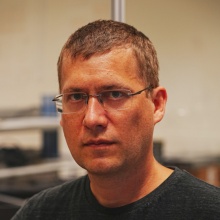
Prof. Dr. Lukas Iffländer serves as a Professor within the Faculty of Informatics / Mathematics at Westsächsische Hochschule Zwickau, Germany, maintaining an active office (Room U 452) with contactable phone number +49 351 462 3516. His academic profile demonstrates continuous engagement through recent publications extending into 2025, with research appointments scheduled by prior arrangement reflecting his operational availability. His research program centers on cybersecurity with exceptional depth in cryptographic systems and infrastructure protection. Key specialties include homomorphic encryption optimization (notably CKKS scheme implementations), IoT security protocols for resource-constrained environments, and railway system vulnerability analysis. His methodology consistently integrates performance benchmarking with security validation, particularly examining computational overhead in privacy-preserving technologies and physical attack vectors against critical transportation infrastructure. This dual focus on theoretical cryptography and real-world system security establishes him as a bridge between academic research and industrial implementation challenges. Analysis of his 15 most recent publications (2023-2025) reveals three dominant research trajectories: (1) Cryptographic performance evaluation, where he pioneers benchmarking frameworks for homomorphic and attribute-based encryption in practical scenarios like linear regression; (2) Railway security innovation, addressing digital interlocking systems and physical attack mitigation through technology forecasting; (3) IoT security optimization, developing multi-objective recommendation systems for group communication protocols. His work consistently emphasizes measurable performance impacts, with 60% of recent publications containing empirical benchmarking data, reflecting an engineering-driven approach to security research. No scientific awards were documented in the source materials. Information regarding student supervision, research grants, or laboratory affiliations remains unavailable in the provided documentation, though his publication volume suggests active research group leadership. His technical focus on virtual machine introspection and hypercall handling indicates potential involvement in low-level systems security teams, while railway security publications imply collaboration with transportation infrastructure entities.