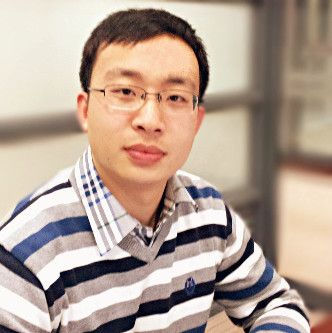
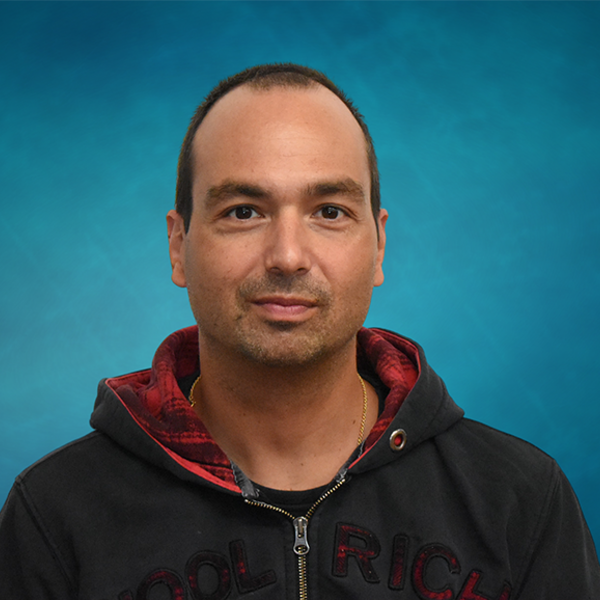
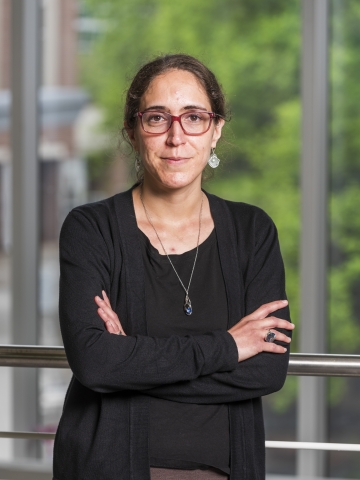
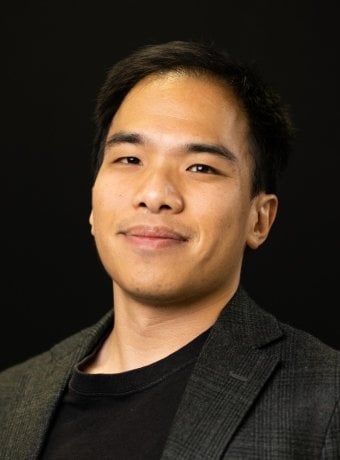
Zhicheng Ji is an Assistant Professor of Biostatistics & Bioinformatics at Duke University, affiliated with the Division of Integrative Genomics. His research focuses on developing computational methods for single-cell RNA-seq , spatial transcriptomics , and genomic data analysis . He teaches courses like BIOSTAT 824: Case Studies in Biomedical Data Science . Research Highlights : Statistical modeling of microbiome data Machine learning for cell segmentation T cell immunology in cancer Multi-omics data integration Spatially variable gene detection Foundation models for epigenetics Scientific Awards : NIGMS Grant (2024-2029) for spatial transcriptomics NIEHS Grant (2023-2028) on PFAS exposure NSF ERC PreMiEr (2022-2027) NCI Grant (2022-2027) on ferroptosis
Roar Bakken Stovner is an Associate Professor at the Department of Primary and Secondary Teacher Education within the Faculty of Education and International Studies at Oslo Metropolitan University (OsloMet), where he also serves as Head of Studies - Area of Responsibility 2. His academic career at OsloMet began as an Assistant Professor (2021-2023) before his promotion to Associate Professor in 2023. Prior to his university position, he worked as a teacher in lower and upper secondary schools in Oslo (2012-2018) and completed his PhD at the University of Oslo (2016-2020). He holds a Master of Science and Technology from NTNU (2007-2012) with a thesis on applied computational topology. Stovner's research spans several interconnected domains within educational science: Developing methodologies for describing and measuring teaching quality across multiple classrooms, with special emphasis on mathematics education Metascience research examining how citation practices distort findings and confer unwarranted authority to claims in educational research Creating programming tools for educational research, including the gptworkr package for text analysis in R using ChatGPT His scholarly work focuses on classroom research, mathematics education, mathematical competencies, metascience, and citation analysis. He actively participates in research groups focused on Classroom Research and Task Design in Mathematics Education, and leads significant involvement in the Teacher Education Panel Study (TEPS), a comprehensive longitudinal study examining teacher education implementation in Norway. Stovner's recent publications demonstrate substantial engagement with contemporary issues in educational research methodology, AI applications in education, and critical examination of scientific practices. His work on the EDUCATE project has produced influential reports on algorithmic thinking in mathematics education across different grade levels and exploratory teaching approaches in upper secondary education. His contributions to educational discourse include conference presentations, book chapters, and practical resources for teacher education, such as "Bedre masterskriving – en bok for lærerstudenter" (Better Master's Writing - A Book for Teacher Students), which supports academic writing development among future educators.
Dr. Carolin Liefke serves as Deputy Head of the Haus der Astronomie (House of Astronomy) and Deputy Director of the IAU Office of Astronomy for Education at Heidelberg University. With over 20 years of experience in astronomy education and public outreach, she has been a research associate at the House of Astronomy since March 2010. She also serves as the National Outreach Coordinator for Germany of the International Astronomical Union. Dr. Liefke's research interests span stellar activity, X-ray astronomy, and innovative approaches to astronomy education. Her work focuses on developing educational resources that make astronomy accessible to diverse audiences, including the "telescope license" program for schools, the HdA partner school network, and the Pan-STARRS asteroid search project for students. She has taught numerous seminars at Heidelberg University covering astronomy topics from multi-wavelength observations to solar system studies. Her publications demonstrate consistent focus on translating complex astronomical concepts into classroom-appropriate materials. She maintains an active presence in science communication through her long-running blog "Astronomers do it at Night" and on social media as @astrophysikerin. Her approach emphasizes hands-on learning and connecting cutting-edge astronomical discoveries with school curricula. Deputy Head, Haus der Astronomie (HdA) Deputy Director, IAU Office of Astronomy for Education National Outreach Coordinator for Germany, International Astronomical Union Research Associate, House of Astronomy since 2010 Active blogger since 2009 on astronomy education
Giorgio Scorzelli is a researcher at the University of Utah, serving as Director of Software Development for the Center for Extreme Data Management, Analysis, and Visualization (CEDMAV) and the National Science Data Fabric (NSDF) . He specializes in extreme data management, scientific visualization, and computational topology, with a focus on scalable solutions for climate science, materials science, and neuroscience datasets. His work emphasizes democratizing data access through platforms like OpenVisus , enabling efficient analysis of petascale and exascale data. Key contributions include orchestrating cyberinfrastructure, optimizing parallel I/O, and developing real-time visualization systems for heterogeneous resources. Notable scientific contributions include the NSF Grant #2127548 for NSDF development . His projects integrate cloud computing, geo-distributed storage, and FAIR digital objects to lower barriers to data democratization. Giorgio's research spans multi-resolution algorithms , computational topology , and 3D geometric modeling , with applications in infrastructure security, archaeological reconstruction, and biomedical imaging. His work bridges abstract mathematical frameworks (e.g., Boolean algebras, chain complexes) with practical software solutions.
Dr. Annie I. Antón is a Professor in the School of Interactive Computing at the Georgia Institute of Technology, where she previously served as Chair. Her primary research focuses on ensuring software systems comply with federal privacy and security regulations through requirements specification and policy analysis. She maintains active affiliations with the GVU Center and has served in numerous advisory roles for national security and technology policy organizations. Research Focus Antón leads research at the intersection of technology and policy with specific expertise in: Privacy Engineering : Developing frameworks for regulatory compliance in software systems Security Requirements : Specifying correct system behavior under legal constraints Policy Analysis : Translating legal texts into implementable software requirements Emerging Technologies : Investigating privacy/security implications in IoT, AI, and robotics Professional Recognition Appointed by President Obama to the Commission on Enhancing Cybersecurity (2016) Selected for IDA/DARPA Defense Science Study Group (2005-2006) Serves on NIST Information Security & Privacy Advisory Board Member of Future of Privacy Forum Advisory Board Former member of DHS Data Privacy and Integrity Advisory Committee Publication Focus Her recent research demonstrates a consistent focus on regulatory compliance in technology systems, with evolving emphasis on AI governance and IoT security. Publications show strong interdisciplinary integration of legal frameworks with technical implementations, particularly in healthcare privacy (HIPAA), EU regulations (GDPR), and emerging technology policy. Recent works increasingly address ethical AI development and cybersecurity policy challenges.
Lynn Kamerlin is a Professor at the Georgia Institute of Technology and co-leads the Kamerlin Laboratory, which operates across Georgia Tech and Lund University. Her work integrates computational chemistry and biophysics to address fundamental questions in enzyme evolution, catalysis, and protein design. Education MNatSc in Chemistry, University of Birmingham (UK) PhD in Chemistry, University of Birmingham (UK) Her research spans computational biophysics , focusing on mechanistic biochemistry , protein evolution , and enzyme engineering . Key methodologies include machine learning , molecular dynamics simulations , EVB/QM/MM modeling , and natural language models for protein structure prediction. Recent publications highlight trends in AI-driven enzyme design , conformational dynamics , and mechanistic studies of phosphoryl transfer reactions . Tools like WatCon and Q-RepEx demonstrate her commitment to method development in computational biology. Scientific Awards Georgia Research Alliance Eminent Scholar (2022-Present) Wallenberg Scholar (2020-2024) ERC Starting Grant (2012-2017) Wallenberg Academy Fellowship (2014-2019, prolonged 2019-2024) Young Academy of Europe Chair (2014-2015) Fellow of the Royal Society of Chemistry (2017) Her lab collaborates with experimental groups worldwide, leveraging enhanced sampling techniques and structural bioinformatics to engineer enzymes with tailored properties. Grants from the Swedish Research Council and European Research Council underpin her research on enzyme evolution and catalytic mechanisms. Current projects include computational design of thermostable enzymes , allosteric modulators for biomedical targets, and modular protein scaffolds . The lab also investigates non-canonical amino acid incorporation and FAIR data principles in biomolecular simulations.
Professor Boris Konev is a faculty member at the University of Liverpool, affiliated with the School of Electrical Engineering, Electronics and Computer Science. He holds the academic rank of Professor in Computer Science. Description Logics Ontologies Automated Reasoning Temporal Logic Formal Verification Encrypted Database Applications His recent research focuses on temporal queries mediated by ontologies, knowledge evaluation agents using large language models, and semantic modularity in description logics. Key sub-fields include LLM applications, encrypted databases, and formal verification techniques. He has contributed to software development projects and industry partnerships, including design of equine simulators and online services with Racewood Limited. Current teaching includes the Foundations of Computer Science module (COMP109). Professional roles include guest editorships for AI Communications and program committee membership for the European Conference on Logics for Artificial Intelligence (JELIA).
Vinh Nguyen is an Assistant Professor in the Department of Mechanical and Aerospace Engineering at Michigan Technological University, where he directs the Michigan Tech Center for AI and coordinates the NIST-PREP program. His research focuses on advanced manufacturing through Industry 4.0, human-robot-machine interaction, and physics-based/data-driven modeling. He has developed solutions for machining, additive manufacturing, metal forming, and robotic assembly to promote smart and sustainable manufacturing. Prior to joining Michigan Tech in 2022, he was a National Research Council Postdoctoral Fellow at NIST (2020–2022). Dr. Nguyen earned his PhD (2020), MS in Mechanical Engineering (2017), and MS in Electrical & Computer Engineering (2017) from Georgia Institute of Technology. He received dual bachelor’s degrees in Electrical and Mechanical Engineering from Rensselaer Polytechnic Institute (2014). His research portfolio spans Advanced Manufacturing Industry 4.0 and 5.0 Human-Robot Interaction Physics-Based/Data-Driven Modeling Industrial Automation based on his lab’s interdisciplinary focus on human-centric, resilient solutions. His recent publications address trends in Machine Learning for Manufacturing Autonomous Vehicle Sensors Hybrid Additive/Subtractive Manufacturing Augmented/Mixed Reality Interfaces Industrial Robot Diagnostics Material-Specific Machining with keywords spanning Robotics, Data Science, and Industrial Engineering.
James Shackleford serves as Associate Professor and Interim Associate Dean for Enrollment Management and Graduate Education in the Department of Electrical and Computer Engineering at Drexel University. His research bridges medical image processing, high performance computing, and emerging neuromorphic architectures with significant contributions to radiation therapy applications. Education: PhD in Electrical Engineering, Drexel University, 2011 MS in Electrical Engineering, Drexel University BS in Electrical Engineering, Drexel University Research Focus: Professor Shackleford's work centers on GPU-accelerated medical image registration (forming the core of the open-source Plastimatch software), real-time tumor motion management for radiation therapy, and digital spiking neuromorphic systems . His research integrates computer vision, machine learning, and embedded systems to solve clinical imaging challenges. Publication Trends: Recent work (2020-2024) reveals dual research trajectories: (1) advancing deformable image registration through CycleGAN-based domain adaptation for CT auto-segmentation in radiation oncology, and (2) pioneering neuromorphic computing with configurable hardware architectures, dataflow-based compilers, and resource-aware neural network mapping. These streams converge on high-performance solutions for medical imaging and efficient neural processing.
Pr. Jean-François Lalande is a Professor at CentraleSupélec, affiliated with Inria's PIRAT and CIDRE teams. His research focuses on the security of IT infrastructures, Android applications, and C embedded software, including access control policies, intrusion detection tools, and software code analysis. He has led projects like PEPR DefMal (2022–2028) and ANR LYRICS (2011–2015) for privacy-preserving cryptographic protocols in NFC systems. Roles: Conference Chair (EICC 2025, EICC 2020), Workshop Organizer (IWSMR, 3SL, COLSEC, SHPS). Editorial: Guest Editor for journals like Information Technology and Future Generation Computer Systems . His work spans malware analysis, privacy in mobile systems, and security validation. He has served on technical program committees for international conferences (IEEE, ACM) and national events like SSTIC. His students include PhD graduates such as Romain Brisse and Tomas Miranda Concepcion.
Heidi Mandanis Schooner is a Professor of Law at the Columbus School of Law , The Catholic University of America , where she has been a faculty member since 1993. She specializes in the Regulation of Financial Institutions , with a focus on Banking Law , Corporate Governance , and Consumer Credit . Education: J.D. from Georgetown University Law Center; A.B., cum laude , from Duke University. Professional Experience: Acting General Counsel at First American Metro Corp. (1991-1992); Staff Attorney at the SEC (1986-1988); Visiting Professor at George Washington University Law School (2003-2005) and Suffolk University Law School. Research Interests: Professor Schooner’s work explores the complexities of financial regulation , including bank governance , capital requirements , and systemic risk . She has contributed to debates on Twin Peaks regulatory models , Fintech , and the legal frameworks for banking compliance . Her scholarship often bridges comparative law (UK-US) and international financial governance . She also examines ethical and legal dimensions in banking, including human limitations in regulatory decision-making. Publications Trends: Schooner’s work spans 2024 (e.g., Deference in Bank Regulation) to 2003 (e.g., UK-US Regulatory Challenges) . Key themes include financial reform , bank capital , consumer debt , and Fintech regulation . Her scholarship often addresses post-crisis regulatory adjustments and innovation in financial services . Media Engagement: Professor Schooner has testified before the U.S. Senate Committee on Banking (2023, 2016), participated in ABA panels (2024), and contributed op-eds on banking policy and corporate accountability .
Jenny Vojtech is a Research Assistant Professor in the Department of Speech, Language & Hearing Sciences at Boston University and serves as Associate Director of the STEPP Lab for Sensorimotor Rehabilitation Engineering. Her interdisciplinary work bridges biomedical engineering and clinical speech pathology to develop computational solutions for voice and speech disorders. Her academic credentials include: PhD in Biomedical Engineering, Boston University (2020) MS in Biomedical Engineering, Boston University (2019) BS in Bioengineering, University of Maryland (2015) Dr. Vojtech's research centers on sensorimotor rehabilitation engineering with specialization in voice disorder analysis , speech motor control , and augmentative communication systems . She develops computational algorithms to objectively characterize voice pathologies and creates software for speech analytics in cognitive monitoring applications. Her work uniquely integrates electromyographic signal processing , human-computer interaction design , and clinical rehabilitation principles to address challenges in speech pathology. Analysis of her recent publications (2019-2023) reveals consistent focus on computational approaches to voice and speech analysis, with strong emphasis on methodological refinement for clinical applications. Key thematic threads include algorithmic development for fundamental frequency estimation, EMG-based voice prediction systems, and personalized AAC interface design that accommodates motor impairments. As Associate Director of the STEPP Lab, Dr. Vojtech leads an interdisciplinary research environment focused on engineering solutions for sensorimotor speech disorders. The lab provides infrastructure for developing and validating computational methods that translate engineering innovations into clinically viable rehabilitation tools.
Pedram Johari serves as a Principal Research Scientist at Northeastern University's Institute for Wireless Internet of Things, working under Prof. Tommaso Melodia in the Department of Electrical and Computer Engineering within the College of Engineering. His research focuses on next-generation wireless communications with particular emphasis on medical applications and nanoscale networks. Dr. Johari earned his Ph.D. in Electrical Engineering from the University at Buffalo, State University of New York in 2018 under the supervision of Prof. Josep M. Jornet. Prior to joining Northeastern, he served as CTO of an IoT-tech startup in New York (2018-2019) and held academic positions at University at Buffalo as Adjunct Instructor and Research Assistant Professor (by courtesy appointment). His research spans four interconnected domains: Intra-body Communications and Networking focusing on nanoscale electromagnetic and optical communications within biological tissues; Internet of Medical Things developing wireless systems for healthcare applications; Low Power Wireless IoT creating energy-efficient communication protocols; and Vehicular Communications advancing cooperative driving systems. His work bridges theoretical modeling with practical implementation, often incorporating AI techniques for network optimization. Analysis of his recent publications reveals a strong trend toward digital twin technology for wireless networks, AI-enabled communication systems, and medical applications of nanoscale communications. His research increasingly integrates machine learning with traditional communication theory, particularly in Open RAN systems and seizure prediction technologies, demonstrating cross-disciplinary impact across engineering, computer science, and biomedical fields. Best Paper Award at IEEE Global Communications Conference (GLOBECOM) Best Short Paper Award at IEEE Vehicular Networking Conference (VNC) Best Presentation Award at IEEE Conf. on Computer Communications Workshops (INFOCOM WKSHPS) Dr. Johari actively contributes to academic service as a reviewer for numerous prestigious journals including IEEE Transactions on Wireless Communications, IEEE Transactions on Mobile Computing, and IEEE Internet of Things Journal. He has served on technical program committees for major conferences including IEEE/ACM CHASE and IEEE SECON. His teaching experience includes courses in programming, circuit analysis, and digital principles at University at Buffalo. As a key member of the Wireless Networks and Embedded Systems Lab at Northeastern University, Dr. Johari contributes to the Colosseum wireless network emulator project - recognized as the world's largest wireless network emulator. His work with the Institute for Wireless Internet of Things involves collaboration with industry partners to translate research into practical wireless communication solutions.
Dr. Theresa Züger is an interdisciplinary researcher leading the AI & Society Lab at the Alexander von Humboldt Institute for Internet and Society (HIIG). She investigates how AI systems can be designed to serve the common good, focusing on initiatives that promote sustainability, strengthen social inclusion, and enable technology reuse through open systems. Her work addresses societal challenges associated with artificial intelligence at political, social, and cultural levels, contributing to accurate assessment of AI's societal implications. Züger received her Ph.D. in Media Studies from Humboldt University in Berlin in 2017 with her dissertation 'Reload Disobedience,' focusing on digital forms of civil disobedience. Previously, she earned an M.A. in Theatre, Film and Television Studies as well as German and Philosophy from the University of Cologne. She also headed the office responsible for the German government's Third Engagement Report on behalf of the Federal Ministry for Family Affairs, Senior Citizens, Women and Youth (BMFSFJ). Her research centers on Public Interest AI, examining how AI development and deployment can benefit society rather than primarily maximizing profit. Current projects include 'Impact AI' (funded by Volkswagen Foundation), which develops auditing methods to assess AI projects' impact on public interest and sustainability, and 'Human in the Loop,' investigating how automated decision-making processes should be designed for successful human-machine interaction. She previously led the 'Public Interest AI' project, developing a theoretically grounded understanding of public interest AI and creating prototypes like a web accessibility tool and fact-checking application. Analysis of her recent publications reveals a consistent focus on bridging AI technology with societal values. Her work spans technical aspects of AI implementation, ethical considerations, and practical applications that serve public interests. Key trends include human-AI collaboration frameworks, accessibility enhancements, critical examination of AI hype, and theoretical foundations for public interest-oriented AI development. Züger serves as Vice-Chair of the UNESCO Commission on Communication and Information and participates in several juries including the Deep Tech Award, Digital Places – Land of Ideas, and the Civic Innovation Fund. She is also a regular event moderator for organizations like the Berlin-Brandenburg Media Authority, re:publica, and transmediale. As project leader of Impact AI and head of the AI & Society Lab, Züger directs significant research initiatives with funding from organizations like the Volkswagen Foundation. Her work involves extensive collaboration with academic and practical partners across Europe and globally, particularly through projects addressing women in tech and international AI governance. The AI & Society Lab functions as an interdisciplinary interface for new research approaches and knowledge transfer in AI, promoting inclusive, human rights-friendly, and sustainable AI strategies in Europe.
Dongdong She is an Assistant Professor in the Department of Computer Science and Engineering at The Hong Kong University of Science and Technology (HKUST). His research focuses on the intersection of security and machine learning, applying data-driven approaches to solve security problems. He has established himself as a prominent researcher in software security and fuzzing techniques with publications in top conferences including IEEE S&P, CCS, and USENIX Security. Dr. She received his Ph.D. from Columbia University's Department of Computer Science, where he worked with Professors Suman Jana and Baishakhi Ray. Prior to Columbia, he conducted research with Zhiyun Qian on Android Security at the University of California, Riverside. He completed his undergraduate studies at Huazhong University of Science and Technology. His research spans two main areas: LLM Security, which investigates the security of large language models and LLM-powered systems, and LLM for Traditional Security, which leverages LLMs to solve traditional security problems such as program analysis and vulnerability discovery. His work often combines machine learning techniques with traditional security approaches to develop innovative solutions for software security challenges. Dr. She's publication record shows a consistent evolution from foundational work in neural network-assisted fuzzing (NEUZZ) toward more advanced applications in LLM security and program analysis, demonstrating both theoretical rigor and practical impact with techniques adopted by the security community. Among his notable achievements: Distinguished Paper Award at ISSTA 2025 Distinguished Paper Award at IEEE S&P 2025 Best Paper Award Runner-Up at CCS 2022 Second Place in SBFT 2024 Fuzzing Competition Finalist in 2019 NYU CSAW Applied Research Competition Dr. She currently advises several Ph.D. students including Yuchong Xie, Shuangjie Yao, and Qiao Zhang, who began their studies in Fall 2024. He serves on program committees for major conferences including ASE 2025, where he is a PC Member for the Research Papers track. His research is supported by grants enabling his team to pursue innovative approaches at the intersection of machine learning and security. His research group maintains active collaborations with institutions worldwide and contributes to open-source security tools that are widely used in both academia and industry, with a particular focus on developing advanced techniques for software security analysis through the application of machine learning.