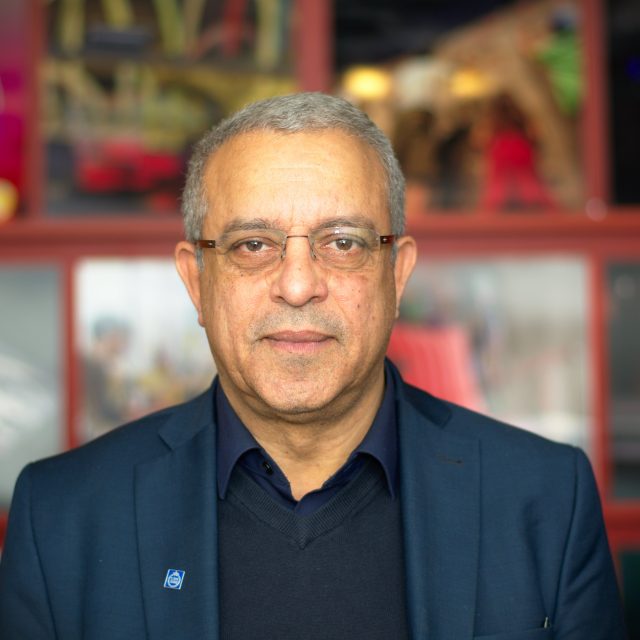
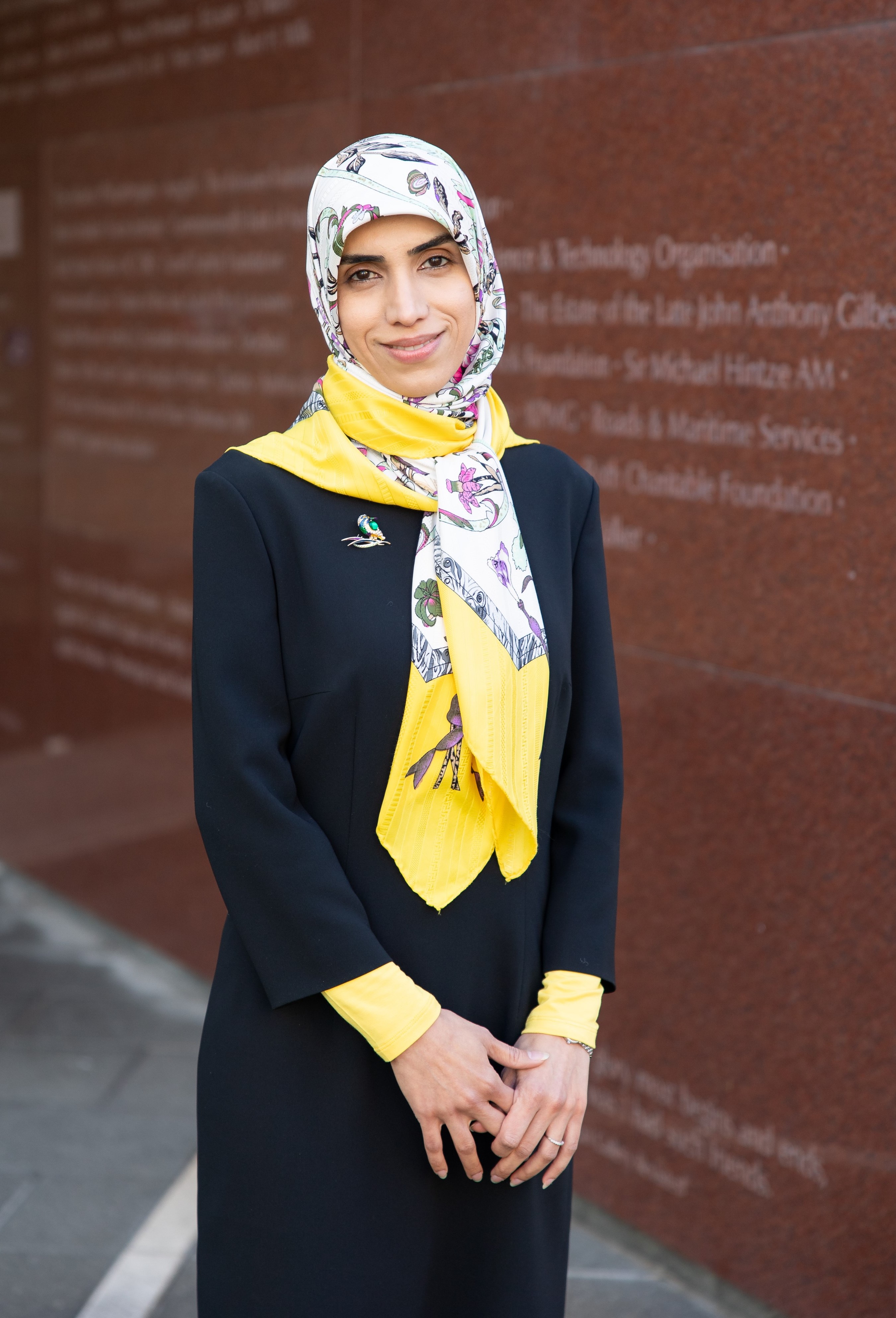
Aleksandr Zagarskikh is an Associate Professor at the Game Development School of ITMO University, specializing in virtual reality, scientific visualization, and high-performance computing. He has led projects in quantum chemistry visualization, flight simulators, and urban simulation technologies. Developed real-time graphics systems for ultra-realistic image synthesis Created high-performance network protocols for distributed visualization Current research focuses on big data decision-making in finance and multiscale urban modeling His work spans predictive modeling, GPU optimization, and cloud-based infrastructure visualization, with publications in Procedia Computer Science. He teaches courses in game technologies, VR, and scientific computer graphics.
Steve Blackburn is a research scientist at Google DeepMind and professor of computer science at the Australian National University in the College of Engineering and Computer Science. His primary research focus is on programming language implementation, with expertise spanning memory management, virtual machines, and performance analysis. He has served in significant leadership roles including Associate Dean for Diversity and Inclusion (2016-2019) and as Program Chair for PLDI 2015 and General Chair for PLDI 2023. Blackburn's research interests center on making software run faster and more power-efficiently on modern hardware. His primary areas include microarchitectural support for managed languages, fast and efficient garbage collection, and the design and implementation of virtual machines. He maintains a strong interest in sound methodology and infrastructure for successful research innovation. His work bridges theoretical computer science with practical systems implementation, with particular focus on memory management frameworks and performance benchmarking. His publication record reveals a consistent focus on memory management systems, with recent work exploring garbage collection in modern contexts including CRuby, Julia, mobile devices, and memory-disaggregated datacenters. His research shows an evolution from foundational garbage collection algorithms toward practical implementations addressing real-world constraints in contemporary programming languages and hardware platforms. A notable trend is his increasing focus on quantifying and understanding the true costs of garbage collection in production environments. Fellow of the ACM Blackburn has supervised numerous doctoral students including Zhen He, John Zigman, Robin Garner, Ting Cao, and currently advises Wenyu Zhao, Zixian Cai, and others. He has also served on multiple program committees for major conferences including PLDI, ASPLOS, ISMM, and OOPSLA, demonstrating his significant contributions to the programming languages and systems research community. His service includes editorial roles for ACM Transactions on Programming Language Applications and Systems from 2017-2020. He leads two major research infrastructure projects: the MMTk memory management framework and the DaCapo benchmark suite, both of which have become foundational tools for researchers in programming languages and systems. These projects reflect his commitment to shared research infrastructure and reproducible methodology in systems research.
Andy D. Pimentel is a Full Professor at the University of Amsterdam, where he chairs the Parallel Computing Systems (PCS) group within the Systems and Networking Lab at the Informatics Institute. His work focuses on the design, programming, and run-time management of multi-core and multi-processor computer systems, with particular attention to performance, power/energy consumption, system dependability, and design productivity. His academic background includes: PhD in Computer Science, 1998, University of Amsterdam MSc in Computer Science, 1993, University of Amsterdam Professor Pimentel's research spans multiple critical areas in modern computing systems. His primary interests include multi-core embedded systems, system-level design and simulation, design space exploration, performance and power analysis, system dependability, hardware/software co-design, run-time resource management, and Edge AI. His work addresses the growing challenges of making computer systems faster, more sustainable, energy efficient, reliable, and secure in an era of increasing computational demands and climate concerns. The PCS group he leads performs research on the modeling, analysis and optimization of extra-functional aspects of computing systems, which play a pivotal role in their work. An analysis of Professor Pimentel's recent publications reveals a strong focus on edge computing, distributed AI, and energy-efficient system design. His work bridges theoretical computer architecture with practical implementation challenges, particularly in the context of resource-constrained environments. Key trends include the adaptation of AI models for edge devices, thermal management in advanced architectures, and optimization of multi-core systems for both performance and energy efficiency. His research increasingly addresses sustainability concerns in computing, reflecting broader industry and academic priorities. His notable scientific achievements include: IEEE CEDA Outstanding Service Recognition Award DATE Fellow Award Professor Pimentel has served in numerous leadership roles in the academic community, including as General Chair of Design Automation and Test in Europe (DATE) 2024, Vice General Chair of IEEE/ACM Embedded Systems Week 2025, and General Chair of IEEE/ACM Embedded Systems Week 2026. He has secured significant research funding for projects related to sustainable computing, edge AI, and multi-core system design. His professional service includes board membership with the ICT Research Platform Nederland (IPN) since 2020 and leadership roles in major conferences such as DATE, Embedded Systems Week, and SAMOS. The Parallel Computing Systems group he chairs is a vibrant research team within the Systems and Networking Lab at the Informatics Institute. The PCS group focuses on the challenges of modern computing systems, particularly addressing the extra-functional aspects like performance, power consumption, and system dependability. Their work is highly relevant to current technological challenges in edge computing, sustainable systems design, and the integration of AI into resource-constrained environments.
Emran Ali is a Graduate Researcher (Ph.D. candidate) and Part-Time Lecturer at Deakin University's School of Information Technology within the Faculty of Science, Engineering and Built Environment. He holds concurrent faculty appointments at Hajee Mohammad Danesh Science & Technology University (HSTU) in Bangladesh where he teaches computer science courses while on study leave. His academic journey includes a Master of Science (Research) in Information Technology from Deakin University (2022) and a Bachelor of Science in Computer Science and Engineering from HSTU. Doctor of Philosophy (Ph.D.) in Information Technology, Deakin University (2023–present) Doctor of Philosophy (Ph.D.) in Machine Learning, Coventry University (Cotutelle program, 2023–present) Master of Science (Research) in Information Technology, Deakin University (2020–2022) Bachelor of Science in Computer Science and Engineering, HSTU Bangladesh (2007–2012) Ali's research focuses on algorithm development and applied machine learning in health informatics, specializing in biosignal processing for neurological and sleep disorder detection. His work integrates time-series data analysis with explainable AI techniques to develop clinical decision support systems. Current projects include ML/DL modeling of sleep-stage transitions in aging populations and causal relationship analysis in sleep disorders using EEG data. Analysis of his 10 recent publications reveals strong concentration in biomedical ML applications (60%), particularly EEG-based neurological disorder detection and mental health diagnostics. Secondary focus areas include environmental monitoring systems (20%) and foundational computer science (20%). His work consistently employs ensemble methods and feature optimization techniques across diverse datasets, with increasing emphasis on real-world clinical applicability in recent publications. Deakin University Post-graduate Research Scholarship (DUPRS) through Cotutelle program with Coventry University National Fellowship from Bangladesh Ministry of Science and Technology (2020) Best Presentation Award at Deakin School of IT Conference (2021) AWS AI/ML Scholarships (2023, 2024) Next Generation Tech Booster Scholarship (2024) Ali provides research supervision at HSTU while serving as a Graduate Research Teaching Fellow at Deakin University for Machine Learning and Data Analytics units. His industry collaborations include projects with Monash University, Alfred Health, and AETMOS Australia focused on health informatics applications. Current funding includes AWS-sponsored nanodegrees and Deakin University research scholarships supporting his sleep disorder research. His technical work integrates cloud-based AI/ML platforms (AWS, Azure) with biosignal processing pipelines, utilizing collaborations across Australian healthcare institutions to validate clinical applications. Recent projects emphasize explainability in deep learning models for medical diagnostics, particularly in resource-constrained environments relevant to Bangladesh healthcare contexts.
Sophie Huiberts is a CNRS researcher at LIMOS, Clermont Auvergne University in Clermont-Ferrand since fall 2023. Previously, she was a Simons Junior Fellow at Columbia University in New York City, hosted by Tim Roughgarden. She completed her PhD research at Centrum Wiskunde & Informatica in Amsterdam under Daniel Dadush and received her doctorate in 2022 from Utrecht University. Dr. Huiberts specializes in theoretical aspects of mathematical optimization, particularly focusing on the gap between practical performance and theoretical predictions of linear programming algorithms. Her research examines software implementations like Gurobi, CPLEX, SCIP, and HiGHS to understand why these algorithms perform better in practice than worst-case analysis would suggest. She has made significant contributions to smoothed analysis of the simplex method, establishing both upper and lower bounds on its complexity under perturbations of worst-case inputs. Analysis of her publication record shows consistent focus on bridging theoretical computer science with practical optimization methods. Her work spans linear programming theory, integer programming, combinatorial optimization, and computational geometry, with particular emphasis on understanding the geometric properties of optimization problems and the behavior of algorithms on real-world instances. Simons Junior Fellowship Dr. Huiberts maintains active engagement with the research community through social media platforms including Mastodon and Bluesky, and produces high-quality recordings of her research talks available on YouTube. She has made a conscious decision to stop air travel since 2023 due to climate concerns, demonstrating commitment to sustainable research practices while maintaining scientific connections through digital means. She is affiliated with LIMOS (Laboratoire d'Informatique, de Modélisation et d'Optimisation des Systèmes), a research laboratory at Clermont Auvergne University focused on computer science, modeling, and optimization systems, where she continues her investigations into the theoretical foundations of practical optimization algorithms.
Dr. Hui Han is a Senior Lecturer at Luleå University of Technology (LTU) in Sweden, working within the Machine Learning Group with a Wallenberg AI, Autonomous Systems and Software Program (WASP) professorship. She is affiliated with the Department of Computer Science, Electrical and Space Engineering, specifically within the Embedded Intelligent Systems LAB. Her office is located in Luleå at room A3424. Dr. Han earned her Ph.D. in Industrial Engineering from the Technical University of Madrid (UPM), Spain. Following her doctoral studies, she completed postdoctoral research at the Data Science department of Fraunhofer IESE in Germany and later served as a postdoctoral fellow in the Department of Computer Science at the Norwegian University of Science and Technology (NTNU), Norway. Dr. Han's research focuses on data science with specific expertise in Edge AI and TinyML (Tiny Machine Learning). She leads research efforts in developing sustainable modeling for Sustainable Supply Chain Management, particularly in reverse logistics and circular economy. Her work also encompasses social commerce and Industry 4.0 applications. As the first author, she has published 17 papers including 10 journal papers, 4 conference papers, and 3 magazine papers, accumulating over 1,000 citations according to Google Scholar. Her publications appear in high-impact journals such as Technological Forecasting & Social Change (IF 13.3), Expert Systems with Applications (IF 8.5), and Education and Information Technologies (IF 5.5). Dr. Han's teaching portfolio includes Management Information Systems, Project in Industrial AI, and TinyML. She has created an introductory TinyML course available on her YouTube channel. Her research spans multiple interdisciplinary areas including Industry 4.0, IoT, Cloud Computing, Big Data Analytics, Cyber-Physical Systems, Multicriteria decision support systems (particularly Fuzzy TOPSIS), Complex Relationships Analysis (PLS-SEM), Data Science, TinyML, Edge AI, Random Forest techniques, Information Systems, Social commerce, E-commerce, Sustainable Supply Chain Management, Reverse logistics, Closed-loop Supply Chains, Circle Economy, and Healthcare applications. Her Embedded ML for Health Project demonstrates practical applications of TinyML in healthcare, using Arduino Nano 33 BLE Sense and OV7675 Camera for melanoma detection through image processing and machine learning algorithms. This project showcases her ability to apply theoretical research to real-world healthcare challenges.
Seif Haridi is a Professor at KTH Royal Institute of Technology in Stockholm, Sweden, specializing in parallel and distributed computing systems. He holds dual roles as Chair-Professor of Computer Systems and Chief Scientific Advisor at RISE SICS. His research integrates systems engineering with theoretical foundations, focusing on programming systems, distributed computing, and big data technologies. Key contributions include co-designing SICStus Prolog, the Mozart Programming System, and Apache Flink, as well as leading the development of HOPS, a European big data platform awarded the IEEE Scale Prize 2017. He has led major EU projects like EIT-Digital’s cloud computing initiative and co-founded startups such as LogicalClocks and HiveStreaming. His teaching includes courses on distributed algorithms and peer-to-peer computing at KTH. Notable awards include the European Data Science Technology Innovation 2019. His work spans systems like HOPS, Flink, and Kompics, emphasizing scalability and robustness in distributed environments. Current projects include CDA (Continuous Deep Analytics) and ExtremeEarth for geospatial data analysis. Research interests include distributed algorithms, consensus protocols, and cloud-native systems. His lab’s contributions to scalable storage (e.g., HopsFS) and stream processing (Apache Flink) highlight his impact on both academia and industry.
Dr. Peter J. Robinson is an Honorary Research Fellow at the School of Electrical Engineering & Computer Science, The University of Queensland. His academic career spans over three decades, focusing on foundational research in programming languages, formal methods, and distributed systems. His work includes contributions to Qu-Prolog, a multi-threaded Prolog implementation, and TeleoR, a robotic task programming framework. Research interests include agent-based systems, blockchain security for aerospace applications, software verification, concurrent programming, and education technology. Notable projects include the Pedro publish/subscribe server and MyPyTutor, an interactive Python learning tool. He has collaborated on railway safety protocols and spacecraft control systems using blockchain. Publications span journals like Formal Aspects of Computing and conferences such as IEEE Symposium on Computers and Communications. Technical reports include work on unification algorithms and multi-agent verification frameworks. He has advised on projects involving IoT architectures and swarm intelligence simulations.
Dr. David Waddington is an NHMRC Emerging Leadership Fellow at the Image X Institute within the Faculty of Medicine and Health at the University of Sydney. He is a member of the University of Sydney Nano Institute and collaborates internationally with institutions like the Martinos Center for Biomedical Imaging at Massachusetts General Hospital. His work focuses on advancing MRI-based imaging technologies for cancer treatment guidance and developing nanoparticle probes for targeted drug delivery. Education: David holds a PhD in Science from the University of Sydney (2018) and earned a University Medal in Physics from UNSW (2010). He was a recipient of a prestigious Postgraduate Fulbright Scholarship (2013–2014) at Harvard University. Research Interests: His projects include the Australian MRI-Linac initiative to improve radiation therapy accuracy through real-time tumor tracking and distortion correction, as well as innovations in low-cost MRI systems and AI-driven image reconstruction. He explores hyperpolarized nanodiamonds for enhanced MRI contrast and synthesizes nanoparticles to improve diagnostic imaging precision in cancer treatment. Key projects: Australian MRI-Linac, MANGO Study, Low-Cost MRI Development International collaborations: Martinos Center (Massachusetts General Hospital) Awards : His achievements include two Best in Physics awards at AAPM (2020, 2022), Summa Cum Laude awards at ISMRM (2016, 2020), and grants such as the FMH Rewarding Research Success (2022) and SEMCAN Viral Bytes Prize (2020). Grants & Students : Leads grants like the 'AI Platform for Targeted Radiotherapy' and 'Advancing Dynamic MRI'. Advises James on developing deep learning techniques for adaptive MRI-guided radiotherapy. His work has produced two patent applications and TEDx talks on medical innovation. Labs/Teams : Affiliated with the ACRF Image X Institute and collaborates with interdisciplinary teams in radiation oncology and biomedical engineering.
Marcus Specht is a Professor affiliated with Delft University of Technology and Leiden University, Netherlands. His research focuses on Educational Technology, Learning Analytics, and Artificial Intelligence in Education. He has contributed to projects involving agent-based social skills training, hybrid intelligence for cognitive process analysis, and computational thinking assessment in higher education. His work spans mobile learning, collaborative learning analytics, and gamification in MOOCs. He collaborates extensively with researchers like Marco Kalz, Roland Klemke, and Hendrik Drachsler. Notable contributions include the Presentation Trainer for public speaking feedback and the DojoIBL platform for inquiry-based learning. His research emphasizes multimodal learning systems, including AR/VR applications and sensor-based training tools. He explores the integration of AI into educational platforms, as seen in projects like JELAI and the ARTES architecture for social skills training.
Dr. José Miguel Rojas is a Lecturer in Software Testing at the University of Sheffield's Department of Computer Science. He holds a PhD from the Technical University of Madrid and has held roles including Research Associate at the University of Sheffield and Lecturer at the University of Leicester. His research focuses on automated software testing, search-based techniques, and education in software engineering. Education: PhD in Software and Systems (Technical University of Madrid, 2013). Research Interests: Automated test generation, mutation testing, empirical software engineering, and teaching methodologies for testing. He leads the development of tools like EvoSuite and Code Defenders , which advance unit test generation and education through gamification. Key Publications include work on test suite generation effectiveness, mutation testing games, and accessibility testing for mobile apps. Awards include ACM Distinguished Paper Awards for contributions to testing methodologies. Grants: PI on EPSRC-funded projects like 'Accelerating Software Development using Gamification' and Co-PI on the UKRI Trustworthy Autonomous Systems Node. Labs/Teams: Active in the Testing Research Group and contributes to the Code Defenders educational platform.
Marc Alier Forment is an Associate Professor at the Universitat Politècnica de Catalunya (UPC), affiliated with the Department of Services and Information Systems Engineering within the Faculty of Informatics of Barcelona (FIB). He is also associated with the Institut de Ciències de l'Educació and serves as Coordinator of the Doctoral Program in Engineering, Science, and Technology Education. His research is conducted through the UPC EduSTEAM - STEAM University Learning Research Group. His research interests span Educational Technology , Artificial Intelligence in Education , Learning Management Systems , Open Source in Education , Ethics in Computing , Sustainability in Education , Mobile Learning , Learning Analytics , and Privacy in EdTech . He emphasizes ethical, secure, and sustainable applications of technology in higher education, particularly in engineering contexts. The recent scholarly output highlights a strong focus on the integration of AI in education (especially through the LAMB framework), ethical implications of generative AI, privacy in learning analytics using edge and fog computing, and innovative pedagogical methods in computer science education. His work increasingly bridges technical computing with humanistic concerns such as ethics, privacy, and social responsibility. Best Paper Award TEEM'22 Premis de Programari lliure 2005 de l'AGAUR VI Premi Davyd Luque a la innovació en les TIC Best interoperability innovation: Moodle simple learning tools for interoperability consumer – Spain Marc Alier Forment has led and participated in numerous educational innovation and R&D+i projects, particularly focused on Moodle/LMS integration, mobile learning, open-source educational tools, and the development of ethical and privacy-preserving technologies. He has mentored and collaborated extensively with colleagues on curriculum development, particularly in embedding sustainability and ethics into computing education. His work is central to UPC’s digital education strategy, especially through the Atenea platform. He leads and contributes to the UPC EduSTEAM research group and has been instrumental in developing STEAM-based lecturer training programs. His projects often involve interdisciplinary collaboration across computing, education, and social sciences, aiming to create holistic, responsible technological solutions for learning.
Dr. Gamal ELGHAZALY is a Research scientist at the University of Luxembourg's Interdisciplinary Centre for Security, Reliability and Trust (SnT), affiliated with the Ubiquitous and Intelligent Systems department. His work focuses on autonomous driving technologies, V2X communication systems, robotics, and control systems. Key research areas include 5G-enabled teleoperated driving, high-definition map construction, and 3D perception for autonomous vehicles. He has developed platforms like RoboCar and contributed to frameworks like FastCycle for modular automated systems. Research interests span robotics kinematics (planar parallel manipulators), adaptive control methodologies (sliding mode control, fuzzy logic), and hybrid systems (cable-driven robots). His publications emphasize real-time motion planning, sensor fusion, and safety-critical systems. Recent works (2023-2025) highlight advancements in 4D perception, cloud-assisted 3D reconstruction, and V2X-enabled collaborative systems. Publications from 2017-2018 reflect early contributions on parallel manipulator modeling and control, while recent efforts focus on integrating cutting-edge technologies like 5G and edge computing into autonomous systems. His work bridges theoretical robotics with practical implementations, addressing challenges in both dynamic environments and industrial applications.
Associate Professor Fatemeh Vafaee is a leading researcher at the University of New South Wales (UNSW) , holding appointments as Associate Professor in the School of Biotechnology and Biomolecular Sciences (BABS) and Deputy Director (Science) of the UNSW AI Institute . She previously served as Deputy Director of the UNSW Data Science Hub (uDASH) and has held academic positions at the University of Toronto and the University of Sydney. PhD in Artificial Intelligence from University of Illinois at Chicago Postdoctoral Fellowships at University of Toronto and University of Sydney Founded the AI-Enhanced Biomedicine Laboratory in 2017 Her research focuses on deploying advanced AI techniques to address biomedical challenges through: Biomarker Discovery for cancer and neurodegenerative diseases Single-Cell Multi-Omics data integration and analysis Computational Drug Repositioning and network pharmacology Multi-Omics Data Fusion and temporal network modeling Recent publications demonstrate expertise in liquid biopsy development , single-cell imaging , and AI-driven cancer diagnostics . Her methodological contributions include novel deep learning architectures for omics data analysis and graph neural networks for drug synergy prediction. Scientific accolades include: Winner, Women in AI Asia-Pacific Health Award (2023) Runner-Up, WAI-APAC Innovator of the Year (2023) Top 10 Women in AI in Asia-Pacific (2023) Australian Bioinformatics and Computational Biology Society Research Excellence Award (2023) She supervises PhD candidates across computational biomedicine and AI in healthcare , with significant grant achievements exceeding $17M in competitive funding, including schemes from ARC Discovery , NHMRC , and Medical Research Future Fund .
Yuan Yao serves as an Assistant Professor in the Department of Information Technology at Uppsala University, Sweden. His academic role spans teaching and research within the Computer Systems division, focusing on cutting-edge computer architecture and parallel computing systems. He maintains active collaborations across international institutions, particularly in energy-efficient hardware design and emerging computing paradigms. His educational journey includes: B.S. in Micro-electronics from Northwestern Polytechnical University, China (2009) M.S. in System-on-Chip Design from KTH Royal Institute of Technology, Sweden (2014) Ph.D. in Electrical Engineering and Computer Science from KTH Royal Institute of Technology (2019) Yao's research centers on power and thermal management for chip multi-processors, Network-on-Chips (NoCs), and GPUs. He pioneers hardware/software co-design for high-performance computing, coherency mechanisms for emerging memory technologies, and performance analysis of on-chip networks. Recent work expands into neural network acceleration and battery-less Internet of Things architectures, reflecting a trajectory toward energy-constrained specialized systems. His methodology integrates formal modeling with practical implementation for real-world impact. Publication trends reveal consistent innovation in energy efficiency across parallel architectures. From foundational DVFS techniques for NoCs (2016-2018) to recent breakthroughs in battery-less IoT (2023-2024), his work demonstrates evolutionary progression toward novel computing domains. Key thematic threads include thermal-aware optimization, memory consistency protocols, and hardware acceleration for AI workloads, with applications spanning data centers to embedded systems. Scientific recognition includes: Best paper candidate at IEEE International Symposium on High Performance Computer Architecture (HPCA) 2018 for in-network packet generation research Yao actively supervises graduate researchers and leads collaborative projects in computer architecture. His grant portfolio supports work on battery-less IoT systems and neural network accelerators, though specific funding details aren't publicly enumerated. Current projects emphasize sustainable computing through novel architectures for energy-harvesting environments. He operates within Uppsala University's Computer Systems division, contributing to research groups focused on hardware acceleration, embedded systems, and networked architectures. His lab environment fosters interdisciplinary work bridging computer architecture, energy harvesting, and machine learning for next-generation computing platforms.


.jpg)