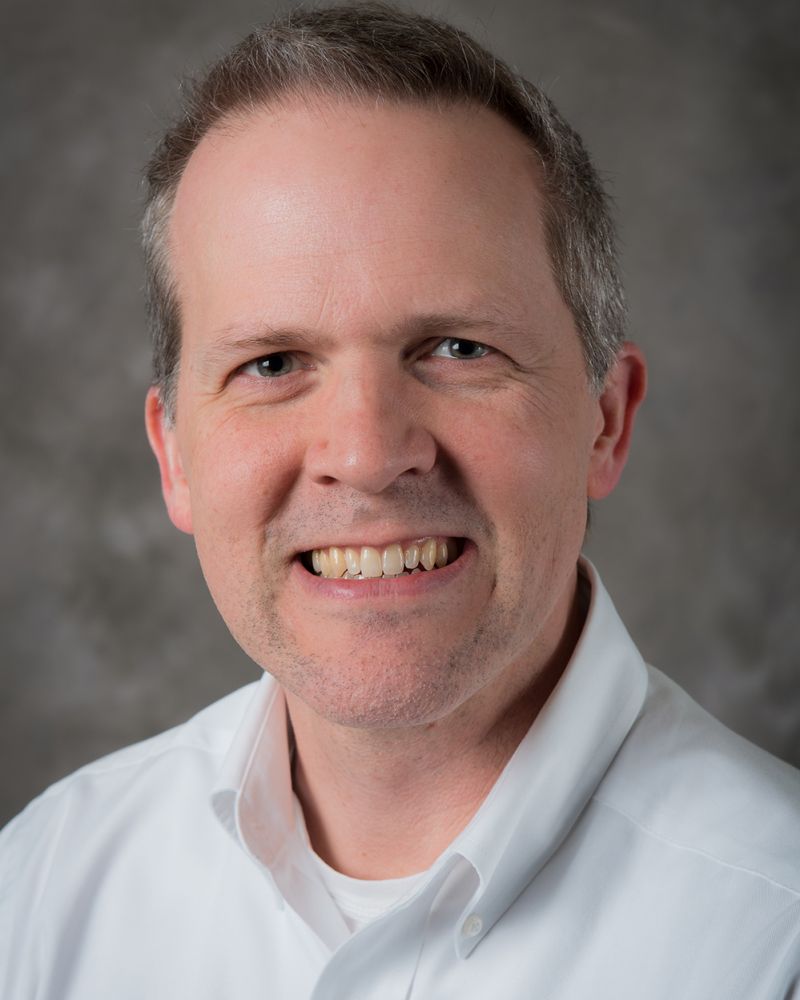
Ethan K. Murphy is an Assistant Professor of Engineering at Dartmouth College's Thayer School of Engineering. His research focuses on electrical impedance tomography (EIT), finite element method (FEM) modeling, and data fusion for biomedical applications such as stroke monitoring, hemorrhage detection, and cancer imaging. He holds a PhD in Mathematics from Colorado State University (2007) and has been recognized with awards including the Society of Critical Care Medicine’s Gold Snapshot Award (2021) and the Clinical Poster Award at the Northeast ALS Conference (2019). His work integrates computational methods with medical technologies, such as developing smartphone-based 3D scanning for EEG electrode localization and EIT systems for real-time tissue characterization. He collaborates on devices like EIT-coupled surgical staplers and non-invasive biomarker systems for hypovolemic cardiovascular instability. His labs and projects emphasize interdisciplinary approaches to biomedical engineering challenges. Key contributions include advancements in fused-data EIT for breast and prostate cancer imaging, phantom studies for validation, and algorithms for rapid FEM mesh generation from 3D scans. Current initiatives aim to improve early detection of internal bleeding and enhance medical imaging accuracy through machine learning and multi-modal data integration.
Shawn Griffiths is an Assistant Professor in the Department of Civil & Architectural Engineering at the University of Wyoming, within the College of Engineering and Physical Sciences. He holds a Ph.D. in Civil Engineering (Geotechnical) from the University of Texas at Austin, an M.S.C.E. from the University of Arkansas, and a B.S. in Civil Engineering from Utah State University. His academic appointment and active research and teaching roles confirm his status as a current faculty member. Education: Ph.D., Civil Engineering (Geotechnical), University of Texas at Austin, 2015 M.S.C.E., Civil Engineering (Geotechnical), University of Arkansas, 2011 B.S., Civil Engineering, Utah State University, 2009 Shawn Griffiths' research focuses on geotechnical earthquake engineering, particularly in surface wave testing, site response analyses, and uncertainty quantification in shear wave velocity profiles. He also has strong interests in engineering education, soil-structure interaction, and the rehabilitation of dams and levees. His work aims to solve real-world problems through interdisciplinary collaboration and practical modeling approaches. He emphasizes the importance of understanding soil behavior under seismic loads and improving predictive models for infrastructure resilience. The recent publications reflect a consistent focus on seismic site characterization, nonlinear soil behavior, and uncertainty in geotechnical models. His research integrates field data (e.g., surface wave and borehole testing) with computational methods to enhance the accuracy of seismic load estimation for bridges, buildings, and transportation systems. There is a clear trend toward quantifying uncertainty and improving modeling fidelity in complex geotechnical environments. Shawn Griffiths is affiliated with key professional organizations in his field: American Society of Civil Engineers (ASCE) Earthquake Engineering Research Institute (EERI) He teaches foundational and advanced courses in geotechnical engineering, including Soil Mechanics (CE 3600), Geotechnical Engineering (CE 4630/CE 5700-07), and Geotechnical Earthquake Engineering (CE 5640). His teaching philosophy emphasizes self-learning, critical thinking, and a positive, professional environment. He encourages students to embrace mistakes as part of the learning process and fosters a balanced, industrious academic culture. While no specific graduate students are named, he welcomes prospective students into his research group and values mentorship. Although no grants are explicitly detailed, his technical reports suggest involvement in funded projects related to seismic risk in transportation infrastructure. His research program is based at the University of Wyoming, where he continues to expand surface wave and borehole testing applications in high-seismic-risk regions.
Patrick Le Tallec is a Professor of Mechanics at École Polytechnique in France, where he currently serves as Dean of the Bachelor Program and is a member of the M3DISIM project. His distinguished academic career spans multiple institutions including Université Paris Dauphine, INRIA (French National Institute for Research in Digital Science and Technology), and international universities such as Stanford University, University of Wisconsin, and Shanghai Jiao Tong University. He has held leadership positions including Vice President for Education and Head of the Laboratory of Solid Mechanics at École Polytechnique. His educational background includes: Graduate from École Polytechnique Ph.D. in Engineering Mechanics from The University of Texas at Austin (1980) Thèse d'Etat in Applied Mathematics from Université Pierre et Marie Curie in Paris (1981) Professor Le Tallec's research focuses on computational mechanics and applied mathematics with expertise in nonlinear mechanics, domain decomposition methods, and multiscale modeling. His work bridges theoretical mathematics with practical engineering applications, particularly in material science and fluid-structure interactions. He has developed advanced numerical methods for elasticity, viscoelasticity, and fluid dynamics with applications in industrial manufacturing and biomedical engineering. His recent publications demonstrate progression from foundational numerical methods to sophisticated multiscale approaches addressing complex engineering challenges in material science. The research shows particular emphasis on rubber mechanics, fatigue analysis, and computational methods for nonlinear structures, reflecting his ongoing commitment to solving real-world engineering problems through mathematical innovation. His scientific honors include: CISI award in Scientific Computing Prize Blaise Pascal of the French Academy of Sciences Chevalier des Palmes Académiques Chevalier de la Légion d'Honneur Officier de l'Ordre National du Mérite Professor Le Tallec has directed over 40 Ph.D. students from 10 different nationalities, demonstrating significant impact in academic mentoring. His research has been supported through extensive collaborations with industrial partners including Michelin, PSA Group, and Dassault Aviation, as well as scientific advisory roles at the French Alternative Energies and Atomic Energy Commission. He has served as president of the French Society of Applied and Industrial Mathematics and held editorial positions with leading journals in his field. His laboratory work centers around computational mechanics research, particularly through the M3DISIM project at École Polytechnique. His research team brings together mathematicians, engineers, and computer scientists to develop innovative solutions for complex problems in material science and structural mechanics, with applications ranging from industrial tire manufacturing to biomedical engineering.
Arthur Araujo is a Professor at Lusófona University, holding a PhD in Tourism Studies from the University of Aveiro. He teaches disciplines such as Crisis and Disaster Management in Tourism for Master's students, alongside courses in Research Methodology, Tourism and Sustainability, and Nautical Tourism for undergraduates. His research spans neurotourism, tourism sustainability, film tourism, destination imagery, and resilience, with publications in leading journals including Annals of Tourism Research , Journal of Travel & Tourism Marketing , and British Food Journal . PhD in Tourism Studies, University of Aveiro Master’s in Management Bachelor’s Degree in Tourism Training in Digital Marketing, Structural Equation Modeling, SPSS, NVivo, and WebQDA Arthur’s work explores the intersection of neuroscience and tourism, focusing on destination imagery, crisis management, and sustainable practices. His recent publications address Gen Z tourism behavior, neurotourism gaps, and age dynamics in post-pandemic recovery. He has industry experience in Brazil and Spain, particularly in tourism accessibility and educational tourism. Arthur is a member of the Centre for Transdisciplinary Development Studies (CETRAD) at UTAD and the ART&TUR International Film Tourism Festival Jury. His research trends include sustainable destination branding, neuroscientific methodologies in tourism, and crisis-induced behavioral shifts. Arthur has contributed to studies on film-induced tourism, slum tourism, and workplace skills in the hospitality sector.
Dan Casas is a Senior Applied Scientist at Amazon in Seattle and an Associate Professor (Profesor Titular) on leave from King Juan Carlos University in Spain. His research spans the intersection of Computer Graphics, Computer Vision, and Machine Learning with a focus on 3D reconstruction, modeling, and animation of virtual humans and clothing. He has authored over 40 high-impact publications in top venues including SIGGRAPH, CVPR, and NeurIPS, and holds 3 international patents. Dr. Casas received his M.Sc. degree (2009) from Universitat Autònoma de Barcelona (Spain), including a research visit at Carnegie Mellon University. He earned his Ph.D. in Computer Graphics (2014) from the University of Surrey (UK), supervised by Prof. Adrian Hilton. He completed postdoctoral research at the University of Southern California's Institute for Creative Technology (2014-2015) and the Max Planck Institute in Saarbrücken (2015-2016). His research interests center on creating realistic virtual humans and digital clothing through advanced techniques in computer vision and machine learning. Casas has pioneered methods for 3D reconstruction of humans and garments from video input, physics-based simulation of soft-tissue deformations, and data-driven approaches to character animation. His work bridges the gap between theoretical computer graphics and practical applications in virtual reality, digital fashion, and immersive communication. Analysis of his recent publications reveals a consistent focus on human digitization, with increasing emphasis on machine learning approaches. His work has evolved from traditional computer graphics techniques toward neural representations and diffusion models, particularly in the areas of 3D garment simulation and human avatar creation. The trend shows growing integration of physics-based modeling with data-driven approaches to achieve both realism and computational efficiency. Marie Skłodowska-Curie Individual Fellowship (2015) FBBVA Leonardo Fellowship (2021) Medal from the Royal Academy of Engineering of Spain for Young Researcher Award (2023) i3 certification (outstanding researcher) from Spanish Ministry of Universities (2022) Winner of 2021 IEEE Retail Digital Transformation Grand Challenge Multiple Outstanding Reviewer Awards at top conferences (CVPR, BMVC, 3DV) Dan Casas has successfully advised multiple PhD students including Suzanne Sorli, Cristian Romero, Raquel Vidaurre, and Igor Santesteban (now at Meta Reality Labs), with several ongoing students including Melania Prieto-Martin, Gonzalo Gómez-Nogales, and Andrés Casado-Elvira. He has secured significant research funding as Principal Investigator, totaling over €1.2 million from Spanish Ministry of Science projects, EU H2020 programs, and industry fellowships including the FBBVA Leonardo Fellowship. His leadership extends to conference organization as Area Chair for ICCV 2023 and General Chair for ACM i3D 2020. Dr. Casas leads research in digital human modeling with applications in virtual reality, fashion technology, and immersive communication. His team develops advanced techniques for creating personalized 3D avatars from minimal input (like smartphone videos), addressing challenges in geometry, appearance, and physical simulation of virtual humans and their clothing.
Arpan Gujarati is an Assistant Professor in the Department of Computer Science at the University of British Columbia (UBC), affiliated with the Systopia Lab. His research focuses on real-time systems, distributed systems, fault tolerance, and reliability analysis in cloud and cyber-physical systems domains. He holds a PhD from the Max Planck Institute for Software Systems (MPI-SWS) and has postdoctoral and research experience at MPI-SWS and UBC. Education: PhD in Real-Time Systems (MPI-SWS/TU Kaiserslautern, 2020), Postdoctoral Researcher at MPI-SWS (2020), Research Associate at UBC (2022–2023), B.Sc. from Birla Institute of Technology and Science (BITS Pilani, India). Research interests include distributed real-time systems, reliability analysis of cloud applications, fault-tolerant machine learning, and scheduling algorithms. His work bridges theory and practice, addressing challenges in ultra-reliable CPS and resilient distributed systems. Awards: Best Dissertation Award (SIGBED, 2020), Best Paper Awards (RTSS 2022, ECRTS 2018), Distinguished Artifact Award (OSDI 2020). Advising: Supervises PhD and undergraduate students in distributed systems and resilience engineering. Active in UBC’s Computer Science Graduate Program, teaching courses like CPSC 416 (Distributed Systems) and CPSC 538G (Topics in Computer Systems). Labs/Teams: Leads the Systopia Lab, collaborating with industry partners on projects like robotic arm datasets and self-driving lab tools (RABIT). Involved in research groups focused on machine learning resilience and real-time systems.
Prof. Dr. Peter Sollich is a Professor of Theoretical Physics at Georg-August-Universität Göttingen, affiliated with the Institute for Theoretical Physics. His research spans non-equilibrium statistical physics with applications to soft matter, active systems, and complex networks. He maintains a small part-time appointment at King's College London. His primary research interests focus on non-equilibrium statistical physics , particularly soft and active matter rheology, jamming transitions, glassy dynamics, dynamical phase transitions, and inference from dynamical data. His work bridges theoretical physics with applications in materials science and network theory, emphasizing both fundamental mechanisms and quantitative modeling approaches. Analysis of his recent publications reveals strong thematic consistency in studying glassy dynamics and active matter systems , with increasing integration of machine learning techniques for network analysis. Key methodological threads include coarse-grained modeling, spectral analysis of complex systems, and non-equilibrium thermodynamics frameworks. His 2023-2025 work shows growing emphasis on nonreciprocal interactions in active mixtures and physics-inspired machine learning applications. Prof. Sollich actively supervises Bachelor's, Master's, and PhD students, welcoming thesis inquiries in theoretical physics. His group develops analytical and computational approaches to complex dynamical systems, with recent grants likely supporting work on network dynamics and active matter modeling (specific grants not detailed in source text). His research group operates within the Institute for Theoretical Physics at Göttingen, focusing on computational and analytical modeling of disordered systems. Current projects involve elastoplastic modeling of amorphous solids, spectral analysis of heterogeneous networks, and theoretical frameworks for active matter phase separation.
Toșa Nicoleta Ioana is a senior researcher at the National Institute for Research and Development of Isotopic and Molecular Technologies (INCDTIM) in Cluj-Napoca, Romania, where she is affiliated with the Department of Isotopic and Molecular Technologies and the Laser Induced Processes research team. She obtained her PhD in Chemistry from Babeș-Bolyai University in 2009 and has been actively contributing to advanced materials and laser-based technologies research since 2006. Education: MSc in Heterocyclic Chemistry, Babeș-Bolyai University, Cluj-Napoca (1995) PhD in Chemistry, Babeș-Bolyai University, Cluj-Napoca (2009) Her research focuses on laser nanofabrication, plasmonics, spectroscopy, and functional materials , with applications spanning biosensing, environmental monitoring, and biomedical technologies. She specializes in photochemical synthesis of noble metal nanoparticles, direct laser writing, surface-enhanced Raman spectroscopy (SERS), and structural characterization in solid and solution phases. Her work bridges chemistry, physics, and engineering to develop innovative sensing platforms and nanomaterials. The recent articles highlight a strong trend in advanced optical sensing and nanofabrication , particularly in dual-mode biosensors (SERS/electrochemical), ultrafast photonics, high-density data storage, and supramolecular systems. Her projects often integrate simulation, nanofabrication, and spectroscopic validation to address challenges in healthcare and environmental science. Scientific Awards: No specific awards listed in the provided text. Dr. Toșa has played a key role in numerous national and international research projects, serving as a key expert in areas such as plasmonic biosensing, EUV photonics, and environmental pollutant detection, and as a partner team leader in projects on optical nanofabrication and petabyte-scale optical storage. She has secured significant research funding and collaborated with institutions across Romania and Europe. Her laboratory and research team focus on laser-induced processes and nanostructured materials , utilizing advanced facilities for optical characterization and nanofabrication within INCDTIM.
Rupali Rajendra Bhadane is a postdoctoral researcher at Åbo Akademi University's Pharmaceutical Science Laboratory (PSL) and Structural Bioinformatics Laboratory (SBL), contributing to interdisciplinary science under the Faculty of Natural Sciences and Technology. Her work spans computational biology, drug design, and sustainable material development. PhD in Pharmacy 8 years of undergraduate teaching experience Her research integrates virtual screening , molecular dynamics simulations , and DFT calculations to advance drug discovery (e.g., Glycomimetic SGLT2 inhibitors , HDAC-2 modulators ), while also applying computational methods to analyze bio-based adhesive materials and virus-mimetic nanoparticles . Recent publications highlight her work on Covid-19 spike protein mutations , g-quadruplex targeting , and core/shell nanostructures for siRNA delivery. She actively contributes to datasets through the Finnish National Protein Crystallography Consortium and European Synchrotron Radiation Facility . Current projects include D2V: From Dust to Value (2023-2026), focusing on circular bio-based residues with Business Finland funding. Her work aligns with UN SDGs for health innovation and environmental sustainability.
Maria Akhmanova is an Assistant Member in the Cell Biology Program at Memorial Sloan Kettering Cancer Center (MSKCC), with affiliations to the Gerstner Sloan Kettering Graduate School of Biomedical Sciences. Her research focuses on understanding how cells invade and migrate through tissues in vivo, integrating live imaging, biomechanical techniques, and computational modeling. Key areas include macrophage infiltration dynamics, tissue resistance mechanisms, and the role of cortactin and actin cytoskeleton regulation. Dr. Akhmanova holds a PhD from Lomonosov Moscow State University and has been recognized with the Austrian Science Fund (FWF) Lise Meitner fellowship (2018-2019). Her lab includes researchers such as Emily Pratt (GSK Graduate Student), Jonah Rosas (Research Scholar), and Xiaoqun Zhang (Senior Research Scientist), with lab alumni including Jayant Asthana. Her work spans disciplines like immunology, biomechanics, and computational biology. Recent studies highlight topics such as mitochondrial bioenergetics in macrophage invasion and Fos signaling in cortical actin regulation. Collaborative projects include work on auxin signaling in plant roots and collagen-based biomaterials for tissue regeneration. Key awards: Lise Meitner Fellowship (2018-2019) Lab members: Emily Pratt (PhD student), Jonah Rosas, Xiaoqun Zhang Collaborations: The lab employs interdisciplinary approaches blending experimental and theoretical frameworks. Her publications emphasize mechanistic insights into tissue-level cell migration, with implications for cancer immunology and regenerative medicine.
Anaís Garrell Zulueta is an Associate Professor at the Polytechnic University of Catalonia (UPC) and a Robotics Researcher at the Institut de Robòtica i Informàtica Industrial (CSIC-UPC) . She serves as Vice-Director of the Mobile Robotics and Intelligent Systems subline and supervises the RAIG - Mobile Robotics and Artificial Intelligence Group . PhD (2013): European Doctorate with highest honors from UPC B.S. in Mathematics (2006) from University of Barcelona Diploma d'Estudis Avançats (DEA) in Control, Vision, and Robotics from UPC Her research focuses on Human-Robot Interaction (HRI) and robot cooperation , particularly in urban environments . Key themes include: Explainable AI for robot transparency Human motion behavior prediction Socially aware navigation systems Collaborative transport robotics Autonomous last-mile delivery systems Cybernetic avatars and societal implications Recent projects (2023-2025) include: TORNADO: Foundation models for robots handling deformable objects HandIA: AI-based rehabilitation tools LENA: Lifelong navigation learning TRIFFID: First responder assistance robotics SOCIAL PIA: Cybernetic avatar modeling Scientific recognition includes: Second Prize for Best Spanish Robotics Thesis Best Paper Award Nomination (IEEE/RSJ IROS, 2009) As an advisor, she supervises: PhD students: Ferran Gebelli Guinjoan, Lavinia Hriscu, Edison Bejarano Final year projects: 8 students on topics like LLM-enhanced interaction and LiDAR SLAM systems She operates within the Institut de Robòtica i Informàtica Industrial (IRI) and collaborates with Carnegie Mellon University.
Thomas Gammeltoft-Hansen is Professor of Migration and Mobility Law at the Faculty of Law, University of Copenhagen, and Director of MOBILE – the Danish National Research Foundation’s Center of Excellence on Global Mobility Law. He also leads the Nordic Asylum Law & Data Lab and serves as Chairperson of the Nordic Institute for Migration. His research spans international and Nordic mobility law, refugee law, data-driven legal methods, and legal theory. PhD in International Law, Aarhus University MSc in Refugee Studies, University of Oxford MA in Political Science, University of Copenhagen His research focuses on the legal frameworks governing human mobility, including transnational migration control, the role of private actors in border enforcement, and the use of data and technology in asylum decision-making. He pioneered the concept of the “migration industry” and has developed innovative data-driven methodologies to analyze asylum practices across the Nordic region. His work critically examines how legal infrastructures shape mobility, often revealing unintended consequences and systemic biases. His recent publications explore legal infrastructure theory, digital evidence in asylum proceedings, and machine learning applications in refugee law. These works highlight a growing trend toward interdisciplinary, data-intensive legal scholarship that bridges law, computer science, and social science to address complex migration challenges. Scientific Awards: Chevening Award (2002) Sapere Aude Ung Eliteforsker (2011) The Idman Award (2013) Dansk Forfatterforenings Fredspris (2017) EliteForsk prisen - Danish Elite Researcher Award (2024) He has served as a member of the Danish Refugee Appeals Board and is a principal investigator on major research grants from the Danish National Research Foundation, NordForsk, Villum Foundation, Volkswagen Stiftung, European Commission, and Wallenberg Foundation. He is frequently consulted by governments, international organizations, and NGOs and is a regular media commentator on migration and asylum issues. He leads a dynamic research environment at the Nordic Asylum Law & Data Lab, which brings together legal scholars, data scientists, and social scientists to advance empirical and theoretical understanding of mobility law. The lab is a hub for interdisciplinary training and innovation in legal research methods.
C. Heath Turner is a Professor in the Department of Chemical and Biological Engineering at The University of Alabama, College of Engineering. He holds the leadership roles of Associate Dean for Research and Economic Development and Director of the Polymers and Soft Materials Research Center (Poly-SM). His work bridges computational research and real-world energy and environmental applications. Education: Ph.D., Chemical Engineering, North Carolina State University, 2002 M.S., Chemical Engineering, North Carolina State University, 1999 B.S., Chemical Engineering, Auburn University, 1996 Dr. Turner’s research centers on computational chemistry and materials simulation, with key interests in catalysis , CO₂ capture , wastewater treatment , plastic upcycling , and clean energy technologies . His group employs molecular dynamics, Monte Carlo, kinetic Monte Carlo, and quantum mechanical calculations to model and predict material behavior at interfaces. A major focus is on designing solvents and nanomaterials for environmental applications, such as carbon capture and desalination. The research is highly collaborative, involving close partnerships with experimentalists to validate simulations. The recent publications (2018) reflect a strong emphasis on surface reactions, catalytic mechanisms (especially involving gold and bimetallic catalysts), and the thermodynamics and kinetics of deoxygenation processes in biofuel synthesis. These works highlight the integration of computational screening with practical engineering challenges in energy and sustainability. Scientific Awards and Honors: Academic Leadership Development Program Fellow, The Southeastern Conference, 2023 UA-OXE Most Outstanding Faculty Member UA-AIChE Most Outstanding Faculty Member NSF CAREER Award, 2008 Dr. Turner has been actively involved in mentoring students and securing research funding. He is associated with major institutional initiatives such as the UA CyberSeed program, which supports interdisciplinary cyber-enabled research. His leadership role as Associate Dean underscores his contributions to research advancement and economic development at the university. He also participates in international recruiting efforts, reflecting a commitment to global engagement and student development. He leads the Turner Research Group, which focuses on developing efficient simulation tools for material discovery and process optimization. The group is affiliated with the Polymers and Soft Materials Research Center and contributes to national efforts in sustainable infrastructure and advanced materials design.
Andrew J. Spence is an Associate Professor in the Department of Bioengineering at Temple University's College of Engineering, where he leads the Spence Lab focused on locomotor neuromechanics and spinal cord injury. His work integrates experimental biology, mathematical modeling, robotics, and molecular genetic tools to understand how animals move and how movement can be restored after injury. PhD in Applied and Engineering Physics, Cornell University Postdoctoral training at UC Berkeley with Bob Full and Eileen Hebets Former RCUK Fellow and faculty at the Royal Veterinary College, London Joined Temple University in 2013 His research interests center on the control of locomotion, gait analysis, spinal cord injury, neuroprosthetics, and the application of optogenetics and chemogenetics (DREADDs) in neuromuscular disorders. He also explores biomechanics in diverse species, from insects to racehorses, seeking general principles of movement. The 15 most recent publications reveal a strong trend toward integrating genetic tools with biomechanical analysis, particularly in rodent models of spinal cord injury. His work spans fundamental questions in animal locomotion and applied research in rehabilitation, with increasing emphasis on closed-loop systems, automated tracking, and neuromodulation. RCUK Tenure Track Research Fellowship W.M. Keck Foundation predoctoral fellowship Spence advises a multidisciplinary team of students and postdocs, collaborates with Professors Michel Lemay and George Smith on spinal cord injury projects, and leads NIH-funded research. His lab develops open-source tools for locomotion analysis and has contributed significantly to understanding stability, gait transitions, and sensory feedback in movement. He teaches courses in neuroengineering and biomechanics at both undergraduate and graduate levels. The Spence Lab is actively involved in developing neurogenetic interventions for spinal cord injury, studying gait adaptation in complex environments, and creating innovative instrumentation for neuromechanical research.
Jianjun Dong is a Professor in the Department of Physics at Auburn University, holding the Thomas and Jean Walter Professorship from 2012 to 2017. His research focuses on theoretical and computational studies of condensed matter physics and materials physics, particularly lattice dynamics, thermal conductivity, and high-pressure phenomena. He has held positions including Visiting Professor at Vanderbilt University (2008) and Visiting Investigator at the Carnegie Institution’s Geophysical Lab (2007). Education: Ph.D., Physics, Ohio University, 1998 M.S., Physics, Ohio University, 1995 B.S., Physics, Beijing University, China, 1992 Research Interests: Professor Dong investigates thermal transport in materials under extreme conditions, including phonon dynamics, anharmonicity effects, and interfacial heat transfer. His work spans theoretical modeling, computational simulations, and applications to Earth’s mantle minerals, semiconductors, and novel materials. He has contributed to understanding thermal conductivity in rocksalt structures, clathrate materials, and high-pressure phases of oxides and nitrides. Key Technical Trends in Articles: His publications emphasize first-principles calculations, advanced algorithms for phonon lifetimes, and interdisciplinary approaches linking condensed matter physics to geophysics. Recent work explores unified statistical theories for heat conduction in nonuniform media and transient heat dynamics. Awards: Thomas and Jean Walter Professor of Physics (2012–2017) SPS Faculty Teaching Award: The Enthusiasm Award (2004) Grants and Advising: While specific grants are not detailed, his research has been supported by institutional and collaborative funding. He has advised students on topics in materials physics and computational modeling, though no named advisees are listed in available texts. Labs and Collaborations: His research group focuses on computational materials physics, with collaborations involving geophysical institutions and materials science groups. Key tools include density-functional theory and molecular dynamics simulations.