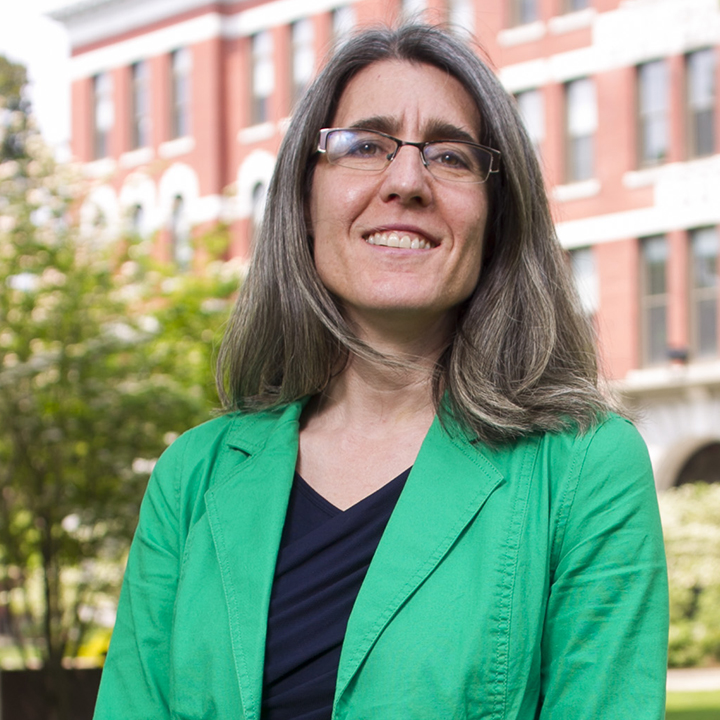
Professor Tooran Alizadeh is a Professor of Urbanism and Infrastructure at the University of Sydney's School of Architecture, Design and Planning. She holds an ARC Future Fellowship and specializes in smart urbanism, infrastructure governance, and Southern urbanism. Her work critically examines socio-spatial inequities, telecommunication infrastructure, and the intersection of technology with urban development in Global South contexts. Education: PhD in Urban Studies, Graduate Certificate in Higher Education, Master of Urban Design and Planning, Master of Architecture, and Bachelor of Architecture. Research Interests: Smart city policy and implementation challenges Infrastructure governance in crises Socio-economic impacts of telecommunication networks Urban resilience and disaster planning Epistemic silences in settler-colonial urbanism Grants: 2023: Infrastructure governance beyond government at times of multiple crises (DVC Seed Funding) 2021: Socio-spatial implications of smart city development in India (ARC Future Fellowship) Awards: ARC Future Fellowship (2020–present). Labs/Teams: Member of the Sydney Southeast Asia Centre. Active in the Infrastructure Governance Incubator research network.
Dr. Andrew H. Whittemore is an Associate Professor and Associate Chair in the Department of City and Regional Planning (DCRP) at the University of North Carolina at Chapel Hill, where he also directs the Master of City and Regional Planning (MCRP) program. His work focuses on land use planning, zoning, urban form, and planning history, with particular attention to the political dynamics and racial biases embedded in zoning decisions. He employs archival and ethnographic methods to explore how local communities shape zoning policies and their socio-spatial impacts. Whittemore’s research interrogates the historical roots of exclusionary zoning practices in the U.S., including the FHA’s influence on suburbanization and the racialized outcomes of zoning in cities like Durham, North Carolina. He also examines contemporary debates around densification, regionalism, and queer urban geographies. His scholarly contributions bridge planning theory and practice, advocating for more equitable and inclusive urban development frameworks. His professional affiliations include the Center for Urban and Regional Studies at UNC. Whittemore is actively involved in planning education, emphasizing the need to reintegrate zoning studies into curricula and address systemic inequities through pedagogy. He currently accepts PhD students interested in urban planning and related fields.
Olgu ÇALIŞKAN, Professor at the Department of City and Regional Planning, Faculty of Architecture, Middle East Technical University (Ankara, Turkey), specializes in urban morphology, parametric urban design, and generative urbanism. With a PhD in Urbanism from Delft University of Technology (2013) and MSc/BSc in Urban Design and City Planning from METU, his work bridges theoretical frameworks with computational methodologies. Education : PhD (Urbanism, TU Delft, 2013); MSc (Urban Design, METU, 2004); BSc (City Planning, METU, 2001) Research interests include physical planning , urban design theory , and design thinking , with a focus on socio-morphological perspectives. Recent publications analyze typological diversity in Ankara (2023), parametric modeling for urban heat island mitigation (2018), and heterotopian urbanism (2019). His work extends to editorial roles in Urban Design and Planning , Built Environment , and METU Journal of The Faculty of Architecture . Prof. ÇALIŞKAN supervises 18 Master’s theses on topics such as urban stigma, parametric landscape urbanism, and spatial censorship. Current projects emphasize sustainable coexistence of agriculture and industry in Türkiye (2025) and AI integration in urban planning (2025).
Dr. Krzysztof Nawratek is a Senior Lecturer in Humanities and Architecture at the University of Sheffield's School of Architecture and Landscape . With a PhD in Architecture and Urban Planning, his work uniquely bridges architecture, urbanism, and religious studies through interdisciplinary approaches. Current Visiting Professor at Pontifícia Universidade Católica de Minas Gerais (Brazil) Leadership roles: MA Architecture Design Program Leader, PGT Director, Departmental Director of Research and Innovation (2022-2024) His research focuses on religious spatial practices , radical contextualization , and decolonizing urban theory . Key themes include: Epistemic urbanism and belief systems Radical inclusivity in architectural practice Postsecular city frameworks Cultural/political spatial dynamics Scientific achievements include: Fellow of The Higher Education Academy (FHEA) Over 15 publications including 7 books Grants from Sir Halley Stewart Trust, UKRI, CAPES (Brazil), and MSCA-ITN Re-Dwell
Dr. Libertad Chavez-Rodriguez is an Associate Professor-Researcher at the Center for Research and Advanced Studies in Social Anthropology (CIESAS) in Monterrey, Mexico, where she has been working since February 2021. She is also a recurring visiting scholar at the Institute of Geography, Christian-Albrechts-University of Kiel (CAU) since 2017. Her work integrates gender studies and political ecology to investigate socio-ecological issues with a focus on marginalized communities. Dr. Chavez-Rodriguez earned her Ph.D. in Social Sciences at the Research Center for Sustainability Studies (artec) at the University of Bremen. Her academic journey includes being a full-time researcher at CIESAS through the "Catedras" Program for Young Researchers of CONACYT from 2014-2021, and doctoral studies at the University of Bremen from 2008-2013. Earlier, she held research positions at the German Academy for Spatial Research and Planning and the Bremer Energie Institut in Germany. Her research program centers on socio-spatial inequalities and social vulnerability to floods in the context of climate change, examining risk perception alongside coping, adaptation, and survival practices. She investigates gender, intersectionality, and disasters, as well as urban mobility concerning environmental justice. Her work takes a political ecology approach to analyze how social segregation and vulnerability manifest in urban environmental issues, particularly in the context of the "Inclusive Mexico: vulnerable groups and development" research project. Dr. Chavez-Rodriguez's publication record demonstrates consistent scholarly output with a clear trajectory toward environmental justice scholarship. Her recent work increasingly focuses on urban mobility and how gendered experiences shape environmental vulnerability. She frequently collaborates internationally, particularly with scholars from the University of Kiel, and her research bridges academic inquiry with community activism through networks like EnJust and Gender CC. Member of the Mexican National System of Researchers of CONACYT, level 1 Fellow of the Summer Program in Social Science (2015-2017) Nazario S. Ortiz Garza 2000 Medal for Academic Merit Juan Antonio de la Fuente Medal for best graduate Dr. Chavez-Rodriguez actively contributes to multiple research networks and social movements. She serves on the Board of the Citizen Participation Council of the Nuevo León State Institute for Women (2020-2021) and is a core member of the activist collective Académicxs de Monterrey 43. Her research has been supported by CONACYT's "Catedras" Program, and she has conducted extensive international research stays at institutions including the Leibniz Institut IRS in Berlin and the University of Kiel. She has received scholarships from both Mexican institutions (CONACYT, SEP, Telmex Foundation) and German organizations (DAAD, Heinrich Böll Foundation). Her laboratory consists of collaborative networks rather than a traditional physical lab, including the Environmental Justice Network "EnJust," the Network for Gender and Environment "RedGESMA," and academic-community partnerships focused on gender justice and climate resilience. Her future research directions appear focused on deepening the intersectional analysis of urban mobility and environmental justice in Latin American contexts.
Ruth Lupton serves as a CASE Visiting Professor and Honorary Professor at the University of Manchester, where she focuses on social policy research with particular emphasis on disadvantaged areas, social exclusion, and education. Her academic work bridges the Centre for Analysis of Social Exclusion (CASE) at the London School of Economics and her honorary position at Manchester. Professor Lupton's research interests span social exclusion, education policy, poverty, inequality, neighborhood effects, and urban policy. Her work consistently examines how social policies impact disadvantaged communities, with particular attention to spatial dimensions of inequality. She has made significant contributions to understanding educational inequalities, neighborhood regeneration, and the effects of austerity on deprived communities. Her research methodology combines quantitative analysis with policy evaluation to assess the real-world impacts of social interventions. Her recent publications reflect a strong focus on analyzing policy impacts across different political administrations in the UK, examining both Conservative and Labour government records on education, neighborhood renewal, and social policy. Lupton's work demonstrates consistent attention to how social policies affect spatial inequalities and disadvantaged populations. Lupton has been actively involved in the Social Policy in a Cold Climate research program, which has produced numerous influential reports on the impacts of recession, spending changes, and policy reforms in the UK. Her research has informed debates on educational inequality, neighborhood effects, and the effectiveness of area-based policy interventions. As an academic leader, Lupton has collaborated extensively with colleagues across institutions, co-authoring major research reports and working with PhD students on topics related to social exclusion and policy analysis. Her work has been instrumental in developing frameworks for analyzing the complex relationships between social policy, economic conditions, and distributional outcomes.
Siiri Silm is an Associate Professor in Human Geography at the University of Tartu's Department of Geography, part of the Faculty of Science and Technology. Her research focuses on spatial mobility patterns, ethnic segregation, and the application of mobile positioning data in analyzing urban and social phenomena. She has explored topics such as bike-sharing usage, transnational mobility, and the impact of digital technologies on social behavior. Silm's work integrates advanced data analytics with geographic methodologies, contributing to urban planning, crisis management, and cross-border studies. Her research has been applied in contexts ranging from tourism analysis to pandemic-related mobility tracking. Education: PhD in Human Geography (2009), supervised by Rein Ahas at the University of Tartu, with earlier research on Tallinn's urban functions and seasonal social phenomena. Her academic contributions include over 30 peer-reviewed articles and methodological frameworks for mobile data analysis. She has collaborated on projects addressing transnational migration, urban segregation dynamics, and the role of ICT in maintaining diasporic connections. Silm's work bridges social and technical sciences, emphasizing data-driven insights into human spatial behavior. Key Projects: Mobile positioning-based tourism statistics, cross-border mobility analysis, and digital tools for urban policy. Methodological Expertise: Mobile phone data integration, spatial-temporal modeling, and GIS applications. Teaching: Focuses on human geography, urban studies, and quantitative spatial analysis methodologies. Her research highlights include pioneering studies on Estonia's seasonal population shifts and the use of smartphone data to map ethnic interaction patterns. Silm's work is characterized by interdisciplinary approaches, often combining geographic, sociological, and technological perspectives to address complex urban and transnational challenges.
Miguel A. Martínez is Professor in Sociology, especially Housing and Urban Sociology, at Uppsala University, where he is affiliated with both the Institute for Housing and Urban Research and the Department of Sociology. His academic work bridges rigorous scholarly research with direct engagement in social movements, particularly those focused on housing justice and urban rights. His research interests encompass a wide range of urban sociology topics including social movements, housing policies, socio-spatial segregation, sustainable mobility, local governance, gentrification, and urban politics. His methodological approach emphasizes qualitative methods and activist research, reflecting his commitment to public sociology that directly engages with social struggles. His work often examines how marginalized communities resist neoliberal urban policies and develop alternative practices of urban living. The analysis of Professor Martínez's recent publications reveals a strong thematic focus on housing movements, particularly in Spain, with increasing attention to transnational connections between urban struggles in Europe and Latin America. His work consistently interrogates the relationship between social movements and urban governance, examining how movements challenge housing financialization, develop alternative housing models, and navigate complex political landscapes. A distinctive feature of his scholarship is the integration of theoretical analysis with practical movement strategies, often drawing on his own experiences as both researcher and participant in urban social movements. Professor Martínez leads significant research projects including 'The intersectional and sustainable impacts of housing movements: the Spanish case' (2020-2023, funded by FORMAS) and 'Urban Struggles for the Right to the City and Urban Commons in Brazil and Europe' (2019-2024, funded by STINT-CAPES). His work demonstrates how academic research can directly inform and be informed by social movement practices, creating a productive dialogue between scholarly analysis and grassroots activism. His teaching at Uppsala University includes courses on Urban Sociology and Qualitative Research Methods, where he incorporates both theoretical frameworks and practical case studies of urban movements. His pedagogical approach reflects his broader scholarly commitment to connecting academic knowledge with real-world social struggles.
Samson Lim is a Lecturer in History at Monash University, specializing in Thai and Southeast Asian history, visual culture, and urban studies. He previously served as Associate Professor and Associate Head of the Humanities, Arts, and Social Sciences Cluster at Singapore University of Technology and Design (SUTD) from 2018–2022. His research explores the history of technology, urban development, and visual culture in Thailand, with a focus on policing, media, and socio-spatial dynamics. Lim holds a Ph.D. in History (2012) and an M.A. in History (2008), both from Cornell University, alongside an MRP in City and Regional Planning (1996) and a B.A. in Political Science (1994) from UCLA. He also earned a Certificate in Thai Studies from Thammasat University (2005). His research interests include the history of technology, urban studies, and interdisciplinary urban development projects. Notable projects include 'Slow Procession: A History of the Traffic Jam in Bangkok' (funded by Gerda Henkel Stiftung) and 'Archiving the Underclass' (funded by Singapore's Asian Research Institute). He collaborates on initiatives like 'Dense and Green Cities' (Future Cities Lab) and 'Asians Becoming Architects in Colonial Singapore' (National Heritage Board). Lim has received the National Day Medal of Honor (2022) for contributions to academia and public service. His work bridges historical scholarship with urban planning, emphasizing sustainable development and socio-spatial integration. He currently mentors PhD students in Thai history, technology, and urban studies. Key academic contributions include his monograph Siam’s New Detectives: Visualizing Crime and Conspiracy in Modern Thailand (2017) and articles on Bangkok’s urbanization, photography, and legal history. His recent work focuses on innovation districts, socio-spatial segregation, and Thailand’s socio-technical evolution.
Piper R. Gaubatz is a Professor and Department Head in the Department of Geosciences at the University of Massachusetts Amherst. She is also a Faculty Affiliate in the Department of Landscape Architecture & Regional Planning. Her research focuses on urban geography, with an emphasis on urban transformation, environmental planning, and public space in China, Japan, and the United States. Position: Professor and Department Head Institution: University of Massachusetts Amherst Department: Department of Geosciences Affiliation: Faculty Affiliate, Department of Landscape Architecture & Regional Planning Dr. Gaubatz holds a PhD from the University of California, Berkeley (1989), an MA in Geography, and an AB in Sociology from Princeton University. She has conducted extensive fieldwork in over 18 cities across China, Japan, and the U.S., and her interdisciplinary research integrates geography, urban planning, sociology, and environmental studies. Her research interests include urban form, urban change, urban ecology, social justice, and regional inequality. She critically examines how power, policy, and culture shape urban spaces, particularly in the context of globalization and post-socialist transformation. Her work often compares urban development patterns between core and peripheral regions in China. The recent publications of Dr. Gaubatz reveal a strong focus on the transformation of public space in Chinese cities, particularly large squares modeled after Tiananmen Square. Her research also explores environmental sustainability, urban-rural interactions, and socio-spatial segregation, especially in rapidly urbanizing third-tier cities. Themes such as commercialization, globalization, and the redefinition of socialist urban legacies are central to her scholarly output. Scientific Awards and Honors: Fulbright Scholar Henry Luce Foundation Fellowship National Academy of Sciences Committee on Scholarly Communication with China National Geographic Society Grant Luce Foundation Grant Association of American Geographers Grant UMass Interdisciplinary Studies Institute Grant Japan Society for the Promotion of Science Grant Chinese Academy of Sciences Collaboration Dr. Gaubatz has advised several graduate students, including PhD candidate Sainan Lin. She has received grant funding from numerous prestigious institutions to support her field research. She teaches a wide range of courses including Urban Geography, Urban Environmental History, and field methods, emphasizing hands-on, experiential learning. She has also contributed to academic service through editorial roles in journals such as Cities , Urban Morphology , and The Geographical Review . Her research is supported by interdisciplinary collaborations with geographers, planners, architects, and historians. She leads ongoing projects on public space in Chinese cities, environmental history in Inner Mongolia, and regional inequality in urban development. Her long-term goal is to develop accessible theoretical and methodological frameworks for understanding urban transformation in both academic and professional contexts.
Philip Goodman is a Professor and Department Chair at the University of Toronto Mississauga (UTM), with a cross-appointment at the Centre for Criminology & Sociolegal Studies. His academic work centers on the sociology of crime and law, focusing on punishment systems, penal labor, prison operations, racial inequality, and historical transformations in penal practices. Goodman's research explores critical criminology through historical and structural analyses of punishment. He investigates penal labor systems—including prison farms and fire camps—the role of race in carceral environments, and narrative strategies for reentry. His methodological approach combines qualitative and historical analysis to examine socio-political dynamics in penal institutions, with particular attention to how power structures shape punishment and resistance. Analysis of his recent publications reveals consistent thematic focus on penal labor history, racial dynamics in correctional systems, and narrative construction during reentry. His work bridges Canadian and American contexts, notably through comparative studies of California's prison fire camps and Canada's prison farms, to uncover patterns of penal evolution, political conflict, and institutional change. As an active faculty member, Goodman is available for supervising graduate students and contributes to the development of emerging scholars in criminology and sociolegal studies through mentorship and academic leadership.
Nate Plageman is an Associate Professor in the Department of History at Wake Forest University, specializing in urban history of colonial and post-colonial Africa with a focus on Ghana. He employs social historical approaches and examines popular music alongside written and oral sources to analyze Ghanaian urban life. His research has been supported by Fulbright and the National Endowment for the Humanities. Education: B.A. Saint Olaf College (2000) M.A. Indiana University-Bloomington (2003) Ph.D. Indiana University-Bloomington (2008) Research Interests: Urban history focuses on colonial infrastructure development and social transformation; African studies emphasize cultural expressions through music and community formation; historical methodology combines archival research with ethnomusicology to reconstruct lived experiences in African urban spaces during periods of colonial and post-colonial transition. Publications: His scholarly articles consistently explore themes of urbanization, cultural identity, and colonial legacies in West Africa. Recent work analyzes music as political expression and urban planning as contested territory between colonial ambitions and local agency, with particular attention to Ghana's socio-cultural evolution. Awards & Grants: Fulbright Fellowship National Endowment for the Humanities grant Academic Service: Coordinates Wake Forest University's African Studies Minor since 2016, fostering interdisciplinary engagement with African histories and cultures across campus.
Kerli Müürisepp is a Researcher and Research Coordinator at the Department of Geosciences and Geography, University of Helsinki, affiliated with the Digital Geography Lab, Helsinki Inequality Initiative, and Helsinki Institute of Urban and Regional Studies. She holds a PhD from the University of Helsinki (2023), an MSc from the University of Tartu (2013), and a BSc from the University of Tartu (2009), with additional studies at Ghent University. Her research focuses on urban segregation, socio-spatial inequalities, environmental exposures, and human mobility, leveraging Big Data and mobile phone data. She leads the ERC-funded GREENTRAVEL project, investigating equitable access to green spaces during urban travels, and oversees project administration and lab operations. Education: PhD in Geography, University of Helsinki (2023) MSc in Human Geography and Regional Planning, University of Tartu (2013) BSc in Geography, University of Tartu (2009) Exchange studies at Ghent University (2009-2010) Research Interests: Urban segregation dynamics, socio-spatial inequalities, environmental justice, activity space analysis, Big Data methodologies, and transnational mobilities. Her work integrates interdisciplinary approaches to understand how daily mobility patterns reflect and reinforce social divides. Grants & Projects: GREENTRAVEL (EU Horizon Europe) BORDERSPACE (Academy of Finland) MAPHEL (Emil Aaltosen Säätiö) Awards: Best Paper Award 2021 (Journal of Location Based Services) III Prize in Estonian National Contest for University Students (2013) Lab & Teams: Core member of the Digital Geography Lab, collaborating on projects like socio-spatial dialogues and urban linguistic landscapes.
Simonetta Longhi is a Professor of Economics at the University of Reading, serving as Head of the Department of Economics and a member of the Labour and Household Economics research cluster. She holds affiliations with the Institute for the Study of Labour (IZA) and the Centre for Research and Analysis of Migration (CReAM). Her research focuses on socio-economic inequalities, particularly gender, ethnicity, disability, and migration impacts on labour markets. She has contributed to understanding wage gaps, unemployment dynamics, and anti-immigration attitudes using large datasets like the UK Labour Force Survey. Her academic career includes roles as an Associate Professor at Reading (2016–2020) and Research Fellow at the University of Essex’s Institute for Social and Economic Research. She has led funded projects on wellbeing, ethnicity pay gaps, and graduate employability. Notable awards include the Moss Madden Medal (2013) and early career recognition for work on wage curves and regional economics. Longhi’s research spans over 50 peer-reviewed articles and book chapters, with contributions to policy through reports for the Equality and Human Rights Commission and Joseph Rowntree Foundation. She actively supervises PhD students and contributes to teaching, including courses on econometrics and social policy. Her administrative roles include directing employability initiatives and promoting diversity within the university.
Professor Deborah Martin of Clark University's Geography Department is an urban geographer specializing in place theory, local politics, legal geography, and social movements. Co-director of the HERO program (Human-Environment Regional Observatory), she engages undergraduates in socio-ecological research on urban greening initiatives. Education: Ph.D. in Geography, University of Minnesota (1999) M.A. in Geography, University of Minnesota (1994) B.A. in Geography and International Studies, Macalester College (1991) Her research explores place-making practices, human-environment relations, and legal geographies across US cities like Minneapolis, Athens (GA), and Massachusetts municipalities. Current work examines urban greening programs' socio-political dimensions, particularly tree planting initiatives' impact on community health and environmental justice. Recent publications analyze community land trust governance, urban canopy dynamics, and place-based activism. Articles span Urban Geography , Political Geography , and Antipode , with emerging 2025 research on relational place theories. Scientific Awards: Whiting Foundation Grant (2025) for Worcester tree survivorship study Massachusetts DCR Grant (2023-2024) for low-income urban greening USDA Grant (2019-2022) on Pittsburgh ecodistricts NSF Grant (2020-2021) for HERO program As an educator, she teaches urban political theory, qualitative methods, and urban planning history while advising graduate students on activism, place identity, and environmental governance projects.