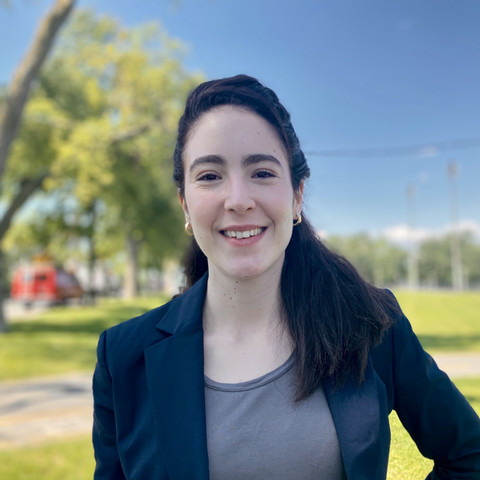
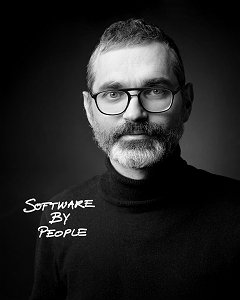
Mike Hazas is a Professor of Human-Computer Interaction at the Department of Information Technology , Uppsala University . He also holds a position at the Institute for Research on Conflicts of Interest in Sustainable Social Transformation/Uppsala . Research Focus: Sustainability in digital technologies, energy demand analysis, thermal comfort automation, and environmental impacts of internet services. Methodology: Combines qualitative and quantitative approaches to study socio-technical systems. Selected Recent Research Trends: His work addresses the hidden sustainability costs of digital proliferation (streaming, gaming, social networks), energy implications of domestic automation, and thermal comfort policies for net-zero transitions. Publications span journals like IEEE Pervasive Computing , Building Research & Information , and International Journal of Human-Computer Studies , with a strong focus on environmental justice in computing.
Professor David Andrews is Professor of Engineering Design in the Department of Mechanical Engineering at University College London (UCL). A globally recognised authority on naval architecture and ship design methodology, he has held continuous academic appointments at UCL since 1980, punctuated by distinguished service in the UK Ministry of Defence where he rose to Director of Frigates and Mine Countermeasures. Since 2000 he has occupied the Chair in Engineering Design at UCL, leading major research initiatives funded by EPSRC, ONR and the EU, and forging strategic industrial partnerships. Education Bachelor of Engineering, UCL (1970) MSc Naval Architecture, UCL (1971) PhD “Synthesis in Ship Design”, UCL (1984) Research Focus Professor Andrews is acknowledged as the world-leading expert in naval ship design methodology, with seminal contributions to early-stage design processes, submarine architecture, trimaran/multi-hull vessels, and distributed ship service systems. His pioneering Design Building Block approach and SURFCON CAD tool have been integrated into industry-standard platforms such as PARAMARINE. Current work addresses energy balance frameworks, computer-aided sketching, and philosophical foundations of engineering design. Across more than 150 publications, a clear trajectory emerges: from fundamental design theory through tool development to practical application in warship, submarine and advanced multi-hull projects. Recent outputs (2021-2024) emphasise automation of early-stage synthesis, network-based modelling of complex distributed systems, and integration of operational availability considerations into concept design. Honours & Awards Fellow of the Royal Academy of Engineering (2000) Fellow of the Royal Institution of Naval Architects (RINA) Fellow of the Society of Naval Architects and Marine Engineers (SNAME) William Froude Medal, RINA (2020) – highest award David W Taylor Medal, SNAME (2021) – lifetime contribution Advising & Grant Leadership Since flexible retirement in 2012 he continues to lecture and supervise MSc projects in Naval Architecture, Marine Engineering and Submarine Design CPD courses. He has led or co-led research grants exceeding £2 million from EPSRC, EU and industry (BAE Systems, Rolls-Royce, BMT, Dstl). These projects have funded numerous CASE studentships and collaborative PhD programmes that bridge UCL and industrial stakeholders. Research Team & Industrial Links Professor Andrews heads the Design Research group at UCL, mentoring successive MoD Professors of Naval Architecture and maintaining active Memoranda of Understanding with BAE Systems and other maritime primes. He chairs the tri-annual International Marine Design Conference’s Design Methodology Panel and has delivered keynote addresses worldwide, uniquely representing non-US expertise at successive US Navy Ship Design Process Workshops.
Mariam Guizani serves as an Assistant Professor in the Department of Electrical and Computer Engineering at Queen's University, where her research bridges Software Engineering and Human-Computer Interaction to advance Diversity and Inclusion in Open-Source Software ecosystems. Education: PhD from Oregon State University Second MSc from Oregon State University BSc in Software Engineering MSc in Software Engineering Her work focuses on designing processes and tools to help Open-Source communities dismantle cognitive barriers, improve inclusivity, and retain contributors. Through multi-year collaborations with Google, Apache Software Foundation, Microsoft Research, and Wikimedia, she has directly influenced real-world platforms including GitHub's Discussion Dashboard and GitHub Blocks. Her research methodology combines socio-technical analysis with empirical studies of contributor experiences across large-scale OSS projects. Scientific Awards: Fulbright fellowship Dr. Guizani actively disseminates her findings through invited presentations at premier academic conferences including ICSE and CSCW, as well as industry forums such as GitHub, ApacheCon, and the Linux Foundation Open-Source Summit, demonstrating significant cross-sector impact of her work on community-driven software development practices.
Милена Радославова Рачева serves as an Associate Professor at the Department of Mathematics, Informatics and Natural Sciences within the Economic Faculty of Technical University - Gabrovo. Holding a Doctor of Sciences degree in Mathematical Sciences, she maintains an active research profile with consistent publications through 2024. Her institutional affiliation demonstrates long-term commitment to the university's academic mission. Research Interests: Dr. Racheva specializes in advanced numerical methods with particular focus on finite element analysis, eigenvalue problems, and Fourier transforms. Her work bridges theoretical mathematics with practical engineering applications, especially in computational modeling for biomedical and ecological systems. Recent publications indicate expanding interests in data approximation techniques and educational technology solutions for remote learning environments. Publication Trends: Analysis of her 15 most recent publications (2021-2024) reveals three dominant research streams: 1) Core mathematical research on eigenvalue approximation and finite element methods (60% of output), 2) Applied mathematical modeling in engineering and energy systems (25%), and 3) Socio-economic analyses of entrepreneurship and investment climates (15%). Her collaborative work with A.B. Andreev represents a significant portion of her technical publications, while recent interdisciplinary projects extend into photovoltaic systems and hydroelectric power analysis. Professional Activities: She has led participation in externally funded scientific projects, most notably the 2012 project "Numerical Methods for Coupled Systems and Computer Modeling in Biomedicine and Ecology" where she served as scientific organization partner. Her publication record shows consistent output across international journals (Springer, IEEE) and Bulgarian academic venues, with recent work appearing in Mathematical Modeling journal and UNITECH conference proceedings.
Matteo Camilli is an Associate Professor in the Department of Electronics, Information and Bioengineering (DEIB) at Politecnico di Milano, Italy, where he leads research in software engineering and verification. His academic journey includes positions as Assistant Professor at Free University of Bozen-Bolzano and postdoctoral research at the University of Milan and University of Bergamo. His educational background includes a PhD in Computer Science (2015), MSc in Computer Science (2012), and BSc in Computer Science (2009), all from the University of Milan. His doctoral research focused on combining advanced abstraction techniques and big data approaches to address state explosion problems in formal verification. Camilli's research primarily centers on software verification, testing, and methods to improve dependability of autonomous, cyber-physical, service-based, and ML-enabled critical systems. His work spans formal methods, model-based testing, uncertainty quantification, and design-time/runtime verification with applications to complex distributed systems. His recent publications reflect a growing focus on explainable self-adaptation, quality assurance for LLM-based systems, and managing uncertainty in adaptive systems. His publication record includes papers in top journals (TOSEM, TAAS, JSS, EMSE) and conferences (ICSE, ISSRE, ICST, ICSA). He serves on program committees for prestigious conferences including ICSE, ICSA, ICST, and ECSA, and is on the steering committee for the International Workshop on Formal Approaches for Advanced Computing Systems (FAACS). Camilli actively contributes to the academic community through conference organization, including serving as Program Committee Member for numerous conferences and as Program Co-Chair for the Software Architecture track at ACM SAC. He also serves as guest editor for special issues on automated testing and dependable AI systems. His teaching portfolio at Politecnico di Milano includes Software Engineering 2, Software Engineering for Automation, and Distributed Software Development. Previously at Free University of Bozen-Bolzano, he taught Systems Engineering and Verification and Reliability for Dependable Systems.
Prof. Kris Luyten serves as Full Professor at Hasselt University's Faculty of Sciences, Department of Computer Science, and Vice Director of the Digital Future Lab. He leads the Applied Computer Science Lab within the Expertisecentrum voor Digitale Media (EDM) on Campus Diepenbeek, focusing on human-centered digital systems. His research spans Human-Computer Interaction with specialization in: Virtual and Augmented Reality systems Human-AI and Human-Robot interaction Ubiquitous computing environments Intelligible interface design Current projects address critical challenges in telerobotics, AR guidance timing, and AI transparency through 44 active research initiatives. Recent publications (2024-2025) demonstrate strong output in top venues including ACM IUI and IEEE ISMAR, with themes centered on: Delay-invariant robotic control under communication constraints Visual guidance timing in industrial AR applications Multimodal interaction frameworks for VR Model multiplicity visualization for transparent AI decisions As an educator, he coordinates key courses including Human-AI Interaction and Software Engineering while supervising 25+ PhD graduates since 2009. His leadership in the €5M Digital Future Lab infrastructure enables cutting-edge research through advanced VR/AR and robotics facilities.
Oskars Java serves as Lead Researcher and Gust Lecturer at Vidzeme University of Applied Sciences' Faculty of Engineering, concurrently directing the Socio-technical Systems Engineering Institute. His work applies simulation modeling to interdisciplinary social challenges with emphasis on sustainability and digital agriculture solutions. Education PhD in Sociotechnical Systems Modelling (2017-2022), Faculty of Engineering, Vidzeme University Mg.sc.comp. Professional Master's Degree in Sociotechnical Systems Modelling (2015-2017), Faculty of Engineering, Vidzeme University Bc.oec. Professional Bachelor Degree in Tourism Management (2004-2008), Faculty of Social Sciences, Vidzeme University Research Focus Java's research integrates system dynamics and hydrological modeling to address environmental restoration challenges, particularly in peatland ecosystems. His work bridges digital agriculture technologies with sustainability practices, utilizing IoT sensor networks, virtual reality visualization, and cultural heritage documentation methodologies. Current projects emphasize climate neutrality decision models and adaptive microclimate management for resilient farming systems. Publication Trends His 14 publications (2017-2022) demonstrate consistent focus on bog hydrological modeling (80% of works), with emerging applications in digital agriculture (15%) and cultural heritage technology (5%). Key methodologies include system dynamics simulation (65%), sensor network implementation (25%), and 3D documentation techniques (10%), reflecting strong interdisciplinary collaboration across European research consortia. Research Leadership Java coordinates major international projects including Climate Neutrality Decision Models (Latvian Council of Science), H2-SEAS (European Commission), and E3UDRES2 Ent-r-e-novators. His grant portfolio spans 11 projects totaling €4.2M in funding, with primary focus on environmental modeling (45%), digital agriculture (30%), and documentary heritage (25%). He serves on editorial boards for Baltic Journal of Modern Computing and Journal of Teacher Education for Sustainability. Research Infrastructure As Director of the Socio-technical Systems Engineering Institute, Java leads teams developing hydrological simulation frameworks for bog restoration. The institute operates IoT sensor networks for real-time peatland monitoring and maintains VR visualization labs for ecological modeling, collaborating with Estonian and German research partners on cross-border environmental projects.
Dr. Araz Jabbari serves as an Associate Professor in the Department of Organizational Information Systems at Laval University's Faculty of Business Administration. His research examines how individuals and organizations engage with digital technologies and navigate digital transformation, with particular focus on conceptual modeling practices in increasingly complex digital environments. Dr. Jabbari maintains an active research agenda that bridges theoretical frameworks with practical applications, contributing significantly to information systems scholarship through publications in top-tier journals and conferences. Dr. Jabbari's academic foundation includes: Ph.D. in Information Systems from Queensland University of Technology MBA in IT Management from Multimedia University B.Sc. in Mathematics from University of Urmia Dr. Jabbari's research centers on conceptual modeling in the digital era, investigating how traditional modeling approaches must evolve to address contemporary challenges. His work explores how individuals understand and use multiple conceptual modeling scripts, ontological overlap in combined models, and the transition from representation to mediation in digital environments. Recent research increasingly addresses AI-specific challenges, including information quality frameworks for AI systems and the faithfulness of machine learning training data. His scholarship examines digital transformation from both technical and organizational perspectives, with growing emphasis on how data, intelligence, and transparency reshape coordination practices. Dr. Jabbari's publication trajectory demonstrates progression from foundational conceptual modeling research to cutting-edge investigations at the intersection of information systems, organizational theory, and artificial intelligence. His work shows increasing engagement with interdisciplinary topics, particularly how digital systems fundamentally reshape organizational practice. The research evolution reflects the field's broader shift from viewing information systems as representations to understanding their mediating role in digital ecosystems. Dr. Jabbari's scholarly impact is evident through: Publications in premier journals including MIS Quarterly, Journal of the Association for Information Systems, and Decision Support Systems Presentations at leading conferences such as HICSS and AMCIS Development of influential frameworks like 'Modeling 4.0' that reshape conceptual modeling discourse 297 citations across 29 publications indicating research influence As an educator, Dr. Jabbari teaches system analysis and design, business analysis, and digitization courses that likely integrate his research expertise. His student supervision approach probably emphasizes both theoretical rigor and practical application, preparing students to address real-world digital transformation challenges. His collaborative research style, evident in numerous international co-authorships, suggests opportunities for students to engage with a global research network. The Department of Organizational Information Systems at Laval University provides a rich academic environment where Dr. Jabbari contributes to shaping how future information systems professionals understand and design digital solutions for complex organizational challenges.
Roumen Nikolov is an Associate Professor in the Department of Computer Science at the University of Library Studies and Information Technologies in Sofia, Bulgaria. He is an active researcher with 19 publications generating over 10,773 reads and 81 citations, specializing in the integration of information technology across education, environmental management, and urban development. As a core member of Elena Shoikova's Lab, his work bridges theoretical frameworks with practical implementations of emerging technologies. His research spans Smart Education systems, Blockchain applications, Smart City ecosystems, and Forest Management solutions. Key interests include developing competence-based learning models for digital natives, creating energy-efficient smart home environments, and establishing interoperable standards for urban IoT infrastructure. His publications consistently emphasize sustainability, user-centered design, and the socio-technical implications of digital transformation in both educational and ecological contexts. Analysis of his 15 most recent publications reveals a pronounced interdisciplinary trajectory where computer science fundamentals converge with environmental science and educational theory. Dominant themes include the application of Big Data analytics in urban ecosystems, blockchain-enabled industrial innovation, and the conceptualization of smart learning environments. His work demonstrates particular strength in translating technical capabilities into tangible solutions for Bulgaria's national ICT strategy implementation and sustainable regional development. Nikolov maintains extensive collaborative networks across Bulgarian academic institutions including the Technical University of Sofia and Bulgarian Academy of Sciences. His primary research vehicle is Elena Shoikova's Lab, which focuses on advanced ICT applications in education and environmental management. Current projects emphasize cloud-based educational architectures, smart forest ecological management systems, and the development of service-oriented smart home solutions that prioritize energy efficiency and user experience.
Antonio Sanchez-Vazquez serves as a Research Fellow at Anglia Ruskin University's School of Management within the Faculty of Business and Law, Cambridge campus. His work bridges business management theory with healthcare technology implementation, focusing on complex organizational systems in public services. Educational background: PhD in Information Systems (University of Glamorgan) MSc in Software Engineering (University of Liverpool) BSc (Hons) in Genetics (University of Leeds) His research centers on technology adoption in healthcare through the lenses of Activity Theory and Systems Thinking. Key areas include Human-Computer Interaction (HCI), Computer Supported Cooperative Work (CSCW), and Healthcare Information Systems (HIS), with particular emphasis on organizational culture, emergency care workflows, and technology evaluation in NHS settings. He examines how innovations like clinical decision support systems impact multi-level organizational structures. Analysis of his 15-year publication history reveals consistent focus on technology-human-organization interactions in healthcare. Early work concentrated on wound care informatics (1999-2004), evolving into emergency care systems (2010-2014), and broader policy issues like digital inclusion (2015). His methodology combines qualitative organizational analysis with pragmatic clinical trials, demonstrating growing emphasis on socio-technical frameworks for technology implementation. Research supervision and grants: Currently supervising one PhD candidate researching mobile health apps for European medical staff Led Benefits Realization Management analysis for UK Police forces Contributed to National Institute for Health Research projects including the SAFER study He maintains active collaborations with NHS trusts through his membership in the Research Development and Innovation Group at Princess Alexandra Hospital, applying systems thinking to frontline healthcare challenges.
Martin Evlogiev is an Assistant Professor at the Department of Architectural Technology, Faculty of Architecture, University of Architecture, Civil Engineering and Geodesy (UACEG) in Sofia, Bulgaria. He has been teaching since April 2022, with previous experience as a part-time lecturer from February to April 2022. His teaching responsibilities include courses on computer technologies in architecture, building construction, and architectural structures for various year levels. Dr. Evlogiev received his architectural education at UACEG, Faculty of Architecture, where he completed his Master's degree in Architecture specialization with a focus on "Public Buildings" between 2009 and 2015. His earlier education includes attending secondary schools "Lev Nikolaevich Tolstoy" (1997-2004) and "Alexander Sergeyevich Pushkin" (2004-2009) in Sofia. He further enhanced his expertise with a Specialized Course in Cultural Heritage Conservation at Ecole de Chaillot from 2017 to 2019. Martin Evlogiev's research focuses on the intersection of architecture and advanced digital technologies. His work explores how artificial intelligence, building information modeling (BIM), and 3D visualization tools can transform architectural design processes and education. He investigates both the technical applications and ethical implications of these technologies in architectural practice. His research spans from practical software implementation challenges to broader questions about how digital tools reshape creative workflows and professional standards in architecture. His recent publications demonstrate a strong focus on artificial intelligence applications in architecture, with particular attention to visualization techniques, ethical considerations, and design automation. He also conducts research on educational aspects of technology adoption in architectural curricula and explores specialized applications of BIM and virtual reality in architectural practice. Dr. Evlogiev has received numerous awards and recognitions for his work: November 2024: Special Prize by Chaos for great contribution at AEC Hackathon in Sofia October 2022: Nomination in the "Computer Graphics" category at International Computer Art Forum "Computer Space" November 2020: Audience Award at Sixth national exhibition-competition for graduate thesis December 2019: First Prize in Logo Competition for the "Bulgarian Flying Disc Federation" September 2014: First prize as part of "Niconsult" team in Competition for the reconstruction of the monument "1300 years of Bulgaria" December 2013: Audience Award at Sofia Architectural Hall October 2013: First Prize in "Architecture" - Highest Architectural Potential Award at ArchHackathon April 2013: Special Award at Positive/Negative Competition May 2013: Third prize at "Keep caml & make DVOR" competition With extensive professional experience in architectural practice since 2013, Dr. Evlogiev brings real-world insights to his academic work. He has worked at firms including "Archont" (2019-2025), "Ivo Petrov Architects" (2015-2019), and "Niconsult" (2014-2015). His practical experience spans architectural design, computer-generated architecture, and internships at various architectural studios. He is also actively involved in research projects, including the "Sozopol 2021 Architectural Studio" analyzing the historic center of Sozopol. Dr. Evlogiev is a member of several professional organizations including CAB (with PPP), SAB ("SPA 15" Company, where he serves as Deputy Chairman), and BANHA. He is currently pursuing doctoral studies independently since 2025 and continues to develop his expertise in advanced architectural technologies.
Lu Xiao is an Assistant Professor in the School of Systems and Enterprises at Stevens Institute of Technology, where she conducts research in software engineering with a focus on software architecture, software economics, cost estimation, and software ecosystems. Dr. Xiao completed her PhD in Computer Science at Drexel University in 2016 under the supervision of Dr. Yuanfang Cai. Her doctoral research focused on the relationship between software architecture and quality attributes. Her research spans several key areas in software engineering with emphasis on empirical methods. She investigates how software architecture influences quality attributes, studies software economics and cost estimation techniques, and examines the dynamics of software ecosystems. Her work frequently analyzes real-world software projects, particularly those in the Apache Software Foundation, providing insights into software maintenance patterns, testing practices, and performance issues. Dr. Xiao has developed practical tools like SAIN for software architecture infrastructure and eFish'nSea for performance education. Analysis of Dr. Xiao's publication record reveals consistent contributions to empirical software engineering, particularly in software architecture analysis, testing methodologies, and performance issues. Her research often centers on Apache projects, demonstrating methodological rigor in studying real-world development practices. She has made significant advances in understanding test refactoring, mocking frameworks, and the identification of performance bottlenecks through linguistic analysis of issue reports. Dr. Xiao has actively contributed to the software engineering research community through service on program committees for major conferences including ASE, ICSE, ESEC/FSE, and ICSA. Her work on program committees spans multiple tracks including Research Papers, Student Research Competition, and specialized workshops. As an academic advisor, Dr. Xiao guides graduate students in research on software architecture analysis, testing practices, and performance optimization. Her research methodology combines empirical analysis of large software repositories with tool development and validation, ensuring practical relevance of her findings. Dr. Xiao leads research efforts focused on understanding the relationship between software architecture and quality attributes. Her current work on bots in pull requests represents cutting-edge research into automation in open source development processes, continuing her tradition of investigating real-world software engineering phenomena.
Alexander Serebrenik is a full professor of social software engineering at the Eindhoven University of Technology in the Netherlands, working within the Department of Mathematics and Computer Science. His academic profile spans decades of interdisciplinary research bridging computer science and social sciences. Professor Serebrenik's research focuses on facilitating software evolution through understanding social aspects of development. His work integrates computer science methods (socio-technical coordination theory, natural language processing, machine learning) with organizational psychology principles. A consistent theme across his publications is empiricism - addressing software engineering challenges through observation and experimentation while balancing social and technical perspectives. His recent work increasingly emphasizes diversity, equity, and inclusion in software engineering, culminating in his 2024 book "Equity, Diversity, and Inclusion in Software Engineering: Best Practices and Insights" (APress). His publication record reveals evolving interests from socio-technical coordination to human factors, community dynamics in open source, and now DEI-focused research. Distinguished Paper Award at ICSE 2023 Distinguished Paper Award at MSR 2023 Distinguished Reviewer Award at FSE 2020 Senior member of IEEE Member of ACM As an academic leader, Professor Serebrenik has mentored PhD students including Tukaram Muske, and actively participates in doctoral symposia. His service includes roles as Diversity and Inclusion Co-Chair at multiple conferences and extensive program committee participation across the software engineering conference landscape. His research group at TU/e maintains an active program studying the social dimensions of software engineering through empirical investigations, contributing significantly to understanding how human factors influence development processes and outcomes.
Dr. Mahum Adil is a Research Associate in the School of Computing Science at the University of Glasgow. She holds a PhD from the Free University of Bozen-Bolzano, Italy, where she developed the Distributed COllaborative DEsign Decision (DCODED) framework for architectural decision-making in distributed software teams. Her research addresses socio-technical challenges in software development through empirical industry collaboration. Education: PhD, Free University of Bozen-Bolzano, Italy Her research focuses on empirical software engineering, sustainable software engineering, and collaborative design practices. She investigates how sustainability principles—spanning environmental, social, technical, and individual dimensions—can be integrated into everyday software development. Using qualitative methods including interviews, workshops, and surveys, she examines real-world team collaboration and decision-making challenges in distributed environments. Dr. Adil's publication record reveals a consistent emphasis on distributed software design and decision-making, with recent work analyzing hybrid work models, pandemic impacts, and tool support for collaborative practices. Her research bridges conceptual framework development with empirical validation to enhance global software team effectiveness. Scientific Awards: No scientific awards are mentioned in the provided text. Information regarding student advising and research grants is not provided in the current text.