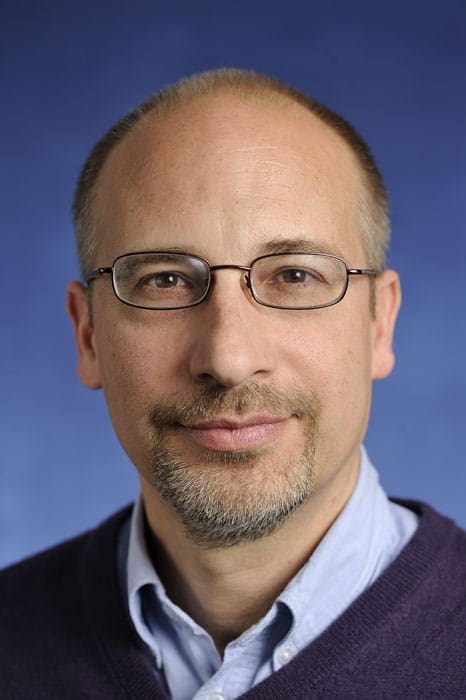
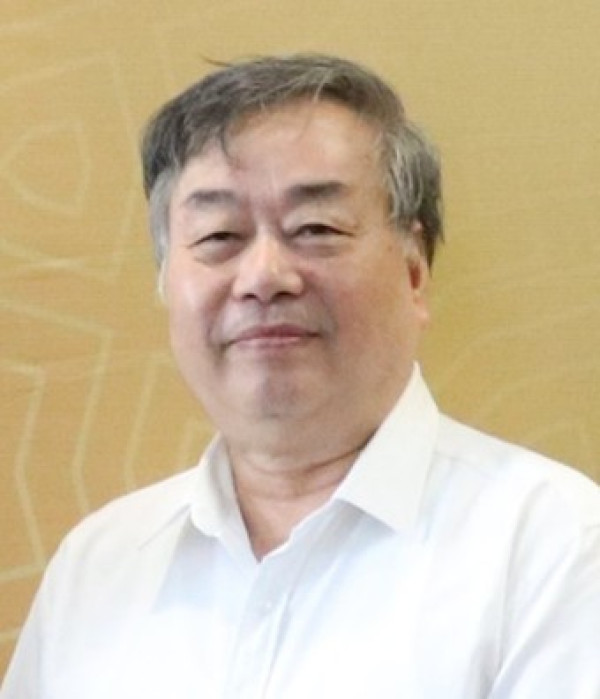
Joel Andreas is a Professor of Sociology at Johns Hopkins University since 2003, serving as Program Director of the East Asian Studies Program. His research focuses on political contention, social inequality, and social change in contemporary China. He holds a PhD in Sociology from UCLA and teaches social theory, political sociology, and courses on Chinese society. He has held visiting positions at universities including the University of Sydney, Hong Kong University, and Ningxia University. His work examines labor movements, rural land policies, and class dynamics in China. Recent research includes analyses of staff-worker congresses, rural land dispossession, and the persistence of militarism in U.S. policy. He critiques market reforms and explores the legacy of the Cultural Revolution. Andreas has contributed to debates on China’s transition to capitalism and the decline of socialist systems. His publications span topics from urbanization to state coercion in rural development. He maintains an active role in academic exchanges and policy-relevant research on China’s socio-political landscape.
Albrecht Fuess is a Professor of Islamic Studies at Philipps University of Marburg since 2010, specializing in Middle Eastern History (13th–17th centuries), Mamluk socio-cultural dynamics, and contemporary European Islamic discourses. His research spans historical continuity in Ottoman-Mamluk-Safavid interactions, Islamic youth cultures, and Mediterranean geopolitics. Research Focus: Medieval Islamic history, Transottomanica mobility studies, Islam in Europe, and cultural integration of Muslim migrants. Awards: Le Studium Fellowship (2007–2009) at Université de Tours. His publications emphasize military-economy interplay, legitimacy through religious narratives, and resource management in empires, with a focus on Mamluk and Ottoman transformations. He has advised on doctoral projects covering topics like Islamic welfare, Arabic ʾAmālī literature, and Cypriot-Ottoman relations. Leadership: Co-coordinator of Transottomanica (DFG-SPP 1981), member of ANR and DAAD committees, and liaison professor for the German National Academic Foundation. Editorial Roles: Co-editor of 'Transottomanica' and 'Muslim Worlds' series, and advisory board member for journals in Cairo, Paris, and Leuven.
Eduardo Araral is an Associate Professor at the Lee Kuan Yew School of Public Policy, National University of Singapore. With over 30 years of experience in academia and government, he holds a PhD in Public Policy from Indiana University-Bloomington under Nobel Laureate Elinor Ostrom. His research focuses on collective action, institutions, and water governance, with publications in Nature Human Behaviour , Public Administration Review , and World Development . He has held fellowships at Stanford University and centers associated with Coase, Ostrom, and Stigler. Research Interests : Collective action, institutional analysis, water governance, digital technologies in public policy, political economy, and socio-ecological systems. Scientific Awards : Ostrom Prize for the Governance of the Commons, Fulbright PhD Scholarship, and Presidential Award for Outstanding Overseas Filipinos. Leadership Roles : Vice Dean for Research, Assistant Dean for Academic Affairs, and Co-Director of the Institute of Water Policy (2016-2022) at LKYSPP. Global Engagement : Advised 20+ international organizations including ADB, World Bank, UNDP, and Fortune 500 companies, while lecturing to 7,000+ government officials across 50+ countries.
Professor Nguyen Van Chinh is a distinguished scholar in anthropology at the University of Social Sciences and Humanities, Vietnam National University (VNU-USSH), specializing in the Department of Anthropology and Religious Studies. With a PhD from the University of Amsterdam and extensive international research experience including a postdoctoral fellowship at the National University of Singapore, he has established himself as a leading expert in Southeast Asian anthropology, migration studies, and ethnic relations. His academic career spanning over four decades includes numerous visiting professorships at prestigious institutions worldwide. Professor Chinh's research interests encompass Anthropology Research Methods , History of Anthropology , Migration and Poverty Studies , Ethnic Identity , and Cross-border Ethnic Groups in Southeast Asia. His scholarly work demonstrates a particular focus on the intersection of economic development, cultural preservation, and social transformation in Vietnamese and Southeast Asian contexts. Through extensive fieldwork and theoretical contributions, he has shaped contemporary understanding of ethnic minorities, migration patterns, and socio-economic changes in the region. His extensive publication record shows a clear evolution toward contemporary issues including China's growing influence in the Mekong region, ethnic Chinese migration, and the challenges of poverty reduction in Vietnam. The research demonstrates increasing engagement with transnational phenomena, border studies, and the impact of China's economic expansion on Southeast Asian societies. His most recent work addresses pressing contemporary issues such as disability rights, academic publishing challenges, and urban migration dynamics. Distinguished PhD dissertation awarded by NVMC (Netherlands Association of Social Sciences and Cultural Sciences), 2000 Certificate of Merit from the President of National University for outstanding achievements, 2007 Asian Leadership Fellow (ALFP) awarded by the Japan Foundation, 2004 Asian Public Intellectual Fellow (API) awarded by the Nippon Foundation, 2010 Multiple research grants from prestigious foundations including Toyota, Rockefeller, and Japan Foundation Professor Chinh has served as an independent consultant for numerous national and international development projects implemented in Vietnam. His advisory work spans multiple sectors including labor, health, agriculture, and ethnic minority affairs, working with organizations such as WHO, World Bank, Asian Development Bank, UNDP, DFID, IUCN, UNICEF, and UNESCO. His expertise in ethnographic research methods and understanding of Vietnamese society has made him a valuable resource for policy development and implementation across multiple domains.
Lorena Sosa is an Associate Professor at the Faculty of Law, Economics and Governance, Utrecht University, specializing in International and European Law. She is affiliated with the Netherlands Institute of Human Rights (SIM) and the research program Family & Law (UCERF). Her roles include membership of the management board of the Center for Global Challenges, Director of Education at UGlobe since 2022, and a community-engaged learning ambassador for her faculty since 2023. Education: PhD (cum laude) in Law from Tilburg University (2015), LL.M. in International Public Law (cum laude, National University of Córdoba), and a law degree from the same institution. Prior to Utrecht, she held positions at the University of Buenos Aires, University of Turku, and others. Research focuses on intersectional discrimination, gender-based violence, and human rights law. Key areas include the Istanbul Convention, feminist legal frameworks, and trans rights in criminal procedures. She employs socio-legal methods and collaborates with international organizations like the EU, Council of Europe, and UN. Publications span topics like femicide, domestic violence, and transgender experiences. Recent works include contributions to the Routledge International Handbook on Femicide and Feminicide (2023) and Preventing and Combating Violence Against Women (2023). Awards include the Marie Skłodowska-Curie Fellowship (2018), VENI Grant (2020), and the Max van der Stoel Award (2015) for her PhD on intersectionality in violence against women frameworks. Teaching includes courses on human rights law at Utrecht’s Legal Research Master, PIL Master, and University College Utrecht. She advises on projects related to victim rights, gender diversity, and empirical legal studies.
Thomas Piketty is a Professor of Economics and Economic History at the École des Hautes Études en Sciences Sociales (EHESS) and the Paris School of Economics. He is co-director of the World Inequality Lab and the World Inequality Database, and a leading scholar on economic inequality and historical political economy. Born on May 7, 1971, in Clichy, France. PhD in Economics from EHESS and LSE (1990–1993). Professor at MIT (1993–1995), Research Fellow at CNRS (1995–2000), and Director of Studies at EHESS since 2000. His research focuses on the interplay between economic development, wealth distribution, and political institutions. Key works include Capital in the 21st Century (2014), Capital and Ideology (2020), and A Brief History of Equality (2022). Piketty has pioneered methods to measure long-term inequality using historical data. Publications span articles in top journals like the Quarterly Journal of Economics, Journal of Political Economy, and American Economic Review. His work emphasizes fiscal policies, wealth taxation, and global inequality trends. He co-founded the World Inequality Database (WID.world) to track income and wealth disparities worldwide. Distinctions include the Yrjö Jahnsson Prize (2013), CNRS Bronze Medal (2001), and Best Young Economist Award (2002). He has advised governments and contributed to policy debates on tax reform, climate justice, and European democratization.
Witold J. Henisz serves as Vice Dean and Faculty Director of the Impact, Value, and Sustainable Business Initiative at The Wharton School, University of Pennsylvania, holding the Deloitte & Touche Professorship in Management. His research centers on political and social risk identification, ESG impact materiality, and corporate diplomacy frameworks that transform stakeholder relationships into strategic assets. His educational background includes a Ph.D. in Business and Public Policy from UC Berkeley's Haas School and an M.A. in International Relations from Johns Hopkins SAIS. Henisz has served as Departmental Editor at Journal of International Business Studies and Associate Editor at Strategic Management Journal , reflecting his scholarly influence. Research interests converge on geopolitical risk quantification, stakeholder engagement optimization, and sustainable business model innovation. His work demonstrates how political hazards materially impact firm valuation and how corporate diplomacy can mitigate conflict through strategic stakeholder alignment. Recent publications leverage massive media datasets (4+ billion articles) to model populism dynamics, indigenous land conflicts, and ESG-credit risk linkages. Award highlights include the Aspen Institute Ideas Worth Teaching Award (2020), Iron Prof recognition (2019), and Academy of International Business Fellowship. His geostrategy framework Geostrategy by Design (2024) provides executives with actionable methods for navigating geopolitical volatility. Aspen Institute Ideas Worth Teaching Award (2020) Iron Prof recognition (2019) Academy of International Business Fellow (2014-present) Multiple Wharton Excellence in Teaching Awards (2006-2021) Industry Studies Association Best Paper Award (2019) Henisz consults through PRIMA LLC for multinational firms (Rio Tinto, Shell), financial institutions (Eaton Vance, World Bank), and NGOs. His executive education programs train leaders in ESG integration and geopolitical risk management, while his KEROVKA crisis simulation develops real-time strategic response capabilities. Media frequently cites his expertise on ESG controversies, with 50+ major publications featuring his analysis since 2022 including Financial Times , Bloomberg , and Wall Street Journal .
Dr. phil. Andrej Holm is a Researcher at the Institute of Social Sciences , Humboldt University of Berlin, specializing in Urban and Regional Sociology . As a Women's Representative and active academic, he focuses on gentrification, housing policy in international comparison, and European urban policy. His work bridges academia and activism, contributing to housing referendums and social movement analysis. Research Themes : Gentrification dynamics, financialization of housing, socio-ecological housing transformation, and post-socialist urban development. Key Projects : Expert analysis for Berlin housing socialization referendum (2022), comparative studies on Amsterdam/Barcelona/Berlin/Vienna (2022), and social infrastructure reconceptualization (2021). Holm's publications span urban policy critiques and housing justice , with recent 2025 works examining financial investors' impact on Berlin housing and pandemic-era housing conditions. His research integrates political economy with spatial inequality frameworks.
Yintan Fan is an Assistant Lecturer and Postgraduate Research Student in the Department of Sociology and Criminology at the University of Essex. His current PhD research focuses on ethnic entrepreneurship and chambers of commerce, exploring how migrant organizations influence socio-economic dynamics. Previously, he worked as a university lecturer (2019–2022), market researcher (2016–2019), and journalist (2009–2011). Education includes a BA in Sociology from Jiangnan University (2012), an MA in Social Science from Complutense University of Madrid (2016), and an MA in Sociology from Bielefeld University (2017). He holds certifications in teaching (HEA Fellowship, China), translation (fluent in Chinese, English, German, Spanish), and project management. Research interests span Economic Sociology , Sociology of Work , Migration Studies , and Cultural Sociology . His work examines topics such as Chinese students' social adaptation in Germany, ethnic entrepreneurs in Spain and Italy, and labor rights in China. Key outputs include conference presentations on migrant organizations, global fashion industries, and trade union efficacy. Awards include the Annual Teaching Contribution Award and Senior Teaching Supervisor titles at Wenzhou Medical University. He has secured grants such as the University of Essex Postgraduate Research Student Proficio Scheme (2022) and Wenzhou Social Science Association Research Program (2020). Professional activities include teaching Researching Social Life I (SC101) and participation in summer schools like the MIT Sloan Medici Program (2023) and Manchester's Creative Qualitative Methods (2022).
Elaine M. Huang is an Associate Professor of Human-Computer Interaction at the Department of Informatics, University of Zurich, where she has served since 2010. She also leads the People and Computing Lab, focusing on the dynamic interplay between human practices and technological advancements. Her academic background includes: PhD in Computer Science, Georgia Institute of Technology (2006) Dr. Huang's research centers on human-computer interaction, examining the bidirectional relationship between technology and human practices. She is particularly known for her work on gender equality in technology, challenging assumptions about innate gender differences and investigating how AI systems may perpetuate biases. Her research also spans sustainable interaction design, mental health technologies, and chronic disease management, always emphasizing empirical data over intuition. Analysis of her recent publications (2023-2025) reveals a strong trajectory toward socially impactful HCI, with significant focus on health technologies (diabetes management, mental health), cultural sensitivity in design, and the ethical challenges of AI. Her methodology often involves field studies to understand real-world technology use, countering the industry's reliance on intuition. As head of the People and Computing Lab, Dr. Huang oversees a research group dedicated to designing and evaluating technologies that address complex human needs. The lab's work frequently involves co-design with diverse user communities to ensure relevance and inclusivity in technological solutions.
Graduate Institute of International and Development StudiesSwitzerland
Alessandro Monsutti is a Professor of Anthropology and Sociology at the Graduate Institute of International and Development Studies in Geneva. He holds additional roles as Faculty Associate at the Centre on Conflict, Development and Peacebuilding, Global Migration Centre, and Albert Hirschman Centre on Democracy. His research focuses on transnational networks, forced migration, and conflict dynamics in Afghanistan, Iran, Pakistan, and Europe. Education: PhD in Social Anthropology from the University of Neuchâtel (2002). Prior roles include Research Fellowships at Yale University (2008–2010) and the School of Oriental and African Studies (1999–2000), and Visiting Professorships at the University of Vienna and Arizona State University. Research Interests: Migration studies, border studies, political economy of post-conflict reconstruction, diaspora dynamics, and the intersection of globalization with local practices. His fieldwork spans Afghanistan, Pakistan, Iran, and Western countries, emphasizing the agency of displaced populations and the socio-economic strategies they employ. Scientific Contributions: Over 30 peer-reviewed articles and authored/edited books including Homo itinerans: Towards a Global Ethnography of Afghanistan (2021) and War and Migration (2005). His work bridges ethnographic rigor with policy relevance, addressing themes like refugee integration, urban migration, and global governance. Grants & Awards: MacArthur Foundation Grantee (2004–2006), Swiss National Science Foundation grants for projects on urban cohabitation and Afghan crisis analysis. Co-led initiatives on adolescent migration and border policy in South Asia. Labs/Teams: Collaborates with the Refugee Studies Centre (Oxford), Global Migration Centre (Geneva), and international NGOs like UNHCR. Active in editorial boards of journals like Tsantsa and ethnographiques.org .
London School of Economics and Political Science (LSE)United Kingdom
John T. Sidel Summary Professor John T. Sidel is the Sir Patrick Gillam Chair in International and Comparative Politics at the London School of Economics and Political Science (LSE), holding joint appointments in the Government and International Relations Departments. He is also Director of the Saw Swee Hock Southeast Asia Centre. His career spans over three decades of research on Southeast Asia, with a focus on the Philippines, Indonesia, and Vietnam. Education B.A. and M.A. in Political Science from Yale University Ph.D. in Government from Cornell University Research Interests Sidel specializes in Southeast Asian politics, including local power dynamics, comparative historical sociology, Islam in politics, reform advocacy campaigns, and infrastructure politics. Key themes include: Local Politics: Analysis of political bossism, dynasties, and subnational governance in the Philippines and beyond. Comparative History: Long-term patterns of state-building, nationalism, and colonial legacies in Southeast Asia. Islam & Politics: Study of religious violence, political mobilization, and transnational Islam in Indonesia. Reform Advocacy: Advising development initiatives like the Philippines' Coalitions for Change program. Infrastructure Politics: Urban transport reforms and their socio-political implications in Metro Manila. Key Publications Major works include Republicanism, Communism, Islam: Cosmopolitan Origins of Revolution in Southeast Asia (2021), Riots, Pogroms, Jihad (2006), and Capital, Coercion, and Crime (1999). His recent research explores transport policy reforms and the political economy of development in the Philippines. Teaching Sidel teaches courses on Southeast Asian politics, comparative historical sociology, and Islam in world politics at LSE. Notable courses include GV4D3 (Local Power in Globalization) and IR461 (Islam in International Relations). Public Engagement He advises international organizations such as The Asia Foundation and UNHCR, contributing reports on Indonesia's refugee policies and Philippine development initiatives. Active in public lectures and podcasts, he promotes Southeast Asian studies through platforms like the LSE's 'Dialogues on Southeast Asia' series.
London School of Economics and Political Science (LSE)United Kingdom
Professor Catherine Allerton is a faculty member in the Department of Anthropology at the London School of Economics and Political Science (LSE). She specializes in the materialities and mobilities of everyday life, with a focus on place, kinship, childhood, migration, and temporalities in island Southeast Asia. Her fieldwork spans a two-placed village in Flores, Indonesia, and Kota Kinabalu, Sabah, East Malaysia. Her research emphasizes interdisciplinary ethnographic methods, particularly involving child participants to challenge adult-centric approaches. She launched the 'Childhood in the Migrant City' exhibition using child-taken photographs from her ESRC-sponsored research. Current projects include exploring discordant temporalities between migration systems and childhood development, as well as completing a book manuscript on moral economies of belonging. Key research interests include the social and political dimensions of landscapes, the anthropology of children, and the impacts of legal status on marginalized youth. She teaches an LSE course on 'Children and Youth in Contemporary Ethnography' and actively supervises PhD students focusing on childhood, migration, citizenship, and Southeast Asian studies. Her work addresses exclusionary practices tied to race, religion, and legal frameworks in Malaysia and Indonesia. Languages spoken include Bahasa Manggarai, English, Indonesian, and Malay. No part-time status is mentioned, indicating full-time faculty commitment.
Associate Professor Madeline Taylor is an Australian Research Council (ARC) Early Career Industry Fellow at Macquarie Law School and Co-Lead of the Energy, Communities, and Market Regulation Stream at the Transforming Energy Markets Research Centre. She specializes in socio-legal aspects of energy transition, focusing on regulatory frameworks, energy justice, and land-use conflicts between energy developers and communities. Her work bridges property law, commercial law, and comparative law to address challenges in renewable energy integration and resource governance. Affiliations: Honorary Associate at Sydney Environment Institute, Member of Sydney Institute of Agriculture Industry Partners: NSW Department of Primary Industries and Spark Renewables (FAARM Project) Research Interests: Energy law and policy, agricultural-legal synergies, renewable energy siting, and just transition principles. She co-edits the Oil, Gas and Energy Law Journal and contributes to the LexisNexis Energy and Resources Law in Australia . Recent Articles Highlight Key Themes: Offshore wind governance, agrivoltaics regulatory systems, hydrogen licensing, and energy justice frameworks. These works emphasize interdisciplinary approaches to balancing economic, environmental, and social dimensions of energy transitions. Awards: 2023 Lawyers Weekly Women in Law Academic/Researcher of the Year, 2024 AFR Higher Education Awards Finalist, Clean Energy Council Transformational Leadership Scholarship Teaching and Engagement: Embeds climate justice in commercial law education; advises governments and NGOs on energy policy. Active in RE-Alliance Management Committee and IUCN Climate Change Law initiatives.
Jampel Dell'Angelo is an Associate Professor with ius promovendi in Water Governance and Politics at the Department of Environmental Policy Analysis, Institute for Environmental Studies (IVM), Vrije Universiteit Amsterdam. He holds concurrent roles as a Visiting Scholar at the University of California, Berkeley's Ecohydrology Lab, and an Environmental Governance Affiliate Scholar at SESYNC, Maryland. His research focuses on multilevel dimensions of water governance, climate adaptation in African irrigation systems, and transnational land investments' impacts. He leads the EU-funded NEWAVE project, coordinating 15 Early Stage Researchers across 10 institutions. Educated with a dual PhD in Environmental Science (Autonomous University of Barcelona) and International Cooperation (Sapienza University), he also holds advanced degrees from the LSE, Sapienza, Curtin, and the University of Siena. As Editor-in-Chief of World Development , he promotes interdisciplinary research on socio-environmental systems. His work contributes to UN SDGs related to clean water, sustainable cities, and responsible production. Research interests span water grabbing dynamics, socio-ecological resilience, and policy frameworks for equitable resource management. Recent projects address Mediterranean water scarcity solutions and the socio-political implications of global land rushes. He supervises PhD candidates exploring themes like water democracy, agrifood transitions, and environmental justice. Key contributions include pioneering analysis of 'water commons grabbing' and documenting the Global Water Grab Syndrome. His documentary work complements field research, such as Working Together: Research and Water Governance on Mount Kenya . Current projects emphasize innovative governance models and climate-resilient water management in transboundary contexts.