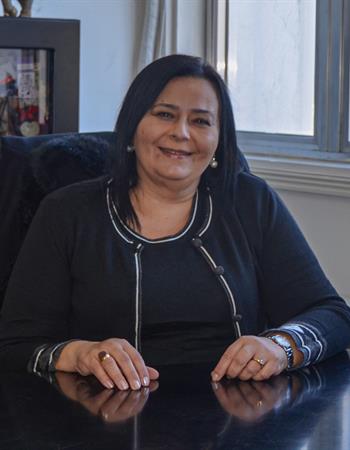
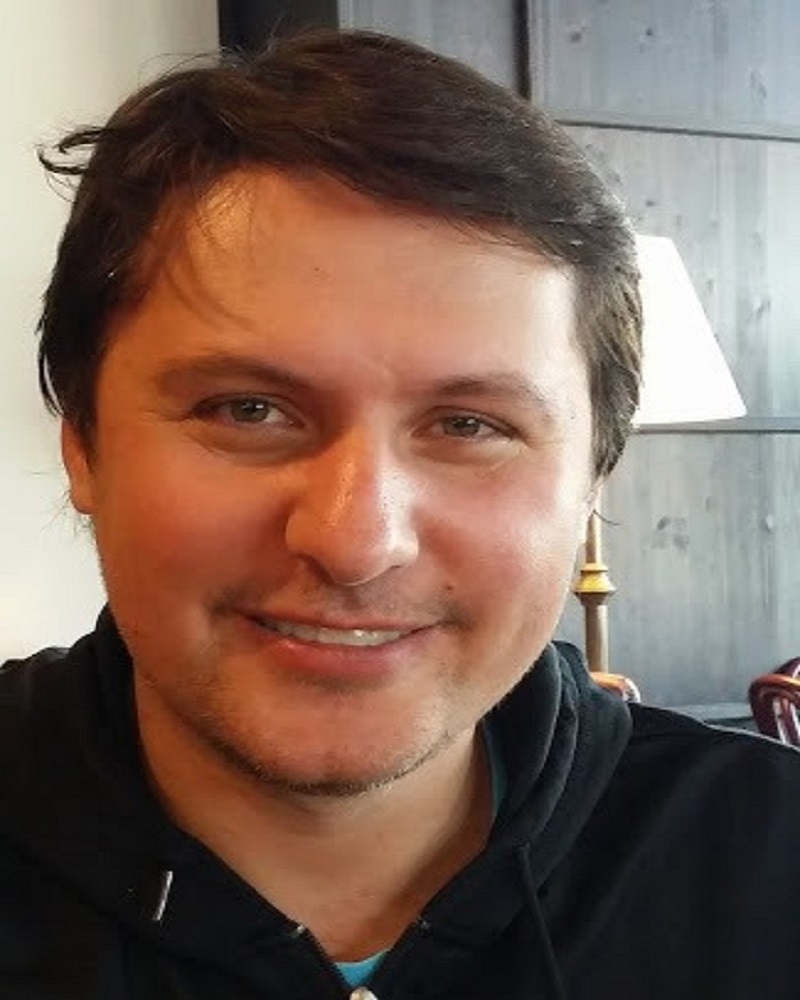
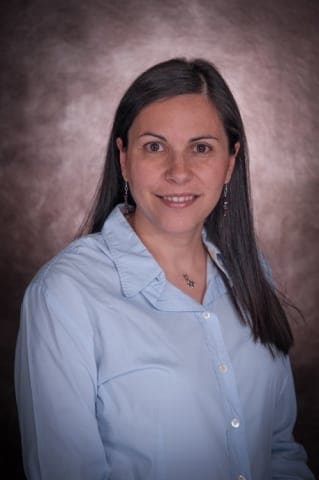
Prof. Bahire Efe Özad is a Professor in the Department of Television and Film Studies at Eastern Mediterranean University's Faculty of Communication and Media Studies. She holds a PhD and multiple master's degrees in education and English language teaching. Her research focuses on media studies, social media impact, communication theory, environmental sociology, cinema analysis, and intercultural communication. She has supervised over 80 PhD and Master's theses, reflecting her extensive academic mentorship. Her notable works include analyses of sacred defense cinema, pandemic governance in Northern Cyprus, and systematic reviews on fake news scholarship. She has conducted impactful studies on marital sustainability during the pandemic, Nigerian election media framing, and digital natives' social media use. Her research spans diverse areas including ICT's environmental impact, romantic relationship dynamics, and blog reader engagement. Prof. Özad has led projects like analyzing communication barriers for African students and exploring original scores in film. She maintains an active academic presence through Google Scholar and has contributed to numerous peer-reviewed journals. Her teaching and research activities emphasize interdisciplinary approaches to media, communication, and social dynamics.
Ali Akdoğan is an Assistant Professor in the Department of Educational Sciences at Final University. His academic career spans over two decades with doctoral studies completed in 2014, following a Master's degree in 1995 and Bachelor's degree in 1992. Educational Background: Doctoral Degree: 2014 Master's Degree: 1995 Bachelor's Degree: 1992 Research Interests: Dr. Akdoğan's work explores educational psychology, teacher development, and the impact of global educational frameworks like the International Baccalaureate program. His research analyzes school culture, emotional intelligence in educational settings, and pandemic-induced distance learning challenges. Publication Trends: Recent work (2021-2022) focuses on psychological impacts of the pandemic on students, effectiveness of international educational programs, and teacher emotional intelligence. Earlier research (2002, 1995) examines social capital and personnel selection in educational institutions.
Martin Hinterberger is Professor of Byzantine and Modern Greek Studies at the University of Cyprus since 2002. He holds MA and PhD degrees from the University of Vienna and served as research fellow at the Austrian Academy of Sciences (1995-2001). He has taught at the University of Vienna, Freie Universitaet Berlin, and EHESS Paris. Specializes in emotions in Byzantine literature Expert in Byzantine hagiography and theoretical approaches Focus on language analysis (learned vs vernacular) Collaborator on the bibliography of the Byzantinische Zeitschrift His recent publications explore the synthetic perfect tense in Byzantine Greek, hagiographic metaphrasis, and emotional expressions in literature. He co-edited volumes on Byzantine-Latin intellectual history and serves as a leading voice in Byzantine philology.
Michael Sirivianos is an Associate Professor at the Cyprus University of Technology (CUT), where he serves as Dean of the School of Engineering and Technology. He holds a PhD in Computer Science from Duke University (2010) and leads research in cybersecurity, disinformation detection, and social media analysis. He coordinates multiple EU-funded projects including ReCRED (Horizon 2020) and ENCASE (Marie Curie RISE), securing over €3M in research funding. Research Focus His work spans: Cybersafety : Detection of cyberbullying, hate speech, and inappropriate content targeting children Trust Systems : Device-centric authentication and blockchain applications Disinformation Analysis : Graph-based detection of fake news and state-sponsored manipulation Scalable Systems : Distributed databases and network infrastructure Achievements & Recognition Best Paper Award (2019) for work on state-sponsored disinformation Distinguished Paper (2018) for fringe web community analysis Spotlight Session recognition (2020) for child protection research Featured in NYT, Washington Post, and Wired for YouTube content analysis Leadership Co-directs the Network Systems Research Lab, serves on the Board of CYENS Centre of Excellence, and coordinates the Fact-check Cyprus Centre against Disinformation.
Nikos Drosos serves as Assistant Professor at the Department of Social and Behavioral Sciences, School of Humanities, Social and Education Sciences, European University Cyprus, where he coordinates the MA programme in Career Guidance and Counselling. His academic career spans over a decade with significant contributions to career counseling theory and practice, particularly in vulnerable populations and crisis contexts. Dr. Drosos' educational background includes: PhD in Psychology (2011), National & Kapodistrian University of Athens, thesis: 'Career Maturity and Career Decision-Making of adolescents from diverse cultural background' MSc in Counselling and Career Guidance (2006), National & Kapodistrian University of Athens BA in Psychology (2007), National & Kapodistrian University of Athens BA in Philosophy, Pedagogy & Psychology (2002), National & Kapodistrian University of Athens His research focuses on career decision-making mechanisms, career adaptability in volatile labor markets, and psychosocial interventions for migrants, refugees, and mental health service users. He investigates how economic crises impact career development trajectories and develops culturally adapted assessment tools like the NADINE Soft Skills Tests. His work bridges vocational psychology with social inclusion policy, emphasizing evidence-based career counseling practices in multicultural contexts. Analysis of his 2021-2024 publications reveals a strong thematic cluster around career resilience in post-pandemic and economic crisis scenarios, with growing emphasis on digital assessment tools for vulnerable populations. His research consistently addresses methodological innovation in cross-cultural psychometrics while maintaining practical applicability for career counselors. Key recognitions include: Wiley’s Research Headlines selection (2021) for career services innovation International award for innovative social inclusion work (2017) Sylff Fellowship for academic excellence (2002) Multiple national distinctions for academic achievements As MA programme coordinator, he mentors graduate students in career counseling methodologies. He has secured over €2M in EU research funding through ERASMUS+ and Creative Europe projects including Work4Psy (supporting mental health NEETs), ART4PSY (art-based social inclusion), and Learn4Carers (caregiver training). His grants consistently target marginalized groups through interdisciplinary collaborations across 12 European countries. Dr. Drosos co-leads the NADINE research consortium developing migrant assessment tools and serves on the Scientific Committee of the European Doctoral Programme in Career Guidance and Counselling (ECADOC). He actively contributes to PEPSAEE (as Treasurer) and ELETYPE, shaping national policies for psychosocial rehabilitation and supported employment in Greece.
Dr. Maysa Siag is a Researcher at Sapienza University of Rome , currently affiliated with the European Doctorate on Social Representation and Communication program. Her research bridges Social Identity Theory and Social Representations Theory , focusing on the layered identities of Palestinian adolescents in diaspora contexts. Research Focus : Social identity construction among displaced populations Methodology : Twenty Statements Test (TST) and qualitative analysis Demographics : 200 adolescents in Jordanian refugee camps (mean age 16.53) The study revealed dominant identity layers including Palestinian refugee , Arab , and Muslim , with analysis spanning spontaneous self-definitions, identity negation, and salience manipulation experiments. Her 2013 project, completed through the IPRA Foundation, contributes to understanding how historical trauma and sociopolitical contexts shape adolescent self-perception.
Ozanser Uğurlu is an academic affiliated with the Faculty of Arts and Sciences at Final University, specializing in Psychology. He holds a Doctoral Degree in Social Psychology from Ankara University (2009) and a Bachelor's Degree in Psychology from Middle East Technical University (2000). Doctoral Degree: Social Psychology, Ankara University (2009) Master's Degree: Social Psychology, Ankara University (2003) Bachelor's Degree: Psychology, Middle East Technical University (2000) His research interests align with social psychology, focusing on human behavior, cognitive processes, personality development, and social interactions. His academic background in social psychology suggests expertise in analyzing group dynamics, individual behavior, and socio-cultural influences.
Dr Leam Anthony Craig is a Visiting Professor of Forensic Psychology at UCLan Cyprus and holds multiple visiting professorships across UK universities including the University of Lincoln and Birmingham City University. He has extensive experience in clinical and forensic psychology, particularly in risk assessment methodologies, sexual/violent recidivism, and offenders with intellectual disabilities. His academic roles include examiner for doctorate programs in forensic psychology and leadership in research initiatives. Qualifications include a PhD in Psychology (University of Birmingham, 2004), MSc in Forensic Psychology (University of Surrey, 1997), and dual BA in Psychology/Sociology (University of Keele, 1995). He is chartered by the British Psychological Society and registered as a clinical and forensic psychologist with the Health & Care Professions Council. His research focuses on risk assessment frameworks, including the CAFIRA model, and explores factors influencing recidivism in sexual offenders. He has authored/co-authored multiple books, edited volumes, and peer-reviewed articles, contributing to the Wiley Handbook series on offender rehabilitation. Key publications address sexual deviance, IDD offenders, and child protection. Craig has secured over £2.5 million in research funding, including projects on offender management pathways and expert witness practices. His professional memberships include the Academy of Experts and the Association for the Treatment of Sexual Abusers (ATSA). Awards include the Emerald Literati Award (2018) and Fellowship of the Academy of Social Sciences (2016). He currently supervises doctoral candidates and serves on editorial boards for journals like Journal of Sexual Aggression and Sex Offender Treatment . His teaching spans risk assessment, offender treatment, and forensic case formulation across multiple institutions.
Prof. Loizos Symeou serves as Vice-Rector of Academic Affairs and Professor of Sociology of Education at European University Cyprus (EUC), where he has been employed since 2007. Previously, he held roles at Cyprus College (2005-2007) and Cyprus Pedagogical Institute (2000-2005). He leads EUC's School of Humanities, Social and Education Sciences, contributing to policy development and educational innovation. His academic credentials include a PhD (2004) and M.Phil. (2001) from the University of Cambridge, an M.Ed. (1999) from University of Sydney, and a B.Ed. (1998) from University of Cyprus. Research focuses on multicultural education, Roma inclusion, teacher training, and parent-school dynamics. Notable projects include ESIPP (parent education for autism families), INSETRom (teacher training for Roma inclusion), and PAMINA (intercultural education programs). His work bridges policy analysis and grassroots implementation, emphasizing equity and social justice. Editorial roles include positions at Journal of Early Childhood Studies and International Studies in Sociology of Education . Awards include the 2014 Social Literacy LED Award for INSETRom's contributions to Roma education. Leadership initiatives include crisis adaptation during the 2020 pandemic, promoting AI integration in education, and fostering partnerships with organizations like KPMG and ACCA for scholarship programs. His work has global impact through EU-funded projects engaging multiple countries in Southeast Europe.
Rigas-Filippos Soldatos serves as a Visiting Assistant Professor in the Department of Psychiatry at the Medical School of the National and Kapodistrian University of Athens, where he currently holds an Academic Fellow position in Neuropsychiatry at Aeginitio Hospital's First Neurological Clinic since May 2021. His academic career includes prior roles as an Academic Fellow in Psychiatry at the university's First Psychiatric Clinic (2014-2020) and a Research Fellow in Neuropsychiatry at the University of Melbourne's Melbourne Neuropsychiatry Centre (2019-2020) under a Greek-Australian Research Fellowship. His educational credentials feature a Doctoral degree (2014) from the National and Kapodistrian University of Athens' 1st Department of Pathological Anatomy with thesis 'Molecular study of meningiomas', a Medical degree (2005) from the same institution's Medical School, and a Bachelor of Science in Biomedical Science (1999) from King's College London. Soldatos specializes in advanced psychiatric research focusing on first-episode psychosis , schizophrenia spectrum disorders , and exposome-environment interactions . His work integrates machine learning methodologies to develop predictive models for symptom remission while examining socioeconomic and familial influences on disease progression. He actively contributes to the Athens first-episode psychosis research study , advancing early intervention frameworks through longitudinal clinical investigations. Analysis of his publication record reveals a concentrated research trajectory on computational psychiatry applications, with recent work emphasizing exposome scoring systems in schizophrenia and pandemic-related caregiver impacts in neurocognitive disorders. His methodological approach bridges clinical psychiatry with data science to address critical gaps in psychosis management and functional outcomes. As a core collaborator in the Athens first-episode psychosis research initiative, Soldatos operates within multidisciplinary teams at Aeginitio Hospital while maintaining international research connections established during his fellowship at the Melbourne Neuropsychiatry Centre.
Professor Elena Papanastasiou is the Dean of the School of Education at the University of Nicosia, Cyprus, where she teaches Educational Research , Quantitative Methods , and Assessment . She holds a PhD in Measurement and Quantitative Methods from Michigan State University (2001) and an Honors B.Sc. in Elementary Education from Pennsylvania State University (1996). Her research focuses on educational assessment , structural equation modeling , multilevel modeling , and mixed methods research , with applications in international assessments like TIMSS and IEA . Recent publications analyze generative AI in education , test-taking metacognition , student well-being , and international schooling contexts in Cyprus, Europe, and the USA. She serves as Cyprus’ General Assembly representative in IEA and is a member of the IEA Standing Committee and Publications Committee , as well as the Professional Development Committee of the Association for Educational Assessment. Her consulting work on methodological frameworks supports research teams globally, emphasizing advanced statistical analysis and educational policy development.
Hürcan Tarhan is an Associate Professor affiliated with the Faculty of Economics and Administrative Sciences at Bahcesehir University. Her academic work spans Human Resources Management, Organizational Behavior, and Educational Administration, with a focus on cross-cultural studies in Turkey, Indonesia, and international education policy. Doctoral Degree: Business Administration - Human Resources Management, Bahcesehir University (2019) Master's Degree: Educational Administration and Management, Yıldız Technical University (2005) Bachelor's Degree: English Language and Literature, University of Uludag (1993) Her research examines paternalistic leadership , precarious employment , and creative learning districts , often integrating psychological and sociological frameworks. Recent publications address TQM-oriented HRM practices in Indonesia and inclusion strategies in Turkish educational systems. While no scientific awards are explicitly mentioned, her work includes administrative tasks and international educational policy analysis, such as challenges faced by Turkish educational attachés abroad.
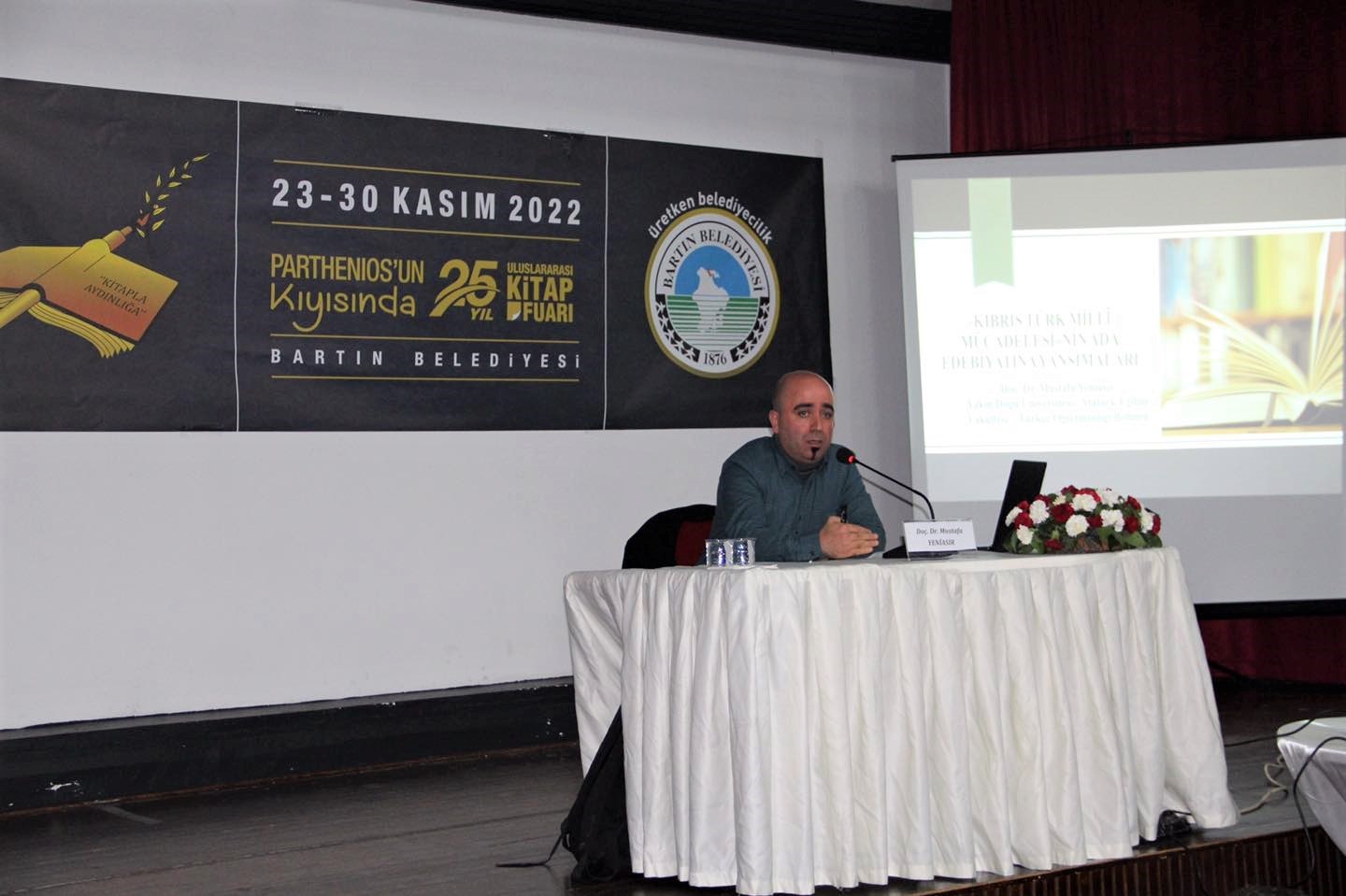
Assoc. Prof. Dr. Mustafa Yeniasır is a faculty member at Near East University , renowned for his expertise in Turkish Cypriot Literature and its interplay with National Identity , Cultural Heritage , and Education . His work explores how literature reflects and shapes social structures, particularly focusing on the socialist themes in post-1930s Cypriot literature and the role of poetry in preserving national consciousness. Key Research Themes : Turkish Cypriot national struggle, language as a cultural mirror, historical elements in folklore, and inclusive education methods. Recent Contributions : Examined digital literacy in education (2024), sustainable cultural heritage (2025), and pedagogical approaches for students with special needs (2025). Public Engagement : Served as jury member for the Hasan Bayri Poetry Contest at the 25th Bartın International Book Fair and delivered talks on Cypriot literature’s societal role. Assoc. Prof. Yeniasır’s scholarship bridges literary analysis with contemporary educational practices, emphasizing the transmission of cultural values through literature and the adaptation of teaching methods for diverse learners.
Eleni Epiphaniou is an Assistant Professor in Health Psychology at the European University Cyprus , affiliated with the School of Humanities, Social and Education Sciences and the Department of Social and Behavioral Sciences . She has held previous academic roles including a Part-Time Lecturer at Open University Cyprus (2016-2018) and Programme Coordinator at City Unity College (2015-2017). PhD in Health Psychology (University of Surrey, 2009) MSc in Health Psychology (University of Surrey, 2005) BSc in Psychology (University of Cyprus, 2004) Her research focuses on self-management support for chronic conditions , care coordination in advanced illness , and implementation science . She has conducted systematic reviews and meta-reviews on hypertension, diabetes, asthma, COPD, and post-stroke care. Her work emphasizes evidence-based interventions and development of implementation standards (e.g., StaRI guidelines). Recent research trends include technology-assisted health interventions , vaccine hesitancy determinants , and psychosocial support for caregivers . She has collaborated with institutions like NICHS and King's College Hospital , and contributed to training programs for healthcare professionals in Cyprus.
Prof. Sitkiye Kuter is a faculty member in the Department of Educational Sciences at Eastern Mediterranean University's Faculty of Education. She holds a PhD in English Teaching from the same university (2009) and prior degrees from Marmara University (BA, 1987) and Eastern Mediterranean University (MA, 1998). Her research focuses on curriculum development, democratic education, teacher education, and learner autonomy with over 20 years of academic contribution. Education Background: BA in English Language Education, Marmara University (1983-1987) MA in English Language Education, Eastern Mediterranean University (1983-1998) PhD in English Teaching, Eastern Mediterranean University (2009) Research interests span critical pedagogy, multicultural education, inquiry-based learning, and technology integration in teacher training. She has supervised 17 theses including studies on educational software evaluation, democratic culture awareness in schools, and teacher self-efficacy perceptions. Her recent publications (2013-2025) explore topics like curriculum design from peace education perspectives, democratic school culture analysis, and collaborative learning strategies. Current ongoing studies investigate academic resilience in preparatory school students and environmental awareness through coding education. Teaching and administrative roles include contributions to the Faculty of Education's strategic planning and curriculum development initiatives. She maintains active involvement in academic mentoring programs and teacher professional development.