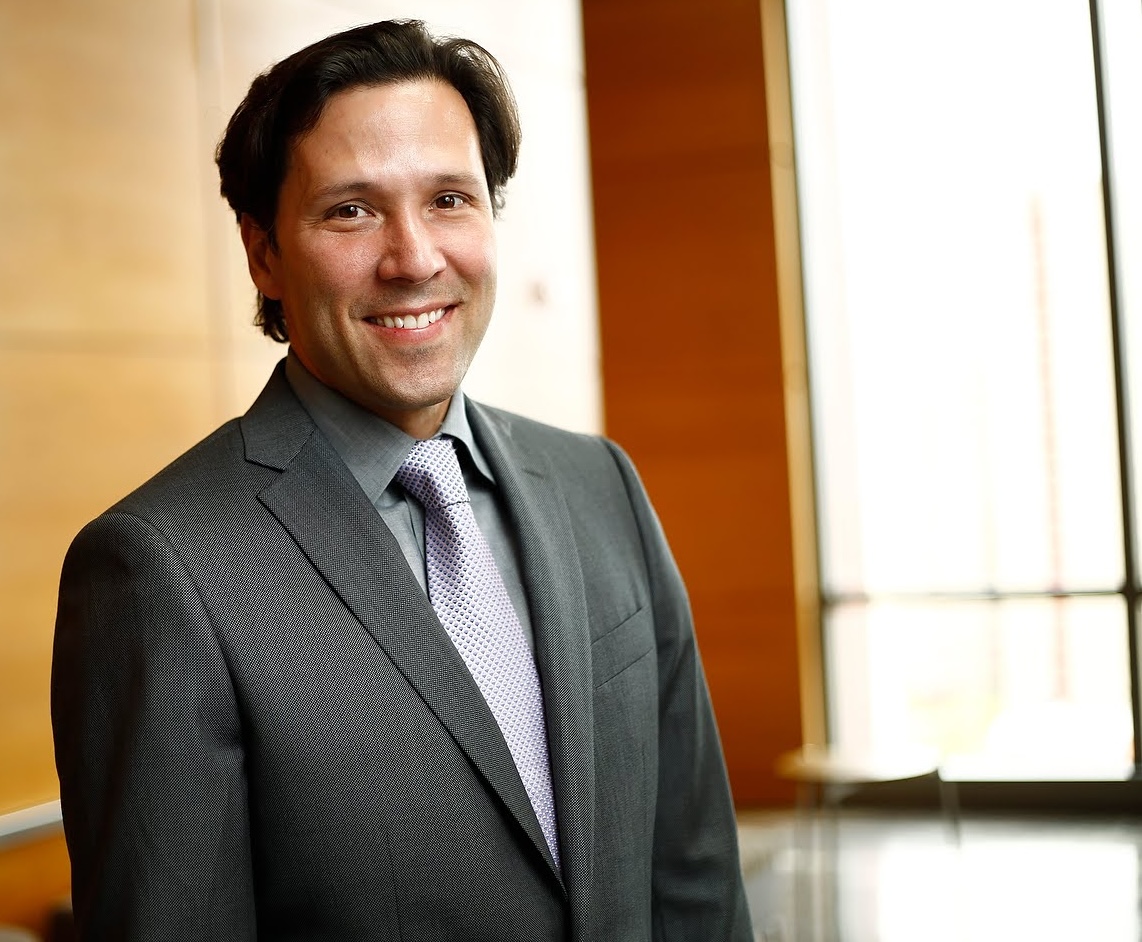
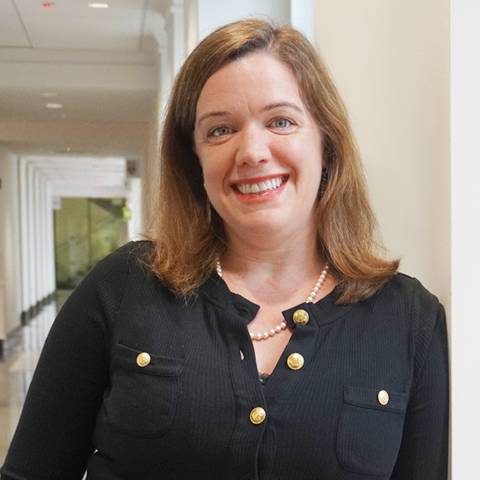
Dr. Winnie Yip is a Professor of the Practice of Global Health Policy and Economics at the Harvard T.H. Chan School of Public Health. She serves as Faculty Director of the China Health Partnership and recently concluded her role as Acting Director at Harvard's Fairbank Center for Chinese Studies. Previously, she was a Professor at the University of Oxford and led the Global Health Policy Program. She holds a PhD in Economics from MIT and a BA from UC Berkeley. Her research focuses on systemic healthcare interventions, policy design, and aging populations' impact on health systems. She collaborates closely with governments and international agencies like the World Bank and WHO, advising on reforms in Asia. Her work emphasizes equitable access, health system efficiency, and innovative eldercare solutions. Dr. Yip’s academic leadership includes roles as past President of the International Health Economics Association and editorial positions at journals like Social Science & Medicine . Her grants include funding from NSF, Bill & Melinda Gates Foundation, and EU Commission. Key areas of study include telemedicine, long-term care financing, and healthcare delivery in low-income regions.
Peter Nilsson is a Professor of Economics at the Institute for International Economic Studies (IIES) , Stockholm University. He also holds a guest professorship at Linnaeus University and serves as a research fellow at IFAU , Uppsala Center for Labor Studies , CESifo , and CEPR . Previously, he was a postdoctoral fellow at Stanford University and obtained his PhD from Uppsala University (2010). Research Focus: His work bridges Labor Economics , Health Economics , and Environmental Economics , analyzing how early-life exposures (alcohol, lead), workplace dynamics, and policy interventions (unemployment insurance, congestion pricing) shape long-term socioeconomic outcomes. Key themes include Environmental Health Impacts on Cognition and Crime Labor Market Responses to Insurance Policies Peer Effects in Workplace Behavior Policy Design for Social Equity Scientific Awards: Nilsson has been recognized through research fellowships at leading institutions and editorial roles, including Associate Editor at The Economic Journal since 2021. His work has been featured in American Economic Review , Journal of Political Economy , and NBER platforms. Key Contributions: He provided testimony for Connecticut’s HB-5045 to reduce childhood lead exposure and contributed to Sweden’s Corona Commission report on pandemic responses. His empirical methods combine natural experiments with administrative datasets to identify causal relationships in health, labor, and environmental economics.
Torben M. Andersen is a Professor at the Department of Economics and Business Economics, Aarhus University. He holds an M.Sc. from the London School of Economics (1981), a Lic. Oecon from Aarhus University (1994), and a PhD from CORE, Université Catholique de Louvain (1986). His research focuses on the Nordic welfare model, public economics, labour economics, and pension economics. He has published over 400 articles in top journals and contributed to policy advisement for Denmark, the EU, OECD, and the World Bank. He currently chairs the DREAM modelling group, the Economic Council for Greenland, and the Danish pension fund ATP. He also serves on boards of Aarhus University Research Foundation, Systemic Risk Council Faroe Islands, and others. Key research areas include welfare state sustainability, public expenditure prioritization, and pension reform impacts. His recent work explores mortality risk hedging and wealth inequality dynamics. He is a fellow at CEPR, IZA, and CESifo.
Eduardo Azevedo is the John M. Bendheim and Thomas L. Bendheim Professor of Business Economics and Public Policy at the Wharton School , University of Pennsylvania. He holds a courtesy appointment as Professor of Economics and was awarded the 2016 Sloan Foundation Fellowship. His research integrates economic theory with practical applications across science and business domains. His research interests include: Market design Selection markets Social science genetics Experimental economics Game theory Recent publication trends focus on: Economic theory applications to healthcare and digital markets Empirical Bayes methods in A/B testing Adverse selection in insurance markets Strategic behavior in two-sided matching Evolutionary behavioral economics He serves as an instructor for BEPP2500 - Managerial Economics , emphasizing real-world application of microeconomic theory to business problems. His work also involves software development for economic research, including MATLAB-based empirical Bayes tools for analyzing treatment effects in large-scale experiments. Scientific awards : Sloan Foundation Fellow (2016)
Jorge Lemus is an Associate Professor of Economics at the University of Illinois at Urbana-Champaign, with a dual appointment in the College of Liberal Arts & Sciences and the College of Law. His research focuses on industrial organization, microeconomics, and the intersection of patent law with innovation policy. He holds a PhD in Economics and maintains affiliations in both economics and law schools, reflecting his interdisciplinary work. Key research interests include strategic patent examination processes, merger impacts on market competition, and design of contests and contracts in regulatory contexts. His work often addresses issues such as signaling in dynamic competitions, regulatory frameworks for innovation, and antitrust implications of patent settlements. Lemus has contributed to debates on topics like organizational disruption in the airline industry and the efficacy of post-grant patent opposition systems. Publications frequently explore empirical and theoretical dimensions of contests, patent litigation strategies, and regulatory outcomes. His work bridges economic theory with legal and policy analysis, particularly in areas affecting technological advancement and market dynamics. External collaborations and grants are not explicitly detailed in the provided texts, but his research website (https://sites.google.com/site/jorgelemuswebsite/) likely contains further details on ongoing projects and affiliations.
Ashli Owen-Smith is a behavioral scientist affiliated with the School of Public Health at Georgia State University , where her research focuses on mental health disparities, suicide prevention, and integrative/complementary approaches for complex mental-physical health conditions. She works with underserved populations including refugees/immigrants, incarcerated individuals, and LGBTQ+ communities through community-based participatory research and mixed-methods frameworks. Her current projects are funded by CDC , DBHDD , and DPH . Education: Ph.D. in Behavioral Sciences (Emory, 2009), S.M. in Public Health (Harvard, 2005), B.A. in Psychology (Smith College, 2001) Her research spans mental health , trauma , suicide prevention , and mindfulness-based interventions . Recent work examines telehealth adaptations for chronic pain and mental health, vaccine hesitancy in refugee communities, and social determinants of suicide . She leads studies on gender-affirming care and health disparities in LGBTQ+ populations. Key article trends include epidemiological analysis of suicide risk factors, COVID-19 impacts on mental health, ICD-10 coding for autism, and complementary medicine in trauma recovery. Subfields span telehealth , health equity , mental-physical comorbidity , and community engagement . Students she has mentored include C.A. Scarlett , T. Griner , and M.M. Sesay . Her work integrates public health policy , clinical research , and health systems analysis .
Miyuki Hino is an Assistant Professor in the Department of City and Regional Planning and an Adjunct Assistant Professor in the Environment, Ecology, and Energy Program at the University of North Carolina at Chapel Hill. She holds a Ph.D. in Environment and Resources from Stanford University and a B.S. in Chemical Engineering from Yale University. Her research focuses on climate hazards, governance, and public policy , with emphasis on equitable adaptation to climate change. Key areas include sea level rise impacts, flood risk on property markets, and managed retreat strategies. She has conducted extensive work on floodplain development policies, household relocation programs, and community resilience frameworks. Dr. Hino's interdisciplinary approach integrates environmental science, urban planning, and social equity . She collaborates with academic and municipal partners, such as the Center for Urban and Regional Studies and Annapolis, MD local governments, to develop actionable solutions for climate adaptation. Her work bridges technical analyses (e.g., sensor networks, machine learning) with policy design to ensure both effectiveness and justice in climate responses. Recent projects emphasize preventing future 'trapped households' by analyzing zoning policies and market dynamics that drive risky development. She advocates for climate-smart growth strategies to balance economic needs with environmental safety, while addressing disparities in vulnerability across communities. Her research has been featured in Science Advances , Nature Climate Change , and interdisciplinary journals. She actively engages with policymakers to translate findings into practical measures, such as equitable buyout programs and floodplain management reforms.
Marc-Antoine Dilhac serves as Associate Professor in the Department of Philosophy at the University of Montreal's Faculty of Arts and Sciences, where he also directs governance and international collaboration initiatives. He holds leadership roles as Scientific Director of Algora Lab and leads the Ethics and Politics research axis at the Centre de recherche en éthique (CRÉ). His academic affiliations extend to the Centre d'études et de recherches internationales (CÉRIUM) and the Canada Research Chair in Public Ethics and Political Theory (2014-2019). Education: PhD in Philosophy and Political Science, University of Paris I: Panthéon-Sorbonne (2009) Master 2 in Philosophy and Political Science, University of Paris I: Panthéon-Sorbonne (2003) Agrégation in Philosophy, University of Paris I: Panthéon-Sorbonne (2002) Dilhac's research spans ethics, political philosophy, and AI governance, with particular focus on democratic tolerance, multiculturalism, and the ethical implications of artificial intelligence. His work bridges theoretical political philosophy with practical applications in AI policy development, sustainable finance, and democratic institutions. He has contributed significantly to UNESCO's Recommendation on the Ethics of Artificial Intelligence and leads initiatives examining AI's impact on French-speaking culture and democratic values. His recent publications reveal a clear trajectory from foundational work on tolerance and justice theory toward contemporary AI ethics challenges. The thematic evolution shows increasing engagement with practical governance frameworks, particularly in finance and education sectors, while maintaining strong philosophical grounding in democratic theory and institutional design. Key Awards and Recognition: Canada Research Chair in Public Ethics and Political Theory (2014-2019) Banting Postdoctoral Fellowship (2011) Contributor to UNESCO's Recommendation on AI Ethics (2021) Dilhac has supervised over 15 graduate students across philosophy, political science, and interdisciplinary AI ethics programs. His research is supported by multiple grants from FRQSC, FRQNT, SSHRC, and MITACS, totaling over $2 million CAD. Current projects include the Generative AI Ethics Framework for Educational Technology (2024-2025) and the Sustainable Finance AI Tools project examining ESG/DEI disclosure analysis. He co-founded and leads the CORDÉ research group on corruption and democracy, and directs Algora Lab's work on AI governance. His upcoming February 2025 panel at Université Laval will address AI and Francophone cultural perspectives ahead of the Paris AI Action Summit.
Sarah E. Light is the Mitchell J. Blutt and Margo Krody Blutt Presidential Professor and Professor of Legal Studies & Business Ethics at the University of Pennsylvania's Wharton School. She serves as Faculty Co-Director of Wharton’s Climate Center and holds primary appointments in the Legal Studies & Business Ethics department. Her educational background includes a JD from Yale Law School (2000), an M. Phil in Politics from Oxford University as a Rhodes Scholar (1997), and an AB in Social Studies, Magna Cum Laude, from Harvard University (1995). Professor Light's research examines the intersection of environmental law, corporate sustainability, and business innovation. Her work addresses how corporate law structures function as environmental law, private environmental governance through business actions (including carbon fees and financial sector decisions), and First Amendment implications of regulating greenwashing. She employs interdisciplinary approaches connecting legal doctrine with business strategy and environmental science. Her publications reveal strong trends in private environmental governance mechanisms, climate risk management in financial systems, and the evolving regulatory landscape for corporate sustainability claims. Recent work focuses on greenwashing regulation, banking sector climate action, and non-extractive corporate relationships with public lands. Penn Fellows Program (2023-2024) Multiple Wharton Teaching Excellence Awards (2018-2021) ARCS Emerging Sustainability Scholar Award (2018) Haub Environmental Law Distinguished Junior Scholar (2015) Top 20 Article in Environmental Law & Policy Annual Review (2020) Professor Light has advised numerous student groups and projects, particularly through experiential courses like 'Wharton in the Wild' where she leads field-based environmental management education. Her grant activities include leadership roles at the Wharton Climate Center and Penn Program on Regulation, with research supported by interdisciplinary initiatives focused on climate governance and business innovation. She maintains active pro bono mediation work with federal courts and community organizations. As Faculty Co-Director of the Wharton Climate Center, she leads interdisciplinary research initiatives connecting business strategy with climate solutions, fostering collaboration between academia, industry, and policymakers through conferences, publications, and executive education programs.
Colleen Carey is an Associate Professor at the Jeb E. Brooks School of Public Policy, Cornell University. Her research focuses on the industrial organization of healthcare systems, particularly federal regulation of health insurance markets like Medicare and Medicaid. She examines topics such as reinsurance mechanisms, risk adjustment policies, and the impact of physician-industry financial relationships on prescribing behaviors. Carey is a Faculty Research Fellow at the National Bureau of Economic Research and previously held roles including Robert Wood Johnson Scholar in Health Policy Research and Staff Economist at the Council of Economic Advisers. Education: Bachelor’s Degree: Yale University Ph.D. in Economics: Johns Hopkins University Research Interests: Federal health insurance market design (e.g., ACA marketplaces) Adverse selection mitigation strategies in subsidized insurance Pharmaceutical industry practices and physician prescribing Opioid abuse policy evaluation Social Security Disability Insurance health outcomes Recent Work Trends: Her 2020-2025 publications emphasize healthcare policy evaluation, including analyses of Medicare Advantage enrollment dynamics, racial disparities in disability programs, and the effects of prescription drug marketing on clinical decisions. She consistently bridges economic theory with applied policy analysis. Scientific Awards and Roles: Editorial Board Member, American Journal of Health Economics Robert Wood Johnson Health Policy Research Scholar (2018-2020) NBER Faculty Research Fellow (ongoing) Advising and Grants: Though no formal advisees are listed, her research often involves collaborations with institutions like the Council of Economic Advisers and NBER. She contributes to policy discussions through evidence-based insights. Labs and Teams: Collaborates extensively with NBER’s Health Economics Group and maintains affiliations with Princeton’s Center for Health and Wellbeing.
Prof. Dr. Evi Hartmann holds the Chair of Business Administration, especially Supply Chain Management at Friedrich-Alexander University Erlangen-Nuremberg (FAU) within the Department of Business, Economics, and Social Sciences. She is actively involved in multiple research focus areas including sustainability, energy markets and energy system analysis, and insurance and risk. Her academic leadership extends across interdisciplinary collaborations with engineering, mathematics, and industry partners. Dr. Hartmann studied industrial engineering at the University of Karlsruhe (TH), received her doctorate in 2002 from the Institute of Technology and Management at the Technical University of Berlin, and completed her habilitation in business administration in 2008. Prior to her academic career, she worked as a consultant at AT Kearney from 1998 to 2005, followed by a junior professorship for 'Purchasing and Supply Management' at the Supply Chain Management Institute at the European Business School. Her research program focuses on supply chain management, purchasing, and strategic foresight, with particular emphasis on application-oriented approaches that bridge theory and practice. Current research trajectories include supply chain resilience in crisis situations (including pandemic response), digital transformation through Industry 4.0 technologies, sustainable and low-carbon supply chains, and the integration of strategic foresight methodologies in logistics decision-making. Her work frequently employs Delphi studies, bibliometric analyses, and multi-tier case studies to examine complex supply chain phenomena. Analysis of her recent publications reveals a strong trend toward interdisciplinary research that combines supply chain management with digital transformation, sustainability, and crisis response. Her work increasingly examines the intersection of technology adoption (particularly Industry 4.0), organizational culture, and supply chain resilience across multiple industries including automotive, food, and maritime logistics. Prof. Hartmann is recognized as the author of two academic bestsellers in her field, though specific awards are not detailed in available materials. Her research has been published in top-tier journals including IEEE Transactions on Engineering Management, International Journal of Production Research, and Journal of Cleaner Production. Her research program demonstrates extensive industry collaboration, with numerous projects involving real-world implementations and close partnerships with companies. She leads research initiatives examining the practical implications of digital transformation, sustainability challenges, and resilience strategies in supply chain operations. Current projects include studies on digital ecosystems, physical internet applications, and the future of freight forwarding technologies. Prof. Hartmann participates in several research networks including the Energy Campus Nuremberg (EnCN) and collaborates with the Department of Mathematics on gas networks and markets research. She is also involved with the Nuremberg Energy Region (Energieregion Nürnberg eV) and contributes to interdisciplinary research centers focused on sustainable development and digital transformation in supply chains.
Dr. Shufang Sun is an Assistant Professor in the Departments of Behavioral and Social Sciences and Psychiatry and Human Behavior at Brown University’s School of Public Health, and Associate Director of the Mindfulness Center. Her work focuses on understanding how stress, trauma, and systemic inequities contribute to health disparities, particularly among marginalized populations like LGBTQ+ individuals, youth, and communities affected by HIV. She develops mindfulness-based, technology-mediated interventions to promote mental health and reduce stigma, with a global focus including China, the Philippines, and Ukraine. Education: PhD in Counseling Psychology from the University of Wisconsin-Madison (2018). Research interests include mindfulness interventions, mHealth (mobile health), global mental health, HIV prevention, minority stress, and stigma reduction. Her work emphasizes community-engaged research and rigorous evidence synthesis through meta-analyses and systematic reviews. Current projects include interventions for displaced Ukrainians, suicide prevention in rural China, and HIV prevention among transgender women in the Philippines. Her interventions address topics like queer resilience, pandemic mental health, and health equity for vulnerable groups. Awards include the APA’s Barbara Smith Early Career Award and Brown University’s Early Career Research Achievement Award. Grants: Principal investigator on NIH-funded projects totaling over $7.5M, including a $3M R24 grant for mindfulness evidence synthesis and a $621K NIMH grant for school-based suicide prevention in China. Labs/Teams: Director of the Mindfulness for Health Equity Lab, collaborating with global researchers on stigma reduction and digital health innovations.
Johannes Spinnewijn is a Professor of Economics at the London School of Economics and Political Science (LSE), affiliated with STICERD and multiple research centers. He holds a PhD in Economics from MIT (2009), following an M.A. from Université Libre de Bruxelles and B.A. from KU Leuven. His research focuses on Public Economics , Behavioral Economics , and Economic Theory , with emphasis on unemployment insurance design, tax compliance, health inequalities, and labor market policies. Notable contributions include analyzing optimal unemployment benefit timing, risk-based selection in insurance, and behavioral nudges in tax systems. Spinnewijn has received prestigious awards such as the ERC Starting Grant (2017-2022) , Wiley Prize (2015) , and Austin Robinson Memorial Prize (2013) . He serves as Director of the CEPR Public Economics Program and co-director of STICERD's Public Economics Program. His editorial roles include the American Economic Review , Review of Economic Studies , and Journal of Public Economics . He has advised over 15 PhD students, including those at top institutions like MIT, Chicago, and Edinburgh. His grants include €1.5 million from the ERC and £200K from the ESRC. Recent work explores health disparities, mental health determinants, and socioeconomic impacts of chronic diseases. Spinnewijn has held visiting roles at Columbia University, UC Berkeley, MIT, and KU Leuven. His teaching spans public economics, contract theory, and microeconomics at both undergraduate and graduate levels.
Christopher S. Tang is a UCLA Distinguished Professor and Edward W. Carter Chair in Business Administration at the Anderson School of Management , where he researches global supply chain management with a focus on social innovation in developing countries . He also serves as Senior Associate Dean for Global Initiatives and Faculty Director of the Center for Global Management . Education: Ph.D. in Management Science (1985, Yale University) M.Phil. in Administrative Science (1983, Yale University) M.A. in Statistics (1983, Yale University) B.Sc. in Mathematics (First Class Honors, 1981, King’s College, University of London) His research explores the intersection of corporate responsibility and supply chain innovation , addressing topics like microfinancing , mobile platforms for developing economies , direct agricultural procurement , and disaster response logistics . He emphasizes visibility, integrity, and agility in uncertain environments. Recent work highlights AI adoption benefits for supply chains , strategies to reduce forced labor risks , and policy impacts on ride-sharing platforms . His research bridges operations management and social justice , advocating for environmental stewardship alongside business growth. Scientific Awards: Salzberg Medallion (2017) Lifetime Fellow, INFORMS (2011) Responsible Research in Management Award (2017) Teaching Excellence Award (multiple years, UCLA-NUS) Dean’s Excellent Service Award (2014) As an influential adviser and consultant , Tang has worked with Amazon, HP, IBM, Nestlé, GKN , and Accenture . He has taught at Stanford University, UC Berkeley, Hong Kong University of Science and Technology , and served as visiting professor at Cambridge University and the Institute of Advanced Study at HKUST .
Owen O'Donnell is a Full Professor of Applied Economics at the Erasmus School of Economics and Erasmus School of Health Policy & Management , Erasmus University Rotterdam. He is a Research Fellow at the Tinbergen Institute and an Editor of the Journal of Health Economics . Education: DPhil, University of York (UK) Research Interests: His work focuses on health economics, including health inequality, health insurance, financial protection, and labor economics, with applications in low-, middle-, and high-income countries. He employs cross-sectional analyses, equity-sensitive frameworks, and global health policy evaluation. Publications & Collaborations: He has published extensively in top journals like Lancet , PLOS Medicine , and Demography , addressing cardiovascular disease, hypertension screening, and healthcare access in India, Philippines, and Sub-Saharan Africa. His recent research emphasizes equity-sensitive welfare weights and treatment gain inequality. Professional Activities: He has served as an Editor for the Journal of Health Economics since 2007 and is actively involved in peer-review and editorial work until 2026.