Briana Last is an Assistant Professor in the Department of Psychology at Stony Brook University, specializing in Clinical Psychology. She holds a PhD from the University of Pennsylvania (2022) and focuses on improving mental health service accessibility and quality through interdisciplinary research. Her research emphasizes three core domains: social determinants of mental health, implementation strategies for service improvement, and structural factors influencing clinician decision-making. She employs mixed methods and community-based participatory approaches, prioritizing marginalized populations affected by systemic inequities. Key interests include behavioral health workforce development, policy analysis, and dismantling barriers to equitable mental healthcare. Her lab, the Mental Healthcare for All Lab, collaborates with governments, agencies, and clinicians to translate research into actionable policies. Notable projects address clinician burnout interventions, public mental health system gaps, and anti-transgender policy impacts. Recent work critiques scientifically unfounded bans on gender-affirming care and evaluates federal loan repayment programs for mental health workforce retention. Publications span topics like AI chatbots in mental health, state policy effects on LGBTQ+ populations, and trauma therapy implementation. Her work highlights how clinician work conditions directly shape patient care quality, advocating for systemic changes to enhance both provider well-being and patient outcomes.
University of Illinois Urbana-ChampaignUnited States
McKenzie F. Johnson is an Assistant Professor at the University of Illinois Urbana-Champaign's Department of Natural Resources and Environmental Sciences (NRES), part of the College of Agricultural, Consumer and Environmental Sciences. She is also affiliated with the Institute for Sustainability, Energy, and Environment (ISEE). Her research focuses on global environmental politics, environmental justice, and human security, with a particular interest in how environmental governance initiatives impact marginalized communities. Education: Began with fisheries governance studies, earned a Master of Arts in Conservation Biology from Columbia University (2007), and a PhD in Environmental Policy from Duke University. Her Fulbright scholarship in West Africa (2010s) focused on extractive industries and social justice linkages. Research Interests: Explores intersections between environment, institutions, and justice through projects in South Asia, Africa, and South America. Current U.S.-focused work examines environmental impact assessments and pipeline development's effects on communities. The (in)Secure Landscapes Lab she leads investigates environmental governance's role in creating human security and justice. Key Themes in Publications: Energy infrastructure conflicts (e.g., Dakota Access Pipeline), environmental peacebuilding in post-conflict regions (Colombia, Afghanistan), carbon market equity, and invasive species governance. Her work critiques neoliberal environmental governance models and advocates for inclusive decision-making processes. Lab Activities: The IL Lab analyzes environmental governance's societal impacts, emphasizing participatory approaches. Current projects include studying soil carbon markets' equity implications and climate change adaptation strategies in conflict zones.
University of Illinois Urbana-ChampaignUnited States
Kevin Chenchuan Chang is a Professor in the Department of Computer Science at the University of Illinois at Urbana-Champaign (UIUC), affiliated with the FORWARD Data Lab and the Data and Information Systems Laboratories. His research focuses on bridging structured and unstructured data through natural language processing, data mining, machine learning, and information retrieval, with applications in web search, social media analytics, and knowledge acquisition. He co-founded Cazoodle and developed GrantForward.com, a funding discovery platform used by leading institutions globally. Education: Ph.D. in Electrical Engineering from Stanford University (2001), B.S. from National Taiwan University. Professional roles include service on program committees for SIGMOD, VLDB, KDD, and NeurIPS, as well as editorial roles for PVLDB, TKDE, and the Encyclopedia of Database Systems. His awards include the ICDE 10-Year Test of Time Award (2022), NSF CAREER Award (2002), and multiple UIUC teaching excellence recognitions. He teaches courses such as CS 411 (Database Systems), CS 598 KCC (Understanding LLMs), and CS 511 (Advanced Data Management). Research contributions span graph algorithms (e.g., Geom-GCN, SimRank), social network analysis (ROSE), and NLP (DEER, Open Relation Modeling). The FORWARD Lab emphasizes real-world impact through systems like GrantForward and tools for analyzing large-scale data.
Debra A. Noumair is Professor of Psychology and Education at Teachers College, Columbia University, and Founder & Director of the Executive MA Program in Change Leadership (XMA) within the Department of Organization and Leadership. She actively engages in teaching, consulting, coaching, and research, focusing on systems psychodynamics applied to organizational change. Her work emphasizes systemic thinking, addressing covert dynamics in social systems, and advancing underrepresented groups through executive coaching and systemic barrier analysis. B.A., Boston University Ed.M. & Ed.D., Teachers College, Columbia University Professor Noumair’s research integrates systems psychodynamics with organizational development, creating frameworks like X-Ray Vision to analyze group and organizational dynamics. She has co-authored seminal texts including Organization Development: A Process of Learning & Changing and co-edited the Research in Organization Change and Development book series. Her collaborations span private, public, and nonprofit sectors globally, with leadership programs in the U.S., Europe, and Asia-Pacific. Her scholarly contributions include foundational work on inclusive leadership, social identity dynamics, and behavioral science applications in organizational settings. She serves on editorial boards for journals such as The Journal of Applied Behavioral Science and Organisational and Social Dynamics , and sits on the Academic Board of Mind Gym, an international behavioral science firm. Teachers College Teaching Award (2020, 2022) Fellow, A.K. Rice Institute for the Study of Social Systems As a core faculty member in the Consulting & Coaching for Change Program (Oxford Said Business School & HEC-Paris) and director of executive education globally, she bridges academic theory with practical organizational transformation. Her teaching philosophy emphasizes co-creation of learning environments that foster personal and professional growth.
Mark Bailey is a Professor of Late Medieval History at the University of East Anglia's School of History and Art History, working part-time. He previously taught at the University of Cambridge. His research focuses on late medieval England's economic and social history, particularly the socio-economic impact of the Black Death and the decline of serfdom. He is an award-winning scholar, recognized as Ford Lecturer in British History (2019) and a Visiting Fellow at All Souls College, Oxford (2018). Teaching includes organizing the module 'The Catastrophic Fourteenth Century' and contributing to the Medieval History Masters program. His research interests span urban governance, agricultural history, and demographic shifts. He actively participates in professional networks, serving as President of the Suffolk Institute of Archaeology and History and on the Economic History Society's board. Key publications include After the Black Death (2021) and The Decline of Serfdom in Late-Medieval England (2014). His recent work explores labor legislation post-Black Death and gender dynamics in servile migration. He holds leadership roles in academic organizations, shaping policy on manorial documents and medieval archives.
Dr Bhishna Bajracharya is an Associate Professor of Urban Planning at Bond University's Faculty of Society & Design. He previously taught at Queensland University of Technology (QUT) for over 12 years and worked as a post-doctoral fellow at the Australian National University. His research focuses on urban sustainability, disaster resilience, and master-planned communities. Education: PhD in Urban Planning, University of Hawaii (200?) MURP in Urban Planning, University of Hawaii BArch in Architecture, Delhi University Research Interests: Smart cities and infrastructure Disaster management and community resilience Transit-oriented development Climate change adaptation Sustainable campus design Knowledge-based regional economies Recent Research Trends: His recent work emphasizes cross-border planning (e.g., Gold Coast Airport integration), megaproject governance, and innovative disaster management frameworks. He frequently collaborates with governments and NGOs to bridge research and policy gaps. Awards & Grants: Australian Research Council (ARC) Linkage Grant for community narratives in urban planning Emergency Queensland grant for disaster governance research Advising & Partnerships: Supervising PhD students in urban planning Collaborations with QUT's Creative Industries faculty Member of Bond University's Sustainability Committee Labs & Teams: Affiliated with the Centre for Comparative Construction Research at Bond University, focusing on global urban challenges.
Dr. Laura Mae Jacqueline Herzog is a postdoctoral researcher at the University of Osnabrück, affiliated with the Institute of Geography and the Research Center Institute of Environmental Systems Research. She serves as representative of mid-level faculty staff in the faculty council of Department 1 Cultural and Social Sciences for the term 2024-2026 and is a member of the working group Resource Management. Dr. Herzog received her PhD from the University of Bern, where she worked as a research assistant at the Chair of Policy Analysis and Environmental Governance. Prior to that, she completed her diploma in political science at the Otto-Suhr-Institut (OSI), Free University of Berlin, focusing on common-pool resource problems and environmental conflicts. Her research focuses on transformation pathways towards sustainable interactions between humans and nature in social-ecological systems, with particular emphasis on aquatic ecosystems. She works predominantly inter- and transdisciplinarily, examining sustainable land, water and open space management, participatory processes and co-creation, transformation processes and capacities, and environmental governance. Her methodological approaches include participatory modeling, interviews & surveys, comparative case study analysis, causal loop diagrams, and Social Network Analysis. Dr. Herzog's publications reveal a consistent focus on water resource management, social-ecological systems, and governance of common-pool resources. Her work spans from micro-pollutant regulation in the Rhine River to transformation processes in peatland use and digitalization in water management. She has developed expertise in analyzing cooperation networks, stakeholder engagement, and the emergence of collaborative governance structures in environmental management contexts. Member of the 3rd cohort of the PostDoc Academy for Transformational Leadership of the Robert Bosch Foundation (2020-2022) Founding member of the Working Group on Governance of Social-Ecological Systems of the Earth System Governance network Dr. Herzog actively engages with stakeholders and the public through her work on the Future Water Laboratory, MOOSland project, and LimnoScenES project. She has served on scientific advisory boards for research projects including BaltAqua and "Participatory visioning for collective action in natural resource management." Her commitment to climate action is evident through her involvement with Scientists4Future in Osnabrück. As part of her research on peatlands, Dr. Herzog works with regional stakeholders to investigate transformation processes toward rewetted peatlands and facilitates knowledge transfer of project findings into teaching materials and exhibition modules. She also conducts research on digital applications for sustainable water use within the Future Water Laboratory.
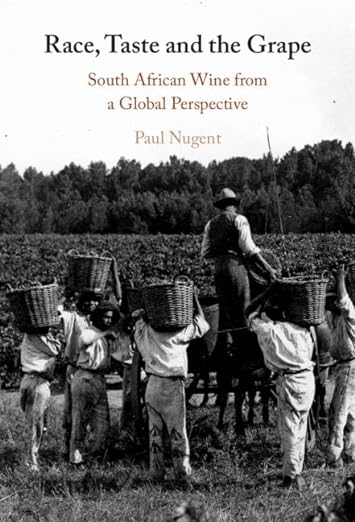
Professor Paul Nugent is a Professor of Comparative African History at the School of History, Classics and Archaeology at the University of Edinburgh, where he also serves as Research Director in History. His work bridges historical scholarship with contemporary policy concerns, particularly regarding African borderlands, wine history, and governance dynamics across the continent. Professor Nugent holds a BA Hons from the University of Cape Town, and MA and PhD from the School of Oriental and African Studies (SOAS) in London. His academic journey began with a temporary lectureship in Comparative Politics at Keele University before joining Edinburgh, where he was promoted to Reader in 2003 and Professor in 2005. Professor Nugent's research primarily focuses on the comparative history of African borderlands, with particular attention to West Africa. His work examines how border regions have shaped state formation, governance, and everyday life, challenging conventional notions of margins and centers. He has also conducted extensive research on the history of the South African wine industry, exploring connections between race, consumption, and economic development. His scholarship spans colonial and postcolonial history, with special attention to Ghana, where he has studied electoral politics and social contracts. Professor Nugent approaches these topics through interdisciplinary frameworks that connect historical analysis with contemporary policy challenges. His scholarly output demonstrates remarkable consistency in exploring the intersections between space, power, and identity in African contexts. Over the past decade, his work has increasingly focused on the governance implications of infrastructure development and border management across the continent, while maintaining his longstanding interest in Ghanaian politics and the cultural history of wine production. ERC Advanced Grant (€2.5 million over 5 years) for "African Governance and Space: Transport Corridors, Border Towns and Port Cities in Transition" (AFRIGOS) Leverhulme Research Fellowship for research on South African wine history British Academy ODA-Challenge grant (2024-2025) for "Living Heritage, Climate Change and Sustainability in South African Agriculture" Fellow of the Stellenbosch Institute of Advanced Study (STIAS) Member of the Institute for Advanced Study (IAS) in Princeton FRHistS (Fellow of the Royal Historical Society) Professor Nugent has supervised 34 successful PhD projects and currently mentors doctoral students including Francesco Longo and Kpanie Addy. His supervisory interests span wine and cultural heritage, African borderlands, regional integration, consumption studies (particularly alcohol), West African politics, and comparative imperial and colonial history. He has received significant research funding including a major ERC Advanced Grant and multiple British Academy grants, demonstrating the impact and relevance of his work to contemporary policy debates. His engagement extends beyond academia through advisory roles with the African Union Border Programme, ECOWAS, and the UNDP African Borderlands Centre. Professor Nugent founded and chairs the African Borderlands Research Network (ABORNE), which has evolved into a major international collaborative platform. He has also led significant research projects including the ERC-funded AFRIGOS project, which examined governance effects of large-scale infrastructure investments across Africa, and currently serves as PI for a British Academy project addressing climate action in the South African wine industry.
Tiina Ritvala is an Associate Professor and Assistant Dean (Teaching and Education) at the Department of Management Studies, Aalto University. Her research focuses on cross-sector collaboration between multinational corporations (MNCs), cities, and nonprofits in contexts like sustainable cities, energy transition, and cultural fields. She holds a D.Sc. (Econ.) from the Helsinki School of Economics (2008) and has been a Visiting Scholar at SCANCOR/Weatherhead (Harvard), Queen's University (Canada), and WU Vienna. Her work bridges organizational theory, international business, and social purpose. **Research Interests**: Cross-sector partnerships, multinational corporations, institutional change, sustainable cities, cultural and creative fields, energy transition. These areas are explored through case studies on global-local dynamics, MNE-NGO interactions, and sustainability initiatives. Recent work emphasizes spatial analysis in international business and geopolitical influences on corporate strategies. **Awards**: Received the Best Paper Award at EIBA 2017 for research on MNEs and sustainable development, the 1997 McKinsey Award for academic excellence, and a distinguished paper honor in the EDAMBA Thesis Competition (2009). **Professional Background**: Prior to academia, she worked in business consulting for a decade and engaged in volunteer work. Her teaching and administrative roles complement her research, focusing on international business education and institutional innovations. **Key Contributions**: Leads the Sustainability in Business research group, exploring topics like energy utilities' transition to renewables, MNC spatial strategies, and transnational commons governance. Her work often highlights the interplay between global institutions and localized action in addressing societal challenges.
Professor Daniel McCarthy is a Professor in Criminology at the University of Surrey's Department of Sociology, serving as Co-Director of the Centre for Criminology and Director of Impact. He holds a BSc, MSc, and PhD. His research focuses on policing, inter-agency collaboration, and the impact of incarceration on families, particularly mothers of incarcerated youth. He explores cross-national public attitudes toward policing and punishment, including death penalty perspectives. Research interests include penal legitimacy, prisoner-family relationships, and the societal effects of imprisonment. His work emphasizes marginalized populations, such as women in prisons and families of incarcerated individuals. He has supervised PhD students on topics like prison-family dynamics and youth justice systems. McCarthy’s publications span academic books, articles, and policy-oriented research, with recent work addressing food policies in women’s prisons and post-release desistance. Teaching includes courses on youth crime, criminal investigation, and law-society relations at both undergraduate and master’s levels. He collaborates with initiatives like the Doing Porridge project, which amplifies women’s voices in criminal justice contexts. His research bridges theoretical criminology with practical policy implications, emphasizing equity and systemic reform.
Ankit Bhardwaj is an Adjunct Professor of Environmental Studies at New York University (NYU) and concurrently a PhD student in Sociology at NYU. His research focuses on the politics of expertise related to carbon emissions reduction, with particular attention to India's urban climate change policies and global South contexts. Previously, he worked at the Centre for Policy Research in New Delhi and contributed to the United Nations Environment Programme’s Emissions Gap Report (2019). Education: MSc in City Design and Social Science (London School of Economics, 2015); BASc in Civil Engineering (University of Toronto, 2014). Research interests include environmental politics, sociology of expertise, climate change mitigation in urban settings, energy infrastructure transitions, and social theory applied to global environmental challenges. His work emphasizes interdisciplinary approaches to understanding how bureaucratic systems, local communities, and global frameworks interact in addressing climate change. Recent publications analyze Indian city bureaucracies' climate responses, energy demand transitions in low-income households, and decarbonization strategies in 'smart cities.' He critiques policy frameworks that fail to reconcile multiple development, energy, and climate objectives. His writing extends to climate justice, racialization theory (e.g., WEB Du Bois), and urbanization dynamics in the Global South. Awards and grants not explicitly listed, but his contributions to major reports like the UNEP Emissions Gap Report highlight his impactful policy engagement. He actively tweets @ankitbhardy and collaborates on projects bridging academic research with actionable policy solutions.
Dr. Holly Doel-Mackaway is an Associate Professor at Macquarie Law School and a leading expert in children's rights, Indigenous studies, and international law. She co-leads the Children’s Rights, Participation and Protection Research Stream in Macquarie’s Faculty of Arts and serves as Co-Editor-In-Chief of the Australian Journal of Human Rights. Her interdisciplinary research focuses on advancing children’s rights globally, with a particular emphasis on Indigenous children’s participation in law and policy development. Dr. Doel-Mackaway holds a PhD in Law from Macquarie University and has extensive international experience with organizations like UNICEF and Save the Children. She teaches courses on Child and Elder Law, International Human Rights Law, and Research Methodologies. Recognized for her teaching excellence, she won the Vice-Chancellor's Learning & Teaching Award in 2021 and was nominated again in 2024. Her research includes groundbreaking work such as the 2022 book Indigenous Children's Right to Participate in Law and Policy Development , which provides a framework for involving Indigenous youth in policy decisions. She leads major grants like the 2024 ARC Linkage Grant on child-centered evidence for social change and collaborates with NGOs and governments across five continents. Key awards include the Macquarie University Executive Dean’s Higher Degree Research Excellence Award (2017) and the Erasmus+ Mobility Grant (2023). She actively participates in international committees like LAWASIA’s Human Rights Committee and advises on child rights in Australia, the Pacific, and beyond. Current research projects include exploring intergenerational policymaking, child protection in the Pacific, and the impact of the Voice to Parliament referendum on Indigenous rights.
University of North Carolina at Chapel HillUnited States
Shakirah Hudani is an Assistant Professor in the Department of City and Regional Planning at the University of North Carolina, with an affiliation in the Department of African, African American, & Diaspora Studies. She holds a PhD in City and Regional Planning from UC Berkeley. Her work centers on African urbanism, post-conflict urban change, and spatial politics in East Africa. Key research focuses include Rwanda's post-genocide urban reconstruction, Nairobi's peripheral development, and Luanda's oil-driven transformations. Her research examines how urban spaces reflect and reshape social dynamics, particularly around memory, identity, and governance. Recent projects analyze commemoration practices in Rwanda, land disputes in Nairobi, and carceral architectures. She critiques master planning processes and explores grassroots urban agency in marginalized communities. Publications span urban studies, critical geography, and postcolonial theory, with a focus on decolonizing urban narratives. Her work bridges academic analysis with practical urban policy debates, emphasizing equity and participatory planning in transitional societies.
Michał Pałasz, PhD, is an Associate Professor at Jagiellonian University's Faculty of Management and Social Communication, Institute of Culture. His research focuses on management in the Anthropocene, posthumanism, ecological humanities, and climate policy. He serves as a European Climate Pact Ambassador, advocating for socio-environmental change through academic and community engagement. His research interests include exploring non-human agency, degrowth, and critical management studies. He has published extensively on climate action, cultural management, and digital culture, with notable works like Culture Management Must Fuel Socioenvironmental Change (2024) and Language Affects Climate (2024). His work bridges theory and practice, emphasizing inclusive and planetary-bound solutions. Pałasz has collaborated on projects such as Tick-tock, the End of the World (2022), examining multidisciplinary responses to the climate crisis. His academic contributions span journal articles, edited books, and conference presentations, often addressing the intersection of management, culture, and environmental sustainability. He teaches courses on posthumanistic management and climate policy, integrating critical perspectives into education. His work highlights the urgency of rethinking management practices to address polycrisis challenges, advocating for more-than-human-centered approaches.
Filippo Carlo Wezel is a Full Professor of Organization and Management at the Faculty of Economics of Università della Svizzera italiana (USI), where he also serves as Director of the Institute of Management and Organisation. He holds additional research affiliations as a Visiting Research Professor at emlyon Business School (France) and a Research Fellow at Judge Business School, University of Cambridge. He plays a significant editorial role as Senior Editor at Organization Studies and serves on the editorial review boards of Organization Science , Strategic Entrepreneurship Journal , Strategic Organization , and the Advisory Board of Research in the Sociology of Organizations . His educational background includes a PhD in Management from the University of Bologna. Prior to joining USI in 2009, he held academic positions at the University of Groningen (post-doctoral researcher) and Tilburg University (Assistant and Associate Professor). He has also been a visiting scholar at leading institutions including Wharton, MIT, Columbia, Duke, London Business School, LSE, and Hong Kong University. His research centers on organizational identity, managerial and inter-firm mobility, entrepreneurship, and institutional theory. His recent publications explore identity hybridization in political parties, category dynamics in creative industries, historical organizational practices in colonial firms, and stigma in emerging markets. He frequently employs longitudinal, historical, and experimental methodologies, often bridging sociology and management. The most recent articles (2020–2025) reflect a strong trajectory in the sociology of organizations, with recurring themes of identity, categorization, legitimacy, and mobility. He investigates how social evaluations, historical constraints, and institutional environments shape organizational behavior and strategic positioning. His work spans diverse contexts—from 18th-century Lyon silk traders to modern ICT firms and medical marijuana markets—demonstrating a broad empirical and theoretical reach. Scientific Honors and Editorial Roles: Senior Editor, Organization Studies Editorial Review Board, Organization Science Editorial Review Board, Strategic Entrepreneurship Journal Editorial Review Board, Strategic Organization Advisory Board, Research in the Sociology of Organizations He has extensive experience in teaching organizational theory and behavior at undergraduate, master’s, PhD, and executive levels. His research has been published in top-tier journals such as Administrative Science Quarterly , American Sociological Review , Academy of Management Journal , and Strategic Management Journal . He leads a vibrant research agenda at USI, supported by a broad international network, though specific grants and funded projects are not detailed in the provided text. He is also involved in mentoring students and shaping the next generation of organizational scholars, though a list of advisees is not available. Filippo Carlo Wezel is a key figure in the European organizational studies community, leading the Institute of Management and Organisation at USI and fostering interdisciplinary dialogue between organization theory and strategy. His work combines deep historical insight with contemporary theoretical innovation, contributing significantly to our understanding of how organizations and careers evolve under institutional and social pressures.