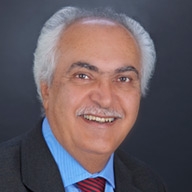
Soroosh Sorooshian is a Professor at the Samueli School of Engineering , University of California, Irvine, with joint appointments in Civil and Environmental Engineering and Earth System Science . He serves as Founding Director of the Center for Hydrometeorology and Remote Sensing (CHRS) and holds the Samueli Endowed Chair in Engineering . His expertise spans hydrometeorology, climate-water interactions, remote sensing applications, and water resource management in arid regions. Education : Ph.D. in Engineering (1978), Engineer Degree in Systems Engineering (1977), M.S. in Operations Research (1973), B.S. in Mechanical Engineering (1971). Leadership & Affiliations : Member of US National Academy of Engineering , International Academy of Astronautics , and multiple scientific bodies (AAAS, AGU, AMS, IWRA). Former advisor to NASA, NOAA, and UNESCO initiatives. Recent research focuses on machine learning integration for hydrological modeling , satellite precipitation product development , and climate change impact assessments . Key trends include deep learning for bias correction , multi-sensor precipitation fusion , and atmospheric river hydrology in California. Awards include the AGU Horton Medal , NASA Distinguished Public Service Medal , and Prince Sultan Bin Abdulaziz International Water Prize . He consults on urban flooding and surface hydrology challenges. Scientific Honors : Chinese Academy of Sciences Einstein Professorship (2014) UNESCO Great Man-Made River Water Prize (2007) AMS Walter Orr Roberts Lecturer (2009) Multiple Distinguished Educator Awards Advisory Roles : Served on committees for NASA, DOE, and World Climate Research Programme's Hydrology Commission.
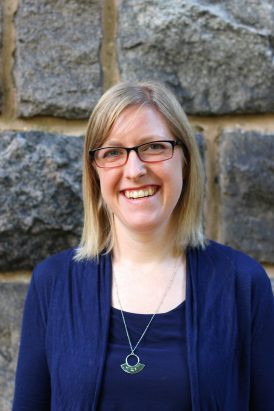
Kerri A. Pratt is a Professor of Chemistry, Earth & Environmental Sciences, and Program in Applied Physics at the University of Michigan, where she is affiliated with the Department of Chemistry within the College of Literature, Science, and the Arts. Her research focuses on the chemical interactions between atmospheric trace gases, particles, clouds, and snow through field-based measurements in wintertime environments and the rapidly warming Arctic. Education: Postdoc, Chemistry, Purdue University Ph.D., Chemistry, University of California, San Diego B.S., Chemistry, Pennsylvania State University Professor Pratt's research centers on atmospheric and environmental chemistry, particularly in polar regions. Her work examines chemical mechanisms in the atmosphere and at the air-snow interface through innovative field measurements. The Pratt Lab employs custom-built, field-portable instruments including single-particle mass spectrometers and chemical ionization mass spectrometers to measure atmospheric composition in real-time. Her research has significant implications for understanding climate change and air quality in rapidly changing Arctic environments. Her publication record demonstrates a consistent focus on Arctic atmospheric chemistry, with particular attention to halogen chemistry, aerosol composition, and cryosphere-atmosphere interactions. Her work often involves interdisciplinary collaborations across atmospheric science, chemistry, and environmental science, with publications appearing in high-impact journals including Proceedings of the National Academy of Sciences and Nature Geoscience. Scientific Awards: Fulbright Scholar Award to Australia, 2025 National Brown Investigator Award, 2024 Blavatnik National Awards for Young Scientists - Chemistry Finalist, 2023 University of Michigan Faculty Recognition Award, 2022 American Geophysical Union Atmospheric Sciences Ascent Award, 2021 American Meteorological Society Henry G. Houghton Award, 2021 College of Literature, Science, and the Arts Class of 1923 Memorial Teaching Award, 2020 American Chemical Society James J. Morgan ES&T Early Career Award, 2018 Department of Energy Early Career Award, 2018 Professor Pratt has received substantial research funding from prestigious sources including the Department of Energy Early Career Award, Sloan Research Fellowship, and National Academy of Sciences Gulf Research Program Early Career Fellowship. Her laboratory actively mentors undergraduate and graduate students in atmospheric chemistry research, with a focus on developing novel instrumentation for field measurements. The Pratt Lab operates as a dynamic research group specializing in atmospheric measurements, with expertise in mass spectrometry, chromatography, and field instrumentation. The lab conducts research in challenging environments including the Arctic, where they study chemical processes in snow, clouds, and the atmosphere to understand climate change impacts.
Jost-Diedrich Graf Von Hardenberg is a Full Professor in the Department of Environmental, Land and Infrastructure Engineering (DIATI) at the Polytechnic University of Turin. He serves as the Energy and Climate Change Area Coordinator and is a Scientific Advisor of the HPC-AI Advisory Council. His research focuses on climate science and geophysical fluid dynamics, with significant contributions to understanding climate change impacts and Earth system modeling. Professor Von Hardenberg's research interests span multiple areas of climate science, including climate dynamics, geophysical fluid mechanics, hydrological cycle analysis, numerical climate modeling, and precipitation downscaling. His work particularly emphasizes climate tipping points and extremes, Rayleigh-Bénard convection in geophysical contexts, high-resolution Earth-system climate modeling, and stochastic approaches to precipitation downscaling. His research integrates theoretical, computational, and observational approaches to address fundamental questions about climate system behavior and change. His recent publications demonstrate a strong focus on Atlantic Meridional Overturning Circulation (AMOC) dynamics, climate extremes in Alpine regions, urban climate effects, and interdisciplinary applications of climate science to ecological and conservation challenges. His work bridges fundamental climate dynamics with practical applications for climate adaptation and environmental management. Among his notable recognitions are the Research in Paris award from the Maire de Paris (2009) and Fellowships at the London School of Economics and Political Science (2001-2002, 2004-2006). He has participated in numerous research networks including the European Geosciences Union section 'Nonlinear Processes in Geophysics' (2004-2012), the EC-Earth Consortium (2012-present), and COST Action ES0805 TERRABITES 'The terrestrial biosphere in the earth system' (2010-2014). Professor Von Hardenberg actively supervises PhD students including Marianna Albanese, Maria Clara Corda, Sara Filippini, and Jacopo Grassi, among others. He leads multiple significant research projects such as ROTurb (Resolving Ocean Macroscale Turbulence), LocClima (Impact of LOCal conditions on Italian microCLIMAtes), CRAWL (Carbon Release in A Warming cLimate), and CliMOC (Climate Impacts of the Atlantic Meridional Overturning Circulation), with funding from EU, national programs, and commercial contracts. He is a member of the Interdepartmental Center SmartData@PoliTO - Big Data and Data Science Laboratory, where he contributes expertise in climate data analysis and modeling. His collaborative work extends to multiple institutions through non-commercial agreements with the National Research Council and various international research consortia focused on climate system understanding.
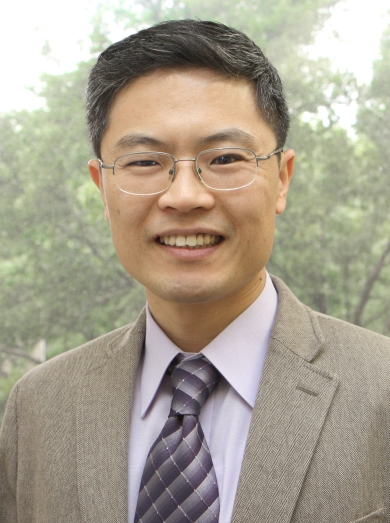
Professor Yongwan Chun is a faculty member in the Geospatial Information Sciences program at the University of Texas at Dallas , affiliated with the School of Economic, Political and Policy Sciences. His academic journey includes a PhD in Geography (2007) and MS in Applied Statistics (2006) from the Ohio State University. Research Interests: Methodological advancements in GIScience, spatial statistics, environmental justice, urban crime analysis, population migration, and commodity flow modeling. Awards: Emerging Scholar Award (2017) from the Spatial Analysis and Modeling Specialty Group of the Association of American Geographers. Grants: Multiple awards from National Science Foundation and National Institute of Health totaling $1.4 million. Article Trends reflect expertise in spatial autocorrelation (Moran's I, Geary's C), location-allocation modeling (p-median, p-dispersion), and applications to healthcare accessibility, urban crime patterns, housing market segmentation, and climate impacts. His work integrates GIScience with Bayesian methods, eigenvector filtering, and big data uncertainty. Collaborators: Daniel A. Griffith, Hyun Kim, and students like Dongeun Kim and Changho Lee. Recent Topics: Trauma center accessibility, snowpack variation modeling, and spatiotemporal crime analysis. Contact: ywchun@utdallas.edu | Office: GR 3.208, UT Dallas
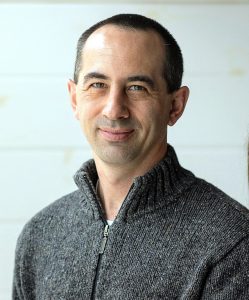
Marco Tedesco is a Lamont Research Professor at the Lamont-Doherty Earth Observatory (LDEO) within Columbia University's Columbia Climate School and an Adjunct Scientist at NASA Goddard Institute for Space Studies (GISS). He is affiliated with the Data Science Institute, Sant’Anna School of Economics (Italy), and serves as a Climate Resident Scientist at Columbia Business School. His roles include leadership in interdisciplinary climate research, field expeditions, and science communication. Tedesco holds a Laurea degree and PhD from the University of Naples and the Italian National Research Council, followed by postdoctoral work at NASA Goddard Space Flight Center. He previously served as a faculty member at City College of New York (CCNY), where he directed the Cryosphere Processes Laboratory and held roles at the National Science Foundation. Research Focus : Tedesco specializes in cryosphere dynamics, including seasonal snowpack, ice sheet surface properties, and the socioeconomic impacts of climate change. His fieldwork spans Greenland, Antarctica, Iceland, Canada, and the Italian Alps. He is renowned for his work on remote sensing techniques applied to cryospheric processes and authored Remote Sensing of the Cryosphere (Wiley, 2015) and The Hidden Life of Ice (2018), which explores climate science and justice. His research also addresses microplastics in polar regions and climate justice implications. Awards & Recognition : A Fellow of the Explorers Club and member of the New York City Panel on Climate Change Equity Working Group, Tedesco’s work has been highlighted by the Washington Post and National Geographic Traveler. His grants and projects include studies on Arctic sea ice, Greenland ice sheet dynamics, and the socioeconomic dimensions of climate change. Labs & Initiatives : Founder of the Cryosphere Processes Laboratory at CCNY, Tedesco collaborates on projects such as the SLICE initiative (Spectral Signs of Life in Ice) and leads efforts in understanding ice-albedo feedback mechanisms. His interdisciplinary approach bridges environmental science with economics and policy, emphasizing climate resilience strategies.
Nik Callow is an Associate Professor at the UWA School of Agriculture and Environment and co-Director of the UWA Centre for Water and Spatial Science. His expertise spans hydrology, geomorphology, remote sensing, and GIS. He leads major projects like the Australian Plant Phenomics Network (APPN) and WaterSmart Dams, focusing on water-dependent ecosystems and spatial science innovations. Callow oversees UWA’s drone operations and supports ~60 drone pilots. He teaches courses in geographical sciences and environmental monitoring, and his research integrates drone technology with climate change studies. Education: PhD in Geography (UWA, 2007), GCHEd (UQ, 2011) Affiliations: Member of the Western Australian EPA Expert Scientific Advisory Council, Resilient Landscapes Hub (NESP), and multiple industry collaborations. Research interests include ecohydrology, marginal snowpacks, and palaeoclimate studies. Projects address water management, biodiversity, and climate resilience in Australia and globally. His work has received the EGU Jim Dooge Award (2020) for contributions to wetland salinity research. Active grants include partnerships with Snowy Hydro, Rio Tinto, and the Grains Research and Development Corporation. Teaching focuses on field science, GIS, and climate processes.
Summer Rupper is a Professor at the School of Environment, Society & Sustainability at the University of Utah, where she has held her position since July 2019. Her research focuses on understanding the interactions between climate, glaciers, and water resources, with particular emphasis on high mountain regions including High Mountain Asia, the Himalayas, and polar regions. She leads multiple research projects examining glacier dynamics, hydrological processes, and climate change impacts on water security for downstream populations. BS in Geology from Brigham Young University (2001) MS in Geology from University of Washington (2004) PhD in Earth and Space Sciences from University of Washington (2007) Professor Rupper's research spans physical geography, environmental geoscience, and climate change science, with specific expertise in glaciology, hydrology, and atmospheric sciences. Her work integrates field measurements, remote sensing, and numerical modeling to understand glacier dynamics, snow processes, and water resource availability in mountainous regions. She has particular expertise in High Mountain Asia, where glaciers provide critical water resources for over a billion people. Her research addresses fundamental questions about glacier response to climate change, hydrological partitioning, and the implications for water security in vulnerable regions. Her recent publications demonstrate a consistent focus on understanding glacier dynamics, hydrological processes, and climate interactions in mountainous regions. The work spans multiple methodologies including remote sensing analysis, numerical modeling, statistical approaches, and field-based measurements. Key themes include glacier melt contributions to river systems, precipitation patterns in complex terrain, snow density modeling, and the impacts of climate change on water resources in High Mountain Asia and polar regions. Her research often integrates multiple data sources and approaches to address complex questions about cryospheric processes and their societal implications. Superior Research Award (2024, CSBS, University of Utah) G.K. Gilbert Award for Excellence in Geomorphic Research (2022) Outstanding Utah Higher Education Science Teacher (2021) Top Researcher Award, Celebrate U showcase (2017) Antarctic Service Medal (2010, USAF) Professor Rupper actively mentors graduate students through thesis research courses at both the PhD and Master's levels, as well as individual projects. She has secured significant research funding from multiple federal agencies including NSF, NASA, and USAID, with current projects examining climatic controls on Antarctic ice sheets, glacier dynamics in High Mountain Asia, and historical glacier changes. Her collaborative work extends across international boundaries, working with scientists in Pakistan, Bhutan, and other regions to address shared water security challenges. She also engages in community outreach through workshops with school districts and science teacher associations to communicate climate science to broader audiences. Professor Rupper participates in multiple collaborative research teams including the NASA High Mountain Asia Team (HiMAT), where she contributes expertise in glacier dynamics and hydrology. She serves on several scientific committees including the NSF Ice Core Facility Sample Allocation Committee and the American Geophysical Union Cryosphere Section Fellows Committee. Her research often involves interdisciplinary teams combining expertise in glaciology, hydrology, remote sensing, and climate modeling to address complex questions about mountain water systems under changing climate conditions.
Aaron Weiskittel is a Professor of Forest Biometrics and Modeling and the Irving Chair of Forest Ecosystem Management at the University of Maine’s School of Forest Resources. He directs the Center for Advanced Forestry Systems and the Center for Research on Sustainable Forests . His research focuses on developing quantitative tools for forest management, including growth and yield modeling, climate change impacts, and sustainable forestry practices. He holds a PhD (2007), MS (2003), and BS (2001) in forest resources from Oregon State University and The Ohio State University, respectively. Research interests include: Forest biometrics and modeling Climate change effects on forest productivity Stem taper equations and volume estimation Old-growth forest structure analysis Commercial thinning impacts on stand dynamics Key contributions include: Development of growth models for the Acadian Region Evaluation of climate change on forest productivity and species distribution Advancements in forest biomass and carbon estimation Collaborative studies on northern white-cedar silviculture His work integrates field data, remote sensing, and computational modeling to address complex forest management challenges. Ongoing projects focus on carbon MRV frameworks, forest carbon markets, and stakeholder-driven climate adaptation strategies.
Noah P. Molotch is a Professor in the Department of Geography at the University of Colorado Boulder, leading the Mountain Hydrology Group and affiliated with the Cryosphere and Surface Processes Lab and Niwot Ridge Long-Term Ecological Research program. His work integrates ground observations, remote sensing, and computational modeling to advance understanding of mountain hydrology, water resources, and ecohydrology in changing climates. His educational background includes: PhD in Hydrology and Water Resources from the University of Arizona (2004) MS in Environmental Science and Management from the University of California, Santa Barbara (2000) BA from the University of Colorado Boulder (1997) Molotch's research focuses on snow hydrology , ecohydrology , and remote sensing with emphasis on snowmelt distribution, soil moisture dynamics, and streamflow generation. He investigates how climate change alters snowpack characteristics and hydrological partitioning, affecting forest productivity and carbon cycling in montane ecosystems. His work spans from the Colorado Front Range to Chilean Andes, addressing critical water security challenges through field studies and satellite data integration. Recent publications (2024-2025) reveal three dominant research thrusts: (1) Advanced snow water equivalent estimation using machine learning and airborne remote sensing, (2) Climate impacts on snowmelt timing and hydrological partitioning across mountain systems, and (3) Ecohydrological feedbacks between snow dynamics and vegetation productivity. These studies increasingly incorporate drone-based multispectral imaging and cross-scale data fusion to resolve spatial heterogeneity in alpine environments. Molotch mentors PhD students Millie Spencer and Emma Tyrrell, with Spencer documenting glacier retreat in Chile through CUAHSI-funded research. His group has secured significant grants from the U.S. Bureau of Reclamation for developing operational snowpack datasets, while collaborating with NASA, NOAA, and water management agencies on real-time monitoring systems. Community engagement includes art-science collaborations like the Colorado Arts Science Environment Program to communicate climate impacts. The Mountain Hydrology Group operates cutting-edge facilities including the Cryosphere and Surface Processes Lab and contributes to the Niwot Ridge Long-Term Ecological Research site. They deploy airborne lidar, drone-based thermal imaging, and wireless sensor networks to map snow properties at unprecedented resolutions, directly informing water resource management during drought and flood events across the Western U.S.
Dr. Jonathan Frame is an Assistant Professor of Artificial Intelligence/Machine Learning in Geological Sciences at the University of Alabama (2024–present) and a Faculty Fellow at the Alabama Water Institute (2024–2027). He holds a PhD in Geological Sciences from the University of Alabama (2022), an MS in Civil Engineering from the University of California, Irvine (2011), and a BS in Earth Systems Science, Technology, and Policy from California State University, Monterey Bay (2010). His research focuses on advancing hydrologic modeling through machine learning, including deep learning for streamflow forecasting, geospatial modeling, and flood prediction systems. Notable projects include improving the National Water Model with LSTM networks and developing rapid inundation mapping techniques using satellite data. He has contributed to over 30 peer-reviewed publications and actively participates in conferences like AGU and NeurIPS. His engineering experience spans flood risk mitigation, groundwater analysis, and pipeline transient modeling across California, Texas, and Washington. Research Interests Machine learning integration in hydrological systems Operational flood forecasting and inundation mapping Data-driven approaches for ungauged basins Climate nonstationarity and model adaptability Hydraulic transient analysis in water infrastructure Recent Contributions Frame’s recent work emphasizes NextGen water modeling frameworks, combining physics-based models with AI to enhance predictive accuracy. His 2025 paper on heterogeneous water modeling frameworks and 2024 studies on rapid inundation mapping highlight innovations in integrating satellite observations with hydrologic models. He also explores topics like mass conservation constraints in rainfall-runoff models and evapotranspiration prediction using deep learning. Grants & Projects FEMA partnership for near-real-time flood damage prediction systems NOAA-funded research on AI in environmental sciences NASA snowpack analysis for water resources forecasting Development of the Tarsier environmental modeling framework Labs & Collaborations Frame collaborates with the Alabama Water Institute and contributes to interdisciplinary teams advancing hydrologic AI. His work intersects with climate science, environmental engineering, and computational hydrology to address global water challenges.
Dr. Christine Christ is a Researcher at the Faculty of Theology of the University of Basel. Her work spans theological disciplines with a focus on historical, ethical, and intercultural perspectives. Institution: University of Basel School: Faculty of Theology She contributes to research areas including theology, religious studies, ecumenism, and ethics, though specific projects are not detailed in the provided texts. Her role involves academic collaboration and guest research initiatives. Recent publications highlight trends in soil science, environmental monitoring, and climate-related research, suggesting potential interdisciplinary engagements or data inconsistencies. These works address multi-scale soil quality frameworks, sediment source apportionment, peatland carbon dynamics, and radionuclide tracing methodologies. Dr. Christ's contact details include the email christine.christ@unibas.ch . No scientific awards or student supervision details are mentioned in the provided data.
Alberto Godio is a Full Professor at the Politecnico di Torino, affiliated with the Department of Environmental, Land and Infrastructure Engineering (DIATI). He coordinates Latin America relations under the University Strategic Plan and is a member of the Interdepartmental Center Photonext for Applied Photonics. His research focuses on Applied Geophysics, Geophysical Data Integration, and Glaciology. He graduated in Mining Engineering (1988) and earned a PhD in Underground Resources Engineering (1993). He has been an Associate Professor (2005-2024) and Full Professor (2024-present) at PoliTO, leading projects funded by EU (FP7, LIFE, Horizon), MIUR (PRIN, FIRB), and regional bodies. His recent publications explore geophysical methods for subsurface modeling, glacial systems, and environmental remediation, with keywords spanning Geophysics, Hydrology, and Climate Science. His work emphasizes ground-penetrating radar, seismic noise analysis, and hybrid modeling techniques. Scientific awards include the Best Paper Award at the Near Surface Geoscience Conference (2008). He has supervised PhD students on fiber optic sensors and GPR optimization, advised projects on digital twins, and led EU-funded research on biogas enhancement in landfills.
Jonathan Kingslake is an Associate Professor in the Department of Earth and Environmental Sciences at Columbia University and a member of the Lamont-Doherty Earth Observatory. His research focuses on glaciology, subglacial and supraglacial hydrology, and ice sheet dynamics. He holds a BSc in Physics from the University of York and a PhD in Glaciology from the University of Sheffield. Prior to Columbia, he worked as a Glacier Geophysicist at the British Antarctic Survey. His work integrates field observations, remote sensing, and mathematical modeling to improve understanding of glacial processes and climate impacts. Education: B.Sc. Physics, University of York (2009) Ph.D. Glaciology, University of Sheffield (2013) Key Research Themes: Subglacial and supraglacial water dynamics West Antarctic Ice Sheet evolution Ice shelf stability and meltwater mechanisms Glacial lake formation and drainage Fieldwork Experience: Antarctica (2013–2015): Radar and GPS measurements of ice flow Greenland (2017): Meltwater refreezing studies Juneau Icefield (2018): Firn compaction and ice core sampling Grants & Collaborations: NSF-funded projects on Antarctic ice shelf dynamics Lenfest Junior Faculty Development Grant (Juneau Icefield fieldwork) Part of the Polar Geophysics Group at Lamont Lab/Team: Advises a group of students and postdocs in the Polar Geophysics Group, focusing on interdisciplinary approaches to glacial processes.
Aimée Classen is a Professor and Director of the University of Michigan Biological Station (UMBS), leading a 13,000-acre research campus. She is affiliated with the Department of Ecology and Evolutionary Biology at the University of Michigan. Ph.D., Northern Arizona University (2004) B.A., Smith College (1995) Research Interests : Her work focuses on ecosystem ecology, global change, nutrient cycling, plant-soil interactions, and biodiversity. The Classen Lab investigates: Connections among soil organisms, herbivores, plants, and ecosystem function Impact of global change on biodiversity and ecosystem dynamics Scale and context in ecological patterns Scientific Awards : Fellow, American Association for the Advancement of Science (AAAS) Fellow, Ecological Society of America (ESA) Research Team : Lab members include graduate students Ariana Di Landro, Brenda Hernandez, and others. Staff: Karin Rand (lab manager), Isabel Thornberry (research tech).
Dr. Yun Qian is a distinguished Earth Scientist and Lab Fellow at Pacific Northwest National Laboratory (PNNL), where he leads the Earth System Modeling Group with over 80 scientists and staff within the Atmospheric, Climate, and Earth Sciences (ACES) Division. He joined PNNL in 2000 and has established himself as a renowned expert in climate modeling, particularly in regional climate systems, aerosol-climate interactions, and urban climate effects. Dr. Qian is also an AMS Fellow with significant contributions to understanding human influences on the Earth system. Dr. Qian received his academic training in China: Ph.D. in Atmospheric Science from Nanjing University, Nanjing, China B.S. in Atmospheric Science from Nanjing University, Nanjing, China Dr. Qian's research focuses on advancing our understanding of climate systems through sophisticated modeling approaches. His work spans regional and global climate modeling, aerosol-climate interactions, snow and glacier impurities and their climatic impacts, land-atmosphere-water interactions, urban and coastal environment modeling, and uncertainty quantification in climate modeling. His pioneering work on Asian aerosols revealed their dominant role in shaping climatic trends in East Asia, while his research on snow and ice impurities provided new insights into changes in snowpacks in the western United States and the Himalayas. Dr. Qian has also made significant contributions to understanding how atmosphere-land-water interactions modulate the influence of human activities on the environment. Analysis of Dr. Qian's recent publications shows a strong focus on urban climate effects, regional climate modeling, and the impacts of human activities on climate systems. His work increasingly incorporates advanced computational methods including machine learning for weather pattern identification. There's a clear trend toward studying the interactions between urban environments and climate systems, with particular attention to heat stress, precipitation patterns, and regional warming effects. His research also shows growing interest in extreme weather events and their changing patterns under climate change scenarios. Dr. Qian has received numerous prestigious awards and recognitions: Fellow of American Meteorological Society Chair of AMS Coastal Environment Committee Program Chair for Annual AMS Coastal Environment Symposium Editor of JGR-Atmospheres, Atmospheric Chemistry and Physics, and Advances in Atmospheric Sciences Director of international workshop on Uncertainty Quantification in Climate Modeling and Projection Member of Scientific Steering Committee for IPCC CMIP6 Global Monsoons Modeling Inter-comparison Project NSR 2020 Best Paper AAS Esteemed Review Paper Award PNNL Exceptional Contribution Program Award PNNL EBSD Mentor of the Year Editors' Citation for Excellence in Refereeing at AGU (2015, 2019) Contributing Author of IPCC Assessment Report Fellowship Award of International Council for Science (ICSU), 1997 Xue-Du-Feng-Zheng Award in Chinese Academy of Sciences, 1998 With over 200 peer-reviewed articles and 20,000 citations (h-index of 74), Dr. Qian has made substantial contributions to climate science. His work has garnered significant media attention, with features in top-tier scientific publications like Nature and Science, as well as major news outlets including the Associated Press, New York Times, Washington Post, BBC, NBC, and NPR. He has served as chair of the AMS Coastal Environment Committee, Program Chair for the Annual AMS Coastal Environment Symposium, and as a member of the Scientific Steering Committee for the IPCC CMIP6 Global Monsoons Modeling Inter-comparison Project. Dr. Qian has also directed international workshops on uncertainty quantification in climate modeling and served as an editor for three prestigious journals. Dr. Qian leads the Earth System Modeling Group at PNNL, which comprises over 80 scientists and staff. His team focuses on developing and applying atmospheric and land surface models to advance understanding of human influence on the Earth system. The group's work spans regional climate modeling, aerosol-climate interactions, snow and glacier impurities, land-atmosphere-water interactions, urban and coastal environment modeling, and uncertainty quantification. Their research has significant implications for understanding climate change impacts and developing adaptation strategies.