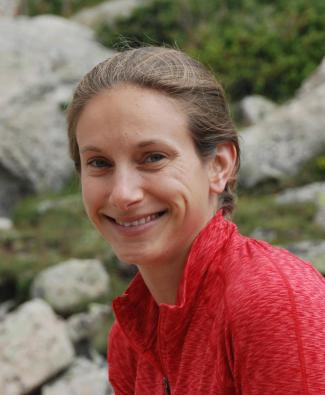
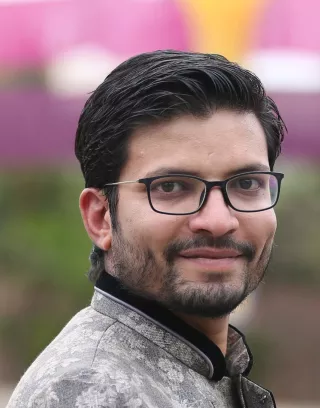
Katharina Bardy is a researcher affiliated with the Centre for Teacher Education and the Center for Science Education Research (AECCs) at the University of Graz. Her work contributes to the UN Sustainable Development Goals, particularly in plant science and climate education. Active in botany, ecology, and evolutionary biology Focus on alpine ecosystems, hybridization, and biogeography Her recent research explores Veronica and Melampodium species, snowmelt dynamics in alpine grasslands, and ploidy variation in plant evolution. Publications span peer-reviewed journals and interdisciplinary educational initiatives. She received the BNE-Auszeichnung 2021 for collaborative climate education efforts and has organized academic events like Klimabildung for Future .
Daria Kluver is a Professor in the Department of Earth and Atmospheric Sciences at the University of Houston, within the College of Science and Engineering. Her work bridges climate science, hydrology, and geoscience education, with a strong focus on snowfall dynamics and regional climate modeling. Education: Ph.D. in Climatology, University of Delaware, 2011 M.S. in Geography, University of Delaware, 2007 B.S. in Meteorology, Saint Cloud State University, 2003 Her research centers on climatological processes, particularly snowfall patterns, seasonal climate prediction, and the influence of large-scale atmospheric systems on regional climate. She employs spatial data analysis and climate datasets to understand hydroclimatic variability across North America. Her work spans observational climatology, dataset development, and climate education innovations. The recent publications reflect a consistent trajectory in climate science, with emphasis on snowfall modeling, climate projections, and interdisciplinary applications involving hydrology and education. Her articles span journals in climatology, atmospheric technology, and geoscience pedagogy, indicating a well-rounded research program that integrates science and teaching. Scientific Awards: No awards listed in the provided text. Daria Kluver has not advised any students listed in the available data. There is no mention of grants, laboratories, or research teams in the provided information. Her scholarly contributions are primarily evident through her publications and curriculum development in climate science education.
Shaakir Shabir Dar is a Research Fellow at the University of Oulu , affiliated with the Faculty of Technology and the Water, Energy and Environmental Engineering department. His work focuses on isotopic and hydrological processes in cold climates. PhD, MTech, BE (Civil Engineering) Research interests center on decoding isotopic fingerprints of snow sublimation, water vapor dynamics, and atmospheric moisture transport. His methodology integrates water isotope forensics with eddy covariance flux measurements to study phase transitions in the cryospheric water cycle. Projects include Isotopes in Sublimation by Laboratory and In-field Meteorological Experiments , conducted at Oulanka Research Station and the Cold Climate Container at the University of Oslo. This aligns with initiatives like Cryosphere Research Infrastructure and Correcting a Bias Undermining the Global Importance of Snowmelt . Awards : Marie Skłodowska-Curie Postdoctoral Fellowship Contact : Email: shaakir.dar@oulu.fi Postal Address: P.O.Box 8000, FI-90014 University of Oulu, Finland
Dr Katarzyna Wasak-Sęk is an Assistant Professor (research staff equivalent) at the Department of Geoenvironmental Research, Institute of Geography and Spatial Organization of the Polish Academy of Sciences (PAN) in Kraków, Poland. Since 2017 she has held a permanent research position, advancing from junior documentary filmmaker (2016–2017) to assistant researcher. She previously served as an independent administrative officer at the Institute of Geography and Spatial Management, Jagiellonian University, where she completed her PhD in Earth Sciences in 2017. Education 2002–2008 – Master’s degree (Inter-Faculty Studies in Environmental Protection), University of Warsaw, with specialization in physical geography. Master’s thesis: Development of initial soils in the foreland of the Fláa glacier (SE Iceland) . 2017 – PhD in Earth Sciences (physical geography), Institute of Geography and Spatial Management, Jagiellonian University. Doctoral thesis: The influence of vegetation and soil parent material on the properties of organic matter in the lower montane zone soils in the Western Tatra Mountains . Research Interests Dr Wasak-Sęk’s work centres on soil organic matter dynamics , mountain soil formation and evolution , and environmental change impacts on soil properties. Her studies integrate field sampling, laboratory analyses and modelling to understand how vegetation, lithology and disturbances (windthrow, deforestation, snowmelt) control carbon and nitrogen cycling in high-altitude and high-latitude ecosystems. Key themes include: Biogeochemistry of organic matter in montane soils Effects of windthrow and forest disturbance on soil chemistry and microbial activity Nitrogen transformations and acidification processes in alpine catchments Headwater chemistry responses to vegetation and climate gradients Publication Profile & Trends Between 2018 and 2025 she has authored or co-authored more than 20 peer-reviewed articles in leading journals such as Science of The Total Environment , Journal of Environmental Management , Catena , Geomorphology , Geochemistry, Geophysics, Geosystems , and Journal of Soils and Sediments , plus numerous book chapters and conference abstracts. Her output displays a clear trajectory from reviews and methodological papers on carbon sequestration (2018–2019) toward integrative studies coupling soil–vegetation–atmosphere interactions in mountain and sub-arctic environments (2020–2025). Grants & Projects While explicit grant titles are not listed, her extensive publication record and editorial roles indicate sustained funding for projects on: Soil organic carbon stability in rendzina soils Effects of windfall events on soil buffering capacity and chemical denudation Nitrate dynamics during snowmelt and rain-on-snow episodes in the Tatra Mountains Microbiome responses to wet-meadow translocation and habitat reconstruction Editorial & Outreach Activities Dr Wasak-Sęk has served as co-editor of the 1st National Scientific Conference "Geośrodowisko – Climate, Nature, Man" (2024) and as editorial board member for the Przegląd Geograficzny . She contributes to popular-science magazines ( Bez Pługa ) and field-session guides, demonstrating commitment to knowledge transfer beyond academia.
Dr. Anna Gannet Hallar is a Professor of Atmospheric Sciences at the University of Utah , where she leads the Hallar Aerosol Research Team (HART) and serves as a Courtesy Faculty member in the College of Earth, Ocean, and Atmospheric Sciences at Oregon State University. She is an Affiliate Scientist at the National Center for Atmospheric Research (NCAR) in Boulder, Colorado. Education: BA in Physics (Truman State University, 1999), MS (2001) and PhD (2003) in Atmospheric Sciences from the University of Colorado. Postdoctoral Training: National Research Council Postdoctoral Fellow at NASA AMES Research Center (2003), focusing on aerosol optical properties. Her research specializes in atmospheric aerosol science , employing data-driven approaches to understand aerosol-climate-air quality connections. Key areas include: Biosphere-atmosphere-climate interactions Anthropogenic emissions impact assessment New particle formation (NPF) in complex terrain Ice nucleation and mixed-phase cloud processes Halogen chemistry and mercury oxidation Mountain valley fog dynamics Recent publications emphasize NPF modeling , mercury oxidation studies , and complex terrain air quality challenges . Her work leverages advanced instrumentation and field campaigns like Storm Peak Laboratory operations. Scientific Awards Outstanding Undergraduate Research Mentor Award (University of Utah, 2023-2024) Outstanding Teaching Award (College of Mines and Earth Science, 2019) Regents' Rising Research Award (Nevada System of Higher Education, 2012) Dr. Hallar actively mentors graduate students and secures major NSF and DOE grants for projects including: REU SITE: Alpine Meteorology Training (2023-2028) CFACT: Cold Fog in Complex Terrain (2021-2025) Storm Peak Laboratory Facility Operations (2021-2026)
Rachel Gallery is an Assistant Professor at the School of Natural Resources and the Environment, University of Arizona, specializing in soil microbial ecology, biogeochemical cycles, and climate change impacts. Her research spans diverse ecosystems including alpine forests, semi-arid regions, and tropical alpine páramos, with a focus on microbial responses to disturbances like wildfire, drought, and climate warming. Research Themes : Microbial community dynamics, carbon cycling, mineral weathering, critical zone science, and ecosystem resilience. Methodological Focus : Integration of field measurements, genome-resolved metagenomics, remote sensing, and modeling approaches to understand soil processes. Recent work highlights seasonal snowmelt effects on microbial activity, novel applications of the MIMICS model, and soil connectivity mechanisms. While her publications emphasize collaborations through CZNet and Critical Zone Observatories, no specific advising or grant details are listed in the provided data.
Lynn Christenson is a Professor of Biology at Vassar College, where she has been on faculty since 2005. She holds a BS from the University of Winnipeg and MS/PhD degrees from SUNY College of Environmental Science and Forestry. Her research examines complex ecosystem relationships with focus on forest nutrient cycling, invasive species impacts, and climate change effects. Her research interests center on biogeochemical cycling in northern temperate forests, studying how factors like invasive insects (gypsy moths), atmospheric nitrogen deposition, and shifting winter climate regimes influence forest community dynamics. Current investigations address climate-induced forest migration patterns and tree species adaptation. Christenson's publications demonstrate consistent focus on forest ecosystem processes, spanning nutrient dynamics, decomposition mechanisms, and climate impacts. Recent work shows increased emphasis on climate change adaptation and forest migration patterns under warming scenarios. Co-PI on NSF Conference Grant for Forest Biodiversity Workshop She maintains active research collaborations studying forest responses to environmental change in the Catskills and Northeastern US forests.
Adrian Harpold is an Associate Professor in the Department of Natural Resources & Environmental Science at the University of Nevada, Reno , where he leads the Nevada Mountain Ecohydrology Lab . His work addresses water sustainability challenges in the context of rapid environmental change and increasing demand for water resources in the 21st century. Education : B.S. Virginia Polytechnic Institute, 2003 M.S. Virginia Polytechnic Institute, 2005 Ph.D. Cornell University, 2010 Research Interests : Harpold’s research centers on mountain ecohydrology , integrating field observations, remote sensing, and modeling to understand how climate change, forest structure, and extreme events affect snowpack dynamics, vegetation feedbacks, and water availability. His lab addresses three guiding questions: How will changing and extreme climate impact mountain snowpacks and precipitation? How do feedbacks between changing snowpacks and vegetation control catchment-scale water budgets, especially during drought? How will changing snowpacks and precipitation alter streamflow generation and flood sensitivity? Additional themes include the fate and transport of water, energy, carbon, and biogeochemical solutes at landscape scales, bridging basic and applied science. Publication Trends : From 2022–2025, Harpold has published prolifically on snow hydrology , forest-snow interactions , machine-learning applications , and climate-driven hydrologic change . Recent work emphasizes lidar-based forest characterization , non-stationarity in hydrologic models after mega-disturbances , and groundwater influence on snowmelt runoff . These studies collectively advance predictive capabilities for water resource management under non-stationary climate conditions. Scientific Awards : No specific awards are listed in the provided text. Advising, Grants & Collaborations : Harpold mentors graduate students through the Graduate Program of Hydrologic Sciences at UNR. While individual student names are not provided, his lab actively involves graduate researchers in field campaigns, remote-sensing analysis, and integrated modeling projects. Grant funding supports lidar acquisitions, field instrumentation across the Sierra Nevada, and development of decision-support tools for forest and water managers. Labs & Teams : The Nevada Mountain Ecohydrology Lab (website: https://www.unr.edu/natural-resources/mountain-ecohydrology ) operates field sites and sensor networks across the Sierra Nevada and Great Basin, leveraging partnerships with federal agencies, forest services, and irrigation districts to translate research into actionable water-resource strategies.
Dr. Michael Gooseff is a Professor at the University of Colorado Boulder in the Department of Civil, Architectural & Environmental Engineering , where he also serves as Co-Director of the Hydrologic Sciences Graduate Program and Associate Dean for Research in the College of Engineering. His research focuses on stream-groundwater interactions , biogeochemical cycling , and polar ecosystem responses to climate change . PhD, MS, and BCE in Civil Engineering from University of Colorado and Georgia Tech Lead Principal Investigator of McMurdo Dry Valleys LTER Research spans Arctic Alaska (Toolik Field Station) and Antarctica , with recent work on Alaskan river discharge trends , Aufeis thaw dynamics , and chemostasis in polar streams . His lab develops innovative methods using UAVs , geophysical imaging , and tracer experiments . Scientific awards include: Fellow of the Geological Society of America (2018) Robert L. Stearns Award (2022) Outstanding Teaching Award (2012) He has advised 15+ graduate students and contributed to major NSF-funded projects in hydrologic connectivity , permafrost degradation , and groundwater-surface water exchange across diverse environments including the Colorado River and McMurdo Dry Valleys .
Torsten Sachs is a prominent researcher at the Alfred Wegener Institute Helmholtz Centre for Polar and Marine Research in Potsdam, Germany, specializing in Arctic permafrost systems and biogeochemical cycles. His work focuses on methane and carbon dioxide fluxes in tundra ecosystems, with particular emphasis on Siberian permafrost landscapes. Sachs has established himself as a leading expert in eddy covariance measurements and remote sensing applications for monitoring Arctic environmental changes. His research interests span permafrost dynamics, greenhouse gas emissions from Arctic ecosystems, carbon cycling in tundra environments, and the impacts of climate change on polar regions. Sachs has made significant contributions to understanding methane emission mechanisms in polygonal tundra landscapes and the relationship between soil moisture dynamics and carbon sequestration in Arctic ecosystems. His work often integrates field measurements with modeling approaches to address critical questions about climate feedbacks in the rapidly changing Arctic. The publication record reveals a strong focus on Arctic carbon cycling , with numerous contributions to major international research initiatives including the MOSAiC expedition. His recent work has increasingly addressed climate mitigation strategies, particularly carbon dioxide removal options in the context of German climate policy. Technical innovations in airborne measurement techniques and eddy covariance methodology represent another important dimension of his research portfolio. Sachs has been actively involved in several major collaborative projects including the AirMeth campaigns and the FLUXNET2015 dataset development. His research has been instrumental in advancing our understanding of how permafrost degradation affects greenhouse gas emissions and ecosystem functioning in the Arctic. The consistent publication record spanning over two decades demonstrates his sustained contribution to polar environmental science.
Bethany Neilson is a Professor in the Department of Civil and Environmental Engineering at Utah State University with a dual appointment at the Utah Water Research Laboratory (UWRL). She currently serves as the CEE Water Division Head and Director of the Logan River Observatory, leading significant research efforts in mountain hydrology and water resources. Her work bridges engineering, environmental science, and practical water management applications across diverse watershed systems. Dr. Neilson's research focuses on groundwater/surface water interactions and their effects on instream water quality and temperature regimes across various environments including desert rivers, arctic systems, agricultural rivers, mountain streams, and regulated river reaches. Her current work emphasizes understanding mountain hydrology in the Logan River watershed, with projects examining groundwater exchanges in karst regions, snow depth variability using LiDAR technology, and micro-plastic transport from pristine to urban areas. Her recent publications demonstrate an integration of traditional hydrologic modeling with machine learning approaches, particularly for snow-dominated karst watersheds. The research shows increasing emphasis on understanding climate change impacts on water resources, with applications to water management in the western United States. 2024 Utah AWRA Academic Sector Award Multiple USU teaching and mentorship awards (2012-2017) IGN International Academy Fellowship (2014) UCOWR Ph.D Dissertation Award (2007) Dr. Neilson has mentored numerous graduate students working on diverse projects related to hydrology, water quality, and watershed management. Her research is supported by various grants that address critical water resource challenges, particularly in the western United States where water scarcity and management are pressing concerns. She leads the Logan River Observatory, which provides long-term hydrologic data to inform state-wide water management decisions. Her laboratory work includes extensive field instrumentation in the Logan River watershed, with a focus on understanding how karst geology influences water movement and storage. This work has direct applications for water management in regions with similar geological characteristics across the western United States.
Sebastian Buchelt is a doctoral student at the Chair of Remote Sensing , part of the Institute of Geography and Geology under the Faculty of Philosophy at the University of Würzburg. His research focuses on applying SAR remote sensing and time series analysis to study periglacial processes in alpine environments. Current affiliation: University of Würzburg (since 2020) Education: B.Sc. in Geography and Experimental Physics (University of Munich), M.Sc. in Applied Earth Observation and Geoanalysis (University of Würzburg) Research interests include: SAR remote sensing for periglacial monitoring Climate change impacts on alpine geosystems Time series analysis of geospatial data Integration of radar and geophysical field methods Recent publications highlight his work on: Rock glacier dynamics via multi-sensor data fusion Permafrost degradation assessments using historical ERT Alpine snow cover detection algorithms Sentinel-1 applications for Arctic snowmelt analysis Contact: sebastian.buchelt@uni-wuerzburg.de
Katharine Kelsey is an Assistant Professor in the Department of Geography & Environmental Sciences at the University of Colorado Denver, part of the College of Liberal Arts and Sciences. Her research focuses on understanding how climate change and ecological disturbances impact Arctic and urban ecosystems, with an emphasis on biogeochemical cycles, vegetation phenology, and hydrological processes. Her work integrates field measurements, remote sensing, and modeling to study topics such as greenhouse gas emissions from Arctic wetlands, the effects of herbivory and climate on plant communities, and intra-urban environmental variations. Key projects include the EcoTram initiative, which examines lateral connectivity of water, energy, and vegetation in mountainous regions. Recent studies highlight her exploration of typhoon impacts on coastal ecosystems, snowpack dynamics in urban and alpine settings, and the long-term resilience of Rocky Mountain forests following bark beetle outbreaks. Her interdisciplinary approach bridges environmental science, geography, and climate modeling to address global change challenges. Dr. Kelsey collaborates on federally funded research, including National Science Foundation RAPID grants, and actively engages in science communication to translate complex environmental data for broader audiences.
Rajtantra Lilhare is a Research Fellow in the Department of Geography, Earth, and Environmental Sciences at the University of Northern British Columbia (UNBC), specializing in hydrological modeling of the Nechako River watershed in northern British Columbia. His work disentangles climate change impacts and flow regulation effects on river systems through advanced geospatial and hydrological techniques. His academic background includes a PhD in Natural Resources and Environmental Studies (NRES) from UNBC (2020) and an MTech in Remote Sensing and GIS from the Indian Institute of Remote Sensing, India (2013). During his doctoral studies, he was supervised by Dr. Stephen Déry. Dr. Lilhare's research focuses on hydrological modeling, climate change impacts, and environmental science, with particular emphasis on Canadian river basins including the Nechako and Nelson systems. His methodology integrates remote sensing, GIS, and multi-model intercomparison frameworks to assess water resource dynamics under changing climatic conditions, addressing critical gaps in understanding permafrost-affected hydrology and anthropogenic influences. Analysis of his 15 most recent publications (2016-2023) reveals consistent themes in model intercomparison (notably the Nelson-MiP project), uncertainty quantification in hydrological simulations, and climate change impact assessments across northern watersheds. Key contributions include soil temperature-baseflow relationships, ensemble precipitation product validation, and sensitivity analyses across permafrost gradients, demonstrating methodological rigor in large-scale hydrological studies. As a postdoctoral researcher, he collaborates with Dr. Stephen Déry on major initiatives like the Nelson-MiP project, though specific advising roles, grant funding details, and laboratory facilities are not publicly documented in his current profile.
Tyler Smith is an Associate Professor at Clarkson University in the Department of Civil & Environmental Engineering within the Coulter School of Engineering & Applied Sciences. He is also an affiliate faculty member of the Institute for a Sustainable Environment, Institute for STEM Education, and the Beacon Institute for Rivers & Estuaries. Ph.D. in Ecology & Environmental Sciences, 2012, Montana State University M.S. in Civil Engineering, 2008, Montana State University B.S. in Civil Engineering with Bio-Resources Engineering Option, 2006, Montana State University Smith specializes in integrative watershed studies using Bayesian statistical approaches to enhance hydrologic modeling and decision-making. His research includes collaboration with experimentalists, data-scarce regions, and model realism in dynamic environments. His peer-reviewed publications focus on Bayesian calibration, uncertainty quantification, and hydrologic connectivity in watersheds. These works emphasize cross-catchment transferability, prior distribution analysis, and predictive performance in ephemeral systems. Active research grants include the Niagara and St. Lawrence River Operation Forecasting project funded by the New York Power Authority.