
Ian Baker is the Sherman Fairchild Professor of Engineering and Senior Associate Dean for Research and Graduate Programs at Dartmouth College's Thayer School of Engineering. His research focuses on materials for energy systems, mechanical behavior of materials, and advanced characterization techniques. He holds degrees from the University of Oxford (BA, 1979; D.Phil, 1982) and has been recognized as a Fellow by multiple prestigious organizations. Education: BA in Metallurgy and Science of Materials (Oxford, 1979), D.Phil in Metallurgy and Science of Materials (Oxford, 1982). Research Interests: Magnetic materials, high entropy alloys, snow/ice microstructure, biomaterials, and energy-efficient materials systems. Dr. Baker’s work bridges materials science with applications in energy systems and biomedical engineering. His recent publications emphasize sustainable magnet manufacturing and advanced materials characterization using machine learning. Awards: AAAS Fellow (2015), TMS Fellow (2012), Materials Research Society Fellow (2011). Professional Roles: Editor-in-Chief of Materials Characterization (2009–2020), Field-Chief-Editor of Frontiers in Metals and Alloys (2022–). He advises graduate students in materials science and leads projects funded by grants related to energy systems and biomaterials development.
جستوجوی استاد و پژوهشگر
استاد راهنما، استاد دانشگاه یا پژوهشگر مناسب برای مسیر پژوهشیتان را پیدا کنید و با او ارتباط بگیرید.
نمایش ۶۱-۷۵ از ۱٬۵۷۰ استاد راهنما
اطلاعات این پروفایلها از صفحات عمومی دانشگاهها جمعآوری شده و ممکن است بهروز نباشد.
Summer Rupper is a Professor at the School of Environment, Society & Sustainability at the University of Utah, where she has held her position since July 2019. Her research focuses on understanding the interactions between climate, glaciers, and water resources, with particular emphasis on high mountain regions including High Mountain Asia, the Himalayas, and polar regions. She leads multiple research projects examining glacier dynamics, hydrological processes, and climate change impacts on water security for downstream populations. BS in Geology from Brigham Young University (2001) MS in Geology from University of Washington (2004) PhD in Earth and Space Sciences from University of Washington (2007) Professor Rupper's research spans physical geography, environmental geoscience, and climate change science, with specific expertise in glaciology, hydrology, and atmospheric sciences. Her work integrates field measurements, remote sensing, and numerical modeling to understand glacier dynamics, snow processes, and water resource availability in mountainous regions. She has particular expertise in High Mountain Asia, where glaciers provide critical water resources for over a billion people. Her research addresses fundamental questions about glacier response to climate change, hydrological partitioning, and the implications for water security in vulnerable regions. Her recent publications demonstrate a consistent focus on understanding glacier dynamics, hydrological processes, and climate interactions in mountainous regions. The work spans multiple methodologies including remote sensing analysis, numerical modeling, statistical approaches, and field-based measurements. Key themes include glacier melt contributions to river systems, precipitation patterns in complex terrain, snow density modeling, and the impacts of climate change on water resources in High Mountain Asia and polar regions. Her research often integrates multiple data sources and approaches to address complex questions about cryospheric processes and their societal implications. Superior Research Award (2024, CSBS, University of Utah) G.K. Gilbert Award for Excellence in Geomorphic Research (2022) Outstanding Utah Higher Education Science Teacher (2021) Top Researcher Award, Celebrate U showcase (2017) Antarctic Service Medal (2010, USAF) Professor Rupper actively mentors graduate students through thesis research courses at both the PhD and Master's levels, as well as individual projects. She has secured significant research funding from multiple federal agencies including NSF, NASA, and USAID, with current projects examining climatic controls on Antarctic ice sheets, glacier dynamics in High Mountain Asia, and historical glacier changes. Her collaborative work extends across international boundaries, working with scientists in Pakistan, Bhutan, and other regions to address shared water security challenges. She also engages in community outreach through workshops with school districts and science teacher associations to communicate climate science to broader audiences. Professor Rupper participates in multiple collaborative research teams including the NASA High Mountain Asia Team (HiMAT), where she contributes expertise in glacier dynamics and hydrology. She serves on several scientific committees including the NSF Ice Core Facility Sample Allocation Committee and the American Geophysical Union Cryosphere Section Fellows Committee. Her research often involves interdisciplinary teams combining expertise in glaciology, hydrology, remote sensing, and climate modeling to address complex questions about mountain water systems under changing climate conditions.

Michael Frenchمشاهده پروفایل
دانشیار
Michael French is an Associate Professor at Stony Brook University's School of Marine and Atmospheric Sciences (SoMAS), Department of Atmospheric Sciences. His research focuses on using Doppler radar data to study severe weather phenomena, particularly tornado dynamics and mesoscale processes. He holds a Ph.D. in Atmospheric Sciences from the University of Oklahoma (2012). His expertise includes analyzing phased array and dual-polarization radar data to improve understanding of supercell thunderstorms, tornado formation, and operational forecasting techniques. He has contributed to major field campaigns like VORTEX2 and has published extensively on radar signatures, hydrometeor analysis, and tornadic processes. Key research themes include radar-based tornado prediction, mesoscale snow banding, and improving short-term forecasting methods. His work integrates advanced radar technologies and GIS tools to study environmental impacts on severe weather events. Dr. French collaborates with institutions like NOAA and the University of Oklahoma, focusing on advancing radar meteorology and severe storm dynamics. His recent studies explore the influence of radar scanning strategies on thunderstorm observations and the role of hydrometeor size sorting in distinguishing tornadic supercells.

Philip Brunner is a Professor of Hydrogeology at the University of Neuchâtel's Faculty of Science since 2012. He is based at the Center for Hydrogeology and Geothermics (CHYN), leading the Laboratory of Hydrogeological Processes. His work centers on sustainable water resource management through quantitative tools. He earned his PhD from ETH Zurich, focusing on sustainable salt and water management in Western China's agricultural basins. Post-PhD, he conducted three years of postdoctoral research in Australia, developing new approaches for simulating river-aquifer interactions. Brunner's research spans surface water-groundwater interactions, numerical modeling, and remote sensing. He integrates methods from numerical modeling, remote sensing, scientific computing, and isotopic chemistry. His interdisciplinary collaborations with mathematicians, biologists, and physicists address challenges in agriculture, ecohydrology, engineering, and sustainable resource management. Recent publications highlight innovative tracer techniques (noble gases, microbes), low-cost monitoring systems, and advanced numerical models. His work tackles climate change impacts on ecosystems, groundwater in conflict zones, and sustainable practices in diverse environments including mountains and agricultural regions. He teaches courses such as Introduction to Hydrological Processes (Master), Numerical Modeling (Master), Remote Sensing (Master), and Introduction to Soil Physics (Bachelor, in French). His laboratory serves as a center for experimental and computational hydrogeological research.
Simen Pedersenمشاهده پروفایل
دانشیار
- Ecology
- Wildlife Biology
- Climate Change
- +۳ مورد دیگر
Simen Pedersen is an Associate Professor at the Department of Forestry and Outback Studies , Faculty of Applied Ecology, Agricultural Sciences and Biotechnology, University of Inland Norway, Campus Evenstad. His research focuses on climate change impacts on wildlife, particularly adaptive responses in mountain hares and deer populations. Key Research Themes: Climate-driven camouflage mismatch in mountain hares, stress physiology in hunted populations, and trophic interactions between large herbivores and forest ecosystems. Methodology: Integrates GPS tagging, camera trap data from SCANDCAM, and molecular techniques to study adaptive genetics and behavioral responses. Publication Trends: Recent work spans from 2025–2016, emphasizing climate adaptation , herbivory impacts , and ecological sustainability . Collaborations with international scientists (Australia, Sweden, Norway) appear across journals like Global Change Biology and Ecology and Evolution . Students: Supervises PhD researcher Simen M Talleraas in the TaigaClimate project , which examines climate and management effects on deer populations. Labs & Teams: Affiliated with the WILDCOM research group (Ecological Communities in Change), working on wildlife population dynamics and habitat use through projects like Hare's change of costume and Territory use in hares .
Nathan R. Holbert is an Associate Professor of Communication, Media, and Learning Technologies Design at Teachers College, Columbia University, and the founder/director of the Snow Day Learning Lab. He holds a Ph.D. in Learning Sciences from Northwestern University, an M.A.Ed. in Instructional Process from Washington University, and a B.S. in Secondary Chemistry Education from Greenville College. His research focuses on designing playful tools and environments for children to engage with computational thinking and STEM topics. Key interests include culturally responsive education, game-based learning, and constructionist pedagogy. Holbert co-edited Designing Constructionist Futures (MIT Press, 2020) and co-authored Playful Testing (ETC Press, 2022). He also hosts the Pop & Play podcast on education and pop culture. Recent publications explore topics such as Afrofuturism in design, educational video games as cognitive tools, and leveraging cultural values in maker activities. His work emphasizes equity and accessibility in educational technology. The Snow Day Learning Lab serves as a hub for his experimental projects in playful and culturally grounded learning.
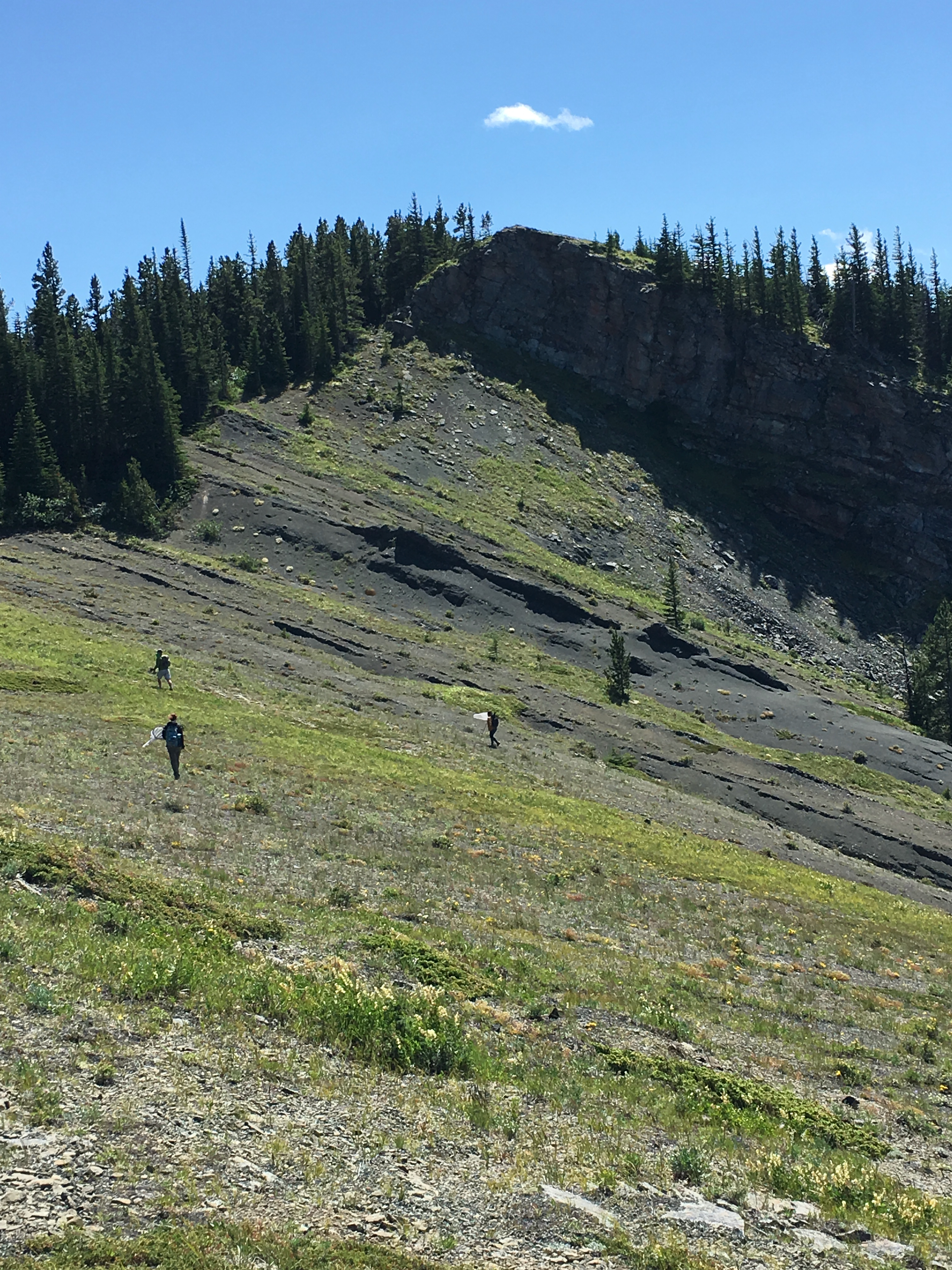
Dr. Nusha Keyghobadi is a Professor in the Department of Biology at Western University, specializing in population genetics, conservation biology, and landscape ecology. Her research examines how landscape modification and climate change impact genetic diversity and spatial structure of populations, with a focus on butterflies and other insects. She leads a lab investigating alpine ecosystems, endangered species reintroduction (e.g., mottled duskywing), and the genetic resilience of populations under extreme weather conditions. Dr. Keyghobadi teaches courses in molecular ecology and environmental biology, and collaborates globally on conservation genetics projects. Her lab includes current students Aaya Aboulnaga, Laura Bax, and Evan Bennett, among others. Education details are not explicitly stated, but her extensive research history indicates advanced training in ecology. Her work integrates field studies, molecular techniques, and spatial analysis to address applied conservation challenges. She has supervised over 30 students, many of whom have advanced to postdoctoral positions or professional roles in conservation, medicine, and policy. Her lab's current projects include: 1) studying Rocky Mountain Apollo butterflies to assess climate impacts on alpine populations; 2) monitoring genetic diversity in reintroduced mottled duskywing populations; and 3) exploring edge effects and dispersal in fragmented landscapes. Collaborations span institutions like the Carolinian Canada Coalition and the Queensland Institute of Medical Research. Lab alumni have pursued diverse careers, including conservation biology, medical research, and policy roles. Dr. Keyghobadi emphasizes interdisciplinary training and ethical scientific practice.
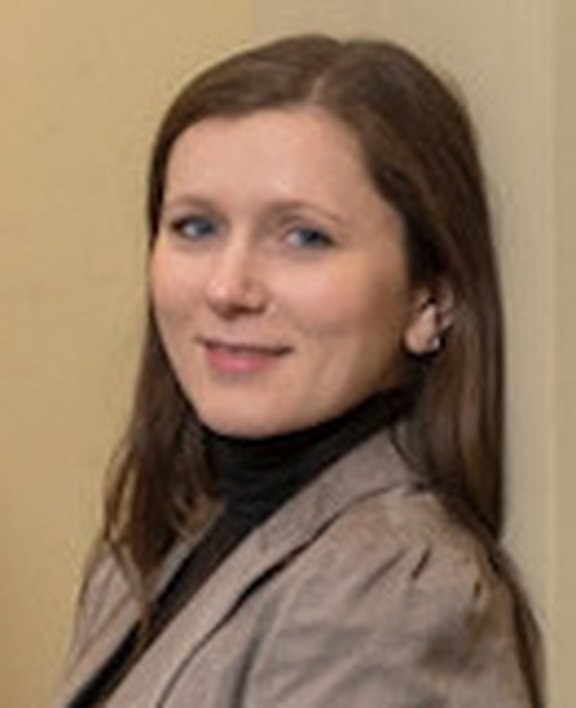
Nikolina Banمشاهده پروفایل
استادیار
Dr. Nikolina Ban is an Assistant Professor at the Department of Atmospheric and Cryospheric Sciences (ACINN) at the University of Innsbruck, Austria. Her research focuses on high-resolution climate modeling, convection-permitting models, and mountain climate dynamics. She leads projects such as 'Mountain Climate at the Kilometre-Scale Resolution' and collaborates with international teams like TEAMx-UIBK and the CORDEX-FPSCONV-Team. Key areas include extreme rainfall projections, hail/lightning diagnostics, and the impact of climate change on Alpine regions. Expertise: Regional climate modeling, convection-permitting approaches, mountain climate variability. Key Projects: Third Pole climate simulations, Alpine hydrological studies, and national climate scenario development in Austria. Her work addresses challenges in resolving fine-scale climate processes over complex terrains. Recent studies emphasize improving projections of precipitation extremes and understanding model uncertainties. Collaborations span institutions globally, including the Swiss Federal Institute of Technology (ETH Zurich) and the University of California, Los Angeles (UCLA). Publications highlight advancements in ensemble-based climate simulations and the added value of kilometer-scale models for capturing temperature and wind patterns in alpine regions. Ongoing research includes evaluating dynamical downscaling techniques for reliable regional climate change assessments.
Sinisa Krajnovic is a Professor of Computational Fluid Dynamics and Head of the Department of Mechanics and Maritime Sciences at Chalmers University of Technology. His research focuses on vehicle aerodynamics, bluff-body flows, and time-dependent numerical simulations, particularly in ground vehicle flows (trains, cars, buses) and high-speed train dynamics. He leads studies on flow control mechanisms, bi-stable wake phenomena, and turbulence modeling using advanced CFD techniques like LES and PANS. Recent work emphasizes active flow control optimization, snow-resistance performance of bogies, and aerodynamic interactions in platoons. His 247+ publications span topics including high-speed train aerodynamics, ship airflow control, and bluff-body wake dynamics. Collaborations involve experimental validation and industrial applications in rail and marine transportation.
Professor Markku Kulmala (University of Helsinki) is a leading expert in atmospheric and environmental physics. As Academician of Finland and double ERC Advanced Grant holder, he leads the Institute for Atmospheric and Earth System Research (INAR) and ACCC Flagship. With ~1200 publications and a WoS H-index of 124, his work focuses on atmospheric aerosols, climate interactions, and air quality. Academy of Finland grants (2004-2009, 2011-2015) ERC Advanced Grant (2×) ISI Highly Cited Researcher His research team has published 4 groundbreaking studies in Nature and Science , including: Aerosol formation mechanisms Aerosol-cloud-climate interactions Atmosphere-land surface relationships Climate-air quality feedbacks With over 20 PhD/Master's students supervised, recent work includes Arctic aerosol studies ( Elementa 2025), Beijing air quality analysis ( Nature Communications 2025), and climate modeling applications. He has received multiple international awards including the Fuchs Memorial Award and honors from Stockholm and Tartu universities.
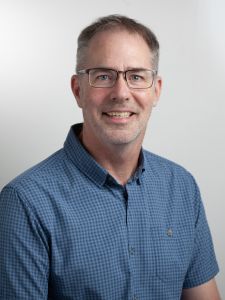
Mark Carey is a Professor in Environmental Studies and Geography at the University of Oregon , where he leads research at the Glacier Lab ( glacierlab.uoregon.edu ). His work bridges environmental history, glaciology, and climate justice, focusing on the intersections of glaciers, society, and climate change in the Andes and Arctic. Research Interests Environmental History Glaciology and Society Climate Change Adaptation Environmental Justice Latin American Environmental Policy Arctic and Andean Cryospheric Studies Mark Carey’s recent publications emphasize sociocryospheric systems, glacial lake outburst flood (GLOF) risks, and climate litigation. His interdisciplinary work combines historical analysis with contemporary climate science, highlighting vulnerabilities in mountain cryospheres and advocating for community-centered adaptation strategies. He has authored influential works like The Routledge Handbook of Environmental History (2023) and developed frameworks for analyzing climate justice in glacial regions. His Glacier Lab at the University of Oregon fosters collaborative research on global cryospheric changes, with a focus on Andean and Arctic regions. Carey’s career spans decades of CNH-funded research (2010) and leadership in integrating environmental history with climate policy, emphasizing the need for decolonized research methodologies and gender-inclusive adaptation strategies.
- Geomatics
- Environmental Science
- GIS Applications
- +۴ مورد دیگر
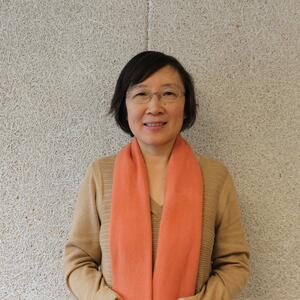
Dr. Dongmei Chen is a Professor in the Department of Geography and Planning at Queen's University, affiliated with the Faculty of Arts and Science. She holds cross appointments in the School of Environmental Studies and the Beaty Water Research Centre. Her research focuses on understanding human-environment interactions through GIS and remote sensing, with specialties in land use modeling, climate change impacts, and spatial data analysis. Education: PhD in Geography (2001, San Diego State University/UCSB); M.Sc. in GIS/Remote Sensing (Chinese Academy of Sciences); B.Sc. in Geography (Peking University). Pre-Queen's career included work as a GIS product specialist at ESRI. Research interests include geomatics, environmental science, and applying machine learning to remote sensing challenges. Recent work addresses flood susceptibility modeling, urban sprawl analysis, and spatial-temporal disease risk. Her interdisciplinary approach bridges geospatial technologies with environmental and social science. Active in research centers like LaGISA, she explores topics like air pollution monitoring and spatial data privacy. Grants and advising are integral to her role, though specific details are not detailed here. Collaborations span global contexts, including Brazil, Thailand, and China.

- Atmospheric Science
- Climate Change
- Cloud Physics
- +۳ مورد دیگر
Dr. Gregory V Cesana is an Associate Research Scientist at Columbia University's Center for Climate Systems Research (CCSR), affiliated with the Columbia Climate School. He holds a B.S. (2005) and M.Sc. (2007) in Atmosphere/Ocean/Soil Remote Sensing from the University of Toulon and a Ph.D. from Sorbonne Université (2013). His career includes postdoctoral work at Caltech/NASA JPL and current collaboration with NASA GISS to improve climate models using satellite data. Research focuses on cloud processes, radiative feedbacks, and model evaluation using A-train satellite observations (CALIPSO, CloudSat). Key interests include low-cloud feedbacks, cloud-phase transitions, and reducing climate uncertainty. Projects include applying satellite data to constrain climate model biases and developing observational frameworks for future missions. Education: University of Toulon (B.S./M.Sc.), Sorbonne Université (Ph.D.) Affiliations: Columbia CCSR, NASA GISS, and international collaborations Publications highlight advancements in cloud-radiation interactions, model evaluation techniques, and Arctic/Southern Ocean climate dynamics. Expertise spans remote sensing (lidar/radar), climate modeling, and satellite data integration.

- Fungal Biology
- Ecology
- Climate Change
- +۳ مورد دیگر
Kathryn M Jacobsok is a Professor in the Department of Biology at Grinnell College, with affiliations in Environmental Studies and the Global Development Studies (GDS) concentration. Her work bridges fungal biology with ecological responses to climate change and sustainable resource management in arid regions. Ph.D. in Biological Sciences (1992), Virginia Polytechnic Institute and State University Post-Doc (1993-1995), Desert Research Foundation of Namibia Her research focuses on fungal interactions with other organisms, particularly mycorrhizae, endophytes, plant pathogens, and litter saprophytes, examining their ecological roles and responses to climatic drivers like temperature and moisture. Current projects investigate physiological traits enabling saprophyte adaptation to non-rainfall moisture sources such as fog, dew, and snow in arid environments. Collaborative research in the Namib Desert (Namibia), Chihuahuan Desert (New Mexico), and Grinnell’s CERA field station Teaching includes BIO 150 (Climate Change Effects), BIO 252 (Evolution & Ecology), BIO 325 (Fungal Biology), and ENV 195 (Environmental Challenges) Jacobsok advises Biology majors and students in Grinnell’s Global Development Studies concentration. She also serves on the Advisory Board for the Center for Prairie Studies, contributing to local environmental and social sustainability initiatives.
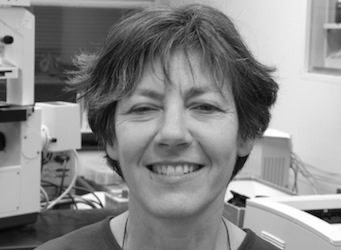
Connie Lovejoy is a Professor in the Department of Biology at Université Laval, Quebec, Canada, specializing in Arctic marine microbial ecology. Her research focuses on microbial biodiversity in polar environments, particularly planktonic microorganisms including phytoplankton, protists, archaea, and bacteria that drive global carbon and mineral cycling. She leads multiple research projects examining Arctic microbial communities and their responses to climate change. Dr. Lovejoy received her B.Sc. from the University of California Davis (1973-1976), followed by a Ph.D. in Oceanography from Université Laval (1998-2002), and completed a postdoctoral fellowship at Institut Ciènces del Mar, CSIC' CMIMA in Spain (2002-2004). Her research interests center on Arctic marine microbes and their ecological roles. She investigates questions regarding microbial abundance, genetic and metabolic diversity, and the factors determining growth and mortality in these organisms. Her work examines how these microorganisms function within changing Arctic ecosystems, particularly in relation to climate change impacts on microbial food webs and biogeochemical cycles. She has pioneered research on microbial communities in permafrost lakes, river-to-sea continua, and under-ice environments. Analysis of her recent publications (2022-2024) reveals consistent focus on Arctic microbial ecology across multiple dimensions: microbial community structure across environmental gradients, biogeochemical cycling in changing environments, evolutionary adaptations of polar microorganisms, and the use of molecular techniques to understand microbial diversity. Her work spans freshwater, brackish, and marine systems, with particular attention to the impacts of climate change on microbial communities and their ecosystem functions. Dr. Lovejoy has secured significant research funding through NSERC and ArcticNet grants, leading projects on Arctic microbial biodiversity, biogeography, and environmental selection. She has been instrumental in major research initiatives including the Canada First Research Excellence Fund Sentinel North project focusing on sentinel microbiomes for Arctic ecosystem health. Her laboratory at Université Laval collaborates extensively with international research teams across Canada, the United States, Europe, and participates in major Arctic research networks. She works closely with the Takuvik research unit, a joint Canada-France research laboratory focusing on Arctic studies.