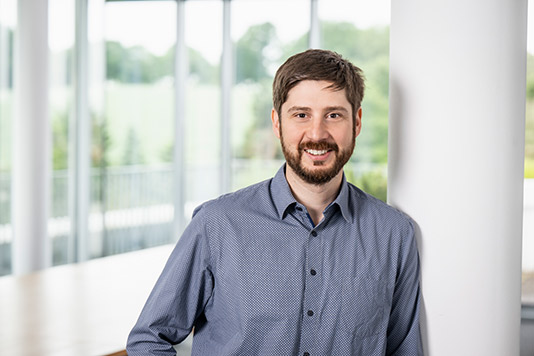
Gökhan İnceمشاهده پروفایل
دانشیار
Assoc. Prof. Dr. Gökhan İnce is a faculty member at Istanbul Technical University (ITU) in the Department of Computer Engineering, under the Computer and Informatics unit. He holds a PhD from Tokyo Institute of Technology and has held research positions at Honda Research Institute in both Japan and Germany. His academic and research profile is deeply rooted in artificial intelligence, human-computer interaction, robotics, and smart wearable technologies. PhD, Tokyo Institute of Technology, 2008–2011 MSc, Technische Universität Darmstadt, 2004–2007 BSc, Istanbul Technical University, 1999–2004 His research spans a wide range of topics including speech recognition, emotion recognition, brain-computer interfaces, e-textiles, fog computing, and IoT-based rehabilitation systems . He actively develops intelligent systems for real-world applications such as telerehabilitation, scoliosis monitoring, and AI-driven enterprise solutions. The recent publication trends show a strong focus on textile-based wearable sensors, multimodal emotion recognition, fog computing frameworks, and AI integration in business processes . His work combines hardware innovation with advanced machine learning, particularly in adversarial and transfer learning paradigms. Scientific Awards and Recognitions: Üstün Başarı Ödülü, YÖK, 2024 En Başarılı Tez Ödülü, ITU, 2024 Best Paper Award, IARIA, 2017 and 2016 Best Presentation Award, Signal Processing Applications Conference, 2016 Best Paper and Best Student Paper, IEA-AIE Conference, 2010 BİDEB Postdoctoral Research Fellowship, 2014 He has led and supervised 30 research projects and over 125 research outputs , including numerous peer-reviewed articles and conference contributions. He serves as Principal Investigator (PI) on multiple ongoing projects in AI, smart textiles, and data integration. He is also a member of professional organizations including IEEE, ISCA, and ISAI, and contributes to open science initiatives. His work is conducted through interdisciplinary teams focusing on smart textiles, robotics, AI systems, and biomedical applications . These teams bridge engineering, computer science, and healthcare to develop next-generation assistive and intelligent technologies.