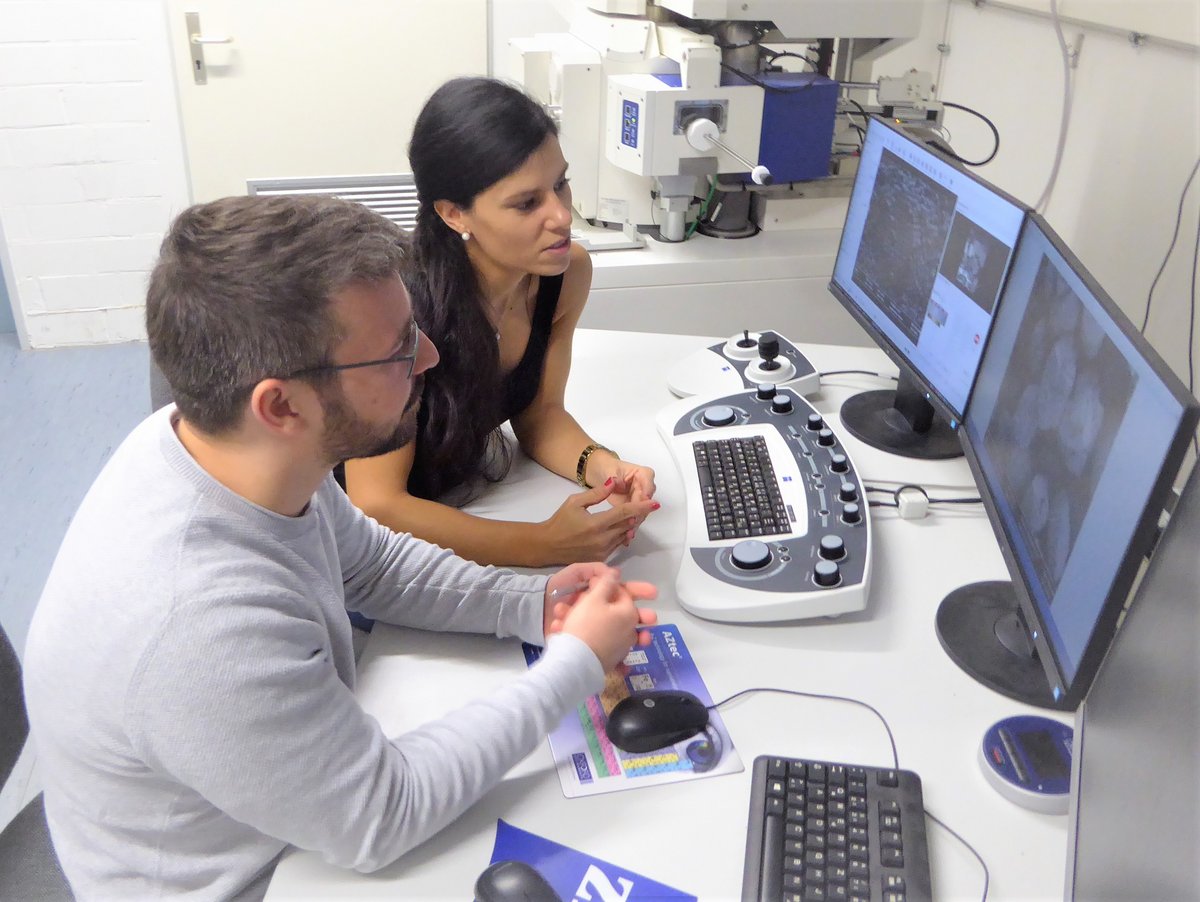
Dr. Cristina Ruiz Agudo is a researcher at the University of Konstanz , focusing on the fundamental understanding of crystallization processes and their applications in sustainable materials engineering. Her work challenges classical crystallization theories by investigating nonclassical pathways involving prenucleation species, amorphous intermediates, and nanoparticle-based aggregation mechanisms. Research Themes : Additive-controlled crystallization, mineral-water interactions, advanced material synthesis Techniques : Potentiometric titration, atomic force microscopy, analytical ultracentrifugation Her studies aim to enable novel synthesis strategies for industrial materials like cement, gypsum, and calcium phosphates, with applications in CO2 sequestration, biomedical engineering, and construction technologies. Research trends include: Nonclassical crystallization mechanisms Role of additives in controlling crystal polymorphism and morphology Development of bioinspired materials (e.g., coacervates, hydrogels) Environmental and industrial applications (e.g., salt damage prevention) Microstructure engineering for enhanced material properties Geochemical implications of mineralization processes Her group’s work bridges fundamental mineral physics with practical material design, emphasizing sustainability and functional performance.
Professor Joan Cordiner serves as Head of the School of Chemical, Materials and Biological Engineering at the University of Sheffield, a position she assumed in 2021 after joining the department as Professor of Process Engineering and External Engagement in 2020. With a distinguished career at Syngenta spanning global and senior management roles, she brings extensive expertise in leadership, process design, complex modeling, and industry-academia collaboration to her academic leadership. Her research focuses on revolutionizing process efficiency and safety through cutting-edge modeling technologies. The Cordiner Group develops innovative mechanistic and data-driven models to address critical challenges in predictive maintenance, mRNA vaccine production, decarbonization strategies, hydrogen safety, and process resilience. Their work bridges academia and industry, exemplified by the spin-out company Kausalyze which transforms research into practical predictive maintenance solutions for manufacturers. Professor Cordiner's publications reveal a strategic research evolution toward integrating artificial intelligence with chemical engineering fundamentals to solve emerging industrial challenges. Recent work demonstrates increasing focus on hydrogen safety infrastructure, mRNA production technologies, and resilience assessment methodologies - all critical areas for the global transition to net-zero industrial processes. Her exceptional contributions have earned recognition through prestigious fellowships: Fellow of the Royal Academy of Engineering (FREng) Fellow of the Royal Society of Edinburgh (FRSE) Fellow of the Institute of Chemical Engineers (FIChemE) Fellow of the American Institute of Chemical Engineers (FAIChE) Chartered Engineer (CEng) Professor Cordiner has secured substantial research funding including current grants from Wellcome Leap for RNA production technology and EPSRC for sustainable microwave manufacturing. She actively serves on influential committees including the Royal Academy Policy committee and National Engineering Policy Centre, where she shapes national engineering policy. Her group maintains strategic partnerships with the UK HyRES Hub for Hydrogen research, the Vax Hub for vaccine development, and critical materials initiatives supporting net-zero technologies. The Cordiner Group operates at the vital intersection of academia and industry, with their 'Breaking down barriers' initiative featured in Nature highlighting their commitment to strengthening collaborative research models. Their work directly addresses industrial challenges while advancing fundamental engineering knowledge, creating a powerful feedback loop between theoretical innovation and practical application.
Dr Bin Chen serves as a Research Associate in Manufacturing Data Analytics at the School of Electrical and Electronic Engineering, University of Sheffield, focusing on data-driven solutions for industrial systems and processes. His core research domains include: Manufacturing Data Analytics Industrial Engineering Data Science applications in production systems Smart Manufacturing technologies Electrical Engineering integration for industrial automation No scientific awards or honors were documented in the provided materials. The available information contains no references to student supervision, research grants, or laboratory affiliations.
Kemafor Anyanwu Ogan serves as Associate Professor in the Department of Computer Science at North Carolina State University's College of Engineering, where he directs the Semantic Computing Lab. His research bridges theoretical foundations with practical applications in data-intensive systems, supported by continuous funding from major agencies since 2012. His educational foundation includes: Ph.D. in Big Data and Knowledge Management, Semantic Web, and Internet of Things from the University of Georgia (2007) Dr. Ogan's research program centers on scalable semantic technologies, with evolving focus from foundational Semantic Web and knowledge graph processing (2014-2019) to blockchain-integrated systems (2021-2024). His work develops novel frameworks for RDF query optimization, knowledge graph analytics, and blockchain transaction primitives that address critical challenges in distributed data management. Current efforts emphasize agricultural supply chain transparency and smart manufacturing applications. Publication trends reveal strategic progression from MapReduce-based RDF processing to blockchain-enhanced architectures, reflecting adaptation to emerging computational paradigms while maintaining core expertise in semantic data management. Recent work demonstrates increasing industry relevance through manufacturing and agricultural applications. His scientific recognition includes: Three IBM Faculty Awards (2008, 2009, 2016) Best Paper Award at JIST 2012 Best Student Paper Award Nominee at ISWC 2014 Dr. Ogan has secured $2.3M+ in competitive funding across 10 major grants, with current projects focused on blockchain for agricultural resilience (USDA), declarative blockchain transactions (Cisco), and crop productivity analytics (GRIP4PSI). His Semantic Computing Lab actively collaborates with RENCI, IBM, and agricultural industry partners to translate research into real-world impact, particularly in food supply chain optimization and smart contract reliability. The Semantic Computing Lab drives innovation through NSF-funded projects like SmartChainDB and SERPENT, developing semantically-enhanced blockchain platforms that enable trustless smart marketplaces while addressing critical performance limitations in existing systems.
Ahmed Nait Chabane is a Professor and teacher-researcher at CESI Engineering School in Saint-Nazaire, France, where he serves as the educational manager of the first year of the integrated preparatory cycle. His academic home is within the School of Engineering, specifically focusing on Electronics and Signal Processing. Education: Doctor of Signal and Image Processing from UBO Brest / ENSTA Bretagne (2013), Thesis: "Grazing-invariant segmentation of side-scan sonar images using a competitive neural approach" Specialized Master's degree in Image Processing and Geographic Information Systems from USTHB University, Algiers, and Télécom Bretagne (2009) Electronics Engineer from University of Bejaia (2007) Professor Nait Chabane's research spans multiple domains including acoustic signal and image processing, machine learning algorithms, decision systems, and Industry 4.0/5.0 applications. His early work (2010-2015) focused on acoustic signal processing and classification algorithms, while his current research (2017-present) emphasizes decision algorithms, heterogeneous data analysis, knowledge extraction, and human-robot collaboration systems. His work bridges theoretical research with industrial applications, particularly in aerospace and manufacturing sectors. His publication record shows a clear evolution from sonar image processing toward broader applications of machine learning in industrial settings, with recent work heavily focused on human-robot collaboration, Industry 4.0 applications, and optimization algorithms for manufacturing processes. The research demonstrates increasing interdisciplinary collaboration with industry partners through CIFRE theses. Professor Nait Chabane actively supervises multiple PhD students through CIFRE partnerships with industry, including Guillaume Morin-Duponchelle (completed), Pierre Hemono, and Houssein Olleik (ongoing). His teaching portfolio includes Electronics, Electricity, Signal and Image Processing, Artificial Learning, Statistics, and Operational Research. His Engineering and Digital Tools Research Team focuses on practical applications of advanced algorithms in industrial contexts, with particular emphasis on solving real-world constraints in confined environments, resource optimization, and human-robot interaction challenges.
Rosen Iliyanov Kolev is a Senior Lecturer at the Department of Finances and Accounting within the Faculty of Economics at St. Cyril and St. Methodius University of Veliko Tarnovo. His academic work focuses on contemporary accounting challenges, particularly in the areas of management accounting, cost systems, and environmental accounting. With a PhD credential, he contributes significantly to the academic community through his research publications and teaching activities in the Bulgarian higher education landscape. Dr. Kolev's research interests span multiple critical areas in modern accounting practice. His work explores the integration of environmental standards into accounting policies, the evolution of management accounting in the context of Industry 4.0, and innovative approaches to cost calculation in complex business environments. He has particularly focused on strategic management accounting, circular economy business models, and the adaptation of accounting practices to multiple crises. His research demonstrates a strong connection between theoretical accounting frameworks and practical business applications, especially in the energy sector and industrial enterprises. Analysis of Dr. Kolev's publication record from 2018-2024 reveals a clear trajectory toward increasingly sophisticated accounting systems that address modern business challenges. His work shows growing emphasis on digital transformation in accounting, sustainability reporting, and the integration of environmental considerations into financial management. The trend indicates his research is evolving to address the intersection of traditional accounting practices with emerging technological and environmental demands, particularly focusing on Industry 4.0 applications and circular economy principles in cost management systems.
Wilson Q. Wang is a Professor at Lakehead University's Department of Mechanical and Mechatronics Engineering, where he serves as Lakehead Research Chair, Director of Mechatronics Engineering, and PhD Graduate Program Coordinator. He founded and directs both the Intelligent Mechatronics Systems Lab and Electric Vehicle Lab, supported by CFI/ORF grants. With cross-appointment in Electrical and Computer Engineering, he maintains an adjunct professorship at the University of Waterloo. PhD, Mechatronics Engineering, University of Waterloo MEng, Industrial Engineering, University of Toronto MSc, Mechanical Engineering, Northeastern University, China BASc, Electro-mechanical Engineering, SIT, China Dr. Wang's research focuses on the intersection of artificial intelligence and mechanical systems, specializing in signal processing techniques for condition monitoring, fault diagnosis, and prognostics. His work develops intelligent control systems that enhance machinery reliability through early fault detection and predictive maintenance strategies. The research spans both theoretical development of novel algorithms and practical implementation in industrial settings, with particular emphasis on mechatronic systems and electric vehicles. His publication record demonstrates consistent contributions to high-impact journals including IEEE Transactions on Fuzzy Systems, IEEE Transactions on Instrumentation and Measurement, and IEEE/ASME Transactions on Mechatronics. The work shows an evolving trajectory from fundamental signal processing techniques toward increasingly sophisticated AI-driven prognostic systems, with growing emphasis on real-time implementation and industrial applications. CFI John Evens Leaders Grant Award (2022) Excellent Teaching Award, Lakehead University (2018) Distinguished Researcher Award, Lakehead University (2017) NSERC DG Accelerator Grant Award (2016) Innovation Award, Lakehead University (2015) Dr. Wang has supervised an extensive research team including 9 postdoctoral fellows, 15 PhD students, and nearly 40 MSc students. His research has been supported by multiple NSERC grants (DG, AG, CRD, DAS, EG, IG), CFI (JELF, NOF), ORF, and industry partners including Bombardier Transportation, Siemens Mahon Electric, and Techform Group. He serves as Associate Editor for several prestigious journals including IEEE/ASME Transactions on Mechatronics and IEEE Transactions on Instrumentation and Measurement. He directs two specialized research facilities: the Lab for Intelligent Mechatronic Systems (LIMS) and the Lab for Electric Vehicles (LEV), which support his team's work on smart sensors, fault diagnosis systems, and intelligent control applications across various mechanical and electromechanical systems.
Professor Konstantinos Salonitis is a Professor of Manufacturing Systems and Head of the Sustainable Manufacturing Systems Centre at Cranfield University. He holds multiple professional qualifications including Chartered Engineer, Fellow of IMechE, Fellow of IET, and Fellow of the Higher Education Academy. With extensive experience in sustainable manufacturing research and education, he has secured over £8 million in research funding and currently leads major projects including the MASTER ATI project with a budget of £15.9 million. Professor Salonitis earned his Diploma in Mechanical Engineering from the University of Patras in 2001, followed by a PhD in Manufacturing Processes in 2006. He further enhanced his qualifications with an MBA, a Master's in Education (Adult learning), and a PGCAP. He joined Cranfield University in 2012 as a Lecturer in Manufacturing Systems, progressing to Senior Lecturer in 2015, Reader in 2017, and Professor in 2019. His research focuses on sustainable manufacturing systems, with particular emphasis on energy efficiency, environmental impact assessment, and the integration of lean and green approaches. Professor Salonitis has developed innovative frameworks for sustainability assessment in manufacturing, including carbon accounting tools and life cycle assessment methodologies. His work bridges theoretical research with practical industrial applications, addressing critical challenges in foundation industries such as cement, steel, and aerospace manufacturing. Analysis of Professor Salonitis's recent publications reveals a strong focus on circular economy implementation, digital technologies for sustainability, and energy efficiency in manufacturing processes. His research increasingly integrates blockchain, AI, and digital twin technologies with traditional manufacturing systems to enable more sustainable production. There's a notable geographic dimension to his work, with significant collaborations focusing on sustainability practices in Saudi Arabia and other Middle Eastern countries. Chartered Engineer Fellow of the Institution of Mechanical Engineers (FIMechE) Fellow of the Institution of Engineering and Technology (FIET) Fellow of the Higher Education Academy (FHEA) Chair of the Manufacturing Industries Division at IMechE Professor Salonitis has supervised more than 120 PhD and MSc students to completion and currently mentors 8 PhD candidates. His research has been supported by significant funding from diverse sources including European Commission programs (FP5-FP7, Horizon 2020), EPSRC, Innovate UK, and industrial partners such as GKN, BAE Systems, Rolls-Royce, and Airbus. With over £8 million secured in research funding over the past decade, his work has substantial industrial impact, particularly in the aerospace and foundation industries sectors. As Head of the Sustainable Manufacturing Systems Centre, Professor Salonitis leads a multidisciplinary team focused on developing innovative solutions for sustainable manufacturing. The Centre works closely with industrial partners to translate research into practical applications, with particular expertise in energy efficiency assessment, carbon footprint reduction, and circular economy implementation. The Centre also plays a key role in Cranfield's international collaborations, especially with Chinese institutions through the UK-Jiangsu World Class University Consortium.
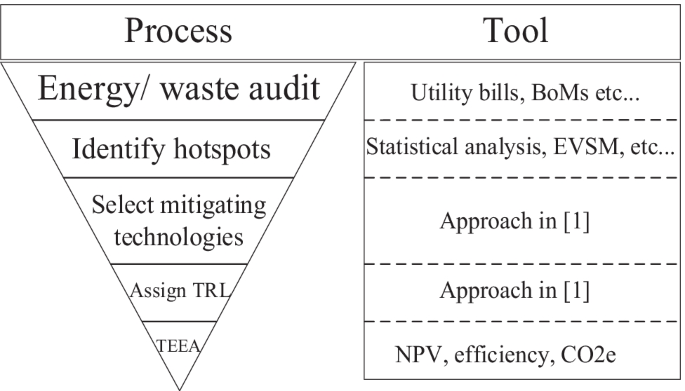
Dr. Yousef Haddad is a Research Fellow in Sustainability Assessment of Metallic Aerospace Structures at the Sustainable Manufacturing Systems Centre , part of the School of Aerospace, Transport and Manufacturing at Cranfield University . He holds a PhD from Cranfield, an MSc from Brunel University London, and a BSc from Yarmouk University. Research Focus: Design, modeling, and sustainability of manufacturing systems, with emphasis on mathematical programming, discrete-event simulation, and life cycle assessment. Current Projects: Lead researcher on an ATI-funded initiative evaluating sustainability in aerospace manufacturing, focusing on waste heat recovery and energy-efficient electric motors. Publications: Extensive contributions to journals like Procedia CIRP and International Journal of Computer Integrated Manufacturing , covering topics from low-carbon aerospace production to carbon accounting frameworks. Student Supervision: Mentored 15 MSc theses and 6 group projects in sustainable manufacturing and systems modeling. His methodological work includes techno-environmental-economic analysis (TEEA) frameworks for net-zero transitions, with sensitivity studies on organic Rankine cycles and electric motor efficiency upgrades. He employs modeling tools like CoolProp for thermodynamic analysis and applies optimization techniques (integer programming, stochastic models) to industrial challenges.
Dr. Jelena Milisavljevic Syed is a Senior Lecturer in Manufacturing Systems at Cranfield University's Sustainable Manufacturing Systems Centre, with expertise spanning mechanical, control, and industrial engineering. Her academic journey includes positions at the University of Liverpool where she served as Lecturer in Industrial Design and Director of the Systems Realization Laboratory. Her educational background is impressive and diverse: PhD in Mechanical Engineering (Dynamic Management of Networked Engineered Manufacturing Systems) from University of Oklahoma MS in Mechanical Engineering (Uncertainty Management in Realization of Complex Manufacturing Systems) from University of Oklahoma MEng in Mechanical Engineering (Elastohydrodynamics Lubrication in Machines) from University of Nis, Serbia Diploma in Mechanical Technician for Computer-Aided Design from College of Mechanical Engineering Dr. Milisavljevic Syed's research focuses on integrating design thinking, strategy, and innovation management to realize cyber-physical product-service systems that adapt to dynamic market changes, supporting further digitalization in smart manufacturing. Her work bridges theoretical frameworks with practical industrial applications, particularly through her development of Design for Dynamic Management (DFDM) methodology. Analysis of her recent publications reveals a strong emphasis on sustainable manufacturing, digital transformation, and AI applications in supply chain management. Her work increasingly focuses on Industry 5.0 concepts, digital twins, and circular economy principles, reflecting the evolving landscape of modern manufacturing systems. The interdisciplinary nature of her research spans engineering, computer science, and sustainability domains. She maintains active professional memberships in several prestigious organizations: American Society of Mechanical Engineers (ASME) American Society for Engineering Education (ASEE) British Fluid Power Association (BFWG) Institution of Engineering and Technology (MIET) Institute of Electrical and Electronics Engineers (IEEE) Design Society Dr. Milisavljevic Syed currently supervises multiple PhD students working on cutting-edge research topics including AI-supported design for dynamic management, quality assurance frameworks for digital twins, and sustainable supply chain strategies. Her research addresses critical challenges in modern manufacturing, particularly focusing on how to adapt existing manufacturing systems to rapidly changing demand while maintaining sustainable production practices. She leads the Systems Realization Laboratory, which focuses on developing practical solutions for industry challenges through interdisciplinary collaboration between engineers, data scientists, and industry partners.
Tibor Csizmadia is a Full Professor at the University of Pannonia , specializing in Quality Assurance, Strategic Management, and Research Methodology. He currently serves as Vice-dean for Quality Assurance and Accreditation Affairs at the university. His work bridges academic leadership with practical applications in organizational development. PhD in Quality Management (University of Twente, 2006) MSc in Technical Management (University of Pannonia, 1999) Dr. Csizmadia's research focuses on quality management systems in higher education, strategic decision-making , and methodological approaches to organizational research. He explores the intersection of digital transformation and human resource management, particularly in SME contexts. Recent publications analyze Industry 4.0 implementation in SMEs, EU R&D funding mechanisms , and organizational happiness metrics in academic institutions. His work combines quantitative and qualitative methodologies to address real-world business challenges. As an IT Mentor and Cluster Manager, he has led initiatives such as the Innovation and Knowledge Transfer Office at the University of Kaposvár (2009-2012) and IPA cross-border cooperation projects. He currently offers consultation hours on Mondays (13:00-14:00) by prior arrangement.
Michal Stričík is an Associate Professor at the Department of Commercial Entrepreneurship within the Faculty of Commercial Entrepreneurship at the University of Economics in Bratislava. He serves as a study advisor for the second-degree program in Corporate Financial Management (CFM-Michalovce) and teaches courses including Environmental Economics, Green Marketing, Hospitality Management, and Regional Development. Research Interests : Business economics, waste management, sustainable development, environmental economics, and regional development, with a focus on municipal waste policy, citizen behavior, industrial energy efficiency, and food safety. Publications span topics such as sustainable waste systems, consumer behavior analytics, and antimicrobial food preservation. His work integrates environmental economics with practical applications in business and regional planning. Scientific projects include grants like VEGA 1/0450/24 and KEGA 035EU-4/2022 , emphasizing policy adaptation and post-pandemic sustainability challenges. No formal awards are listed in the provided text.
Dr Jason X. Wang serves as Lecturer in Sustainable Supply Chain Management within the Operations Management and Decision Sciences department at the University of Sheffield's Management School. Previously holding the position of MBA Programme Leader and Senior Lecturer at the University of Huddersfield, his academic focus centers on sustainable operations and supply chain innovation. His research program investigates sustainable and circular supply chain management through two primary lenses: customer-driven sustainability practices integrating carbon neutrality and circular product design, and blockchain technology applications enhancing supply chain transparency and resilience. This work extends to sustainability innovation in construction through prefabricated systems, addressing sector-specific challenges in environmental performance optimization. Analysis of his 15 most recent publications (2017-2025) reveals consistent emphasis on sustainability measurement, with significant application of event study methodology to quantify market reactions to environmental initiatives. Recent work increasingly employs advanced analytical techniques like fuzzy DEMATEL for barrier analysis, while maintaining strong focus on blockchain implementation challenges and decarbonization strategies across multiple industries. Dr Wang actively supervises PhD candidates in quantitative blockchain applications for sustainable supply chains and supply chain finance. His current research funding includes: £16,000 grant from The Productivity Institute investigating SME decision-making in technology-driven logistics productivity ESRC/The Productivity Institute project on strategic productivity for business leadership teams He contributes to the academic community as Editorial Review Board member for Journal of Supply Chain Management and IEEE Transactions on Engineering Management, while serving as Guest Editor for Transportation Research Part E and Senior Editor for Cogent Business & Management. Dr Wang is an active member of the Supply Chain, Operations and Logistics Applied Research Centre, where he develops industry collaborations including vehicle recovery services in New Zealand and UK motorsport sector sustainability initiatives.
Prof. Santosh K. Misra is an Associate Professor at the Department of Biological Sciences and Bioengineering of the Indian Institute of Technology Kanpur . His research focuses on biomedical materials and devices for human sustainability , particularly in nanotechnology applications for crop protection , cancer therapy , and drug delivery . He leads the BioMeDHs Lab , which develops biodegradable nanoparticles and smart biomaterials for translatable medical solutions . Research Themes include: Nanoparticle-based diagnostics (e.g., portable eye injury sensors , cortisol detection chips ) Cancer-targeted therapies (e.g., STAT-3 modulators , photo-thermal DNA degradation ) Environmental remediation (e.g., oil spill cleanup , pharmaceutical contaminant filters ) Publication Trends highlight innovations in carbon nanomaterials for therapeutic delivery , antibacterial agents , and regenerative medicine . His work spans 2014–2025 with recent emphasis on 3D-printed stents , smart hydrogels , and transdermal melanoma treatments . Contact Information : Email: skmisra@iitk.ac.in Phone: +91 512-259-4013 (office) Fax: +91 512-259-4010
Saeid Lotfian is a Teaching Fellow at the Department of Naval Architecture, Ocean and Marine Engineering within the University of Strathclyde . His research focuses on Marine Energy Systems , Structural Integrity , and Advanced Materials for renewable energy applications. He actively contributes to projects funded by the Engineering and Physical Sciences Research Council (EPSRC) and collaborates with researchers in Ultrasonics , Composite Materials , and Wave Energy Converters . Research Domains : Marine Energy, Structural Mechanics, Material Science, Sustainable Engineering Tools : Computational Modeling, Experimental Testing, Ultrasonic Inspection His work addresses critical challenges in Tidal Turbine Blade Durability , Erosion Modeling , and Offshore Wind Maintenance , with recent publications in Engineering Failure Analysis and Journal of Marine Science and Engineering . Lotfian participates in international collaborations and contributes to conferences on Net-Zero Technologies and Offshore Structural Integrity .