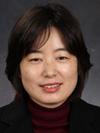
Lei Lei is an Associate Professor at the University of Guelph, specializing in Computer Engineering. Her research focuses on Machine Learning/Deep Reinforcement Learning, Internet of Things (IoT)/Internet of Vehicles (IoV), Mobile Edge Computing, and Smart Grid Optimization. She explores cutting-edge applications in energy-efficient systems, autonomous vehicles, and intelligent transportation networks. Her work integrates advanced AI techniques with real-world challenges in communication and control systems. Key research areas include optimizing electric vehicle charging schedules using hierarchical deep reinforcement learning and enhancing vehicular networks through 6G communication protocols. She has pioneered methods for joint communication-control systems, securing federated learning models, and developing robust resource allocation strategies in IoT and edge computing environments. Lei Lei’s publications emphasize interdisciplinary solutions, bridging computer science, electrical engineering, and transportation systems. Her recent work addresses challenges in smart grid security, multitimescale control systems, and the application of AI tools like ChatGPT in connected vehicles. She is affiliated with the AI Affiliated Faculty at the University of Guelph, reflecting her contributions to artificial intelligence research.
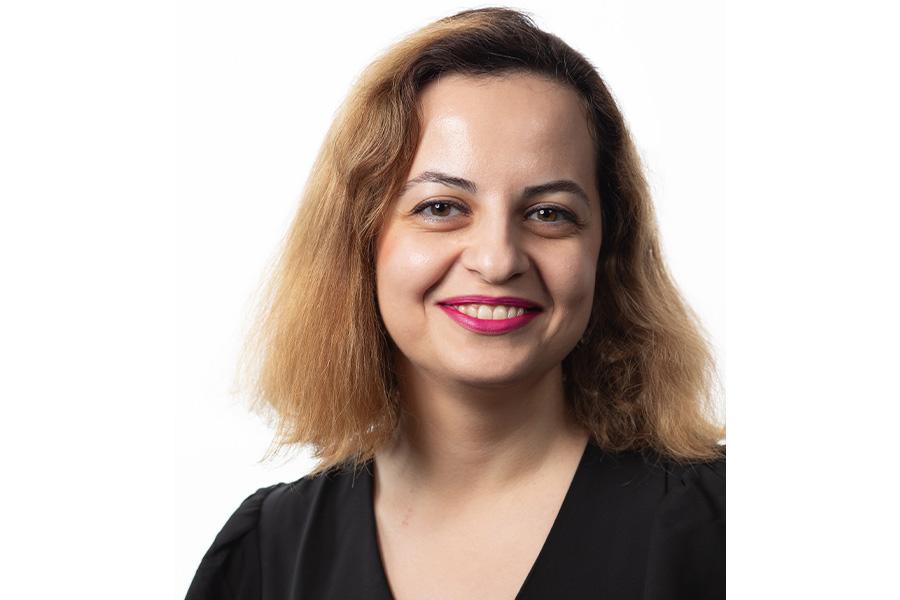
Sadaf Salehkalaibar is an Assistant Professor in the Department of Computer Science at the University of Manitoba, Winnipeg, Canada. She holds an office in the EITC building (E2-416) and has previously held academic positions at the University of Tehran, University of Toronto as a research associate, and visiting roles at McMaster University, Telecom Paristech, and National University of Singapore. Her research focuses on explainable artificial intelligence, generative models, and information theory with an emphasis on rate-distortion-perception tradeoffs in video and image processing. Her educational background includes teaching courses such as Signals and Systems, Digital Signal Processing, and Network Security at the University of Tehran. She currently teaches COMP4190 (Artificial Intelligence) at the University of Manitoba. Research interests revolve around developing efficient algorithms for AI systems, with key contributions in learned video compression, federated learning, and privacy-preserving techniques. Notable work includes the M22 algorithm for communication-efficient federated learning and the NSERC Discovery Grant-funded project on data-driven learning efficiency. Recent publications highlight advancements in perception loss functions, Gaussian vector source analysis, and secure distributed hypothesis testing. She actively serves on editorial boards (e.g., IEEE Transactions on Communications) and conferences (ISIT, ITW). Awards include the prestigious NSERC Discovery Grant (2025). Supervision highlights 13 MSc students at the University of Tehran, focusing on topics like privacy-preserving systems and distributed learning. Labs/teams: Leads research group at University of Manitoba focusing on AI and information theory applications in multimedia systems.
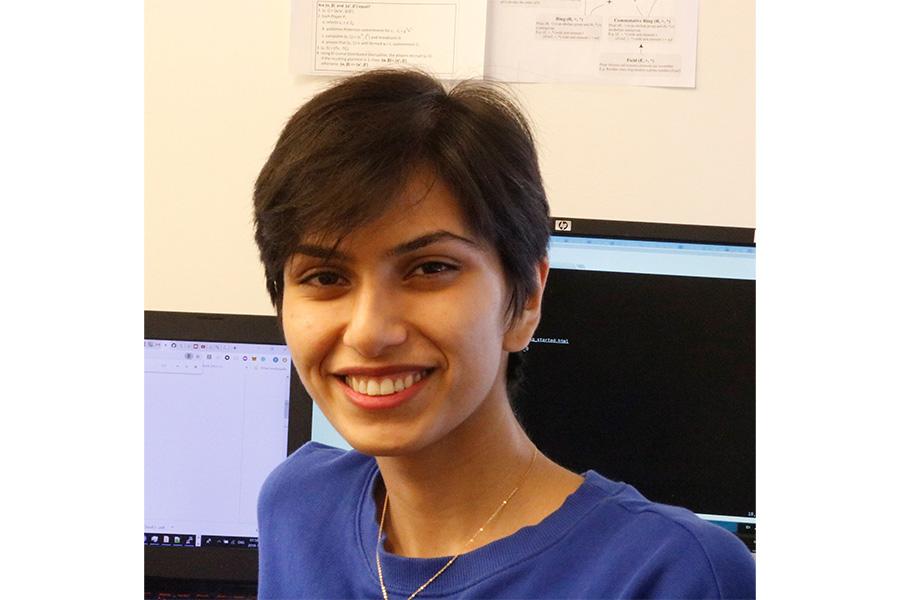
Deepa Kundur is the Professor & Chair of The Edward S. Rogers Sr. Department of Electrical & Computer Engineering at the University of Toronto. She earned her BASc, MASc, and PhD in Electrical and Computer Engineering from the same institution in 1993, 1995, and 1999, respectively. Current roles: IEEE Spectrum Advisory Board Conference leadership: General Chair of 2018 GlobalSIP Symposium, TPC Co-Chair for IEEE SmartGridComm 2018, among others Her research focuses on cybersecurity , signal processing , and complex dynamical networks , particularly in smart grid applications. She has authored over 200 publications and pioneered techniques for detecting false data injection attacks, enhancing grid resilience, and integrating machine learning into power systems. Her recent work spans quantum learning for grid security , LLM-based mental health prediction , and resilient control systems . She has received 14 best paper recognitions, including IEEE SmartGridComm (2015) and IEEE INFOCOM Workshop (2008). Fellowships: IEEE Fellow (2015), Canadian Academy of Engineering Fellow (2016), Massey College Senior Fellow (2019) Teaching awards: Tenneco Meritorious Teaching Award (2005), Gordon Slemon Teaching of Design Award (2002) Early career honors: NSERC Scholarships (PGS A/B), Canada Scholarship She leads the Kundur Research Group , developing models for cyber-physical systems in smart grids and autonomous vehicle networks. Her team explores reinforcement learning for grid defense , transmissibility-based fault detection , and privacy-preserving smart grid analytics .
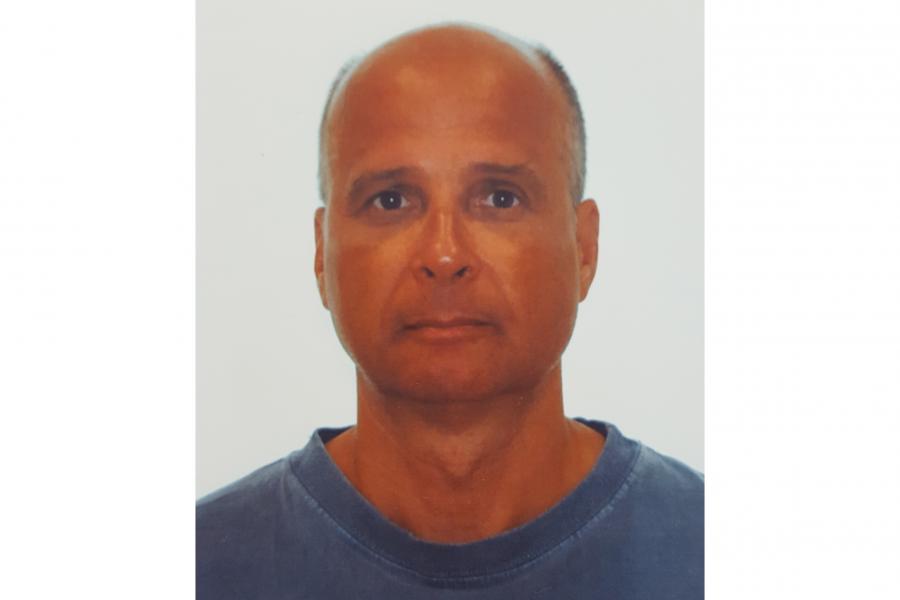
Dr. Ken Ferens is an Assistant Professor in the Department of Electrical and Computer Engineering at the Price Faculty of Engineering, University of Manitoba. He serves as the Computer Engineering Champion in the Centre for Engineering Professional Practice and Engineering Education and directs the Applied Cognitive Intelligence (ACI) Research Group. Dr. Ferens is a senior member of the Institute of Electrical & Electronics Engineers (IEEE), Chair of the EduManCom Chapter of the IEEE, Vice-Chair of the Computer and Computational Intelligence Chapter of the IEEE, and Chair of the Industry, Teaching Assistants, and Student Forums for Engineering Curriculum Review and Improvement. Ph.D. (Computer Engineering), University of Manitoba, 1996 M.Sc. (Computer Engineering), University of Manitoba, 1991 B.Sc. (Electrical Engineering), University of Manitoba, 1989 Dr. Ferens has over 33 years of research experience in computational intelligence, focusing on cognitive machine learning, artificial intelligence, cognitive computational intelligence, chaos theory applications, agent-based models, and various optimization algorithms including simulated annealing, genetic algorithms, artificial neural networks, and particle swarm optimization. His research applies these techniques to develop software and hardware intrusion detection systems for cybersecurity applications. He teaches graduate-level courses on Computer Network Security and Applied Computational Intelligence, providing students with theoretical background and hands-on experience in state-of-the-art security methods. Analysis of Dr. Ferens' recent publications reveals a strong focus on applying cognitive and chaotic computational techniques to cybersecurity challenges, particularly malware detection and network intrusion detection. His work increasingly integrates complexity theory, fractal analysis, and hybrid optimization approaches to enhance security systems' effectiveness. There's a clear progression toward more sophisticated machine learning architectures applied to increasingly complex security scenarios, with growing emphasis on real-world IoT and network security applications. Best Paper Award at IEEE International Conference on Cognitive Informatics and Cognitive Computing (ICCI*CC 2022) Best Paper Award at IEEE International Conference on Cognitive Informatics and Cognitive Computing (ICCI*CC 2015) Best Journal Paper Award for 2013 (Journal of ICT Research and Applications) Best Poster Award at 12th International Conference on e-Health Networking, Application & Services (2010) Best Paper Award at IASTED International Conference on Computer, Electronics, Control, and Communication (1991) Dr. Ferens collaborates with national and international industry partners including the Department of Advanced Information Management, Content Technology Canadian Tire Corporation (CTC), and Magellan Aerospace. His research group has received funding supporting the Cyber-security Research Program, developing practical applications of computational intelligence for security systems. He has supervised numerous graduate students in the Electrical and Computer Engineering department, focusing on research at the intersection of machine learning and cybersecurity. Dr. Ferens leads the Applied Cognitive Intelligence (ACI) Research Group within the Department of Electrical and Computer Engineering, which focuses on applying cognitive, chaotic, and computationally intelligent algorithms to build intrusion detection systems. The group collaborates with industry partners to develop practical security solutions while providing students with hands-on research experience in cutting-edge security technologies. Their work spans both theoretical algorithm development and practical hardware implementation for real-world security applications.
Dr. Mohammadreza Arani is an Assistant Professor and Canada Research Chair (CRC) in Smart Grid Cyber-Physical Security at Toronto Metropolitan University's Department of Electrical, Computer, and Biomedical Engineering. He joined the university in 2019, bringing expertise in renewable energy, microgrids, and cybersecurity. His research focuses on enhancing smart grid stability, renewable integration, and cyber-physical security. Education: BSc: Sharif University of Technology (2009) MASc: University of Waterloo (2012) PhD: University of Alberta (2017) Research Interests: Arani specializes in cyber-physical security of smart grids, microgrid dynamics, renewable energy systems, and power system stability. His work bridges urban infrastructure needs and advanced energy technologies, emphasizing practical solutions for modern grid challenges. Awards: NSERC Postdoctoral Fellowship (2017–2019) Alberta Innovates Technology Future Student Scholarship (2014–2017) Advising & Collaboration: Arani views graduate students as future colleagues, fostering independent research and collaboration. He emphasizes interdisciplinary approaches and industry-academia partnerships, leveraging Toronto's urban environment for applied research. Labs & Teams: While no specific lab is named, his research benefits from Toronto Metropolitan's facilities and collaboration networks in power systems and cybersecurity.
Azadeh Tabiban is an Assistant Professor in the Department of Computer Science at the University of Manitoba, leading the FOCUS research lab. She specializes in cybersecurity with a focus on cloud/edge security, network security, and applying machine learning to security challenges. Her work emphasizes practical solutions for real-world systems, including provenance analysis, forensics, and securing smart grids and 5G networks. Education: PhD from Concordia University (supervised by Prof. Lingyu Wang and Prof. Makan Pourzandi), followed by a postdoctoral fellowship at the University of Waterloo collaborating with Ericsson Montreal. Previously involved in the NSERC/Ericsson IRC in SDN/NFV Security Project. Research Interests: Building scalable security technologies for transparency and trustworthiness in computing systems. Key areas include provenance systems, cloud/NFV security, smart grid cybersecurity, and AI-driven security solutions. Recent projects include URGP-funded work on AI-based intrusion detection and NCC-supported 5G security collaborations with Ericsson and other universities. Awards and Grants: NSERC Discovery Grant (2024), University Research Grants Program (URGP) (2025), National Cybersecurity Consortium (NCC) Grant (2023), and Best Paper Candidate at CNS'20. Active in securing industrial partnerships and government-funded initiatives. Advising and Training: Supervises PhD and MSc students in system security and machine learning applications. Offers funded positions prioritizing underrepresented groups. Mentors undergraduate students interested in programming and practical cybersecurity solutions. Labs/Teams: Leads the FOCUS lab focused on foundational and operational cybersecurity research. Collaborates with industry partners like Ericsson and academic institutions including Waterloo and Concordia.
Amir Asif is a Professor at the Lassonde School of Engineering, York University, and concurrently serves as Vice President, Research and Innovation. His academic leadership roles include Dean of the Gina Cody School of Engineering and Computer Science at Concordia University (2014-2020). He specializes in signal processing, communications, and their applications in healthcare, power grids, and distributed systems. Asif holds a PhD from Carnegie Mellon University and a Harvard certification in executive leadership. Education: PhD, Electrical and Computer Engineering, Carnegie Mellon University (1996) MS, Electrical and Computer Engineering, Carnegie Mellon University (1993) BSc, University of Engineering and Technology Lahore (1990) Harvard Certificate in Leadership for Senior Executives (2018) Research Interests: Asif’s work spans signal processing for medical imaging (e.g., ultrasound elastography), smart grid optimization, and cybersecurity in power systems. His recent publications address hydrogen energy systems, EMG-based gesture recognition, and resilient control frameworks against cyberattacks. Grants & Leadership: He leads NSERC-funded projects on federated learning and resilient algorithms. He chairs the Ontario Council of University Research and serves on TRIUMF Innovations and the Richmond Hill Board of Trade. His grants include SSHRC funding for equity initiatives and NSERC support for distributed signal processing. Teaching & Mentorship: Asif has supervised over a dozen graduate students and taught courses like Digital Communications and Statistical Signal Processing Theory. Notable advisees include Arash Mohammadi (PhD, 2014) and Nick Sajadi (PhD, 2017).
Soumaya Cherkaoui is a Full Professor in the Department of Computer Engineering and Software Engineering at Polytechnique Montréal. Previously, she served as a Full Professor at Université de Sherbrooke and held industrial roles as an aerospace project manager. Her research integrates artificial intelligence with telecommunications, focusing on quantum computing, frugal edge intelligence, and applications in connected vehicles and IoT. Current Position: Full Professor, Polytechnique Montréal Prior Academic Role: Full Professor, Université de Sherbrooke Industry Experience: Aerospace Project Manager Research Interests: Convergence of AI and communications, quantum computing for networking, frugal intelligence at the edge, and applications in autonomous vehicles, industrial IoT, and smart grids. She leads government and industry-funded projects, including a $6 million quantum initiative in 2025. Recent Publication Trends: Her 2025–2024 work emphasizes quantum-enhanced anomaly detection (via QGANs), Open RAN slicing with quantum optimization, and reinforcement learning for secure cognitive radio networks. Topics span 5G/6G, vehicular networks, and zero-trust architectures. Scientific Awards: IEEE Communication Society Distinguished Lecturer (2020) ACM Mirela Notare Award (2023) IEEE Bio-Inspired Computing STC Leadership Award (2023) N2Women: Stars in Networking and Communications (2023) Best Paper Awards at IEEE ICC 2017, IEEE LCN 2021, ICCSPA 2024 Advising and Grants: Supervised 3 Master's students in 2024, with research on quantum GANs and federated learning for vehicular networks. Secured grants like the $6 million quantum project (2025) and participated in CFI-QC government funding (2022). Editorial and Leadership: Served as Associate Editor for IEEE, Wiley, and Elsevier journals. Chaired conferences like IEEE LCN 2019 and IEEE ICC2025, and held leadership roles in IEEE Communications Society committees.
Roozbeh Razavi-Far is an Assistant Professor at the Faculty of Computer Science and the Canadian Institute for Cybersecurity at the University of New Brunswick. His research focuses on machine learning, big data analytics, and cybersecurity of cyber-physical systems and IoT devices. He has authored/co-authored over 150 publications and is listed by Stanford as among the top 2% of most cited researchers (2022). His work spans federated learning, transfer learning, quantum machine learning, and dependable AI systems. He serves as an Associate Editor for Neurocomputing, Machine Learning with Applications, and IEEE Transactions on Industrial Cyber-Physical Systems, among others. As an IEEE Senior Member, he chairs IEEE Computational Intelligence and Systems, Man, and Cybernetics Societies. Previously, he directed the Learning System and Cybernetics Group at the University of Windsor (2016–2022). His research interests emphasize security in non-stationary environments, adversarial machine learning defenses, and real-time analytics for smart grids. Awards include NSERC-DG, NSERC-ECR, and USRG grants. He has mentored students who received NSERC Alexander G. Bell, MITACS, and Ontario Graduate Scholarships. His recent publications highlight advancements in privacy-preserving split learning, blockchain-based federated learning security, and graph-based malware detection. He also explores quantum computing applications in AI and cybersecurity frameworks for cyber-physical systems.
Amiya Nayak is a Professor at the School of Electrical Engineering and Computer Science of the University of Ottawa. His research focuses on Fault-Tolerant Computing , Distributed Systems , and Ad hoc and Sensor Networks . He specializes in cybersecurity, IoT security, blockchain integration, and machine learning applications in healthcare and vehicular networks. His work addresses challenges in secure communication protocols, distributed learning frameworks, and energy-efficient network designs. Notable research areas include: IoT Security : Developing frameworks for threat detection, privacy-preserving systems, and blockchain-empowered IoT defenses. Federated Learning : Enhancing healthcare predictions and IoT management through decentralized, privacy-aware machine learning. Vehicular Networks : Securing Vehicle-to-Everything (V2X) communication and optimizing QoS in cooperative internet of vehicles (IoV). Network Optimization : Leveraging deep reinforcement learning and graph neural networks for WDM network restoration and edge computing. His publications (2020–2025) highlight contributions to: Secure authentication protocols in medical sensor networks. AI-driven metaverse security solutions. Decentralized energy trading using NFTs. Energy-efficient sleep scheduling in wireless body area networks (WBANs). Nayak holds a Ph.D. and is a P.Eng. (Professional Engineer). His work bridges theoretical computer science with practical applications in telecommunications and healthcare systems.
David G. Michelson is an Associate Professor at the University of British Columbia (UBC) within the Faculty of Applied Science's Department of Electrical and Computer Engineering. He leads the Radio Science Lab (RSL) and directs the AURORA Connected Vehicle Testbed and Marine Systems Initiative. A licensed Professional Engineer (PEng) and amateur radio operator (VA7DM), he holds a club license for RSL's amateur radio station VE7ECE. His research focuses on wireless propagation and channel modeling , low-profile antenna design , EMI/EMC , and applications in intelligent transportation, satellite communications, and precision agriculture. He has held leadership roles in IEEE committees, including Chair of the Mobile Radio Standards Committee and membership on the Boards of Governors for the Communications and Vehicular Technology Societies. Notable awards include: 2009 IEEE Canada E.F. Glass Award 2011 IEEE Antennas and Propagation Society R.W.P. King Best Paper Award (with Simon Chiu) He has supervised graduate research on topics spanning 5G security , smart grid communications , millimetre-wave channel modeling , and satellite relay systems . Current roles include directing UBC's Radio Science Lab and participating in the RCN Naval Architecture Conference.
Lin Cai is a Professor in the Department of Electrical & Computer Engineering at the University of Victoria, Canada. She holds prestigious fellowships including NSERC Steacie, IEEE, CAE, and Royal Society of Canada. Her research focuses on wireless communications, networking, and mobile computing, with emphasis on protocols for multimedia and IoT systems. She has led projects in vehicular networks, UAV-assisted systems, and federated learning for edge intelligence. Dr. Cai has advised over 20 students, many of whom have received awards and prominent roles in academia and industry. She has authored numerous high-impact papers, secured grants from NSERC, CFI, and industry partners, and serves in leadership roles at IEEE and educational institutions. Notable contributions include work on congestion control, network security, and autonomous systems. Education: BEng (Nanjing U. of Sci. & Tech.), MASc/PhD (University of Waterloo) Affiliations: IEEE Vehicular Technology Society Board of Governors, IEEE ComSoc Distinguished Lecturer Awards: 2020 IEEE N2Women 'Star in Networking', RSC Fellow 2024, Best Paper Awards (ICC 2008, WCNC 2011) Research Labs: Connected Autonomous Vehicles (CAV) Lab, AI-driven Networking Group Her work integrates networking, AI, and control theory to address challenges in 6G, IoT, and smart transportation. She actively promotes diversity through initiatives like the 'Riko-chan' STEM manga series.
Akhtar Hussain serves as an Assistant Professor in the Department of Electrical and Computer Engineering at Laval University, Quebec. His research centers on AI-driven optimization of power and energy systems, with emphasis on microgrid resilience, distributed energy resource integration, and electric vehicle-grid interactions. He actively contributes to advancing grid reliability through innovative resource allocation and consumer satisfaction frameworks. Ph.D. in Electrical Engineering, Incheon National University, South Korea (2019) M.Sc. in Electrical Engineering, Myongji University, South Korea (2014) B.Sc. in Electrical Engineering, National University of Sciences and Technology, Pakistan (2011) Dr. Hussain's research spans power systems resilience, smart grid technologies, and equitable energy access. His work integrates artificial intelligence with traditional power engineering to address challenges in microgrid operation, electric vehicle integration, and renewable energy management. Key focus areas include developing algorithms for optimal resource utilization, enhancing grid stability during contingencies, and designing frameworks for fair energy distribution in diverse communities. His recent publications (2023-2025) reveal a strong trajectory toward AI-enhanced grid management, with recurring themes of resilience optimization, equity-focused resource allocation, and electric vehicle-grid synergies. The research demonstrates increasing sophistication in handling uncertainty through machine learning while addressing socio-technical dimensions of energy transition. Dr. Hussain currently supervises one Master's student and has guided five Ph.D. candidates to completion. His research is funded by a Natural Sciences and Engineering Research Council of Canada (NSERC) Discovery Grant ($160,000/year) for the project 'Grid Condition and Resilience-Aware Incentivization and Deployment of Distributed Energy Resources' (2024-2029), supplemented by a Springboard to Discovery award ($40,000) for 2024-2025. As an IEEE member, he collaborates with industry partners on real-world grid modernization initiatives, focusing on practical implementation of resilience strategies through microgrids and mobile energy resources.
Jagath Samarabandu is a Professor in the Department of Electrical and Computer Engineering at Western University. He holds a Ph.D. and M.S. in Electrical Engineering from SUNY Buffalo, and a B.Sc. in Electronics and Telecommunication Engineering from the University of Moratuwa, Sri Lanka. His academic career spans since joining Western University in 2000, with prior post-doctoral experience at SUNY Buffalo and industry work at Life Imaging Systems Inc. Education: Ph.D. Electrical Engineering, SUNY Buffalo M.S. Electrical Engineering, SUNY Buffalo B.Sc (Eng) Electronics and Telecommunication, University of Moratuwa His research focuses on Artificial Intelligence, Machine Learning, Image Analysis, and Cyber Security , with applications in biomedical imaging, network intrusion detection, and civil infrastructure monitoring. He has supervised numerous graduate students working on topics ranging from chromosome analysis to smart grid security. Recent publications highlight his work in medical AI applications (auditory processing disorder diagnosis), industrial time-series analysis (using contrastive predictive coding), and network security frameworks (INSecS system development). He has contributed to 3D ultrasound segmentation, prostate motion compensation algorithms, and synthetic aperture radar systems. Key projects include NSERC-funded intelligent home monitoring systems for elderly care and low-cost synthetic aperture radar development for search-and-rescue applications.
Shivam Saxena is an Assistant Professor in the Department of Electrical and Computer Engineering at the University of New Brunswick, located in Head Hall D65, Fredericton. His research focuses on smart grid technologies, including distributed energy resource integration, blockchain applications for energy trading, electric vehicle-grid interactions, and resilient microgrid design. This work addresses decarbonization challenges through technological and market innovations. Publications demonstrate a strong emphasis on real-world implementation, with field-tested solutions for V2X integration, blockchain-based transactive energy, and distributed control systems. Recent work explores novel applications in agricultural energy management and trust mechanisms for decentralized systems.