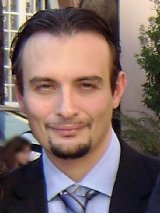
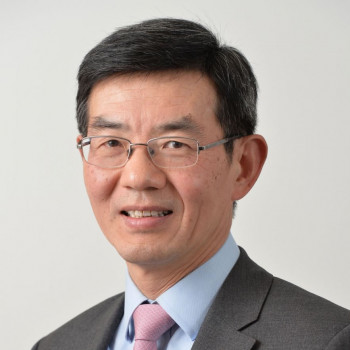
Dr Yongle Sun is a Lecturer in Additive Manufacture at Cranfield University , specializing in cross-scale modelling of metal manufacturing processes for aerospace and energy applications. BSc & MSc in Mechanics from Xi'an Jiaotong University PhD in Mechanical Engineering from The University of Manchester His research focuses on multi-physics modelling of additive manufacturing and welding processes, with particular emphasis on residual stress/distortion prediction and mitigation. Current projects include: NEWAM (cross-scale additive manufacturing) SAM (smart manufacturing) I-Break (process innovation) With over £10M in research funding, his work bridges mechanistic models with engineering applications through collaborations with: GE Avio Aero WAAM3D Airbus EPSRC Innovate UK Key achievements include: First author of 16 leading journal papers Co-author of 35+ peer-reviewed works H-index of 23 Queen's Anniversary Prize contribution Top-cited paper in International Journal of Impact Engineering
R. Luke DuBois is an Associate Professor and Co-Chair of the Technology, Culture and Society Department at the NYU Tandon School of Engineering, where he also directs the Integrated Design & Media program and the Brooklyn Experimental Media Center. He holds a DMA in music composition from Columbia University and is a renowned artist, composer, and performer whose work explores intersections between technology, sound, and visual media. His research focuses on digital media, human-computer interaction, and emerging technologies applied to artistic expression and accessibility. Key roles include directing the SONYC initiative (addressing urban noise pollution via AI) and leading the NYU Ability Project (advancing disability studies through technology). He has collaborated with institutions like the Smithsonian and artists such as Maya Lin, and his work has been exhibited globally, including at the Sundance Film Festival and the Aspen Institute. DuBois co-developed the Jitter software suite for real-time data manipulation and performs in avant-garde groups like Bioluminescence and Fair Use. His artistic practice combines time-lapse phonography, interactive installations, and interdisciplinary projects that critique cultural ephemera while advancing accessibility in STEM and the arts. Recent contributions include browser-based tools for accessible music notation (SoundCells) and sonification techniques for calculus education. He serves on the Board of the ISSUE Project Room and has been featured in major publications like the New York Times and TED Conference talks.
Professor Sondipon Adhikari is a Professor of Engineering Mechanics at the James Watt School of Engineering, University of Glasgow. He holds a PhD from the University of Cambridge (2001) and has held academic positions at Swansea University (2007–2021), Bristol University (2003–2007), and visiting roles at institutions worldwide. His research focuses on structural dynamics, probabilistic methods, and computational mechanics, with applications in uncertainty quantification, vibration energy harvesting, and nanoscale systems. He has secured over £4.0M in research funding, published six books, and authored 400+ peer-reviewed papers (h-index 73). His awards include the Wolfson Research Merit Award (2010), Philip Leverhulme Prize (2007), and EPSRC Advanced Research Fellowship (2004–2009). Recent research highlights include inertial amplifier-based vibration control systems, bladeless wind turbine optimization, and topological metamaterials. He leads grants in energy harvesting, structural dynamics, and multiscale mechanics.
Professor Craig Priest is a faculty member at the University of South Australia within UniSA STEM , focusing on microfluidics , optofluidics , and interfacial science applications. He serves as a Research Degree Supervisor and has contributed to advancements in sensor technology, biomedical engineering, and materials science. Key Research Themes : Development of micropillar array-integrated sensors for rapid vapor detection 3D-printed microstructures to mitigate matrix effects in electrochemical sensing Wettability engineering for passive fluid control in lab-on-a-chip devices PDMS-PS bonding protocols enabling robust cell culture platforms like Heart-Dyno Collaborations & Grants : Collaborated with Queensland University of Technology and QIMR Berghofer on biomedical devices Involved in ARC grants: ARC IH150100028 and ARC DP1094337 Industry partnerships with BHP Billiton and ULVAC Inc. Academic Contributions : Published in IEEE Sensors , APL Materials , and ACS Applied Materials & Interfaces Active in microfluidic device design for biomedical and environmental applications Developed evaporation-driven fluid transport systems for portable biosensing platforms
Efstathios (Stathis) Michaelides is the W.A. "Tex" Moncrief, Jr. Founding Chair of Engineering at Texas Christian University (TCU). He holds a Ph.D. and M.S. in Engineering Science from Brown University (1980, 1979) and a B.A. in Engineering Science and Economics from Oxford University (1977). His research focuses on advanced energy systems, multiphase flow, and renewable energy transitions. Ph.D. , Engineering Science, Brown University, 1980 M.S. , Engineering Science, Brown University, 1979 B.A. , Engineering Science and Economics, Oxford University, England, 1977 Michaelides' work spans energy conversion , geothermal systems , nanofluidics , and particle-fluid dynamics . His recent publications analyze energy storage requirements for renewable transitions, drag force correlations in complex flows, and thermodynamic implications of carbon sequestration. His research trends include decarbonization strategies , nanoparticle-enhanced phase transitions , and smart microfluidic systems . He has also contributed to foundational texts like Particles, Bubbles and Drops (2006) and the Multiphase Flow Handbook (2017).
Professor Mahroo Eftekhari is a Professor in Building Services Engineering at Loughborough University, leading the Low Energy Building Services Engineering MSc programme. Her research focuses on energy-efficient building systems, thermal comfort, HVAC optimization, and renewable integration. She has pioneered control systems for airports and buildings, including MPC-based strategies to reduce energy use while enhancing occupant well-being. Notable contributions include the development of BISPA (Building & Industrial Services Pipework Academy), a national center for BIM and pipework training. Education: Holds qualifications including CEng (Chartered Engineer), DPhil (Doctor of Philosophy), FCIBSE (Fellow of Chartered Institution of Building Services Engineers), and SFHEA (Senior Fellow of the Higher Education Academy). Her academic career is marked by collaborations with Tata Steel, Mitsubishi R&D, and Vexo, yielding applied research in sustainable building technologies. Research Interests: Indoor Air Quality, Thermal Comfort Modeling, Zero Energy Buildings, Digital Twins, and Advanced Control Systems. She has developed innovative solutions like AI-driven thermal management for Building Energy Management Systems (BEMS) and interfaces to synchronize airport operations with energy systems. Awards & Grants: Secured funding from diverse bodies for projects such as adaptive thermal comfort models, BISPA infrastructure, and energy-efficient HVAC strategies. Her work emphasizes practical applications, including reducing CO₂ emissions via airport terminal optimization and improving renewable energy use in buildings. Lab & Teams: Leads the Building Energy Research Group, managing projects in closed-loop heating systems, IEQ monitoring, and hydronic system efficiency. The Civil Engineering labs house interactive BIM rigs launched with institutional and industry support.
Monica Olvera de la Cruz is the Lawyer Taylor Professor of Materials Science and Engineering, Chemistry, and Chemical & Biological Engineering at Northwestern University, with a courtesy appointment in Physics and Astronomy. She directs the Center for Computation & Theory of Soft Materials and serves as Deputy Director of the Center for Bio-Inspired Energy Science. Her research focuses on designing responsive materials, including polymers, electrolytes, and complex fluids, with applications in biotechnology and energy. She holds a Ph.D. from Cambridge University (1985) and a B.A. from UNAM (Mexico). Her research interests include self-assembly of heterogeneous molecules, ionic-driven assembly mechanisms, and functional materials design. Recent work highlights include modeling electrostatic effects in biomimetic systems and exploring superionic conductors. Awards include National Academy of Sciences membership (2012), APS Polymer Prize (2017), and American Philosophical Society membership (2020). Professional service roles: Gordon Research Conferences Board, DOE Basic Energy Sciences, Max Planck Institute advisory board Led over 150 publications since 2020, emphasizing soft matter physics and materials innovation Her group's innovations bridge theoretical physics and applied materials science, with notable achievements in bio-inspired materials and electrochemical systems.
Li Song is a Professor and holds the Lesch Centennial Chair & Lloyd G. and Joyce Austin Presidential Professor at the University of Oklahoma's Aerospace & Mechanical Engineering Department. He leads the Building Energy Efficiency Lab and serves as AME Associate Director for Research. His expertise spans building energy systems, HVAC optimization, and fault detection technologies. Education: Ph.D. (Thermal/Fluid Science, 2004) from University of Nebraska-Lincoln; M.S. (Thermal/Fluid Science, 1996) from Harbin Institute of Technology; B.S. (Thermal Energy Systems, 1993) from Shengyang University of Civil Engineering and Architecture. Research focuses on energy-efficient HVAC systems, fault detection algorithms, and building performance analytics. Notable contributions include the ULEM-FDD system for high-performance buildings and virtual sensor technologies for airflow/water flow measurement. Awards include the ConocoPhillips Energy Prize (2011 finalist) and Bes-Tech Innovation Award (2006). Publications emphasize HVAC control strategies, energy modeling, and IoT-enabled diagnostics. Courses taught include Thermodynamics, Energy Efficient Building Systems Design, and HVAC Systems Engineering.
Brian Kirby is the Meinig Family Professor in the Department of Mechanical Engineering at the College of Engineering, Cornell University. He is a leading researcher in microfluidics, biomedical engineering, and cancer diagnostics, with a strong emphasis on circulating tumor cells (CTCs), rare cell isolation, and biophysical forces in disease. His work bridges engineering, biology, and clinical medicine. Institution: Cornell University School: College of Engineering Department: Mechanical Engineering Rank: Professor Education: Stanford University, 2001 Brian Kirby's research focuses on developing and applying microfluidic technologies to solve biomedical challenges. His work centers on microfluidic rare cell capture , particularly circulating tumor cells (CTCs) , enabling early cancer detection and monitoring treatment response. He investigates biophysical forces such as shear stress and surface interactions in conditions like thrombosis and cancer metastasis. His lab also works on dielectrophoresis , acoustophoresis , and electrokinetics for cell separation and analysis. Additional interests include bioinstrumentation , lab-on-a-chip devices , and fluid mechanics in biological systems . His recent publications show a consistent focus on microfluidic diagnostics, cancer biophysics, and smart fluid systems. Articles span topics from CTC isolation in prostate and pancreatic cancers to thrombosis in medical devices and programmable viscosity metamaterials . The research integrates engineering design with clinical applications, often involving interdisciplinary collaboration. Scientific Awards: Creative Teaching Award, Cornell Center for Teaching Innovation Advising Award, College of Engineering, Cornell University, 2015 Research Award, College of Engineering, Cornell University, 2015 Brian Kirby is actively involved in advising and research mentorship. While specific student names are not listed in the provided text, his extensive publication record and leadership of a research group indicate active supervision of graduate students and postdoctoral researchers. His research is supported by grants related to cancer diagnostics, microfluidics, and biomedical engineering, though specific grant details are not provided. He has contributed to the development of novel microfluidic devices such as the GEDI (Geometrically Enhanced Differential Immunocapture) platform for CTC capture and functional analysis. Labs and Teams: Kirby leads a research laboratory at Cornell focused on microfluidics and biomedical instrumentation. His team develops and applies microfluidic platforms for clinical diagnostics, particularly in oncology and hematology. The lab collaborates with clinicians and scientists across disciplines to translate engineering innovations into medical applications.
Professor Mohan Lal Kolhe is a distinguished academic at the University of Agder , serving as a Full Professor in Smart Grid and Renewable Energy within the Faculty of Engineering and Science and the Department of Engineering Sciences . With over three decades of international academic experience, he has held positions at prestigious institutions including University College London, University of Dundee, and Hydrogen Research Institute in Canada. His career spans technical innovation, policy development (e.g., as a member of South Australia’s Renewable Energy Board), and extensive research leadership in sustainable energy systems. Research Leadership : Focus on Smart Grid integration, Electric Vehicles, Hydrogen Energy, Solar/Wind Systems, and Techno-Economic Energy Analysis. Global Recognition : Listed in the top 2% of scientists worldwide (2020-2023) by Stanford University, with 10 publications averaging 200+ citations. Recent publications emphasize advanced optimization techniques for renewable integration, EV charging infrastructure, hydrogen production, and power system stability. His work has secured competitive funding from entities like the Norwegian Research Council and EU programs. Awards and Expert Roles : Top 2% Global Scientist (Stanford, 2020-2023) Highly Cited Researcher (Top 10 publications, 200+ avg. citations) Expert evaluator for European Commission, Royal Society London, EPSRC, and Cyprus Research Foundation He actively contributes to international conferences as keynote speaker and editorial board member, with leadership roles in research groups like Autonomous and Cyber-Physical Systems and Energy Systems .
Prof. Daryl W. Yee is a Tenure Track Assistant Professor at École Polytechnique Fédérale de Lausanne (EPFL), affiliated with the Institute of Electrical and Micro Engineering (IEM) and multiple teaching units. He holds a B.Eng. from Imperial College London, and M.Sc. and Ph.D. from Caltech, followed by postdoctoral research at MIT. His research focuses on integrating molecular design and materials processing to develop advanced functional materials addressing societal challenges in healthcare, energy, and climate change. Key research directions include Polymer-to-X additive manufacturing, dynamic polymers, microstructure control in polymers, and novel 3D printer development. Education highlights include: B.Eng in Materials Science and Engineering, Imperial College London (2011-2014) M.Sc. and Ph.D. in Materials Science, Caltech (2014-2020) Postdoctoral Associate at MIT (2020-2022) His lab, ALCHEMY, emphasizes democratizing advanced materials manufacturing through accessible chemistries and processing strategies. Current teaching roles span Materials Science and Engineering and Microengineering. Four PhD students are currently advised, and he oversees courses in electrical engineering and materials engineering. Research interests emphasize hydrogel-based additive manufacturing, nanoparticle superlattices, and polymer design. Though no funded PhD/postdoc positions are currently open, self-funded researchers are encouraged to contact him directly.
Angelo Cervone is a Professor at Delft University of Technology's Department of Astrodynamics & Space Missions within the Faculty of Aerospace Engineering. His research focuses on advanced propulsion systems, CubeSat technology, additive manufacturing for space applications, and space systems design. He leads projects like LUMIO, a CubeSat mission to monitor lunar meteoroid impacts, and has contributed to the development of green propellants and smart composite structures with embedded sensors. His work integrates cutting-edge manufacturing techniques like laser powder directed energy deposition with propulsion system optimization, emphasizing sustainable and robust space technologies. Cervone has authored over 130 publications and edited the book Adaptive On- and Off-Earth Environments , reflecting his expertise in off-world infrastructure and robotic production systems. He received the Rhizome Award (2021) for advancing autarkic systems in off-Earth habitat development. Key Projects: LUMIO CubeSat mission, Rhizome habitat system development, smart propellant tank design Research Themes: CubeSat propulsion, lunar exploration, additive manufacturing for space, in-situ resource utilization His articles highlight advancements in micro-thrusters, structural health monitoring via fiber optics, and autonomous navigation systems for deep-space CubeSats. Cervone collaborates globally on missions requiring innovative propulsion architectures and materials science breakthroughs.
Prof Wen Wang is Professor of Biomedical Engineering and Vice-Principal and Executive Dean for Science and Engineering at Queen Mary University of London, affiliated with the School of Engineering and Materials Science and the Centre for Bioengineering. He is a Chartered Engineer and holds fellowships from the Institution of Mechanical Engineers (FIMechE), Higher Education Academy (FHEA), American Institute for Medical and Biological Engineering (FAIMBE), and the Royal Academy of Engineering (FREng), reflecting his leadership and technical excellence in engineering and biomedical sciences. His research focuses on vascular bioengineering , biomaterial mechanics , and cell biomechanics , with particular emphasis on the endothelial glycocalyx , vascular stem cells , and transmembrane transport . He employs advanced techniques such as AFM nano-indentation, confocal microscopy, and microfluidic platforms to study the mechanical properties, shear stress responses, and structural stability of biological systems. His work spans from fundamental biophysics to translational applications in drug delivery and cardiovascular disease. Prof Wang has led multidisciplinary research projects in the UK and through international collaborations with partners in the US, China, and Japan. His recent publications highlight sustained contributions to understanding microcapsule mechanics , extracellular vesicles , biofluid dynamics , and biomolecular sensing . His work integrates experimental and computational modeling, particularly in microcirculation and cellular transport phenomena. He has received notable scientific recognition through multiple prestigious fellowships and has published extensively in high-impact journals including Nature Communications , Journal of Controlled Release , Biosensors and Bioelectronics , and Journal of Fluid Mechanics . His research demonstrates a strong trajectory in both fundamental discovery and applied biomedical innovation. Prof Wang actively supervises research and collaborates with clinical and engineering partners at Queen Mary and King's College London. His leadership in the School of Engineering and Materials Science underscores his role in shaping academic strategy and research excellence in science and engineering at Queen Mary University of London.
Marco Badami is a Full Professor at the Department of Energy (DENERG) , Polytechnic of Turin. He serves as Scientific Director for national and EU-funded research projects in energy systems and has been a Course Lecturer for Energy Systems and Industrial Use of Energy since 2010. He supervises PhD students in Energetics and Electrical Engineering . Research Interests: His work spans energy systems optimization, machine learning applications for industrial energy efficiency, smart grids, cogeneration scheduling, blockchain-based energy data immutability, and predictive maintenance algorithms for photovoltaic plants. Current projects focus on AI-driven energy audits, optimized control systems for industrial microgrids, and digital twin architectures. Collaborations: He works with Trigenia Srl, Stogit SpA, and international institutions on commercial research contracts. His scientific contributions include 15+ publications on topics like LSTM forecasting for solar energy, deep reinforcement learning for multi-energy systems, and decentralized peer-to-peer energy trading platforms.
Prof. Dr.-Ing. Udo Fiedler is a faculty member at the Technical University of Central Hesse (THM), Department of Business Administration and Economics, where he serves as Head of the Production Engineering Laboratory and Member of the Senate. His academic work focuses on manufacturing engineering with specialization in high-speed machining, production processes, and machine tools. His research interests include: High-Speed Machining (HSC) and precision manufacturing Green machining of sintered parts in the green state Process optimization using statistical experimental design Machine tool technology and NC programming Industry 4.0 applications in manufacturing education Process monitoring and control for increased manufacturing safety Prof. Fiedler's publication record demonstrates an evolution from fundamental machining processes toward integrating AI with traditional manufacturing. His recent work shows strong emphasis on applying artificial intelligence to quality prediction, optimizing green machining processes, and implementing Industry 4.0 concepts through learning factory approaches, bridging traditional manufacturing engineering with modern digital technologies. His significant scientific contributions include: Development of methods for NC programming of complex workpieces Research on stability lobe diagrams for milling processes Studies comparing different production methods including HSC, EDM, and generative processes Work on mechatronic tool holders for process monitoring Applications in the ophthalmic industry for precision machining of spectacle lenses Prof. Fiedler teaches multiple courses at THM including Factory Planning/Ergonomics, Handling and Assembly Technology, Innovative Manufacturing Processes, and Machine Tools at the bachelor's level, and Learning Factory 1 and 2 at the master's level. He leads current research projects including Klag-Robotics (2023-2025), Loewe Project OST (2018-2021), and GrünSpan (2014-2015), demonstrating sustained research activity across multiple manufacturing domains.