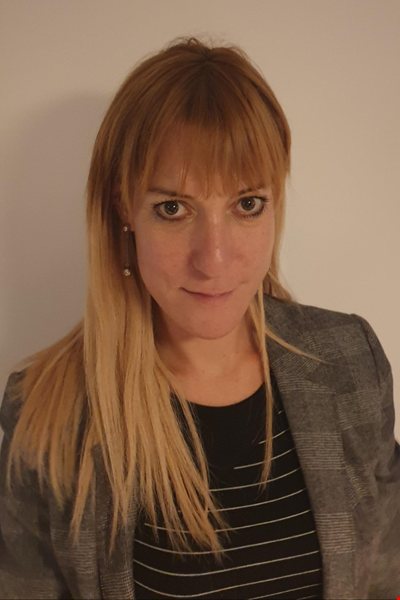
Dr Mahsan Sadeghi is a Research Scientist at CSIRO and an Honorary Senior Research Fellow at the University of Sydney's School of Architecture, Design and Planning . She leads Australia’s national project on the Australian Residential Overheating Model , addressing urban heat impacts on health and energy use. Her work bridges architecture, climate adaptation, and public health. PhD in Architecture (University of Sydney, 2018) CSIRO Early Research Career (CERC) Fellow (2021–2024) NHMRC Postdoctoral Fellow (2019–2021) Affiliate of NHMRC Centre of Research Excellence for Safe Air Her research focuses on climate-sensitive building design , urban heat mitigation , and health impacts of overheating . Key projects include greening infrastructure analysis, ventilation systems for thermal comfort, and policy development for housing air-conditioning. 2023–2024: Funded by Australian National University for indoor environment and sleep studies 2019–2020: Industry grants for zero energy residences and wind tower design 2017–2019: CRC-funded studies on urban heat island mitigation and CO2 reduction Scientific awards include: NHMRC Postdoctoral Fellowship Climate Change, Human Health, and Social Impacts Node Grant Commissioned by Western Australia Government for housing policy She contributes to public policy through parliamentary submissions and co-authored a position paper on clean air legislation.
Fabio Favoino is an Associate Professor at the Department of Energy (DENERG) at the Polytechnic of Turin, Italy, and a member of the FULL Interdepartmental Center - Future Urban Legacy Lab. His academic career focuses on building physics and energy systems, with particular expertise in building envelope technologies, energy efficiency, and sustainable building design. Research Interests Professor Favoino's research spans multiple areas of building science and technology, with a strong emphasis on energy performance and sustainable design. His primary research interests include building energy performance and nearly zero-energy buildings, advanced building envelope systems and facade technologies, building insulation materials and responsive building elements, smart glazing and electrochromic window systems, double-skin facades with integrated thermal storage, building simulation and performance assessment methodologies, integration of renewable energy systems in buildings, and thermal comfort and indoor environmental quality. Publication Trends Professor Favoino's recent publications demonstrate a clear focus on advanced building envelope technologies, particularly responsive and adaptive systems. His work increasingly integrates multi-domain analysis, combining thermal, acoustic, and daylight performance assessment. There is a strong emphasis on experimental validation of novel technologies like electrochromic windows, double-skin facades with phase change materials, and smart ventilation systems. His research also shows growing interest in living lab methodologies, sensor networks for building performance monitoring, and the integration of IoT infrastructure for building management systems. Professional Recognition Editorial Board Member for Building and Environment (2022-present) Editorial Board Member for Glass Structures & Engineering (2018-present) Effective Member of the Italian Thermotechnical Association (2018-present) Effective Member of CIBSE, United Kingdom (2016-present) Founding Partner of IBPSA Italy (2012-present) Effective Member of REHVA, European (2011-present) Effective Member of AICARR, Italy (2011-present) Research Leadership Professor Favoino actively supervises PhD students working on cutting-edge building technologies and leads several significant research projects including MIRABLE (2023-2025) on measurement infrastructure for healthy and zero-energy buildings, and the PRIN-funded iclimabuilt project (2021-2025) on functional and advanced insulating materials for climate adaptive building envelopes. He has also led commercial research projects on high-performance glazing systems and participated in the Cost Action TU1403 - Adaptive Facade Network (2014-2018) as coordinator. Research Infrastructure Professor Favoino's work with the FULL Interdepartmental Center - Future Urban Legacy Lab and involvement with the HIEQLab facility provide platforms for interdisciplinary research on sustainable urban development, building technologies, and human-centered environmental quality assessment.
Paolo Marocco is a Fixed-term Assistant Professor at the Department of Energy (DENERG) of Politecnico di Torino, Italy. His work focuses on hydrogen-based mobility solutions, renewable energy systems, and techno-economic/environmental sustainability analysis. He serves on teaching committees for Electrical and Energy Engineering, Mechanical Engineering, and Aerospace Engineering programs. Academic Role: Assistant Professor (Fixed-term) Department: Department of Energy (DENERG) Teaching: Hydrogen Laboratory, Electrical Energy Storage Systems, Applied Thermodynamics Research spans four key areas: Hydrogen Infrastructure : Green hydrogen production for ammonia synthesis, aircraft propulsion, and rail transport decarbonization. Projects include SOFFHICE (SOFC hybridization in maritime engines) and PNRR initiatives for industrial decarbonization. Energy Storage Systems : Hydrogen-battery hybrid storage, virtual thermal inertia storage, and optimal dispatch models for wind-electrolysis systems. Industrial Decarbonization : Semiconductor manufacturing, steel industry high-temperature heat substitution, and biogas carbon recovery. Policy Integration : Bridging technical research with European green policy targets through Italian energy modeling. He supervises 7 PhD students across Energetics, Mechanical Engineering, and Energy/Nuclear Engineering programs. Current projects include SOFFHICE (2023-2026) and PNRR-funded industrial furnace decarbonization (2023). Recent publications analyze hydrogen train feasibility, aviation fuel cells, and storage system optimization.
Meng Yuan is an Assistant Professor in the Department of Sustainability and Planning at The Technical Faculty of IT and Design, Aalborg University, Denmark. With a strong focus on sustainable energy systems, Dr. Yuan contributes significantly to the university's research profile in green energy solutions and climate change mitigation. Dr. Yuan's research interests center on Smart Energy Systems, with particular expertise in renewable energy integration, district heating systems, and the development of advanced energy system models. Their work spans techno-economic and environmental analysis of low-carbon technologies at local, regional, and national scales, contributing directly to multiple UN Sustainable Development Goals, particularly those related to affordable and clean energy, industry innovation, and climate action. The publication record shows a strong focus on renewable energy transition pathways, with particular emphasis on hydrogen technologies, district heating optimization, and energy storage solutions. Dr. Yuan's research demonstrates a consistent trajectory toward increasingly complex energy system modeling and analysis, with recent work exploring sector coupling and cross-border energy solutions. "Best Paper Award" at the 1st African Conference on Sustainable Development of Energy, Water and Environment Systems (SDEWES), May 2025 "Best Presenter" at the 10th International Conference on Low Carbon Asia (ICLCA), September 2024 Beijing Outstanding Graduates Award, June 2022 China National Scholarship at PhD level, 2020 Top 10 Outstanding Student Award at CUPB, 2020 As an active researcher, Dr. Yuan serves as an Ethics editor for Energy (Elsevier) and Sustainable Energy Technologies and Assessments (Elsevier), and has participated in numerous peer review activities. Current research projects include CARMA-Green Fuels Cross Mission Carbon Management, INNO-CCUS INFRASTRUCTURES, and ActRes: Agency for resilience – Making people and energy systems fit for climate change and crises, demonstrating significant engagement with both European and international research initiatives.
Tiago Miguel Ferreira is a Senior Lecturer in Smart and Resilient Cities and Structures at the University of the West of England's College of Arts, Technology and Environment (CATE), School of Engineering. He also holds positions as an Invited Associate Professor at the University of Coimbra (Portugal), Visiting Professor at D'Annunzio University of Chieti-Pescara (Italy), and Associate Researcher at the Institute for Sustainability and Innovation in Structural Engineering (ISISE) at the University of Minho (Portugal). Ferreira earned his PhD in Civil Engineering from the University of Aveiro (2015), an Advanced Studies degree in Rehabilitation of Built Heritage from the University of Porto (2010), and an MSc in Civil Engineering from the University of Aveiro. As a Chartered Civil Engineer, his academic activity focuses on structural vulnerability of historical buildings and urban areas to natural and anthropogenic hazards, particularly earthquakes, fires, floods, and landslides, with recent emphasis on multi-hazard interactions. His publication record includes over 170 scientific and technical publications, with more than 70 articles in international peer-reviewed SCI journals. Ranked among the top 2% scientists globally for three consecutive years (2021-2023), Ferreira serves as Co-Editor-in-Chief of GeoHazards and Section Editor-in-Chief of Fire journals, demonstrating his leadership in the field. Ferreira has participated in eight R&D projects (four ongoing), currently leading both a CATE College Building Research project on VR environments for pedestrian evacuation after earthquakes and an MIT Portugal research project on multi-hazard risk assessment. His editorial work and extensive publication record show consistent focus on methodological advances in vulnerability assessment across multiple hazard types. Ranked among top 2% scientists globally (2021, 2022, 2023) Carlos Sousa Oliveira prize 2019 for best journal paper International Red Temática Conacyt prize for best research thesis Outstanding Contribution in Reviewing award for Engineering Structures Publons Peer Review Awards 2016 (Top 10% reviewer) Ferreira has supervised 25 Master's Dissertations (23 completed, 2 ongoing) and 10 PhD Theses (5 completed, 5 ongoing), demonstrating strong commitment to academic mentorship. His research projects span multiple European and international collaborations, with particular focus on developing practical methodologies for vulnerability assessment that can be implemented at urban scales. His work bridges theoretical advances with practical applications for improving urban resilience.
Dr Evina Katsou is a Visiting Professor in the Department of Mechanical and Aerospace Engineering within the College of Engineering, Design and Physical Sciences at Brunel University London. She serves as Course Director for the Water Engineering MSc program and leads the Water & Environmental Engineering research group with 20 researchers. Dr Katsou's educational background includes a PhD in 'Wastewater Treatment with the Use of Membranes' (2008-2011), an MSc in Water Resources Science & Technology (2006-2008), and an MEng in Chemical Engineering (2000-2005), all from the National Technical University of Athens (NTUA), Greece. Her research program focuses on three interconnected areas: (1) Sustainable resource recovery from wastewater and safe reuse; (2) Data analytics, knowledge discovery and process modelling; and (3) Circularity & sustainability measurement and assessment. Dr Katsou has developed innovative approaches for biological nutrient removal from wastewater, including partial nitrification/denitrification and complete autotrophic nitrogen removal processes. Her work integrates advanced data analytics methods such as multivariate statistics, clustering techniques, machine learning algorithms, and artificial neural networks to identify complex relationships between process variables, particularly for measuring GHG emissions in water treatment systems. Dr Katsou has authored 98 journal publications (h-index: 27) and 12 book chapters with over 100 presentations, and holds a patent on biopolymers recovery. Her recent publications demonstrate a strong focus on circular economy applications in water systems, nature-based solutions for urban environments, and resource recovery technologies. The research trends show increasing integration of data-driven decision support systems with environmental sustainability metrics, particularly in the water-energy-food nexus domain. Chartered Chemical Engineer (Greece) HEA Fellow (FHEA) of the Higher Education Academy Mentor in the APEX (Academic Practice & Professional Excellence Framework) scheme Member of management group of the Royal Academy of Engineering (RAE) Visiting Professors Scheme Co-leader of Circular Economy VLT in Water Europe Leader of SMART WATER Working Group in ICT4Water Cluster-EC Member of ISO standards drafting team on Circular Economy Dr Katsou has successfully supervised 16 PhD students to completion and currently supervises several ongoing doctoral projects. She has secured substantial research funding as Principal Investigator on 11 national and international projects including RESILEX Horizon Europe, SYMBIOREM Horizon Europe, BORECER Horizon Europe, HYDROUSA H2020, and WATER-MINING H2020. Her industrial consulting portfolio includes significant contracts with leading UK water industry partners such as Affinity Water, Arup, Severn Trent, and Anglian Water, with projects ranging from carbon footprint assessment to corrosion mitigation and process optimization. She leads the Transformation Tools group of the Cost Action on Circular Cities, co-leads the Circular Water VLT of Water Europe, and co-leads the SMART-WATER group of the ICT4Water Cluster-EC. Dr Katsou is also a member of the drafting team for new ISO standards on Circular Economy (Measuring and Assessing Circularity - ISO5902).
Miguel Sales Dias is affiliated with ISCTE - Instituto Universitário de Lisboa, specifically the Iscte Business School. His research spans multiple domains, including Machine Learning , Immersive Technologies , and Urban Mobility . His work focuses on: Developing AI-driven systems for energy consumption optimization in public buildings Creating co-design interfaces for housing customization Exploring mHealth applications for cardiac diagnostics Advancing virtual reality for education and visitor experiences Recent publications demonstrate expertise in smart city solutions , bioinformatics , and human-computer interaction . While specific awards or educational background weren't explicitly mentioned, his extensive publication record indicates significant contributions to interdisciplinary research.
Suzanne Harris-Brandts is an Assistant Professor of Architecture and Urbanism at Carleton University and a Faculty Associate at the Institute of European, Russian & Eurasian Studies (EURUS) . She holds a PhD in Urban and Regional Studies from MIT and a Master of Architecture from the University of Waterloo , with academic honors including the RAIC Medal and Mit Priscilla King Gray Fellowship . Her research bridges design and social sciences to examine power dynamics , equity , and collective identity in the built environment. Key themes include urban development in hybrid regimes , conflict-induced displacement , and community resistance strategies . Current work focuses on her book Constructing the Capital , analyzing authoritarian urbanism in Eurasia. Harris-Brandts has received SSHRC grants , NSF Georgia funding , and Graham Foundation support . Her work has been exhibited at Cambridge Galleries and the Tbilisi Architecture Biennial . She is a licensed OAA architect and LEED AP BD+C professional with over a decade of international design experience in cities like Toronto , Vancouver , and Tbilisi .
Rafael Duarte Pereira da Silva is a Research Fellow at the Research Group on Engineering and Intelligent Computing for Innovation and Development (GECAD) within the School of Engineering of the Polytechnic Institute of Porto. He is currently pursuing his doctoral degree in Artificial Intelligence and Intelligent Systems Engineering while developing AI-driven solutions for energy communities and smart buildings. His academic background includes: Master's degree in Artificial Intelligence Engineering (2025) from the Polytechnic Institute of Porto, with a dissertation on "Distributed Intelligent Management of Citizen Communities" (grade: 19/20). Bachelor's degree in Computer Engineering (2022) from the Polytechnic Institute of Porto, featuring a green computing project for smart building energy management. Currently enrolled in a doctoral program in Artificial Intelligence and Intelligent Systems Engineering (since 2025). Rafael's research spans Artificial Intelligence, Distributed Computing, and Energy Communities, focusing on human-centric intelligent systems for resource optimization. He develops virtual energy communities using IoT devices and AI models to enable dynamic interaction with community members while managing distributed resources. His work emphasizes sustainability through green computing principles and integration of renewable energy sources in smart infrastructure. His 2024-2025 publications reveal a cohesive research trajectory centered on the Caravels framework for decentralized energy management. Key themes include container-based infrastructure for community resource sharing, peer-to-peer energy trading with storage optimization, and AI-driven demand response systems. His work bridges theoretical AI models with practical IoT implementations, particularly in energy forecasting and HVAC control, demonstrating significant contributions to sustainable consumption in smart buildings and community-scale energy systems. Advising Co-supervised three undergraduate thesis projects at the Polytechnic Institute of Porto on IoT notification systems, Linux-based single-board computer configuration, and open-source IoT devices for smart buildings. Grants and Projects Sa4CPS: Secure situational awareness for critical cyber-physical systems (COMPETE2030-FEDER and ITEA) NGS: New Generation Storage (PRR initiative) TIoCPS: Trustworthy and Smart Communities of Cyber-Physical Systems (P2020 and ITEA programs) As an active GECAD member, Rafael contributes to server infrastructure management and organizes scientific events, including public demonstrations that secured the group's "Excellent" FCT evaluation rating. He has coordinated annual team energizing events for two consecutive years and participated in developing virtual energy community systems that showcase GECAD's research impact in distributed computing and IoT integration.
Professor Adel Aneiba is the Dean of the School of Architecture, Built Environment, Computing and Engineering at Birmingham City University (BCU) and leads the Cyber Physical Systems Research Group. He holds a Ph.D. and MSc in Mobile Computing and Distributed Systems from Staffordshire University (2008 and 2004). With over 15 years of experience as a Senior Academic and ICT Consultant, he has collaborated with international organizations like UNESCO and governmental bodies on large-scale ICT projects, focusing on data centre design, business process reengineering, and capacity building. Research Interests: His work centers on IoT enabling technologies, data-driven networks, and digital transformation solutions. He actively supervises Ph.D. students in Cyber Physical Systems applied to smart health, cities, and factories. Interdisciplinary expertise in computing, engineering, and digital infrastructure Leadership in academic administration and research group development Scientific Affiliations: Fellow of the Higher Education Academy (HEA) Member of Association for Computing Machinery (ACM) Member of Institute of Electrical and Electronics Engineers (IEEE) Prof. Aneiba has secured significant research and enterprise grants, bridging academia and industry through enterprise projects, and contributes to academic governance via roles in technical committees for conferences and journals.
Dr. Arjen van Klink serves as a lecturer in Next Strategy at Rotterdam University of Applied Sciences and directs the Business Innovation Knowledge Center. He has been affiliated with the university since 2016, contributing significantly to both education and research focused on strategic management for small and medium enterprises (SMEs). Dr. van Klink earned his PhD from Erasmus University Rotterdam in 1995, where he researched port networks, urban development, and logistics management. Prior to his academic career, he worked at Rabobank in roles spanning sector development, strategy, and innovation, advising companies and mentoring innovative startups. His research centers on strategic capacity in SMEs - the organization's ability to engage with the future through signaling developments, anticipating change, experimenting, learning, and adapting. He developed the Next Strategy Scan, a practical assessment tool that measures strategic capacity by examining aspects like discussion space within companies, strategy implementation monitoring, and innovation resources. Dr. van Klink emphasizes that strategic capacity is not about creating strategic plans but establishing a collective learning process throughout the organization. Analysis of his recent publications reveals a consistent focus on practical strategic management solutions for SMEs. His work spans digital transformation, scenario planning, leadership development, and business model innovation, with particular attention to helping SMEs navigate complex economic and societal changes. He challenges the traditional view of strategy as mere planning, advocating instead for an integrated approach where dreaming, thinking, and doing work together to build organizational resilience. Member of the River Board (public-private platform for economic development) Former chair of the Supervisory Board of the Rotterdam Library (2013-2020) Former treasurer of the Rotterdam Housing Association Guest lecturer in the Master's program in Maritime Economics & Logistics at Erasmus University Rotterdam Dr. van Klink actively engages students through the Business Booster program, where third-year business students help SMEs develop innovative business models. He also contributes to the Leadership minor and supervises multidisciplinary projects investigating value creation in urban development. His work bridges academic research with practical application, ensuring findings translate into actionable insights for SMEs facing operational and strategic challenges.
Professor Hakim Al-Samoui is a distinguished faculty member in the Department of Civil Engineering at the Faculty of Engineering, University of Tripoli. He has served at the university since 2003, obtaining the rank of Professor in 2005 and receiving a promotion to job grade 16 in 2022 (effective from January 1, 2017). His academic career spans over three decades with significant contributions to concrete technology research and education. Bachelor's degree from University of Tripoli (1988) Master's degree from University of Gdansk, Poland (1990) PhD from University of Gdansk, Poland (1996) Worked at University of Gdansk (1996-2002) Professor Al-Samoui specializes in concrete technology with particular expertise in two-stage concrete pouring, concrete durability, fabric formwork, concrete recycling, pozzolanic materials, and concrete mix design. His research bridges theoretical advancements with practical applications in construction engineering. He has published over eighty research papers in distinguished journals and presented at numerous international conferences worldwide, establishing himself as a leading expert in specialized concrete technologies. His recent publications demonstrate a clear trajectory toward sustainable construction materials, advanced concrete technologies, and computational approaches to material science. The research spans traditional concrete innovations while increasingly focusing on eco-friendly alternatives, waste material utilization, and cutting-edge technologies like 3D printing and machine learning applications in construction materials. Scientific Recognition: Fellowship from American Concrete Institute (2020) - first Libyan to receive this honor Active member of American Concrete Institute committees since approximately 1999 External evaluator for leading journals including Construction and Building Materials, American Concrete Institute publications, and American Society of Civil Engineering journals Professor Al-Samoui has supervised six Master's theses at University of Tripoli and served as advisor for graduate students from Gdansk Technical University (Poland), Tehran University (Iran), and Dublin Institute of Technology (Ireland). He has also acted as an external examiner for numerous Master's and PhD theses across multiple universities in Libya, Lebanon, Iraq, and India. His extensive international collaborations include research visits to Columbia University, University of South Carolina, Munich University, and Gdansk University of Technology. Through his active participation in international conferences across more than 20 countries and his role on scientific committees, Professor Al-Samoui maintains a robust research network that spans the global concrete technology community. His recent activities in 2023-2024 demonstrate continued research productivity and academic engagement.
Dr Katerina Cerna is an Assistant Professor (Associate Senior Lecturer) at the School of Information Technology, Halmstad University, Sweden. She leads research on participatory and more-than-human design, embedding learning sciences, sustainability and care ethics into technology development. She coordinates work in the REBEL research programme, is Area Leader for Participation in CAISR Health, and drives projects such as PadAI, Grow 2B Well and PAS-SAP. Education: PhD in Education Sciences, University of Gothenburg Research Interests: Her scholarship converges around enabling meaningful participation in design processes, especially for marginalised or vulnerable groups. Current strands include: Mental-health technology co-designed with young adults (PadAI) Embodied and multispecies engagements with plants for urban wellbeing (Grow 2B Well) Care-full participatory design with older adults (ACCESS, Demokit) Proxy-user methods for hard-to-reach populations (PAS-SAP) Publications at a glance: The 2022-2025 corpus reveals an intensifying focus on mental health support systems , multispecies and more-than-human design , and care-centred participatory methods . Qualitative, ethnographic and design-research methodologies dominate, often applied in contexts of ageing, disability, youth mental health and environmental sustainability. Scientific Awards & Fellowships: No specific awards listed; recognition is implicit through sustained funding (REBEL, CAISR Health, ACCESS, PadAI, PAS-SAP, Grow 2B Well). Advising & Grants: Principal investigator/supervisor on PadAI (participatory AI for youth mental health) Area Leader for Participation – CAISR Health Work-package leader – REBEL programme “Re-imagining Future Smart Living” Coordinator – ACCESS (postdoc project on older adults’ digital literacy) Workshop leader – I.N.S.E.C.T. summer camps on multispecies design Labs & Teams: She is embedded in the REBEL collective – an interdisciplinary group of researchers, designers and practitioners re-imagining inclusive futures. She collaborates closely with the CAISR Health research environment and has ongoing partnerships with Chalmers University of Technology, University of Gothenburg, Umeå University, Bergen University and Salzburg University.
Stefan Forsström is an Associate Professor at Mid Sweden University, affiliated with the Department of Computer and Electrical Engineering (DET) and the STC Research Centre. His work focuses on distributed systems, IoT, and educational innovations for lifelong learning. Academic Rank: Associate Professor Department: Computer and Electrical Engineering (DET) Research Centres: STC Research Centre Location: Sundsvall, Sweden Research interests include IoT, edge computing, machine learning, and educational technology. He has led projects like DRIVEN, DAWN, and GRIT while exploring secure and scalable IoT architectures. Recent publications analyze trust in edge AI systems, task offloading in vehicular networks, and intrusion detection for IIoT. His work often involves real-world implementations and performance evaluations. Teaching initiatives emphasize flipped classroom models, MOOCs, and generative AI education for professionals.
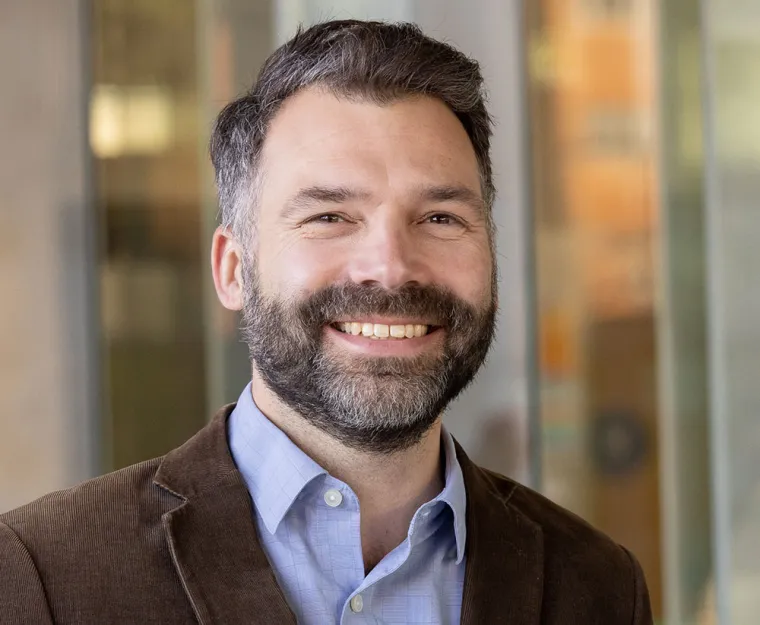
Jonathan Bean is an Associate Professor at the University of Arizona, affiliated with the School of Architecture and School of Landscape Architecture and Planning . As a CUES Distinguished Fellow , he bridges architecture, marketing, and civil engineering through research on market transformation, taste regimes, and sustainable building practices. His work integrates consumer research, human-computer interaction, and building science. PhD, University of California at Berkeley (2011) MS, University of California at Berkeley (2008) BA, University of University of California at Berkeley (2002) Bean's research focuses on high-performance building systems , consumer culture theory , and taste regime analysis . He advocates for energy-efficient AI systems and explores sociomaterial dimensions of cosmopolitan servicescapes. His work on the SunBlock distributed district energy system highlights innovative approaches to carbon reduction. Recent publications examine AI ethics, energy equity, Solar Decathlon innovations, and IoT challenges. Awards include the CUES Distinguished Fellow title and leadership roles in the Passive House Alliance US . Grants from the SSHRC Canada and National Institute for Transportation and Communities support his interdisciplinary work. Bean advises the Master of Science in Architecture Sustainable Market Transformation Concentration and contributes to the Consuming Tech column for ACM Interactions. His TEDx talk Demand Less underscores the potential of passive building principles for net-zero museums and energy stability.