Massachusetts Institute of TechnologyUnited States
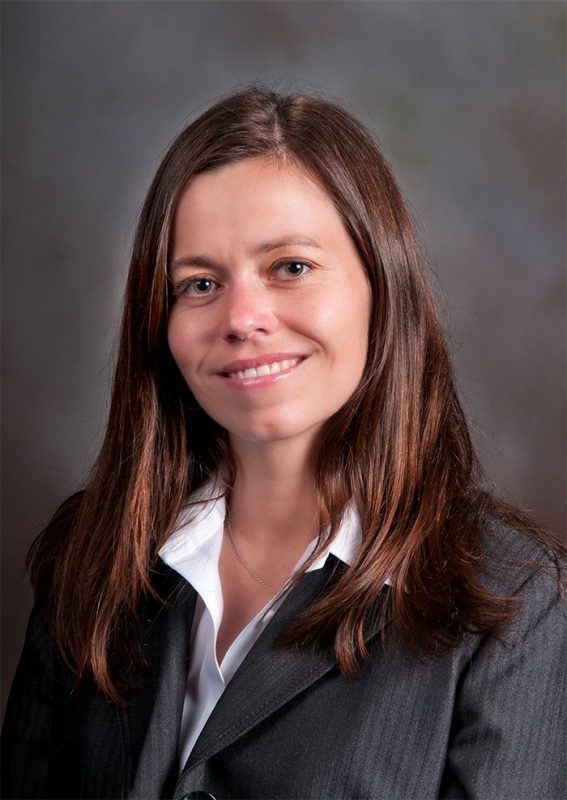
Yanchong Karen Zheng is the George M. Bunker Associate Professor of Operations Management at MIT Sloan School of Management. She holds a PhD from Stanford University and degrees from Tsinghua University. Her research focuses on supply chain transparency, smallholder agriculture, and socially responsible operations, employing field-based methods to design implementable solutions. Collaborations include projects with the Karnataka government on agricultural platforms and Fair Trade USA on sustainability. Education: PhD in Management Science & Engineering (Stanford), BS/MS in Automation (Tsinghua). Key research areas include smallholder supply chains in developing countries, environmental responsibility, and behavioral operations. Recent work addresses auction design for farmers’ income improvement and regulatory transparency in China’s food industry. She has won awards such as the NSF Award and MSOM Award, and teaches courses like Operations Strategy and Behavioral Decision Theories.
Virginia Polytechnic Institute and State UniversityUnited States
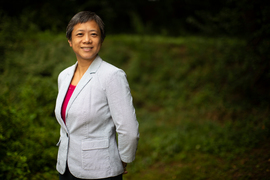
Catherine Larochelle is an Associate Professor in the Department of Agricultural and Applied Economics at Virginia Tech, within the College of Agriculture and Life Sciences. Her research focuses on evaluating agricultural technologies and programs, particularly their adoption mechanisms and impacts on productivity, income, and food security. She holds a Ph.D. in Applied Economics from Virginia Tech and has conducted extensive international fieldwork in countries like Nepal, Rwanda, Malawi, and Ecuador. Her funded projects include transformative initiatives like integrating native wildflowers into grazing systems to support pollinators and enhancing legume-based product commercialization in Africa. She teaches courses such as Agricultural Production and Consumption Economics and leads experiential learning programs in Ecuador. Dr. Larochelle has received awards including the College of Agriculture and Life Sciences Global Faculty Scholar (2021) and Outstanding Dissertation Award (2012). Her work bridges academic research with real-world applications, emphasizing global development and sustainable agricultural practices. Her advisory role supports graduate students who present at international conferences, and she collaborates with organizations like CIAT and USDA on projects addressing food security, biodiversity, and technology adoption.
Dr. Patricia Biermayr-Jenzano is an Adjunct Professor in Science, Technology and International Affairs (STIA) at Georgetown University’s School of Foreign Service (SFS). She also serves as Senior Academic Advisor for the Global Development Studies Minor and teaches courses on Sustainable Development, Food Security, and Gender Studies. Her expertise spans gender analysis in agriculture, participatory action research (PAR), and food systems transformation. She holds a PhD and MSc from Cornell University in Social Sciences and Agricultural Extension, alongside an Agricultural Engineering degree from Universidad de Morón, Argentina. Dr. Biermayr-Jenzano’s research focuses on gender mainstreaming in agriculture and conservation, women’s economic empowerment, and participatory approaches in rural development. She has conducted fieldwork across Latin America, Africa, and Asia, addressing issues like women’s access to land, seeds, and market participation. Her work emphasizes linking science with policy, particularly in low- and middle-income countries, and she collaborates with organizations such as FAO, IFC, and IFPRI. Her professional roles include international consulting for FAO’s evaluation office and IFC’s gender coordination in agribusiness projects. She has led evaluations in over a dozen countries, analyzing gender dimensions in value chains, food security, and social protection strategies. Recent work includes projects in Bhutan’s Gross National Happiness framework and Haiti’s female farmer empowerment initiatives. Key publications highlight her contributions to gender-sensitive supply chain management, genome-edited crops in climate-smart agriculture, and equitable food systems transformation. She actively participates in global forums like the Committee on World Food Security and the Global Forum on Agricultural Research.
University of Illinois at SpringfieldUnited States
Ali Nizamuddin is a Professor in the School of Politics and International Affairs at the University of Illinois Springfield. He holds a B.A. in Political Science from Northwestern University, and M.A. and Ph.D. in Political Science from Columbia University, specializing in International Relations. His research focuses on global trade, multinational corporations' impacts in developing regions, and the political ramifications of fear-driven populist policies. Notable publications include Declining Risk, Liberalization, and State-Multinational Bargaining Power (2009) and The Patenting of Life, Limiting Liberty, and the Corporate Pursuit of Seeds (2023). His current work examines fear's role in distorting policy priorities through case studies in Rwanda, Bosnia, India, the U.S., and European/African nations. Dr. Nizamuddin’s scholarship bridges political economy and international relations, analyzing how corporate power structures interact with state policies and public sentiment. His recent studies address the socio-economic consequences of genetically modified seed monopolies and the geopolitical tensions arising from fear-based governance strategies.
Leslie Verteramo Chiu is a Researcher at the Tata-Cornell Institute (TCI) within Cornell University’s Department of Global Development. His work focuses on risk management strategies for smallholder farmers, food-value chain optimization, and agricultural finance in developing countries. He evaluates interventions impacting farmer producer organizations, particularly in Mexico. Dr. Chiu holds a PhD in Applied Economics from Cornell, an MSc in Quality and Productivity from Monterrey Tech (Mexico), and a BSc in Business and Economics from Sophia University (Japan). His research spans topics including livestock economics, policy analysis, and climate-smart agriculture. Notable studies address cattle preconditioning incentives, antimicrobial policy impacts, and strawberry production comparisons between conventional and organic systems. He has contributed to reports on digital agriculture in New York State and socioeconomic dynamics in conflict zones of Mexico. Dr. Chiu’s work integrates quantitative methodologies like stochastic modeling and econometric techniques (e.g., PMG-ARDL approaches) to evaluate governance and sustainability challenges. He collaborates across disciplines, addressing issues from pet insurance demand to BRICS nations’ environmental policies. His research emphasizes practical solutions for smallholder commercialization and resilient agricultural systems.
Massachusetts Institute of TechnologyUnited States
Karen Zheng is the George M. Bunker Associate Professor at the Massachusetts Institute of Technology's Sloan School of Management , where she has been a faculty member since 2011. She holds a PhD in Management Science and Engineering from Stanford University (2011), and BS and MS degrees in Automation from Tsinghua University. Research Interests : Smallholder supply chains in developing countries, supply chain transparency, environmentally and socially responsible operations, and behavioral operations research. Teaching : Courses like Operations Strategy , Stochastic Models in Business Analytics , and Behavioral Decision Theories at MBA, PhD, and undergraduate levels. Her articles focus on agricultural supply chains, behavioral economics, and supply chain transparency. Recent work includes Supply Chain Transparency and Sustainability (2023) and Artificial Shortage in Agricultural Supply Chains (2022). She collaborates with organizations like Fair Trade USA, the 2030 Water Resources Group, and the World Bank to design field-based solutions for smallholder farmers and supply chain transparency. She has received scientific awards such as the MSOM award (2020) and an NSF award (2015). Her media highlights include work on optimizing online auctions for poverty alleviation and data-driven market intelligence in India.
Patrick Struebi is a social entrepreneur and academic at Fordham University's Gabelli School of Business, where he teaches social entrepreneurship and leads the Fordham Foundry incubator. He founded the Fairtrasa Group, a pioneering social enterprise that supports marginalized smallholder farmers through organic and fair trade practices, impacting over 60,000 lives. Education: Bachelor’s in Certified Accounting from Swiss Academy of Cert. Accountants Affiliation: Adjunct Professor at Fordham University (since 2016), Social Entrepreneur in Residence at Yale Entrepreneurial Institute (2013-2017) His research focuses on systemic social innovation, cross-sector collaboration, and scaling social enterprises globally. His work bridges business and development to address poverty and environmental degradation through ethical supply chain models. Key trends in his publications include sustainable agriculture, fair trade systems, climate-resilient farming, and metrics for measuring social impact in value chains. His academic output emphasizes actionable frameworks for integrating social and environmental goals into business practices. Sustainable Development Goals (SDGs), Fairtrade certifications, and regenerative agriculture are central to his academic contributions. He advocates for eliminating intermediaries in food supply chains to maximize farmer benefits and ecosystem restoration. Scientific Awards: Ashoka Fellow Endeavor High-Impact Entrepreneur Yale World Fellow Multiple Social Entrepreneur of the Year awards (Schwab, abc*, Univision, Visionaris) As a thought leader, he lectures globally at institutions like Harvard, Yale, and the World Economic Forum, while co-developing AgTech platforms such as Blooom to expand farmer impact.
Prof. Duncan Boughton is a fixed-term Professor in the Department of Agricultural, Food, and Resource Economics at Michigan State University (MSU), with a dual appointment as Visiting Professor at Kasetsart University, Thailand. His work focuses on food security policy analysis, climate resilience in agrifood systems, and capacity building in agricultural research institutions across Asia and Africa. He holds a Ph.D. from MSU and advanced degrees from the University of Reading, UK. **Affiliations & Roles:** Lead USAID Myanmar Agriculture Policy Support Activity (MAPSA) Core member of the Feed the Future Innovation Lab for Food Security Policy Team Leader for UN LIFT Agri-food Value Chain Development Project (2016–2021) Former Director of MSU’s Food Security Group (2006–2015) Advisor to Myanmar’s National Agricultural Research System **Research Interests:** Climate-smart innovations in Thai agricultural value chains Post-coup recovery of Myanmar’s agrifood system Gender, nutrition, and youth employment in food policy Capacity building for evidence-based policymaking **Awards & Recognition:** J. William Fulbright Foreign Scholarship (2019/20) Ralph H. Smuckler Award (2016) Host Country Program Young Professional Mentor in Myanmar/Thailand **Grants & Projects:** Winrock-led Regional Agricultural Innovation Network (RAIN) USAID-funded GISAMA Program (2008–2012) Mozambique Policy Analysis and Research Support (2002–2004) **Labs & Collaborations:** Food Security Group at MSU International Food Policy Research Institute (IFPRI) Regional Climate-Smart Agriculture Hub in Thailand
Ellen Szarleta is a researcher affiliated with Indiana University Northwest, focusing on community engagement, higher education, and economic development. She leads initiatives through the Center for Urban and Regional Excellence (CURE), coordinating programs like the Community Engagement Student Fellowships, Adult Education, and the IU Northwest Community Garden. Her work emphasizes collaboration between universities, nonprofits, and communities to address issues such as lifelong learning, youth development, and environmental sustainability. Her research spans community-university partnerships, nonprofit sustainability, and economic analysis, with notable projects including transportation planning for seniors and capacity-building for social innovation. She also contributes to policy discussions on civic engagement and has authored book reviews and journal editorials on sustainable community practices. Ellen’s academic contributions include over three decades of publications, from 1980s studies on agricultural economics in Burkina Faso to present-day work on environmental sustainability and service-learning pedagogy. She actively collaborates with local organizations to enhance community resilience and educational access across diverse populations.
Mathew Abraham is Assistant Director at the Tata-Cornell Institute for Agriculture and Nutrition (TCI) within Cornell University's Department of Global Development. He co-leads the Institutional Evaluation component of the Feed the Future Innovation Lab for Crop Improvement. His research focuses on evaluation methodologies, agricultural value chains, food security in developing countries, and institutional innovation. Previously, he held a post-doctoral position at TCI after completing his PhD in International Economics and Management from Copenhagen Business School (2015). Abraham’s work emphasizes linking agriculture, nutrition, and poverty reduction through evidence-based interventions. He coordinates interdisciplinary research projects addressing global food systems challenges, including climate resilience, market access for smallholders, and policy design for sustainable development. His recent publications analyze topics such as farmer collective profitability, technological interventions in food systems, and pandemic impacts on nutrition security. He collaborates with international organizations and policymakers to strengthen agricultural development programs globally.
Thomas Reardon is a **University Distinguished Professor** in the Department of Agricultural, Food, and Resource Economics (AFRE) at Michigan State University (MSU), where he has been since 1992. He holds a Ph.D. from UC Berkeley and additional degrees from Columbia University and the Université de Nice. A global leader in agricultural economics, he focuses on food systems transformation, including the 'supermarket revolution,' the 'Quiet Revolution' of midstream SMEs, and the role of e-commerce in agrifood value chains. His research spans Africa, Asia, and Latin America, with recent fieldwork in India, Kenya, Nigeria, and Tanzania. **Education**: Ph.D., UC Berkeley; M.I.A., Columbia University; Diplôme, Université de Nice; B.A., Claremont Men's College. **Research Interests**: Reardon studies value chain dynamics, rural nonfarm employment, and the impact of technological innovations like e-commerce on food systems. He emphasizes the role of SMEs in midstream logistics, processing, and wholesale markets, coining terms like the 'Hidden Middle' to describe these critical sectors. **Publications**: A prolific author with over 50,000 citations and an h-index of 103 (as of 2025), Reardon publishes in top journals such as *Science*, *Nature Food*, and *American Journal of Agricultural Economics*. Recent work addresses climate resilience, pandemic-driven pivoting in supply chains, and Africa’s rise in domestic food production. **Awards**: Fellow of the AAEA, Honorary Lifetime Member of IAAE, and featured in outlets like *The New York Times* and *The Guardian*. His work on food systems resilience and policy has influenced global initiatives like the UN Food Systems Summit. **Teaching & Mentorship**: Teaches courses on food systems and international markets at MSU, mentoring over 100 graduate students since 1992. Collaborates with institutions like IFPRI as a Non-Resident Senior Research Fellow. **Global Impact**: Advises on policies for developing countries, addressing challenges like rural employment, food security, and the integration of smallholders into modern value chains.
Kerry Clark, Ph.D. , serves as Associate Research Professor in the School of Natural Resources at the University of Missouri (MU) and has directed CAFNR International Programs since 2019. She is also the leader of the Mechanization Division for the Feed the Future Soybean Innovation Lab , spearheading multi-state cover-crop breeding projects and African mechanization initiatives. Dr. Clark earned her Ph.D. in Soil Science from the University of Missouri in 2016 . She currently teaches Soil Morphology , Soil Genesis , and Pedology , and coaches the nationally competitive MU Collegiate Soil Judging Team . Her research integrates soil pedology , cover-crop genetics , and international agricultural mechanization . On the domestic front, she leads a multi-state collaboration to breed and commercialize improved cover-crop varieties for U.S. farmers. Internationally, Clark’s mechanization team—comprising Ghanaian equipment designers—has trained over 200 manufacturers across 12 African countries, fostering local fabrication of affordable farm machinery for smallholder soybean producers. Recent publications (2022-2025) reveal a dual focus: advancing soil-structure methodology , soil-health assessments , and organic farming systems in the U.S. Mid-South, while simultaneously exploring quinoa and legume cover-crop genetics , agro-byproduct valorization , and agricultural innovation ecosystems . The body of work underscores commitments to sustainability, education, and global food security. Grants & Awards (selected): SIL MRA2 Mechanization (2022-2027) – $440,184 – University of Illinois System Agribusiness Development Activity (2021-2025) – $155,000 – Chemonics International Inc. Introduction to U.S. Gastronomy and Food Ingredients for Colombia (2024-2025) – $113,455 – USDA Foreign Agricultural Service Connecting Agricultural Innovation Ecosystems (2024) – $22,727 – Digital Harbor Foundation Advising & Capacity-Building: While specific student names are not listed, Clark mentors numerous graduate and undergraduate researchers through the Soil Judging Team, multi-state cover-crop breeding projects, and USDA fellowship programs (Borlaug, Cochran, Scientific Exchange). CAFNR International Programs hosts visiting scholars and coordinates USDA-sponsored internships, expanding MU’s global engagement. Laboratories & Teams: Dr. Clark leads the Feed the Future Soybean Innovation Lab Mechanization Team and directs the CAFNR International Programs office, managing a small professional staff that implements capacity-building initiatives in food safety, animal health, and plant health across sub-Saharan Africa.
Virginia Polytechnic Institute and State UniversityUnited States
Jeffrey Alwang is a Professor in the Department of Agricultural and Applied Economics at Virginia Tech, affiliated with the College of Agriculture and Life Sciences. He joined the department in 1989 and has been a leading scholar in development economics, focusing on poverty reduction, agricultural technology impact assessments, and rural development strategies across Africa, Asia, and Latin America. Education: Ph.D. in Agricultural Economics, Cornell University (1989) M.S. in Agricultural Economics, Pennsylvania State University (1985) B.A. in Political Science, Pennsylvania State University (1978) Research Interests: Alwang’s work emphasizes policies to reduce rural poverty, assess impacts of agricultural technologies, and strengthen value chains in developing countries. Key areas include climate resilience, food security, and the integration of smallholder farmers into modern markets. His recent projects analyze cacao value chains in Ecuador, conservation agriculture in the Andes, and the socio-economic impacts of agricultural innovations in Ethiopia, Bangladesh, and China. Recent Research Trends: His articles address topics like value-added certification in livestock markets, nitrogen management in corn systems, and intergenerational support in rural China. They reflect a focus on bridging theoretical economic analysis with applied development challenges. Awards: Virginia Tech Policy Research Fellow (2022) CALS Excellence in Applied Research Award (2021) Lifetime Achievement Award from Ecuador’s INIAP (2019) World Bank SPOT Award (2005) and numerous other recognitions Advising & Grants: Alwang has advised over 70 graduate students, many of whom now hold academic and policy roles globally. His grants support fieldwork in Ecuador, Zimbabwe, and other regions, emphasizing experiential learning for students through research internships and international collaborations. Labs/Teams: Leads the Ecuador-based undergraduate research program, integrating coursework with six-week field internships. Collaborates with institutions like the International Potato Center (CIP) and the Inter-American Development Bank (IDB) on applied development projects.
Dr. Karim Maredia is a Professor and Assistant Dean at Michigan State University's College of Agriculture & Natural Resources (CANR), where he serves as Director of International Programs. His roles include leading global initiatives in agricultural technology transfer, biosafety, and international development. He has extensive experience in over 60 countries, focusing on human resource development and institutional capacity building. Education and Prior Experience: Holds a doctoral degree (honoris causa) from Peru's University of Ricardo Palma. Previously worked at CIMMYT in Mexico as a research scientist. Served on the African Union's High-Level Panel on Emerging Technologies since 2017. Research Interests: Prioritizes global food security, agricultural biotechnology, biosafety frameworks, precision agriculture in developing nations, and home gardens for nutrition resilience. He emphasizes technology transfer, policy advocacy, and empowering scholars from low-income regions. Key Projects: Led the Feed the Future Global Biotech Potato Partnership, developed international training programs at MSU, and co-edited eight books on agricultural extension and biotechnology. Recent collaborations include partnerships with India-based organizations to enhance Africa and Asia's agricultural education systems. Awards: Honorary doctorate from Peru (2009), Fellow of India's NAAS (2020s), and multiple international recognitions for contributions to global agricultural development. Grants and Advising: Manages CANR's international programs budget and oversees global scholar cohorts. His grants focus on bridging knowledge gaps in biotechnology and biosafety across Africa, South Asia, and Central Asia. Labs/Teams: Affiliated with CANR's Food Security Group, World Technology Access Program, and Precision Agriculture initiatives. Collaborates closely with the Department of Entomology on pest management strategies.
Dan Clay is a Professor and Director of Global Programs in Sustainable Agri-food Systems at Michigan State University's Department of Community Sustainability. He specializes in agricultural development, food security, and value chain analysis, with extensive experience in Africa and Southeast Asia. His work focuses on sustainable coffee and horticulture value chains, food aid impacts, and satellite-based famine early warning systems. Clay has led high-impact projects like the PEARL initiative in Rwanda and PFID-F&V programs, strengthening export markets and producer linkages. He advises international organizations such as the World Bank and WTO on food security and agricultural policy. Notable achievements include the 2012 Michael P. Malone International Leadership Award and the 2004 Dudley Seers Memorial Prize. His research spans Rwanda, Burundi, Senegal, Vietnam, and Thailand, addressing challenges like climate adaptation, cooperative governance, and smallholder livelihoods. Domestically, he explores sports analytics, examining NCAA basketball performance factors. Awards: Michael P. Malone Award (2012), Dudley Seers Prize (2004) Key Projects: PEARL (Rwanda coffee/horticulture), PFID-F&V (global horticulture) Expertise: Food security policy, sustainable intensification, household surveys Clay's international career includes roles as MSU's in-country director in Rwanda (1992–1994) and an International Technical Advisor for household surveys in Africa. His work has been featured in major media outlets like TIME and the New York Times.