Christopher Rääf is a Professor in Medical Radiation Physics at the Department of Translational Medicine, Lund University. He serves as Assistant Head of Department and contributes to academic leadership while maintaining an active research profile. Research Fingerprint: Nuclear safety, radiation detection, dosimetry, radioisotopes, and environmental epidemiology Key Projects: Emergency preparedness for Small Modular Reactors, OSL/IRSL dosimetry, and radioactive source localization His work involves both experimental and computational approaches to radiation protection, with applications in nuclear safety, decontamination, and public health preparedness. He supervises PhD students in dosimetry and Bayesian inference methods.
Dr. Ernst-Arndt Reinecke is Head of the Safety Research department at Forschungszentrum Jülich's Institute of Energy Technology (IEK-6). Holding a PhD from RWTH Aachen University (1999), he has dedicated his career to nuclear safety research with a specialized focus on hydrogen safety and containment phenomena during severe accidents in light water reactors. His leadership extends to international collaborations including founding membership in the International Association HySafe (2009) and participation in the European Hydrogen Safety Panel since 2018. Dr. Reinecke's research interests center on catalytic hydrogen recombiners, severe accident analysis, and hydrogen mitigation strategies in nuclear containment systems. His work bridges fundamental research with practical safety applications, particularly in developing passive safety systems that prevent hydrogen explosions during nuclear accidents. His expertise spans both experimental validation and computational modeling of hydrogen behavior under accident conditions. His extensive publication record reveals consistent focus on improving nuclear safety through better understanding of hydrogen behavior, development of passive autocatalytic recombiners (PARs), and validation of safety codes. Recent work emphasizes the application of nuclear hydrogen safety knowledge to emerging hydrogen technologies, demonstrating the transferability of nuclear safety expertise to broader energy applications. As department head, Dr. Reinecke leads numerous national and international projects including AMHYCO and SASPAM-SA, focusing on hydrogen safety in nuclear applications and small modular reactors. His team conducts experimental research using facilities like REKO and THAI to validate computational models for hydrogen behavior and mitigation.
John Stewart serves as a Lecturer in the Max Bell School of Public Policy at McGill University and holds a Fellowship with the Canadian Global Affairs Institute. His career bridges academic scholarship and high-impact policy practice, including a decade as Director of Policy and Research at the Canadian Nuclear Association (2010-2022) and 20 years of US-Canada economic relations expertise developed during his tenure at the U.S. Department of State (1990-2010). His educational foundation includes: Graduate Diploma in Economics, London School of Economics (Energy and Natural Resource Economics) MA in International Affairs, Carleton University BA in Canadian Studies, Mount Allison University Stewart's research examines critical intersections of energy policy, regulatory complexity, and North American relations. His leadership of the federal-provincial-industry Small Modular Reactor Roadmap Project (2017-2019) demonstrates applied expertise in clean energy transitions, while his book Strangers With Memories provides historical depth to contemporary US-Canada dynamics. Current teaching focuses on real-world regulatory challenges through courses like Ontario's Green Energy Act case study. His scholarly output centers on the 2017 monograph analyzing US-Canada relations from free trade agreements to security cooperation, reflecting consistent thematic focus on bilateral economic integration and diplomatic history. This work establishes foundational context for his current energy policy engagements. Stewart maintains active policy influence through ongoing roles at the Canadian Global Affairs Institute and legacy leadership in national energy initiatives. His immigrant integration work since 2002—including chairing two Ottawa service organizations—complements academic pursuits with community-level policy implementation experience, creating unique cross-sector perspectives for students.
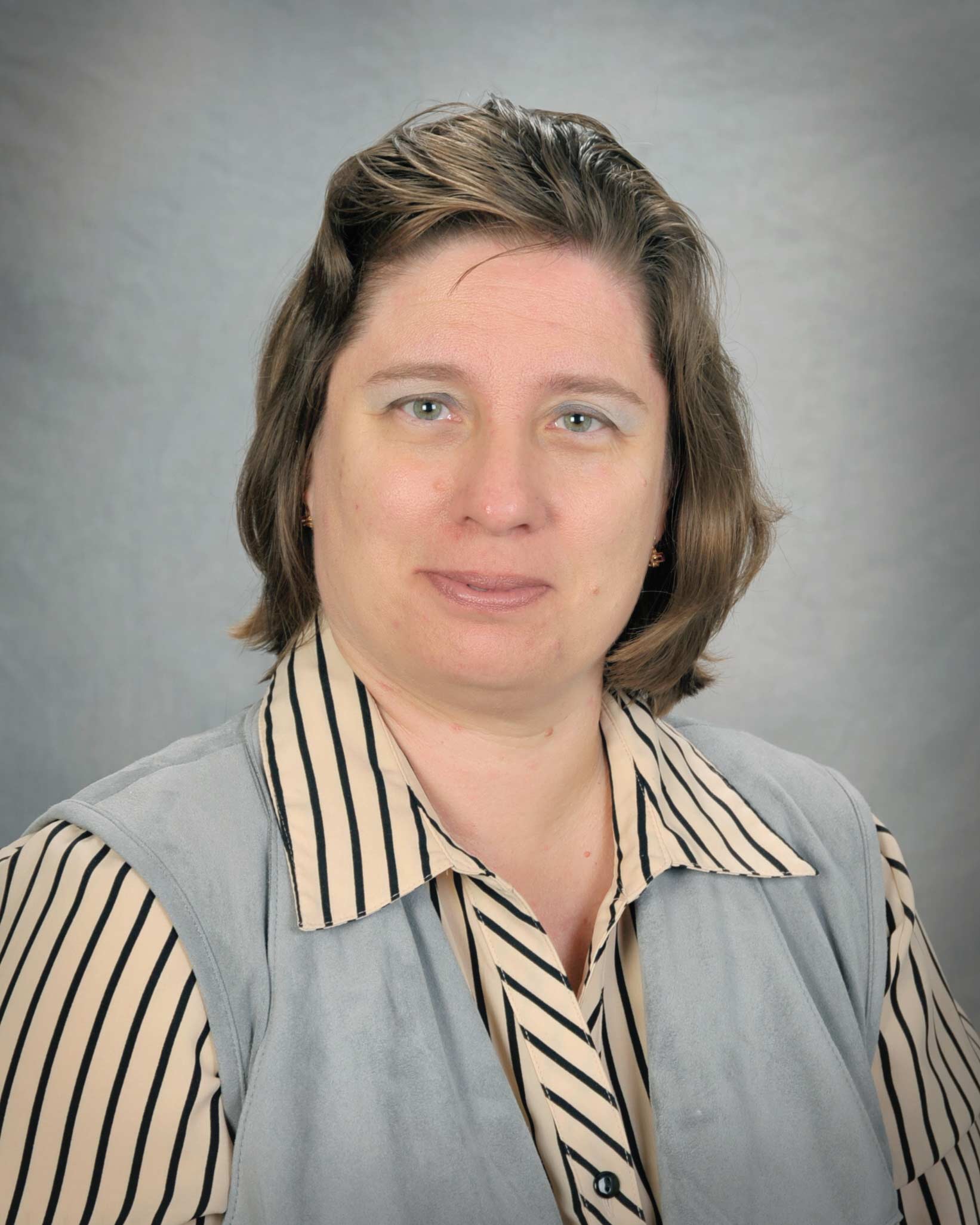
Galina V. Tsvetkova is a Senior Lecturer in the Department of Nuclear Engineering at Texas A&M University. Contact: Phone 979-845-4162, Email tsvetkovag@tamu.edu , Office AIEN M406B. Ph.D., Nuclear Engineering, Texas A&M University (2003) M.S., Molecular Physics and Physics of Kinetic Phenomena, Moscow State Engineering Physics Institute (1995) Her research spans Reactor Physics , Isotope Separations , and Molecular Dynamics & Separations Phenomena , focusing on advanced nuclear systems like the STAR-H2 and HTGR for hydrogen production, co-generation, and sustainable fuel cycles. Key publication trends include fast reactor systems , lead-cooled reactors , helium-cooled reactor integration , nuclear process heat applications , and actinide utilization to extend reactor fuel lifecycles.
Neven Y Ali serves as a Senior Lecturer III in the Department of Nuclear Engineering at the University of New Mexico, where she has held a faculty position since 2017 after transitioning from a postdoctoral fellowship at Missouri University of Science and Technology. Her academic credentials include: Ph.D. in Nuclear Engineering, Missouri University of Science and Technology M.S. in Nuclear Engineering, Missouri University of Science and Technology M.S. in Computer Information Systems, Arab Academy for Banking and Financial Sciences Dr. Ali's research program centers on thermal-hydraulics for fourth-generation nuclear reactors, light water reactors (LWR), small modular reactors (SMR), and advanced nuclear fuel manufacturing processes. She pioneered the application of non-invasive radioisotope-based measurement techniques—including Gamma Ray Computed Tomography and Radioactive Particle Tracking—to optimize gas-solid spouted bed systems for TRISO nuclear fuel particle coating, directly addressing commercialization bottlenecks in next-generation reactor technology. Her work bridges fundamental hydrodynamics with practical nuclear fuel fabrication challenges. Her teaching portfolio includes NE 323L Radiation Detection Measurement, reflecting her expertise in nuclear instrumentation and measurement methodologies.
Dr. Mostafa Yakout serves as an Assistant Professor in the Department of Mechanical Engineering within the Faculty of Engineering at the University of Alberta. A Professional Engineer (P.Eng.) licensed in Alberta and Ontario, he also holds an Adjunct Research Professor position at Western University (2022-2025). Previously, he served as a Sessional Instructor at McMaster University and an Assistant Lecturer at Alexandria University. His educational background includes: Postdoctoral Fellowship, McMaster University, Canada, 2019-2022 Ph.D. Mechanical Engineering, McMaster University, Canada, 2015-2019 M.Sc. Production Engineering, Alexandria University, Egypt, 2011-2013 B.Sc. Production Engineering, Alexandria University, Egypt, 2005-2010 Dr. Yakout's research focuses on developing process-driven solutions for additive manufacturing of next-generation materials, including alloys containing rare-earth metals, high-performance metal alloys, and high-temperature materials. His group employs numerical, analytical, and experimental methods to establish critical process-structure-property-performance relationships. This work directly supports clean technology development and industrial transformation toward net-zero emissions in Canadian manufacturing. Analysis of his recent publications (2021-2025) reveals dominant themes in laser powder bed fusion (LPBF), particularly Inconel 617 applications for small modular reactors, rare earth element-doped coatings, and magnetic alloy optimization for electric motors. His research consistently integrates multiphysics modeling, in-situ process monitoring, and microstructure-property relationship studies targeting aerospace, nuclear energy, and biomedical engineering applications. No specific scientific awards or fellowships are documented in the provided materials. Dr. Yakout currently accepts undergraduate students for research supervision. His group collaborates extensively with industry, government agencies, and academic institutions across Canada and internationally. As CARDD-Tech Research Lead, he focuses on critical minerals and rare earth elements to advance sustainable manufacturing solutions aligned with national clean technology initiatives. He leads the ANGAM Group, which specializes in additive manufacturing process development for advanced materials. The team's work emphasizes hybrid additive manufacturing techniques and design optimization for industrial applications requiring high-performance material solutions.
Lirong Liu is an Associate Professor at the School of Sustainability, Civil and Environmental Engineering within the Faculty of Engineering and Physical Sciences at the University of Surrey. Additionally, they hold a Research Fellow position at the University of Surrey's Institute for Sustainability. Their past affiliations include the University of Regina in Canada. Liu’s research spans interdisciplinary fields including environmental science, engineering, energy systems, and sustainability policy. Their work focuses on environ-economic modeling, climate change mitigation, and sustainable resource management. Key areas include hydrogen integration in industrial decarbonization, socio-economic impacts of emissions trading, and policy frameworks for sustainable development. Recent publications emphasize whole-system approaches to energy storage, building envelope improvements, and supply chain carbon emissions. Liu has developed advanced models for analyzing multi-regional environmental and economic interactions, such as factorial input-output analysis and copula-based systems modeling. Their research also addresses global challenges like post-Brexit trade impacts and small modular reactor siting under climate variability. No scientific awards are explicitly mentioned in the provided texts. Liu’s advising and grant activities are not detailed here, but their research collaborations span academia, industry, and policy sectors. They contribute to labs and teams focused on sustainability, energy transition, and climate resilience.
Shelley Welton is a Visiting Assistant Professor of Law at the University of South Carolina School of Law, specializing in climate change law, energy law, and environmental governance. Her research examines how climate change impacts legal frameworks and public policy, with publications in top-tier law reviews such as the Columbia Law Review and Harvard Environmental Law Review. Education: Ph.D. in Law, Yale Law School J.D., New York University School of Law Master of Public Administration in Environmental Science and Policy, Columbia University B.A., University of North Carolina at Chapel Hill Research Focus: Welton's work bridges legal scholarship and practical policy, addressing topics like administrative law reforms for climate governance, energy transition challenges, and equity in environmental decision-making. She emphasizes interdisciplinary approaches combining legal analysis with socio-environmental science perspectives. Professional Background: Prior to her academic role, Welton served as Deputy Director of Columbia Law School's Sabin Center for Climate Change Law and clerked for federal judges in the Eastern District of New York and the Fourth Circuit Court of Appeals. Her expertise spans judicial interpretation of environmental statutes and regulatory frameworks. Teaching: Welton teaches courses on Administrative Law, Energy Law, Environmental Law and Policy, and Climate Change Law at the University of South Carolina. Key Contributions: Her scholarship highlights systemic legal barriers to climate adaptation and proposes innovative regulatory solutions. She frequently collaborates with policymakers, NGOs, and international bodies on climate law initiatives.
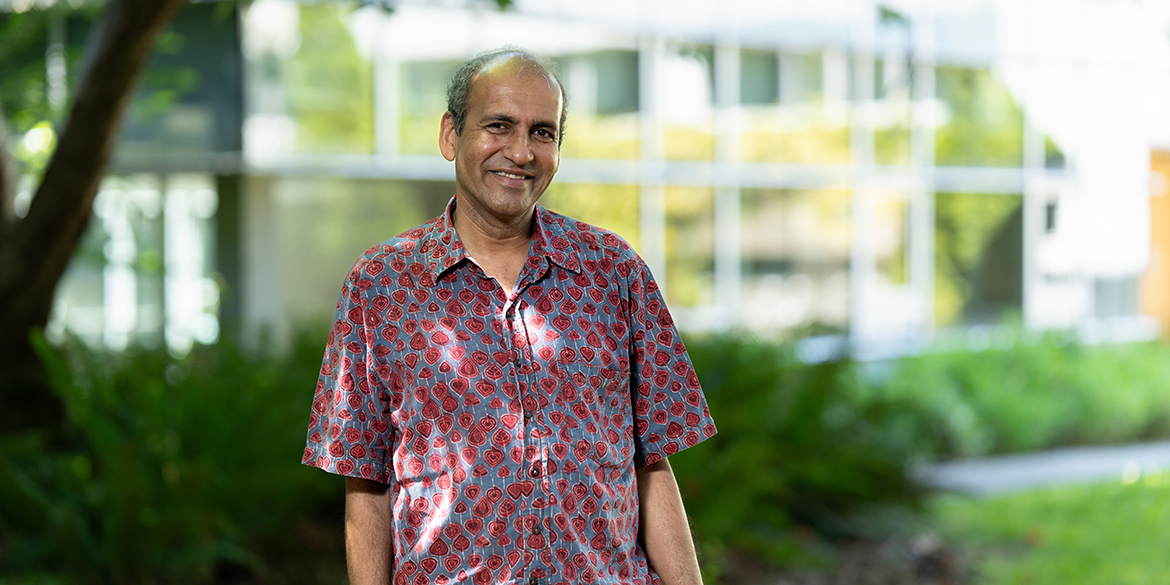
M.V. Ramana is a Professor and the Simons Chair in Disarmament, Global and Human Security at the School of Public Policy and Global Affairs (SPPGA) , University of British Columbia. He combines technical expertise with interdisciplinary methods to address policy-relevant questions in international security and energy supply , particularly focusing on nuclear energy and fissile materials related to nuclear weapons . Research Expertise includes Energy Policy , Science & Technology Policy , and Sustainable Resource Policy , with geographic specialization in South Asia . His recent book, Nuclear Is Not the Solution (2024), argues against nuclear energy as a climate solution due to high costs and long deployment timelines . He emphasizes renewable energy (solar/wind) and grid management as superior alternatives. Scientific Awards include the Leo Szilard Award (2014) and Guggenheim Fellowship (2003). He advises Ph.D. and M.Sc. students in energy policy and security studies, including Prerna Gupta , Sadia Tasleem , and Celeste Pomerantz . His 15+ recent publications analyze nuclear economics , accident risks , and policy barriers for small modular reactors (SMRs), nuclear waste management , and renewable energy transitions . Edits journals: Energy Research & Social Science , Science & Global Security Advises on Canadian nuclear policy via affiliations like the International Panel on Fissile Materials
Dr. Michael Bluck is an Associate Professor in Nuclear Engineering at Imperial College London's Department of Mechanical Engineering. He serves as Director of the Centre for Nuclear Engineering and the Rolls-Royce Nuclear University Technology Centre, coordinating research, teaching, and policy advice across nuclear fission and fusion. His expertise spans advanced computational methods applied to nuclear reactor design, including spherical tokamaks and small modular reactors (SMRs). He holds a BSc (Hons) in Mathematics (Mathematical Physics) from the University of Kent and a PhD from Imperial College on integral equation methods for wave propagation. Bluck's research focuses on integrating computational mechanics with nuclear engineering challenges, such as thermal mixing in reactor components and uncertainty quantification in fusion economics. He leads interdisciplinary projects involving Bayesian networks for decision support, CFD simulations for fluid dynamics, and collaboration with industry partners like Rolls-Royce. His work addresses both technical and policy aspects of nuclear energy, including cost-driver analysis and government advisory roles. Key affiliations include the Applied Mechanics and Nuclear Engineering groups at Imperial. His research outputs span computational methods (e.g., POD/SPOD analysis, Gaussian process emulation) and socio-economic studies on fusion commercialization. Though no explicit awards are listed, his contributions to nuclear innovation are reflected in his leadership roles and collaborative industry projects. Bluck’s advising and grants involve advancing computational tools for nuclear systems, with notable projects on SMRs and submarine reactor technologies. His lab, the Centre for Nuclear Engineering, fosters cross-disciplinary research and education in nuclear science and technology.
Srinivas Garimella is the Hightower Chair in Engineering and Professor at the Georgia Institute of Technology's Woodruff School of Mechanical Engineering, leading the Sustainable Thermal Systems Laboratory. He holds a PhD from The Ohio State University (1990) and has held academic and industry roles including positions at Iowa State University, Western Michigan University, Battelle Memorial Institute, and General Motors. His research focuses on sustainable energy systems, including absorption heat pumps, phase-change microchannel heat exchangers, and thermal management for automotive and building applications. He has pioneered studies on heat and mass transfer in binary mixtures, supercritical fluid dynamics, and energy efficiency solutions. Honors include the ASME ICNMM 2012 Outstanding Researcher Award, Ohio State Alumni Achievement Award, and NSF CAREER Award. His work bridges academia and industry, addressing global challenges in decarbonization and energy sustainability. Education: Ph.D., Mechanical Engineering, The Ohio State University, 1990 M.S., Mechanical Engineering, The Ohio State University, 1984 B.Tech, Indian Institute of Technology, Kanpur, India, 1982 Research interests span heat transfer mechanics, combustion optimization, and renewable energy integration. His lab develops novel thermal systems for buildings, vehicles, and industrial processes, emphasizing scalable, sustainable solutions.
Romain Renoult is a researcher at Politecnico di Milano's Nuclear Reactors Group (NRGroup), with a focus on nuclear fuel and reactor core modeling. He has been involved in neutronic analysis of Small Modular Reactors (SMRs) using Monte Carlo code (SERPENT) and fuel performance modeling for nuclear applications. Educational Background: MSc (2013): "Extension and application of a fuel pin performance code" MSc (2020): "Modelling of helium behaviour in oxide nuclear fuel for fuel performance analysis" PhD (2018): "Modelling and assessment of inert gas behaviour in UO2 nuclear fuel for transient analysis" His research spans reactor physics, fuel behavior under transient conditions, and reduced-order modeling techniques. Current R&D activities at NRGroup (2020–today) include fuel performance modeling, while earlier work (2015) focused on SMR core design at Ecole des Mines de Nantes. Collaborations include Alessandro Cechet and NRGroup colleagues. NRGroup affiliations include roles as Research Assistant at Politecnico di Milano, contributing to GenIV reactor technologies like Lead-cooled Fast Reactors (LFRs).
Artem Gaganov is a Professor overseeing MSc students in nuclear engineering and related fields. His research focuses on thermal-hydraulic simulations of nuclear reactors, including Small Modular Reactors (SMRs), and the application of tools like RELAP5 for safety analysis and design optimization. He has advised students on topics such as the modeling of RITM-200 SMR for land deployment and thermal-hydraulic simulations of NuWard-like SMRs under accident scenarios (SBO, LOCA). His work contributes to advancing nuclear energy safety and efficiency through computational modeling and reactor design innovation. No academic awards or formal articles are explicitly listed, though his student advisement highlights active engagement in nuclear research and education.
Ignacio Guirado is a researcher at NRGroup since 2022, specializing in advanced nuclear energy systems. His work focuses on thermal-hydraulics, passive safety systems, small modular reactors (SMRs), and molten salt reactor technologies. Collaborations include ANSALDO NUCLEARE and Thales Alenia Space under Italy’s PNRR-funded Industrial PhD programs. Research emphasizes experimental validation, computational modeling (CFD/system codes), and digital twin frameworks. He co-supervises PhD candidates through initiatives like the 2022–2023 Industrial PhD fellowships, involving 6-month international placements. Current projects include neutronics analysis and multiphysics modeling of noble metal deposition in molten salt fast reactors. No specific awards or grants are detailed in the provided text, though his involvement in PNRR-funded programs highlights institutional recognition. His work bridges academic research and industrial applications in nuclear energy innovation.
Nicolò Badodi is affiliated with NRGroup, where he has been involved in R&D activities since 2020. His research focuses on advanced nuclear technologies, including Molten Salt Reactors (MSRs), neutronics, thermal-hydraulics, and multiphysics modeling. He has contributed to projects like the ELSMOR initiative, which involves Compact Plate Heat Exchangers for Small Modular Reactors (SMRs). His work integrates experimental and numerical analysis with simulation framework development and digital twin technologies. He supervises PhD and MSc students, overseeing theses such as 'Multiphysics Modeling Approach for Noble Metals Deposition in MSRs' (Giovanni Zullo) and 'Modelling of Gaseous/Volatile Fission Products Release from Oxide Fuel' (Stefano Passoni). His research also extends to computational fluid dynamics (CFD) applications in nuclear systems. No scientific awards are explicitly mentioned in the provided texts. His professional network includes collaboration with professors, research assistants, visiting researchers, and NRGroup alumni, indicating active academic-industrial engagement.