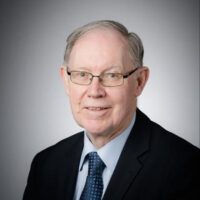
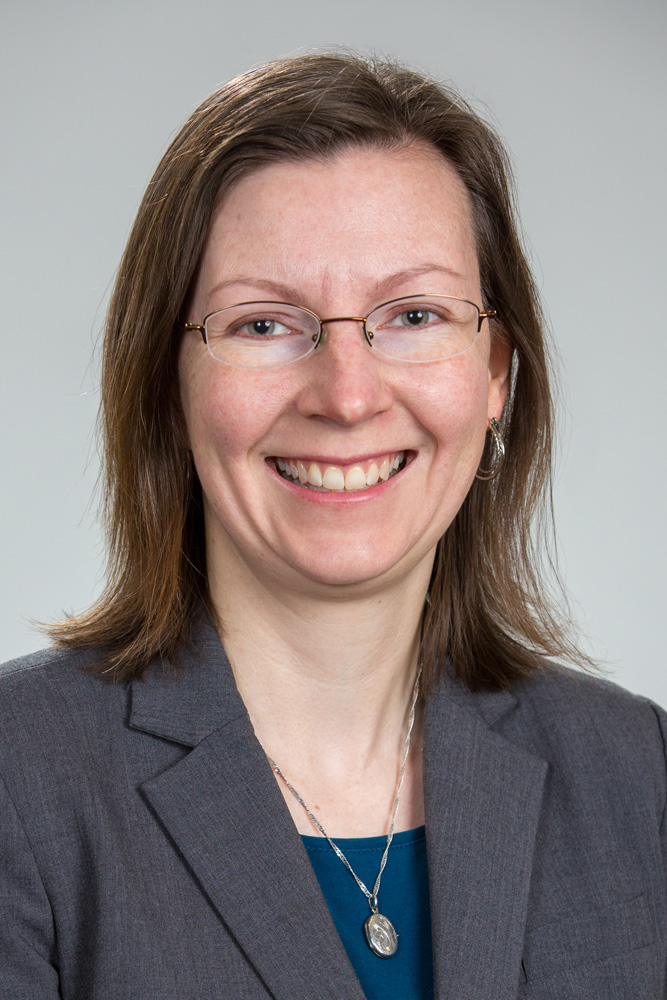
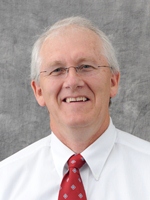
Marat Margulis is Associate Lecturer in Nuclear Engineering at the University of Derby's College of Science and Engineering. His research focuses on advanced reactor technologies including small modular reactors (SMRs), fuel cycle optimization, and safety analysis. Recent publications examine neutron spectrum behavior in PWRs, americium-based burnable poisons, and boron-free reactor control systems. Work contributes to next-generation nuclear systems with enhanced safety and proliferation resistance. Research areas: Advanced reactor design validation Fuel depletion and spectral analysis SMR operational safety Experimental reactor physics
Professor Paul Stewart is affiliated with the University of Derby's College of Science and Engineering, specializing in Control and Systems Engineering. His research focuses on biomedical monitoring systems, nuclear reactor optimization, airport operations, and aerospace propulsion. Notable projects include developing real-time blood pressure estimation systems for dialysis patients and advancing modular nuclear reactor designs using genetic algorithms. He collaborates across disciplines, addressing challenges in energy efficiency, control systems, and transportation logistics. His work integrates advanced algorithms and engineering principles to solve complex problems in healthcare, aerospace, and sustainable energy. Research interests span hemodialysis monitoring technologies, genetic algorithm applications in modular systems, and multi-objective optimization for airport ground movements. His contributions also include pioneering studies on solar-powered high-altitude aircraft and energy-efficient electric propulsion systems. Despite no explicitly listed awards or grants, his prolific publications reflect sustained academic and industrial engagement. Key collaborations involve institutions like the University of Derby and international teams in nephrology, aerospace, and transportation engineering fields. While no labs or formal research teams are named, his work indicates involvement in interdisciplinary research networks focused on practical engineering solutions with societal impact.
Dr. Braden Limb is a Research Scientist in the Department of Mechanical Engineering at Colorado State University, affiliated with the Walter Scott, Jr. College of Engineering. He works under Dr. Jason Quinn in the Sustainability Research Laboratory, focusing on techno-economic analyses and optimization of sustainable technologies like electrified transportation and carbon capture systems. Education: PhD in Systems Engineering, Colorado State University MS and BS in Mechanical Engineering, Utah State University Research Interests: His work spans techno-economics, life cycle analyses, and optimization of sustainable systems. Key areas include carbon capture technologies, renewable energy integration, thermal energy storage, and biofuel sustainability assessments. He evaluates the economic viability of emerging green infrastructure and climate financing mechanisms. Advising & Grants: No formal advisees listed. His research is supported by institutional collaborations within the Sustainability Research Laboratory. Labs/Teams: Active member of the Sustainability Research Laboratory, contributing to cross-disciplinary projects on energy systems and environmental policy.
Prof. Damien Ernst is a faculty member at the Montefiore Institute, Department of Electrical Engineering and Computer Science, University of Liège (Belgium). His research focuses on energy systems, remote renewable energy hubs, reinforcement learning, and optimization algorithms. He actively contributes to decarbonization strategies for hard-to-abate sectors like shipping and aviation. Academic Rank: Professor University: University of Liège School: Montefiore Institute Department: Electrical Engineering and Computer Science Research interests include: Design and techno-economic analysis of remote renewable energy systems Reinforcement learning applications in energy and optimization Energy transition policy and sustainability modeling Machine learning techniques for energy system transparency Integration of nuclear, hydrogen, and battery technologies His recent publications demonstrate expertise in: Remote Renewable Energy Hub (RREH) design Small Modular Reactor (SMR) integration Asymmetric Actor-Critic algorithms Energy system optimization and modeling Grid stability and hosting capacity analysis Explainable AI for closed-domain question answering Prof. Ernst leads PhD projects at the intersection of Operations Research and Energy Systems, focusing on energy systems models' transparency and optimization techniques.
Dr. Glenn Harvel is a Professor in the Department of Energy and Nuclear Engineering at Ontario Tech University, located in Oshawa, Ontario. He holds a PhD in Nuclear Engineering (McMaster University, 1995) and has over three decades of academic and research experience. His expertise spans nuclear safety, energy systems optimization, and advanced diagnostic techniques. Education: PhD in Nuclear Engineering, McMaster University (1995) Master of Engineering in Engineering Physics, McMaster University (1991) Bachelor of Engineering, McMaster University (1989) Research Focus: Dr. Harvel’s research integrates Diagnostic Techniques (neutron radiography, ultrasonics), Energy Systems (EHD-driven pollution control and heat transport), and Nuclear Design (small modular reactors and plant aging mitigation). Recent work includes supercritical fluid thermal analysis and non-destructive material evaluation. Recent Research Trends: His 2013 publications emphasize supercritical fluid dynamics and advanced reactor cooling systems. Collaborations with industry (e.g., Toyota, CSA) and organizations (NSERC, OCE) highlight applied research in sustainable energy and nuclear safety. Affiliations and Memberships: Member of Canadian Nuclear Society Member of ASME Member of IEEE-DEIS Licensed Professional Engineer (PEO) Teaching: He instructs courses in nuclear plant design, safety, thermalhydraulics, and reactor engineering. Research Infrastructure: Based at the Energy Systems and Nuclear Science Research Centre (ERC), his lab focuses on experimental and computational analysis of energy systems and nuclear components.
Markus Drapalik is a researcher at the Institute for Safety and Risk Sciences within the Department of Landscape, Water and Infrastructure at the University of Natural Resources and Life Sciences, Vienna (BOKU). His work spans risk research, renewable energy systems, radiation protection, and technology assessment, with a strong focus on wind energy safety, particularly ice throw phenomena. He holds a doctoral degree in Natural Resources and Life Sciences and previously pursued physics doctorate studies at the University of Vienna. His research interests include risk assessment in renewable energy, particularly urban small wind turbines, photovoltaics, biogas, and nuclear safety. He has led multiple research projects on ice throw simulation, risk analysis of small wind turbines, and safety considerations for small modular reactors. His work integrates experimental physics, engineering modeling, and policy-relevant technology assessment. His recent publications reflect a strong trend in renewable energy risk mitigation, especially concerning wind turbine icing, alongside contributions to nuclear safety standards and advanced materials assessment. These works appear in journals related to cold regions science, sustainable energy, and safety research, demonstrating interdisciplinary engagement. Scientific awards: No specific awards listed in the provided text. Advising and Grants: Markus Drapalik has supervised numerous master’s theses on topics including wind turbine recycling, seasonal energy storage, and photovoltaic applications. He has been involved in multiple externally funded research projects, supported by entities such as FFG, EU, and the Austrian Federal Environment Agency, often serving as project leader or key contributor in areas of energy risk and safety. Labs and Teams: He is a core member of the research team at the Institute for Safety and Risk Sciences at BOKU, collaborating with colleagues such as Friederike Frieß, Nikolaus Müllner, and Christian Gepp. He has co-organized the Vienna Nuclear Symposium series and contributed to EU-level foresight projects on security scenarios and disaster management.
Professor Teodora Retegan Vollmer leads the Nuclear Chemistry and Industrial Materials Recycling unit at Chalmers University of Technology, Sweden. Her research focuses on the chemical safety of advanced nuclear reactor systems , including fuel-coolant-cladding interactions under normal and extreme scenarios, and novel nuclear fuel pathways via Partitioning for Transmutation (P&T) . She also drives hydrometallurgical innovations for materials recycling, particularly in WEEE (waste electrical and electronic equipment) and mining tailings. Her work spans European Commission (EC) projects like A-CINCH for nuclear education, SAFETY for accident-tolerant fuels, and RareGreen for sustainable rare earth processing. She collaborates closely with industry through platforms like ENEN (European Nuclear Education Network) and ANItA (Academic-Industrial Nuclear Technology Initiative). Key Research Themes: Nuclear Reactor Safety (Lead/Bismuth Coolants) Advanced Fuel Development (Uranium Nitride, Thorium Doping) Rare Earth Recovery (Neodymium Magnets, Fluorescent Lamps) Solvent Extraction (BTBP Ligands, TODGA, Cyanex 572) Urban Mining (E-Waste Recycling) Notable Projects: ENEN2plus (2022–2026) SKILLS4NUCLEAR (2024–2028) PASCAL (2020–2024)
Dr. Konstantin Mikityuk is Group Leader of Advanced Nuclear Systems at Paul Scherrer Institute's Laboratory for Simulation and Modelling. He has researched fast reactor safety since 1992, focusing on neutronics and thermal-hydraulics of sodium-cooled systems. As coordinator of the Horizon-2020 ESFR-SMART project, he leads European sodium fast reactor safety research. He represents Switzerland in the Generation-IV International Forum Experts Group and co-chairs its Education Task Force. Dr. Mikityuk also serves as Swiss representative to IAEA's Technical Working Group on Fast Reactors. His research develops computational methods for reactor safety assessment, including advanced simulation tools for sodium boiling phenomena, core power distribution, and fuel performance. Recent work examines metallic fuel behavior, accident progression in loss-of-flow scenarios, and uncertainty quantification methodologies. He obtained his PhD from Russian Research Centre "Kurchatov Institute" (2002) and holds engineering degrees from Moscow Engineering Physics Institute.
John Luxat is a Professor in the Department of Engineering Physics at McMaster University and holds the NSERC/UNENE Industrial Research Chair in Nuclear Safety Analysis. He earned his Ph.D. in Electrical Engineering from the University of Windsor. Luxat's research develops advanced methodologies for nuclear safety analysis, including best-estimate models for accident progression, uncertainty quantification, and probabilistic risk assessment. His work investigates thermalhydraulic phenomena in reactor systems, severe accident management for CANDU and advanced reactors, and safety aspects of small modular reactors. Experimental studies focus on boiling heat transfer mechanisms and vapor formation dynamics under depressurization scenarios. Luxat has served as President of the Canadian Nuclear Society and Chairman of the International Nuclear Energy Academy. He currently acts as Senior Advisor on Nuclear Energy in McMaster's Office of the Vice-President, Research. His research informs safety guidelines for nuclear power plants internationally.
Ramteen Sioshansi is a Professor in the Department of Engineering and Public Policy, the Department of Electrical and Computer Engineering, and Heinz College at Carnegie Mellon University, where he also serves as Associate Department Head for Graduate Affairs and Director of the Carnegie Mellon Electricity Industry Center. He is additionally an Adjunct Professor at The Ohio State University’s Department of Integrated Systems Engineering. His work bridges engineering, economics, and policy with a focus on energy systems and market design. His research interests include energy storage, electricity market design, renewable integration, decarbonization, grid resilience, and energy justice. He employs advanced optimization and modeling techniques to analyze how energy systems can be operated and regulated more efficiently and equitably. His work often addresses the economic and policy challenges of integrating low-carbon technologies and distributed energy resources. Ramteen's recent publications highlight a strong trend in analyzing the role of energy storage in providing multiple grid services, reforming market designs to accommodate long-duration storage, and ensuring equitable access to resilient energy. His work spans technical modeling, economic analysis, and policy implications, frequently appearing in high-impact journals such as Current Sustainable/Renewable Energy Reports and The Energy Journal . Energy Justice Through Energy Storage Long-Duration Energy Storage (LDES) Policy Electric Vehicle Integration Demand Flexibility and Aggregators Hydrogen and Carbon Removal Economics Small Modular Reactors and Nuclear Policy Ramteen has received recognition as a top researcher in energy and energy storage domains. He actively contributes to the academic community through INFORMS, particularly in the Energy, Natural Resources, and the Environment (ENRE) section, and encourages nominations for prestigious awards like the Harold Hotelling Medal. He advises graduate students, including recent PhD graduate Dr. Hyeong Jun Kim and former student Joe Duggan. His research is supported by collaborations across academia, national labs (e.g., Argonne), and industry. He frequently engages with media on topics such as natural gas supply risks, EV integration, and the future of nuclear energy. Ramteen leads the Carnegie Mellon Electricity Industry Center, a hub for interdisciplinary research on electricity markets and policy. He is also a Faculty Affiliate at the Wilton E. Scott Institute for Energy Innovation, where he contributes to CMU’s broader energy innovation ecosystem.
Jennifer McKellar is an Associate Professor and Department Chair in the Department of Energy and Nuclear Engineering at Ontario Tech University, Faculty of Engineering and Applied Science. Her work focuses on sustainable energy systems, integrating life-cycle assessment, environmental analysis, and decision-making tools to inform energy policy and technology development. Education: PhD, University of Toronto, Department of Civil Engineering, Graduate Collaborative Program in Environmental Engineering (2012) MASc, University of Toronto, Department of Chemical Engineering and Applied Chemistry (2005) BASc, University of Toronto, Department of Chemical Engineering and Applied Chemistry, Undergraduate Collaborative Program in Environmental Engineering (2003) Dr. McKellar's research centers on energy systems analysis, with a strong emphasis on life-cycle assessment and costing, environmental impacts of small modular reactors, hydrogen and fuel cells, and real options analysis under uncertainty. She investigates energy supply chains, particularly in oil sands and nuclear sectors, to evaluate sustainability and inform decision-making for government, industry, and technology developers. Her goal is to support the transition to sustainable energy systems through rigorous, interdisciplinary research. Her recent publications reflect a consistent focus on energy sustainability, covering topics such as oil sands emissions, small modular reactors, urban energy systems, and sustainability integration in engineering education. The research spans environmental science, energy policy, and engineering economics, often combining life-cycle methods with expert elicitation and real options modeling to address uncertainty and complexity in energy decisions. Scientific Awards: Ontario Graduate Scholarship (2010-2011) Natural Sciences and Engineering Research Council (NSERC) of Canada – Postgraduate Scholarship D2 (2008-2010) Government of Ontario/DuPont Canada Scholarship in Science and Technology (2003-2004) Mackay Hewer Memorial Prize (2003) Canadian Society for Chemical Engineering Medal (2002) Dr. McKellar advises on energy policy and sustainability, with her research supported by methodologies in life-cycle assessment and expert elicitation. She teaches courses such as Fuel Cell Design, Solar Energy Technologies, and specialized graduate topics in life cycle assessment and small power energy systems. She is actively involved in professional societies including the Canadian Nuclear Society, International Society for Industrial Ecology, and the Chemical Institute of Canada. As a licensed Professional Engineer in Ontario, she bridges academic research with real-world engineering applications. No specific grants or advising relationships with named students are listed in the provided text. She is affiliated with professional organizations that support her interdisciplinary work in energy and sustainability, and she contributes to curriculum development by integrating sustainability thinking into technical education.
Park Chang Je is an Associate Professor in the Department of Quantum and Nuclear Engineering at Sejong University , South Korea. He leads the Sejong Nuclear Core Design and Reactor Analysis Lab (SeNDAL) and has previously served as a Principal/Senior Researcher at the Korea Atomic Energy Research Institute (KAERI). His expertise lies in nuclear reactor design, neutron transport theory, Monte Carlo simulations, and spent nuclear fuel analysis. Education: Ph.D. in Nuclear Engineering, Korea Advanced Institute of Science and Technology (KAIST), 2001 M.S. in Nuclear Engineering, KAIST, 1995 B.S. in Nuclear Engineering, Seoul National University, 1993 Research Interests: His research spans a wide range of nuclear engineering disciplines, including: Nuclear core design and reactor analysis Neutron transport and diffusion theory Monte Carlo theory and applications Spent nuclear fuel characterization and safeguards Thorium fuel cycle and small modular reactors Radiation shielding and nuclear safety Recent Research Trends: His recent publications focus on advanced nuclear reactor design, safety analysis of spent fuel storage systems, Monte Carlo-based shielding analysis, and innovative fuel cycle strategies. He has contributed to the design of thorium-based reactors, development of neutron multiplicity counting techniques, and evaluation of nuclear waste management systems. Research Projects & Funding: Development of Prompt Response In-Core Instrument and 3D Core Flux Distribution Synthesis Methodology (2023) Human Resources Development Project for High-Level Waste Management (2023) Development of manufacturing technology for neutron-absorbing composite materials for spent fuel storage (2022) Regulatory methodology development for protection against radiological sabotage (2020) Conceptual design of thorium-based ship reactors and space nuclear systems (2017–2021) Laboratory & Team: He directs the Sejong Nuclear Core Design and Reactor Analysis Lab (SeNDAL) , which focuses on reactor physics, nuclear fuel cycle analysis, and radiation transport simulations. The lab collaborates with domestic and international institutions including KAERI, KAIST, and international research reactors.
Joseph D. Smith is a Professor in the Linda and Bipin Doshi Department of Chemical and Biochemical Engineering at Missouri University of Science and Technology. He holds the Wayne and Gayle Laufer Endowed Energy Chair and serves as Director of the Energy Research and Development Center and Executive Director of the Small Nuclear Modular Reactor Research and Development Consortium. With over 30 years of industry experience in chemical and petrochemical sectors, Dr. Smith specializes in computational fluid dynamics (CFD) for reactive flow systems, fiber-optic sensing technologies, and advanced materials processing. BS, MS, PhD in Chemical Engineering from Brigham Young University Former industrial roles at Dow Chemical, Cabot Corporation, Koch Industries, and Idaho National Laboratory Academic appointments at Tennessee Technological University, University of Michigan, University of Illinois-Urbana/Champaign, and University of Tulsa Dr. Smith’s research focuses on: CFD modeling of pulverized-fuel combustion, gasification, and industrial heating systems Fiber-optic sensor development for extreme environments in steelmaking and lunar applications Molten salt electrolysis for aluminum extraction from lunar regolith Refractory material performance in high-temperature industrial processes His recent publications highlight trends in: Advanced optical sensor systems for real-time industrial monitoring Lunar resource utilization through electrostatic and magnetic separation High-temperature analysis of molten materials and refractory interactions Dr. Smith has developed proprietary CFD models, contributed chapters to industry handbooks, and holds eight patents in combustion and process optimization technologies. He also serves as an expert witness in gas flare performance and hydrocarbon processing litigation.
Bryan Watson is an Assistant Professor of Systems Engineering in the College of Engineering at Embry-Riddle Aeronautical University, affiliated with the Department of Electrical Engineering and Computer Science. His work bridges systems engineering, resilience, and sustainable design, with applications in manufacturing, energy, and infrastructure systems. B.S. in Systems Engineering, United States Naval Academy (2009) M.S. in Mechanical Engineering Ph.D. in Mechanical Engineering, Georgia Institute of Technology His research focuses on enhancing the resilience of Systems of Systems through biologically inspired design, sustainable development, and distributed demand estimation. He integrates principles from nature to improve reliability, safety, and sustainability in interconnected systems. His interdisciplinary work spans mechanical, electrical, and industrial engineering domains. The recent publications highlight a strong trend in resilience engineering, sustainable systems design, and biologically inspired solutions. Key domains include smart grids, manufacturing networks, aerospace systems, and cyber-physical infrastructures. The research emphasizes modeling, optimization, fault tolerance, and human-centered design, often leveraging systems thinking and model-based approaches. Nuclear Professional Engineer Certification Master Training Specialist Certification (military’s highest instructor accreditation) Naval Achievement Medal (x2) Military Outstanding Volunteer Service Medal Naval Commendation Medal 2024 ERAU College of Engineering Teacher of the Year 2024 ERAU Research Mentor of the Year 2022-2023 ERAU Outstanding Small Teaching Practice Award Bryan Watson is an active mentor and educator, recognized for excellence in teaching and research guidance. He leads student projects in systems engineering and resilience, and his grants support innovation in sustainable and adaptive systems. Though specific grant titles are not listed, his recognition as Research Mentor of the Year underscores his leadership in student development and sponsored research. His work is associated with the Computation and Advancement of Sustainable Systems Lab and the Sustainable Design and Manufacturing Lab during his doctoral studies. At Embry-Riddle, he continues to develop frameworks for resilient, user-safe, and sustainable systems, likely leading a research group focused on systems-of-systems engineering and bio-inspired design.
Dr. Adam Rajewski is a Polish nuclear energy expert and Assistant Professor at the Warsaw University of Technology 's Institute of Thermodynamics . He teaches Energy Sources & Conversion and Advanced Renewable Energy Sources to part-time engineering students. His research focuses on nuclear energy integration , gas-fired power systems , and energy transition challenges. As a nuclear policy analyst, he led industrial research on market conditions for small modular reactors and flexible power generation . He serves on the European Nuclear Society 's advisory council and edits the Journal of Power Technologies . Recent work explores thermal energy storage , power system flexibility , and low-carbon cogeneration through 20+ technical publications. 2021: Received 'Meritorious for Energetics' honor 2009: Distinguished Master's Thesis award, Polish Nukleonic Society He organized international nuclear conferences and collaborated with Heat-Tech Center on diploma projects. Current research involves molten carbonate fuel cells and energy decarbonization strategies.