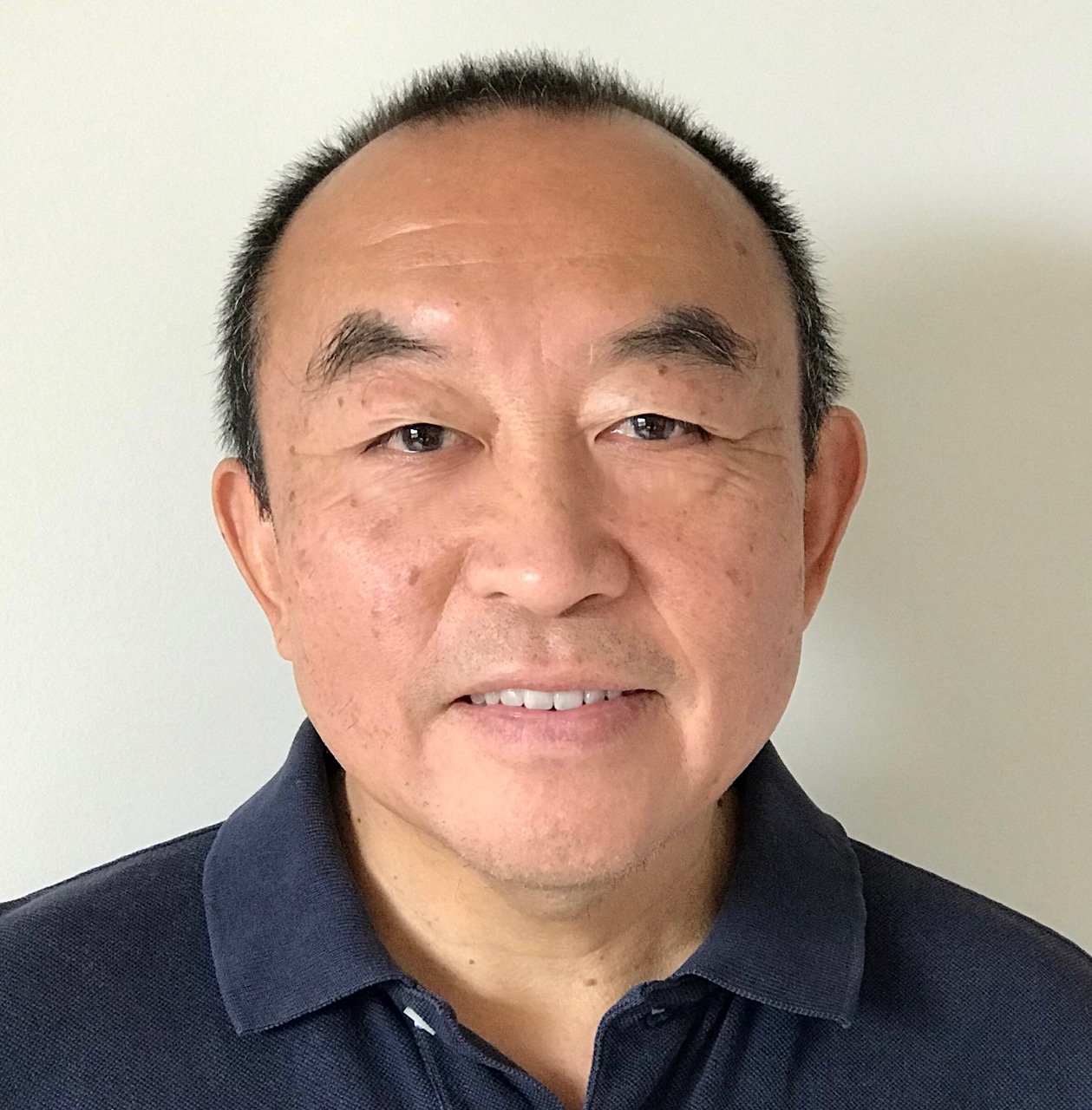
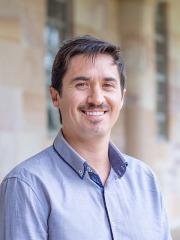
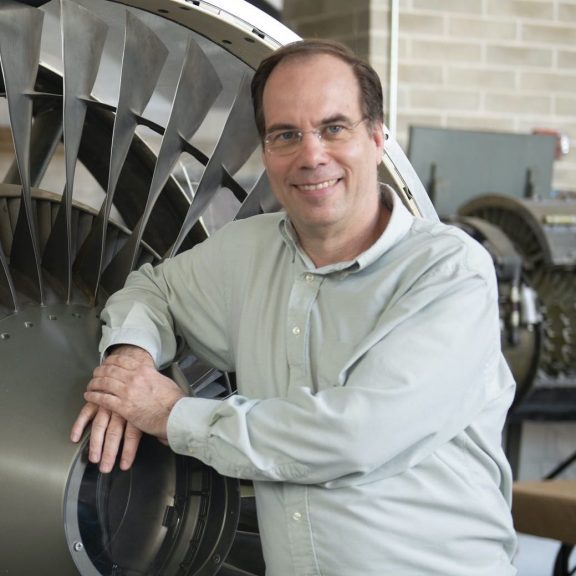
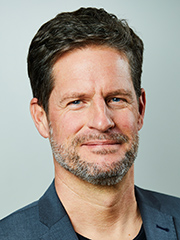
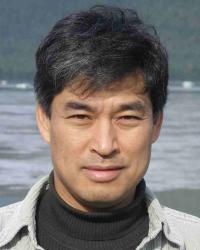
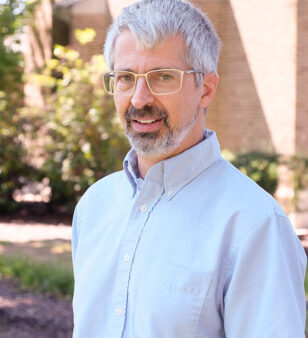
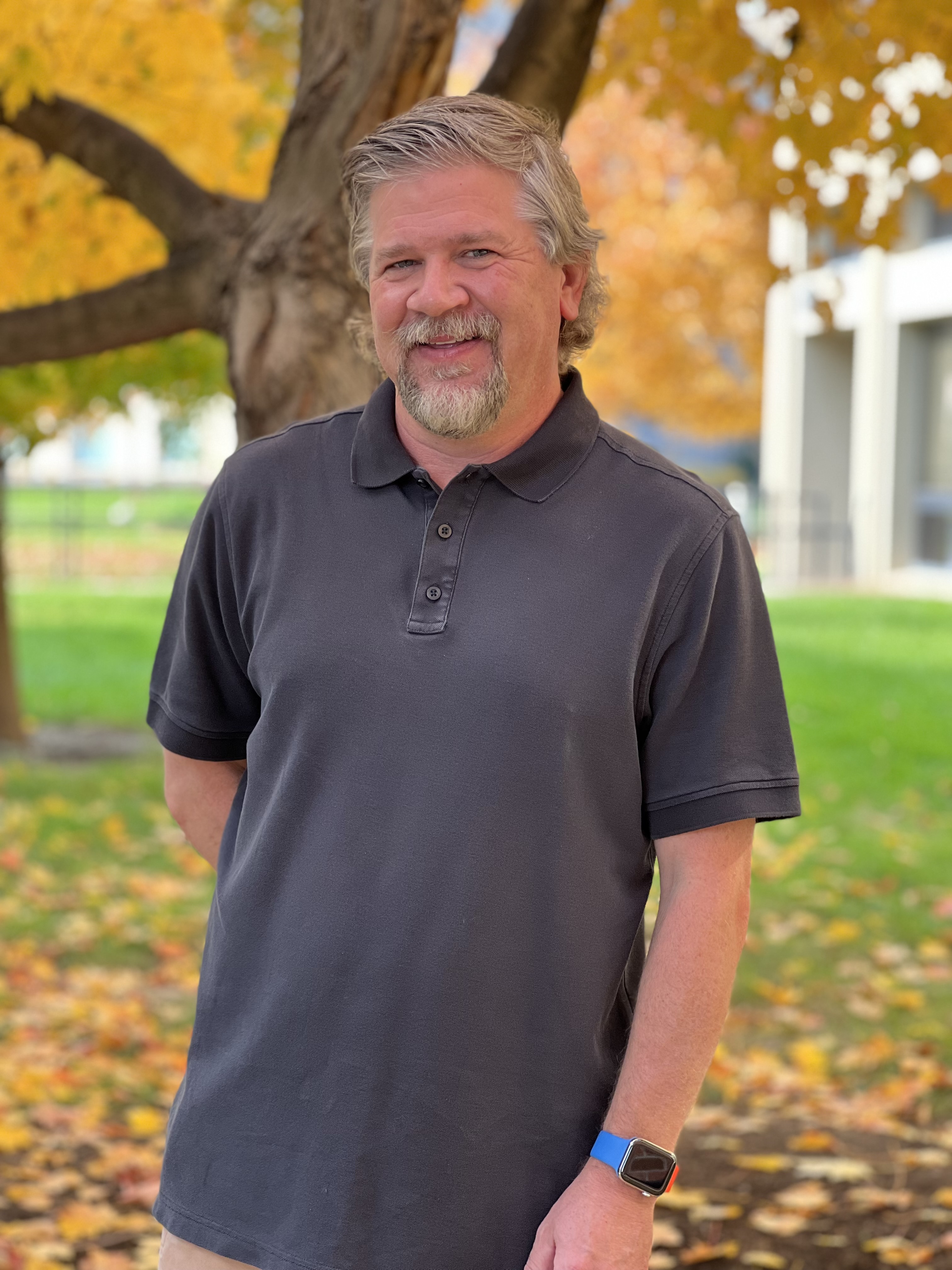
Renjie Feng is a Research Fellow in Mathematics and AI at the School of Mathematics and Statistics and the Sydney Mathematical Research Institute , University of Sydney. His work bridges probability theory, statistics, and applications in machine learning, deep learning, and artificial intelligence. His research interests focus on probability theory and its applications to machine learning , random matrix theory , and statistical physics . He investigates extreme value problems, spectral properties of random matrices, and topological features of random fields over Riemannian manifolds. Recent publications highlight trends in random matrix theory (GUE, GOE, GSE), extreme gap problems , determinantal point processes , and Wiener chaos . Collaborative works with F. Götze, D. Yao, and R. Adler emphasize U-statistics , multivariate linear statistics , and random topology inspired by Poisson point process studies.
George Yin is a Professor in the Department of Mathematics at the University of Connecticut (since 2020). Previously, he held the position of Distinguished Professor at Wayne State University (2017–2020) and has been a faculty member there since 1988. He earned his Ph.D. in Applied Mathematics from Brown University in 1987, along with M.S. degrees in Applied Mathematics and Electrical Engineering, and a B.S. in Mathematics from the University of Delaware (1983). His research focuses on stochastic optimization, control theory, stochastic systems, and numerical methods, with applications to biology, finance, and engineering. He has held editorial roles at journals such as SIAM Journal on Control and Optimization and has received prestigious awards including SIAM Fellow (2015), IEEE Fellow (2002), and IFAC Fellow (2014–2017). Key funding includes continuous NSF support since 1989, grants from the Air Force Office of Scientific Research, and others. His work spans theoretical advancements in stochastic systems and practical applications in energy systems, control engineering, and data science. He has advised numerous students and maintains active collaborations internationally. Labs/Teams: Goldenson Center for Actuarial Research, Quantitative Learning Center. Grants: NSF, AFOSR, ARO, NSA, and multiple institutional grants.
Fima Klebaner is Professor in the School of Mathematics at Monash University and Director of the Centre for Modelling of Stochastic Systems. His research spans stochastic processes, financial mathematics, and population biology, with emphasis on limit theorems, branching processes, and diffusion models. Current projects include ARC-funded work on stochastic population dynamics and financial derivatives pricing. Key research areas: 1) Population-dependent stochastic systems; 2) Large deviation principles; 3) Financial mathematics (Dupire formula, volatility); 4) Approximation methods for complex processes. Recent publications (2018-2025) show balanced focus on theoretical probability (45%) and applied modeling (55%), particularly in ecology and finance. Article analysis reveals advanced methodologies in: 1) Stochastic calculus applications (33% of recent works); 2) Limit theorems for interacting systems (27%); 3) Financial mathematics innovations (20%). Theoretical contributions frequently interface with biological and financial applications.
Dr. Jorge Miranda-Pinto is a Senior Lecturer at the School of Economics within the Faculty of Business, Economics and Law at the University of Queensland. He is also a Research Associate at the ANU Centre for Applied Macroeconomic Analysis (CAMA) and an Affiliate of the Centre for Efficiency and Productivity Analysis. His research focuses on applied macroeconomics, international economics, and macroeconomic theory, with an emphasis on business cycle fluctuations, production networks, fiscal policy transmission, and sectoral shifts. He holds a PhD in Economics from the University of Virginia (2017). Educations: PhD in Economics (University of Virginia, 2017) His research explores the role of firm and household heterogeneity in shaping macroeconomic volatility and the effects of fiscal stimulus. Recent work includes analyzing commodity price shocks, service trade impacts, and monetary policy transmission mechanisms. He has contributed to projects such as the ARC-funded study on unobserved networks in macroeconomic fluctuations (2022–2025). Publications highlight interdisciplinary approaches to understanding economic dynamics, including articles on production networks, business cycle asymmetry, and trade credit effects. His work bridges theoretical models with empirical applications, addressing global economic challenges. Grants: ARC Discovery Project (2022–2025) Miranda-Pinto collaborates with institutions like the IMF and Federal Reserve Bank of Cleveland, reflecting his engagement with policy-relevant research. He is available for academic supervision and media commentary on macroeconomic topics.
Massachusetts Institute of TechnologyUnited States
Steven R. Hall is a Professor of Aeronautics and Astronautics at the Massachusetts Institute of Technology (MIT), School of Engineering. His research focuses on aerospace control applications and optimal control theory, with significant contributions to helicopter vibration reduction and actuator design. Education: S.B., 1980; S.M., 1982; Sc.D., 1985, all from MIT Dr. Hall's work bridges aerospace systems and electrochemical actuation, exploring innovative methods for vibration control and structural dynamics in rotorcraft. His career spans both technical and administrative roles, including Chair of the MIT Faculty (2013–2015). His recent publications highlight expertise in aerospace controls , rotor dynamics , electrochemical actuators , and engineering education . Notably, his 2024 article on dental prosthetics’ entrepreneurial aspects deviates from his core aerospace themes. Scientific Awards: Tau Beta Pi Member (1983–1985), Hertz Fellow (1998), Raymond L. Bisplinghoff Fellow Dr. Hall has served in leadership positions at MIT, including Assistant Department Head (1997–1998), and is affiliated with the Aerospace Controls Lab . His career demonstrates a commitment to advancing aerospace technology and education.
Rhenish Friedrich Wilhelm University of BonnGermany
Riddhipratim Basu is an Associate Professor at the International Centre for Theoretical Sciences (ICTS-TIFR) in Bengaluru, India, since September 2017. Previously, he was a Szegö Assistant Professor of Mathematics at Stanford University (2015–2017) and a Ph.D. graduate in Statistics from UC Berkeley (2015), supervised by Allan Sly. Research focuses on Probability Theory, with emphasis on First/Last Passage Percolation, Interacting Particle Systems, Large Deviations, and Random Matrix Theory. Key collaborators include Allan Sly, Shirshendu Ganguly, Mahan Mj, and Manan Bhatia. Publications span journals like Communications on Pure and Applied Mathematics , Annals of Probability , and Comm. Math. Phys. His work explores geodesic structures in percolation models, scaling exponents in KPZ universality, and geometric properties of stochastic processes. Recent studies include Liouville Quantum Gravity and Airy process fluctuations.
Samuel Herrmann is a Professor of Applied Mathematics at the University of Burgundy, France. He is a member of the Statistics, Probability, Optimization and Control team and an external member of the TOSCA project team at INRIA. His research focuses on stochastic processes, particularly asymptotic analysis of non-linear stochastic processes, large deviations, and stochastic resonance phenomena, with applications in climatology, biology, and financial modeling. Education: PhD in Mathematics (2001) - University of Burgundy Habilitation (2009) - Asymptotic analysis related to stochastic processes Research Interests: Stochastic differential equations and their numerical simulation Large deviation phenomena in stochastic processes Self-stabilizing diffusions and stochastic resonance First-passage and exit time problems for diffusions Applications in climatology, biology, and finance Scientific Contributions: Professor Herrmann has published extensively on stochastic processes, with over 50 peer-reviewed articles and a monograph on stochastic resonance. His work includes exact simulation methods for diffusion processes, studies on self-stabilizing systems, and theoretical contributions to large deviations theory. He has collaborated with leading researchers such as Peter Imkeller and David Peithmann. Awards and Recognition: Contributed to the encyclopedia of mathematical physics Co-authored the book "Stochastic Resonance: A Mathematical Approach in the Small Noise Limit" (2014) Teaching and Supervision: He teaches courses on stochastic processes and their simulation at both undergraduate and master's levels, including the Master in Turin program. He has supervised numerous PhD and master's students in stochastic processes and related fields.
Anant Narula is a postdoctoral researcher at Chalmers University of Technology, Sweden, affiliated with the Department of Electrical Engineering. His work focuses on power electronics in power systems, stability analysis of grid-forming converters, and renewable energy integration. PhD in Electrical Engineering (2023), Chalmers University of Technology Postdoc since 2023 at Department of Electrical Engineering Research Interests: Narula specializes in power electronics for power systems, analyzing grid-forming converter dynamics, stability, and control strategies. His work addresses challenges in renewable energy integration, microgrid protection, and converter-based grid support. Publication Trends: His recent articles (2024–2025) explore small-signal analysis of converters, reactive behavior impacts, and stability enhancement techniques. Earlier works (2016–2023) cover fault ride-through, parameter tuning, and modular converter design. Scientific Affiliation: He is a member of IEEE, contributing to power electronics and renewable energy research through collaborations and conference proceedings.
Martin Forde is a Lecturer in Financial Mathematics at King's College London's Department of Mathematics, part of the Faculty of Natural, Mathematical & Engineering Sciences. He joined King's in 2011 and previously held roles as a Research Fellow at Dublin City University and Visiting Assistant Professor at the University of California, Santa Barbara. His research focuses on asymptotics for stochastic volatility models, Lévy processes, and diffusion-type processes, with applications in financial mathematics and quantitative finance. His work often involves large deviations theory and explores topics like volatility smile dynamics, rough volatility models, and optimal trade execution strategies. Key research interests include rough volatility, price impact models, Gaussian fields, and robust hedging of exotic options. He contributes to events such as the London-Paris Bachelier Workshop in Financial Mathematics and maintains an active publication record in journals like Risk , Quantitative Finance , and Mathematical Finance . His recent work addresses small-time and large-time asymptotics in models like the Rough Heston and Stein-Stein frameworks, as well as the analysis of multiplicative chaos and log-correlated Gaussian fields. Publications highlight advancements in understanding the behavior of financial derivatives under stochastic volatility, including papers on the conditional law of Bacry-Muzy fields, rough Bergomi model skew flattening, and optimal execution strategies under drift uncertainty. His research bridges theoretical probability and applied finance, with a focus on rigorous mathematical analysis of market dynamics and derivative pricing.
Johannes Haller is a Professor of Experimental Particle Physics at the University of Hamburg , affiliated with the Institute of Experimental Physics under the Faculty of Mathematics, Informatics and Natural Sciences. He actively contributes to the CMS experiment at the LHC , focusing on physics beyond the Standard Model, boosted objects, and Higgs boson studies. Since 2023, he chairs the Particle Physics Division of the German Physical Society (DPG) and serves on multiple national and international committees. PhD in Particle Physics (Universität Heidelberg, 2003) Diploma in Physics (Universität Heidelberg, 2000) His research spans collider experiments from LEP (OPAL) to HERA (H1) , ATLAS , and now CMS . His group develops AI-based algorithms for CMS trigger systems and participates in global electroweak fits through the Gfitter collaboration. Recent work explores flavor anomalies , heavy Higgs bosons , and medium effects in heavy-ion collisions . Selected scientific responsibilities include: Spokesperson for BMBF-FSP-104 “Elementarteilchenphysik mit dem CMS–Experiment” (2021–2024) Managing Director of Institute of Experimental Physics (2016–2019) Co-organizer of major conferences like EPS-HEP2023 His research group includes Master’s students Syed Sajal Hasan, Balduin Letzer, Parth Patil, Christian Sammoray, and Emre Toka.
Stefano Marmi is a Full Professor of Mathematical Physics at the Faculty of Sciences, Scuola Normale Superiore in Pisa, Italy. He joined the institution as a full professor of Dynamical Systems on November 1, 2003, after serving as an associate professor at the University of Udine and a researcher at the University of Florence. His academic journey began with Physics studies at the University of Bologna, where he graduated in June 1986 and later earned his PhD in Theoretical Physics (specializing in Mathematical Methods for Physics) in 1990. Professor Marmi's research primarily focuses on Dynamical Systems , with particular emphasis on quasiperiodic motions, KAM theory, and geometric renormalization in holomorphic and Hamiltonian dynamical systems. His work also extends to analytic number theory (including Lambert series and continued fractions), elliptic curves, and applications of mathematics to life sciences and medicine. His publication record demonstrates consistent contributions to the field since the early 1990s, with recent work concentrating on interval exchange maps, small divisor problems, and complex dynamics. His research trends show a consistent thread connecting dynamical systems theory with number theory, particularly through the study of continued fractions and their dynamical properties. The most recent publications (2010-2012) reveal an increasing focus on quantitative aspects of dynamical systems, including entropy calculations and numerical analysis of alpha-continued fractions. His work maintains strong connections with mathematical physics applications. ISAAC Prize winner in 1999 Invited speaker at Bourbaki Seminar (exposé 854, November 14, 1998) Professor Marmi has maintained significant international collaborations throughout his career, particularly with Jean-Christophe Yoccoz at the Collège de France in Paris, Pierre Moussa at SPhT, CEA in Saclay, France, and Carlo Carminati at the University of Pisa. His teaching portfolio includes courses on Dynamical Systems, Statistical Mechanics, Rational Mechanics, and specialized PhD courses on Holomorphic Dynamical Systems, Hamiltonian Systems, Small Divisors, and Analytic Number Theory. He has also developed courses connecting dynamical systems theory with financial time series analysis.
Professor Hong Qian is the Olga Jung Wan Endowed Professor of Applied Mathematics at the University of Washington, Seattle. He holds adjunct roles in Bioengineering and has held visiting professorships at institutions like Jilin University and Fudan University. His research focuses on stochastic analysis and nonequilibrium thermodynamics in biological systems, particularly cellular dynamics and complex systems like epidemiology and economics. Education: B.A. in Astrophysics (Peking University, 1982), Ph.D. in Biochemistry and Biophysics (Washington University School of Medicine, 1989). Professional Experience: Postdoctoral fellowships at Caltech and University of Oregon, prior roles at UCLA and NIH-funded National Simulation Resource. Research interests include nonlinear stochastic systems, nonequilibrium statistical physics, and mathematical biology. He has pioneered work on mesoscopic thermodynamics of small systems and biochemical networks. His contributions span over 160 peer-reviewed articles, including books on chemical biophysics and stochastic reaction systems. Awards: APS Fellow (2010), Royalty Research Fund (2002-2003), multiple editorial roles in top journals. Grants: Over $5M in NIH/NSF funding for projects on metabolic networks, cardiac systems, and cell population dynamics. Teaching spans advanced courses in stochastic analysis, dynamical systems, and mathematical biology. Advised over 30 graduate students and postdocs, many now leading academic and industrial roles.
Ken Ri Kim is a Senior Lecturer in Textiles at Loughborough University’s School of Design and Creative Arts. She holds a PhD in Digital Weaving and Coloration from Hong Kong Polytechnic University, an MA Textile Practice and Theory from Southampton University, and a BSc in Textiles and Clothing Design from Kyunghee University. Her research focuses on advancing woven textile coloration and design through interdisciplinary approaches combining color science, digital image processing, and smart materials. Her work addresses limitations in multicolour production and 3D form creation using experimental methods involving weave structures, digital Jacquard systems, and subtractive color theory. Key contributions include novel weaving applications and first-of-its-kind textile designs disseminated through academic journals, conferences, and international exhibitions. She has worked in the textile and fashion industry across South Korea, Hong Kong, and the UK before transitioning to academia in 2017. Research trends in her publications emphasize color system optimization, digital Jacquard innovation, and sustainable textile practices. Her work bridges traditional weaving techniques with modern digital technologies to enhance design capabilities and material aesthetics. Notable projects include gradient color deviation studies and comparative textile recycling analyses between Korea and the UK. Her lab focuses on experimental textile fabrication, with active participation in global exhibitions showcasing innovative woven art and smart materials. Collaborations with industry partners drive applied research outcomes in both commercial and academic contexts.
Dr. Richard Kliman is a Professor in the Department of Biological Sciences at Cedar Crest College, joined in 2002 after teaching at large public universities. He holds a Ph.D. from Wesleyan University and postdoctoral fellowships at Rutgers University and Harvard University. His research focuses on evolutionary and ecological genetics, particularly population genomics of invasive species and marine ecology. He collaborates on studies like the Belize marine reserve analysis and has been funded by NIH and Conservation International. Education: A.B. in Biology and Music (Colby College), Ph.D. in Biology (Wesleyan University) Research interests include molecular evolution, speciation mechanisms, and evolution education advocacy. He serves as chair of the Education and Outreach Committee for the Society for the Study of Evolution and previously held roles at the NSF and as editor of the Encyclopedia of Evolutionary Biology. He developed the EvolGenius simulation tool for teaching population genetics. His publications span evolutionary biology, genetics, and computational methods. He has held administrative roles including Department Chair (2017-2022) and Faculty Council President at Cedar Crest.
Indiana University–Purdue University IndianapolisUnited States
Brian Woodahl serves as a Teaching Professor in the Department of Physics at Indiana University Indianapolis within the School of Science. His career bridges theoretical physics and experimental validation with emphasis on foundational mechanics. His academic credentials include: Ph.D. in Theoretical Physics, Purdue University (1999) M.S. in Mechanical Engineering, Washington State University (1993) B.S. in Electrical Engineering, Washington State University (1987) Research spans Modified Newtonian Dynamics (MOND) laboratory verification, quantum field theory in neutron star contexts, and general relativity paradoxes including closed-timelike-curves. His computational work utilizes Mathematica for modeling neutrino condensates and chiral potentials in condensed matter systems. Current investigations focus on MOND applications to small-acceleration regimes as evidenced by his AIP-recognized publication. Publication trends reveal consistent contributions to fundamental physics validation, particularly in experimental tests of Newtonian mechanics and quantum phenomena in extreme astrophysical environments. His 2007 laboratory study demonstrated measurable deviations at micro-acceleration scales. Award highlights: American Institute of Physics 'Top Ten Physics Contributions for 2007' recognition School of Science Trustees’ Teaching Award While specific advising details aren't documented, his course narratives indicate extensive undergraduate mentorship in physics pedagogy. The source material contains no grant disclosures or laboratory team specifications.