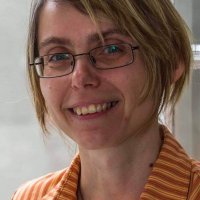
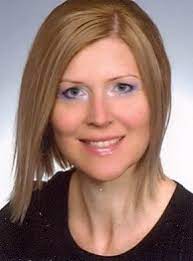
Assoc. Prof. Dr. Olha Madyar is an Associate Professor at the Institute of Central European Studies, Faculty of Arts, University of Presov. She holds a PhD in Slavic Languages from the National Academy of Sciences of Ukraine (2007) and a scientific-pedagogical title of Associate Professor in Slovak Philology (2015). Her academic career includes roles at Uzhhorod National University (2006–2016) before transitioning to the University of Presov in 2019. Research focuses on Slovak-Ukrainian contrastive linguistics, translation studies, and Slovak as a foreign language. Key projects include VEGA-funded work on anthroponymic categories in Slavic languages and KEGA research on Slovak as a second language for Ukrainian students. She has authored/co-authored monographs and peer-reviewed articles addressing gender categorization in Slavic languages, cultural translation challenges, and lexical adaptation. Teaching expertise includes courses in Slovak language practice, translation, and cultural studies. International collaborations include research stays at the University of Presov’s Institute of Slovak Studies and participation in bilateral academic agreements between Ukrainian and Slovak institutions.
Michal Bočák is an Associate Professor in the Department of Communication and Media Studies at the Faculty of Arts, University of Prešov in Prešov, Slovakia. He also serves as a visiting lecturer in gender and queer studies at the Department of Journalism, Palacký University in Olomouc, Czech Republic. His academic career includes serving as Vice-Dean for Educational Affairs (2021-2023) and previously as chair of the Department of Communication and Media Studies (2012-2021). Bočák earned his PhD in general linguistics from the University of Prešov in 2008, followed by a habilitation procedure in general linguistics in 2020. His educational background includes an MA in phonetics & media studies from the University of Prešov (2005). His research primarily focuses on media representations of identities, particularly gender and sexuality, discourse theory, and methods of discourse analysis. He has conducted extensive analysis of culinary magazines and television news formats, examining how they construct representations of food, tradition, and national identity. His work bridges semiotics, cultural studies, and media theory, with particular attention to queer theory applications in media analysis. Bočák's publications demonstrate a consistent focus on discourse analysis frameworks, with significant contributions to understanding how media texts construct meaning through intertextuality, representation, and discursive positioning. His work spans traditional media formats like television news to digital spaces including web pornography. As an editorial board member for Media Studies: Journal for Critical Media Inquiry and Jazyk a kultúra [Language and Culture], Bočák actively contributes to scholarly discourse in his field. He is also a member of the Center for Cultural, Media and Communication Studies in Olomouc, Czech Republic. His academic leadership includes serving as Vice-Dean for Educational Affairs and previously as department chair, demonstrating his commitment to academic administration alongside his research and teaching responsibilities. His work editing conference proceedings and academic collections shows his engagement with the broader scholarly community.
Bojan Belić is a Teaching Professor and Languages Coordinator at the Department of Slavic Languages & Literatures at the University of Washington . He specializes in Bosnian, Croatian, Montenegrin, and Serbian language pedagogy, linguistics, and Slavic language curriculum development. Education: Ph.D. in Slavic Linguistics, The Ohio State University (2005) Research Interests: Focus on Slavic languages, language pedagogy, Russian studies, and curriculum design. He coordinates programs in Bosnian, Croatian, Montenegrin, Serbian, Bulgarian, Czech-Slovak, Polish, Romanian, Russian, Slovene, and Ukrainian. Contact: Email: bojan@uw.edu | Office: PDL A-214 | Office Hours: By appointment (Summer 2025).
Assoc. Prof. Hana Vančová, PhD., is a dedicated academic at Trnava University's Faculty of Education, where she has served as an Associate Professor in the Department of English Language and Literature since 2013 (promoted from Assistant Professor following her 2022 habilitation). Currently Deputy Head of Department for Education, she oversees curriculum development and serves as study advisor for single-subject and combined English language teacher education programs at bachelor's, master's, and doctoral levels. Her institutional commitment spans over a decade with full-time employment since 2013. Education: 2004–2009: Master of Arts (Mgr.) in English Language and Literature – Slovak Language and Literature, Faculty of Education, Trnava University 2009–2012: Doctor of Philosophy (PhD.) in Pedagogy, Faculty of Education, Trnava University 2019: Professional Development: "Teaching languages in the digital era: the best apps, web platforms and ICT solutions for learning languages", Institute for Training, Employability and Mobile Learning Hana Vančová's scholarly work centers on English pronunciation pedagogy , with pioneering research in technology-enhanced instruction . Her primary domains include phonetics and phonology , lexicology , and digital language learning tools , investigating how AI, mobile applications, and multimedia resources optimize pronunciation acquisition. She bridges theoretical linguistics with practical classroom applications through ergonomic educational design, emphasizing learner-centered methodologies that address sociolinguistic factors like accent identity and intelligibility. Her habilitation thesis established her as a key innovator in pronunciation technology. Analysis of Vančová's publication trajectory (2014-2024) reveals a decisive shift from foundational studies on Slovak learners' pronunciation errors toward cutting-edge research on AI-driven pronunciation training. Her recent work explores karaoke-based methods and ethical AI implementation in CALL (Computer-Assisted Language Learning), highlighting human-AI interaction dynamics. The consistent thread is her commitment to making pronunciation instruction accessible through technological innovation, with publications increasingly addressing inclusivity, ethical considerations, and ergonomic design in digital language learning environments. While no specific scientific awards are documented beyond her academic promotion, Vančová's habilitation procedure—evaluated by an international committee including scholars from Poland, Czech Republic, and Slovakia—represents significant scholarly recognition. Her work has received 36 citations (14 foreign, 22 domestic) as of 2021. As study advisor for English language teacher training programs, Vančová mentors students across bachelor's, master's, and doctoral studies, guiding curriculum development for profile subjects in phonetics, lexicology, and digital language education. She maintains structured consultation hours (Wednesdays 10:00-11:30, study advising 11:30-13:00 via MS Teams) and demonstrates sustained research productivity through monographs, textbooks, and peer-reviewed articles. Though specific grant funding isn't detailed, her habilitation thesis exemplifies capacity for substantial scholarly projects with practical pedagogical impact. No dedicated laboratories or formal research teams are documented; Vančová's academic activities operate within the Department of English Language and Literature framework, focusing on individual research initiatives and departmental leadership in educational technology integration.
Dr. Silke Hamann is a researcher at the University of Amsterdam, Faculty of Humanities, Department of Linguistics. Her work bridges phonology and phonetics, focusing on the emergence of phonological features, perceptual cues in segmental contrasts, and the interaction of phonology with orthography and language acquisition. Current projects: diachronic loanword adaptation, congenital amusia's impact on speech perception, Bantu languages (with Nancy Kula and Laura Downing), Catalan studies (with Francesc Torres-Tamarit) Research interests span synchronic/diachronic phonology, phonetic perception, computational modeling of phonological acquisition, and cross-linguistic analysis of retroflex consonants. Her publications analyze phenomena in Korean, Japanese, Bantu languages, German, Portuguese, and Slavic languages, with recurring themes of cue weighting, phonological constraints, and orthographic influence. Recent articles highlight her focus on creaky voice diagnostics, loanword phonotactics, congenital amusia, and Bantu intonation systems. Collaborations with Nancy Kula (Bantu) and Francesc Torres-Tamarit (Catalan) underscore her international research network.
Stefan-Michael Newerkla is a University Professor of West Slavic Linguistics at the Department of Slavonic Studies, Faculty of Philology and Cultural Studies, University of Vienna. He has served as Head of the Institute of Slavic Studies since 2022, following previous leadership roles as Deputy Head (2018-2022) and Head (2005-2008). His academic leadership extends to significant positions including Member of the Academy Council of the Austrian Academy of Sciences (2022-2026), Member of the International Board of Palacký University Olomouc (2022-2026), and Member of the Scientific Council of the Czech Academy of Sciences (since 2013). Professor Newerkla earned his doctorate in 1998 with a dissertation on "Intended and actual linguistic reality in Bohemia. Diglossia in the school system of the Czech-speaking countries of the Habsburg Monarchy 1740–1918 using the example of the West Bohemian district town of Plzeň (Pilsen)" and completed his habilitation in 2003 on "Language Contacts Czech – German – Slovak. German Loanwords in Czech and Slovak: Historical Development, Evidence, Previous and New Interpretations." His academic journey began with studies in Slavic Studies, English Studies, and American Studies at the University of Vienna from 1992-1998. His research focuses on West Slavic linguistics with particular emphasis on contact linguistics, areal linguistics, linguistic geography, and historical sociolinguistics. He investigates the development of linguistic contacts between German, Hungarian and Slavic languages, examining Central Europe as a linguistic area with special attention to Austriazisms and Internationalisms research. His work also explores the school system and language teaching in the Habsburg Monarchy, analyzing language legislation versus language reality and diglossia or polyglossia in the educational system. Additional research interests include the National Renewal in the Bohemian Lands, Vienna's role in the Czech National Renewal, the Slovak national awareness process, and the grammatology and grammarography of West Slavic languages. Analysis of his recent publications (2023-2025) reveals a continued focus on historical language contact in Central Europe, particularly examining multilingualism in the Habsburg Monarchy and linguistic heritage. His work increasingly incorporates interdisciplinary approaches, connecting linguistic analysis with historical, educational, and cultural studies perspectives. Recent publications show particular attention to Czech language in Austria, language teaching methodologies, and the reconstruction of historical language contact phenomena, with several multilingual publications reflecting his expertise in cross-cultural communication. Professor Newerkla's scientific achievements have been recognized with numerous prestigious awards: Medal of the Minister for Foreign Affairs of the Czech Republic (August 7, 2024) for Services to Diplomacy Premia Bohemica for 2023 for outstanding contribution to promoting Czech literature abroad Josef-Dobrovský-Ehrenmedaille of the Czech Academy of Sciences (April 25, 2017) Full member of the Austrian Academy of Sciences (since 2018) Corresponding Member of the Austrian Academy of Sciences (since 2014) Member of the Academic Assembly of the Czech Academy of Sciences (since 2010) Award from University of Vienna for Innovative Teaching (June 22, 2001) As an academic leader, Professor Newerkla has supervised numerous theses across various levels of study. His research is supported by significant grants, most notably his role since 2016 as consortium member and board member of the Special Research Programme "German in Austria. Variation – Contact – Perception" (SFB F 60-G23), where he heads Task Cluster C and subprojects 05 and 06. He also led the research project "Slavists in Exchange: Austria and Russia 1849-1939" (2021-2025). His administrative roles have included Chairman of the Curricular Commission of the Senate of the University of Vienna (2010-2016) and Member of the Senate of the University of Vienna (2009-2016). Professor Newerkla is actively involved in multiple international research teams and collaborations, including the Permanent Conference of Austrian and Czech Historians on Common Cultural Heritage (SKÖTH), which he has co-chaired since 2009. His research group at the University of Vienna's Institute of Slavic Studies focuses on West Slavic linguistics, with particular expertise in historical language contact phenomena and the linguistic heritage of Slavic languages in Central Europe. He has also served as editor for numerous publications including the Vienna Slavic Yearbook (New Series) since 2013.
Prof. Wilken Engelbrecht is a prominent scholar in Dutch language and literature at the John Paul II Catholic University of Lublin. His work focuses on historical linguistics , medieval philology , and literary reception studies in Central and Eastern Europe. He has led international projects like CODL and organized conferences including the 15th Regional Colloquium van Comenius . Education & Appointments : PhD in Dutch Philology, habilitation on prepositional complements, founder of Olomouc Neerlandistiek program His research spans 150 years of Dutch studies in Czech Republic , medieval Latin commentaries on Ovid, and translation dynamics under socialist regimes. Recent publications analyze Czech reception of Frisian literature and Ovidian traditions in academic contexts. Awards & Recognitions : Bronze Medal for Long Service Silver Medal of Palacký University Officier van de Orde van Oranje-Nassau Individual Rector's Award (I stopień) He serves on editorial boards for Roczniki Humanistyczne and Neerlandica Wratislaviensia , and has reviewed over 10 habilitation theses. His teaching includes Dutch language courses and comparative studies at Palacký University.
Katarína Labudová serves as an Associate Professor at the Department of English Language and Literature within the Faculty of Arts and Letters at Catholic University in Ružomberok, Slovakia. She holds the additional role of Erasmus+ Department Coordinator, facilitating international academic exchanges. Dr. Labudová earned her PhD in Comparative Literatures in 2011 and maintains regular office hours for student consultations on Tuesdays from 10:30-12:00 by appointment. Her research interests center on Margaret Atwood's literary works, particularly examining food motifs within speculative fiction across Atwood's major dystopian narratives. Labudová has extended her scholarly focus to include Angela Carter's writings, fairy tale adaptations, biblical myth reconstructions, and the intersection of narrative theory with cultural studies. Her methodological approach combines feminist criticism, comparative literature analysis, and cultural anthropology perspectives to explore how literature reflects and critiques social power structures. Labudová's publication record reveals a consistent trajectory of scholarly engagement with Atwood's works from 2010-2022, culminating in her 2022 monograph Food in Margaret Atwood's Speculative Fiction and textbook Studying Margaret Atwood: Shifting the Boundaries of Genres . Her articles demonstrate increasing specialization in food symbolism within dystopian literature, with particular attention to how dietary restrictions function as mechanisms of patriarchal control. Recent work has expanded to analyze Slovak and Romani folk narrative traditions alongside contemporary literary adaptations. As an educator, Dr. Labudová teaches courses on British and Canadian literature, bringing her research expertise directly into the classroom. Her academic work bridges literary analysis with cultural critique, examining how narrative forms both reflect and challenge societal norms regarding gender, power, and environmental sustainability. Her contributions to Margaret Atwood scholarship have established her as a significant voice in contemporary Canadian literary studies within Central European academia.
Renáta Pavlová, PhD is a Lecturer for Slovak language at the Institute of Slavic Linguistics and Cultural Studies, Faculty of Humanities, University of Regensburg since September 2020. Previously, she served as a Scientific Assistant at Constantine the Philosopher University in Nitra (2017-2020) and as a Slovak Language Lecturer at the Slavic Institute, University of Cologne (2016-2013). Her academic journey includes completing her PhD at Constantine the Philosopher University in Nitra in 2011 with a dissertation on 'Slovak as a Foreign Language.' Dr. Pavlová's educational background includes: Studies in Slovak Language and Literature – German Language and Literature at Constantine the Philosopher University, Nitra (1998-2003) PhD in Slovak as a Foreign Language from Constantine the Philosopher University, Nitra (2011) Dr. Pavlová's research focuses on three interconnected areas: Slovak as a foreign language with emphasis on linguodidactic aspects, machine translation between German and Slovak, and the development of reading comprehension in foreign language learning. Her work in linguodidactics examines effective teaching methodologies for Slovak language acquisition, while her machine translation research analyzes error patterns and quality assessment. The reading comprehension strand investigates intervention programs for developing literacy skills in both native and foreign language contexts, with applications across primary and secondary education levels. Her recent publications demonstrate a consistent focus on the intersection of language learning, technology, and literacy development. The trend shows increasing attention to machine translation quality assessment, particularly examining morphosyntactic and lexical errors in German-Slovak translation. Her work also reveals a strong commitment to practical applications, with numerous publications on language testing, certification (particularly ECL exams), and intervention programs for reading comprehension. The collaborative nature of her research is evident through multiple co-authored works with colleagues across various institutions. Dr. Pavlová has been involved in several significant research projects including VEGA projects on reading comprehension development (2019, 2017), APVV projects on machine translation error classification (2018), and KEGA projects on language preparation (2019). She also contributed to international initiatives like EUROPODIANS (2009) for developing online Slovak courses and EURONOUNCE (2009) analyzing Slovak pronunciation by German speakers. As an educator, Dr. Pavlová teaches various Slovak language courses at University of Regensburg, including Slovak I, Slovak III (general and translation-specific), Slovak Conversation, and specialized seminars on Machine Translation. She actively participates in cultural outreach, having recently attended events with the Slovak Ambassador and the President of the Slovak Republic, demonstrating her role in promoting Slovak language and culture internationally.
Prof. PhDr. Milan FERENČÍK, PhD., is a Professor at the University of Prešov's Faculty of Arts, affiliated with the Institute of British and American Studies. He specializes in linguistics, sociolinguistics, and applied linguistics, focusing on topics like multilingualism, politeness theory, and linguistic landscapes. His research often intersects with cultural studies and globalization, examining language use in urban environments, tourism, and globalized contexts. Contact him via milan.ferencik@unipo.sk. His work spans academic writing styles, regulatory discourse practices, and the sociolinguistics of conflict, as seen in studies on Slovakia’s social movements and Ukraine’s crisis signage. He contributes to blended learning methodologies and has explored linguistic aspects of ELF interactions and spatial semiotics in urban spaces.
Dr. Lenka Nerlich serves as a Lecturer for Czech language at the Institute of Slavic Studies, University of Regensburg, where she teaches modules TSC-M01 through TSC-M11 and maintains consultation hours during summer semester 2025 on Fridays from 13-14 in office PT 4.1.66. Her research focuses on Czech language pedagogy and sociolinguistics, with particular emphasis on the relationship between language usage and language attitudes in Czech communities. Dr. Nerlich has conducted empirical studies in West Bohemia and Prague examining actual language usage versus perceived norms, and has produced significant research on second-generation Czech emigrants in Germany, analyzing their language skills and usage patterns. Her work extends to Czech language teaching methodology in German academic contexts and language standardization issues. Dr. Nerlich's publications reveal a consistent trajectory from empirical sociolinguistic studies toward practical language teaching applications, culminating in textbook development for Czech language learners at various proficiency levels. Her scholarly work bridges theoretical sociolinguistics with practical language instruction needs. Member of UNIcert® Scientific Advisory Board (2005-2010) Member of Association of Czech Language Teachers at Charles University Prague (since 2007) Partnership with Chair of Czech Language and Literature at Charles University Prague (since 2006) At the University of Regensburg, Dr. Nerlich has been instrumental in establishing the UNIcert® Czech language certification program, which has been available to students of all disciplines since winter semester 2006/2007. Her current work focuses on adapting Czech literary works for practical language teaching with supporting exercises and vocabulary resources.
Academy of Fine Arts and Design in BratislavaSlovakia
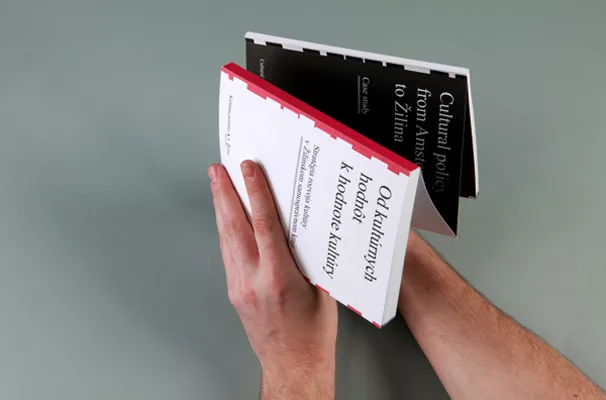
Marcel Benčík serves as Associate Professor and Vice-Rector for International Cooperation at the Academy of Fine Arts and Design in Bratislava, where he heads the Studio Space within the Department of Visual Communication. With over two decades of professional design experience, he bridges academic leadership and creative practice across Central Europe through significant collaborations with cultural institutions including the Slovak National Gallery and architectural studio zerozero. Academic Background ArtD. (Doctorate) from Academy of Fine Arts, Prague (2004-2007) under Assoc. Prof. Pavel Choma Master's Degree from Academy of Fine Arts, Bratislava (2002-2004) Bachelor's Degree from Academy of Fine Arts, Bratislava (1998-2002) Benčík's research focuses on the intersection of communication design with architectural spaces, where he explores how visual systems enhance user experience in cultural institutions. His work demonstrates particular innovation in exhibition design and spatial navigation systems, often integrating traditional graphic elements with digital interfaces to create cohesive visitor journeys that serve both functional and aesthetic purposes. His award-winning projects include the Balustrade on the Parish Stairs in Žilina (2016 National Award winner) and Kasárne/kulturpark Košice's visual communication system. Recent outputs through 2024 show continued exploration of intermedia museum concepts and urban design interventions that respond to contemporary social contexts while maintaining strong visual identities. Selected Honors National Award for Communication Design (Experimental Design Category, 2016) Multiple National Design Awards (2020, 2021) Dušan Jurkovič Award for Architectural Integration Polish Design Award for International Collaboration The Most Beautiful Book of Slovakia recognition As Studio Space manager, Benčík mentors students in thesis development while leading international collaborations through G4 network and Design Weekend Bratislava. His academic service includes jury participation for design competitions across Europe and opposition roles at Polish and Czech institutions, demonstrating significant contribution to regional design education standards.
Dr. Anikó Polgár serves as Associate Professor at the Department of Hungarian Language and Literature within the Faculty of Education at J. Selye University in Komárno, Slovakia. She joined the university in 2021 after holding similar positions at Comenius University in Bratislava (2013-2021) and Constantine the Philosopher University in Nitra (2009-2013). Her academic background includes degrees in Latin-Hungarian Language (1993-1998) and Classical Languages (Greek Language and Literature, 1999-2005) from Comenius University, followed by a PhD in Literary Theory from Eötvös Loránd University in Budapest (1998-2004). She completed her habilitation in Translation Studies at Constantine the Philosopher University in Nitra in 2009. Dr. Polgár's research focuses on the history of Hungarian translation, the influence of ancient literature on Hungarian literature, prosodic and philological aspects of Hungarian literary translation, cultural and collective memory in 20th century Hungarian literature, and women's literature. Her work demonstrates a strong interdisciplinary approach bridging philology, translation studies, and cultural history with particular emphasis on Central European contexts. Her recent publications reveal a consistent scholarly trajectory examining translation practices, cultural identity, and literary reception across Central Europe, with particular attention to Hungarian-Finnish relations, classical reception, and women's literary expression. These works appear in journals such as Journal of Language and Cultural Education, Yearbook of Finno-Ugric Studies, and World Literature Studies. Major awards include: Multiple Imre Madách Awards from the Literary Fund (2004, 2010, 2017, 2024) Posonium Awards (2004, 2010) Rector's Award for her monograph Ovidius redivivus (2011) Tibor Déry Foundation Award (2020) Dr. Polgár currently leads the NKFI 150848 project Literature and Translation in the Hungarian Cultural Heritage (2025-2028) and has participated in numerous research projects examining translation, cultural identity, and multilingualism in Central Europe since 2004. Her extensive publication record includes 338 items across various categories, reflecting her significant contribution to Hungarian literary studies and translation research within the Slovak academic context.
Doc. PhDr. Martina Kášová, PhD. is an Assistant Professor at the Department of German Studies within the Faculty of Arts at the University of Prešov. Her research focuses on locutionary acts, German subjunctive and Slovak conditional structures, advertising communication, and corpus linguistics. She holds degrees from the University of Pavol Jozef Šafárik in Prešov and conducted studies abroad at Friedrich Schiller University in Jena and the University of Bayreuth. Key publications include monographs on political advertising linguistics (2011) and comparative German/Slovak grammatical analysis (2007), as well as a German grammar textbook (2011). Her work bridges theoretical linguistics with applied communication studies, emphasizing cross-linguistic comparisons and sociocultural dimensions of language use.
Ján Gavura is affiliated with the Institute of Slovak and Media Studies at the Faculty of Arts, University of Prešov . His research focuses on Slovak literature, poetry analysis, translation studies, and literary criticism, with a particular emphasis on post-1989 Slovak literary culture and philosophical themes in poetry. Research Interests: His work explores the intersection of Slovak literature, poetic form, and cultural symbolism. He investigates how themes like mythology, spirituality, and political influence shape contemporary poetry, particularly through introspective and subversive narratives. Publications: His recent articles span topics such as the evolution of Slovak poetry, translation practices, and the role of animals and technology in literary works. These contributions reflect his engagement with both historical and avant-garde literary movements in Slovakia. Scientific Awards: No specific awards mentioned in the provided text.