Masaki Nishida is a Professor at the Faculty of Sport Sciences , Waseda University, and Vice President of the Health Support Center at the same institution. He also serves as Chief of the Sleep Research Institute . His research bridges Sleep Science , Sports Medicine , and Clinical Psychiatry , with a focus on the interplay between sleep, cognitive function, and athletic performance. Education: Tokyo Medical and Dental University, Faculty of Medicine (1996) His work has significantly advanced understanding of napping interventions for athletes, sleep quality in competitive divers, and neurophysiological mechanisms linking sleep spindles to memory consolidation. Current research projects include a 2024-2027 study on functional bedding effects funded by Japan Society for the Promotion of Science. Scientific awards include the 15th Japanese Society of Sleep Research Encouragement Award (2010) and the 88th Japanese Society for Occupational Health Award (2015). His publications span topics like REM sleep's role in emotional memory , sleep inertia , and motor adaptation , with recent emphasis on international sports psychiatry standards . He actively contributes to professional societies including the Japanese Association of Sports Psychiatry (Chairman) and Society for Neuroscience .
Colin J Akerman is Professor of Neuroscience and Group Leader in the Department of Pharmacology at the University of Oxford, concurrently serving as Corange Fellow and Medical Tutor at Corpus Christi College. His research investigates fundamental mechanisms of synaptic circuit formation and plasticity, with direct implications for epilepsy, dementia, and schizophrenia through multidisciplinary approaches integrating electrophysiology, optical imaging, and computational modeling. His primary research interests encompass Synaptic Plasticity, Neural Circuit Formation, and Excitatory-Inhibitory Balance, with specific focus on neuronal progenitor influences on connectivity, chloride dynamics in inhibitory transmission, and learning mechanisms in disease contexts. The lab employs custom-built equipment and molecular tools to probe synaptic function across in vivo , in vitro , and in silico platforms, emphasizing how activity-dependent processes shape neural networks during development and disease. Recent publications (2023-2025) reveal strong thematic convergence on intracellular chloride regulation in sleep-wake cycles, cortical circuit assembly from embryonic progenitors, and innovative optical tools for neural monitoring. This work bridges molecular neuroscience with systems-level understanding of synaptic plasticity, particularly regarding ionic mechanisms in epilepsy and sleep homeostasis. No scientific awards or fellowships are explicitly documented in the source materials. Professor Akerman currently mentors four PhD students (Vourvoukelis, Selfe, Wang, Gemayel) and multiple postdoctoral researchers, having previously trained scientists now leading independent groups in Toronto, Edinburgh, Cape Town, Oxford, and London. His research is funded by the European Research Council, Innovative Medicines Initiative, and Wellcome Trust, supporting investigations into synaptic mechanisms underlying neurological disorders. The Akerman Group, established in 2008, operates as an integrative neuroscience hub within Oxford's Pharmacology Department. The 10-member team combines expertise in patch-clamp electrophysiology, optogenetics, multiphoton imaging, and computational modeling, with current projects spanning neuronal progenitor biology, inhibitory synaptic plasticity, and learning rule implementation in neural networks. The lab emphasizes technical innovation, regularly developing custom instrumentation and molecular tools for neural observation and manipulation.
Professor Anil Seth is a leading cognitive and computational neuroscientist at the University of Sussex, where he holds a professorship in the School of Engineering and Informatics. He is Director of the Sussex Centre for Consciousness Science and Co-Director of the CIFAR Program on Brain, Mind, and Consciousness and the Leverhulme Doctoral Scholarship Programme. His research bridges neuroscience, psychology, philosophy, and AI to investigate the biological basis of consciousness and selfhood. His research interests include: Predictive processing approaches to perception Virtual and augmented reality in self-experience studies Mathematical modeling of perception and emergence Machine learning applications in subjective perception modeling Interoception and selfhood Neural mechanisms of conscious experience The recent publications reflect a strong focus on consciousness, neural dynamics, predictive models, and interdisciplinary approaches. Trends include the use of computational modeling, neurophenomenology, causal analysis, and the ethical implications of emerging neurotechnologies. His work increasingly integrates large language models and data-driven methods for analyzing subjective experience. His scientific awards include: Segerfalk Award Perspectives Award Highly Cited Researcher (Web of Science, 2019–2022) Royal Society Michael Faraday Prize (2023) Seth has secured substantial research funding from the European Research Council (ERC), EPSRC, Wellcome Trust, CIFAR, and the Sackler Foundation. He has supervised numerous research projects and doctoral students through interdisciplinary programs. He leads the Dreamachine project and has been an Engagement Fellow with the Wellcome Trust. He serves on editorial boards including Philosophical Transactions of the Royal Society B and is Editor-in-Chief of Neuroscience of Consciousness . He leads a multidisciplinary research group at the Sackler Centre, bringing together psychologists, mathematicians, neuroscientists, computer scientists, and philosophers. His team conducts innovative research using virtual reality, neuroimaging, and computational modeling to explore the nature of consciousness and self.
Xenophon Papademetris is a Professor of Biomedical Informatics & Data Science and Radiology & Biomedical Imaging at Yale School of Medicine. He serves as Associate Director of Biomedical Imaging Data Sciences at Yale Biomedical Imaging Institute and directs the Medical Software and Medical Artificial Intelligence Certificate Program. PhD in Electrical and Information Sciences from Yale University (2000) BA from Cambridge University (1994) Postdoctoral Fellowship at Yale University (2002) His research focuses on medical image analysis, machine learning, and biomedical software development. He has developed tools like BioImage Suite Web and contributed to standards committees at the Association for the Advancement of Medical Instrumentation (AAMI). His work spans modalities including MRI, CT, PET, and optical imaging. Recent publications emphasize neuroimaging analysis, explainable AI in healthcare, and multimodal data integration across species. He leads NIH-funded research under the BRAIN Initiative (R24 MH114805) and has authored a textbook on Medical Software published by Cambridge University Press. IEEE Senior Member Yale Brown-Coxe Postdoctoral Fellowship Harding Bliss Prize for Excellence in Engineering He directs the BioImage Suite Project, creating web-based image analysis tools using JavaScript and WebAssembly. His teaching includes both academic courses and a Coursera program on Medical Software with over 14,000 enrollments.
Rishidev Chaudhuri is an Associate Professor at the University of California, Davis in the Department of Neurobiology, Physiology and Behavior within the College of Biological Sciences. His research focuses on computational neuroscience and neural dynamics, employing mathematical models to investigate how neural circuits generate cognitive processes such as memory, perception, and decision-making. His work explores neural dynamics through models of memory systems, attentional mechanisms, and probabilistic inference. Recent publications highlight advances in understanding hippocampal memory scaffolds, parietal-frontal interactions, and neuromorphic computing inspired by brain architecture. Education: BA in Physics (Amherst College), PhD in Applied Mathematics (Yale University) Centers: Center for Neuroscience; affiliated with Applied Mathematics and Neuroscience Graduate Groups Scientific awards and honors are not explicitly mentioned in the provided materials.
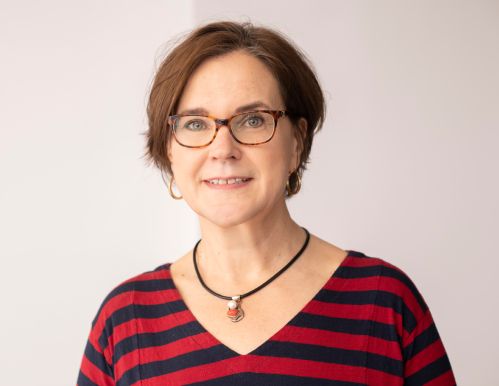
Dr. Nancy L. Sin is an Associate Professor in the Department of Psychology within the Faculty of Arts at the University of British Columbia. She teaches undergraduate and graduate courses in health psychology and supervises students at multiple levels. She is Co-Chair of the Antiracism Task Force for the Society for Biopsychosocial Science and Medicine and a member of the Steering Committee at the UBC Edwin S.H. Leong Centre for Healthy Aging. Previously, she served on the Executive Committee for the American Psychological Association's Division on Adult Development and Aging and established the Diversity Mentorship Program. PhD, University of California, Riverside, 2012 Dr. Sin's research focuses on biological and behavioural pathways linking daily well-being and stress to health. Her work demonstrates that emotional responses to daily stressors are associated with inflammatory, neuroendocrine, and autonomic mechanisms implicated in aging-related conditions like cardiovascular disease. She investigates daily positive events as protective factors for stress processes and health, with particular interest in emotional well-being and aging, stress-sleep cycles, and health equity. Her research spans multiple disciplines including health psychology, gerontology, and social psychology. Analysis of Dr. Sin's recent publications reveals consistent focus on daily stress processes, positive emotions, and health outcomes across the lifespan. Her work increasingly examines pandemic-related stressors, social determinants of health, and health disparities, with strong emphasis on methodological rigor through daily diary and longitudinal approaches. The publications demonstrate interdisciplinary collaboration across psychology, public health, and medicine, with growing attention to diversity, equity, and inclusion in health research. Distinguished Alumni Award, Department of Psychology, University of California, Riverside (2025) Fellow, Gerontological Society of America (2025) Innovative Research on Aging Award (Bronze Award) from the Mather Institute (2021) Michael Smith Foundation for Health Research Scholar (2020) Springer Early Career Achievement Award in Research on Adult Development and Aging (2019) Gerontological Society of America's Behavioral and Social Sciences Student Research Award Editor's Choice article at Annals of Behavioral Medicine Dr. Sin actively supervises undergraduate, MA, and PhD students, with a current focus on Health Psychology graduate students specializing in adult development and aging, stress, and health equity/disparities. Her research has been supported by significant grants as PI or Co-I from the U.S. National Institute on Aging, Social Sciences and Humanities Research Council of Canada, Canadian Institutes of Health Research, Canada Foundation for Innovation, and the Michael Smith Foundation for Health Research. She has established a strong research program examining daily experiences and their health implications across adulthood. Dr. Sin directs the UPLIFT Health Lab (Understanding Pathways Linking Inter- and Intraindividual Factors To Health), which explores psychosocial well-being and biobehavioural mechanisms underlying healthy aging. The lab investigates how daily positive events promote health through lower inflammation, adaptive cortisol profiles, and better health behaviors, with particular attention to how positive emotions buffer stress processes. The lab actively recruits community participants for studies on daily experiences and health, contributing to intervention development for promoting psychological and physical well-being across adulthood.
Michelle CD Bridi is an Assistant Professor in the Department of Neuroscience at West Virginia University School of Medicine , with a joint affiliation at the Rockefeller Neuroscience Institute . Her research integrates synaptic plasticity , sleep physiology , and neurological conditions to investigate dynamic synaptic regulation under typical and atypical states. Education: BS , McGill University, 2006 PhD , University of Pennsylvania, 2013 Research Focus: The Bridi Lab explores how daily oscillations in excitation/inhibition (E/I) balance are disrupted in Autism Spectrum Disorder (ASD) , aging , and post-stroke states . Current projects address: 1) synaptic adaptation to sleep/wake cycles, 2) E/I imbalance in neurodevelopmental disorders, and 3) molecular mechanisms maintaining neuronal firing rate homeostasis. Publication Trends: Recent work spans REM sleep plasticity , autism models , and neurodegenerative interventions , emphasizing synaptic oscillations , NMDA receptor pathways , and gene therapy applications. Collaborative efforts with Morgan Bridi's lab extend findings to stress and stroke contexts. Grants & Collaborations: Research is funded by NIH/NIGMS , BBRF , and NSF . The lab actively collaborates with cross-institutional teams and is recruiting postdocs and students for ongoing studies.
Leah Doane is a Professor and Chair of the Department of Psychology at Arizona State University (ASU) since 2025. She holds affiliations with the Biodesign Center for Personalized Diagnostics and previously served as Associate Dean of Graduate Initiatives in the College of Liberal Arts and Sciences (2024). Her academic background includes a B.A. in Psychology from Cornell University (2002), M.A. and Ph.D. in Human Development and Social Policy from Northwestern University (2006/2008), and a postdoc at the University of Chicago in Psychiatry and Behavioral Neuroscience. Research focuses on developmental psychopathology, examining links between health behaviors, physiological stress (e.g., cortisol), and stressful experiences across childhood, adolescence, and emerging adulthood—with particular emphasis on Latinx youth and college transition challenges. Key themes include cultural adaptation, sleep health, epigenetic influences, and bicultural stress. Funded by NIH, CDC, and Army Research Institute, her work integrates ecological and ambulatory assessment methods. Leadership roles include Director of Faculty Success, Developmental Graduate Training Area Head, and Deputy Chair in ASU's Psychology Department. Awards include William T. Grant Foundation Scholar (2025-). Active in teaching advanced courses on research methods and thesis supervision, she mentors students through courses like Honors Thesis (PSY 493), Research (PSY 792), and Dissertation (PSY 799). Key grants include studies on Latino youth college pathways (Helios Education Foundation, 2015-2016), genetic/environmental influences on sleep and behavior (NICHD, 2015-2020), and culturally informed interventions. The Adolescent Stress and Emotion Lab (adolescentstressandemotionlab.org) serves as her research hub.
Dr. Manuel Carro Dominguez is a Researcher at the Department of Neural Control of Movement, ETH Zürich. His work focuses on understanding the neural mechanisms underlying sleep dynamics, arousal regulation, and their impact on motor performance and cardiovascular function. He specializes in techniques such as auditory stimulation, pupil-based neurofeedback, and EEG/ECG monitoring to explore sleep oscillations, cortical excitability, and their clinical applications. His research bridges neuroscience, biomedical engineering, and sleep medicine, with a particular emphasis on enhancing human physiology through targeted interventions during sleep. Key research interests include: sleep modulation via auditory stimuli, pupilometry as a marker of arousal states, and the development of medical devices for gas sensing and closed-loop biofeedback systems. His studies often integrate multidisciplinary approaches to address translational challenges in neurophysiology and cardiovascular health. Recent publications highlight advancements in auditory stimulation effects on cardiac function, the role of K-complexes in sleep dynamics, and the design of gas sensing technologies for biomedical applications. His work contributes to both fundamental neuroscience and applied biomedical engineering, aiming to improve clinical outcomes through innovative sleep-based interventions.
Philip Gehrman is a Professor of Psychology in the Department of Psychiatry at the University of Pennsylvania Perelman School of Medicine and a clinical psychologist at the Philadelphia VA Medical Center . He directs the Sleep, Neurobiology and Psychopathology (SNaP) Lab , focusing on sleep-mental health interactions. Education : PhD in Psychology Key Research Areas : Sleep dysregulation in mental health, translational sleep research, genomics/metabolomics of insomnia, neuroplasticity in depression, CBT for sleep disorders His work spans clinical research and molecular investigations , including NIH-funded studies on genetic mechanisms and neural pathways of sleep disorders. Current projects involve: Telemedicine CBT for insomnia Wearable sleep monitoring in PTSD Slow-wave activity in depression CSF biomarkers for dementia Dr. Gehrman supervises graduate students and collaborates with multidisciplinary teams. His lab's publications highlight interdisciplinary approaches to sleep-mental health links.
Brandon Weissbourd is an Assistant Professor in the Biology department at the Massachusetts Institute of Technology (MIT) and holds a joint appointment as an Investigator at the Picower Institute for Learning and Memory. He joined MIT in 2023 after completing a postdoctoral fellowship in the lab of David Anderson at the California Institute of Technology (Caltech). Prior to that, he earned his PhD in Biology from Stanford University in 2016 under the mentorship of Liqun Luo, and a BA in Human Evolutionary Biology from Harvard University in 2009. His research interests encompass systems neuroscience, evolutionary biology, and molecular biology. He uses jellyfish models, such as Clytia hemisphaerica, to study the evolution and functional mechanisms of nervous systems. His work combines computational techniques like single-cell RNA-seq and advanced microscopy with traditional genetic and anatomical approaches to dissect neural circuits and their roles in behaviors like feeding and social interaction. Additionally, he has explored serotonin and noradrenaline systems in mammals, focusing on their heterogeneity and functional connectivity. Recent publications emphasize the utility of non-traditional model organisms for evolutionary studies and underscore his expertise in computational methods for neurobiological analysis. Earlier work includes groundbreaking studies on the dorsal raphe serotonin system and basal forebrain circuits governing sleep-wake cycles. No scientific awards or honors have been explicitly mentioned in the provided text. Weissbourd’s academic trajectory reflects a strong emphasis on interdisciplinary research, merging evolutionary, molecular, and systems-level perspectives to understand neural systems across species. His advising record is not detailed here, though he has been affiliated with prestigious research labs during his training. Current affiliations include the MIT Biology department and the Picower Institute, where he likely contributes to collaborative projects in systems and evolutionary neuroscience. Weissbourd’s work is grounded in experimental models such as Clytia medusa and mouse brain studies, enabling him to investigate both ancient nervous system architectures and modern mammalian neural pathways. His lab’s focus on functional genomics and circuit mapping positions him at the forefront of studies on neural diversity and evolutionary innovation.
Bärbel Finkenstädt Rand is a Senior Tutor at the Warwick Medical School , University of Warwick, with extensive research contributions at the intersection of statistics, machine learning, and biomedical sciences. Her work focuses on developing advanced methodologies for analyzing temporal and spatio-temporal data, particularly in circadian rhythms and disease dynamics. Research Themes : Bayesian inference, Hidden Markov Models, circadian rhythm stability, transcriptional bursting, and wearable sensor data analysis. Collaborations : Chronotherapy Group at Warwick, Université Paris-Saclay, and interdisciplinary teams across medicine, genetics, and computational biology. Publications reveal a strong emphasis on circadian health monitoring, gene expression dynamics, and epidemic modeling using stochastic frameworks. Her recent work prioritizes personalized medicine applications through telemonitored biomarkers and IoT platforms . Methodological Innovations include spline-based HMMs, distributed delay systems, and harmonic modeling for nonstationary time series. Applications span oncology, sleep medicine, and population ecology.
Mary A. Carskadon is Professor of Psychiatry and Human Behavior at Brown University's Warren Alpert Medical School and Director of the EP Bradley Hospital COBRE Center for Sleep and Circadian Rhythms in Child and Adolescent Mental Health. Her distinguished career spans over five decades with foundational contributions to sleep science. Her educational background includes a BA in psychology from Gettysburg College (1969) and a doctorate with distinction in neuro- and biobehavioral sciences from Stanford University (1979), earned under William C. Dement. She is a distinguished alumna of Gettysburg College and holds an honorary doctor of sciences degree from that institution. Carskadon's research focuses on circadian timing systems and sleep/wake patterns in children, adolescents, and young adults. Her work on school start times has significantly influenced public health policy, prompting organizations like the American Academy of Pediatrics and CDC to advocate for later school schedules. She developed the multiple sleep latency test (MSLT) with Dr. Dement, which remains a global standard for assessing sleep disorders. Current research examines sleep-health disparities in urban children with asthma, sleep patterns in suicide risk populations, and the impact of sleep restriction on adolescent performance. Her extensive publication record shows consistent focus on adolescent sleep physiology, circadian rhythms, and public health implications. Recent work explores connections between sleep timing, mental health, and academic performance, particularly during the COVID-19 pandemic, while maintaining her foundational work on sleep measurement methodologies. Lifetime Achievement Award of the National Sleep Foundation Distinguished Scientist and Outstanding Educator Awards of the Sleep Research Society (the latter now presented in her name) 2023 Brown University Distinguished Research Achievement Award William C. Dement Academic Achievement Award (2023) V. Sagar Sethi, M.D., Mental Health Research Award Leadership in Sleep Medicine Award from American Academy of Physicians of Indian Origin-Sleep Elected Fellow of the Association for Psychological Science Elected Fellow of the American Association for the Advancement of Science Carskadon directs the NIH/NIGMS-funded Bradley Hospital COBRE Center, mentoring junior researchers in pediatric sleep and circadian rhythms. She serves as inaugural editor-in-chief of SLEEP Advances and has secured multiple NIH grants including R01 HL142058 examining ethnic differences in children's sleep patterns with asthma, P20 GM139743 for the COBRE center, and R01 HD103665 investigating sleep restriction effects using neuroimaging. Her work bridges laboratory research with real-world applications, particularly in school policy reform and health equity initiatives. She leads multiple research teams including the CLASS Study (Circadian Light in Adolescence, Sleep and School), projects on sleep disruption in urban children with asthma, and studies examining sleep's role in opioid use disorder treatment. Her laboratory continues to innovate in sleep measurement techniques while maintaining longitudinal studies on adolescent sleep patterns across developmental stages.
Professor Sander Nieuwenhuis (Leiden University) specializes in Cognitive Neuroscience of Decision Making through behavioral, EEG, and pharmacological approaches. His work bridges prefrontal cortex function and noradrenergic system mechanisms in human cognition. Studied cognitive psychology (Groningen) and earned PhD (Amsterdam, 2001) International experience: Cambridge University (visiting research), Princeton University (postdoc) Research focuses on noradrenaline's role in attention, decision-making, and cognitive control via: Locus coeruleus-norepinephrine system dynamics Phasic vs. tonic alertness effects Cognitive task performance under neuromodulator deficiency Neuroprotective pathways in Alzheimer's models Recent publications analyze DBH deficiency (Jepma et al., 2011) and attentional blink mechanisms (Nieuwenhuis et al., 2005). His Temporal Attention Lab integrates fMRI, genetics, and computational modeling . Teaching leadership includes: Chair of Research Master Program Committee Coordinator of Scientific Writing courses
Sara Aton, Ph.D., is an Affiliate Professor in the Department of Molecular, Cellular, & Developmental Biology at the University of Michigan, and an affiliate of the Michigan Neuroscience Institute. Her research focuses on understanding how sleep and waking states influence memory consolidation through synaptic plasticity in neural circuits. She employs behavioral, biochemical, electrophysiological, and optogenetic techniques to study rodent models, particularly examining the roles of acetylcholine and interneurons in memory processing. Key research interests include the dynamics of sleep states (NREM and REM), synaptic plasticity mechanisms, and the impact of sleep disruption on memory formation. Her work addresses how neuronal activity during sleep reactivates learning-related ensembles and regulates biosynthetic processes critical for memory stabilization. Aton has received prestigious awards such as the NIH New Innovator Award (2013) and Alfred P. Sloan Fellowship (2013). Her lab investigates translational applications, including therapeutic interventions for sleep-related cognitive impairments in conditions like Fragile X syndrome. The Aton Lab is a hub for interdisciplinary research, combining molecular, cellular, and systems neuroscience approaches. Her publications emphasize sleep-dependent memory consolidation, synaptic plasticity, and the neural circuits governing these processes. Collaborative efforts span neuropharmacology, optogenetics, and computational modeling to unravel the complex interplay between brain states and cognition.