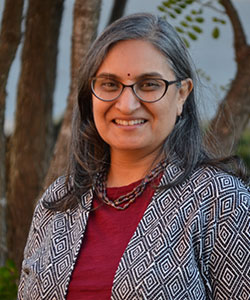
Ghaffar Ali Hurtado Choque is an Associate Professor in the School of Public Health and Extension Specialist at the College of Agriculture and Natural Resources, University of Maryland. His work focuses on family and community health interventions for marginalized populations. Dr. Hurtado leads research projects including 'Familias Activas' addressing Latinx youth mental health through family-skills building and sports engagement. As co-investigator for Maryland Rural Opioid Technical Assistance, he addresses substance abuse challenges. His education includes a Ph.D. in Work, Community, and Family Education from the University of Minnesota.
Professor Lisa Kervin is a leading academic in early childhood education at the University of Wollongong (UOW), serving as Director of Early Start Research and holding a Professorial appointment in the School of Education. Her research focuses on young children’s literate practices, play-based learning, and digital technology integration in education. She leads the ARC Centre of Excellence for the Digital Child and has secured significant funding, including a 2025 ARC Future Fellowship exploring intergenerational play. Kervin was honored as a Member of the Order of Australia (AM) in 2024 for contributions to early childhood digital literacy research. She has supervised over 35 research students, many now in academic and leadership roles, and currently oversees seven doctoral candidates. Her work bridges theory and practice through collaborations with educators and industry partners, emphasizing interdisciplinary approaches to child development and policy influence globally. Education: PhD in Language and Literacy from UOW (2001–2004). Professional roles include Principal Fellow of the Australian Literacy Educators’ Association and Director qualifications from the Australian Institute of Company Directors. Her research spans digital childhood ethics, play pedagogy, and literacy curriculum design, with outputs impacting government policies and international educational frameworks. Ongoing projects include the ‘DigIQ’ program promoting digital literacy and ‘Playgroups for All Ages’ fostering intergenerational engagement. Grants and collaborations involve partnerships across six universities and 33 global organizations. Her teaching innovations include the Early Childhood Elevate Mentoring Program to support educators’ academic progression. Kervin’s work addresses critical issues like screen time impacts, STEAM education, and culturally responsive pedagogies, positioning her as a key voice in 21st-century early childhood education.
Dr. Gráinne Cousins is an Associate Professor at the School of Pharmacy and Biomolecular Sciences, Royal College of Surgeons in Ireland (RCSI). She specializes in epidemiology of drug use, with a focus on opioid agonist treatment, gender disparities in drug-related mortality, and prescription drug misuse. Her work integrates data linkage studies, cohort analyses, and Delphi consensus methods. She holds memberships in the Psychological Society of Ireland and the Society for the Study of Addiction, and serves on the National Drug Strategy Research Sub-Committee since 2022. Dr. Cousins completed her BA in Applied Psychology at University College Cork (1996–1999), MSc in Health Psychology at NUI Galway (2000–2002), and PhD in Population Health Sciences at RCSI (2006–2009). She was a Post-doctoral Research Fellow at the HRB Centre for Primary Care Research (2009–2013) before joining RCSI as a Lecturer in 2013, progressing to Senior Lecturer (2017) and Associate Professor (2023). Her research interests include pharmacoepidemiology, population health, and opioid substitution treatment. She leads HRB-funded projects on drug misuse trends, OAT adaptations during the pandemic, and prescription drug-related harms. Recent publications analyze overdose mortality, pandemic treatment adjustments, and gabapentinoid prescribing patterns. Dr. Cousins supervises 13 completed PhD/MSc students and currently guides 3 Professional Doctorate candidates. She teaches Research Methods, Global Health, and Clinical Research Skills across undergraduate and postgraduate programs. Her grants include HRB awards for OAT continuity during crises and prescription drug misuse analysis (2021–2024).
Dr. Jackie Cha serves as an Assistant Professor in the Department of Industrial Engineering within Clemson University's College of Engineering, Computing and Applied Sciences. Her research bridges human factors engineering with healthcare innovation, focusing on surgical robotics, physiological signal analysis, and wearable medical technologies to enhance clinical performance and safety. Her academic foundation includes advanced degrees from leading institutions: Ph.D. in Industrial Engineering from Purdue University M.S.E. in Biomedical Engineering from the University of Michigan B.S.E. in Biomedical Engineering from the University of Michigan Cha's research program centers on quantifying human performance in high-stakes medical environments through sensor-based metrics. She investigates nontechnical skills in surgical teams, mental workload during robotic procedures, and ergonomics of exoskeleton implementation in operating rooms. Her work integrates physiological signals, eye-tracking, and proximity sensors to develop objective assessment tools for surgical proficiency and team dynamics. Analysis of her 2023-2025 publications reveals consistent thematic focus on human-robot collaboration in surgery, with emerging trends in AI-driven workload detection (s-DResNet), neural correlates of surgical expertise, and environmental factors affecting robotic surgery outcomes. Key methodological approaches include scoping reviews of human-robot interaction metrics, mixed-methods evaluations of exoskeleton efficacy, and extended reality applications for nontechnical skills training. She leads the ECHO Lab (Engineering for Clinical and Human Outcomes) at Clemson, which develops translational solutions for healthcare human factors challenges. Her lab's work spans from fundamental physiological signal analysis to applied interventions in operating rooms and emergency medical settings.
Dr. Sudeep Hegde is an Assistant Professor in the Department of Industrial Engineering at Clemson University, where he also serves as a Faculty Scholar in the Clemson University School of Health Sciences Research (CUSHR). His research focuses on proactive organizational learning, human-AI collaboration, and remote physiological monitoring, with applications in healthcare, education, and transportation. He holds a Ph.D. in Industrial and Systems Engineering from the University of Buffalo (2015), an M.S. from the University at Buffalo (2010), and a B.S./M.S. from Ramaiah Institute of Technology in India (2007). His professional experience includes roles at Texas A&M University, the State University of New York at Buffalo, and Harvard Medical School. Hegde’s work emphasizes resilience engineering, cognitive systems, and applied ergonomics. Notable research contributions include studies on organizational adaptive capacity during crises, healthcare workflow optimization, and leveraging AI for healthcare decision-making. He teaches courses such as Human Factors Engineering and Cognitive Systems and Resilience Engineering. Key research thrusts include: Proactive organizational learning frameworks Human-AI teaming for large-scale learning Remote physiological monitoring in high-stress environments Resilience in healthcare systems and emergency response Past grants and collaborations include studies on pandemic response strategies, ED physician workloads, and biofeedback applications for mental health. His interdisciplinary approach bridges systems engineering, human factors, and healthcare innovation.
Michael A. Clemens is a Professor in the Department of Economics at George Mason University and a nonresident senior fellow at the Peterson Institute for International Economics. His research focuses on migration and development, economic growth, and aid effectiveness. With 20 years of experience building research programs on international migration at the Center for Global Development, he maintains affiliations with multiple international institutions including the IZA Institute of Labor Economics and the Centre for Research and Analysis of Migration. His research examines economic causes and effects of migration worldwide, with publications in premier journals like the American Economic Review. He holds a PhD in Economics from Harvard University, specializing in economic history, public economics, and development economics. Clemens is multilingual with proficiency in English, Spanish, Turkish, French, and Portuguese. Awards: Royal Economic Society Prize
Dr. Thalia R Goldstein is an Associate Professor in the Department of Applied Developmental Psychology at George Mason University (GMU). She directs the PLAY Lab and co-directs the National Endowment for the Arts Research Lab (MasonARC). Her research focuses on children’s social-emotional development through pretend play, theater, and imaginative activities. Dr. Goldstein holds a Ph.D. in Developmental Psychology from Boston College (2010), with postdoctoral training at Yale University (2010–2012) and a prior faculty role at Pace University (2013–2017). Her education includes a BA from Cornell University (2002), MA (2007), and Ph.D. (2010) from Boston College. Research grants include funding from the National Science Foundation, National Endowment for the Arts, and the John Templeton Foundation. She serves on editorial boards for journals like Psychology of Aesthetics, Creativity, and the Arts and is an APA Division 10 Fellow. Current research explores topics such as the impact of theater education on empathy, longitudinal learning in acting, children’s understanding of fictional characters like Santa Claus, and adult engagement in pretend activities. Her book Why Theatre Education Matters (2024) synthesizes findings on arts’ cognitive and social benefits. Key awards include a 2019 poster award at the Cognitive Science Society conference. Dr. Goldstein advises students on projects involving dance, video games, and moral understanding in pretend play. She teaches courses on developmental psychology, creativity, and social-emotional learning. Her work bridges developmental science and the arts, with media features in The New York Times , NPR, and the National Endowment for the Arts podcast. Labs: PLAY Lab (playlab.gmu.edu), Mason Arts Research Center (MasonARC). Office: David J. King Hall DK3055.
Vahe Permzadian is an Assistant Professor in the Department of Psychological Science at Missouri University of Science and Technology, where he has been employed since 2020. Prior to this position, he served as a Lecturer of Management in the School of Business and Economics at the State University of New York at Plattsburgh for one year. His academic background includes a Ph.D. in Industrial-Organizational Psychology from the University at Albany, State University of New York. Education Ph.D. in Industrial-Organizational Psychology from University at Albany, State University of New York M.A. in Experimental Psychology from Brooklyn College, City University of New York B.A. in Psychology from Queens College, City University of New York Research Interests Dr. Permzadian's research focuses on three key domains: adjustment and socialization of organizational newcomers, goal setting and motivation in work and achievement settings, and scholarship of teaching and learning. His work bridges industrial-organizational psychology with educational psychology, examining how psychological principles apply to both workplace and academic settings. He has conducted extensive research on assessment formats, open educational resources, and the relationship between personality traits and performance outcomes, with particular attention to motivational processes and their impact on individual achievement. Publication Trends Dr. Permzadian's recent publications show a strong methodological emphasis on meta-analyses and systematic reviews examining educational interventions and psychological processes. His work spans both organizational psychology (focusing on workplace motivation, social efficacy, and personality) and educational psychology (focusing on student learning, assessment formats, and educational resources). A notable trend is his investigation of how test formats (closed-book vs. open-book) affect learning outcomes, as well as the impact of open educational resources on student achievement, reflecting his commitment to evidence-based educational practices. Teaching Dr. Permzadian has taught a comprehensive range of courses at both undergraduate and graduate levels since 2013, including Industrial-Organizational Psychology, Organizational Psychology, Principles of Statistics, Psychology of Personality, Introduction to Psychology, Principles of Management and Organizational Behavior, Human Resource Management, and Training and Development. His teaching portfolio demonstrates expertise across core psychology domains and business applications, with many courses taught repeatedly over multiple years, indicating established curriculum development and instructional expertise.
Dr. Mojgan A. Jadidi serves as Associate Professor in the Teaching Stream and Director of Common Engineering & BSc Science within the Department of Civil Engineering at York University's Lassonde School of Engineering. A Professional Engineer (P.Eng) and founder of the GeoVA Lab, she leads research at the intersection of geospatial analytics, digital infrastructure, and innovative engineering education aligned with UN Sustainable Development Goals. Education: PhD in Geomatics, Université Laval (2014) MSc in Earthquake and Seismology Engineering, ROSE Center (Italy) & Université Joseph Fourier (France) BSc in Civil-Survey Engineering, Iranian University of Science and Technology Research Focus: Her pioneering work in Geospatial Visual Analytics spans 2D/3D environments, Building Information Modeling (BIM) and 3D GIS integration, and Spatial Quantum Computing applications for smart cities. She develops Infrastructure Digital Twins using sensor data fusion while revolutionizing engineering education through gamification and augmented/virtual reality pedagogies that transform complex spatial concepts into immersive learning experiences. Research Trends: Recent publications (2021-2023) demonstrate convergent innovation across three domains: (1) Building energy optimization through BIM-graph analytics, (2) Transportation safety via AI-driven situational awareness, and (3) Educational technology using VR sandboxes and visual-verbal comics. These works consistently integrate quantum computing principles and UN SDG frameworks to solve urban sustainability challenges. Scientific Recognition: ASEE Zone III Best Paper Award (2023) ASEE Saint Lawrence Best Research Paper & Poster (2022) 3D GeoInfo Conference Best Paper (2018) NSERC Postdoctoral Fellowship (2016) ESRI Student Award (2011) Erasmus Mundus Scholarship (2006) Research Leadership: As Associate Director of York's ESRI Center of Excellence, she manages multi-source funding from NSERC, Mitacs, and York University internal grants. Her professional service spans global organizations including ISPRS Commission IV (Secretary), IEEE Women in Engineering (Member), PEO Etobicoke (Chair), and buildingSMART Canada (Committee Member), driving standards for BIM and digital twin implementation in urban infrastructure. Lab Innovation: The GeoVA Lab develops cutting-edge tools including the TopoSurvey Game for immersive surveying education, PAN-Lassonde XR Sandbox for virtual lab experiences, and quantum computing frameworks for bike-sharing optimization, establishing new paradigms in spatial data interaction and engineering pedagogy.
Dr. David Anekwe is an Assistant Professor of Teaching and Academic Site Lead for the Master of Physical Therapy North (MPT-N) program at the University of Northern British Columbia (UNBC), located in Prince George. He holds an Affiliate Lecturer position in the Northern Medical Program and oversees academic operations for the MPT-N program. His clinical background includes roles as Clinical Head at Federal Medical Centre, Nigeria, and teaching at McGill University’s MPT Program. Education: PhD in Rehabilitation Sciences (McGill University), MPT-N Academic Site Lead, postdoctoral training at Concordia University. Research shifted from respiratory physiology and critical care rehabilitation to distributed health professions education and student learning outcomes. Key responsibilities include managing MPT-N academic operations, coordinating Cardiorespiratory content, and training Clinical Skill Assistants. His recent publications focus on ICU mobilization strategies, rural health disparities, and critical care educational tools. Collaborations include contributions to Canadian cardiovascular rehabilitation guidelines and development of learning needs assessment tools for physiotherapists.
Tae Eun Kim is an Associate Professor in Maritime Safety Management at UiT The Arctic University of Norway, working within the Department of Technology and Security. Her research, teaching, and industrial collaboration focus on maritime safety and human factors, with particular expertise in maritime safety management, accident analysis, Maritime Autonomous Surface Ships (MASS), and human factors in maritime operations. Dr. Kim's research spans four interconnected domains: maritime safety management and leadership, maritime accident and casualty analysis, Maritime Autonomous Surface Ships (MASS), and human factors in maritime operations. She has developed assessment instruments like the Safety Leadership Self-Efficacy Scale (SLSES) and conducted STAMP-based causal analyses of maritime accidents. Her work on MASS addresses safety challenges in mixed navigational environments and examines leadership competencies for autonomous shipping operations. Her human factors research explores how technological advancements impact navigators' performance, crew dynamics, and safety outcomes, including gender parity issues in the maritime industry. Dr. Kim's publication record reveals a strong focus on the intersection of maritime safety, technology, and human performance. Her recent work increasingly addresses autonomous shipping technologies, with numerous publications on AI decision transparency, learning analytics in maritime simulator training, and multi-modal data analysis for nautical skill development. She has conducted systematic reviews on simulator training approaches and scenario design, contributing significantly to methodology development in maritime education and training. Her research demonstrates a clear trajectory toward integrating emerging technologies with traditional maritime safety practices as the industry transitions toward greater automation. Dr. Kim is actively involved in several significant research projects, including the i-MASTER EU Horizon Europe Research and Innovation Project, the REFRAME project, and the SPRICE project (Multidisciplinary approach for spray icing modelling). She is a member of both the Advanced Maritime Ship Operations research group and the Maritime Safety Science (MARSCI) Research Group, demonstrating her commitment to collaborative research in maritime safety science. Dr. Kim teaches several specialized courses at UiT, including SVF-3206 Safety Management and Accident Investigation, TEK-3014 Navigation Technology, MFA-2100 Maritime Digitalization, MFA-8010 Maritime HTO (Human-Technology-Organisation) and Innovation, and MFA-2018 Maritime Administration and Leadership. Her teaching portfolio reflects the interdisciplinary nature of her expertise, bridging engineering, safety science, and organizational behavior in maritime contexts.
Sabine Seufert is a Full Professor of Management of Educational Innovations at the University of St. Gallen (HSG), where she has held leadership roles including Director of the Institute of Educational Management and Educational Technologies (since 2021) and Director of the Institute of Business Education and Educational Management (2009–2020). She holds a PhD in Information Management (1996) and a Habilitation in Business Education (2006) from the University of St. Gallen, specializing in educational innovation and technology integration. Her research focuses on digital transformation in education, AI applications in learning environments, and competence development in vocational training. She has pioneered initiatives like the Swiss Centre for Innovations in Learning (scil) and contributed to frameworks for hybrid intelligence in education. Her work bridges academic research and practical implementation, emphasizing ethical AI use and teacher preparedness for technological change. Key affiliations include the European Foundation for Management Development (EFMD), the editorial board of the International Journal of Learning Technology , and advisory roles for journals like Empirical Research in Vocational Education and Training . Her recent publications explore AI literacy, social robots in classrooms, and the impact of generative AI on teaching and learning. Her career spans over 25 years, including guest professorships at the University of Southern Queensland and Stanford University, leadership in educational institutions, and policy advisory roles. She is actively involved in shaping future-ready education systems through digital innovation and human-AI collaboration strategies.
Dr. Deepti Kharod serves as an Associate Professor at the Dreeben School of Education, University of the Incarnate Word, specializing in playful pedagogies, care and compassion in learning and teaching, and nature-based learning. Her work actively bridges academic research with community partnerships to foster culturally responsive teaching and compassionate learning communities across formal and informal educational settings. Her academic credentials include: Ph.D. in Interdisciplinary Learning and Teaching, University of Texas at San Antonio (Early Childhood and Elementary Focus) M.A. in Journalism, University of California, Berkeley M.A. in Asian Studies, University of California, Berkeley B.A. in International Studies, Johns Hopkins University Dr. Kharod's research investigates how playful, compassionate, and nature-based approaches transform educational practices, with particular emphasis on early childhood contexts. She examines the integration of care ethics and culturally sustaining pedagogies through interdisciplinary lenses, connecting social justice, environmental stewardship, and teacher identity development. Her community-engaged methodology partners with educators at institutions like the DoSeum and San Antonio Museum of Art. Analysis of her recent publications reveals a cohesive scholarly trajectory toward play advocacy and compassionate teacher education. Her work consistently demonstrates how playful learning environments advance equity, particularly through faith-based explorations, risk-taking in outdoor play, and culturally responsive frameworks that empower marginalized students and preservice teachers. Her contributions have been recognized with significant awards: Sr. Margaret Rose Palmer Mission Continues Award for Education (2023) UIW KDP Chapter Community Service Award (2022) KDP Membership Recruitment Recognition (2022) KDP Service Awards Dr. Kharod actively secures research funding to advance her mission, including the Interfaith Care of Creation grant (2022) and Compassionate Integrity Training Research Grant (2022). Current UIW-funded projects include 'Constructing faith in play' (Faculty Endowment Research Award, 2023) and 'Developing professional identity for preservice teachers from under-represented populations' (THECB Somos Unidos Grant, 2023), focusing on inclusive teacher development through playful learning. Through leadership roles as Book Review Editor for The Association for the Study of Play and Chapter Counselor for Kappa Delta Pi, alongside service on the NAEYC Play Policy Practice Forum and San Antonio River Authority's Environmental Advisory Committee (2020-2022), Dr. Kharod extends her impact into community-based play advocacy, environmental education, and race-conscious community dialogues.
Dr. Ying Huang is a Professor of Communication at the University of West Florida (UWF), affiliated with the College of Arts, Social Sciences and Humanities. She holds a bachelor’s degree in Law from Fudan University, Shanghai, China, and a master’s and doctorate in Media Management and Mass Communication & Media Arts from Southern Illinois University Carbondale. Her research focuses on visual framing, advertising messages, and their societal impacts, with a particular interest in cross-cultural analyses and the role of humor/hyperbole in advertising. She teaches courses in advertising, research methods, and visual communication and advises UWF’s student chapter of the American Advertising Federation (ClubAd). Dr. Huang’s research explores how visual elements shape audience perception, including studies on visual metaphors, hyperbole in advertising, and gender portrayals in Chinese media. Her work often compares media narratives across cultures, such as analyzing the 2008 Olympic torch relay coverage in U.S. and Chinese press. She has also contributed to curriculum development, including a new graduate course on visual communication. Her articles span peer-reviewed journals like Sex Roles , International Communication Gazette , and Mass Communication and Society . Her research highlights trends in visual rhetoric, advertising ethics, and the intersection of media with cultural and political contexts. While no awards are listed, her work reflects a commitment to advancing understanding of visual communication’s societal role. In advising and mentorship, Dr. Huang leads ClubAd, fostering student engagement in advertising practices. Her academic contributions bridge theory and practice, emphasizing global perspectives in media studies.
Dr. Ana Duff is an Associate Teaching Professor in the Department of Mathematics at Ontario Tech University, Faculty of Business and Information Technology. She holds a PhD in Mathematics from the University of Ottawa and has taught at institutions including the University of Ottawa, Royal Military College of Canada, and International School of Belgrade. Her research focuses on Lie superalgebras and their applications in quantum physics, alongside contributions to problem-solving frameworks in education. She has received multiple teaching awards and is actively involved in community mobilization programs. Education includes a B.Sc. (Honours) in Mathematics from York University, an M.Sc. from the University of Toronto, and a Certificate in University Teaching from Ontario Tech University (2018). Her work emphasizes responsible management education and sustainable development. Recent publications include a 2024 paper in CMS Notes on systematic problem-solving frameworks and a 2022 discussion paper on teaching methodologies. Awards include teaching recognitions from the University of Ottawa and Royal Military College of Canada, alongside a student-nominated Ontario Tech Student Choice Award. She has led workshops on open data integration in education and co-chaired the FBIT PRME Steering Committee (2021–2024). Dr. Duff’s community engagement spans large-scale programs in Canada and internationally, bridging academic and practical applications of mathematics and education.