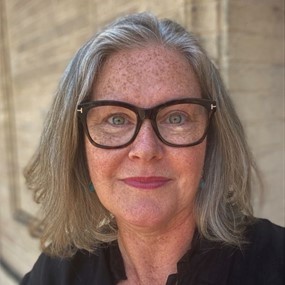
Dr. Nicholas Broskey is an Associate Professor in the Department of Kinesiology at the College of Health and Human Performance, East Carolina University. His research bridges translational science and clinical practice, focusing on skeletal muscle physiology and mitochondrial biology to address metabolic diseases through exercise interventions. Dr. Broskey's work explores how maternal health during pregnancy programs infants' metabolic health outcomes, utilizing mesenchymal stem cell models to study developmental programming of obesity and diabetes. He combines clinical expertise in exercise prescription and metabolic assessment (e.g., hyperinsulinemic-euglycemic clamp, indirect calorimetry) with basic science techniques to evaluate mitochondrial content and function. His recent publications highlight maternal exercise effects on offspring metabolism, mitochondrial heterogeneity in racial health disparities, and bioenergetic adaptations in cancer cells. Grants from NIH, Brody Brothers' Foundation, and Duke University support his research on maternal-fetal metabolic programming and exercise transducers. Scientific Awards Outstanding Researcher or Creative Activity Award 2023-2024 Early Career Grant Challenge 2018 Endowed Postdoctoral Fellowship 2015 Best Poster 2012 Dr. Broskey actively serves on editorial boards for Clinical Experimental Obstetrics and Gynecology (2023) and International Journal of Sports Medicine (2022).
Kuo-Fen Lee, PhD is a Professor at the Salk Institute for Biological Studies, holding the prestigious Helen McLoraine Chair of Molecular Neurobiology. He leads the Clayton Foundation Laboratories for Peptide Biology, where his research focuses on nerve regeneration, spinal cord injury, and molecular mechanisms underlying neural development and neurodegenerative diseases. His work bridges basic neuroscience with potential therapeutic applications for conditions like ALS, paralysis, and Alzheimer's disease. Dr. Lee received his educational training from multiple prestigious institutions: a degree in Plant Pathology from National Taiwan University; an MS in Cancer Enzymology and Cell Differentiation from National Yang-Ming Medical College, Taiwan; a PhD in Endocrinology from Baylor College of Medicine, Houston; and completed his postdoctoral training at the Whitehead Institute for Biomedical Research. His primary research interests center on understanding why humans cannot regenerate damaged nerves while many other animals can. Dr. Lee has made significant discoveries regarding the p45 protein, which promotes nerve regrowth in mice but is absent in humans (who instead have p75, which inhibits nerve growth). His laboratory also studies neuregulin signaling, neuromuscular synapse formation, and the role of various proteins like nestin in neural development and maintenance. His work often employs mouse models to investigate spinal cord injury, pain pathways, and neurodegenerative conditions. Analysis of Dr. Lee's recent publications reveals a consistent focus on molecular neurobiology with particular emphasis on neural signaling pathways, synaptic maintenance, and nerve regeneration mechanisms. His research spans from basic molecular mechanisms to potential therapeutic applications, with increasing attention to pain pathways, Alzheimer's disease models, and the intersection of neuroscience with immunology and metabolism in recent years. As holder of the Helen McLoraine Chair of Molecular Neurobiology, Dr. Lee has received significant institutional recognition for his contributions to neuroscience. While specific awards aren't detailed in the provided text, his sustained funding and leadership position indicate substantial peer recognition in his field. Dr. Lee's research program involves extensive collaboration with other neuroscience laboratories, as evidenced by his numerous co-authored publications across various neuroscience subdisciplines. His work has been consistently funded, allowing for the maintenance of an active research laboratory focused on nerve regeneration and molecular neurobiology. The Clayton Foundation Laboratories for Peptide Biology serves as the primary research environment for Dr. Lee's team, where they investigate molecular mechanisms of nerve development, regeneration, and degeneration using advanced genetic, molecular, and cellular approaches. The laboratory maintains active research programs in multiple areas of neural signaling and development.
Stacy Farina is an Associate Professor in the Department of Biology at Howard University, affiliated with the College of Arts & Sciences. Her research focuses on functional morphology, biomechanics, and evolutionary biology, particularly in fish systems. She holds a B.S. in Marine and Freshwater Biology from the University of New Hampshire (2010) and a Ph.D. in Evolutionary Biology from Cornell University (2015). Her work examines skeletal morphology, respiratory systems, and functional adaptations in diverse fish species, including flatfishes, snailfishes, and elasmobranchs. Recent studies investigate remote research methodologies during the pandemic, deep-sea adaptation, and biomechanical integration in feeding systems. She directs a research lab in Just Hall, Room 410, and maintains a Google Scholar profile. Publications span topics like ventilation mechanics, acoustic signaling evolution, and skeletal density patterns in deep-sea environments. Her research emphasizes interdisciplinary approaches, combining anatomical analysis, computational modeling, and experimental biomechanics. No scientific awards or grants are explicitly listed in the provided texts. She advises no listed students, though her research involves undergraduate participation. Her lab focuses on fish morphology, ecology, and evolutionary processes.
Dr. April Nowell is a Professor of Anthropology in the Department of Anthropology at the University of Victoria's Faculty of Social Sciences, specializing in Paleolithic archaeology, cognitive archaeology, and the archaeology of children. Currently on leave, she leads internationally recognized research projects across Europe, the Levant, Australia, and Africa while actively accepting graduate students. She earned her PhD from the University of Pennsylvania and has developed expertise in Neanderthal lifeways, Paleolithic art, and hominin life histories. Her academic journey reflects deep engagement with both theoretical frameworks and fieldwork across diverse geographical contexts. Nowell's research examines how prehistoric societies structured knowledge transmission, childhood development, and symbolic expression. Her groundbreaking work on finger flutings in Australian caves reveals children's roles in Paleolithic storytelling traditions, while her analysis of Levantine wetland ecosystems demonstrates how Pleistocene humans adapted to environmental shifts. She challenges conventional narratives about Neanderthal cognition and has pioneered methodologies for reconstructing prehistoric childhood experiences through skeletal and material evidence. Her recent publications show consistent innovation in archaeological methodology, particularly in digital documentation of rock art and interdisciplinary approaches to human development. Key trends include integrating bioarchaeological data with cognitive models, examining material culture as evidence of social learning, and analyzing environmental archives to understand human dispersal patterns. Her scientific recognition includes: 2023 EAA Book Prize for Growing Up in the Ice Age: Fossil and Archaeological Evidence of the Lived Lives of Plio-Pleistocene Children Nowell secures major research funding including Social Sciences and Humanities Research Council grants supporting her Azraq Basin project in Jordan and Koonalda Cave research in Australia. She mentors graduate students in Paleolithic theory while collaborating with Indigenous communities and international scholars on field projects spanning five continents. Her work bridges academic research and public engagement through TEDx talks and media appearances examining science communication. She directs field programs at Jordan's Azraq Basin wetlands and Australia's Koonalda Cave, working with multidisciplinary teams including geochronologists, bioarchaeologists, and Traditional Owners to investigate Pleistocene human adaptation and cultural transmission.
Dr. Adam W. Feinberg is a Professor at Carnegie Mellon University with joint appointments in Biomedical Engineering and Materials Science & Engineering. He leads the Regenerative Biomaterials and Therapeutics Group, pioneering research in tissue regeneration and biomaterials design. Feinberg's research focuses on developing engineering strategies to create functional tissues, particularly for cardiac, skeletal, and corneal applications. His laboratory investigates the biomechanics of engineered extracellular matrices and develops scaffolds that guide stem cell differentiation into functional tissues. Scientific Awards: NIH Director’s New Innovator Award (2012) NSF CAREER Award Ladd Research Award (2013) Arthur Hamerschlag Career Development Professorship His work has been featured in prominent journals including Science and Nature Biotechnology, and recognized through media reports in WIRED and The New York Times for innovations in 3D-printed organs and biomedical devices.
Dr. Bradley Schoenfeld is a Professor of Exercise Science at Lehman College, serving as Graduate Director of the Human Performance and Fitness program. He previously acted as Sports Nutritionist for the New Jersey Devils hockey team. His research focuses on the effects of exercise on body composition, particularly muscle hypertrophy and fat loss, along with related nutrition interventions. Schoenfeld has authored over 300 peer-reviewed papers and the influential textbook Science and Development of Muscle Hypertrophy . He has received notable awards including the 2016 Dwight D. Eisenhower Fitness Award and 2018 NSCA Young Investigator of the Year. His work examines muscular adaptations from exercise variables manipulation, body composition changes, and supplementation effects. Key research themes include resistance training protocols, load progression strategies, and the physiological mechanisms underlying muscle growth. Education: Doctoral degree in Exercise Science Key Affiliations: National Strength and Conditioning Association (NSCA Fellow) Publications consistently address practical applications of resistance training science, emphasizing evidence-based approaches to optimize muscle development. His studies frequently explore training variables like volume, frequency, intensity, and rest periods. Grants and collaborations have supported investigations into deload strategies, isometric training effects, and nutritional strategies for hypertrophy. Labs/Teams: Conducts research through Lehman College's Human Performance Lab Future Work: Continuing exploration of training variables optimization and nutritional ergogenic aids
Gil Serrancoli Masferrer is an Associate Professor in the Department of Mechanical Engineering at the School of Engineering of East Barcelona (EEBE), part of the Polytechnic University of Catalonia (UPC). He is affiliated with the InSup - Research Group in Surface Interaction in Bioengineering and Materials Science and the LAM - Multimedia Applications and ICT Laboratory. His work focuses on biomechanics, computational modeling, and telerehabilitation systems development for clinical applications. Dr. Serrancoli's research spans multisolid dynamics, dynamic optimization, movement simulation, and telerehabilitation systems. His expertise lies in applying computational techniques to solve complex problems in orthopedics, gait analysis, and rehabilitation engineering. His work bridges mechanical engineering with biomedical applications, particularly in musculoskeletal modeling and simulation of orthopedic procedures. He has developed novel computational frameworks for estimating internal musculoskeletal loading and muscle adaptation in various conditions, including hypogravity environments. His recent publications demonstrate a strong focus on in-silico modeling of orthopedic procedures, particularly knee osteotomies (proximal fibular osteotomy versus high tibial osteotomy), with detailed analysis of joint pressure redistribution. He has also pioneered the application of machine learning techniques, particularly recurrent neural networks, to biomechanical problems including cycling biomechanics and running dynamics prediction. His work consistently integrates computational efficiency with clinical relevance. Technical Award - OpenSim+ Advanced Workshop March 2024 Accésit del XLV Congreso de la Sociedad Ibérica de Biomecánica y Biomateriales European Society of Biomechanics Travel Award OpenSim Virtual Workshop - Technical Award OpenSim Visiting Scholar 2017 Enginyers BCN 2018 Dr. Serrancoli leads several competitive R&D projects including 'Muvity: a novel physical telerehabilitation system' for vulnerable populations and 'Simulaciones predictivas in silico para cirugías ortopédicas' (Predictive in-silico simulations for orthopedic surgeries). He collaborates extensively with researchers across Europe, particularly with Jordi Torner, Josep Maria Font Llagunes, and Joan Carles Monllau, and has secured funding from national and regional programs including Plan Estatal de Investigación Científica y Técnica y de Innovación. He is actively involved in the BIOMEC - Biomechanical Engineering Lab and the TecSalut - Research Group in Health Technologies, where he contributes to the development of innovative solutions for healthcare challenges, particularly in the areas of telerehabilitation and computational biomechanics for orthopedic applications.
Woojin Han is an Assistant Professor in the Departments of Orthopedics and Cell, Developmental & Regenerative Biology at the Icahn School of Medicine at Mount Sinai. His research program focuses on the mechanobiology of skeletal muscle stem and progenitor cells, with applications in disease modeling and the development of advanced therapeutics for muscle injuries and degenerative diseases. Dr. Han earned his BS in Biomedical Engineering from the University of Rochester and his MS and PhD in Bioengineering from the University of Pennsylvania. He completed his postdoctoral training at the Georgia Institute of Technology, where he received awards from the American Federation for Aging Research (AFAR) and the NIH. Dr. Han's research integrates biomaterials, bioengineering, and in vivo genetic approaches to investigate cell-matrix interactions and mechanobiological signaling, aiming to uncover the mechanisms driving muscle regeneration and pathology. His work is supported by the National Institutes of Health (NIH) and the Department of Defense (DoD). Analysis of Dr. Han's recent publications reveals a strong focus on muscle regeneration mechanisms, particularly examining the role of extracellular matrix proteins, mechanical confinement, and signaling pathways in muscle stem cell behavior. His research spans from fundamental mechanobiology to translational applications using biomaterials for tissue regeneration. 2025 NEBEC Emerging Investigator Award 2024 Mount Sinai Faculty Council Award for Junior Faculty 2023 Popular Science's The Brilliant 10 2022 Stephen I. Katz Early Stage Investigator Grant Awardee American Federation for Aging Research (AFAR) award NIH award Dr. Han's research is supported by significant funding from the National Institutes of Health (NIH) and the Department of Defense (DoD). His work bridges basic science and clinical applications, with particular emphasis on developing advanced therapeutics for muscle injuries and degenerative diseases. Through his lab, he mentors junior researchers in the fields of biomechanics, bioengineering, and regenerative medicine. Dr. Han leads the Han Lab, which focuses on skeletal muscle regeneration research. The lab employs a multidisciplinary approach combining biomaterials engineering, molecular biology, and advanced imaging techniques to develop novel strategies for enhancing muscle repair and preventing pathological changes following injury.
João F. Mano is a Full Professor at the Department of Chemistry, University of Aveiro, and Director of the Doctoral Program on Biotechnology. He leads the COMPASS Research Group and serves as Vice-Director at CICECO - Aveiro Institute of Materials. His academic appointments include Invited Professor at University of Lorraine (France), Visiting Professor at KAIST (South Korea), and Adjunct Professor at Ajou University (South Korea). Education: PhD in Chemistry (1996, Technical University of Lisbon); D.Sc. in Tissue Engineering, Regenerative Medicine and Stem Cells (2012, University of Minho) Research Interests focus on Biomaterials for Regenerative Medicine , integrating Nanotechnology , Microtechnology , and Biofabrication . His group develops Bioinspired Materials using polymer chemistry, Decellularized Extracellular Matrix , and 3D Bioprinting to engineer Cell Microenvironments for therapeutic applications. Recent Publications highlight advancements in Human-Derived Hydrogels , Photopolymerizable Scaffolds , Magneto-Responsive Biomaterials , and Programmable Bioinks . Trends show emphasis on Organ-on-a-Chip integration, Smart Living Materials , and Green Bioprinting methodologies. Scientific Awards include: European Research Council Advanced Grants (2015, 2020) Fellow at IUPAC, European Academy of Sciences, and American Institute of Medical and Biological Engineering ERC Proof of Concept Grants Doctor Honoris Causa from University of Lorraine and Utrecht UNESCO Chair on Biomaterials George Winter Award (European Society for Biomaterials) Supervisions & Collaborations encompass 74+ MSc, 26+ PhD students, and 40+ postdocs. He co-founded METATISSUE and CELLULARIS Biomodels , and serves as Editor-in-Chief of Materials Today Bio .
Dr. Nicola Allison is a Reader at the University of St Andrews, School of Earth & Environmental Sciences, where she leads research on biomineralisation. Her work focuses on how marine organisms form calcium carbonate structures, the impact of environmental changes on these processes, and the role of these biominerals in reconstructing past climates. Her research integrates experimental studies using controlled aquaria systems to culture corals and other organisms, alongside geochemical analyses of fossil carbonates. Key areas include the effects of ocean acidification, rising temperatures, and organic matrices on biomineral formation. She collaborates internationally, including through the International Ocean Discovery Program (IODP). Publications highlight advancements in understanding coral skeletal chemistry, aragonite precipitation mechanisms, and the development of climate proxies. She holds grants from NERC, MASTS, and the Leverhulme Trust, supporting projects on coral calcification, biomolecule influences, and climate change impacts. Dr. Allison actively engages in public outreach through workshops and conferences, contributing to climate science communication and policy-relevant research on marine ecosystems.
Dr. Andrew Best is an Assistant Professor of Biology at Massachusetts College of Liberal Arts (MCLA), specializing in biological anthropology with a focus on human physiological evolution. His primary research examines the role of sweating in human evolution, contemporary human sweat characteristics, and the metabolic limits of endurance performance. He holds a Ph.D. from the University of Massachusetts (2021), an M.A. from the University of Massachusetts (2016), an M.A. from Quinnipiac University (2006), and a B.A. from Saint Michael’s College (2004). Dr. Best teaches courses including BIOL 101: Biology Seminar for Majors , BIOL 342/343: Anatomy and Physiology , BIOL 440: Exercise Physiology , and BIOL 484: Biomechanics . His research integrates evolutionary biology, thermal physiology, and exercise science to explore how human metabolic and thermoregulatory systems have evolved to support extreme endurance activities. Key projects include studying sweat gland density variation across populations and the physiological constraints of ultra-endurance events. His publications span topics such as ultramarathon energy expenditure, strength training’s impact on endurance, and primate sweat gland evolution. He actively participates in academic conferences and collaborates with researchers globally. No scientific awards are explicitly noted in the provided materials. Dr. Best’s work reflects interdisciplinary approaches to understanding human biological adaptation, with ongoing projects likely extending into nutritional strategies for endurance athletes and comparative analyses of primate thermoregulation systems.
Bonnie Effros is Professor and Head of the Department of History at the University of British Columbia since 2022. With a PhD from UCLA and BA from Brandeis, her academic journey spans prestigious roles at University of Liverpool, University of Florida, Binghamton University, and Southern Illinois University. A Fellow of the Royal Historical Society and recipient of the French Colonial Historical Society’s Alf Andrew Heggoy Book Prize, she shapes historical discourse through her work on archaeology, gender, and colonial legacies. PhD, History, UCLA (1994) MA, History, UCLA (1990) BA, History, Brandeis University (1987) Her research bridges late antique/early medieval archaeology and 19th-century antiquarianism , focusing on France and its colonial possessions. Recent projects examine Père Camille de la Croix ’s contested Christian archaeology in France and Salomon Reinach ’s assimilation politics. She connects material culture to gender dynamics, Christian conversion debates, and colonial power structures through extensive fieldwork in Vatican archives and French/British collections. Key trends in her 15 most recent publications include: analyzing 19th-century museum-building in Algeria; investigating gender through Merovingian burial practices; and exploring colonial narratives via artifact circulation. Her work often intersects with museum studies , gender archaeology , and historiographical critique . French Colonial Historical Society’s Alf Andrew Heggoy Book Prize (2019) SSHRC Insight Development Grants (2023-2025, 2025-2027) Royal Historical Society Fellowship University of Florida’s International Educator of the Year (2014) As a graduate supervisor, Effros mentors students in late antique/early medieval European history with colonial contexts, emphasizing Latin proficiency and multilingual research. She co-edits the Brill Series on the Early Middle Ages and Studies in Late Antiquity , while serving on the Medieval Academy of America’s Council. Her pandemic-era work on Liverpool silversmith Joseph Mayer’s collections demonstrates continued engagement with cultural patronage and museum provenance issues.
Albert M. Berghuis is a Professor in the Department of Biochemistry at McGill University's Faculty of Medicine. His research focuses on structural mechanisms of antibiotic resistance and fungal pathogenesis using advanced techniques including X-ray crystallography, electron microscopy, and computational chemistry. His primary research interests include: Structural basis of antibiotic resistance mechanisms, particularly against aminoglycosides Development of novel antimicrobials through structure-based drug design Structural studies of fungal-specific metabolic pathways for antifungal drug discovery Enzyme mechanisms involving protein-small molecule interactions Analysis of his recent publications reveals a consistent focus on structural elucidation of resistance mechanisms, with particular emphasis on aminoglycoside-modifying enzymes and fungal targets. His work bridges structural biology with therapeutic development, showing strong translational potential in combating antimicrobial resistance. Professor Berghuis maintains the Berghuis Lab with facilities in both the McIntyre Medical Sciences Building and the Francesco Bellini Life Sciences Building. His laboratory employs integrated structural biology approaches to tackle pressing problems in infectious disease treatment.
Mary J. Sandage is a Professor and Dean's Distinguished Research Fellow in the Department of Speech, Language & Hearing Sciences within the College of Liberal Arts at Auburn University. She serves as Graduate Program Officer and maintains an active research program focused on voice physiology and upper airway disorders. Her educational background includes: PhD in Exercise Science from Auburn University MA in Speech Language Pathology from the University of Iowa BA in English with a minor in Linguistics from Iowa State University Internationally recognized for expertise in laryngeal physiology and clinical voice rehabilitation, Dr. Sandage specializes in singing voice rehabilitation, chronic cough, inducible laryngeal obstruction, and exercise-induced laryngeal obstruction. Her research examines muscle bioenergetics, performance physiology, hormonal influences, and fatigue aspects of voice function, along with thermoregulation for upper airway disorders and healthcare disparities in speech pathology services. Analysis of her recent publications (2022-2025) reveals a strong interdisciplinary approach bridging exercise science with voice pathology. Her work consistently explores biomarkers of vocal function (particularly blood lactate), develops novel assessment tools like the Fluid Interval Test for Voice, and addresses critical gaps in differential diagnosis for upper airway disorders. She has made significant contributions to understanding vocal physiology through the lens of sports science, with applications for both clinical populations and professional voice users. Her scientific recognition includes: Fellow of the American Speech Language Hearing Association Pan American Vocology Association Recognized Vocologist Dean's Distinguished Research Fellow at Auburn University As Graduate Program Officer, Dr. Sandage oversees graduate education in Speech, Language & Hearing Sciences. Her research program includes numerous collaborative projects examining healthcare disparities, particularly in rural Alabama, and has resulted in the development of the Voice & Upper Airway Clinic within the Auburn University Speech & Hearing Clinic. She directs the Voice Physiology Lab, where she investigates applied muscle physiology, voice acoustics and aerodynamics, laryngeal imaging, and laryngeal thermophysiology. Her work frequently involves interdisciplinary collaborations with exercise scientists, otolaryngologists, and sports medicine specialists to advance understanding of voice function across diverse populations.
Amjad Javed is a Professor and Associate Dean at the University of Alabama at Birmingham , with primary appointments in the School of Dentistry - Oral & Maxillofacial Surgery and joint affiliations in Cell, Developmental and Integrative Biology , Otolaryngology , and Biomedical Engineering . His research spans bone biology, cartilage development, and myeloma bone disease. PhD in Physiology (University of the Punjab, 2003) MS in Zoology/Animal Biology (University of the Punjab, 1992) Research Interests focus on transcriptional regulation via RUNX2 and Sp7 in skeletogenesis, vascular calcification mechanisms, epigenetic control of bone formation, and tumor-bone microenvironment interactions in multiple myeloma. Key subfields include endochondral ossification, osteoclast differentiation, and nanomatrix-based tissue engineering. Scientific Contributions include discoveries about RUNX2's role in postnatal bone resorption, λ5 protein's impact on skeletal aging, and heparanase's promotion of myeloma metastasis. His work demonstrates RUNX2's dual function in chondrocyte apoptosis and cartilage degradation. Teaching & Mentorship involves graduate committee service for over 15 students and instruction in courses like Connective Tissue and Bone , Oral & Skeletal Biology , and Journal Clubs . Collaborations span Comprehensive Arthritis, Musculoskeletal, Bone and Autoimmunity Center , Integrative Center for Aging Research , and Biomatrix Eng Regen Med Center .