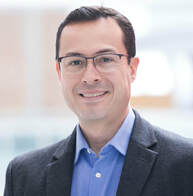
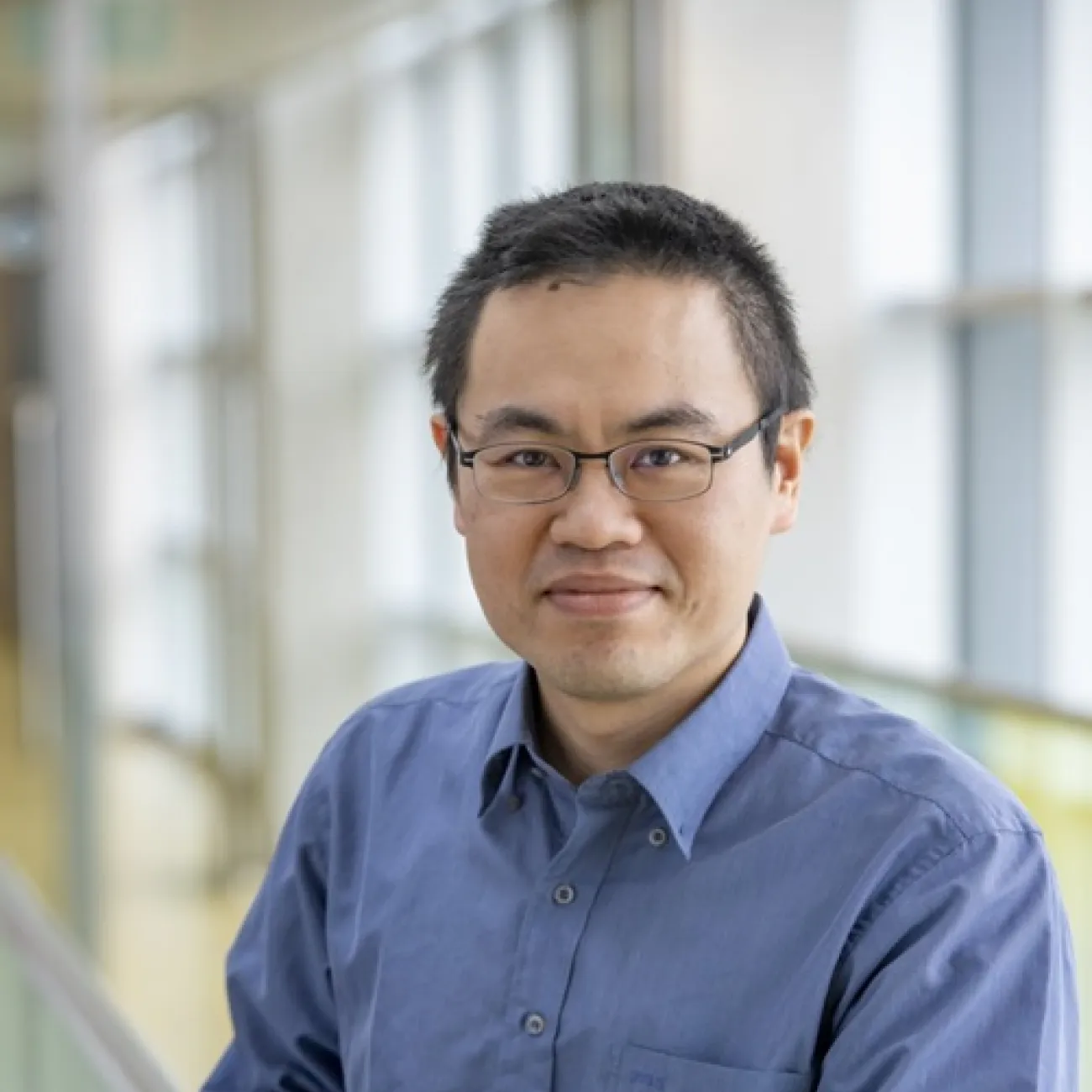
Dr. Gregor Hlawacek is the Head of the Ion Induced Nanostructures group at the Helmholtz-Zentrum Dresden-Rossendorf (HZDR), leading research in advanced microscopy and nanotechnology. He holds a position within the Ion Beam Physics and Materials Research institute under the Ion Beam Center department. His work focuses on ion beam engineering, nanoscale device fabrication, and correlative microscopy techniques, with applications in quantum materials, spintronics, and biomedical interfaces. Dr. Hlawacek’s research interests include: Development of helium and focused ion beam (FIB) technologies for nanoscale patterning and characterization Study of defect dynamics in semiconductors and 2D materials Applications of ion beams in biomedical nanotechnology and toxicology Quantum emitter engineering in silicon-based systems His recent work highlights advances in correlative microscopy approaches for studying nanoparticle-cell interactions, programmable quantum defect engineering in SiC/Si systems, and novel magnetic nanostructures for spintronics. He has contributed to over 100 peer-reviewed publications since 2013, with recent breakthroughs in ultra-long-term data storage via atomic defects and high-resolution imaging techniques. Dr. Hlawacek collaborates with international institutions on projects involving nanomaterials synthesis, semiconductor characterization, and advanced microscopy. His lab integrates tools like the npSCOPE instrument for in-situ correlative analysis, combining AFM, FIB, and ion microscopy for multimodal nanoscale investigation.
Gerard Markx is a Professor in Bioprocessing at Heriot-Watt University, affiliated with the School of Engineering & Physical Sciences and the Institute of Biological Chemistry, Biophysics and Bioengineering. Previously, he held a position in the School of Chemical Engineering and Analytical Science at the University of Manchester. His research focuses on cell characterization techniques, biofilm architecture, and tissue engineering applications. He holds a patent for biomedical coating methods and has contributed to studies on microbial growth and isolation. Education & Positions: Professor in Bioprocessing, Heriot-Watt University Former role at University of Manchester Research Interests: Specializes in dielectric properties of cells, ultrasound/optical techniques, and biofilm engineering. His work bridges cell culture, analytical biotechnology, and microfabrication to advance regenerative medicine and environmental biotechnology. Publications & Awards: Authored 17 research outputs including patents and book chapters. Recipient of the Fellow of the IChemE (2014). Advising & Labs: Leads a research group investigating multicellular systems and biomaterials. Collaborates on projects involving cell separation, biofilm modeling, and microfluidic device development. Labs/Teams: Active in labs focused on bioprocessing and biomaterials engineering, with interdisciplinary collaborations in chemical engineering and microbiology.
Carlos Escobedo is an Associate Professor in the Department of Chemical Engineering at Queen's University, with cross appointments in the Department of Chemistry (Faculty of Arts and Science) and the Beaty Water Research Centre. He holds a B.Sc. from UNAM (2000), M.A.Sc. from University of Toronto (2002), Ph.D. from University of Victoria (2011), and completed a postdoctoral fellowship at ETH Zurich (2011-2013). His lab develops microfluidic and optofluidic technologies for analytical and diagnostic applications, focusing on label-free sensing, single-cell analysis, and biomedical innovations. Education: B.Sc., National Autonomous University of Mexico (UNAM), 2000 M.A.Sc., University of Toronto, 2002 Ph.D., University of Victoria, 2011 Postdoctoral Fellow, Swiss Federal Institute of Technology (ETH Zurich), 2011-2013 Research Interests: Microfluidics, optofluidics, plasmonics, biosensing, nanoparticle assembly, and environmental monitoring. Current projects include wearable diagnostics, single-cell interrogation, and biomimetic nanostructures. Recent work emphasizes synergies between microfluidics and plasmonics for applications like virus detection and bacterial adhesion studies. His lab has developed cost-effective sensors for pesticide analysis and SERS substrates with sub-picomolar sensitivity. Collaborations include the Mexico-Canada Research and Learning Hub and institutions in Japan. Advising & Lab: Supervises postdoctoral fellows (e.g., Juan Manuel Gomez Cruz) and graduate students (e.g., Brianna Bradley). The Escobedo Lab is part of Queen's Department of Chemical Engineering and collaborates with the QSens Lab (Docoslis group). Research is supported by grants in nanotechnology and environmental engineering. Labs/Teams: Escobedo Lab (Queen's University), QSens Collaborative Nanotechnology Lab (with Dr. Docoslis).
David Paterson serves as a Postdoctoral Research Associate at the University of Glasgow's School of Cardiovascular & Metabolic Health, focusing on interdisciplinary biomedical research that bridges immunology, nanomedicine, and biophysical systems. His work demonstrates strong integration of engineering principles with biological applications. His research interests center on nanoparticle drug delivery systems , membrane biophysics , and inflammatory disease mechanisms . Paterson's work explores how nanoscale interventions can modulate immune responses, particularly in rheumatoid arthritis, while also investigating fundamental membrane interactions with antimicrobial peptides and engineered vesicles. Analysis of his publication record reveals consistent focus on translational biomedical engineering approaches, with recent work (2024) demonstrating therapeutic applications for rheumatoid arthritis, while earlier publications established foundational work in membrane biophysics and microfluidic systems. His research trajectory shows progression from fundamental biophysical studies toward clinically relevant applications. Paterson has collaborated extensively with researchers including Tassieri, Reboud, Wilson, and Cooper across multiple publications, indicating strong interdisciplinary network within the University of Glasgow's biomedical research community.
Rikkert Frederix is a Senior Lecturer at Lund University's Department of Physics, Faculty of Science. His research focuses on high-energy particle physics phenomenology, particularly at the Large Hadron Collider (LHC). He specializes in improving theoretical predictions for LHC processes using advanced event generators like MadGraph5_aMC@NLO, aiming to resolve discrepancies between data and theory, enhance prediction accuracy, and explore beyond the Standard Model physics. Research interests include precision calculations of top quark pair production, electroweak corrections, and Monte Carlo methods for event generation. His work addresses algorithmic challenges such as negative weight reduction in NLO matching and optimization for high-luminosity LHC conditions. Publications span topics like tt̄ production dynamics, Z-boson angular coefficients, and software frameworks for collider physics. Collaborations emphasize interdisciplinary approaches between theory and experimental data analysis.
Qian Wang is a Researcher at the Department of Energy and Process Engineering, Faculty of Engineering, Norwegian University of Science and Technology (NTNU). Their research focuses on combustion diagnostics, laser-based measurement techniques, and advanced imaging systems for fluid dynamics analysis. Key areas include soot characterization, flame tomography, and the development of cost-effective diagnostic tools. Research interests encompass combustion kinetics, thermometry, and particle dynamics, with applications in propulsion systems and material science. Recent work emphasizes the use of machine learning and deep learning for data-driven diagnostics, particularly in turbulent combustion environments. Publications highlight innovations in volumetric reconstruction, time-resolved imaging, and optimization of optical systems under constrained conditions. No scientific awards are mentioned in the provided text. Qian’s work involves collaboration with engineering teams to advance combustion diagnostics through interdisciplinary approaches, though specific grants or advising roles are not detailed here.
Georgios Stefanidis is a Professor at the National Technical University of Athens (NTUA), affiliated with the School of Chemical Engineering and the Department of Analysis, Design and Development of Processes and Systems. His research focuses on process intensification, plasma-driven chemical conversions, ultrasonic and microwave applications, and sustainable chemical manufacturing. He leads studies on non-oxidative methane coupling to ethylene, catalytic reactor design, and valorization of waste materials through advanced recycling techniques. His work integrates cutting-edge technologies like non-thermal plasma, acoustic cavitation, and computational modeling to enhance energy efficiency and resource utilization. Professor Stefanidis has contributed to advancements in sonochemical reactor modeling, microwave-assisted synthesis, and the development of novel reactor configurations such as rotary kiln-type systems. His research addresses global challenges in carbon utilization, renewable energy integration, and circular economy solutions. He currently holds the email address gstefani@mail.ntua.gr and is a full-time faculty member without part-time status. His recent studies include investigations into the electrification of CO₂-based methanol synthesis, plasma-catalytic methane conversion, and the application of artificial intelligence in crystallization processes. These efforts aim to bridge fundamental science with industrial-scale applications, emphasizing scalability and economic viability through techno-economic assessments and modular reactor design.
Alana Cowell is a Research Fellow at Birkbeck, University of London, affiliated with the School of Natural Sciences. She is a Postdoctoral Research Assistant in Professor Carolyn Moores' lab, focusing on the regulation of the actin cytoskeleton using advanced techniques like single-particle cryo-electron microscopy (Cryo-EM) and cell tomography. Her research explores cellular processes such as filopodia formation, endothelial barrier integrity, and the role of proteins like Talin1 and TLNRD1 in cancer and genetic disorders. Her work bridges molecular biology, structural biology, and cell biology, with a particular emphasis on protein function, cytoskeletal dynamics, and their implications in diseases. Recent studies include investigations into Talin1 dysfunction linked to systemic capillary leak syndrome and the biochemical characterization of integrin interactomes. No scientific awards or grants are explicitly listed in the provided information. She is part of Carolyn Moore's research group, contributing to projects that integrate cutting-edge microscopy techniques with biochemical analyses to unravel cellular mechanisms.
Sara Rouhanifard is an Assistant Professor in the Department of Bioengineering at Northeastern University's College of Engineering. She leads the Rouhanifard Lab, which focuses on developing chemical approaches to study RNA processing, DNA-protein interactions, and their roles in disease and development. Her work integrates chemical, biological, and computational methods to address challenges in biomedical research. Education: PhD (2014), MS (2012) in Biochemistry from Albert Einstein College of Medicine; BS (2007) in Biochemistry and Molecular Biology from University of Massachusetts, Amherst. Research interests include single-cell RNA dynamics, epitranscriptomics, and nanopore sequencing. Recent articles highlight advancements in live-cell click chemistry (inCu-click), pseudouridine modification profiling, and viral particle analysis via nanopore systems. Awards: 2025 Søren Buus Outstanding Research Award; 2023 CMBE Rising Star Award; NIH F32 Fellowship. Advising includes PhD students Keqing Nian and Oleksandra Fanari. Active grants include a $4.2M NIH R01 (2024) for RNA sequencing tools and a $3.4M NIH R01 (2023) for mRNA pseudouridylation studies. The lab emphasizes interdisciplinary collaboration, with projects like the Spark Fund-supported InCu-Click reagent and partnerships with Yale University on RNA sequencing innovations. Future work targets translational applications in diagnostics and drug discovery.
Niki Saoulidou is an Associate Professor at the Physics Department of the National and Kapodistrian University of Athens (NKUA), Greece. She joined NKUA in 2011 as an Assistant Professor and was promoted to Associate Professor in June 2018. Her research focuses on experimental particle physics through major international collaborations including CMS at CERN and DUNE at Fermilab. She earned her Bachelor's degree (1996) and PhD (2003) from the University of Athens, with her doctoral research conducted on the DONUT experiment at Fermilab that first observed the tau neutrino. Prof. Saoulidou's research spans several interconnected domains: Neutrino Physics : Pioneering work on DONUT (tau neutrino discovery), MINOS (neutrino oscillations), and contributions to NOvA and DUNE experiments Jet Physics & QCD : Developed Particle Flow jet identification for CMS, led Jet Algorithms and Standard Model Physics with Jets groups Exotic Particle Searches : Dark matter, extra dimensions, and heavy resonances using dijet/multi-jet events Detector Development : Key contributions to CMS High Granularity Calorimeter design for HL-LHC Higgs Physics : Current focus on Higgs property measurements with Run 3 data Her recent publications (2024-2025) predominantly analyze LHC proton-proton collisions, featuring studies of jet production mechanisms, exotic particle searches, Higgs physics, neutrino detection techniques, and precision QCD measurements. Over 75% utilize CMS or DUNE data, reflecting her dual experimental focus. Significant scientific recognition includes: Fermilab Wilson Fellowship (2006-2009) - prestigious early-career award She leads the NKUA particle physics group and holds multiple leadership positions: Chair of international Long-Baseline Neutrino Committee (LBNC) since 2023 Ex-officio member of Fermilab Physics Advisory Committee Former CMS roles: Jet Algorithms co-convener (2010-2012), Standard Model Physics with Jets co-convener (2012-2014), Exotica co-convener (2018-2021) Current CMS Conference Committee and Diversity Office member
Armin Knoll is a Research Staff Member at IBM Research Europe - Zurich, Switzerland, where he has been working since 2006. He specializes in nanofabrication and thermal scanning probe lithography, with significant contributions to the development of probe-based data storage technologies, including the well-known 'Millipede' project and subsequent 3D nanofabrication using heatable probes. Dr. Knoll earned his Diplom degree in Physics from the University of Würzburg, Germany, in 1998, followed by a PhD summa cum laude from the University of Bayreuth, Germany, in 2004. His doctoral thesis focused on 'Equilibrium and Dynamic Phase Behavior in Thin Films of Cylinder Forming Block Copolymers' under the supervision of Professor G. Krausch. Armin Knoll's research primarily centers around nanofabrication techniques, particularly thermal scanning probe lithography (t-SPL). His work spans multiple disciplines including nanotechnology, materials science, and molecular systems. He has made significant contributions to probe-based data storage , 3D nanofabrication , and more recently, chemical computing systems. His research often involves the precise manipulation of materials at the nanoscale, with applications ranging from data storage to molecular computing. Analysis of Dr. Knoll's recent publications reveals a strong focus on advancing thermal scanning probe lithography techniques while expanding into chemical computing and nanofluidic systems. His work shows a clear progression from fundamental nanofabrication methods toward more complex systems that integrate biological components and chemical reaction networks. The interdisciplinary nature of his research bridges physics, chemistry, materials science, and engineering, with increasing emphasis on creating functional nanoscale systems for information processing. European Research Council (ERC) award for project entitled 'Topographically guided placement of asymmetric nano-objects' (2012) Best Paper Award in 2010 of the IBM materials research community (MRC) (2011) IBM Research Division Accomplishment 2010 for 'Probe-based Nanopatterning' (2010) Research Division Award for 'Probe-based Nanopatterning' (2010) IBM Research Division Accomplishment 2009 for 'Designing Polymers to Enable Nanoscale Thermo-Mechanical Data Storage' (2009) Dr. Knoll has been actively involved in mentoring and collaborative research, supervising two postdoctoral students and a PhD student since 2007. His work has received significant external recognition and funding, including the prestigious ERC award in 2012. He has collaborated extensively with external industry partners, particularly in the development of the 'Millipede' project for probe-based data storage. His research has also attracted attention from major scientific journals, with publications in Science, Advanced Materials, and other high-impact venues. At IBM Research Europe - Zurich, Dr. Knoll co-leads the '3D nanofabrication using heatable probes' project, building on expertise from the earlier 'Millipede' project. He works closely with collaborators including Heiko Wolf and Robert Lovchik, developing advanced nanofabrication techniques with applications across semiconductors, artificial intelligence, quantum computing, and hybrid cloud technologies. His current research directions include chemical computing systems that use complex chemical networks as information-processing units.
Dr Bruce (Jun-Yu) Ou is an Associate Professor at the University of Southampton's Department of Electronic & Electrical Engineering. He is a member of the Quantum, Light and Matter Group and the Institute for Life Sciences. His research focuses on metalens technology for imaging and metrology, AI-driven nanoimaging techniques, and nano-optomechanics. Ou has published over 70 high-profile journal articles, including first-author contributions in Nature Nanotechnology , Nature Communications , and Advanced Materials , with an h-index of 31 and 3,900+ citations. He holds 3 patents and has contributed to 160+ conference presentations. His work on nano-optomechanical metamaterials has garnered attention from both academic and commercial outlets such as Nature , Nature Photonics , BBC, and Financial Times. Ou also has 3 years of industry experience in SEM/FIB and phase-change memory technologies. He is currently accepting PhD applications and supervises students in Physics and Electronic & Electrical Engineering. Key research projects include EPSRC-funded initiatives like NOEMIA and wafer-level imaging systems, as well as collaborations on sensor-integrated nano-opto-electro-mechanical resonators and secure communication platforms. Ou has been invited as a speaker at international conferences (SPIE, CLEO) and events like the 2024 BeamMeeting UK. His research group's website ( nanooptomechanics.com ) showcases ongoing projects that merge optics, AI, and nanomechanical systems. Notable past projects include work on optomechanical metamaterial nanobolometers and shape-memory photonic nanowire arrays. Grants and collaborations highlight his role in advancing interdisciplinary research at the intersection of quantum technology and nanoscale engineering.
Dr. Lane Baker is a Professor and Department Head in the Department of Chemistry at Texas A&M University, holding the Carl D. McAfee '90 Endowed Chair in Analytical Chemistry. His research focuses on electrochemical measurement and instrumentation at nanoscale interfaces, including Scanning Ion Conductance Microscopy (SICM), single-entity electrochemistry, and bioelectrochemistry. He leads a dynamic research group (bakergrp) developing tools for high-throughput analysis and electrochemical imaging. Research Interests: Electrochemical imaging, nanoelectrochemistry, ion transport at biological interfaces, catalytic nanoparticles, and applications of machine learning in data interpretation. Key techniques include SICM, SECCM, and electrospray ionization. Recent articles highlight advancements in single-entity electrocatalysis, high-throughput electrochemical systems, and biomedical applications like 3D blood-brain barrier models. Collaborations span nanomaterial synthesis, electrochemical energy storage, and bioanalytical instrumentation. Scientific Awards: AAAS Fellow (2023), SEAC Reilley Award (2023), NSF CCI Center Grant (2023) Advising: 30+ PhD graduates, current advisees include Cody Leasor, Yunong Wang, Kristen Alanis, and Sasha Alden Labs/Teams: Baker Research Group, affiliated with Texas A&M's NSF Center for Single-Entity Nanochemistry
Professor Hywel Morgan (MBE) is a leading academic at the University of Southampton , holding the Professor of Bioelectronics chair in the School of Electronics and Computer Science . His work bridges engineering and biomedical applications, with a focus on microfluidics , bio-sensors , and lab-on-a-chip technologies . Moved to Southampton from the University of Glasgow in 2003 Deputy Head of School Research (2016–2022), overseeing REF 2020 submission Co-founder and Director of Verso Biosense and iFast Diagnostics Scientific advisor to Nuclera Nucleics and other companies Research Interests : Development of 3D microfluidic platforms for stem cell-derived tissue analysis Miniaturized sensors for vital signs and antimicrobial resistance Impedance cytometry for label-free cell analysis Applications in respiratory diseases, cancer, and ocean sensing Grants & Collaborations : Funded by EPSRC, Royal Society, MRC, BBSRC, Wellcome Trust, and EU programs Collaborations with researchers in pulmonology, cancer, and environmental science Labs in the Digital Health and Biomedical Engineering group Scientific Awards & Memberships : MBE (2020) Royal Society Wolfson Research Merit Award (2015–2020) Desty Memorial Prize (2004) Fellow of the Institute of Physics, Royal Society of Chemistry, IET, and Learned Society of Wales
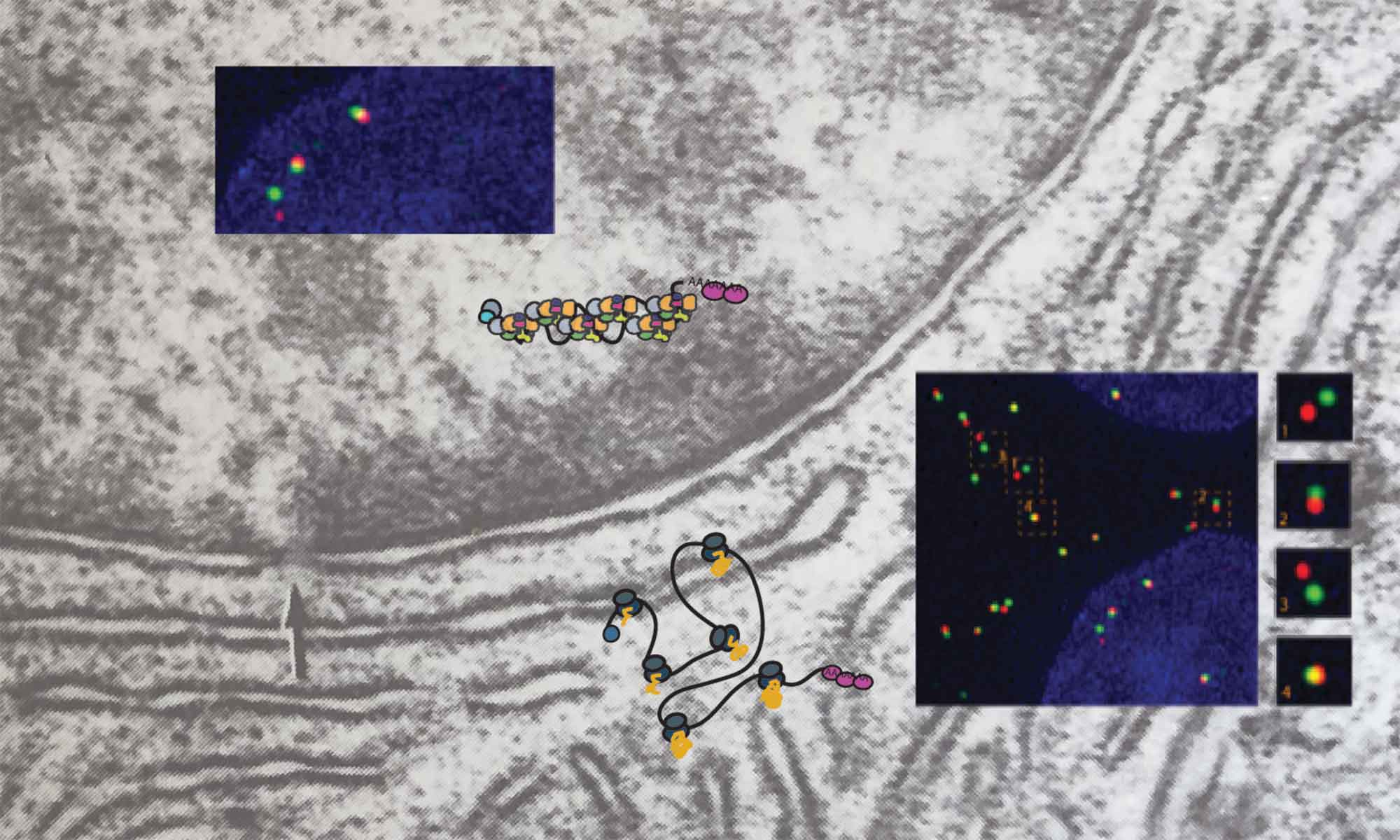
Professor Daniel Zenklusen is a Full Professor at the Department of Biochemistry and Molecular Medicine, Faculty of Medicine, Université de Montréal since 2010. He holds a PhD in Cell Biology from the University of Lausanne (2002) and completed postdoctoral research at the Albert Einstein College of Medicine, New York. His research focuses on RNA regulation and gene expression mechanisms, particularly investigating how RNA metabolism and nuclear organization influence disease processes like cancer and neurodegeneration. Key research themes include the spatial and temporal regulation of RNA metabolism, nuclear pore-mediated mRNA export, and the structural organization of (pre-)mRNP complexes. He employs single-molecule imaging, super-resolution microscopy, and CRISPR-Cas9 genome editing to study these processes in yeast and mammalian models. Zenklusen leads multiple grants from agencies such as the Canadian Institutes of Health Research (CIHR), Fonds de recherche du Québec (FRQ), and the Natural Sciences and Engineering Research Council (NSERC). Notable projects include investigating intron RNP topology and mRNA nuclear retention mechanisms, funded by IRSC and FRQNT. Education: PhD in Cell Biology, University of Lausanne (2002) MSc in Molecular Biology, Universität Bern (1998) Teaching: Courses include BCM-1501 (Origins of Biochemical Life) and others in biochemistry and molecular medicine programs. His lab actively recruits PhD and postdoctoral researchers with expertise in cell biology, biochemistry, and biophysics. Current projects address RNP biology, RNA-protein interactions, and the role of nuclear organization in disease.