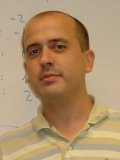
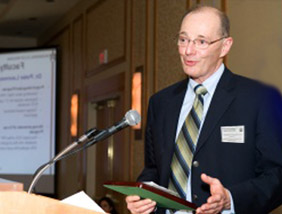
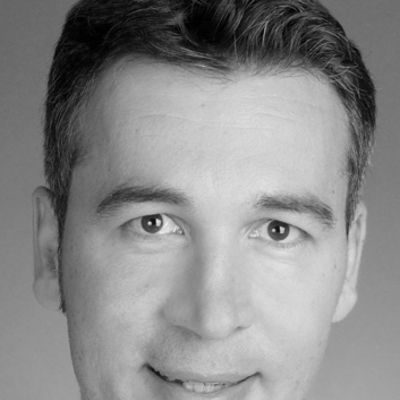
Prof. Dr. Thomas Michael Bohnert is a faculty member at ZHAW School of Engineering, specializing in distributed systems and cloud computing. He has led multiple projects including: Bringing FIWARE to the NEXT step (completed), Enterprise Cloud Robotics Platform (completed), Apache Cloudstack for NFV (completed), Solidna cloud storage (completed), T-NOVA NFV services (completed), and Mobile Cloud Network (completed). Research Focus: Cloud robotics Network Functions Virtualization (NFV) Software-Defined Networking (SDN) Mobile cloud networking Resilient cloud systems Energy-efficient cloud platforms Publications Trends: His work spans 2012-2024 with consistent focus on cloud-native application design, NFV orchestration, SDN implementation, and mobile cloud integration. Key themes include self-managing systems, distributed computing frameworks, and infrastructure optimization. Collaborations: Frequently collaborates with Andrew Edmonds, Giovanni Toffetti Carughi, Piyush Harsh, and Sandro Brunner across EU projects and industry partnerships.
Dr. Zeeshan Rana MSc, PhD, FHEA, MIET, MPEC is a Research Fellow at Cranfield University with expertise spanning Computational Fluid Dynamics , Autonomous Systems , and Artificial Intelligence Applications . His research focuses on high-speed aerodynamics , drone tracking systems , and renewable energy fluid dynamics . Education : MSc in Mechanical Engineering PhD in Computational Fluid Dynamics & Aerodynamics (Cranfield University) His work bridges hypersonic flow analysis with practical applications in Formula One aerodynamics , planetary rover navigation , and textile wastewater treatment . Recent research integrates machine learning with CFD simulations to solve complex engineering problems. Scientific trends in his publications (2025–2013) reveal consistent focus on: Computational Aerodynamics (ILES, WENO schemes, SU2 validation) Autonomous Systems (drone tracking, visual SLAM, sign language modeling) Renewable Energy (VAWT turbines, microbial fuel cells) Scientific Contributions: Fellow of the Higher Education Academy (FHEA) Member of the Institution of Engineering and Technology (MIET) Member of the Professional Engineering Community (MPEC) Current affiliations include the Digital Aviation Research and Technology Centre (DARTeC) , contributing to reinforcement learning-based surveillance and multi-sensor fusion systems for drone tracking.
Josep Maria Porta Pleite is an Associate Researcher at the Institut de Robòtica i Informàtica Industrial (IRI), a joint center of the Spanish National Research Council (CSIC) and Universitat Politècnica de Catalunya (UPC). He leads the Kinematics and Robot Design (KRD) research group and has been actively contributing to robotics and computational kinematics since 2007. His work bridges theoretical algorithm development and practical applications in robotics, molecular biology, and environmental toxicology. Porta’s research spans motion planning , robot kinematics , SLAM , and planning under uncertainty . He has made significant contributions to solving complex kinematic problems in closed-chain systems and molecular conformational spaces. His work often involves developing efficient algorithms and open-source software tools such as the CuikSuite , Cuik-KDtree , and Pose SLAM , which are widely used in robotics research. His recent publications (2019–2025) reveal a strong trend toward interdisciplinary applications, particularly in zebrafish behavioral analysis and neurotoxicology , where computational methods are applied to assess environmental contaminants. He also continues to advance core robotics problems, including trajectory optimization, hand-eye calibration, and closed-form solutions in rotation geometry. His work appears in top-tier journals such as IEEE Transactions on Robotics , Mechanism and Machine Theory , and Science of the Total Environment . Porta has served as an associate editor for IEEE Transactions on Robotics (2015–2018) and has supervised numerous students and collaborators. He has led long-term software development efforts and secured research funding through national and European projects. Scientific Contributions: Lead developer of the CuikSuite for motion analysis of closed-chain systems. Coordinator of the KRD research group since 2011. Contributor to ambient intelligence and robot localization during his postdoc at the University of Amsterdam. He advises multiple students in robotics, computer vision, and biomedical applications, and his team develops tools for path planning, singularity analysis, grasp optimization, and molecular modeling. There is no indication of part-time status, retirement, or former affiliation.
Professor Peter D. Lawrence holds a faculty position at the University of British Columbia (UBC) within the Department of Electrical & Computer Engineering, part of the Faculty of Applied Science. He has been a Professor since 1974 and has held visiting research roles at Chalmers University of Technology (1970-1972) and MIT (1972-1974). His educational background includes a B.A.Sc. from the University of Toronto (1965), M.Sc. from the University of Saskatchewan (1967), and Ph.D. from Case Western Reserve University (1970). He is a Professional Engineer (P.Eng.) and Fellow of the Canadian Academy of Engineering (FCAE). Research interests focus on improving human-machine interfaces, sensor technologies for control systems, and medical robotics. Key areas include teleoperation of heavy machinery, vision-based control, EEG-based brain interfaces, and functional approximation methods for complex systems. Collaborations span multiple disciplines at UBC, including Mechanical Engineering, Computer Science, Mining Engineering, and Forestry, with funding from NSERC and PRECARN/IRIS. Medical Robotics: Brain-computer interfaces and ultrasound-guided surgery. Autonomous Systems: Path planning and vision-based tracking for excavators and haul trucks. Sensing Technologies: Eye-tracking, joint-angle sensors, and slip detection for mobile robots. His teaching contributions include coordinating the Project Integrated Program (PIP) for ECE students and co-developing the interdisciplinary New Venture Design course with the Sauder School of Business. He leads the RCL Lab and has authored books on real-time microcomputer systems and contributed to IEEE publications. Awards include recognition as a Fellow of the Canadian Academy of Engineering.
Davide Amato is an Assistant Professor in Spacecraft Engineering at the Department of Aeronautics, Faculty of Engineering at Imperial College London. He leads the Computational Astrodynamics (COAST) research group focused on developing advanced computational methods to enhance space situational awareness and satellite dynamics analysis. His work emphasizes error correction in orbital data, machine learning applications for space systems, and sustainable space operations. Education: PhD from Technical University of Madrid (2017), MSc and BSc from University of Naples Federico II (2013, 2009). Prior positions include Postdoctoral roles at University of Arizona and University of Colorado Boulder. Research interests include astrodynamics, space debris mitigation, orbit propagation, and computational methods. His group develops algorithms for satellite maneuver reconstruction, error-bounded orbit prediction, and scientific machine learning applications in space systems. Recent work addresses challenges in space catalog accuracy and collision avoidance through advanced mathematical techniques. He actively supports PhD applications for computational astrodynamics research via Imperial's President's PhD scholarships. His research spans applied mathematics, aerospace engineering, and interdisciplinary collaborations with the Space Lab and Artificial Intelligence Network at Imperial.
Stjepan Bogdan is a Full Professor at the Department of Control and Computer Engineering, Faculty of Electrical Engineering and Computing (FER), University of Zagreb. His work bridges advanced robotics, control systems, and manufacturing innovation. Key research areas: UAV control, multi-agent coordination, and fuzzy logic applications Active in simulator-based development (e.g., X-Plane, USARSim, Simulink) Research focuses on: Dynamic UAV control systems (magnetic field localization, moving mass control) Swarm robotics and decentralized coordination protocols Flexible manufacturing system optimization His publications show strong emphasis on practical implementations in: Maritime and GNSS-denied environments Human-in-the-loop aerial systems Industrial automation with autonomous vehicles
Lukas Luft is a postdoctoral researcher at the Autonomous Intelligent Systems group within the Department of Computer Science at the University of Freiburg. His work spans robotics and quantum physics, focusing on probabilistic methods for robot localization, multi-robot systems, and causal inference. Post Doc (2020–present) PhD in Computer Science, University of Freiburg (2020) Master and Bachelor in Physics, RWTH Aachen and University of Freiburg His research in Robot Localization and Mapping includes advanced probabilistic techniques like Bayes filters, decentralized algorithms for multi-robot systems, and change detection in environments using full posterior distributions. He also explores Causality and Foundations of Quantum Physics , applying entropic inequalities and information theory to causal discovery and non-locality. The articles highlight his contributions to robotics, particularly in sensor modeling for Lidar, simultaneous localization and mapping (SLAM), and efficient probabilistic methods. In quantum physics, his work addresses causal structures and entropic information, bridging AI with foundational physics. Luft has collaborated with leading researchers, including Prof. Wolfram Burgard and Bernhard Schölkopf, and contributed to key conferences like Robotics: Science and Systems (RSS) and IEEE IROS.
Pascual Campoy Cervera is a Full Professor at the Universidad Politécnica de Madrid (UPM) and holds visiting professor positions at Delft University of Technology, Tongji University, and Queensland University of Technology. His work focuses on Control Systems , Machine Learning , and Computer Vision for Unmanned Aerial Vehicles (UAVs) . As Principal Investigator of the Computer Vision and Aerial Robotics group at UPM's Center for Automation and Robotics (CAR), he has led over 40 R&D projects with European, national, and industrial funding. Current affiliations: UPM, TU Delft, CAR-UPM Research themes: UAV autonomy, swarm robotics, embedded vision systems His research integrates cutting-edge technologies in image processing, control theory, and artificial intelligence to enhance UAV capabilities in unstructured environments. Recent projects include: Autonomous firefighting systems High-speed drone racing frameworks Swarm-based solar farm inspection Thrust vectoring for heavy UAVs Notable scientific awards include multiple international prizes at UAV competitions (IMAV12–17). His team has developed the Aerostack and Aerostack2 frameworks for aerial robotics, which address execution control, mission planning, and sensor fusion challenges.
Guillaume Bourmaud is an Associate Professor at the University of Bordeaux , affiliated with the Bordeaux Institute of Technology and the Signal and Image Processing department. He is a member of the MOTIVE research team within the IMS Bordeaux laboratory. Research Interests : His work focuses on Signal processing and image matching algorithms Computer vision and Transformer-based architectures Statistical learning for geospatial and atmospheric data SLAM (Simultaneous Localization and Mapping) with probabilistic models Publications Trends : Recent work spans computer vision (2024), geospatial navigation (2023), and atmospheric measurement techniques (2022), with emphasis on kriging, Gaussian processes, and feature correspondence evaluation.
Pascal Vasseur is a University Professor at the University of Picardie Jules Verne (UPJV) in the Faculty of Sciences, Computer Science Department. He leads the Robotics Perception group within the MIS Laboratory (Modeling, Information and Systems) and serves as a member of the National University Council (Section 61) since 2016. Additionally, he has been an Associate Editor for IEEE Robotics and Automation Letters since 2016, demonstrating his significant standing in the robotics research community. Professor Vasseur's research focuses on robotics perception systems, with particular expertise in vision (including omnidirectional and event-based cameras), Lidar, and Radar technologies. His work addresses fundamental challenges in pose estimation, mapping, and localization for robotics and automotive applications. His recent publications show a strong emphasis on advanced sensor technologies, multi-sensor calibration techniques, and practical implementations for autonomous systems. His publication record demonstrates consistent high-impact research output, with numerous articles in top robotics and computer vision venues including IEEE Robotics and Automation Letters, IEEE Transactions on Intelligent Vehicles, and CVPR. He has also authored two comprehensive books on Omnidirectional Vision (2023-2024), establishing himself as a leading expert in this specialized area of computer vision. Professor Vasseur has coordinated multiple significant research projects including ANR projects CaViAR and pLaTINUM, the international DrAACaR project, and PHC STAR and AMADEUS projects. He currently serves as scientific officer for the ANR CLARA Project, continuing his leadership in advancing robotics perception research. His research group actively contributes to solving practical challenges in automotive vision systems, drone navigation, and forest environment mapping, with applications spanning autonomous vehicles, robotics navigation, and environmental monitoring systems. The group's work bridges theoretical advances in computer vision with real-world robotics implementations.
Prof. Reiner Marchthaler is a Professor at Esslingen University of Applied Sciences within the Faculty of Computer Science and Information Technology. He serves as Deputy Director of the Institute for Intelligent Systems (IIS), Scientific Director of the Green IT 2026 Conference, and Liaison Lecturer for the Friedrich Ebert Foundation. His academic leadership spans autonomous systems research and educational initiatives in embedded technologies. His research centers on Embedded Systems and Sensor Data Fusion, with pioneering work on Kalman filters for autonomous systems. He maintains the authoritative resource kalman-filter.de and has developed real-time capable SLAM algorithms, camera-based reference systems, and parking space detection frameworks. His expertise extends to entropy-based safety evaluation in autonomous driving and semantic segmentation using mixed real/synthetic data. Analysis of his 2020-2025 publications reveals dominant trends in autonomous driving systems, emphasizing real-time sensor fusion, deep learning for perception, and safety validation. Key subfields include adaptive Kalman filtering (ROSE-Filter), landmark-based navigation, neural network training with synthetic data, and maximum entropy safety frameworks. His work bridges theoretical innovation with automotive applications, particularly in model vehicle testing environments. Prof. Marchthaler leads research at the Institute for Intelligent Systems, directing the Green IT 2026 initiative and advising the Friedrich Ebert Foundation. His team develops ROS-based validation environments for autonomous algorithms and maintains the Kalman filter knowledge portal. Current projects focus on connected traffic systems using conventional infrastructure landmarks and entropy-optimized safety protocols for production vehicles.