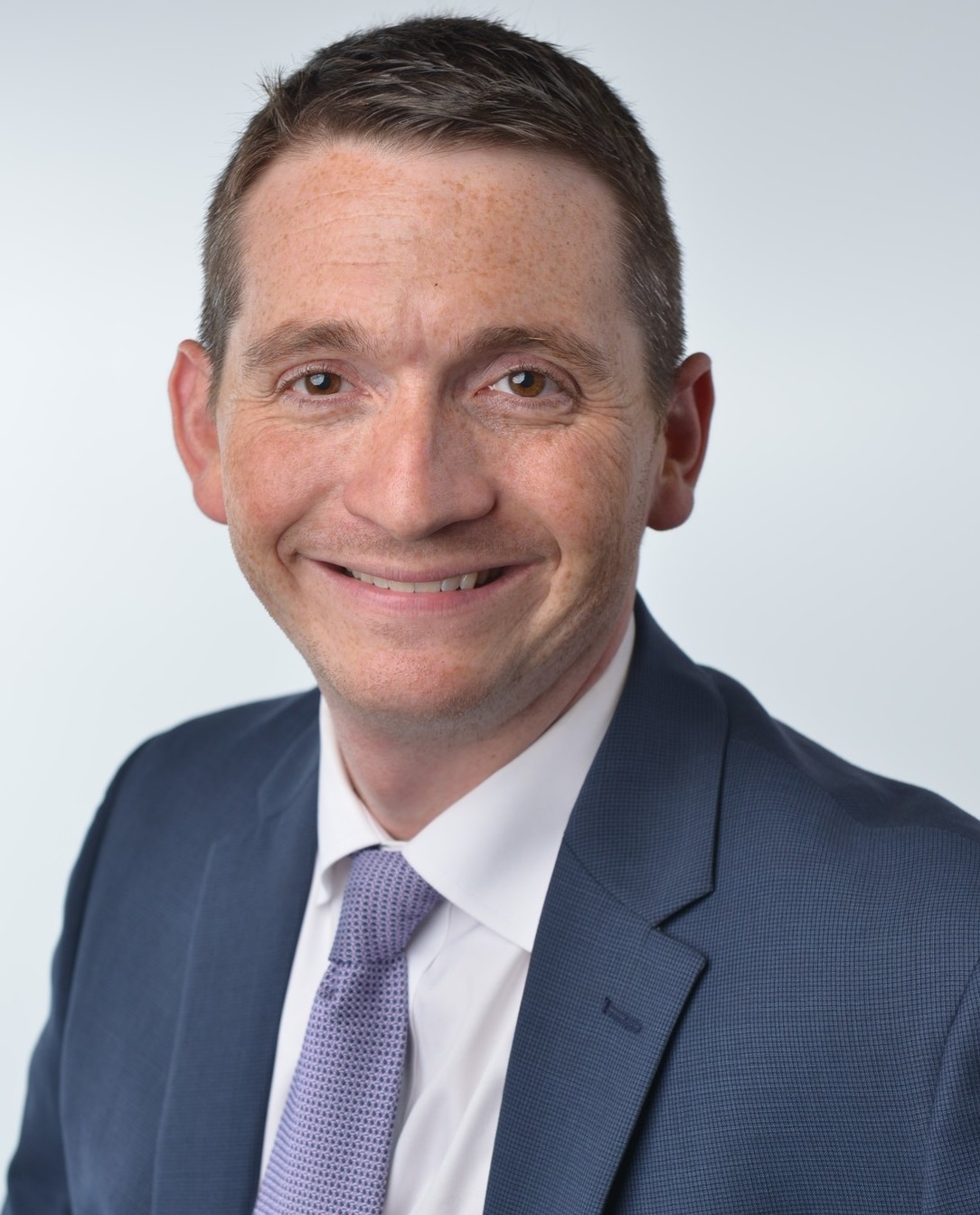
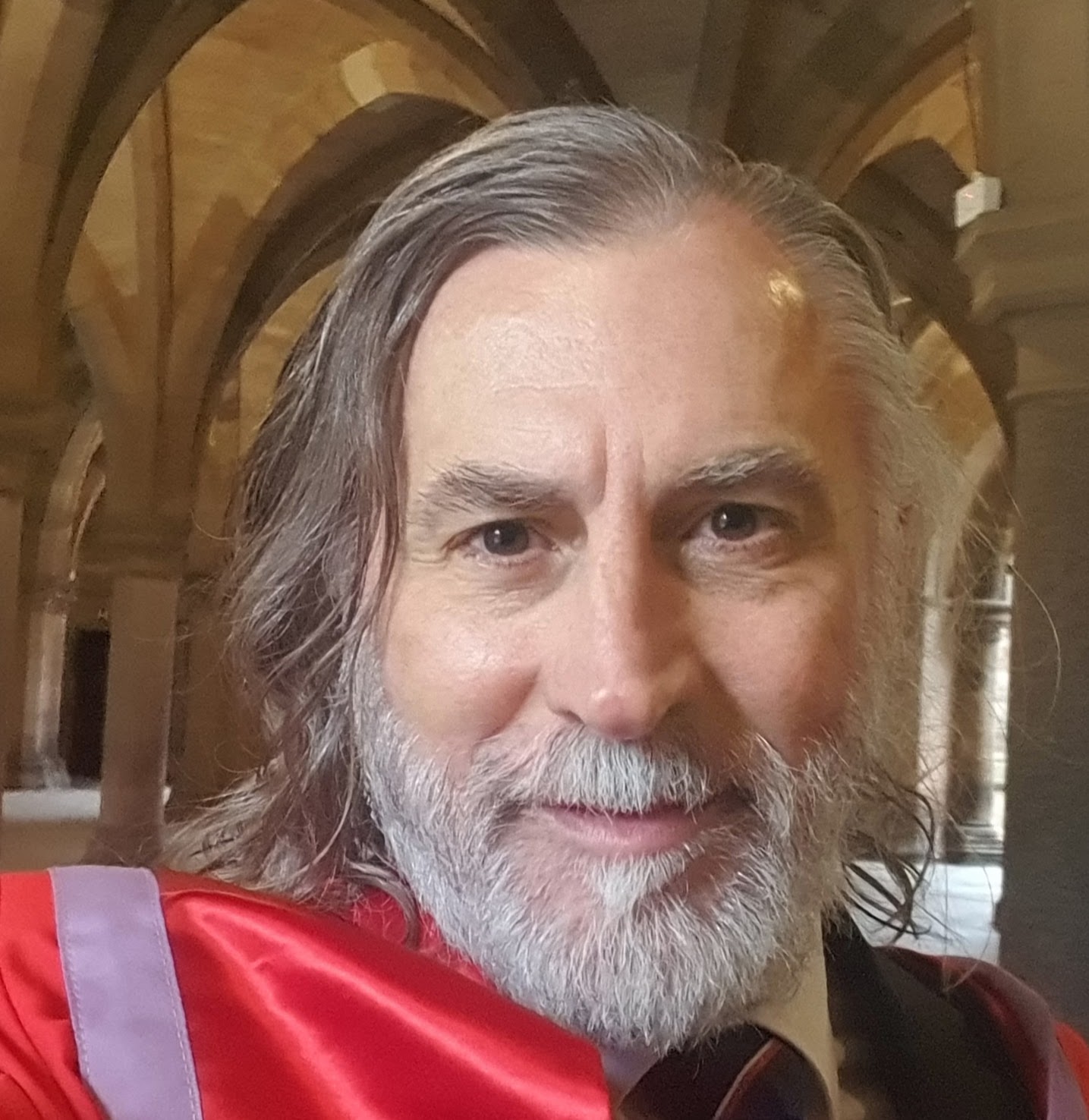
Krista Maree Mehlhaff is an Assistant Professor in the Department of Obstetrics, Gynecology, and Reproductive Sciences at the University of Maryland School of Medicine. She serves as Medical Director of the Obstetric Care Unit at the University of Maryland Medical Center and Director of Patient Safety, Risk Mitigation and Care Enhancement for her department. Her career includes 14 years in the United States Air Force as a maternal-fetal medicine specialist and obstetrician/gynecologist, culminating in leadership roles at Walter Reed National Military Medical Center. Dr. Mehlhaff's research and clinical interests focus on preterm birth , perinatal palliative care , maternal morbidity/mortality , simulation training , teamwork in obstetrics , and quality improvement . Analyses of her publications reveal recurring themes in perinatal neurology, fetal viability, and military healthcare applications. Master Clinician, Walter Reed National Military Medical Center (2023) Associate Master Clinician (2021) Resident/Fellow and Nurse Collaboration Award (2018) Administrative Chief Resident Award (2013) Dennis D. Barber Academic Achievement Award (2013) Ultrasound Award (2011) Humanism and Excellence in Teaching Award (2011) She has led initiatives in universal obstetric bundles implementation, maternal safety working groups, and quality improvement projects across military healthcare systems. Her scholarly work spans perinatal neurology, rare pregnancy complications, and team-based clinical practices.
Andrew O'Malley is a Senior Lecturer in the School of Medicine at the University of St Andrews, where he serves as Deputy Programme Director of the Scottish Graduate Entry Medical Programme (ScotGEM) and Deputy Director of Teaching. His work focuses on the intersection of medical education and technology, particularly in the areas of anatomical sciences, digital health, and artificial intelligence. Dr. O'Malley holds a Doctor of Philosophy in Anatomy & Human Identification and a Bachelor of Science in Forensic Anthropology, both from the University of Dundee. His educational background as an anatomist and forensic anthropologist informs his teaching across various subjects in the School of Medicine, including ScotGEM Case Based Learning, medical ethics, and generative artificial intelligence. His research interests center on the use of technology in health professions education, with specific focus on Technology-Enhanced Learning (TEL), telehealth, and generative artificial intelligence. Dr. O'Malley's work contributes to UN Sustainable Development Goals related to quality education and good health. Dr. O'Malley's publications demonstrate a strong trend toward exploring AI applications in medical education, with particular emphasis on diagnostic accuracy, question generation, bias mitigation, and simulation technologies. His recent work shows increasing sophistication in prompt engineering for medical AI applications and attention to equity issues in AI-generated medical content. #TopDownloadedArticle Prize (2024) Best Poster (2023) CELPiE Research Fund Award (2024) Dr. O'Malley actively supervises postgraduate research students and has been involved in multiple research projects including ComSIM: Community Orientated Simulation, and research on AI diagnostic accuracy. He has presented his work at international conferences including the 1st International Conference on Artificial Intelligence in Medical Education in Kuala Lumpur and contributed written evidence to the House of Lords UK Engagement with Space Committee. Dr. O'Malley is affiliated with the St Andrews SETI Post-Detection Hub, reflecting his interest in broader applications of technology and scientific methodology beyond traditional medical education.
Denny Yu is an Associate Professor at the Edwardson School of Industrial Engineering, Purdue University. His work bridges human factors, neuroergonomics, and healthcare safety through advanced sensor systems and AI. Primary Affiliation : Edwardson School of Industrial Engineering, Purdue University Research Themes : Surgical ergonomics, autonomous vehicle human factors, cognitive workload assessment, multimodal physiological sensing Dr. Yu's research focuses on neuroergonomics and human-robot interaction , particularly in surgical and transportation contexts. His team develops sensor-based systems for workload monitoring, including: EEG-eye tracking fusion for situation awareness Wearable exoskeletons for surgical posture support Computer vision tools for lifting task risk analysis Smart infusion pump usability frameworks AI-driven surgical coaching systems Recent publications emphasize deep learning applications in soft tissue deformation estimation and real-time adaptive systems for robotic surgery augmentation. His work spans both occupational health (veterinary surgeons, airport workers) and medical device innovation domains.
Jonathan White serves as a Senior Lecturer in Cyber Security within the College of Arts, Technology and Environment at the University of the West of England (UWE). With over 23 years of prior industry experience in telecommunications critical infrastructure systems, he joined UWE in January 2020 after transitioning from roles as software developer, product specialist, and management leader in real-time embedded systems. His educational background includes an M.Sc. in Cyber Security (with Distinction) and B.Sc. in Computing for Real-time Systems, both from UWE, where he is currently pursuing a PhD focused on Federated Learning security tradeoffs. White's research centers on Federated Learning applications for IoT security, container security analysis, and machine learning-driven threat detection in home networks. Analysis of his publication record reveals a strong focus on practical security implementations, particularly in containerized environments (Docker security analysis, cyber ranges) and Federated Learning security frameworks. His work consistently bridges theoretical machine learning concepts with tangible security applications for IoT and edge devices, emphasizing privacy-performance tradeoffs in distributed systems. Scientific Recognition: Fellow of the Higher Education Academy (FHEA) White actively contributes to cyber security education through innovative teaching methods including the 'Cyber Funfair' immersive learning platform and Scalextric-based physical system hacking demonstrations. His industry background in telecommunications critical infrastructure informs his practical approach to security education and research, particularly regarding real-time system vulnerabilities and high-availability network security requirements. His technical expertise spans C and Python programming, network security protocols, and specialized knowledge in securing containerized environments and IoT ecosystems. Current research includes longitudinal analysis of container image vulnerabilities and development of modular cyber range infrastructure for security training.
Peter Kazanzides is a Research Professor in the Department of Computer Science at the Whiting School of Engineering, Johns Hopkins University, where he joined the faculty in 2002. His research focuses on robotics, medical robotics, augmented reality, and computer-assisted interventions with primary applications in computer-integrated surgery. His educational background includes multiple degrees from Brown University: ScB (1983) in Electrical Engineering AB (1983) in Computer Science ScM (1985) in Electrical Engineering ScM (1987) in Applied Mathematics PhD (1988) in Electrical Engineering Kazanzides is a member of the Robotics, Vision, and Graphics research group and directs the Sensing, Manipulation, and Real-Time Systems (SMARTS) laboratory. His work spans surgical robotics, mixed reality, and systems engineering, with emphasis on computer-assisted surgery in extreme environments including minimally invasive surgery, microsurgery, and space teleoperation. The SMARTS lab develops real-time sensing systems, augmented/mixed reality interfaces using head-mounted displays, high-performance motor control, and sensor fusion technologies, with strong focus on system integration and open-source platforms like the da Vinci Research Kit (dVRK). Analysis of his recent publications (2024-2025) reveals dominant trends in surgical robotics autonomy, augmented reality navigation, force estimation, and digital twin technologies. Key themes include AI-driven task automation, haptic feedback enhancement, real-time instrument segmentation, and simulation environments for surgical training, primarily leveraging the da Vinci Research Kit framework. As director of the SMARTS lab within the Laboratory for Computational Sensing and Robotics (LCSR), Kazanzides leads a collaborative ecosystem including the Computer Integrated Interventional Systems (CIIS) Lab, Advanced Medical Instrumentation and Robotics (AMIRO) Lab, Dynamical Systems and Controls Lab (DSCL), Computer Aided Medical Procedures (CAMP) Lab, Medical UltraSound Imaging & Intervention Collaboration (MUSiiC) Lab, and Photoacoustic & ULtrasonic Systems Engineering (PULSE) Lab. His lab maintains responsibility for the development and support of the open-source da Vinci Research Kit, a critical resource for surgical robotics research worldwide.
Ariel Chan is an Associate Professor in the Department of Chemical Engineering and Applied Chemistry at the University of Toronto, Faculty of Applied Science and Engineering. She is cross-appointed to the Institute for Studies in Transdisciplinary Engineering Education & Practice (ISTEP) and serves as the Principle Investigator of the Re-Engineering Education (Re3) Research group. Ph.D. in Chemical Engineering from Queen’s University Postdoctoral Fellowship at Agriculture Canada Registered Professional Engineer (P.Eng.) in Ontario Her research focuses on three domains: Assisted-Learning Technology (VR/AR and virtual labs), Data Analytics for Student Success (machine learning and language complexity analysis), and Sustainable Laboratory Practices (Life Cycle Analysis in biodiesel production and nutritional initiatives). She has developed over 40 inquiry-based lab projects and a virtual lab tour with immersive safety training. Recent trends in her publications include integrating VR/AR for remote experimentation , data science for equity in education , and sustainable chemical processes . Her work often combines chemical engineering principles with pedagogical innovation. Scientific Awards Northrop Frye Award (2023) Bill Burgess Teacher of the Year Award (2023) Wighton Fellowship (2022) Diran Basmadjian Teacher of the Year Award (2019) Dean’s Emerging Innovation in Teaching Professorship (2018-2021) Technology Enhanced Active Learning (TEAL) Fellowship (2018-2021) NSERC Postdoctoral Fellowship (2009-2011) Chan accepts graduate students and leads the Unit Operations Laboratory modernization project, emphasizing accessible, inclusive, and sustainable education through immersive technology and data-driven curriculum design.
Sarah Kaufman serves as Director of the NYU Rudin Center for Transportation and Assistant Clinical Professor of Public Service at New York University's Wagner Graduate School of Public Service. Her work bridges academic research and practical policy solutions for urban transportation systems, with emphasis on equity, technology, and resilience. Her research spans transportation policy, urban planning, emergency management, and climate change adaptation. Key focus areas include mobility equity (notably the "pink tax" on transportation), micromobility systems, autonomous vehicle governance, and disaster response protocols. She investigates how technology and policy can create more inclusive and resilient urban mobility networks, with particular attention to gender disparities and climate vulnerabilities. Analysis of her 15 most recent publications reveals consistent themes in transportation equity, emerging technologies, and crisis management. Her work demonstrates methodological diversity—from agent-based modeling (MATSim-NYC) to policy analysis of scooter sharing—and maintains strong practical relevance through partnerships with transportation agencies. Notable trends include the evolution of micro-mobility regulation, gender-based mobility disparities, and transportation's critical role in pandemic and extreme weather response. As Director of the Rudin Center, she leads a multidisciplinary research team that produces policy-influential reports on congestion pricing, transit innovation, and sustainable mobility. The center serves as a hub for collaboration between government agencies, industry stakeholders, and community organizations, translating academic research into actionable transportation solutions for New York City and beyond.
Paul B. Ingram is an Associate Professor in the Department of Psychological Sciences at Texas Tech University, specializing in the Counseling Program. His work focuses on psychological assessment with particular emphasis on military and veteran populations. Education: B.A. from University of North Carolina at Asheville M.A. (Clinical) from Western Carolina University Ph.D. (Counseling) from University of Kansas Internship at Eastern Kansas Veteran Affairs Dr. Ingram's research centers on two main areas: diagnostic efficiency and treatment utilization. His work in diagnostic efficiency focuses on improving the assessment of trauma/PTSD, symptom misrepresentation, and depression in military populations using instruments like the MMPI-2-RF/MMPI-3 and PAI. His research on treatment utilization examines factors influencing mental health attitudes and predicting treatment outcomes, particularly related to trauma and depression. His recent publications show a consistent focus on psychological assessment validity, particularly with military and veteran populations. The research demonstrates expertise in MMPI instruments, over-reporting scales, and validity testing across different clinical settings within the Veterans Affairs system. Dr. Ingram leads a research lab that takes an empirical approach to psychological assessment, with a focus on developing methods for detecting invalid responding, improving criterion prediction, and conducting longitudinal studies on recovery processes. The lab particularly emphasizes work with military/veteran populations, neuropsychology, and trauma-exposed families. He currently has an active research team including graduate students N.M. Morris, B.L. Golden, and S. Moses who are co-authors on his recent publications. Dr. Ingram has stated he will not be accepting new graduate students for the 2024-2025 academic year but continues to mentor existing students in his lab.
PD Dr. habil. Thomas Wöhling serves as a Senior Research Scientist and Team Leader for Stochastic Modelling of Hydrosystems at the Chair of Hydrology, Dresden University of Technology's Faculty of Environmental Sciences. His research spans integrated environmental systems modeling with particular expertise in surface water-groundwater interactions, braided river systems, and vadose zone processes. Previously, he held research positions at Water and Earth System Sciences Competence Cluster in Tübingen (2010-2015) and Lincoln Environmental Research in New Zealand (2006-2010). Dr. Wöhling completed his Dipl.-Hydrol. (1999) and PhD in Hydrology (2005) at Dresden University of Technology, followed by habilitation in Stochastic Hydrology (2021). His educational background includes extensive research at the Institute of Hydrology and Meteorology at TU Dresden (1999-2005) where he developed foundational expertise in hydrological modeling. Wöhling's research focuses on integrated modeling of coupled environmental systems , particularly flow and contaminant transport in surface water-groundwater systems, nutrient and energy fluxes in soil-plant-atmosphere systems, and distributed hydrological modeling. His work emphasizes stochastic modeling and uncertainty analysis , with significant contributions to inverse modeling, model calibration, multiobjective optimization, and Bayesian model averaging techniques. He has pioneered methods for evaluating monitoring network worth and data utility for environmental models. His publication record demonstrates consistent contributions to hydrological science, with recent work (2023-2025) focusing on machine learning applications in hydrology, advanced statistical inversion techniques, and complex karst system modeling. Key trends include integration of physics-based and data-driven approaches, improved uncertainty quantification methods, and applications to climate change impacts on water resources. His work bridges theoretical advances with practical applications in New Zealand's braided rivers and European hydrological systems. STAHY Best Paper Award (2018) ASCE Journal of Irrigation and Drainage Engineering Best Reviewer Awards (2008, 2010, 2011, 2015, 2018) ASCE Journal of Irrigation and Drainage Engineering Best Paper Awards (2008, 2009) Dr. Wöhling leads the Stochastic Modelling of Hydrosystems team and has secured funding for numerous projects including Klimakonform, ISOSIM, VAMOS II, and the International Research Training Group 'Integrated Hydrosystem Modelling.' His work combines novel monitoring techniques with modeling and optimal sensor placement to improve prediction reliability for river-groundwater exchange fluxes. He collaborates extensively with international partners, particularly in New Zealand through the Lincoln Agritech's Braided Rivers program. His laboratory work focuses on combining traditional hydrological measurements with advanced computational techniques, including deep learning applications for soil surface hydrology and time-windowed Bayesian analysis for predictive modeling. The team maintains strong connections with field sites in Germany's Saxon region and New Zealand's Canterbury Plains, facilitating integrated theoretical and empirical research approaches.
Glenn Daehn is the Mars G. Fontana Professor of Metallurgical Engineering at The Ohio State University , where he has served as faculty since 1988. His work bridges materials science , advanced manufacturing , and STEM education , with leadership roles in initiatives like the Ohio Manufacturing Institute and NSF's HAMMER Center. Ph.D. & M.S., Materials Science & Engineering, Stanford University B.S., Materials Science & Engineering (departmental honors), Northwestern University Professor Daehn specializes in impulse-based manufacturing , focusing on plastic deformation , impact welding , and solid-state joining of dissimilar materials. His research drives innovations in lightweight materials, aerospace manufacturing, and biomedical device fabrication. His publications reveal a strong emphasis on dynamic material processing , robotic manufacturing , and sustainable materials systems . Recent work explores orbital cold welding and AI-enhanced surgical plate bending systems. ASM Marcus A. Grossman Young Author Award (1990) Army Research Office Young Investigator Award (1992) 2022 ASM Gold Medal Award Ranked top 2% of scientists worldwide (2021) Daehn has received multiple Lumley Research Awards and led groundbreaking projects including Metamorphic Manufacturing and Hybrid Autonomous Manufacturing . He maintains active collaborations with industry through initiatives like the Center for Design and Manufacturing Excellence .
Jie Deng, Ph.D., is a Professor in the Department of Radiation Oncology at UT Southwestern Medical Center, where she serves as faculty in the Division of Medical Physics & Engineering. She is a certified MRI and MRI for radiation therapy medical physicist by the American Board of Medical Physics and holds a leadership role as a magnetic resonance safety officer. Dr. Deng is actively involved in both clinical and research aspects of medical imaging and radiotherapy, with a strong emphasis on integrating advanced imaging technologies into therapeutic workflows. Dr. Deng earned her academic degrees from prestigious institutions: a Bachelor of Science in Biomedical Engineering from Southeast University in China, a Master’s in Bioengineering from the University of Illinois at Chicago, and a Ph.D. in Biomedical Engineering from Northwestern University. She further enhanced her expertise by obtaining a Master of Science in Law from the Northwestern Pritzker School of Law, reflecting a multidisciplinary approach to her scientific work. Her research interests center on MRI physics , quantitative imaging , oncological imaging , and the application of artificial intelligence in medical imaging. She has pioneered work in MRI-guided radiation therapy, imaging biomarkers for therapeutic response, and AI-driven image reconstruction and artifact reduction. Her recent publications demonstrate a consistent focus on improving imaging accuracy, speed, and clinical utility, particularly in liver, pediatric, and oncological applications. The analysis of her 15 most recent articles reveals a strong trend toward deep learning-based image reconstruction , quantitative MRI biomarkers , and synthetic image generation for radiotherapy planning. Topics such as 4D-MRI, synthetic CT, motion artifact reduction, and AI fusion models dominate her scholarly output, indicating a forward-looking research trajectory centered on intelligent, fast, and precise imaging for personalized cancer therapy. Dr. Deng actively contributes to the scientific community through presentations at major conferences including the International Society for Magnetic Resonance in Medicine (ISMRM) and the American Association of Physics in Medicine (AAPM), where she shares innovations in MRI, adaptive radiotherapy, and AI integration. As an educator, Dr. Deng mentors medical physics residents and graduate students, delivering lectures on MR-only simulation, MR-linear accelerator practices, and medical imaging fundamentals. While no specific grants are mentioned in the text, her extensive publication record in high-impact journals suggests active research funding and collaborative projects. She is affiliated with key professional organizations and serves on UT Southwestern’s MRI Safety Committee, ensuring safe and effective use of MRI in clinical and research settings. Her work bridges the gap between engineering innovation and clinical application, making significant contributions to the field of radiation oncology and medical physics.
Patricia Lucía Barber Pérez is a Full Professor at the University of Las Palmas de Gran Canaria, where she works in the Department of Quantitative Methods in Economics and Management within the School of Economics, Business and Tourism. She is a prominent member of the Health Economics and Public Policies Research Group and serves as Principal Investigator for multiple national and European health workforce planning projects. Her professional activities include teaching courses such as Final Degree Project (Economics), Final Degree Project (Business Administration and Management), and Basic Statistics Applied to the Tourism Sector. Dr. Barber's research focuses primarily on Health Economics with particular emphasis on system dynamics and applied simulation models for healthcare planning and management systems, especially human resources management. Her work encompasses structural models of simultaneous equations and empirical applications in health economics areas including smoking, economic valuation, and equity. She has made significant contributions to understanding healthcare workforce needs, physician supply-demand dynamics, and pandemic economic impacts. The analysis of her recent publications reveals a strong focus on health workforce planning and forecasting, with particular attention to specialist physician needs across various medical fields. Her research employs sophisticated modeling techniques including system dynamics to project future healthcare workforce requirements. A notable trend is her extensive work on pandemic-related economic impacts and healthcare system resilience, reflecting the evolving priorities in health economics research following global health crises. Dr. Barber has participated in numerous research projects funded by the Ministry of Health, European Commission, and local government entities. Her collaborative work extends across Spain and internationally, particularly with Latin American countries on healthcare workforce planning initiatives. She has served as Principal Investigator for major projects including the 2021-2035 Specialist Physician Supply and Demand Report for Spain and various European health initiatives. Her academic contributions span multiple research teams, most notably the Health Economics and Public Policies Research Group at ULPGC. She frequently collaborates with researchers across Spain and internationally, particularly with B. González López-Valcárcel on numerous health economics projects. Her work bridges academic research with practical health policy applications, influencing healthcare planning at regional, national, and European levels.
Dr. Matt Offord is a Senior Lecturer in Experiential Leadership Education within the Management department at the University of Glasgow's Adam Smith Business School. As Associate Director for Learning and Teaching (Scholarship of Learning and Teaching), he leads initiatives in educational innovation and mentors teaching-focused academics. His unique background as a former naval officer with nearly 30 years of service informs his practical approach to leadership education. Offord's research centers on experiential learning methodologies, particularly ecopedagogy, outdoor learning, and educational escape rooms. Drawing inspiration from John Dewey's educational philosophy, he creates learning experiences that develop critical reflection about leadership through unconventional settings and simulations. His work bridges theory and practice with a focus on 'wide awake' consciousness in leadership development. His extensive publication record shows a clear trajectory toward innovative educational approaches, with recent work emphasizing ecopedagogy, AI integration in business education, and sustainable leadership practices. Offord has published in journals including Postdigital Science and Education, Open Scholarship of Teaching and Learning, and Palgrave Communications. Shortlisted for Best Innovation Strategy Award (Association of MBAs and Business Graduates, 2024) Shortlisted for Innovation in Business Education Award (QS Reimagine Education, 2023) Distinction in MSc (Digital Education) (University of Edinburgh, 2023) Distinction in Post Graduate Certificate of Academic Practice (University of Glasgow, 2021) Aspect Innovation Fellow (2023) Senior Fellow of Recognising Excellence in Teaching (RET) Certified Management and Business Educator (CMBE) Offord actively mentors early career academics and PhD students while leading the School's academic efforts in Technology Enhanced Learning and Teaching (TELT) and AI. His current supervision focuses on paradoxical leadership, post-heroic leadership, emotional regulation, and leadership expectations. Significant grant funding supports his work, including the Knowledge Exchange Innovation Fund 2025 (£36,000) for educational escape rooms in maritime DEI training and the Chancellor's Fund 2023-2025 for ecopedagogy teaching projects. His teaching practice spans undergraduate, postgraduate, and executive education levels, with expertise in experiential learning through practical ecopedagogy, outdoor learning, serious games, and simulations. Offord has developed educational escape rooms for business education and maritime leadership training, demonstrating his commitment to innovative pedagogical approaches that connect classroom learning with real-world challenges.
Jorge Camba is an Associate Professor at the School of Engineering Technology and holds a courtesy appointment in the Department of Computer Graphics Technology at Purdue University . He also serves as a Senior Research Scientist (by courtesy) in the Department of Industrial Engineering at the University of Naples Federico II , Italy. PhD in Systems and Engineering Management (Universidad Politécnica de Valencia, Spain) MSc in Digital Media (East Tennessee State University) MSc in Computer Science (Universidad de Vigo, Spain) His research explores intelligent CAD systems , digital manufacturing , and mixed reality environments , focusing on model quality assurance , design intent communication , and collaborative design tools . Recent work investigates spatial cognition in CAD education , geometric variability analysis , and annotation-driven knowledge management . Key trends in his publications include parametric modeling strategies , 3D annotation systems , and XR applications in design evaluation. Awards include the Purdue Faculty Scholar (2021) and I3B Fellow (2021). He has presented at conferences on topics like Industry 4.0 , space habitat design , and digital product quality .
Frederick Berry is a Professor at Purdue Polytechnic Institute's School of Engineering Technology (SoET). He earned B.S.E.E., M.S.E.E., and D.Eng. degrees from Louisiana Tech University in 1981, 1983, and 1988 respectively. Dr. Berry leads the Capstone Education program, managing 50-60 industry-supported student projects annually. Doctor of Engineering, Louisiana Tech University (1988) M.S.E.E., Louisiana Tech University (1983) B.S.E.E., Louisiana Tech University (1981) Dr. Berry's research focuses on Engineering Technology Pedagogy , particularly capstone course design and assessment methodologies. His work explores peer review systems , team dynamics , and industry-academia collaboration . He utilizes tools like CATME for teamwork evaluation and investigates micro-learning and digital credentials for workplace readiness. Recent publications analyze trends in Capstone Education , emphasizing continuous improvement , self-and-peer assessment , and workplace information needs . His work spans from 2024's "Scalable Competitive Intelligence Education" to foundational 2017 studies on teamwork metrics.