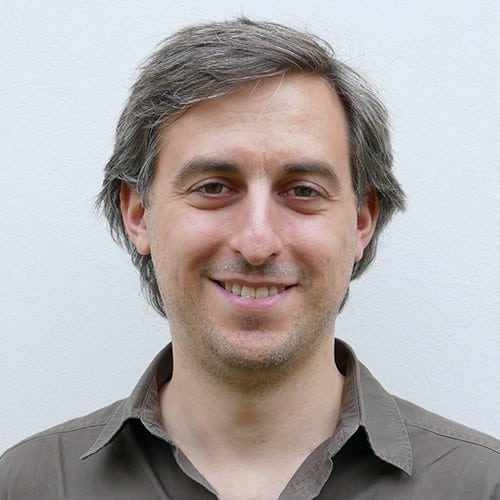
Liang Huang is a Postdoctoral Researcher at Aalborg University's Applied Power Electronic Systems department under the Faculty of Engineering and Science. His work focuses on grid-connected power electronic systems for renewable energy applications. Education: PhD in Electrical Engineering, Aalborg University: Specialized in stability and control of wind generation systems connected to weak grids Research Focus spans power electronics, wind energy, and grid stability. Key areas include: Stability analysis of grid-following and grid-forming inverters Impedance modeling for wind generation systems Control strategies for weak grid applications Non-asymptotic state estimation in DC motor systems Transient overcurrent protection in renewable energy systems Recent Research Trends show emphasis on grid-forming STATCOMs, virtual admittance modeling, reference frame transformations, and hybrid inverter control architectures. His work addresses challenges in offshore energy hubs and weak grid integration. Professional Affiliations: Chairperson, IEEE (2024–) IEEE Member (2021–2023) Projects: Leading PhD project on weak grid stability (2020–2023) Contributing to EUDP-funded Offshore Energy Hubs (2022–2026)
Christian Simonsen Fisker is a Part-time Lecturer at the Department of Materials and Production within the Faculty of Engineering and Science at Aalborg University. His research spans interdisciplinary fields including materials science, optics, and social dynamics. He holds a PhD in Architecture and Media Technology (2011), focusing on mobility patterns among seniors in car-centric cities. Expertise: Thin-film solar cells, nanostructuring, and senior mobility case studies Part-time academic with active publication record from 2007-2014 Key research interests include: Optimization of photovoltaic materials through nanoimprinting and FDTD simulations Social implications of mobility loss among aging populations Material defect modeling using advanced computational methods Publications demonstrate focus on: 6 articles on solar cell technology (2011-2014) 1 PhD thesis analyzing urban mobility challenges No awards listed but maintains active research output across multiple disciplinary areas.
Nicolò Gozzi serves as a Senior Research Scientist at the National Research Council of Italy (CNR), specializing in computational approaches to public health challenges. His work bridges epidemiology, network science, and data analytics to address complex disease dynamics through interdisciplinary collaboration with institutions including Northeastern University and the Bruno Kessler Foundation. Gozzi's research focuses on Computational Epidemiology, Digital Epidemiology, Network Science, and Data Science. He pioneers methods for modeling behavioral responses during pandemics, analyzing mobility networks, and developing forecasting systems. His work integrates digital surveillance with traditional epidemiological frameworks to study vaccine impacts, health inequities, and intervention effectiveness—particularly evident in his extensive contributions to COVID-19 and influenza research. Analysis of his 15 most recent publications reveals a consistent trajectory in modeling infectious disease dynamics through computational frameworks. His work spans behavioral epidemiology (examining vaccination decisions and risk compensation), network resilience (assessing mobility patterns during interventions), and digital infrastructure applications (including cybersecurity analogies). A defining characteristic is his use of real-world data for policy-relevant forecasting, demonstrated through projects like Influcast and RespiCast. Gozzi leads or contributes to critical public health infrastructure projects including Epydemix (an open-source epidemic modeling toolkit), AWaRe (global antimicrobial stewardship), Influcast (influenza forecasting), and RespiCast (European respiratory disease hub). These initiatives emphasize collaborative, data-driven approaches to disease surveillance and intervention planning across multiple geographic and institutional contexts.
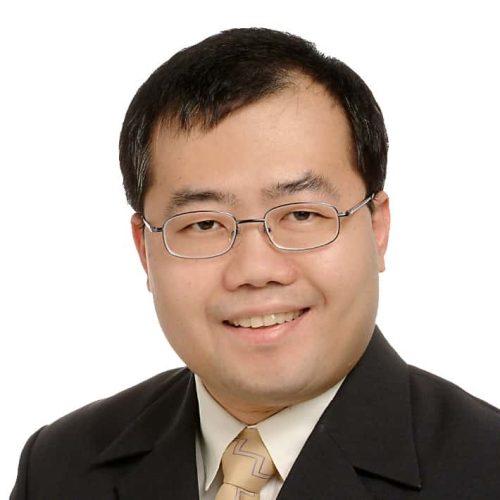
Siew Ann Cheong is an Associate Professor in the Division of Physics and Applied Physics at the School of Physical & Mathematical Sciences, Nanyang Technological University (NTU), Singapore. He is also an External Faculty member at the Complexity Science Hub (CSH) since 2019. Associate Professor, NTU (2016–present) Assistant Professor, NTU (2007–2016) Postdoctoral Associate, Cornell Theory Center (2006–2007) External Faculty, Complexity Science Hub (2019–present) Educational Background: B.Sc. (Hons) in Physics, National University of Singapore (1997) M.Sc., National University of Singapore (2000) M.Sc., Cornell University (2002) Ph.D. in Theoretical Condensed Matter Physics, Cornell University (2006) Siew Ann Cheong’s research centers on understanding the dynamics of complex systems with many degrees of freedom, such as financial markets, earthquakes, infectious diseases, biological sequences, and social systems. He employs both modeling and data-driven approaches to explore fundamental questions: What makes a system complex? How does complexity emerge? His goal is to develop a computational theory of complex systems by treating their dynamics as information processing. He applies methods from statistical physics, network science, time series analysis, and agent-based modeling to uncover universal principles across disciplines. His recent publications reveal a strong trend toward interdisciplinary research, particularly in econophysics, urban science, and computational history. He frequently uses topological data analysis (TDA), persistent homology, and network-based methods to study financial market crashes, urban gentrification, and knowledge evolution. His work bridges physics with social sciences, ecology, and digital humanities, demonstrating a consistent focus on identifying critical transitions and structural changes in complex systems. Scientific Awards: SPMS Excellence in Teaching Award (2008, 2010, 2011) Nanyang Award for Excellence in Teaching (2010) Science Mentorship Programme Outstanding Mentor Award (2010) Best Paper Award, International Conference on Culture and Computing (2013) Siew Ann Cheong has supervised numerous PhD, undergraduate, and high school research students, contributing significantly to academic mentoring. He has received multiple teaching awards, reflecting his commitment to education. His research is supported by interdisciplinary collaborations and grants, particularly in complex systems and data science. He has also contributed to computational history and heritage impact modeling through projects like SHIFT (Sustainable Heritage Impact Factor Theory). He leads a research group focused on complex systems, with former fellows and students now in academic and research positions worldwide. Labs and Research Groups: While no formal lab name is mentioned, his research is conducted within the Division of Physics and Applied Physics at NTU, involving a team of former and current students and fellows working on complex systems, econophysics, and network science. He collaborates with institutions such as the Complexity Science Hub, National University of Singapore, and international universities.
Vittorio Loreto is a Full Professor of Physics of Complex Systems at Sapienza University of Rome and an External Faculty member. He served as Director of SONY Computer Science Laboratories (CSL) in Paris from 2017 to 2023 and founded the new Sony CSL in Rome (CSL-Rome) in 2021 through a joint initiative with the 'Enrico Fermi' Research Centre. His work focuses on interdisciplinary applications of statistical physics to complex systems. His research interests center on the statistical physics of complex systems , with applications in innovation dynamics , network theory , social dynamics , urban sustainability , and creativity . He explores how systems evolve through the 'adjacent possible,' modeling phenomena from text evolution to open-source software collaboration and urban planning. His work bridges physics, computer science, and social sciences to understand emergent behaviors in complex environments. Analysis of his recent publications (2017–2024) reveals a strong focus on urban sustainability (e.g., 15-minute cities), innovation and discovery processes , network dynamics , and data-driven modeling of social and creative behaviors . His interdisciplinary approach combines statistical physics with real-world data to address challenges in science, cities, and information ecosystems. Vittorio Loreto has received recognition through high-impact publications in journals such as Nature Human Behaviour , Physical Review Letters , Scientific Reports , and PLOS ONE . Though no specific awards are listed, his leadership in founding CSL-Rome and directing an international research lab underscores his scientific influence. He has advised or collaborated with researchers such as P. Gravino, B. Monechi, E. Ubaldi, F. Tria, and V. D. P. Servedio. His projects include Kouzan , a blockchain-based system for knowledge transfer, and urban sustainability games. He has been involved in major research initiatives addressing Sustainable Development Goals, particularly in sustainable cities and the infosphere. He leads the 'Innovation, Creativity and Artificial Intelligence' team and co-founded CSL-Rome, which focuses on Sustainable Cities, the Infosphere, and Augmented Creativity. His lab integrates physics-based modeling with AI and data analytics to tackle real-world complexity in urban and digital environments.
Alessandro Pluchino is an Associate Professor of Theoretical Physics, Mathematical Methods and Models at the Department of Physics and Astronomy "E. Majorana", University of Catania. He holds the qualification of Full Professor in Theoretical Physics of Fundamental Interactions and serves as a research delegate at INFN, local coordinator of LINCOLN (Learning Complex Networks), and staff member of DYNSYSMATH. He is also a member of the Società Italiana di Fisica and the Complex Systems Society, and the University of Catania referent for the Piano Nazionale Lauree Scientifiche (PLS) in Physics. His research spans the modeling and simulation of complex systems using agent-based models and network analysis, with applications in biological, ecological, economic, and social systems. He also investigates fundamental physics, statistical mechanics, chaos theory, and complex networks. His work extends to optimization methods in smart cities, sustainability, energy, and transportation infrastructure. Pluchino has authored over 100 scientific publications and several books. His recent publications focus on career dynamics in sports and seismic vulnerability using machine learning, reflecting a strong interdisciplinary trend combining physics, data science, and societal applications. His scientific achievements have been recognized with two Ig-Nobel Prizes: in 2010 for Management, for demonstrating mathematically that random promotions improve organizational efficiency, and in 2022 for Economics, for studying the role of luck in success—both shared with Andrea Rapisarda and collaborators. He actively supervises numerous PhD and master’s students across physics, engineering, and interdisciplinary programs, and teaches courses such as Agent-Based Models, Dynamic Systems and Chaos, History of Physics and Epistemology, and General Physics. He is an editorial board member of PLOS ONE, Entropy, and Frontiers in Physics, underscoring his influence in the scientific community. Pluchino leads and participates in several research teams and networks, including LINCOLN and DYNSYSMATH, and is deeply engaged in scientific dissemination for non-specialist audiences.
Andrea Rapisarda is a Full Professor of Theoretical Physics at the University of Catania, Italy, affiliated with the Department of Physics and Astronomy "Ettore Majorana" and INFN Catania. He is the coordinator of the PhD program in Complex Systems for Physical, Socio-economic and Life Sciences and serves as co-director of the International School on Complexity at the Ettore Majorana Foundation in Erice. Additionally, he is an External Faculty member at the Complexity Science Hub Vienna, reflecting his international academic engagement. His research spans Complex Systems, Statistical Mechanics, Deterministic Chaos, Nonlinear Dynamics, Complex Networks, and Agent-Based Models , with a strong emphasis on applications to socio-economic systems. He investigates the role of randomness, luck, and inefficiencies in hierarchical organizations, drawing from interdisciplinary methods in physics and computational modeling. His work has demonstrated how random strategies can outperform merit-based ones in organizational efficiency and democratic design. The 15 most recent publications highlight a consistent focus on modeling randomness in success, inequality, and decision-making across domains such as sports, economics, politics, and public health. His work integrates agent-based simulations, network analysis, and statistical physics to understand complex phenomena, often with policy-relevant implications. Ig Nobel Prize for Management (2010) Ig Nobel Prize for Economics (2022) Rapisarda is an active advisor and researcher, though specific student names are not listed in the provided texts. He has contributed to numerous editorial boards, including Physica A, Entropy, Frontiers in Physics (Social Physics) , and Complexity . He has also been involved in public outreach, policy discussions on democratic reform via sortition, and science communication through media interviews and public lectures. He leads research projects on improving organizational and societal systems using insights from complexity science.
Jose Angel Leiva Vilaplana is a Research Fellow at the Technical University of Denmark (DTU), affiliated with the Department of Engineering Technology and Didactics. He completed his PhD at DTU as a Marie Skłodowska-Curie Early Stage Researcher (2021-2025), focusing on cost-benefit modeling for energy digitalization. His research addresses UN Sustainable Development Goals through work in smart grids and sustainable energy transitions. Research Interests: Leiva Vilaplana specializes in quantitative analysis of digital transformation in energy systems. Key areas include: Dynamic cost-benefit modeling for grid investments and digital solutions Decision-making frameworks under uncertainty in electricity distribution Regulatory policy design for power grid modernization System dynamics applied to energy sector transitions Risk assessment and optimization in smart grids Publication Trends: His 15 most recent articles (2021-2025) demonstrate a consistent focus on energy digitalization, with emphasis on system dynamics, regulatory economics, and open-source modeling. Research evolves from technical evaluations (sensor placement, substation automation) to policy-driven analyses (barrier mitigation, regulatory frameworks), reflecting applied interdisciplinary work. Awards and Honors: Marie Skłodowska-Curie Early Stage Researcher Fellowship (2021-2025) Projects: He led the PhD project "Cost benefit assessment to inform on competitiveness of increased digitalization in energy sector" (2021-2025), developing system-dynamics models to evaluate economic impacts of grid digitalization. The project involved collaborations across European institutions and generated multiple peer-reviewed publications. Collaborations: Works within DTU's energy research network and the InnoCyPES consortium, focusing on interdisciplinary solutions for sustainable energy systems. No dedicated lab mentioned, but contributions align with DTU's strategic initiatives in green technology.
Federica Lo Verso is a researcher at the Department of Mathematics and Computer Science, University of Southern Denmark, specializing in polymer science and nanoparticle research. Her work bridges computational modeling and experimental validation in the synthesis and structural analysis of microgels and polymer nanoparticles. Key affiliations: IMADA (Interdisciplinary Centre for Advanced Materials Simulation), eScience Center Research Focus: Her research explores polymer chain behavior, nanoparticle formation, and nanocomposite dynamics. Keywords include polymer science, nanotechnology, and condensed matter physics, with specific attention to microstructure optimization and topological constraints. Selected Publications (2016-2018): Recent work analyzes microgel deswelling, chain stiffness effects, and solvent-driven nanoparticle structuring. Trends highlight computational approaches to polymer self-assembly and nanomaterials engineering. Collaborative Network: Frequent collaborations with researchers like Arbe, Colmenero, Pomposo, and Moreno across institutions, focusing on interdisciplinary studies of polymer-based nanomaterials.
Ramin Aghababaei serves as an Associate Professor and Head of the Mechanics and Materials section at the Department of Mechanical and Production Engineering within Aarhus University's College of Engineering. His research focuses on mechanical engineering and materials science applications. Full Name: Ramin Aghababaei Academic Rank: Associate Professor University: Aarhus University College: College of Engineering Department: Department of Mechanical and Production Engineering Research Interests : Mechanical Engineering Materials Science Tribology Computational Modeling Adhesion Mechanics Friction Analysis Publication Trends : His recent work explores wear mechanisms, tool optimization, and computational modeling of material behavior, with applications in manufacturing and sustainable materials. Contact Information : ra@mpe.au.dk | +45 93 50 89 56
Jinghao Li is a Tenure Track Assistant Professor at the Department of Mechanical and Production Engineering within Aarhus University's College of Engineering. His research focuses on additive manufacturing, microstructure engineering, and solidification processes. Primary expertise in Additive Manufacturing and Powder Material Science Active in experimental and computational materials design Contact: jli@mpe.au.dk | +45 87 15 17 59 Recent publications highlight his work in: Laser wire directed energy deposition of titanium alloys High-entropy alloy design using CALPHAD and machine learning Thermoelectric property enhancement in half-Heusler compounds His research combines experimental validation with computational modeling to advance manufacturing and materials science.
Ole Balling is a Professor at the Department of Mechanical and Production Engineering, Aarhus University, Denmark, specializing in multibody dynamics and vibration analysis. His work bridges theoretical mechanics with practical applications in renewable energy and agricultural systems, leveraging advanced computational modeling for industrial-scale engineering challenges. His primary research interests include Multibody Dynamics for structural simulation, Operational Modal Analysis in rotating machinery, Wind Turbine Engineering (focusing on gearboxes and blades), and Soil-Vehicle Interaction for agricultural/military applications. He also develops Digital Twin frameworks for agricultural vehicles and investigates Vibration Control in robotic systems, with strong emphasis on experimental validation and energy-efficient design. Recent publications (2020-2023) reveal concentrated expertise in offshore wind turbine reliability (gear microgeometry, tower vibrations), soil mechanics modeling (aggregate fracture, drawbar pull testing), and autonomous vehicle mobility frameworks. A recurring theme is the application of operational modal analysis to diverse systems—from parallel manipulators to wind turbine hubs—demonstrating cross-domain adaptability of his core methodologies in dynamics and control. Scientific Awards: No awards documented in source materials. Grants and project leadership highlight sustained NATO collaboration, including the ongoing Next Generation NATO Reference Mobility Model (NG-NRMM) (extending to August 2025) and Mobility Assessment Methods for Autonomous Military Ground Systems . Past projects include INNOMILL (2015-2018) for large-component machining, BioXtek (2014-2017) for agricultural technology, and Low Bottom Soft Soil Modeling (2013-2017) for terrain damage reduction. He operates within the Mechatronics and Dynamics section of the department, utilizing laboratories for vibration testing, soil mechanics experiments, and multibody simulation. Current work focuses on autonomous military vehicle assessment and wind turbine gearbox optimization, with future projects targeting energy-efficient accelerator magnets and large-scale machining cell development.
Gorm Bruun Andresen is an Associate Professor in the Department of Mechanical and Production Engineering at Aarhus University's College of Engineering. His research focuses on renewable energy systems, energy storage optimization, and climate change mitigation strategies. Specializes in energy system modeling Expert in Power-to-X technologies Investigates nuclear power's role in carbon-neutral systems Develops storage solutions for renewable integration Leads projects on European energy infrastructure His recent work analyzes the interplay between weather patterns and renewable energy production, exploring hydrogen storage systems, sector-coupled energy networks, and grid optimization strategies. He has contributed to multiple high-impact studies on decarbonization pathways and energy market participation models. Scientific Awards: Best Poster Award (2023) for Power-to-X integration research Active in both academic and practical energy transition initiatives, he led Aarhus University's student-employee rooftop photovoltaic project and participates in European energy system workshops. His research team explores storage technologies, market strategies, and climate impacts on energy design decisions.
Michael Szell is Assistant Professor in the Department of Computer Science at the IT University of Copenhagen and External Faculty at the Complexity Science Hub Vienna. His interdisciplinary work bridges physics, mathematics, and computer science to study collective human behavior through large-scale data analysis and network modeling. Research Interests: His work centers on urban mobility, sustainability, and data visualization, with a focus on understanding how people interact with urban and online environments. Using computational and network-based methods, he investigates bicycle infrastructure, multimodal transport systems, sidewalk networks, and the social impacts of urban highways. His recent publications reveal a strong trend in urban sustainability and network science , particularly in optimizing bicycle networks and analyzing how urban design affects social connectivity. Articles in journals like Scientific Reports and PNAS highlight his impact in computational urban analytics. Award-winning developer of the massive multiplayer online game 'Pardus' Michael leads innovative research projects involving data-driven urban planning and has contributed to public discourse through media features and press highlights. His work often involves interdisciplinary collaboration and has practical implications for sustainable city development. He has developed interactive data visualization platforms and tools like BikeDNA for assessing cycling infrastructure.
Ondrej Franek is an Associate Professor at the Department of Electronic Systems within the Technical Faculty of IT and Design at Aalborg University. His work focuses on antennas, wireless propagation, millimeter-wave systems, and reconfigurable intelligent surfaces for next-generation communication networks. He is actively involved in projects like RISE-6G and VIRTUOSO, advancing 6G wireless technologies and communication system optimization. Research interests include antenna design, electromagnetic modeling, wind turbine blade technology, and signal processing for 5G/6G networks. His recent work emphasizes reconfigurable intelligent surfaces (RIS) and their application in improving channel models and network efficiency. Franek has contributed to over 100 publications and holds patents in lightning protection systems and wind turbine monitoring. He has supervised 2 PhD students and collaborated on projects funded by industry and academic partnerships. Notable contributions include electromagnetic modeling for RIS and condition monitoring systems for renewable energy infrastructure. Media highlights include coverage of his team's experiments with the Lumi supercomputer in 2021.