معرفی
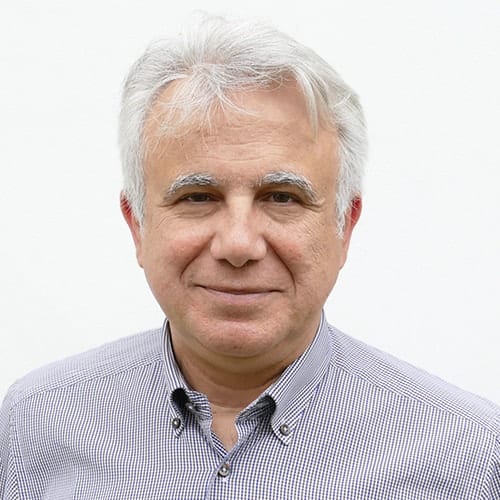
Alessandro Pluchino is an Associate Professor of Theoretical Physics, Mathematical Methods and Models at the Department of Physics and Astronomy "E. Majorana", University of Catania. He holds the qualification of Full Professor in Theoretical Physics of Fundamental Interactions and serves as a research delegate at INFN, local coordinator of LINCOLN (Learning Complex Networks), and staff member of DYNSYSMATH. He is also a member of the Società Italiana di Fisica and the Complex Systems Society, and the University of Catania referent for the Piano Nazionale Lauree Scientifiche (PLS) in Physics.
His research spans the modeling and simulation of complex systems using agent-based models and network analysis, with applications in biological, ecological, economic, and social systems. He also investigates fundamental physics, statistical mechanics, chaos theory, and complex networks. His work extends to optimization methods in smart cities, sustainability, energy, and transportation infrastructure.
Pluchino has authored over 100 scientific publications and several books. His recent publications focus on career dynamics in sports and seismic vulnerability using machine learning, reflecting a strong interdisciplinary trend combining physics, data science, and societal applications.
His scientific achievements have been recognized with two Ig-Nobel Prizes: in 2010 for Management, for demonstrating mathematically that random promotions improve organizational efficiency, and in 2022 for Economics, for studying the role of luck in success—both shared with Andrea Rapisarda and collaborators.
He actively supervises numerous PhD and master’s students across physics, engineering, and interdisciplinary programs, and teaches courses such as Agent-Based Models, Dynamic Systems and Chaos, History of Physics and Epistemology, and General Physics. He is an editorial board member of PLOS ONE, Entropy, and Frontiers in Physics, underscoring his influence in the scientific community.
Pluchino leads and participates in several research teams and networks, including LINCOLN and DYNSYSMATH, and is deeply engaged in scientific dissemination for non-specialist audiences.