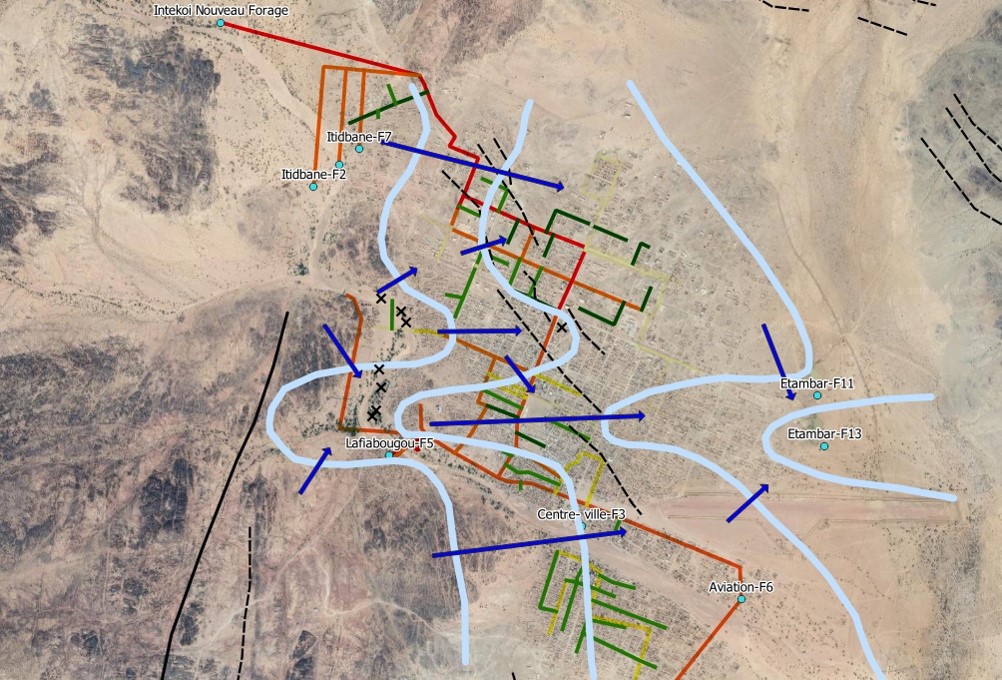
Andreas Braun is a Senior Lecturer at the Department of Geography, University of Tübingen, Germany. He leads lectures and courses on physical geography, geospatial methods, and remote sensing applications. Currently serving since January 2022, his academic responsibilities include teaching, thesis supervision, and research in geoinformatics with a focus on humanitarian response applications. PhD in Geography (2014-2019), University of Tübingen Baden-Württemberg Certificate in University Didactics (2015-2017) Professional experience at Stuttgart's Land Surveying Office (2013) His research bridges geospatial technologies with humanitarian applications, emphasizing remote sensing for environmental monitoring in refugee camps, urban structure analysis, and climate change adaptation. Key areas include SAR data utilization, geosimulation for landscape dynamics, and machine learning applications in geospatial projects. Scientific publications span topics like urban heat island effects in Vietnam, refugee camp monitoring using satellite imagery, and landscape change modeling. His work appears in journals such as IEEE Journal of Selected Topics in Applied Earth Observations , Remote Sensing , and Journal of Flood Risk Management . Teaching activities cover physical geography methods, GIS, remote sensing, and applied geoinformatics for both B.Sc. and M.Sc. programs. He supervises interdisciplinary projects connecting geography with social sciences, focusing on urban planning, climate adaptation, and environmental justice.
Prof. Dr. Ing. Friedrich Fleischmann serves as a Professor at the Faculty of Production Engineering, University of Bremen, with his office located at Neustadtswall 30, 28199 Bremen (Building E, Room 208). His institutional affiliation spans multiple research initiatives focused on optical metrology and precision engineering within Germany's academic framework. His research program centers on advanced metrology techniques for freeform optical surfaces, with particular emphasis on experimental ray tracing methodologies, gradient sensor development, and characterization of both reflective and transmissive optics. Key research thrusts include the measurement of mid-spatial-frequency errors in progressive lenses, LED beam shaping optics, and high-precision verification of complex optical components. His work bridges theoretical optical design with industrial manufacturing applications, addressing critical challenges in optical quality control. Analysis of his 15 most recent publications (2019-2025) reveals a cohesive research trajectory focused on experimental ray tracing as a unifying methodology. His work demonstrates consistent innovation in surface reconstruction algorithms (particularly radial basis functions), sensor integration for gradient measurement, and cross-validation of optical metrology techniques across diverse applications from ophthalmic lenses to industrial lighting systems. The publications show strong methodological continuity between simulation frameworks and physical measurement validation. Prof. Fleischmann has led significant research projects including: Development and application of a digital twin for progressive lens verification (09/2024 - 10/2025) Further development of inventions for measuring shape and waviness of reflecting surfaces (03/2020 - 08/2021) Integrated gradient sensor for freeform surfaces using multiple light sources (09/2019 - 08/2021) Young Engineers 2015: Enhancement of Beamshaping Optical Elements for LED Lighting (eboLED) (05/2015 - 11/2019) EXIST Research Transfer: EasyPrecision measurement platform development (03/2012 - 10/2013)
David Senor is a Lab Fellow at Pacific Northwest National Laboratory (PNNL) and an Adjunct Professor of Nuclear Engineering at Texas A&M University. With over 30 years of experience since joining PNNL in 1992, he specializes in nuclear materials science with a focus on irradiation effects, material behavior under radiation, and development of nuclear fuels and structural materials. Dr. Senor holds a PhD in Nuclear Engineering from Texas A&M University (1992), along with MS (1989) and BS (1988) degrees from the same institution. His educational background has provided a strong foundation for his extensive research career in nuclear materials. His research focuses on neutron irradiation effects on reactor structural materials, burnable absorbers, and fuels, as well as proton and ion irradiation effects on accelerator beam-intercepting devices. He has pioneered work in fabrication of materials and fuels for nuclear service, particularly in silicon carbides for fission and fusion reactor applications, tritium-producing burnable absorber rods, and uranium-molybdenum fuels for research reactors. His recent publications demonstrate continued leadership in understanding radiation damage mechanisms, lithium ceramics for fusion applications, and advanced characterization techniques for nuclear materials. Dr. Senor has received numerous professional recognitions including the Secretary's Achievement Award from the Department of Energy (2019) and the Nuclear Engineering Distinguished Former Student Award from Texas A&M University (2018). He also earned early career recognition as a Young Leader from The Minerals, Metals and Materials Society (1996). As the national technical lead for the National Nuclear Security Administration Tritium Modernization program, principal investigator for fusion solid breeder research, and PI for post-irradiation examination in the RaDIATE Collaboration, Dr. Senor continues to play a critical role in advancing nuclear materials science. He has organized numerous international workshops and symposia, served on the Science Review Board for Nuclear Science User Facilities, and contributed to professional societies including The Minerals, Metals and Materials Society and the American Nuclear Society.
Kevin Rosso is a Laboratory Fellow and the associate director of the Physical Sciences Division for Geochemistry at Pacific Northwest National Laboratory (PNNL). He received his BS degree in geological sciences from Cal Poly at Pomona, California, in 1992, and his MS and PhD degrees in geochemistry from Virginia Tech in 1994 and 1998. With over 340 publications and an H-index of 63, Dr. Rosso is a leading figure in molecular geochemistry and surface science. Dr. Rosso's educational background includes: Ph.D., Geochemistry, Virginia Polytechnic Institute and State University M.S., Geochemistry, Virginia Polytechnic Institute and State University B.S. Geological Sciences, California State Polytechnic University, Pomona Dr. Rosso is best known for his pioneering research on electron transfer reactions between aqueous ions, mineral surfaces, and bacterial enzymes. His research spans from fundamental topics such as metal sulfide oxidation, bacterial reduction of metal oxides, contaminant interactions with clay minerals, and mechanisms of crystal growth and dissolution, to applied areas including geologic carbon sequestration, stress corrosion cracking in alloys, performance optimization of lithium battery materials, and the design of semiconductor materials for solar photocatalysis. His work has been instrumental in establishing the field of molecular geochemistry through the application of advanced tools like scanning probe microscopy, quantum mechanical molecular simulations, and massively parallel supercomputers. Analysis of Dr. Rosso's recent publications (2022-2023) reveals a continued focus on mineral-water interfaces, electron transfer processes, and materials for energy applications. His research spans multiple disciplines including geochemistry, materials science, surface chemistry, and computational chemistry. Key themes include aluminum speciation in alkaline solutions, mineral dissolution and precipitation mechanisms, electron transport in metal oxides, and the development of advanced characterization methods for understanding complex geochemical systems. Dr. Rosso has received numerous prestigious awards recognizing his contributions to geochemistry: Science Innovation Award (Stumm Medal), European Association of Geochemistry, 2020 Geochemistry Fellow, 2020 Member, Washington State Academy of Sciences, 2019 Visiting Distinguished Scholar, Durham University, 2019-2020 Life Fellow of the Mineralogical Society of America Life Fellow of The Geochemical Society Life Fellow of The European Association of Geochemistry Mineralogical Society's Hallimond Lectureship, 2016 Mineralogical Society of America Award, 2004 Dr. Rosso leads the U.S. Department of Energy's major fundamental geochemistry program at PNNL and is the founding director of the Center for Understanding Subsurface Signals and Permeability (CUSSP), a multi-institutional DOE Energy Earthshot Research Center launched in 2023. He has mentored a research group of approximately 35 PhD students, postdoctoral fellows, and staff scientists. His laboratory work is supported by significant DOE funding for research on geochemical processes relevant to energy production, environmental remediation, and nuclear waste management. Dr. Rosso directs the Center for Understanding Subsurface Signals and Permeability (CUSSP), which focuses on understanding subsurface processes critical for carbon sequestration, nuclear waste disposal, and geothermal energy. His team combines experimental and computational approaches to study mineral-fluid interactions at multiple scales, from molecular to field levels. The laboratory maintains state-of-the-art facilities for surface characterization, spectroscopy, and high-performance computing simulations.
Thomas Dunning serves as a Battelle Fellow with a joint appointment in the Advanced Computing, Mathematics & Data division at Pacific Northwest National Laboratory (PNNL), a U.S. Department of Energy national laboratory. His research spans computational chemistry, quantum mechanics, and high-performance computing infrastructure development. His primary research interests focus on computational chemistry methodologies , particularly in quantum chemistry software development, electronic structure theory, and molecular modeling. Dunning has pioneered advancements in correlated molecular wave function calculations, basis set development, and high-accuracy simulations for chemical systems ranging from noble gas dimers to environmental contaminants. His work bridges theoretical chemistry with practical high-performance computing applications. Dunning's publication record demonstrates consistent contributions to quantum chemistry software frameworks and benchmark methodologies, with emphasis on NWChem development, accurate potential energy surfaces, and molecular interaction modeling. His research trends show evolution from fundamental molecular physics in the 1990s toward integrated environmental and materials applications in later work. Battelle Fellow (prestigious internal PNNL recognition for exceptional scientific contributions) As a Battelle Fellow, Dunning leads critical research initiatives in computational chemistry infrastructure without documented student advisement or external grant mentions in the provided materials. His work maintains strong connections to PNNL's Environmental Molecular Sciences Laboratory and advanced computing facilities.
Prof. Dr. Stefanie Walch-Gassner is a Professor of Theoretical Astrophysics at the University of Cologne, where she leads the Theoretical Astrophysics group Cologne (TAC) within the Department of Physics. She serves as head of the SILCC project (SImulating the life cycle of molecular clouds), a European collaboration focused on modeling molecular cloud formation, evolution, and dispersal with emphasis on astro-chemical modeling and feedback processes. Her research spans multiple spatial scales, from interstellar medium physics on kiloparsec scales down to protostellar disks and jets on astronomical unit scales. She employs computational tools including FLASH, GADGET, GANDALF, KROME, and radiative transfer codes like RADMC-3D and POLARIS. Walch-Gassner's work connects theoretical models with observational data, as evidenced by recent research on [CII] emission in high-redshift galaxies comparing simulation results with ALPINE survey observations. Her research group collaborates with: Prof. Dr. Arshia M. Jacob Prof. Dr. Lucas Labadie Prof. Dr. Dominik A. Riechers Prof. Dr. Peter Schilke Prof. Dr. Stephan Schlemmer Dr. Netty Honingh Dr. Urs Graf She has supervised numerous PhD students to completion since 2016 and regularly teaches courses including Hydrodynamics, Theoretical & Computational Star Formation, and Advanced Seminar on Topical Subjects of Astrophysics. She also organizes intensive workshops on numerical methods in astrophysics for graduate students.
Dr. Guoqiang Li is an Associate Professor in the School of Computer Science at Shanghai Jiao Tong University, where he conducts research at the intersection of formal methods, programming languages, and security. His academic journey includes prior positions as Assistant Professor (2009-2013) and subsequent promotion to Associate Professor (2014-present) at the same institution. He has held international appointments including a postdoctoral fellowship at Nagoya University (2008-2009), an academic visit at the University of Oxford (2015-2016), and a Guest Associate Professorship at Kyushu University's Research and Development Center for Smart Mobility (2016-2020). Dr. Li earned his B.S. from Taiyuan University of Technology (2001), M.S. from Shanghai Jiao Tong University (2005), and Ph.D. from Japan Advanced Institute of Science and Technology (2008). His educational background reflects a strong foundation in both Chinese and Japanese academic traditions. His research focuses on formal verification, programming language theory, zero-knowledge proofs, knowledge reasoning, and intelligent system verification and security. Over the past decade, his work has evolved from traditional formal methods applied to timed automata and process calculi to contemporary topics including neural network verification, zero-knowledge proof systems, and the application of large language models to program analysis. His publication record demonstrates a clear progression toward addressing verification challenges in increasingly complex modern systems. Dr. Li's recent publications reveal a strategic research trajectory: early work centered on timed automata and formal verification of concurrent systems, while current research addresses the verification of AI systems, zero-knowledge cryptographic protocols, and LLM-enhanced program analysis. This evolution reflects his commitment to applying rigorous formal methods to emerging computational challenges. Distinguished Paper Award at ICSE 2020 for 'Unblind Your Apps: Predicting Natural-Language Labels for Mobile GUI Components by Deep Learning' Consistent publication in top-tier venues including ASE, ICSE, FSE, and OOPSLA Recognition through multiple National Natural Science Foundation of China (NSFC) grants as Principal Investigator Dr. Li actively contributes to the academic community as a Senior Member of the China Computer Federation, Deputy Director of Theoretical Computer Science for the Shanghai Computer Society, and committee member for multiple technical organizations. He serves as Organization Chair for SEKM'20-22 and FMAC'17, Publicity Chair for TASE'21-23, and has participated in program committees for numerous international conferences. His teaching portfolio includes undergraduate and graduate courses in algorithm design, mathematical foundations, and scientific writing, demonstrating his commitment to both theoretical computer science education and practical application.
Li Haitao serves as Dean, Dean's Distinguished Chair Professor of Finance, and Director of the Family Business Research Center at Cheung Kong Graduate School of Business (CKGSB). Holding a PhD from Yale University, he previously held faculty positions at the University of Michigan's Stephen M. Ross School of Business and Cornell University's Johnson Graduate School of Management. His academic leadership extends to editorial roles at Management Science and the International Review of Finance . Education: PhD in Finance, Yale University Professor Li's research spans quantitative finance with emphasis on asset pricing anomalies, derivative securities valuation, and fixed income modeling. His work integrates advanced mathematical techniques including Lévy processes and Bayesian analysis to address complex market phenomena. Key contributions examine volatility smiles in interest rate caps, survival bias in equity returns, and nonparametric estimation of state-price densities. His expertise bridges theoretical finance with practical applications in hedge fund performance evaluation and corporate risk management. His publication record reveals consistent contributions to top finance journals including the Journal of Finance , Review of Financial Studies , and Journal of Financial Economics , with research evolving from foundational term structure modeling toward contemporary challenges in liquidity risk and machine learning applications in finance. Scientific Awards: Sanford R. Robertson Professorship, University of Michigan (2007-2008) NTT Research Fellowship, University of Michigan (2006-2007) Q-Group Research Grant (2004) Best Student Paper Award, Eastern Finance Association (1997) Trefftz Award, Western Finance Association (1996) Sterling Prize Fellowship, Yale University (1991-1993) Professor Li actively contributes to academic governance through editorial board service while directing CKGSB's Family Business Research Center. His current research agenda focuses on AI applications in financial markets and China's evolving role in global finance, evidenced by recent speaking engagements at the 2025 Summer Davos and Boao Forum for Asia. He serves on the editorial boards of Management Science (Finance Department) and the International Review of Finance . As Director of the Family Business Research Center, he leads initiatives examining succession planning in Chinese family enterprises and cross-border investment patterns, with recent projects analyzing Macau's casino industry leadership transitions and China-Africa economic relationships.
Nada Sissouno is a Professor of Mathematics and Didactics of Mathematics at the Faculty of Electrical Engineering, Media and Informatics at Amberg-Weiden University of Applied Sciences since November 2023. She also serves as Vice Dean and Co-head of the Competence Center Grundlagen (CCG). Additionally, she maintains a position as a guest researcher at the Research Group: Applied and Numerical Analysis and Optimization and Data Analysis at the Technical University of Munich (TUM). Her educational background includes a Doctorate in Mathematics (Dr. rer. nat.) from TU Darmstadt (2007-2011) and a Diplom in Mathematics with a minor in psychology from TU Darmstadt (2000-2007). She has completed further education as a Diversity Manager in 2021 and holds certificates in teaching in higher education from the Bavarian Universities (2014-2016). Professor Sissouno's research focuses on mathematical methods in signal and image processing, data science, dynamical systems, numerical simulation, and approximation theory. Her work particularly emphasizes spline functions on domains, wavelets and frames, and evidence-based development of teaching methodologies. Her recent publications demonstrate strong expertise in mathematical imaging, phase retrieval problems, and approximation theory, with applications spanning ptychographic imaging, variational inpainting methods, and structural sparsity in multiple measurements. Her collaborative research bridges theoretical mathematics with practical applications in signal processing and image analysis, with a particular focus on developing robust numerical algorithms for complex data analysis problems. She has published in prestigious journals including Advances in Computational Mathematics, Journal of Fourier Analysis and Applications, IEEE Transactions on Signal Processing, and Inverse Problems. Referentin für Talentmanagement & Diversity at TUM (2022-2023) Deputy spokesperson of Research Associates' Council of the TUM (2019-2023) Gender equality officer of Department of Mathematics (2019-2022) Professor Sissouno teaches mathematics courses for engineering and computer science students, with a focus on making mathematical concepts accessible and relevant to practical applications. She has been involved in teacher training and the evidence-based development of teaching methodologies, demonstrating her commitment to both research excellence and educational innovation.
Clément Pit-Claudel is an assistant professor at École Polytechnique Fédérale de Lausanne (EPFL), where he heads the SYSTEMF lab in the School of Computer and Communication Sciences. His research focuses on programming languages, compilers, and formal verification, with broader interests spanning systems engineering, hardware design languages, security, performance engineering, and type theory. Education: Undergraduate studies at École Polytechnique PhD at MIT with Adam Chlipala, specializing in proof-producing compilers Pit-Claudel's research program is organized around three main axes: extensible compilation (teaching compilers domain-specific optimization tricks), hardware design languages and verification (creating ways to describe and verify hardware), and tooling for proof assistants (to support verification efforts and lower entry barriers). His work bridges theoretical foundations with practical applications, as evidenced by algorithms from his Elk project being merged into V8 (and hence Chrome and Node.js). Scientific Awards: Distinguished artifact, Untangling Mechanized Proofs, ACM SIGPLAN International Conference on Software Language Engineering (2020) William A. Martin Memorial Thesis Award for Outstanding Thesis in CS, MIT (2016) Frederick C. Hennie III Teaching Award in Recognition of Outstanding Contributions to Departmental Teaching, MIT (2016) Pit-Claudel has extensive experience mentoring students through MIT's Undergraduate Research Opportunities Program and currently teaches Software Construction to approximately 400 undergraduate students and Interactive Theorem Proving at the graduate level. He's deeply committed to educational excellence, having developed innovative teaching methods including continuous assessment through oral examinations and designing assignments that lead students to build concrete artifacts they can be proud of. The SYSTEMF lab, created in January 2023, focuses on building "small, fast, and completely verified components for critical systems, at reasonable cost." The lab's philosophy of "full assurance, without compromise" combines machine-checked proofs of correctness, hardware-software co-design, low-level compiler engineering, and new tools for interactive theorem proving.
Mark Harman is a part-time Professor of Software Engineering at University College London's Department of Computer Science within the Faculty of Engineering Sciences, while working full-time as a Research Scientist at Meta Platforms in the Instagram Product Performance team. He previously served as head of Software Engineering at UCL and director of its CREST centre from 2006 to 2017 before joining Meta when his startup Majicke was acquired in 2017. Harman's research spans multiple domains of software engineering, with particular emphasis on Search Based Software Engineering (SBSE), which he co-founded in 2001. His work has evolved to include LLM-based software engineering, software testing, program analysis, and bias mitigation in machine learning systems. He has made significant contributions to automated testing through systems like Sapienz and WW that have been deployed at scale at Meta. His publication record shows a clear evolution from traditional software testing and analysis toward increasingly sophisticated integration of machine learning techniques. Recent work demonstrates strong focus on addressing fairness challenges in ML systems, improving test reliability in continuous integration environments, and exploring the applications of large language models in software engineering tasks. This reflects both his ability to identify emerging challenges and his commitment to practical, industry-relevant research. IEEE Harlan Mills Award (2019) ACM Outstanding Research Award (2019) Fellowship of the Royal Academy of Engineering (2020) Harman maintains a unique bridge between academia and industry, having co-founded the Simulation-Based Testing team at Meta and previously directing UCL's CREST research centre. His work on Sapienz grew from his startup Majicke and has had significant industrial impact while maintaining strong academic foundations. He frequently participates in academic conferences as both contributor and committee member, demonstrating ongoing commitment to the research community despite his industry position. At Meta, Harman works within the Instagram Product Performance team, building on his earlier work with the Simulation-Based Testing team where he co-developed platforms for client- and server-side testing. His research on cyber-cyber digital twins represents an innovative application of simulation techniques to virtual software systems rather than physical ones.
Dr. Julian Elias Reiser is a Research Fellow in the Experimental Ergonomics and Stress & Work Design group at the Leibniz Research Centre for Working Environment and Human Factors (IfADo), affiliated with TU Dortmund University. His work focuses on applying mobile neuroimaging techniques, particularly EEG, to assess cognitive workload and human performance in real-world settings such as driving and walking. His educational background includes: PhD in Psychology (2020) from TU Dortmund University, with a thesis titled "Neuroergonomics in the wild - Workload assessment using mobile EEG" M.Sc. Psychology from the University of Ulm (2016) B.Sc. Business Psychology from Leuphana University Lüneburg (2014) Dr. Reiser's research interests lie at the intersection of neuroscience and human factors. He investigates how cognitive processes unfold during complex tasks in natural environments, using mobile EEG and eye-tracking to measure workload, attention, and operator state. His work aims to improve human-machine interaction and workplace design by providing objective neurophysiological measures of mental effort. His recent publications (2023-2025) highlight a strong emphasis on real-world applications of neuroergonomics. Key themes include the use of eye blink-related potentials as indicators of cognitive load, the impact of automation on driver attention, and the development of signal processing methods for decoding brain activity in dynamic settings. His research spans transportation, occupational health, and human-computer interaction. No scientific awards are listed in the available information. There is no information provided regarding students advised or research grants obtained. Dr. Reiser is part of the Experimental Ergonomics team led by Prof. Dr. Edmund Wascher within the Ergonomics department at IfADo. The team conducts cutting-edge research on human factors in various work contexts, with a focus on developing and applying neuroergonomic methods to assess and enhance human performance in real-world environments.
Dr. Benjamin Stodt is a postdoctoral researcher at the Leibniz Research Center for Working Environment and Human-Factors (IfADo) in Dortmund, Germany, where he has been working since August 2021. He is part of the Department of Ergonomics, specifically within the Networking Group focused on Aging and Experimental Ergonomics. His contact information includes email stodt@ifado.de and phone number +49 231 1084-376, with his office located at Ardeystr. 67, 44139 Dortmund. Dr. Stodt earned his Doctorate (Dr. rer. nat.) in 2018 from the Faculty of Engineering at the University of Duisburg-Essen. Prior to his current position, he worked as an analyst in market and media research from 2019 to 2021. His academic journey at the University of Duisburg-Essen began as a student assistant in 2010, progressing to research assistant and PhD student from 2013 to 2018. He completed both his Master of Science (2012-2013) and Bachelor of Science (2008-2012) in Applied Cognitive and Media Science from the same institution. Dr. Stodt's research focuses on human-computer interaction, auditory and audio-visual perception, virtual environments, and aging. His work examines how humans perceive spatial auditory information in both real and virtual settings, with particular attention to age-related differences. He combines experimental psychology with ergonomics to investigate spatial hearing, auditory localization, and the development of virtual reality technologies that accurately simulate real-world auditory experiences. His methodology frequently incorporates EEG to examine the neural correlates of auditory perception. His recent publications demonstrate a consistent research trajectory examining auditory perception in virtual versus real environments across multiple dimensions including spatial change detection, azimuth perception, and distance perception. Dr. Stodt's work has important implications for developing more realistic virtual environments, assistive technologies for aging populations, and understanding age-related changes in sensory processing. His research spans neuroscience, cognitive psychology, virtual reality, and human factors engineering. Dr. Stodt has published in reputable journals such as the European Journal of Neuroscience and Biomedicines, and presented at major acoustics conferences including DAGA (Annual Conference on Acoustics) and AUDICTIVE. His collaborative work frequently involves researchers including D. Neudek, R. Martin, E. Wascher, and S. Getzmann. At IfADo, Dr. Stodt works under the leadership of Prof. Dr. Edmund Wascher (Head of Department) and collaborates with the department's secretariat managed by Judith Geiger. His research contributes to the institute's mission of studying the working environment and human factors, with potential applications in workplace design, assistive technologies, and understanding age-related changes in sensory and cognitive processing.
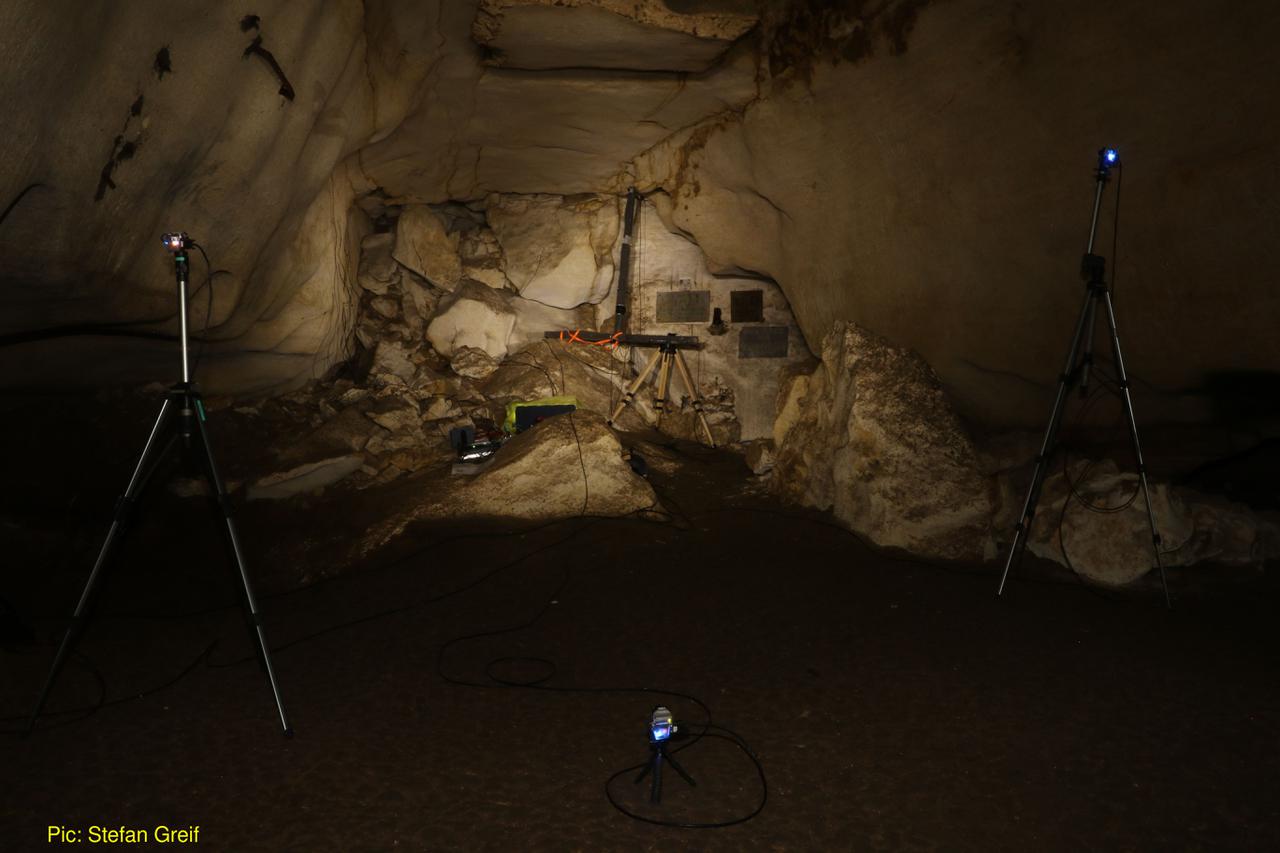
Dr. Thejasvi Beleyur is a Group Leader of the Active Sensing Collectives Lab at the Centre for the Advanced Study of Collective Behaviour, University of Konstanz, and holds an affiliated position at the Max Planck Institute of Animal Behavior. She also serves as IMPRS Faculty, contributing to interdisciplinary research at the intersection of animal behavior, sensory biology, and collective systems. Current: Group Leader, Active Sensing Collectives Lab (2025-present) Previous: Postdoc at Centre for the Advanced Study of Collective Behaviour (2021-2025) PhD: Max Planck Institute for Ornithology (2015-2021) Education: BS-MS in Biological Sciences, IISER-TVM (2008-2013) Dr. Beleyur's research program investigates how active-sensing agents like echolocating bats navigate complex sensory environments when operating in groups. Her work combines field observations, computational modeling, and swarm robotics to understand the sensorimotor strategies animals employ in information-limited settings. She has pioneered the development of the Ushichka dataset—a multichannel audio-video system for recording echolocating bats in natural habitats—which provides unprecedented insights into how bats modify flight and echolocation behaviors as group sizes change. Her publication record reveals a consistent trajectory examining sensory challenges in collective animal systems, with emphasis on echolocating bats. The research spans experimental field work, computational modeling, and methodological innovations in acoustic and video tracking. Recent work has expanded into developing computational tools like the beamshapes Python package for sound source modeling and exploring robot platforms to simulate bat collective behavior. Carl-Zeiss Nexus grant for inter-disciplinary research (2025) DFG Walter Benjamin postdoc grant (2021-2023) Early Career Researcher Award at International Bioacoustics Congress Google Cloud Platform Research Credits award ($1000) DAAD-GSSP Stipend for doctoral studies (2015-2020) Dr. Beleyur actively mentors students in her lab, currently supervising PhD student Frithjof and Master's student Aditya, following the completion of Gabriele's Master's thesis on the active-sensing Ro-BAT platform. Her research program is supported by competitive grants including the Carl-Zeiss Nexus grant and previously the DFG Walter Benjamin fellowship, which funded her work on 'The How and What of Active Sensing Collectives.' The Active Sensing Collectives Lab brings together an interdisciplinary team working at the interface of sensory biology, robotics, and collective behavior. The lab develops novel computational methods for analyzing complex datasets from multi-sensor field recordings, with emphasis on creating tools for long-term community use. Current projects include characterizing echolocating groups in the field and studying sensorimotor strategies using computational modeling.
Christian Hert is a Researcher at Esslingen University of Applied Sciences, serving as Head of 'Autonomous Indoor Flight Robotics' at the Virtual Automation Lab since June 2024 and as Research Associate since May 2021. His work focuses on implementing robotics solutions for industrial environments, particularly with autonomous flying systems. Education: Master of Engineering in Automotive Systems Engineering from Heilbronn University (March 2021) Bachelor of Engineering in Mechatronics - Automotive Systems Engineering from Baden-Württemberg Cooperative State University in Stuttgart (September 2019) Christian Hert's research centers on autonomous indoor flight robotics in industrial contexts, with specific expertise in path planning for autonomous flying robots and methods for indoor localization. His work bridges theoretical robotics with practical industrial applications, particularly focusing on safe human-drone interaction and simulation-based operation systems. His research addresses critical challenges in flexible production systems where increasing product customization demands innovative material transport solutions. Hert's publications demonstrate a clear trajectory toward practical implementation of UAV technology in manufacturing environments. His recent work focuses on safety mechanisms for human-drone interaction using curve-shortening flow methods, while his earlier research established foundations for simulation-based operation of indoor flight robots using digital twin technology. These works collectively address the challenge of integrating UAVs into dynamic production environments with minimal infrastructure requirements. Christian Hert has established himself as a key contributor to the Virtual Automation Lab, working closely with Prof. Dr.-Ing. Sascha Röck and collaborating with researchers from institutions including University of Stuttgart. His industry experience with Porsche Engineering Services GmbH during both his bachelor's and master's studies provides valuable practical context for his academic research. Hert leads the 'Autonomous Indoor Flight Robotics' research group within the Virtual Automation Lab, developing solutions that leverage otherwise unused airspace in industrial settings. His work specifically targets the challenges of implementing safe UAV operations in close proximity to human workers in high-wage countries where customized production systems are increasingly necessary.