Hege Kristin Aslaksen Kaldheim is an Associate Professor at the Department of Health and Nursing Science, University of Agder (UiA). She holds a Master's in Health Sciences (2012) and a PhD (2023) from UiA, focusing on interprofessional simulation-based learning in surgical nursing education. Her clinical background includes over 20 years in perioperative nursing at Sørlandet Hospital and roles as a college lecturer in nursing education. Research Interests: Her work centers on perioperative nursing practice, simulation-based educational methods, and interprofessional collaboration in healthcare. She emphasizes how simulation enhances clinical competence and teamwork in acute care settings. Recent studies explore newly graduated nurses' transition to clinical practice and the role of simulation in preparing nursing students for acute situations. Publications: Her research trends show strong focus on qualitative studies examining simulation-based learning outcomes, interprofessional education impacts, and clinical practice transitions. Key contributions include scoping reviews on simulation use in perioperative contexts and longitudinal studies on nurse training effectiveness. Affiliations & Groups: Member of the Q-safe research group (patient safety and quality improvement). Active in UiA's academic community as a lecturer since 2018 and contributor to regional healthcare education initiatives.
Kurt Jonny Johansen is a Senior Lecturer and Study Program Manager for the Radiography BSc program at UiT The Arctic University of Norway . Based in Tromsø, he works in the Department of Radiography within the Institute of Health Sciences (IHO). His research interests span: Medical imaging safety protocols Nuclear medicine education E-learning technologies in healthcare training Emergency radiography Environmental impact assessment on aquatic species Recent publications highlight his work in MRI safety checklists, PET radiopharmaceutical development, and virtual teaching tools for radiography. While no specific awards are listed, his collaborations with researchers like Richard Fjellaksel and Helen Egestad demonstrate his active engagement in both educational and applied research. As a member of the Research Group Acute and Critically Ill , he contributes to healthcare research at UiT's MH East U9.130 facility.
Dag Johansen is a Professor in the Department of Informatics at UiT The Arctic University of Norway, Tromso campus. His work spans multiple research areas at the intersection of computer science, sports science, medicine, health technology, and nutrition science. He leads the interdisciplinary "Corpore Sano" research center and is actively involved in several research groups including the Cyber Security Group (CSG) and Crime Control and Security Law. Professor Johansen's research focuses on developing fundamental software solutions for secure and error-free data processing in heterogeneous distributed systems, ranging from lightweight "Internet of Things" devices and mobile phones to large-scale cloud solutions. His work particularly emphasizes applications in sports technology, edge computing, and compliance technology. His research interests include distributed systems, cybersecurity, sports technology, edge computing, data privacy, AI for sports analytics, multimedia forensics, and compliance technology. His recent publication trends show a strong focus on AI applications for sports video analysis, particularly in soccer and ice hockey, where his team has developed AI-based cropping systems for social media representations. He also has significant work in data privacy and GDPR compliance, especially regarding the "third country problem," as well as applications of AI in sustainable fishing practices. His 2024-2025 publications demonstrate continued work in self-healing microservices, lightweight encryption for video feeds, and virtual reality training environments. Professor Johansen is actively involved in mentoring students and research collaborators, as evidenced by his extensive publication record with numerous co-authors including doctoral students and postdoctoral researchers. His work has received funding through various research projects focused on data analytics, privacy technology, cybersecurity, and sports technology applications. He leads the interdisciplinary "Corpore Sano" center, which brings together researchers from computer science, sports science, medicine, health technology, and nutrition science. His work also involves collaboration with the "Njord" project focused on sustainable fishing through AI applications, and he's involved in developing the "Áika" distributed edge system for AI inference.
Yngve Karl Frøyen is a Professor at the Department of Architecture and Planning within the Faculty of Architecture and Design at the Norwegian University of Science and Technology (NTNU). Since 2010, he has taught and coordinated spatial and transport planning in the master's program in physical planning, while also leading GIS and geodata activities across academic programs. His research focuses on sustainable urban transport , emphasizing walking, cycling, and public transit as tools to enhance urban systems. He investigates how urban form —including land use, density, and functional mix—affects travel behavior, with specific projects on retail location transport impacts, cycling infrastructure modeling, and park-and-ride solutions in urban peripheries. Key trends in his recent publications include urban ecology , smart city geospatial analysis , and pedestrian/cycling mobility . His work integrates GIS, accessibility metrics, and land use-transportation interdependencies, reflecting collaborations with institutions like SINTEF and Asplan Viak. Doctoral training in transport economics and impact analysis 9-year research at the Norwegian Institute of Urban and Regional Research (NIBR) Consulting and project management in transport modeling, electronic ticketing, and GIS applications Contributions to Norwegian transport policy frameworks
Adam Palmquist is a Professor at Nord University, leading the HABIT research group focused on human-centered AI, behavior analytics, and technology design. He holds a PhD in Applied Information Technology for Learning and specializes in gamification, learning analytics, VR games, and organizational learning dynamics. His work bridges academia and industry, addressing real-world challenges through cross-disciplinary collaboration. Education: PhD in Applied Information Technology for Learning. Research Interests: Palmquist’s research explores gamification’s role in lifelong learning, AI integration in education, and VR game development. He investigates how generative AI, learning analytics, and game mechanics enhance engagement and motivation. His studies on group processes in workplace learning highlight frameworks for effective organizational learning systems. Current Projects: GOAL: Uses gamification to train leadership in crisis scenarios, funded by the University of Borås. ETUS: Enhances game research via eye-tracking and analytics, funded by Nord University. BiP: Studies remote-first VR game development methodologies, funded by Erasmus+. Scientific Affiliations: Member of the University of Gothenburg’s research team, steering committee for the Design Society’s Data Informed Design group, and the Swedish Game Researcher Council. Grants & Advising: Active in Nordic and international collaborations, including the Norwegian Centre for Excellence in IT Education (EXCITED). Supervises Izabella Jedel’s PhD on gamification in higher education. Labs/Teams: Heads HABIT, which integrates experts from Journalism, Games, Business, and Social Work to develop innovative tech solutions.
Dag Svanæs is a Professor of Human-Computer Interaction (HCI) at NTNU’s Department of Computer and Information Science. His research focuses on embodied interaction, emphasizing the physical, bodily, and social dimensions of human-computer interaction. He developed a usability laboratory for simulating multi-user, multi-device scenarios, particularly in healthcare contexts. His theoretical framework draws heavily from Maurice Merleau-Ponty’s phenomenology, exploring how perception and action shape interaction. Education: PhD in HCI from NTNU (2000). His research areas include interaction design, user-centered methods, and healthcare IT systems design. Key projects include the UNITY-Things IoT framework and exergame development for balance training in seniors. Research Highlights: Svanæs pioneered participatory design methodologies in healthcare IT, emphasizing end-user involvement through role-play and prototyping. His work on pandemic policy critiques and lockdown strategies demonstrates interdisciplinary collaboration between HCI and public health. Publications: Over 50 peer-reviewed articles in venues like Computer Supported Cooperative Work , Frontiers in Computer Science , and IEEE Transactions . Recent work addresses exergame design, pandemic response systems, and embodied interaction theory. Grants & Labs: Built NTNU’s Health Informatics Usability and Design Lab. Collaborates with academic and healthcare institutions on projects like the NSEP (Norwegian Center for Electronic Patient Records).
Hege Skundberg Kletthagen is an Associate Professor and Head of Department for Paramedicine and Advanced Clinical Nursing at the Department of Health Sciences, NTNU. She holds a doctorate in nursing science and specializes in mental health care, family-centered approaches, and quality improvement in psychiatric services. Her research addresses coercion in mental health care, prehospital mental health work, and the experiences of families supporting individuals with mental illness. She is affiliated with the Gjøvik Faculty of Medicine and Health Sciences. Education: Doctorate in Nursing Science (specific details not explicitly stated). Research Focus: Mental health service quality Family-centered care interventions Coercion and aggression in clinical settings Prehospital mental health strategies Teaching: Leads courses MDV6023 and MDV6022 on prehospital mental health work. Professional Contributions: Active in international conferences and has authored over 20 peer-reviewed articles, focusing on adapting quality assessment tools for Norwegian mental health contexts and evaluating family support programs.
Tor-Morten Grønli serves as Professor at the Department of Technology, School of Economics, Innovation and Technology, Kristiania University College (Norway). He is also a Visiting Research Scholar at Copenhagen Business School's Department of Information Technology Management and an affiliate of the Center of Business Data Analytics (cbsDBA). Education PhD in Computer Science from Brunel University, London (2011) Master of Technology (with distinction) from Brunel University, London (2007) Research Focus Grønli leads research in context-aware systems, mobile/pervasive computing, and Internet of Things (IoT). He founded/directs the Mobile Technology Lab at Kristiania and has co-authored 70+ publications. Core expertise includes: IoT architecture and applications Machine learning for transport systems Mobile computing frameworks Blockchain-security integration Edge-cloud computing paradigms Publication Trends Recent works (2023-2025) demonstrate strong focus on converging IoT, blockchain, and AI technologies, particularly for intelligent transport and healthcare systems. Dominant themes include federated learning implementations, privacy-preserving architectures, and sustainable edge computing solutions, with increasing emphasis on real-world applications in medical diagnostics and public infrastructure. Professional Activities Founder/Director of Mobile Technology Lab General Chair: Norwegian Conference on ICT Co-organizer: International Conference on Mobile Web Editorial Board: International Journal of Pervasive Computing, Journal of Online Information Review, Computers & Electrical Engineering TPC Member for IEEE BigData, Percom, HICSS, COMPSAC Guest Editor for special issues in Future Generation Computer Systems
Assistant Professor Veronica Vikne is affiliated with the Department of Health and Caring Sciences at Western Norway University of Applied Sciences. Her work focuses on nursing education, simulation-based training, and gender dynamics in healthcare curricula. Recent research emphasizes implementation strategies for simulation systems , gender representation in nursing education , and contextual challenges in clinical training . Publications highlight interdisciplinary approaches to healthcare education reform.
Natalia Andreassen serves as Professor of Organization and Management at Nord University's School of Business, where she directs the experience-based Master in Emergency Preparedness and Crisis Management program. Her research focuses on Arctic-specific emergency response systems, leveraging her background at the High North Center and current contributions to NORDLAB emergency response laboratory. She actively bridges academic research with practical crisis management applications in extreme northern environments. Her research program centers on maritime emergency preparedness in the High North, examining security-sustainable development intersections, inter-organizational coordination in complex environments, and training concept development for Arctic crisis management. Key themes include nuclear incident response, situational awareness in collaborative teams, and municipal-level emergency exercise design, all addressing unique challenges of Arctic operations including extreme weather, geopolitical complexities, and resource constraints. Analysis of her 15 most recent publications reveals a strong trajectory toward collaborative crisis management solutions, with increasing emphasis on tabletop exercises for nuclear maritime emergencies, professional diversity in response teams, and cognitive factors in emergency decision-making. Her work consistently integrates field studies from Arctic operations with theoretical frameworks to develop practical training models. No scientific awards, fellowships, or medals were documented in the source materials. Andreassen actively supervises master's students in Emergency Preparedness Organizations and Crisis Management while developing training concepts through projects like ATOMEX and NORDLAB. Her grant-funded work includes the MARPART project on Arctic maritime preparedness and Nordic collaborations on radiological emergency response, focusing on knowledge transfer between academia and operational agencies. She is a core contributor to Nord University's Center for Crisis Management and Collaboration (NORDLAB), which designs and evaluates emergency response exercises for Arctic conditions. Through this laboratory, she facilitates cross-border training initiatives like the Student Barents Rescue program and develops tools such as the INCLUS risk assessment framework for nuclear emergencies.
Salman Nazir is Professor at the University of South-Eastern Norway (USN) , Faculty of Technology, Natural Sciences and Maritime Sciences, Department of Maritime Operations. He heads the Training and Assessment Research Group (TARG) and is Scientific Leader of the national Centre of Excellence in Maritime Simulator Training and Assessment (COAST). Since 2019 he has held the rank of Professor, after serving as Associate Professor from 2015 and earlier post-doctoral and lecturer roles in Norway, Italy, South Korea and Pakistan. Education PhD in Industrial Chemistry and Chemical Engineering ( cum laude ), Politecnico di Milano, Italy, 2011–2013 MSc in Chemical Engineering (Process System Engineering), Hanyang University, South Korea, 2007–2009 BSc in Chemical Engineering, Bahauddin Zakariya University, Pakistan, 2002–2006 Research Interests Prof. Nazir’s work sits at the intersection of Human Factors, Safety and Simulation Technology . He investigates how immersive virtual- and augmented-reality simulators, novel training syllabi and evidence-based performance indices can enhance operator competence and safety in complex maritime and process-industry systems. Concepts such as Distributed Situation Awareness , multi-criteria decision making , accident analysis and learning process optimisation are central to his multidisciplinary agenda, which actively involves cognitive scientists, computer scientists, maritime practitioners and industrial stakeholders. Research Trends & Article Overview Across more than 80 peer-reviewed outputs, a clear trajectory emerges: early focus on process-industry training simulators and KPI development evolved into maritime-centric studies on simulator fidelity, VR-based education, and human-automation interaction in autonomous shipping. Recent work (2019–2021) emphasises systematic reviews and comparative European studies, validating VR-headset efficacy, performance-assessment frameworks, and sociotechnical implications of increased automation. Honours & Awards COAST designated one of 12 national Centres of Excellence in Education (SFU) by DIKU, Norway Coordinator/Leader, EU Horizon 2020 project ENHANCE (multi-million NOK) 400 000 NOK MARKOM 2020 Workshop grant PhD cum laude , Politecnico di Milano Young-researcher grants, Politecnico di Milano (2011 & 2013) Merit scholarships, Hanyang University & Korean Government Advising & Grant Portfolio Prof. Nazir currently supervises 6 master students and 1 PhD candidate in “Automated Performance Assessment in Maritime Operations”, while co-supervising additional PhD students at Liverpool John Moores University. He has successfully graduated 3 master and 6 bachelor students . External funding includes EU Horizon 2020, Norwegian SFU scheme, MARKOM 2020, Maritime Technology and Innovation (MTDI) and multiple Italian national grants. Labs & Collaborative Networks He leads TARG at USN, acts as Scientific Leader of COAST , and collaborates with leading international scholars such as Prof. Zaili Yang (Liverpool John Moores), Prof. Annette Kluge (University of Duisburg-Essen), Prof. Davide Manca (Politecnico di Milano) and Prof. Paulo Carvalho (UFRJ, Brazil). These partnerships span computer science, cognitive psychology, maritime logistics and safety engineering, ensuring a truly interdisciplinary research ecosystem.
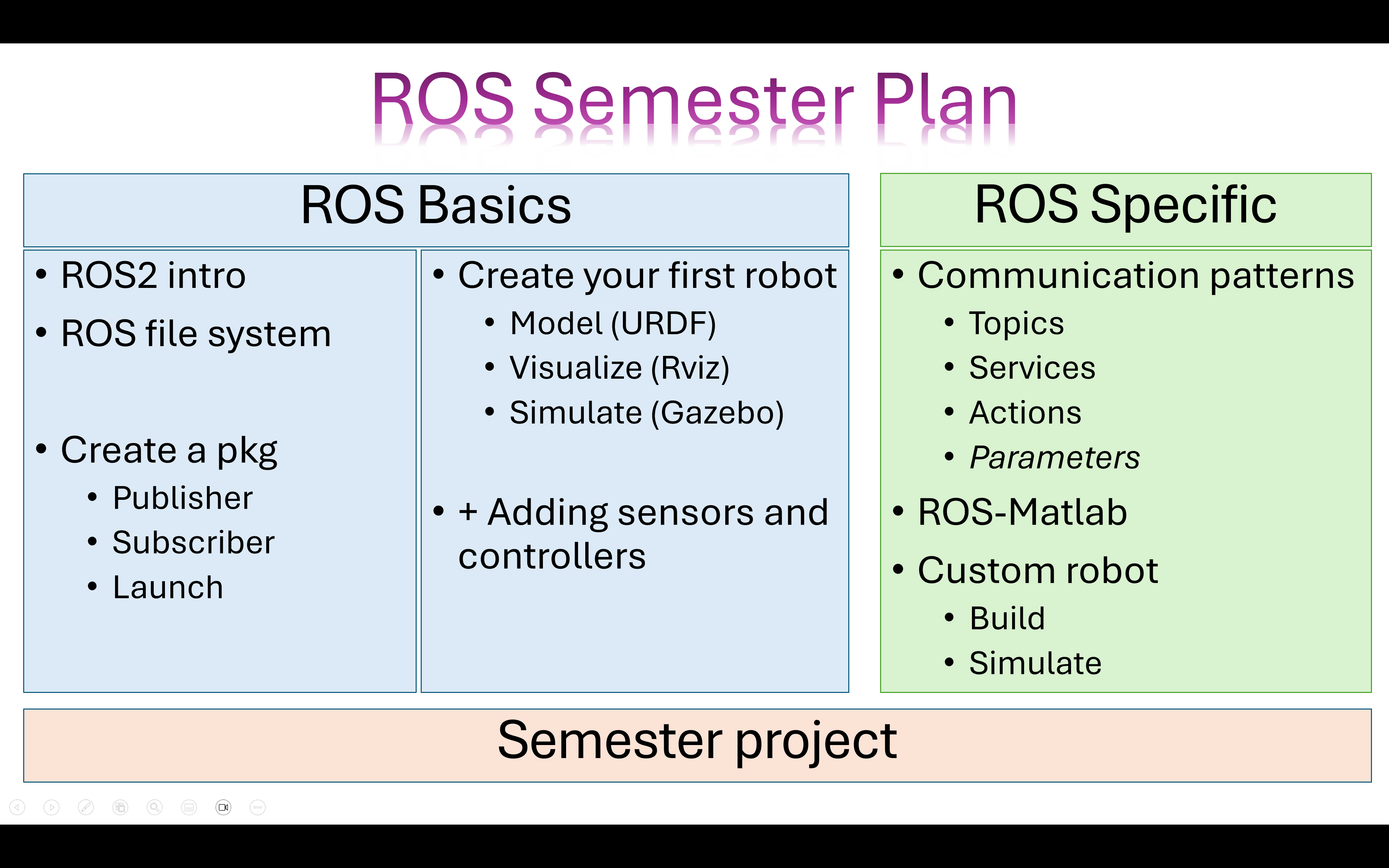
Gizem Ates Venås is an Associate Professor in the Department of Computer Science, Electrical Engineering and Mathematical Sciences at Western Norway University of Applied Sciences. She leads research in Human-Robot Interaction (HRI), focusing on intuitive human-robot cooperation through inertial measurement units (IMUs), gamified training systems, and teleoperation. Her work emphasizes safety and natural interaction in collaborative robotics applications. Education: Bachelor's in Electronics and Communication Engineering (2010-2015), Izmir Institute of Technology Master's in Mechanical Engineering (2015-2018), Izmir Institute of Technology PhD in Computer Science (Software Engineering, Sensor Networks) (2018-2023), Western Norway University of Applied Sciences Research interests include: IMU-based motion estimation for cooperative manipulation Design of gamified training systems to improve HRI proficiency Medical robotics applications in teleoperated surgical systems Sensor fusion and real-time data processing for collaborative robots Teaching focuses on robotics fundamentals: ROS programming, embedded systems (Arduino), and robot control Courses: ELE306 Robotics, DAT160 Intelligent Robots, ADA526 Applied Robot Prototyping Labs/Teams: Core member of HVL Robotics Lab, developing open-source robotics education materials and simulation tools.
Michail Giannakos is a Professor of Interaction Design and Learning Technologies at the Department of Computer Science, Faculty of Information Technology and Electrical Engineering, Norwegian University of Science and Technology (NTNU). He serves as Head of the Learner-Computer Interaction Lab and has held visiting positions including EAISI Visiting Professor at Eindhoven University of Technology (2023-2024) and Honorary Professor at UCL Knowledge Lab (2022-2023). Previously, he was Associate Professor (2017-2020) and Senior Lecturer (2014-2017) at NTNU, and Assistant Professor at Old Dominion University (2013-2014). Dr. Giannakos's research focuses on the design and study of emerging technologies in online and hybrid education settings, with particular emphasis on student and instructor experiences. His work spans Human-Computer Interaction , Learning Analytics , Learning Technologies , and User Experience Research . He has co-authored over 150 peer-reviewed publications in leading journals including Computers & Education, Computers in Human Behavior, IEEE TLT, and ACM TOCE. His recent publications reveal a strong trend toward multimodal learning analytics, embodied interaction in educational contexts, and the application of generative AI in education. The research increasingly integrates physiological and cognitive measurements with traditional learning data to create more comprehensive educational insights. There's also a noticeable focus on STEM education, particularly in mathematics learning through embodied and multimodal approaches. EAISI Visiting Professor, Eindhoven University of Technology (2023) Honorary Professor, UCL Knowledge Lab, University College London (2022) IDC Best Paper Award (2022) ITiCSE Top 5 papers in 25 Years Award (2020) RCN Young Research Talent grant (2016) ERCIM "Alain Bensoussan" Fellow (2013) Outstanding Academic Award, NTNU (2017-2020) Dr. Giannakos actively supervises multiple PhD students and postdocs, including Giulia Cosentino and Andrew Pulsipher as main supervisees. He has successfully mentored numerous PhD candidates to completion, many of whom have gone on to academic positions. His research is supported by substantial grants from diverse sources including the European Commission (Horizon Europe, Horizon 2020), Research Council of Norway, US-NSF, Microsoft Research, and DAAD. Current major projects include STEAM Learning Ecologies (Horizon Europe, 2022-2025) and SURROUNDEDbySCIENCE (Horizon 2020, 2021-2025). As Head of the Learner-Computer Interaction Lab, Dr. Giannakos leads a multidisciplinary team exploring how emerging technologies can enhance learning experiences. The lab focuses on multimodal data collection, embodied interaction design, and the development of intelligent learning environments that adapt to user needs. Current work emphasizes the integration of generative AI with multimodal analytics to create more responsive educational systems.
Siv Eie is an Associate Professor at OsloMet – Oslo Metropolitan University's Faculty of Education and International Studies, where she holds a leadership role as Head of Studies in the Department of Primary and Secondary Teacher Education. Her research focuses on innovative pedagogical methods, particularly the integration of digital tools like Minecraft in teacher education, geography education, and sustainable development. She has contributed to projects such as enhancing practical placements in the Global South to improve educational collaboration. Education: Human Geography forms the foundation of her academic background. Research Interests: Eie’s work emphasizes critical thinking, place-based education, and the use of technology to enhance social studies and geography curricula. She explores collaborative learning models, sustainable development pedagogy, and the application of role-play and digital tools in teacher training. Publications: Her research trends highlight the effective use of Minecraft for teaching historical and geographical concepts, the role of storytelling (Storyline Approach) in education, and the importance of spatial literacy. She also advocates for global perspectives in curriculum design. Grants & Projects: Leads initiatives like the Global South practical placement project to strengthen international educational partnerships. No specific grants are explicitly listed. Labs/Teams: Active in research groups such as Classroom Research and collaborates on Storyline Approach methodologies for meaningful learning experiences.
Gunn Astrid Baugerud is a Professor at OsloMet - Storbyuniversitetet's Faculty of Social Sciences, Department of Social Sciences – Everyday life under different living conditions. Her research focuses on forensic psychology, child abuse investigation techniques, and integrating artificial intelligence into forensic interviewing. She leads projects like the Next Generation Avatar for Information-Gathering Interviews (ARGI) and Barneavhørsprosjektet, aiming to improve investigative practices through technology. Her work emphasizes improving the quality of forensic interviews with children, particularly those exposed to abuse. She has pioneered AI-driven child chatbots and avatar-based training tools for professionals such as police, social workers, and healthcare providers. Key projects include developing digital education programs using AI and cognitive psychology principles to prevent child maltreatment. Research highlights include national studies on preschool-aged abuse victims' disclosures and comparative analyses of 2D/3D virtual environments in interview training. Her dissemination includes workshops at international symposiums on child abuse and presentations to Nordic social work institutions. She collaborates with global institutions like the National Children's Advocacy Centers and the Canterbury Centre for Policing Research.