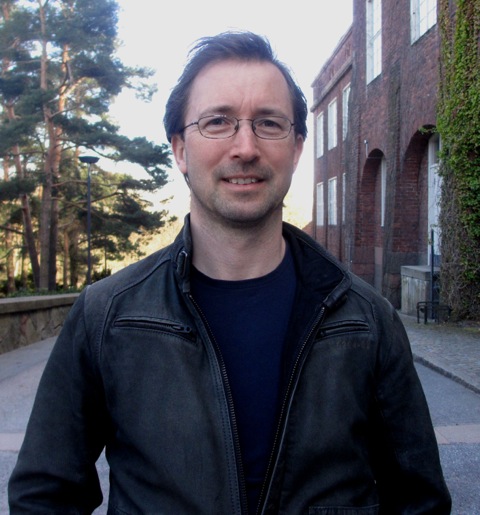
Jonas Bylander is a Professor at Chalmers University of Technology in the Department of Microtechnology and Nanoscience, specifically within the Quantum Technology division. He leads a research group focused on developing quantum computers using superconducting circuits.
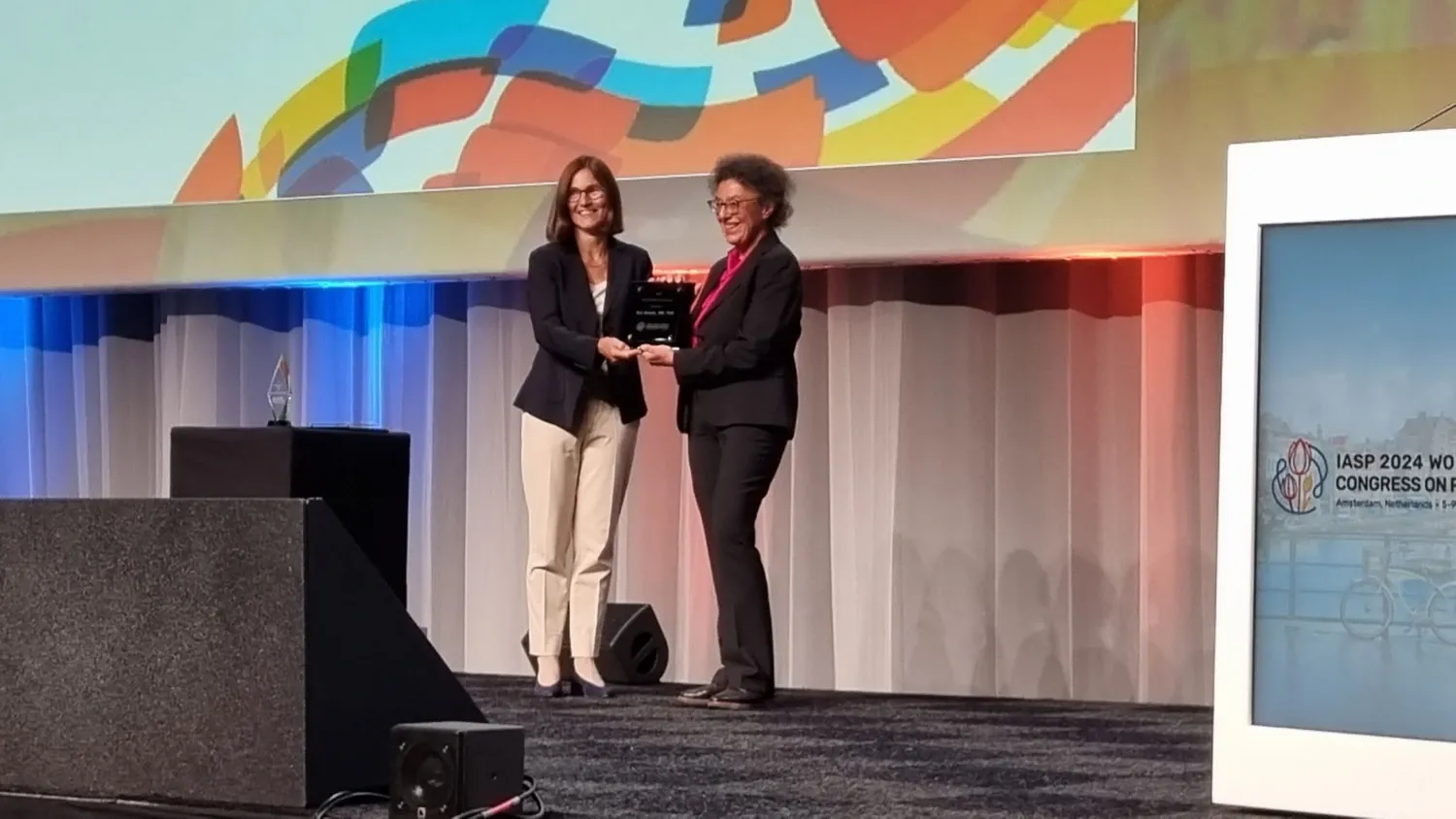
Professor Eva Kosek holds dual academic positions as Professor of Clinical Pain Research at Karolinska Institutet (since 2015) and Uppsala University (since 2020). She is affiliated with the Department of Clinical Neuroscience and leads the Mechanisms of Pain and Treatment Research Group . Her roles include senior consultant at Uppsala University Hospital's Pain Center. Education: MD from Uppsala University (1986), PhD from Karolinska Institutet (1996). Specializations: Rehabilitation Medicine (1998), Pain Relief (2001). Academic promotions: Associate Professor at Karolinska (2004), Full Professor (2015). Research Focus: Chronic pain mechanisms, neuroimmune interactions, fibromyalgia, and autoimmune pathways. Key projects include the RAFT trial (Rituximab for fibromyalgia autoantibody therapy) and the BACPAP consortium for low back pain phenotyping. She chairs IASP's Terminology Task Force, introducing the 'nociplastic pain' concept. Key Contributions: Discovered anti-satellite glial cell IgG antibodies in fibromyalgia patients, linked to symptom severity. Pioneered neuroimaging studies on pain modulation circuits. Authored over 300 publications, with recent work on cerebrospinal fluid biomarkers and lipid metabolite profiles. Awards: 2024 Roland Melzack Lecture Award from IASP. Recognized for redefining pain taxonomy and translational research. Grants: Active funding includes Swedish Research Council grants on fibromyalgia autoimmunity, environmental exposures, and neuroinflammation. Total grants exceed SEK 100M over her career. Labs/Teams: Leads a multidisciplinary team at Karolinska's Pain Research Center, collaborating internationally on translational pain studies. Active in biobanking initiatives like the Swedish Chronic Pain Biobank.
Tobias Sjöblom serves as Professor and Head of Department at Uppsala University's Department of Immunology, Genetics and Pathology, where he leads the Cancer Precision Medicine research program. His work bridges clinical oncology and molecular biology, with particular focus on translating genomic findings into clinical applications for cancer patients. His research interests center on cancer genomics, precision medicine, and molecular diagnostics, with extensive work on colorectal cancer biology and treatment. Sjöblom's laboratory investigates how genetic variations influence cancer development, progression, and response to therapy, particularly focusing on pharmacogenomic biomarkers that can guide personalized treatment decisions. His work spans from basic molecular mechanisms to clinical applications, with strong emphasis on translating research findings into clinical practice. Analyzing his recent publication record reveals a clear trajectory toward precision oncology applications, with increasing focus on liquid biopsy technologies, AI-assisted diagnostics, and biomarker-driven treatment strategies. His research demonstrates a consistent pattern of investigating how specific genetic alterations (particularly in NAT2, CYP2D6, and other metabolic enzymes) can be leveraged for targeted cancer therapies. The interdisciplinary nature of his work is evident in collaborations spanning molecular biology, clinical oncology, bioinformatics, and medical imaging. Sjöblom has established significant research infrastructure through initiatives like the U-CAN biobank, creating valuable resources for cancer research across Sweden. His leadership extends to developing novel methodologies for cancer genomics and diagnostics, including advanced techniques for mutation detection and tissue analysis. His laboratory maintains strong clinical connections, working closely with oncologists and surgeons to ensure research questions address real clinical challenges. This translational approach has resulted in numerous publications in high-impact journals including Nature, Science, and Cell Death and Disease, demonstrating the significance and quality of his contributions to cancer research.
Erik G. Larsson is a Professor and Head of the Division for Communication Systems within the Department of Electrical Engineering (ISY) at Linköping University (LiU), Sweden. He joined LiU in September 2007 and has previously held academic and research positions at the Royal Institute of Technology (KTH), University of Florida, George Washington University, and Ericsson Research. Research Interests: Enabling technologies for 6G wireless communication Statistical inference and signal processing Network science and complex networks Decentralized and federated machine learning over networks Physical layer security and privacy Energy-efficient digital signal processing His research group, active in areas like RadioWeaves and massive MIMO, focuses on robust, efficient, and secure wireless connectivity. Recent publications highlight trends in decentralized learning, resource allocation in wireless networks, and the integration of AI into mobile networks, particularly through projects like 'Turning the Air into an AI Computer' funded by the Knut and Alice Wallenberg Foundation. Scientific Awards and Honors: IEEE Signal Processing Magazine Best Column Award (2012, 2014) IEEE ComSoc Stephen O. Rice Prize (2015) IEEE ComSoc Leonard G. Abraham Prize (2017) IEEE ComSoc Best Tutorial Paper Award (2018) IEEE ComSoc Fred W. Ellersick Prize (2019) IEEE SPS Donald G. Fink Overview Paper Award (2023) IEEE Fellow Member, Royal Swedish Academy of Sciences (KVA) Gyllene Moroten Best Teacher Award (2021) Advising and Grants: He has supervised numerous Ph.D. and Licentiate students, many of whom now hold positions at leading industry and academic institutions. His research is currently funded by major organizations including the Knut and Alice Wallenberg Foundation, Swedish Foundation for Strategic Research (SSF), ELLIIT, Security-Link, Swedish Research Council (VR), and EU Horizon 2020 (H2020-SNS-6GTandem). Previous sponsors include VR, KVA, NSF, ORAU, and multiple EU FP7 and H2020 projects (e.g., MAMMOET, REINDEER, 5G-Wireless). Leadership and Service: He has served as Associate Editor for IEEE Transactions on Communications and IEEE Transactions on Signal Processing, chaired technical committees and steering committees in IEEE Signal Processing Society, and held leadership roles in major conferences such as the Asilomar Conference on Signals, Systems and Computers. He was a Visiting Fellow at Princeton University in 2015.
Magnus Boman is a Professor of AI and Health at the Department of Medicine, Solna, Karolinska Institutet (KI), where he leads the AI@KI initiative to support researchers in AI integration. He is affiliated with the Chronic Inflammatory Disease Epidemiology research group under Johan Askling. His research focuses on AI applications in precision medicine, multimodal prediction, ethical norms in AI systems, energy-efficient computing, and quantum sensor data interpretation. Research Interests: Artificial Intelligence in healthcare and precision medicine Multimodal data analysis for disease prediction and treatment Machine learning for clinical decision support systems Ethical and societal implications of AI Grants: Swedish Research Council: Improving breast cancer histology image classification (2024-2026) Scalable Federated Learning (2022-2025) Ai in sustainable cities (VINNOVA, 2019) Advising & Students: Supervised over 50 PhD and Master's students across KI, KTH, and Stockholm University, focusing on AI applications in healthcare, machine learning, and computational epidemiology. Notable projects include predictive modeling for mental health outcomes and variant filtering in genetic data. Labs & Teams: Leads AI@KI, fostering AI adoption in medical research. Collaborates with the Johan Askling group on epidemiology and chronic disease studies.
Marianna Ivashina is a Professor and Head of the Antenna Systems Research Group at Chalmers University of Technology's Department of Electrical Engineering . Her work focuses on array antennas , antenna integration with electronics , optimal beamforming , and over-the-air measurement methods . The group has achieved international recognition for innovations in ultra-wideband (UWB) feeds , Gap waveguide antennas , and Doherty-power-amplifier-integrated antennas for 5G/6G and radio telescope applications. Key projects include the SSF Sweden-Taiwan collaboration , EU Horizon 2020 MyWave , and VINNOVA ENERGETIC initiatives. Her recent publications emphasize millimeter-wave (mmWave) communication and reconfigurable intelligent surfaces (RIS) , with applications in 5G/6G networks , satellite communication (SatCom) , and advanced antenna testing chambers . She explores beamforming optimization , self-interference mitigation , and hybrid OTA environments to enhance wireless system performance. The group's work bridges theoretical advancements with practical implementations, including RFSoC testbeds and high-efficiency antenna arrays . Marianna leads major research programs funded by Ericsson , VINNOVA , and EUREKA EURIPIDES2 , addressing challenges in beamforming , antenna-IC integration , and automated design for 5G/6G . These projects highlight her role in advancing millimeter-wave communication and sensor integration technologies.
Per Enqvist is an Associate Professor in the Division of Numerical Analysis, Optimization and Systems Theory within the Department of Mathematics at KTH Royal Institute of Technology, Stockholm, Sweden. He has held this position since 2009 after progressing from Assistant Professor (2006-2009) and post-doctoral roles at INRIA France and CNR Italy. His academic background includes: Ph.D. in Optimization and Systems Theory from KTH (2001), supervised by Professor Anders Lindquist M.Sc. in Engineering Physics (Civilingenjör) from KTH (1994) with Applied Mathematics focus Post-doctoral studies at INRIA Sophia-Antipolis (2003-2004) and CNR Padova (2001-2003) Enqvist's research centers on mathematical modeling of stochastic processes, scheduling, and queueing theory with applications across operations research, systems engineering, and signal processing. His principal interests span Optimization, Operations Research, Systems Engineering, Signal Processing, Mathematical Systems Theory, and Modeling and Simulation. He has made significant contributions to spectral estimation, covariance interpolation, and resource allocation frameworks. Publication analysis reveals an evolution from foundational systems theory work (2000s) on spectral estimation and minimal realization toward applied optimization in healthcare operations (2010s-2020s). Recent articles address radiation therapy scheduling and contact center modeling using queueing theory with risk-sensitive measures like CVaR, while earlier work established theoretical frameworks for covariance interpolation and passive system synthesis. No scientific awards are documented in the provided information. He has received funding from Vetenskapsrådet (Swedish Research Council) and led the ACCESS seed project on "Robust Spectral Estimation". Enqvist is course responsible for multiple master's program tracks including Aerospace systems and Industrial Engineering, and oversees the Optimization and Systems Theory seminar series. No student advisement details are provided. He maintains affiliations with the ACCESS Linnaeus centre, Center for Industrial and Applied Mathematics (CIAM), and serves on the Swedish Operations Research Society (SOAF) board.
Maria Fällman is a Professor at the Department of Molecular Biology at Umeå University, where she also serves as Deputy Head of Department. She is affiliated with Molecular Infection Medicine Sweden (MIMS), a leading research center for molecular infection medicine in Sweden. Dr. Fällman's research focuses on understanding the molecular mechanisms behind bacterial adaptation to different environments, with particular emphasis on Yersinia pseudotuberculosis and Salmonella enterica Typhimurium. Her group investigates gene regulation critical for establishing and maintaining infections, bacterial stress responses, and the molecular mechanisms of the Type Three Secretion System (T3SS). The lab has developed advanced methods for RNA extraction from complex tissue samples and performs in vivo gene expression analyses. Her publication record shows consistent contributions to understanding bacterial pathogenesis, with recent articles in high-impact journals including Nature Communications, Science, and PLOS Pathogens. Her work spans from fundamental molecular mechanisms of bacterial virulence to computational approaches for analyzing pathogen stress responses. A significant contribution is the PATHOgenex database (http://www.pathogenex.org), containing gene expression data of over 30 human pathogens exposed to different stress conditions. Dr. Fällman leads the Maria Fällman Lab, which has made important discoveries including the finding that sub-lethal doses of Yersinia result in persistent infection in mice with reprogramming of bacterial gene expression. Current projects focus on stress response modeling and deciphering heterogeneous populations of infecting bacteria using single-cell RNA-seq.
Libo Chen is an Assistant Professor at Uppsala University's Department of Electrical Engineering; Solid State Electronics. His work focuses on neuromorphic tactile systems, bioinspired e-skin, and self-powered transducers. Research Interests : Neuromorphic engineering for tactile feedback Stretchable and self-healing electronics Energy harvesting for bioinspired systems Triboelectric transducers and sensors Surface chemistry of mesoporous materials Publication Trends : Over the past five years, Chen has published in interdisciplinary areas spanning Materials Science , Neuroengineering , and Chemical Physics , with a focus on tactile systems, self-healing materials, and hybrid energy applications. Labs & Teams : He is affiliated with Uppsala University's Ångström Laboratory, a hub for advanced materials and electronics research.
Joachim Oberhammer is a Professor in Microwave and THz Microsystems at KTH Royal Institute of Technology in Stockholm, Sweden. He leads research in radio-frequency/microwave/terahertz micro-electromechanical systems (MEMS) and has held academic roles since 2005. His work includes pioneering advancements in THz communication, sub-THz radar concepts, and MEMS-based components. Oberhammer has been awarded the 2023 Young Engineer Award by the European Microwave Association and holds multiple grants, including an ERC Consolidator Grant (2013) and SSF framework grants (2014–2025). He has authored over 200 peer-reviewed publications and holds four patents in MEMS and THz technology. Education: M.Sc. in Electrical Engineering (Graz University of Technology, 2000), Ph.D. in Microwave Engineering (KTH, 2004). Postdoctoral research at Nanyang Technological University (2004) and Kyoto University (2008). Guest professorships at Universidad Carlos III de Madrid (2019–2020) and NASA-JPL (2014). Research focuses on MEMS fabrication, THz systems integration, and radar technologies. Key projects include the EU-funded M3TERA and Car2TERA projects, and leadership in SSF framework grants for electronics research. He coordinates the EU RIA projects TeraMeasure and TESLA, advancing terahertz applications. Teaching responsibilities include MSc and PhD courses in MEMS engineering, radar systems, and integrated circuits. His lab develops high-performance THz components, including waveguide switches, antennas, and filters, with applications in communication, sensing, and aerospace.
Susanne Schötz is an Associate Professor of Phonetics at Lund University's Centre for Languages and Literature and a Researcher at the Lund University Humanities Lab. She is also the project manager for Cat-human communication research and a member of the LU Profile Area: Natural and Artificial Cognition. Her research focuses on phonetic variation in three main areas: dialectal variation in Swedish and other languages, paralinguistic variation related to age, emotion, attitude and health condition, and phonetic variation in human-animal communication, particularly cat-human communication. She has led several research projects including Melody in human–cat communication (Meowsic), Cat–Human Communication, and studies on Estonian Swedish and Swedish vowel articulation using articulography. Dr. Schötz teaches courses at the speech and language pathology and audiology programs at Lund University. Her work with cats has gained significant attention, including winning the Ig Nobel Prize in Biology in 2021 for research on cat-human communication. Her research output demonstrates strong trends in animal communication, particularly focusing on the acoustic properties of cat vocalizations and how humans perceive and interpret these sounds. She combines traditional phonetic analysis with innovative approaches to study cross-species communication, making significant contributions to both linguistics and animal behavior studies. Scientific Awards: The Ig Nobel Prize in Biology (2021) Årets Mäster (Master of the Year) (2020) Vetenskapssocieteten Lunds universitet (2016) Vetenskapssocieteten i Lund: Stipendium för betydande insats inom humanistisk forskning (2007) Dr. Schötz has supervised research projects and students in phonetics and human-animal communication. Her work has been supported by various research funds including MAW, SKK och Agrias forskningsfond, and the Pufendorf IAS. She is in charge of the articulographs in the Humanities Lab, which are essential for her research on speech production and articulation. She is actively involved in the Lund University Humanities Lab, contributing to its mission of interdisciplinary research in the humanities through her expertise in phonetics and communication studies.
Gustav Eje Henter is an Assistant Professor at KTH Royal Institute of Technology, holding roles as the Head of Research at Motorica AB and a Core Team Member of the Wallenberg Research Arena (WARA) for Media and Language. He is the Secretary of the ISCA SynSIG (Special Interest Group on Speech Synthesis) and a Co-Organiser of the GENEA Workshops on Embodied Agents' Non-Verbal Behavior. His research focuses on speech synthesis, gesture generation, and multimodal interaction, with contributions to TTS systems, neural networks, and embodied AI. He leads Digital Futures, a cross-disciplinary research center addressing societal challenges through digital technologies. This center is a collaboration between KTH, Stockholm University, and RISE. His work spans foundational research to industrial applications, emphasizing ethical AI, privacy in voice conversion, and human-robot interaction. Key research themes include causal reasoning in LLMs, adversarial privacy techniques, and benchmarking frameworks like the GENEA Leaderboard. He has organized international workshops (GENEA 2021-2024) and contributed to standards in TTS evaluation methodologies. His technical innovations include HiFi-Glot for formant synthesis and Matcha-TTS for fast waveform generation. His research integrates audio, gesture, and motion synthesis with deep learning, addressing challenges in spontaneous speech synthesis, multimodal coherence, and listener perception. He advocates for rigorous evaluation practices and open challenges to advance the field's reproducibility and real-world applicability.
Mikael Johansson is a Professor at Kungliga Tekniska Högskolan (KTH), specializing in Control Technology . He teaches and coordinates courses such as Distributed Optimization (FEL3311) and various advanced-level degree projects in computer science, electrical engineering, and systems engineering. His research spans Control Systems , Machine Learning , and Optimization , with a focus on asynchronous algorithms, federated learning, and applications in energy systems and construction. His work includes 15 recent publications on topics like neural networks, distributed optimization, and battery technology. Notable areas of contribution are in asynchronous learning, federated learning with privacy constraints, and quasi-Newton methods for optimization. His research bridges theoretical advancements with practical applications in urban design, healthcare, and autonomous systems.
Mikael Gidlund is a Full Professor of Computer Engineering at Mid Sweden University in Sundsvall and holds an adjunct professorship at Beijing Jiaotong University, China. He serves as head of the Computer Engineering subject and program manager for the international MSc program in Computer Engineering. His academic journey includes a Ph.D. in Electrical Engineering from Mid Sweden University (2005), followed by roles at ABB Corporate Research (2008-2014) where he led wireless technologies research. Dr. Gidlund's research spans Wireless Communication, Industrial IoT, 5G/6G Networks, and Network Security . His group focuses on AI/ML for beyond-5G wireless communication, time-critical industrial applications, and IoT security. Current research themes include Future Wireless Networks (5G/6G) using AI/ML, Time-and mission-critical wireless communication, Industrial IoT, and IoT Security. His work demonstrates strong interdisciplinary connections between wireless systems, industrial automation, and security. His publication portfolio includes over 200 scientific articles and 20+ patents. Recent publications show a clear trend toward AI/ML integration in wireless systems, NOMA techniques, RIS technologies, and security solutions for industrial applications. The research output demonstrates strong international collaboration across six continents. Best Paper Award at IEEE International Conference on Industrial IT (2014) Co-author of IEEE Sweden VT-COM-IT Joint Chapter Best Student Journal Paper Award (2022) Dr. Gidlund actively mentors 6 current PhD students and has supervised 16 former PhD students who now hold positions at institutions including Ericsson, Lund University, Aalborg University, and Mid Sweden University. His research is supported by multiple active projects including IRS TransTech, NIIT, ENSURE 6G, and TRUST. He collaborates with institutions worldwide including City University of Hong Kong, Iowa State University, Kyung Hee University, and KTH Royal Institute of Technology. His research group maintains strong industry connections through projects with ABB, Ericsson, and other industrial partners, focusing on practical implementations of wireless technologies for industrial automation and critical infrastructure.
Victor Torres Company is an Assistant Professor at Chalmers University of Technology, leading the Ultrafast Photonics group in the Department of Microtechnology and Nanoscience. His research focuses on photonic integration, nonlinear physics, and laser frequency combs for next-generation fiber optic communication systems. European Research Council Consolidator Grant (2018) VR Consolidator Grant (2020) Marie Curie Fellowship His recent work includes wafer-scale manufacturing of photonic molecule microcombs, ultralow-loss waveguide development, and noise reduction techniques in parametric oscillators. He also co-founded Iloomina AB (2021) to commercialize chip-scale frequency comb technology.