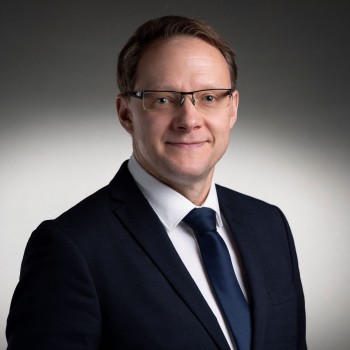
Anna Junga is an Assistant Professor and Laboratory Head at the Department of Morphology, Rīga Stradiņš University . She works concurrently as a Resident Doctor in Anaesthesiology & Reanimatology at Riga East University Hospital. Education: Medical Doctor’s Diploma (2009-2015), Doctoral Degree in Medicine (2015-2018), BA in Nutrition Science (2006-2012) Her research focuses on the morphopathogenesis of intraabdominal adhesions in infants , investigating the roles of growth factors , inflammatory cytokines , degenerative enzymes , and extracellular matrix remodeling . She has presented at international conferences like the World Summit on Pediatrics and BALTIC MORPHOLOGY . Anna has published studies in journals such as Medicina (Kaunas) and Archives of Medical Science , analyzing factors like TNFα , VEGF , and TGF-β in congenital adhesions. She actively participates in professional societies including the European Society of Anaesthesiology and Latvian Association of Anesthesiologists .
Xiaodan Pang is a Tenure Professor at Riga Technical University (RTU) specializing in cutting-edge photonics and communications research. Her work focuses on developing next-generation optical and wireless technologies for high-speed data transmission systems, with significant contributions to silicon photonics, terahertz communications, and integrated sensing and communication architectures. Her primary research interests include: Digital signal processing Wireless communications Signal processing Fiber optics Optoelectronics Photonics Professor Pang's recent publications demonstrate leadership in overcoming fundamental challenges in high-speed communications. Her 2025 work spans silicon photonics ring-resonator modulators for optical-amplification-free links, photonic terahertz chaos systems for secure ranging, and analog fronthaul solutions for 6G networks. Key themes include neural network equalization for ultra-high baudrate transmission, energy-efficient unamplified optical links, and integrated sensing-communication systems leveraging terahertz frequencies. This research directly addresses critical bottlenecks in data center interconnects, 6G mobile infrastructure, and secure high-precision wireless applications. Her technical profile is documented through ORCID (0000-0003-4906-1704), Scopus (54407301300), and Web of Science (D-5032-2015) identifiers, with active professional engagement via LinkedIn.
Andis Supe serves as an Associate Professor at Riga Technical University's Institute of Photonics, Electronics and Electronic Communications, where he leads research in advanced optical communication systems and fiber optic technologies. His institutional affiliation with RTU spans multiple research initiatives focused on telecommunications infrastructure and photonic device development. Dr. Supe's research centers on fiber optic amplifiers, nonlinear optical phenomena, and optical signal restoration techniques. Recent work explores IoT-integrated environmental monitoring systems for indoor air quality and microclimate analysis in public buildings, demonstrating practical applications of photonics in sustainable infrastructure. His expertise bridges theoretical optical physics with real-world telecommunications engineering challenges. Analysis of his 15 most recent publications (2021-2025) reveals three dominant research thrusts: cladding-pumped rare-earth-doped fiber amplifiers (particularly Er/Yb co-doped systems), optical sensing technologies including FBG interrogators and polarization OTDR, and IoT-based environmental monitoring. The publications show increasing diversification from core amplifier design toward applied sensing solutions while maintaining strong theoretical foundations in nonlinear optics. No scientific awards or major honors are documented in available sources. Information regarding graduate student supervision or external research funding remains undisclosed in the provided materials. As a core member of RTU's Institute of Photonics, Electronics and Electronic Communications, Dr. Supe contributes to the institution's optical fiber research ecosystem. The institute maintains specialized laboratories for photonic device characterization and optical network testing, though specific lab affiliations or team structures are not detailed in current documentation.
Jānis Braunfelds is an Associate Professor at Riga Technical University. His research focuses on fiber optic sensors , optical sensor networks , infrastructure monitoring , optical communication systems , and signal processing . Fiber optic sensors Optical sensor networks Infrastructure technical condition monitoring Optical communication systems Signal processing Contact: Janis.Braunfelds@rtu.lv
Mohammed M. Rahman is a Professor of Physical Chemistry in the Department of Chemistry at King Abdulaziz University, Saudi Arabia, where he has been working since 2011. He leads the Sensor's lab at the university's CEAMR Research Center and is recognized as a world-renowned scientist in Materials & Biomaterials from Bangladesh. Dr. Rahman's educational background includes: PhD in Electrochemistry from Jeonbuk National University (2002-2007) Master's degree in Chemistry from Shahjalal University of Science and Technology (2000-2002) Bachelor's degree in Chemistry from Shahjalal University of Science and Technology (1995-1999) With an impressive publication record of 1,151 papers, 320,824 reads, and 33,976 citations, Dr. Rahman's research spans multiple disciplines at the intersection of chemistry, materials science, and environmental engineering. His work primarily focuses on developing advanced nanomaterials for sensing applications, environmental remediation, and energy solutions. Recent publications demonstrate a strong emphasis on electrochemical sensors for environmental pollutants and biomedical applications, as well as sustainable materials development using waste resources. His extensive publication record shows consistent output across multiple domains with a clear trend toward developing nanocomposite materials for environmental monitoring and remediation. A significant portion of his recent work involves creating sensitive electrochemical sensors for detecting pollutants like nitrophenols, heavy metals, and other hazardous compounds in water systems. His research also extends to sustainable materials development, including utilizing agricultural waste for paper production and developing advanced membranes for water purification. Dr. Rahman has held progressive academic positions at King Abdulaziz University, advancing from Assistant Professor (2011-2014) to Associate Professor (2014-2019) and currently serving as a full Professor. His work bridges fundamental materials science with practical applications in environmental protection and healthcare diagnostics. His Sensor's lab focuses on developing cutting-edge sensing technologies using nanomaterials, with particular emphasis on electrochemical approaches. The lab's research encompasses various applications including environmental monitoring, clinical diagnostics, and industrial process control.
Māris Tērauds is an Associate Professor at Riga Technical University (RTU), specializing in signal processing, Doppler radar technologies, and microcontroller systems. His research focuses on analog-digital chip design (ASICs) and Matlab simulations. Signal processing Doppler radar technologies ASICs design Microcontroller systems Matlab simulations Dr. Tērauds can be contacted at Maris.Terauds@rtu.lv . He is active in RTU's scientific community, with an ORCID ID (0000-0001-6934-0036), Scopus Author ID (24725635300), and Web of Science Researcher ID (ACO-5780-2022).
Valdis Bernhofs is Professor of Systematic Musicology at the Jāzeps Vītols Latvian Academy of Music in Riga, Latvia, serving as head of the music theory class since 2016 and collaborating with the University of Heidelberg's 'Music and Brain' research team since 2014. His academic credentials include an MA in Choir Conducting from the Riga Music Academy (1992), an MA in Music Therapy from Heidelberg University of Applied Sciences (2006), and a PhD in Systematic Musicology (2013) focused on aural attention development. Professor Bernhofs' research centers on neurocognitive music learning, musical abilities, and ear training pedagogy. He pioneered the digital training systems AuTra (pitch/rhythm parameters) and AuTra2 (scale/interval/chord perception), alongside authoring Latvia's national curricula for music theory teacher education. His recent publications reveal interdisciplinary trends examining ADHD's impact on music-language perception, emotion recognition in performance via BCMI, and dyslexia-related musical deficits—integrating psychological experimentation, neuroimaging, and computational modeling across 4 high-impact journals (2022-2023). As an active ear training instructor and methodological developer, he bridges cognitive theory with practical music education through Latvia's teacher training programs and international research collaborations.
Katrīne Vecvagare serves as an Acting Assistant in the Department of Pathology at Rīga Stradiņš University, with research activity documented through 2023. Her academic trajectory shows progression from student assistant roles to PhD researcher and finally to expert status across multiple nationally funded projects. Dr. Vecvagare's research focuses on critical intersections of immunology and virology: Herpesvirus reactivation patterns in autoimmune conditions Biomarker identification for Myalgic Encephalomyelitis/Chronic Fatigue Syndrome Mechanisms of fatigue development in rheumatoid arthritis COVID-19 immunopathogenesis and viral interactions Her publication record reveals significant contributions to understanding viral-autoimmune relationships, particularly how herpesviruses may reactivate during SARS-CoV-2 infection. Her work frequently employs biomarker analysis and clinical correlation studies in Latvian patient populations, with one publication on chronic fatigue syndrome diagnostics accumulating 26 Scopus citations. Dr. Vecvagare has participated in three major research initiatives: Establishment of Latvia's COVID-19 biobank (2020-2021) Biomarker selection for ME/CFS patient stratification (2020-2023) University management process improvement at Rīga Stradiņš (2018-2023) Her collaborative network includes leading Latvian immunologists and virologists, with consistent co-authorship patterns indicating stable research partnerships focused on autoimmune and viral disease mechanisms.
Artjoms Špaks is an Assistant Professor in the Department of Surgery at Rīga Stradiņš University. His research focuses on lung cancer and its tumor microenvironment, with a particular emphasis on CXC chemokines and their role in NSCLC. He holds a Doctor of Medicine (Dr.med.) degree from the University of Latvia and has received funding from the European Social Fund and the Latvia State Budget for project management and study content modernization. Špaks serves as Head of the Thoracic Surgery Service at Paula Stradina Clinical University Hospital. Research Interests: His work addresses lung cancer biology, tumor microenvironment dynamics, cancer screening methodologies, and the development of prognostic biomarkers in NSCLC. Špaks' research aligns with UN Sustainable Development Goals (SDGs) related to clinical medicine. Scientific Contributions: Špaks' publications span topics like chemokine signaling, 3D printing in surgical oncology, and biomarker discovery. His recent projects include collaborative efforts under EU Structural Funds, focusing on process management and educational modernization in medicine.
Aigars Reinis is an Assistant Professor in the Department of Biology and Microbiology at Rīga Stradiņš University . His research focuses on antimicrobial resistance, microbiome analysis, and infectious disease mechanisms. He leads projects investigating bacterial behavior using laser speckle imaging and evaluates new antimicrobial agents in cosmetics and medical settings. Education/Expertise: Holds Expert roles from the Latvian Council of Science in Biological sciences (2017-2020), Basic medicine (2021-2024), and Clinical medicine (2024-2027). Research Interests: Includes microbiota analysis in pediatric diseases (e.g., appendicitis, otitis media), novel antibacterial/antiviral surface coatings, and rapid diagnostic systems for antibiotic resistance. Collaborates internationally on studies of Streptococcus agalactiae in pregnancy and microbial diversity impacts on disease severity. Notable Projects: Developed laser speckle methods for real-time microbial monitoring Evaluated probiotics' gut-brain axis effects Studied appendicitis biomarkers in pediatric patients Assessed nanostructured coatings' antibacterial properties Teaching & Supervision: Mentors students in R&D projects, including O. Zašibajevs, A. Tolstiks, and N. Jain. Engages in tech transfer through projects like intimate cosmetics testing for microbiome safety. Labs/Teams: Involved in multidisciplinary teams combining biomedical engineering, microbiology, and clinical research for translational applications.
Professor Sandis Spolītis serves as faculty at the Institute of Photonics, Electronics and Electronic Communications, Riga Technical University (RTU), where he holds the academic rank of Professor. His research program focuses on advancing photonic technologies and optical communication systems through interdisciplinary engineering approaches. His core research domains include: Optoelectronics Fiber-optic communications and interconnections Photonics technologies Optical sensors (fiber Bragg gratings) Digital signal processing Optical physics Professor Spolītis integrates theoretical optical physics with practical engineering solutions, particularly in sensor development and high-speed communication systems. His work emphasizes the application of fiber Bragg grating technology and digital signal processing to enhance optical network performance and sensing capabilities. He maintains active scholarly profiles across major research platforms: ORCID (0000-0002-0571-6409), Scopus (50861924300), and Web of Science (G-4283-2015).
Deniss Kolosovs is an Associate Professor at Riga Technical University, specializing in signal processing, digital telecommunications systems, and adaptive filters. His research focuses on advancing communication technologies through innovative signal manipulation techniques. His affiliations include participation in RTU's scientific ecosystem, with active engagement in digital humanities and photonics-related research networks. He maintains professional profiles on ORCID (ID: 0000-0003-4062-6545), Scopus (Author ID: 57188653909), and LinkedIn.
Māris Munkevics serves as an Acting Assistant in the Statistics Unit, contributing to interdisciplinary research across ecology, neuroscience, and psychiatry. His work demonstrates strong methodological expertise in statistical analysis applied to biological systems. His research interests span multiple domains with a primary focus on ecological and evolutionary processes . Notably, he investigates predator-prey dynamics in Drosophila melanogaster , examining how developmental exposure to predation risk influences adult survival strategies, serotonin signaling, and behavioral plasticity. His work extends to pollinator ecology, studying bumblebee health in relation to apiary proximity, and avian ecology through research on great tit nestlings' telomere dynamics in different forest types. A unique interdisciplinary contribution includes investigating the mental health impacts of yin yoga interventions during the pandemic. Analysis of his recent publications reveals a consistent pattern of research connecting environmental stressors with biological outcomes across multiple species. His work bridges statistical methodology with field biology, producing significant insights into how organisms adapt to environmental challenges. The publications show strong collaborative patterns, particularly with researchers Krams and Krama, indicating established research partnerships. Māris contributes to multiple UN Sustainable Development Goals through his ecological research, particularly those related to life on land and good health and well-being. His fingerprint analysis confirms deep expertise in agricultural and biological sciences (100% Drosophila melanogaster research) and substantial contributions to neuroscience (50% serotonin-related work). His research output shows consistent productivity with publications spanning 2020-2025, demonstrating active engagement in multiple research streams simultaneously. The statistical methodology expertise evident in his position appears central to his collaborative research approach across diverse biological systems.
Lāsma Asare is a Lecturer at the Faculty of Medicine , Rīga Stradiņš University (RSU), affiliated with the Statistics Training Laboratory since 2018. Previously, she served as a Lecturer in the Department of Physics at RSU (2012–2018) and as a Research Assistant at the University of Latvia's Institute of Atomic Physics and Spectroscopy (2009–2015). Education : PhD in Physics (University of Latvia, 2010) Master’s in Natural Sciences (Physics, University of Latvia, 2001) Bachelor’s in Natural Sciences (Physics, University of Latvia, 1999) Her research focuses on pathological skin abnormalities using multispectral non-contact optical sensors , exploring signal generation and their clinical significance. She has also contributed to kidney transplantation studies through data analysis. Recent publications span 2011–2019 and include collaborations at international conferences (ECBO, SPIE) and journals like Lithuanian Journal of Physics . Key themes: photoplethysmography , optical biosensors , and multispectral imaging . Scientific Awards : ThorLabs Best Student Paper Award (2011) for multispectral photoplethysmography research Professional development highlights: Advanced training in qualitative data analysis (NVivo), statistical R programming , and health data compliance .
Toms Salgals is an Associate Professor at Riga Technical University, with a focus on high-speed optical communication systems, integrated photonics, and emerging 6G technologies. His research spans optomechanics, nanophotonics, and radar technologies, leveraging advanced photonic components for next-generation networks. Current affiliation: Riga Technical University Research areas: High-speed fiber optics, optical frequency combs, metamaterials, 5G/6G, nanophotonics Email: Toms.Salgals@rtu.lv His recent publications emphasize silicon photonics modulators , analog fronthaul solutions , and optical amplification-free transmission systems . These works explore the integration of nanophotonics and machine learning for improving signal processing in high-baudrate environments. The 24 listed articles (2020–2025) reflect a strong trend toward short-reach optical interconnects , hybrid photonic architectures , and mid-IR free-space optics , particularly for 6G and beyond. He also investigates quantum cascade lasers, whispering gallery mode resonators, and novel data compression methods.