Roman Krivko is an Associate Professor at the Department of Slavonic Studies , University of Vienna. His research focuses on Old Church Slavonic , Byzantine hymnography , and historical linguistics of Slavic languages. Specializes in medieval Slavic epigraphy and liturgical text analysis Key contributor to studies on Christian traditions in Slavic contexts Active editor and researcher in international Slavic studies Research Themes include: Quantitative analysis of loanwords in Slavic Gospels Textological studies of service menaia and kontakia Historical development of Old Bulgarian language Linguistic networks in Central/Eastern Europe Scientific Contributions span Editorial work on Slověne journal Notable publications on the Temnić inscription and Samuil's epigraph Collaborations with institutions like Vinogradov Russian Language Institute
Dr. Temenuzhka Dimova is a PostDoc researcher at the University of Vienna, Faculty of History and Cultural Studies, Institute of Art History. She is affiliated with the Vienna Cognitive Science Hub and CReA Lab, where she conducts research on gesture semantics in Early Modern painting and digital art history. Her primary research focuses on the historical and semantic interpretation of codified hand gestures (chirograms) in Early Modern painting. She studies the origins, meanings, and combinations of hand signs to understand their role in visual communication and how they relate to contemporary sign languages and gesture studies. Dr. Dimova has developed innovative methodologies including the "chiroscript" transcription system for analyzing depicted gestures in painting. She currently leads the "Following the Festaiuolo" project, which examines multicultural perception of deictic chirograms using eye-tracking methods. Additionally, she contributes to the Jacques-Edouard Berger foundation project – the Vasari Diagram, an open-access platform exploring Wikipedia networks of Old and Modern Masters. Her research bridges art history, semiotics, cognitive science, and digital humanities, creating innovative approaches to understanding visual language in historical contexts. Dr. Dimova has published extensively with 14 scholarly works including her 2019 book "Le langage des mains dans l'art" and numerous articles on gesture analysis in Early Modern painting. Her work demonstrates consistent focus on hand gesture semantics across different historical contexts, with increasingly sophisticated analytical methods. FWF - Austria Science Fund, programme ESPRIT (2022) Dr. Dimova earned her PhD in Art History from the University of Strasbourg in 2017 with a thesis on hand gestures in French figurative arts (1604-1795). Prior to her position at the University of Vienna, she served as a lecturer at the University of Strasbourg (2015-2016) and University Paul Valéry, Montpellier (2013), and worked as a Museum Mediator at Musée Fabre, Montpellier (2009-2013).
Anselm Wagner has been a full professor and head of the Institute for Architectural Theory, Art and Cultural Studies at Graz University of Technology (TU Graz) since March 2010. He concurrently serves as coordinator of the KUWI Graz doctoral programme and dean of studies of the Doctoral School at the Faculty of Architecture, TU Graz. Affiliated with numerous advisory boards—including the Graz Old Town Expert Commission, the City of Graz Advisory Board for Art in Public Space, the Centre for Intermediality Studies at the University of Graz, and the Critical Studies in Architecture board at Goethe University Frankfurt—he is an influential figure in Austrian architectural academia and cultural policy. Education & Early Career 1965: Born in Salzburg, Austria. Studies: Art history, philosophy and classical archaeology at the Universities of Salzburg and Munich. 1991: Diploma thesis on Romanesque architecture in South Tyrol. 2002: Doctoral dissertation on the history of the Salzburg Art Association. 1988-1996: Freelance art critic, exhibition curator, and co-founder/director of Galerie 5020 Salzburg. 1996-2009: Teaching positions and visiting professorships at universities in Vienna, Salzburg, Linz, Graz, and Minneapolis. Research Interests Professor Wagner’s work is anchored in critical architectural theory and the history and theory of contemporary architecture and art . He examines the institutional and scientific histories that shape architectural discourse, with a particular focus on purity and dirt as aesthetic categories of modernity . His FWF-funded projects have investigated Buddhist architecture in the Western Himalayas and solar design knowledge via the Sun Houses of Konrad Frey . Additional strands include cross-epochal image studies and cultural analyses that bridge medieval iconography with present-day spatial practices. Publications & Editorial Work Since 2012 he edits the book series architektur und analyse (jovis, Berlin) and has acted as chief editor of GAM Graz Architecture Magazine . His 2019 co-edited volume Architekturführer Graz (456 pp.) offers an authoritative guide to the city’s architectural heritage. Recent theoretical essays explore neoliberal spatial logics, the politics of heritage, and the semiotics of modernist absence. Grants & Projects FWF Project “Buddhist Architecture in the Western Himalayas: Architectural Research in Dolpo/Nepal” (2018-2021) FWF Project “The Sun Houses of Konrad Frey: Environmental Research and Solar Design Knowledge” (2016-2019) Coordinator, KUWI Graz doctoral programme Dean of Studies, Doctoral School, Faculty of Architecture, TU Graz Advisory & Professional Service Wagner sits on the scientific advisory boards of the Linzer Beiträge zur Kunstwissenschaft und Philosophie, the Centre for Intermediality Studies (CIMIG) at the University of Graz, and the Critical Studies in Architecture network at Goethe University Frankfurt. He is a member of the International Association of Art Critics (AICA) and has served on municipal commissions for art in public space and historic-town conservation.
Mark Aronoff is the Toll Distinguished Professor of Linguistics at Stony Brook University, State University of New York, where he has served since 1974. His primary affiliation is with the Department of Linguistics within the College of Arts and Sciences. Education : B.A. (First Class Honors), McGill University (1965–1969) Ph.D. in Linguistics, Massachusetts Institute of Technology (1970–1974) Research Interests : Dr. Aronoff specializes in linguistic morphology, sign language studies, writing systems, and pedagogical approaches to linguistics. His work bridges theoretical linguistics and cognitive science, emphasizing empirical and cross-linguistic analysis. Awards & Honors : Fellow of the American Association for the Advancement of Science (AAAS) Fellow of the Linguistic Society of America (LSA) Member of the American Academy of Arts and Sciences Recipient of the Guggenheim Fellowship (2014–2015) Albert Nelson Marquis Lifetime Achievement Award (2018) Visiting Roles & Leadership : Visiting Chair Professor, Shanghai Jiao Tong University (2018–2019) Past President, Linguistics Society of America (2004–2006) Chair, AAAS Section on Linguistics and Language Science (2004) Member, Rockefeller Foundation Bellagio Residency (Summer 2013) Professional Contributions : He has led numerous academic initiatives, including directorial roles in summer institutes and international collaborations. His service includes roles on ACLS committees, the National Commission on Language Teaching, and the European Science Foundation College of Experts.
Barbara Soukup-Kirchner is an Assistant Professor for the Sociolinguistics of German in Austria at the Department of German Studies , University of Vienna. Her work bridges sociolinguistics, linguistic landscaping, and cognitive approaches to language variation. She leads the Sparkling Science 2.0 project 'VisibLL – Students explore the (un)observable multilingualism of Vienna's linguistic landscape' and has directed the Austrian Science Fund (FWF) project 'ELLViA – English in the linguistic landscape of Vienna, Austria' (V394-G23).
Anna Weichselbraun is a researcher in the Faculty of History and Cultural Studies at the University of Vienna , specializing in the Institute for European Ethnology . Her work bridges political and legal anthropology , linguistic anthropology , and Science and Technology Studies (STS) , focusing on global technology governance through projects like nuclear regulation and cryptocurrency. Education : PhD in Sociocultural and Linguistic Anthropology (University of Chicago, 2016), Postdoctoral Research (Stanford University, 2016-2018), MA and BA in Interdisciplinary Anthropology, Sociology, and Gender/Media Studies (EHESS/ENS and NYU). Research : Explores knowledge practices in institutions like the IAEA, blockchain verification , and language ideologies in AI regulation . Her book manuscript on the IAEA is under review at Cornell University Press. Her recent work examines Large Language Models (LLMs) through language ideologies, funded by an ERC Consolidator Grant submission. She has held fellowships at Stanford and the Berggruen Institute, with field research in Vienna, SF Bay Area, and UN headquarters. Scientific Awards : ERC Consolidator Grant (submitted) Nuclear Security Postdoctoral Fellowship, Stanford University USC-Berggruen Fellowship Anna actively engages in public discourse via Bluesky, advocating against far-right policies in Austria and critiquing technocratic governance. Her publications appear in Cultural Anthropology , PoLAR , and Signs and Society .
Verena Krausneker is a Senior Lecturer (half-time) at the Institute of Educational Science , University of Vienna, with affiliations at the Institute of Linguistics and Center for Teacher Education. She leads the Sign Languages Working Group , developing educational resources for Austrian Sign Language (ÖGS). Her academic career includes visiting professorships at Humboldt University Berlin (2024) and the University of Hamburg (2007, 2015). Research Focus ÖGS as educational language (2017–2023 PLIG project) BAG-Sign project (2023–2025) with 10 international partners Sign language avatars (2022 ICCHP-AAATE keynote) Historical studies on deaf Austrians under National Socialism (2008–2010, 202023 projects) Language policy frameworks (European Council, EU) Deaf Studies and minority rights NGO Leadership Co-founder, Anti-Racism Organization ZARA (1999) Board member, Austrian Deaf Association (2001–2007) Co-founder, Shalom Alaikum (2015) Scientific Advisory Board, Society for Sign Language and Communication of the Deaf (since 2021) Additional Roles Co-founder, Feldenkrais Institute Vienna (2007–2021) Confidant for Jewish students at University of Vienna Scientific reviewer and assessor Active in international conferences (World Deaf Congress, European Union of the Deaf)
Maj-Britt Mosegaard Hansen is a Professor of Linguistics and Pragmics at The University of Manchester (since 2007), previously holding roles as Associate Professor (University of Copenhagen, 2000-2007) and Assistant Professor (1996-1999). She specializes in pragmatics, semantics, and historical linguistics with a focus on French and Romance languages. Her research explores discourse particles, grammaticalization, and diachronic semantic shifts. She earned her dr.phil. (higher doctorate) from the University of Copenhagen (2008) with a dissertation on particles at the semantics/pragmatics interface. Notable roles include Associate Dean for Research at Manchester's Faculty of Humanities (2018-2021) and Head of Linguistics and English Language (2014-2017). Her work bridges theoretical linguistics and empirical analysis, addressing topics like negation cycles, interactional pragmatics, and medieval French syntax. She is a Fellow of the Royal Danish Academy of Sciences and Letters (2013). Her publications include influential books such as The Structure of Modern Standard French (2016) and over 50 peer-reviewed articles on historical pragmatics and discourse analysis.
Marianne Gullberg is a Professor of Psycholinguistics at Lund University, where she serves as Director of the Lund University Humanities Lab and Director of Huminfra , Sweden's national infrastructure for humanities research. She leads the research programs TEAM (Transdisciplinary Approaches to Learning, Acquisition, Multilingualism) and LAMiNATE (Language Acquisition, Multilingualism, and Teaching) , and previously co-founded the Nijmegen Gesture Centre at the Max Planck Institute for Psycholinguistics. Research Focus : Adult second language acquisition, bilingual processing, gesture production/comprehension, and multimodal communication. Leadership : President of the International Society for Gesture Studies , Vice-president of the European Second Language Association (2000-2007), and active in national and international academic societies. Honors : 2019: European Second Language Association Distinguished Scholar Award 2019: Swenson Prize in Humanities 2014: Rausing Prize in Humanities 2013: Wallenberg Scholar 2010: Lars & Eva Gårding’s Prize in Linguistics Multiple academy memberships including Academia Europaea and Royal Swedish Academy of Sciences Editorial Roles : Editor/Associate Editor for Language Learning , Frontiers in Psychology: Language Sciences , Gesture , and others.
James McQueen is a Professor at Radboud University, Netherlands, currently holding the position of Professor of Speech and Learning in the School of Psychology and Artificial Intelligence. He previously served as Professor of Learning and Plasticity in the School of Educational Sciences (2009–2015). His academic journey includes roles at the Max Planck Institute for Psycholinguistics and the MRC Applied Psychology Unit in Cambridge. Education: B.A. (Honours, 2.1; Distinction in Prelims) in Experimental Psychology, University of Oxford (1987) Ph.D. in Psycholinguistics, University of Cambridge (1992) Research Interests: McQueen’s work focuses on speech perception, spoken-word recognition, second language acquisition, and perceptual learning in speech. His research explores how listeners adapt to phonological reduction and the neural mechanisms underlying word learning. He has led major grants including the NWO Gravitation Consortium “Language in Interaction” (€27.6M) and projects on auditory category learning and language processing. Awards: 2016: Fellow of the Association for Psychological Science 2014: Fellow of the Psychonomic Society 1997: Cognitive Psychology Award, British Psychological Society Advising & Grants: McQueen has supervised over 30 graduate students and postdoctoral fellows. His grants include ESRC, DFG, and NWO-funded projects on topics ranging from sign language segmentation to neural correlates of lexical learning. He has coordinated major initiatives like the “Decoding Continuous Speech” project at MPI. Institutional Roles: He has held leadership roles such as Chairing PhD defenses (since 2017), Speaker for the Language and Communication Research Theme at the Donders Institute (2010–2016), and editorial board memberships for journals like Cognition and Journal of Memory and Language . Labs & Teams: McQueen is affiliated with the Donders Institute for Brain, Cognition and Behaviour and contributed to the Max Planck Institute for Psycholinguistics, focusing on interdisciplinary research in language and cognition.
Institute of Science and Technology AustriaAustria
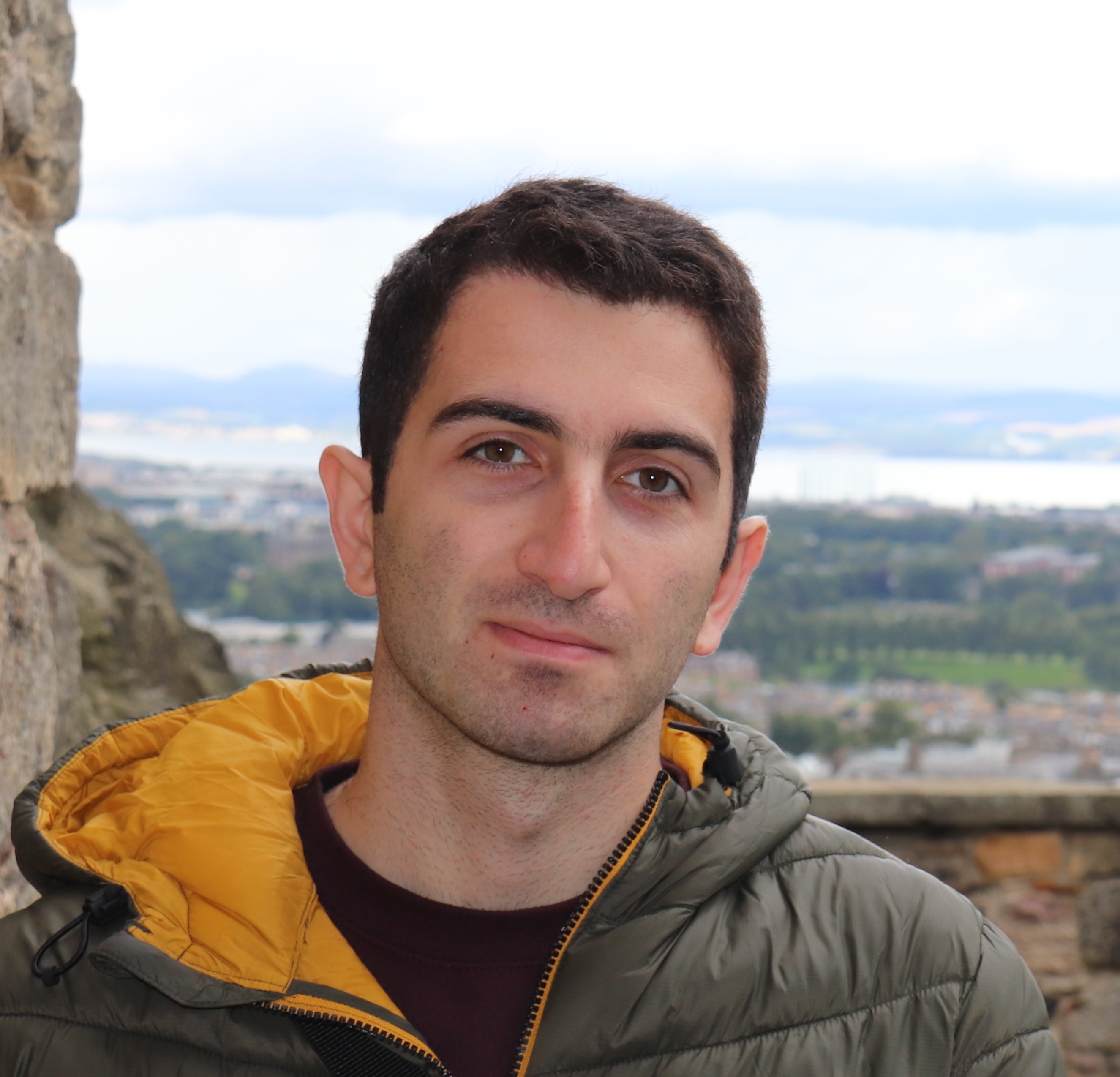
Dr. Mher Safaryan is a postdoctoral researcher at the Institute of Science and Technology Austria (ISTA), affiliated with Prof. Dan Alistarh's research group since 2022. Previously, he held postdoctoral positions at King Abdullah University of Science and Technology (KAUST) from 2019-2022 and served as a research technician there from 2016-2019. He earned his Ph.D. in Mathematics from Yerevan State University in 2018 under Prof. Grigori Karagulyan's supervision. Education: Ph.D. in Mathematics (2018, YSU) Past Affiliations: KAUST (2016-2022), Neural Magic/Red Hat (industrial secondment) His research focuses on optimization theory and algorithms for machine learning , particularly in developing communication/computation/memory-efficient methods for large-scale training and federated learning. Key contributions include LDAdam (low-dimensional gradient statistics optimization), GradSkip (accelerated local gradient methods), and Unified Scaling Laws for compressed representations. He has published in top venues like NeurIPS, ICML, ICLR, TMLR, and The Journal of Geometric Analysis. Scientific Awards: Marie Skłodowska-Curie Fellowship (MSCA COFUND IST-BRIDGE) His work bridges machine learning optimization with mathematical foundations from his earlier research in real harmonic analysis. Current collaborations include Prof. Dan Alistarh (ISTA), Dr. Alexandre Marques (Neural Magic), and Prof. Peter Richtárik (KAUST).
Herr Marc Masana Castrillo is a Researcher at the Institute of Computer Graphics and Vision within Graz University of Technology (College of Engineering). Holding a PhD in Computer Vision (cum laude) from Universitat Autònoma de Barcelona (2020), he specializes in Deep Learning , Continual Learning , and Neural Network Compression . His work addresses catastrophic forgetting in sequential tasks, out-of-distribution detection, and domain adaptation. PhD Thesis: "Lifelong Learning of Neural Networks: Detecting Novelty and Adapting to New Domains without Forgetting" MSc in Computer Vision (with Honours, 2015) BSc in Mathematics and Computer Science (2014) His research spans continual learning frameworks , feature disentanglement , and multimodal translation . Publications in top-tier venues like TPAMI , BMVC , and ICCV highlight his contributions. He co-developed Avalanche , an open-source PyTorch-based library for reproducible continual learning research. Scientific recognition includes the Best Master Thesis Project at UAB (2015) and the Business Track Award at Accenture Datathon (2016). His email addresses are mmasana@tugraz.at and marc.masana@icg.tugraz.at . He has reviewed for journals like TPAMI and conferences including CVPR and ICCV .
Katta Spiel is an Assistant Professor for 'Critical Access in Embodied Computing' at the Human-Computer Interaction Group of TU Wien. They lead the ERC Starting Grant project ACCESSTECH (2024-2029), focusing on marginalized perspectives in technology design. Previously held an FWF Hertha Firnberg position (Exceptional Norms project) and contributed to FWF projects Social Play Technologies and OutsideTheBox. Education: B.A. Media Culture, B.Sc. Media Systems, M.Sc. Computer Science and Media (Bauhaus-Universität Weimar). Doctorate in Participatory Design methodologies with autistic children. Research Interests: Critical Access, Disability Studies, Queer HCI, Participatory Design, Textile Technologies. Focuses on designing technologies that account for diverse realities through collaborative, solidarity-based approaches. Grants & Awards: ERC Starting Grant (2024), Förderungspreis Wien (2022), SIGCHI Outstanding Dissertation Award (2020). Active in policy roles including Austrian Monitoring Committee for UN Disability Convention and Young Academy of Austrian Academy of Sciences. Labs/Teams: Leads ACCESSTECH team at TU Wien's HCI Group. Collaborates with neurodivergent, disabled, and nonbinary communities in participatory research.
Robin Angelini is a PreDoc Researcher at the Department of Informatics, Technische Universität Wien. Their work focuses on Human-Computer Interaction, with an emphasis on accessibility technologies for Deaf communities and speculative design methodologies. Angelini holds a BSc and Diplom-Ingenieur degree, and is affiliated with the ACCESSTECH project (2024–2029). Research interests include reimagining technologies through Deaf perspectives, inclusive maker space access, and forging solidarity through participatory design. Notable contributions include the 2025 Best Paper Award-winning work on 'Speculating Deaf Tech' and explorations of Signing Avatars. Courses taught include Critical Theory of Media and Informatics, and Human Augmentation. Projects: ACCESSTECH (2024–2029), Exceptional Norms (2020–2023) Grants: ACCESSTECH funding supports ongoing research in Deaf-centered tech innovation Labs/Teams: Collaborates with the Human-Centered Computing group, focusing on intersectional technology design and inclusive innovation ecosystems.
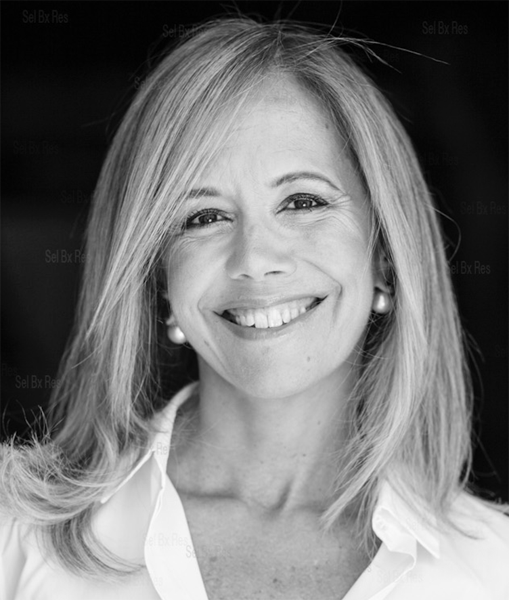
Gil Isabel Capeloa is a Full Professor of Culture Studies at the Universidade Católica Portuguesa (UCP) and currently serves as its Rector. She is also President of the International Federation of Catholic Universities and Chair of the Humanities panel at the Danish Research Council. Her academic journey includes leadership roles as Vice-Rector for Research and Internationalization (2012–2016) and Dean of the School of Human Sciences (2005–2012). Education: B.A. in Modern Languages (University of Lisbon, 1987), M.A. in German Studies (University of Lisbon, 1992), PhD in German Language and Culture (UCP, 2001) Research Focus: Interdisciplinary exploration of culture, arts, and conflict; visual culture analysis; gender studies; surveillance and societal control Her work bridges cultural theory , interarts studies , and conflict analysis across over 182 publications. She founded the Research Centre for Communication and Culture (CECC) and leads its Culture, Art and Conflict (CAC) group. Recent academic output examines post-theoretical frameworks, Beyoncé's cultural impact, and visual disaster narratives. Scientific Recognition: Doctor Honoris Causa from ACU (2022), ICP (2021), Boston College (2019) Distinguished Alumni Award (University of Lisbon, 2019) Fulbright Scholar (2001), DAAD Fellow (2009), FLAD Scholarship (2008) Visiting professor at Stanford, LMU Munich, and National University of Ireland Prof. Gil actively consults for international research foundations and evaluates global educational initiatives, while maintaining extensive editorial contributions to her field.