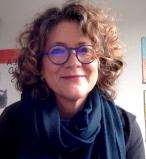
Gabriella Casalino is an Assistant Professor at the University of Bari Aldo Moro, Department of Computer Science, and a key researcher at CILAB - Computational Intelligence Lab. Her work focuses on Computational Intelligence methods for interpretable data analysis, particularly in eHealth, Data Stream Mining, and eXplainable Artificial Intelligence (XAI) within medical and educational domains. She has contributed to innovative approaches in smartphone-based health monitoring, fuzzy logic applications, and remote vital sign detection via photoplethysmography. Education : Ph.D. in Computer Science, with advanced training at institutions like Universitat de Girona and Université de Mons. Research Trends : Recent publications highlight applications of evolving granular computing, neuro-fuzzy systems, and explainable AI in hypertension prediction, bipolar disorder monitoring, and educational data analysis. Key subfields include remote health monitoring, medical data streams, and hybrid AI models. Grants : Research funded by AIRC (Italian Cancer Research Foundation), focusing on computational methods for healthcare challenges. Labs & Collaborations : Active in CILAB, collaborating on projects involving mHealth solutions, cardiovascular risk assessment, and intelligent educational systems.
Monica Barni is a Full Professor at the Department of Modern Literature and Culture, Sapienza University of Rome, specializing in Educational Linguistics and Multilingualism. She serves as the President of the Degree Course in Communication and Interpreting in Italian Sign Language (LIS and LIST) and directs the Ateneo Linguistic Center. Her research spans language policy, Italian L2 education, and the sociolinguistics of migration. Research Interests: Analysis of linguistic policies in Italy and Europe Assessment of language competencies Plurilingual and intercultural education Linguistic landscapes in multicultural urban contexts Translation theory and practice Recent Article Trends: Her 2025 and 2024 publications focus on urban multilingualism, language transmission in migrant families, and policy intersections in education. Earlier works (2022-2023) examine Italian certifications, museum semiotics during pandemics, and European linguistic frameworks like CEFR. Labs & Teams: She leads the Ateneo Linguistic Center and contributes to the GISCEL research network. Her work intersects with projects like Lingua e cittadinanza (Language and Citizenship) and international collaborations in Italian language education.
Giorgio Nisini is an Associate Professor at the Department of Modern Literature and Culture, Sapienza University of Rome. His academic work focuses on 20th-century and new-millennium Italian fiction, interrelationships between literary and cinematic languages, and the intersection of literature, publishing, and cultural industry. Research Interests: Modern/Contemporary Italian Literature, Neorealism, Great War Memoirs, Literary Canon, Publishing Studies. Key Collaborations: Co-director of academic projects with Université de Dschang (Camerun); member of Società Italiana per lo studio della modernità letteraria and Consiglio Scientifico of Master in Editoria, Giornalismo e Management Culturale. Notable Publications: Italian Neorealism. Writings, Images, Society (Perrone, 2014); editor of Carteggio Corrado Alvaro and Vito Laterza (Laterza, 2019). Scientific Awards: Corrado Alvaro Opera Prima Prize; Finalist Premio Tondelli; Finalist Premio Strega (LXV edition); Forum Traiani Prize for Narrative. Recent Articles: Focus on Laterza publishing archive (2025), Pasolini's wartime discourse (2025), Wilcock's surrealism (2022), and Great War memory studies (2021). He organizes cultural events as Artistic Director of Emporio Letterario di Pienza and President of Premio Letterario "Corrado Alvaro-Libero Bigiaretti". His teaching includes Contemporary Italian Literature courses across Philology, Publishing, and Sign Language interpreting programs.
Chiara Innocente is a PhD student in Management, Production, and Design at the Department of Management and Production Engineering (DIGEP) of Politecnico di Torino. She holds the academic rank of Consultant Lecturer and contributes to teaching in courses related to 3D graphics in biomedical engineering applications. Her research spans computational modeling, human-computer interaction, and machine learning, with a focus on rehabilitation engineering, cultural heritage preservation, and medical imaging. Education: PhD in Management, Production, and Design (2022-2025) Research interests include: Machine learning applications in healthcare and rehabilitation engineering Human-computer interaction for augmented/virtual reality 3D graphics and computational modeling for biometric and cultural heritage Convolutional neural networks in medical image analysis Her recent publications highlight interdisciplinary work bridging computer science with clinical applications and cultural preservation. She collaborates on national patents for athlete performance evaluation systems and participates in the Augmented Humans research framework.
Francesco Bellucci is an Associate Professor at the Department of Arts, University of Bologna. His academic journey includes a PhD in Semiotics (University of Siena, 2012), followed by roles such as Senior Research Fellow (2018–2021), Adjunct Professor (2016–2018), and research fellowships at institutions like Tallinn University of Technology and the Peirce Edition Project. His research focuses on Charles S. Peirce's semiotic theory, the philosophy of language, and the history of logic, with a particular emphasis on diagrammatic reasoning and philosophical notation systems. Education: PhD in Semiotics, University of Siena (2012) Master's Degree in Semiotics, University of Bologna (2008) Bachelor's Degree in Communication Sciences, University of Bologna (2005) Research Interests: Bellucci’s work revolves around Peirce’s logico-semiotic framework, exploring themes such as the philosophy of notation, diagrammatic systems (e.g., existential graphs), and the intersection of semiotics with ancient and medieval thought. He has published extensively on Peirce’s philosophy of language, the history of logical diagrams, and comparative analyses of thinkers like Frege and Aristotle. Publications & Contributions: He authored Peirce's Speculative Grammar (2017) and edited Charles S. Peirce. Selected Writings on Semiotics 1894–1912 (2020). His articles span journals like Synthese , History and Philosophy of Logic , and Transactions of the Charles S. Peirce Society . Recent work includes studies on Peirce’s existential graphs, Aristotelian semiotics, and the role of imagination in abduction. Professional Activities: Bellucci has reviewed for over 20 journals since 2013, including Synthese , History and Philosophy of Logic , and Sign Systems Studies . He actively contributes to conferences, delivering papers on Peirce, diagrammatic reasoning, and the history of semiotics worldwide.
Sabine Elisabeth Koesters is a Full Professor at the Department of Modern Literature and Culture at Sapienza University of Rome, where she teaches German language and linguistics courses across multiple degree programs including Linguistics, Modern Philology, Communication and Interpretation in Italian Sign Language (LIS and LISt), and Philosophy. Her teaching portfolio includes German linguistics, German language and translation, and general linguistics courses, with specific focus on both beginners and advanced students. Professor Koesters' research spans multiple areas of German language and linguistics, with particular expertise in phonetics, morphology, lexical semantics, linguistic history, linguistic ideologies during National Socialism, educational linguistics, spoken language, contrastive linguistics, and digital humanities. Her work frequently intersects with phraseology, translation studies, and multilingual analysis, with a special focus on Italo Calvino's works and their translations. She has developed specific expertise in analyzing phraseological patterns across languages, particularly examining how Italian phraseological constructions translate into German and other languages. Her recent publications show a consistent trajectory in phraseological research, with particular emphasis on multilingual phraseology, Calvino translations, and the development of the CREAMY (Calvino REpertoire for the Analysis of Multilingual Phraseology) project. Her work combines theoretical linguistic frameworks with practical applications in language teaching, as evidenced by her publications on metalinguistic competence development through multilingual phraseology. Additionally, she has conducted significant research on the Israelkorpus, examining spatial experiences, emotional expression, and memory in narratives of German-speaking Jewish emigrants to Israel. Professor Koesters leads several research projects including 'German Syntagmatic Verbs: Psycholinguistic Data and Language Teaching Consequences,' 'Phraseology in Italo Calvino's Translations: Towards the Construction of Phraseologisms Networks Using the CREAMY Tool,' and 'University teaching of foreign languages as 'third languages': the case of constructions with supporting verbs.'
Domenico Giuseppe Muscianisi is a Fixed-term Researcher in Glottology and Linguistics at the Department of Humanities, Social Sciences and Cultural Enterprises (DUSIC) at the University of Parma, where he has been employed since the 2021/22 academic year. He also serves as a Visiting Professor of Applied Linguistics at the Scuola Superiore per Mediatori Linguistici Bona Sforza di Bari since the 2023/24 academic year. His academic journey spans multiple prestigious institutions including Harvard University's Center for Hellenic Studies, Leiden University Centre for Linguistics, and collaborations with IULM University in Milan. His educational background includes: Classical high school diploma from the GB Impallomeni state classical high school in Milazzo (ME), 2007 Bachelor's degree in Literature (L-10), Classical Literature curriculum, major in Greek and Latin Linguistics, at the Catholic University of the Sacred Heart of Milan, 2010 Master's Degree in Ancient Sciences (LM-15), Linguistics major, at the Catholic University of the Sacred Heart of Milan, 2012 Joint PhD in Historical-Comparative Linguistics from the University of Macerata and the University of Cologne (Germany), 2017 Muscianisi's research interests focus on Historical Comparative Linguistics, particularly Indo-European languages, with specializations in Greek linguistics and epigraphy, Mycenaean studies, oral poetry and metrics, and word taboo studies. His work bridges linguistic theory with anthropological approaches, examining how language functions in cultural and ritual contexts. He has made significant contributions to understanding Delphic oracles through linguistic analysis, exploring the connections between meter, prosody, and oral composition in ancient Greek poetry. His research often intersects with performance studies, drawing from his background as a classical and Bharatanatyam dancer. His publications reveal a strong trend in interdisciplinary research that combines linguistic analysis with cultural anthropology, religious studies, and performance theory. He frequently examines how language functions in ritual contexts, particularly in ancient Greek religion and oracular practices. His work on word taboos across cultures demonstrates his interest in the intersection of language and cultural belief systems. The articles also show his expertise in both ancient and contemporary linguistic phenomena, moving seamlessly between Mycenaean Linear B inscriptions and modern linguistic theory. As an academic advisor and educator, Muscianisi has taught various courses including Indo-European Civilization, General Linguistics, Phonetics and Phonology, and Glottology at the University of Parma. He serves as a reference for Erasmus+ student mobility programs and as the Quality Assurance Responsible for the Interprete di Lingua dei Segni Italiana program. His teaching reflects his interdisciplinary approach, connecting linguistic theory with cultural and historical contexts. Muscianisi is also active in the Third Mission initiatives at the University of Parma, organizing lectures and seminars on topics ranging from Cimbrian and Mòcheno languages to ancient Greek poetry and performance. He combines his academic expertise with his background in dance, serving as a dance and theater journalist registered with the Order of Journalists of Sicily. His membership in the naMec research center (Asian Nomadic Cultures, Mobility and Environment Studies Center) demonstrates his commitment to interdisciplinary research that spans linguistic, anthropological, and cultural studies.
Marco BRUSOTTI is an Associate Professor of History of Contemporary Philosophy (SSD: M-Fil/06) at the University of Salento, affiliated with the Faculty of Letters and Philosophy, Languages and Cultural Heritage and the Department of Humanistic Studies. He holds a PhD from TU Berlin and habilitation from the same institution. His research focuses on Nietzsche and Wittgenstein, intercultural hermeneutics, and philosophical methodology. He directs the University of Salento's research unit for the PRIN 2009 project on Nietzsche and leads activities in the Interuniversity Center 'Colli Montinari' for Nietzsche studies. He serves on editorial boards for Nietzsche-Studien, Monographien zur Nietzsche-Forschung, and Nietzsche Online. He chairs the Nietzsche Society and advises the Friedrich Nietzsche Foundation. His academic journey includes roles at TU Berlin and LMU Munich before returning to Italy via the 'Rientro dei Cervelli' program in 2004. His research explores Nietzsche's philosophy of culture, Wittgenstein's ethnological perspectives, and the interplay between philosophy and literature. Key awards include the 1995 Joachim-Tiburtius-Preis. His work bridges European intellectual history with contemporary philosophical debates, emphasizing comparative approaches and cultural interpretation.
Francesco Scollo is a Research Fellow at the Department of Agriculture, Food and Environment (Di3A) of the University of Catania. His work focuses on molecular characterization of plant genetic resources, particularly olive and carob trees, and DNA-based traceability in food matrices like extra virgin olive oil. He pioneered the use of droplet digital PCR (ddPCR) for DNA quantification in olive oil and has published extensively on genetic diversity and sustainable agricultural practices. Research Areas: Genetic improvement, molecular traceability, Mediterranean agriculture Techniques: AFLP, SSR, SNPs, HRM, ddPCR Award: 2018 Antico Fattore Award for olive oil DNA quantification Recent publications (2025–2022) emphasize germplasm conservation in carob trees, water management in olive orchards, and agrochemical residue reduction in table grapes. His work bridges plant genetics and food security in Mediterranean ecosystems.
Juan David Guerrero Balaguera is a Research Fellow at Politecnico di Torino's Department of Automatic Control and Computer Science (DAUIN), affiliated with the CAD group. He holds a Ph.D. in Computer and Control Engineering from Politecnico di Torino (2024), advised by Prof. Matteo Sonza Reorda and Prof. Ernesto Sanchez. His research focuses on dependable hardware for safety-critical systems, including GPU reliability, fault tolerance, AI accelerators, and functional in-field testing. Prior to his Ph.D., he earned a Master's (2017) and Bachelor's (2013) in Electronics Engineering from Universidad Pedagógica y Tecnológica de Colombia, where he taught digital design, embedded systems, and FPGA-based image processing from 2014 to 2020. His research interests span advanced FPGA design, computational arithmetic for AI, fault effects analysis in GPUs, and reliability assessment of neural networks. Notable contributions include methods for generating self-test libraries (STLs) for GPUs, evaluating fault impacts on TCUs, and enhancing CNN robustness via dropout layer optimization. Education: Ph.D. in Computer and Control Engineering, Politecnico di Torino (2024) M.S. in Electronics Engineering, Universidad Pedagógica y Tecnológica de Colombia (2017) B.S. in Electronics Engineering, Universidad Pedagógica y Tecnológica de Colombia (2013) He has received the Ph.D. Quality Award (2023 and 2024) from Politecnico di Torino and Best Paper recognitions at DATE 2023 and DDECS 2021. His work bridges theoretical fault models with practical GPU testing methodologies, emphasizing real-world applications in AI and edge computing. Current teaching roles include collaborating on GPU programming (Master's level) and computer sciences courses (Automotive Engineering). Research collaborations involve exploring reliability trade-offs in split-computing DNNs and developing fault-aware design flows for AI accelerators.
Stefania Rimini is a Full Professor of Cinema, Photography, and Television at the Department of Humanities, University of Catania. She holds the academic position of Full Professor in the disciplinary sector PEMM-01/B and is actively involved in research, teaching, and academic leadership. She supervises doctoral theses, leads the Catania Unit of the PRIN 2017 project 'Archives of the South', and coordinates the ARIE research project on opera and media. She also serves as the DISUM delegate for research coordination and is a member of several academic centers, including CRAD at the University of Turin and the Genus Center for Gender Studies. She co-directs the Class A journal Arabeschi with Maria Rizzarelli. Her research interests include intermediality, cinema museology, acting, stardom, documentary film, film archives, and audiovisual heritage. She emphasizes interdisciplinary methodologies and the study of tangible and intangible cultural heritage. Her work often intersects with theater, visual culture, and national/international cultural production. As part of her Third Mission, she curates exhibitions and seminars with local and international impact. The analysis of her recent academic output—particularly her supervision of student theses—reveals a strong focus on the intersections between cinema and other cultural forms such as sports, philosophy, music, literature, and digital media. Her research spans both historical and contemporary themes, from silent film comedy to modern music videos and biographical cinema. She consistently explores narrative, visual language, psychological depth, and cultural representation across genres and media. She has no listed scientific awards in the provided text. However, her leadership in national research projects and editorial roles underscores her academic prestige. Stefania Rimini advises numerous students at the master's level, covering diverse and innovative topics in film and media. Her supervision reflects a commitment to interdisciplinary inquiry and the exploration of cinema as a dynamic, evolving cultural force. She also participates in broader academic activities such as curriculum development and institutional research coordination. She is involved in multiple research initiatives, including the PRIN 2017 'Archives of the South', which examines non-fiction cinema and southern Italian landscapes between 1948 and 1968, and the ARIE project on contemporary opera. These projects involve collaboration with national archives and interdisciplinary teams focused on remediation, iconography, and environmental representation in audiovisual media.
Davide Astori is an Associate Professor in the Department of Humanities, Social Sciences and Cultural Enterprises at the University of Parma. Since March 2015, he has taught courses including 'General Linguistics,' 'Interlinguistics,' 'Romanian Language,' and 'Linguistics of Signed Languages.' He also serves as President of the professionally oriented Degree Course in 'Interpreter in Italian Sign Language and Tactile Italian Sign Language' (InLIST), established in 2023-24. His research spans Indo-European studies, languages in contact, translation studies, linguistic policies, and signed language linguistics. PhD in Romance Studies (Ludwig-Maximilian University Munich) Diploma in Paleography (State Archives of Parma) Registered journalist (Lombardy, since 1994) Teaching experience in 'Jewish Language and Culture,' 'Arabic Language,' and 'Sanskrit' His research focuses on cross-cultural language dynamics and minority language preservation. Recent work includes analyzing gender inequality through historical linguistics, semiotic aspects of Ataturk's language reforms, and accessibility in legal texts. He has also explored Esperanto's role in literary translation and educational innovation in science communication. Publications highlight interdisciplinary approaches to linguistic phenomena. His 2024-2025 works address political semiotics, gender discourse evolution, and legal language simplification. He actively contributes to signed language research through theoretical and applied perspectives. Office hours: Available Tuesdays 10:30-12:30 (or by appointment via davide.astori@unipr.it or +39 0521 03 2369) at the D'Azeglio Complex, Strada Massimo D'Azeglio 85, Parma.
Alide Cagidemetrio is a Full Professor of Anglo-American Languages and Literatures at Ca' Foscari University of Venice, where she is affiliated with the Department of Comparative Linguistic and Cultural Studies. She has held various academic positions including Full Professor at both Ca' Foscari University (2002-present) and University of Udine (1997-2002), and has served in significant administrative roles such as Dean of the Faculty of Foreign Languages and Literatures (2005-2010) and Pro-Rector for International Relations (2012-present). Her international academic experience includes visiting professorships at Harvard University, Wellesley College, and NYUAD. Professor Cagidemetrio's research focuses on American literature from the 19th and 20th centuries, with particular expertise in Henry James studies, narratology, and the history of American culture. Her work extensively examines the representation of femininity, the relationship between cinema and literature, and the cultural history of America. She has taught a wide range of courses including History of American Culture: Signs of Modernity, The Short Story from Irving to Melville, and specialized seminars on Henry James and American modernism. Her recent scholarly output demonstrates a consistent focus on American literary history and criticism, with particular attention to Henry James's works, representations of American identity, and the cultural significance of American literature in global contexts. Her publications span critical editions, translations, book chapters, and scholarly articles that explore the intersections of literature, history, and cultural representation in American writing. Professor Cagidemetrio has coordinated doctoral programs in Iberian, Anglo-American, and Eastern European Studies and has directed the Ca' Foscari Summer School. She maintains active research collaborations with Harvard University and has received research grants from institutions including Columbia University, UC Berkeley, and the Institute for Advanced Study in the Humanities at Amherst.
Francesca Peressotti is a Full Professor at the University of Padua's Department of Psychology. Her research focuses on language processing, bilingualism, and cognitive neuroscience, particularly exploring how language interacts with other cognitive processes. She leads projects such as the PRIN 2022 grant investigating multisensory speech perception and neural mechanisms. Key areas include predictive speech processing, moral judgments in multilingual contexts, and speech motor control in stuttering. Her work integrates electrophysiological methods (ERP, EEG) and neuroimaging to study language comprehension and production. Her research interests encompass bilingualism, predictive processing, sign languages, and the neural underpinnings of language. Recent studies address speaker-specific prediction mechanisms, the impact of language modality on decision-making, and aging effects on semantic retrieval. She has published widely in journals like Cortex , Psychonomic Bulletin & Review , and Scientific Reports . Active grants include investigating multisensory speech perception and motor-sensory interactions. Collaborations involve interdisciplinary teams exploring plant behavior and neurobiological processes. No specific awards are listed, but her contributions span cognitive science and linguistics. Her lab focuses on experimental psychology and neuroimaging, with ongoing studies on cochlear implant users' audiovisual speech processing and bilingual language control networks. She advises graduate students on topics like speech prediction and moral cognition across languages.
Charles Girard is a Research Fellow at the Department of Philosophy and Cultural Heritage of Ca' Foscari University of Venice . His research focuses on the History of Philosophy and Logic in the Long Twelfth Century (1070-1220) , as part of the ERC Starting Grant 2021 Project Polyphonic Philosophy (2022-2027). He collaborates with scholars such as Magdalena BIENIAK, Eugenia DELANEY, Sofia ORSINO, Pietro Antonio PODOLAK, Timothy TAMBASSI, and Caterina TARLAZZI. Research Interests : Medieval Logic, Ontology, Philosophy of Mind, Reflexivity, Act and Potence, Conceptual Taxonomy. Key Contributions : Analysis of works by Abelard, Hervaeus Natalis, Boethius, and Gregory of Rimini, with a focus on intentionality, categorial science, and rational beings. His recent publications include articles in Deutsche Zeitschrift für Philosophie , Recherches de Théologie et Philosophie Médiévales , and Topoi . He has contributed to the Stanford Encyclopedia of Philosophy and translated works from medieval thinkers. Girard serves as Lead Developer (LD) on the ERC-funded project, advancing new horizons in the history of philosophy.