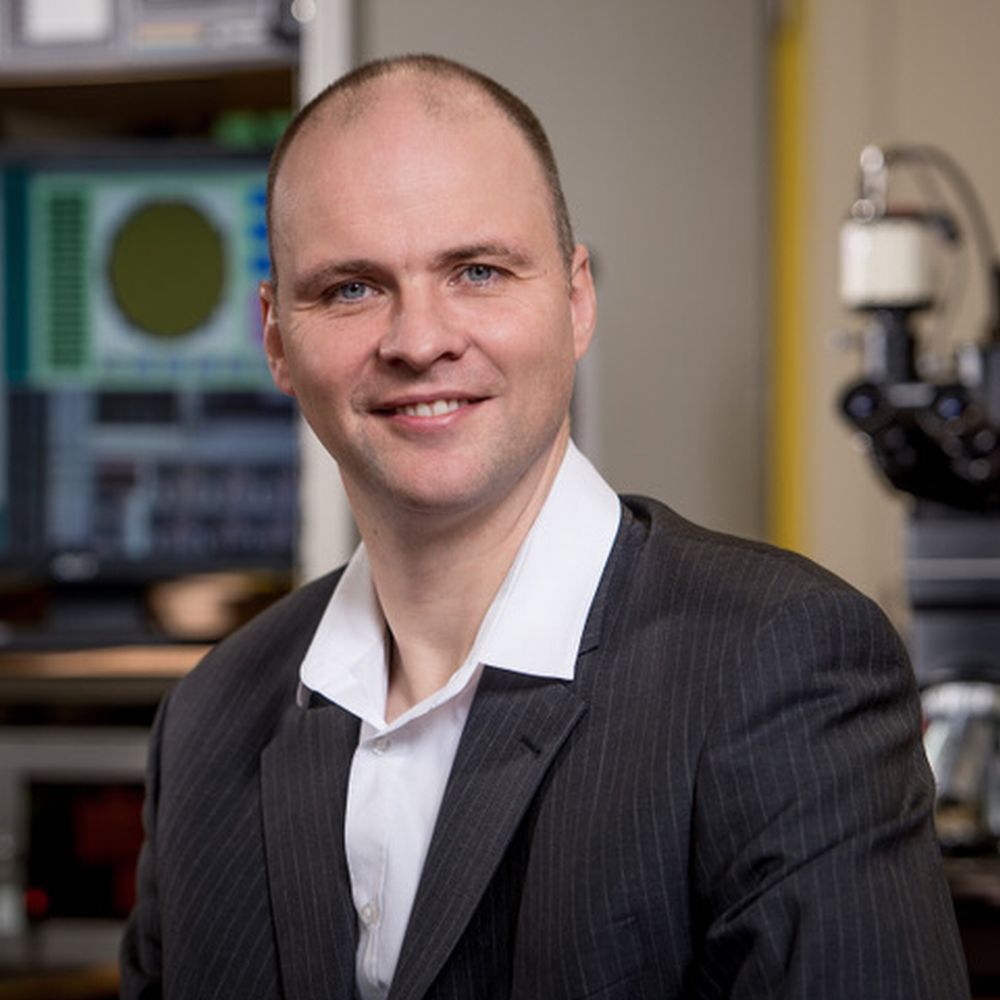
Prof. Dr. Hanspeter Schmid is a Lecturer for Microelectronics and Signal Processing at the University of Applied Sciences and Arts Northwestern Switzerland (FHNW) within the School of Engineering and the Environment. He also serves as a part-time Senior Lecturer at ETH Zurich for Analog Signal Processing and Filtering. Diploma, Postgraduate, and Doctoral degrees from ETH Zurich His research focuses on fast low-power circuits for sensor electronics, signal integrity in analog systems , and sigma-delta modulation . Recent publications address noise analysis, statistical fallacies in small sample measurements, and mixed-signal circuit design. Key article trends include analog/digital filter design, signal-flow graphs, and FFT applications in noise measurement. His work bridges theoretical mathematics with practical circuit implementation, as seen in his 3σ Fallacy study and switched-capacitor tutorials. IEEE CAS Society : Co-Chair (2008-2010), Associate Editor (TCAS-I 2007-2011, TCAS-II 2016-2017) Distinguished Lecturer (2011-2012) and ESSCIRC committee member until 2019 He supervises research projects like Authenticity in Music Production , collaborating with digital music research centers to simulate electronic equipment. His professional affiliations include FHNW’s Institute for Sensors and Electronics and ETH Zurich.
Maria-Luz Fernandez is a Professor at the University of Connecticut in the Department of Nutritional Sciences. She holds a PhD in Nutritional Sciences from the University of Arizona and has served as Graduate Program Coordinator since 2000. Her research focuses on diet-chronic disease relationships, particularly dietary cholesterol, eggs, and their impact on coronary heart disease, type-2 diabetes, and metabolic syndrome. She uses clinical trials and guinea pig models to study cholesterol homeostasis, inflammation, and nutrient delivery systems. Education: BS in Quimico Biologo (University of Sonora, 1974), MS in Food Science (Instituto Politecnico Nacional, 1980), PhD in Nutritional Sciences (University of Arizona, 1988) Her recent work examines controversies around dietary cholesterol and has contributed to USDA guidelines. She has secured over $520,580 in USDA funding and $2 million from food companies. Her article trends show expertise in lipid metabolism, dietary interventions, and functional foods. She has mentored 20+ MS/PhD students and served on university committees including Faculty Council Chair (CAHNR) and Diversity Strategic Planning Committee. Scientific Awards: 2018-2021: Editor-in-Chief, Nutrients 2017: Ed Marth Award for Mentoring Graduate Students 2002: Gamma Sigma Delta Junior Faculty Award 1992: American Heart Association Fellow Fernandez has advised students into diverse careers including academia (e.g., Sonia Vega-Lopez, Kristy L West), industry (e.g., Karin Conde, Marcela Vergara-Jimenez), and clinical research. She collaborates internationally with institutions in Mexico, Colombia, Brazil, and South Korea, and has delivered 30+ invited presentations in the past five years. Her laboratory has pioneered research on nano-delivery of nutrients and cholesterol-lipoprotein interactions.
Prof. Josef Nossek is a Full Professor of Network Theory and Signal Processing at the Technical University of Munich (TUM), Department of Electrical Engineering and Information Technology. His research focuses on signal processing in mobile communications, multi-antenna systems deployment, and technical/physical constraints in communication systems. He holds visiting professorships at UC Berkeley, Vienna University of Technology, and Pazmany University in Budapest. Before joining TUM in 1989, he worked at Siemens AG as Head of Microwave Radio Systems Development. He is a Fellow of IEEE and a member of acatech (German Academy of Science and Engineering). Notable awards include the Federal Cross of Merit (2008), IEEE Education Award (2008), and Bavaria's Prize for Good Teaching (1998). His research interests emphasize practical applications of signal processing theory, including MIMO systems, reconfigurable intelligent surfaces (RIS), and antenna array design. His work bridges theoretical foundations with real-world constraints to optimize wireless communication performance.
Hanna Veselovska is a researcher in the Data Science Group at the Technical University of Munich (TUM), part of the Faculty of Mathematics and the TUM School of Computation, Information and Technology. Her research focuses on Quantization Theory, Mathematical Perspectives of Machine Learning, Image Processing, and Graph Signal Processing. She holds a PhD from the Institute of Mathematics of the National Academy of Sciences of Ukraine (NASU) under Anatoly Holub and has held postdoctoral positions at TU Braunschweig (Germany) and the University of Lübeck (Germany as a DAAD fellow). Current Position: Researcher at TUM Data Science Group PhD: Institute of Mathematics of NASU (2017) Postdoc: TU Braunschweig (2018–2020), University of Lübeck (DAAD fellowship) Her research interests span Phase Retrieval, Super-Resolution, and Sigma-Delta Modulation, with contributions to numerical analysis and signal processing. She has published extensively on topics such as regularized sampling formulas, graph signal quantization, and non-intrusive surrogate modeling. Her work bridges theoretical mathematics with applied data science, with applications in image processing and crashworthiness analysis. Teaching includes courses on Modelling and Simulation with Differential Equations, Random Matrix Theory, and Foundations in Data Analysis at TUM, as well as engineering mathematics courses at TU Braunschweig. Key contributions include advancements in digital halftoning via sigma-delta modulation and recovery of atomic measures on spheres. Her research emphasizes interdisciplinary approaches to solving complex signal processing challenges.
Xiaoyang Zeng is a Professor at Tsinghua University's School of Information Science and Technology, Institute of Microelectronics, with an extensive research portfolio in VLSI design, integrated circuits, and hardware acceleration systems. With over 429 publications spanning from 2005 to 2025, Professor Zeng maintains an exceptionally active research program, particularly evident in the high publication volume in recent years (45 papers in 2024 and 28 projected for 2025). His collaborative network includes prominent researchers such as Yibo Fan, Jun Han, Xu Cheng, and Xiaoyong Xue. Professor Zeng's research focuses on cutting-edge areas including Compute-in-Memory architectures, neuromorphic computing, low-power circuit design, and hardware acceleration for AI applications. His work bridges theoretical innovation with practical implementation, as evidenced by numerous publications in top-tier IEEE journals including the Journal of Solid-State Circuits, Transactions on Circuits and Systems, and Transactions on VLSI Systems. Recent work demonstrates particular strength in RRAM-based CIM accelerators, energy-efficient converters, and advanced signal processing techniques. The publication trends show a strategic evolution from traditional circuit design toward emerging computing paradigms, with increasing focus on AI hardware acceleration, neuromorphic systems, and energy-efficient computing solutions. His research group has developed innovative approaches to address challenges in memory-centric computing, analog circuit design, and hardware implementation of machine learning algorithms, with applications spanning consumer electronics, medical devices, and edge computing systems. Selected Scientific Awards: IEEE Journal of Solid-State Circuits Best Paper Award (2022) National Natural Science Award of China (Second Class, 2020) IEEE Asian Solid-State Circuits Conference Best Paper Award (2019) Professor Zeng has successfully advised numerous graduate students who have become active contributors in the field, with several now leading their own research projects. His research has been supported by multiple national-level grants from the National Natural Science Foundation of China and the Ministry of Science and Technology, focusing on next-generation computing architectures and advanced circuit design methodologies. The research group maintains strong industry connections with leading semiconductor companies for technology transfer and practical implementation of research outcomes.
Prof. Hans-Andrea Loeliger is a Full Professor at ETH Zurich's Department of Information Technology and Electrical Engineering and serves as Deputy Head of the Signal and Information Processing Laboratory. With a career spanning over two decades at ETH Zurich since 2000, he has established himself as a leading researcher in signal processing, information theory, and related fields. His work bridges theoretical foundations with practical applications in communications, electronics, and machine learning. Loeliger's research interests encompass a broad spectrum of topics including signal processing, information theory, communications, system theory, electronics, machine learning, quantum systems, error correcting codes, and neural computation. His work on factor graphs and message passing algorithms has been particularly influential, providing a unifying framework for various signal processing techniques. His recent publications demonstrate continued innovation in areas such as NUV priors, control-bounded analog-to-digital conversion, and neural network applications. His publication record shows consistent high-impact contributions across multiple disciplines, with recent work focusing on the intersection of statistical signal processing, machine learning, and circuit design. The trend in his research demonstrates an evolution from foundational work in factor graphs and information theory toward increasingly sophisticated applications in machine learning, neural computation, and practical circuit implementations. Fellow of the IEEE Loeliger has supervised numerous PhD students and master's candidates through ETH Zurich's Signal and Information Processing Lab, though specific student names aren't listed in the provided text. His teaching responsibilities include courses such as Discrete-Time and Statistical Signal Processing, Electronic Circuits & Signals Exploration Laboratory, and Introduction to Estimation and Machine Learning. His research has been supported by various grants enabling the development of novel signal processing techniques and their implementation in practical systems. The Signal and Information Processing Laboratory under his leadership serves as a hub for interdisciplinary research connecting theoretical signal processing with applications in communications, imaging, and neural systems. The lab maintains strong connections with both academic and industrial partners, facilitating the translation of theoretical advances into practical implementations.
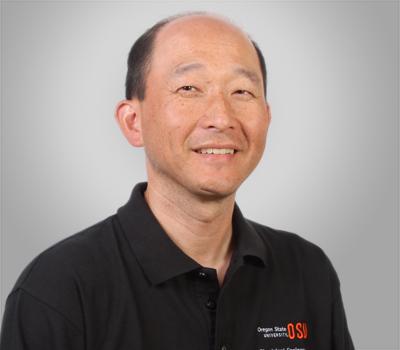
Un-Ku Moon is a Professor in the School of Electrical Engineering and Computer Science at Oregon State University. He earned his Ph.D. (1994), M.Eng. (1989), and B.S. (1987) in Electrical Engineering from the University of Illinois at Urbana-Champaign, Cornell University, and the University of Washington, respectively. Research Interests focus on Analog and Mixed-Signal Integrated Circuits High-Speed Analog-to-Digital Converters (ADCs) Switched-Capacitor and Switched-RC Circuits Low-Voltage/Low-Power Circuit Design Noise-Shaped and Stochastic ADCs His work addresses ADC efficiency in smartphones, medical devices, and communication systems, with trends including predictive level-shifting, ring amplifier optimization, and spread-spectrum clock generation. Scientific Awards include IEEE Fellow (2009) NSF CAREER Award (2002) OSU Graduate Mentoring Award (2007) OSU Alumni Professor Award (2011) Best Paper Awards at ICECS and NEWCAS Moon leads a research group of 8-15 graduate students, collaborating on chip design for analog-digital interfaces. He served as Editor-in-Chief for IEEE Journal of Solid-State Circuits and contributed to major conferences like ISSCC and VLSI.
Dr Jonathan Deane is a Senior Lecturer in the School of Mathematics and Physics at the University of Surrey, affiliated with the Department of Mathematics and Statistics. His research lies at the intersection of applied mathematics, nonlinear dynamics, and mathematical physics, with strong applications in engineering and planetary science. Undergraduate Degree: Physics, Merton College, Oxford (1979–1982) PhD and Postdoctoral Research: Department of Electrical and Electronic Engineering, University of Surrey (1986–1994) Lecturer, University of Surrey (1994–2000) Senior Lecturer, Department of Mathematics and Statistics, University of Surrey (2000–present) Jonathan Deane's research interests span a wide range of applied mathematical topics, including Poincaré inequalities , nonlinear elasticity , chaos in power electronics , triboelectric energy harvesting , and celestial mechanics . His work often combines rigorous analytical methods with numerical simulations to model complex physical phenomena. He has made significant contributions to the understanding of energy minimization in geometric mappings, cavity formation in elastic materials, and the long-term behavior of dissipative dynamical systems. The 15 most recent publications demonstrate a consistent focus on mathematical analysis of physical systems , particularly in the areas of inequalities , variational problems , dynamical systems , and energy conversion devices . The keywords across these works reflect deep engagement with functional analysis, geometric modeling, and nonlinear dynamics. Subfields such as spin-orbit resonance, triboelectric nanogenerators, and hydrostatic pumps indicate a strong interdisciplinary orientation linking mathematics with physics and engineering. His scientific contributions have been published in high-impact journals including: Proceedings of the Royal Society A SIAM Journal on Mathematical Analysis Nonlinear Differential Equations and Applications (NoDEA) Journal of Dynamics and Differential Equations IEEE Transactions on Circuits and Systems Dr Deane has supervised and collaborated extensively, particularly with researchers such as Jonathan Bevan, Michele Bartuccelli, and Guido Gentile. His work on chaotic DC-DC converters, sigma-delta modulators, and parametric amplifiers highlights applications in power electronics and signal processing. He has also contributed to fundamental modeling in energy harvesting, providing a comprehensive framework for triboelectric nanogenerators beyond simple geometries. He is actively involved in research groups focusing on: Nonlinear dynamics and chaos Mathematical modeling of physical systems Energy harvesting technologies Planetary spin-orbit dynamics
Dr. Matthias Keller is a Senior Lecturer at the Department of Microelectronics, Faculty of Engineering, Albert-Ludwigs-Universität Freiburg. He holds a Dr.-Ing. (summa cum laude, 2010) from the same institution for his work on ΔΣ modulators. His research focuses on analog circuit design using CMOS technology, particularly ΔΣ analog/digital converters. He has served as Acting Chair of the Microelectronics Professorship (2020–2022) and received the 2014 Teaching Award from the Faculty of Engineering, the first non-professorial academic staff member to do so. He is actively involved in university governance, including roles in the Senate (since 2023), Faculty Council, and Examination Committee. Education: Diploma in General Electrical Engineering (Saarland University, 2003) Roles: Academic Councillor (since 2015), Acting Chair (2020–2022), Senate Member (2023–) His research emphasizes systematic approaches to noise-shaping architectures and mixed-signal integrated systems. Collaborative projects include work within the Institute for Microsystems Technology (IMTEK).
Salah H. Abouzaid is a Researcher at the Faculty of Electrical Engineering and Information Technology , Ruhr University Bochum, affiliated with the Integrated Systems department. His work focuses on radar technology and sensor systems. Specializes in FMCW radar systems and deep learning applications Research interests include material characterization and vital signs monitoring Active in microwave theory, embedded systems, and neural network modeling His recent publications demonstrate expertise in radar-based material analysis, machine learning integration, and biomedical sensing. No students or awards are listed in available records.
Prof. Dr.-Ing. Friedel Gerfers serves as the Einstein-Professor for Mixed Signal Circuit Design at the Technical University of Berlin since 2019, and has led the Mixed Signal Circuit Design (MSC) group since 2015. Prior to academia, he held industry roles as Design Manager at Apple Inc. (2014-2015) and Technical Director at Integrated Device Technology (IDT) (2012-2014). High-Speed Integrated Circuits (GS/s range) Energy-Efficient RF/Transceiver Architectures Silicon Photonics Applications Ultra-Low-Power Sensor Readout Systems His research focuses on mixed-signal calibration algorithms , semiconductor design flows , and FinFET technology down to 14nm. Recent work emphasizes 22nm FD-SOI CMOS for high-performance applications. Key publication trends include: High-Speed ADC/DAC designs (12-18.5 GS/s) Advanced RF sampling techniques Error correction in current-steering DACs Optical interconnects (VCSEL-based systems) Current affiliations: Technical University of Berlin IEEE Conference Publications German Microwave Conference (GeMiC) Collaborations
Chet Ford, Ph.D., serves as Clinical Associate Professor in the Department of Radiation Oncology at the University of Miami, where he integrates clinical medical physics practice with translational research in MRI-guided radiation therapy. Board-certified by the American Board of Radiology in Therapeutic Radiological Physics, his expertise bridges nuclear magnetic resonance physics, clinical oncology, and medical imaging innovation. His educational foundation includes: PhD in Physics, University of Connecticut (1988) MS in Physics, University of Connecticut (1983) BS in Physics, Virginia Commonwealth University (1981) MBA, Drexel University (2003) Postdoctoral training at the University of Pennsylvania (1990) and Virginia Commonwealth University (2010) established his specialization in MRI physics and clinical radiation oncology. His research pioneers the application of quantitative MRI to model tumor physiology and predict radiation response, leveraging daily imaging from hybrid MRI/radiotherapy systems like ViewRay. Current projects focus on machine learning-driven radiomic analysis of prostate cancer and glioblastoma evolution during treatment, with emphasis on adaptive therapy optimization. Recent publications (2023-2025) reveal a cohesive trajectory in exploiting low-field MR-LINAC technology for real-time treatment adaptation. Key themes include radiomic feature stability assessment, deep learning segmentation for tumor tracking, and multi-parametric MRI analysis to decode treatment resistance mechanisms—primarily in prostate cancer and glioblastoma contexts. Award highlights include: NIH Shannon Award Association of University Radiologists Stauffer Award Doctoral Dissertation Fellowship Award Sigma Pi Sigma Physics Honor Society recognition Dr. Ford mentors physics residents, a biomedical engineering graduate student, and postdoctoral researchers in MRI device development. His grant portfolio features an NIH Shared Instrumentation Grant as Principal Investigator and EPA funding for an MR-based water monitoring device, demonstrating cross-disciplinary innovation. Laboratory efforts center on building small-animal MRI platforms and establishing clinical data registries for ViewRay treatment optimization.
Yan Zhu is a faculty member at the University of Macau , affiliated with the Analog and Mixed Signal VLSI Laboratory within the Faculty of Science and Technology. She has a strong research focus on high-performance analog and mixed-signal integrated circuits, particularly in data conversion and low-power design. Her research interests include: Analog and Mixed-Signal VLSI Design High-Speed Data Converters (ADCs) Noise-Shaping and Time-Domain Circuits PVT-Robust and Low-Power Circuit Techniques Compute-in-Memory and AI Hardware Acceleration The recent publications of Yan Zhu demonstrate a clear trend toward advanced ADC architectures such as time-interleaved, pipelined-SAR, and time-domain converters, with a strong emphasis on calibration, linearity, and energy efficiency. Her work frequently appears in top-tier journals like IEEE JSSC and conferences like ISSCC and CICC, indicating leadership in the field of analog circuit design. There is also a growing focus on machine learning hardware, particularly analog compute-in-memory systems for edge AI applications. No scientific awards or honors are mentioned in the provided text. Yan Zhu has made significant contributions through collaborative research, particularly with Chi-Hang Chan and Rui Paulo Martins , and has been involved in numerous projects related to ADC calibration, metastability, and high-speed sampling. While specific grant details are not listed, the volume and quality of publications suggest active funding support. She has not listed any advisees in the provided data. She is a core contributor to the Analog and Mixed Signal VLSI Laboratory at the University of Macau, where her team focuses on cutting-edge IC design for communication, sensing, and artificial intelligence applications.
Claude Duvanaud serves as an Associate Professor in the Department of Automatic Control and Systems within the School of Engineering at University of Poitiers. His research is primarily conducted through the LIAS (Laboratory of Automatic Systems) which maintains dual locations at both ENSIP (École Nationale Supérieure d'Ingénieurs de Poitiers) in Poitiers and ISAE-ENSMA (Institut Supérieur de l'Aéronautique et de l'Espace) in Chasseneuil, reflecting a strong interdisciplinary collaboration between these engineering institutions. Professor Duvanaud's research focuses on Automatic Control Systems with particular expertise in RF power amplifier linearization, nonlinear system identification, and microwave engineering. His work bridges theoretical control methods with practical RF circuit implementation, developing innovative solutions for distortion compensation in wireless communication systems. He has made significant contributions to adaptive Kalman filtering algorithms for real-time amplifier linearization and has explored novel approaches to internal model control for high-frequency amplification. Analysis of his publication record reveals a consistent research trajectory centered on RF power amplifier modeling and linearization techniques. His work demonstrates a progression from fundamental amplifier characterization to sophisticated digital predistortion methods, with increasing focus on real-time adaptive algorithms. The research spans both theoretical modeling and practical implementation, with applications spanning wireless communications, satellite systems, and advanced RF circuit design. Within the LIAS laboratory, Professor Duvanaud is a key member of the Automatic Control Team, collaborating extensively with researchers including Smail Bachir, Mourad Djamai, and Lucian Dascalescu. His work intersects with other research teams at LIAS including the Data Engineering and Real Time teams, reflecting the interdisciplinary nature of modern control systems research. The laboratory's dual-location structure enables collaboration between mechanical/aerospace engineering at ISAE-ENSMA and broader engineering disciplines at ENSIP.
Prof. Georg Schmidt is a Professor at Esslingen University of Applied Sciences since 2011, specializing in communication systems, digital technology, and coding theory. He holds a PhD in algebraic decoding of Reed-Solomon codes and has extensive industry experience, including roles at Ubidyne GmbH and the University of Ulm's Institute of Telecommunications Technology. His research interests span digital signal processing, embedded systems security, and error-correcting codes. He lectures on advanced channel coding and serves on the DV and Foreign Affairs Committees. Education: 1994–2000: Studied Electrical Engineering at the University of Ulm, focusing on systems engineering, communications, and network technology. Doctorate: Algebraic decoding of Reed-Solomon codes over half the minimum distance (University of Ulm). Research Focus: Communication systems and digital signal processing. Coding theory (e.g., Reed-Solomon codes, expander codes). Data security and embedded systems. Motor control and delta-sigma modulation techniques. Recent Publications Trends: Recent work emphasizes practical applications like Bluetooth Low Energy systems, energy harvesting, and advanced motor control algorithms, complementing foundational research in coding theory and error correction. Awards & Grants: No specific awards or grants listed. Active in patenting (e.g., antenna arrays, calibration methods, and energy systems). Advising & Labs: No student advisees listed. Engaged in collaborative projects on coding and industrial communication at Esslingen’s engineering faculty.